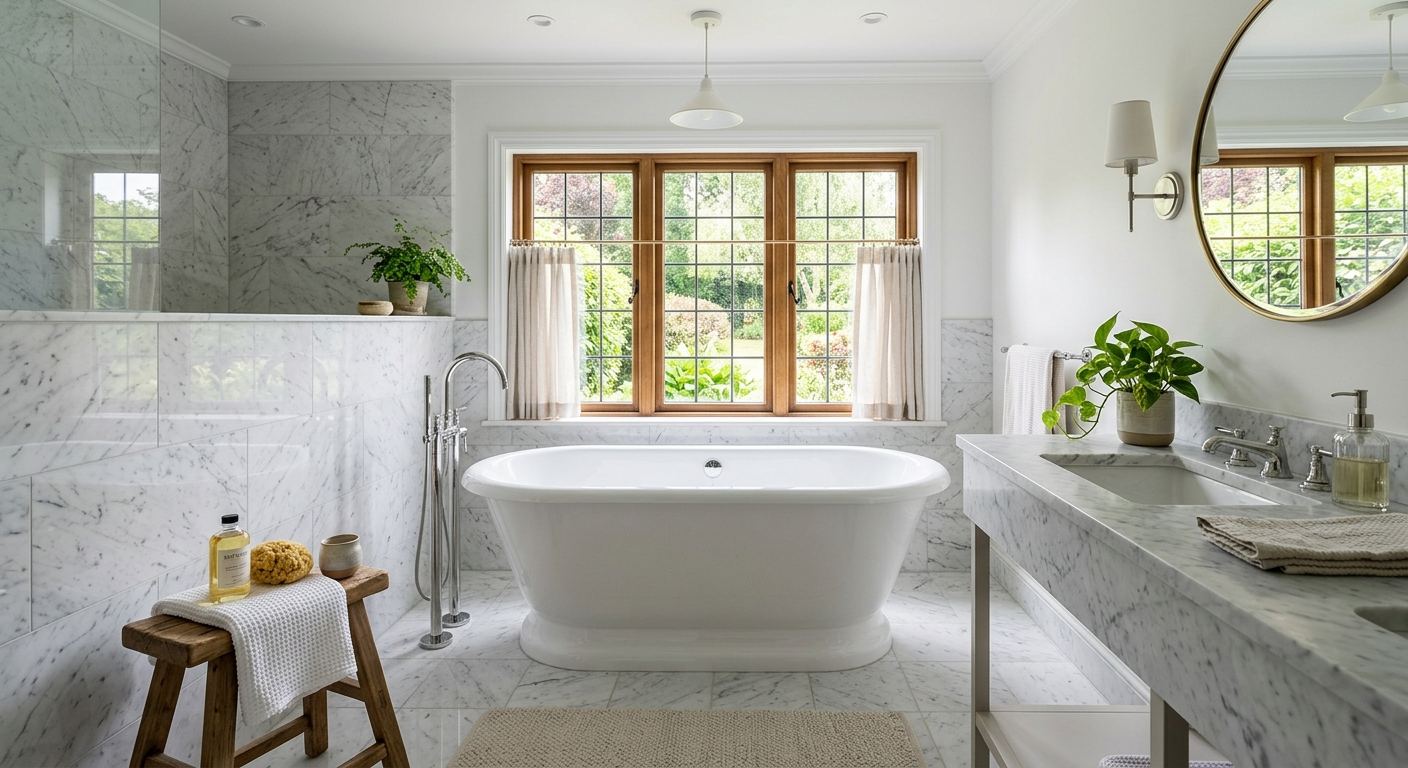
Bathroom renovation options and costs in Chase
Renovating a bathroom in Chase can range from a simple refresh to a full gut-and-rebuild, and the right option depends on how your plumbing, wiring, and waterproofing are performing behind the walls. In Chase, many homes sit in an older housing context—nearly half of dwellings were built before 1981 (49.4% per Statistics Canada, 2021 Census)—so dated drain layouts, older venting, and occasional hidden asbestos-containing materials are more likely than in newer builds. With 970 homeowner households (82.6% of households own), homeowners here are typically choosing projects that improve comfort and long-term maintenance, not just appearances.
In the Thompson–Okanagan region, costs are driven primarily by labour rates and the age of the housing stock, more than day-to-day weather. That means a “same-sized” bathroom can land 30–50% apart across B.C. when contractors need to upgrade plumbing/venting to current expectations or coordinate multiple trades. Climate still matters for the details—bathroom exhaust performance, ventilation run length, and how thoroughly the shower is waterproofed—but local contractors usually plan around typical indoor humidity rather than extreme weather damage.
Trade demand is especially steady around the Chase town centre and the more established residential pockets where access to existing services is predictable and homeowners frequently start projects in the shoulder season to avoid winter scheduling slowdowns. Once walls are opened in older homes, unknowns can push a cosmetic job into a mid-range or full renovation scope, which is why the budget bands below are a better starting point than a single “one-price” quote.
| Renovation Scope |
What's Included |
Typical Duration |
Price Range |
| Cosmetic refresh (paint, fixtures, accessories only) |
Paint, caulking refresh, vanity or faucet swap (no plumbing relocation), toilet swap, towel bars, mirror/light replacement, minor caulk/grout touch-ups |
3–5 days |
$15,000–$20,000 |
| Mid-range full renovation (new tile, vanity, tub/shower, electrical) |
New tile floor/surround, new vanity + countertop, tub/shower replacement or refit, exhaust fan (ducted where needed), GFCI upgrades, demolition + disposal, waterproofing system, basic electrical adjustments |
2–3 weeks |
$20,000–$28,000 |
| High-end full renovation (custom tile, steam shower, heated floors) |
Custom layout, premium tile, heated floor mat + floor build-up, premium fixtures, steam shower (or luxury shower system), upgraded electrical for dedicated circuits, higher-end waterproofing details and niche/bench work |
3–5 weeks |
$28,000–$35,000 |
| Shower-only installation (convert tub to walk-in shower) |
Demo of tub, new walk-in shower pan/floor, waterproofing, tile surround, drain replacement as required, glass door supply and install, exhaust fan tie-in if upgraded |
1.5–3 weeks |
$6,000–$18,000 |
| Bathtub replacement or tub-liner install |
Old tub removal and install (or liner system where appropriate), new trim and valve check, recaulk, basic tile touch-up, leak testing and water-tightness checks |
5–12 days |
$4,000–$11,000 |
| Tile-only installation (floor + surround, existing layout kept) |
Floor + shower surround tile, waterproofing build-up, grout/caulk, preparation and leveling as needed, existing fixtures retained where feasible |
1–2 weeks |
$3,000–$12,000 |
Prices are estimates only and vary by project scope, site access and material selection.
What affects the price of bathroom renovation in Chase
If you’re comparing quotes for the same bathroom in Chase, it’s normal to see a 30–50% spread between contractors across the Thompson–Okanagan region and other parts of B.C. The two biggest drivers are (1) regional labour rates and (2) the age of the local housing stock—more than typical climate. In communities where many homes were built before 1981 (49.4% per Statistics Canada, 2021 Census), plumbing stacks can be cast-iron or have older copper arrangements that don’t align cleanly with modern drains and venting. Supply lines may be galvanized, and ventilation can be under-sized for today’s showerheads—so contractors often must expand the scope once walls are open.
Older construction also increases the chance of “surprise” materials. If asbestos-containing materials are encountered (for example, in some pre-1985 vinyl floor tile, mastic, or drywall compounds), abatement protocols can add $1,500–$5,000+ and extend timelines. Even when no abatement is required, missing shutoffs, corroded valve cartridges, or out-of-date exhaust wiring push the job from cosmetic into mid-range or full renovation territory, commonly aligning with the $15,000–$35,000 full renovation bands.
Concrete examples from Chase: a tiled tub surround on an out-of-level subfloor usually requires more prep and waterproofing build-up, which raises tile installation labour. Conversely, a straightforward “like-for-like” shower conversion where the drain location is staying put can keep costs closer to the shower-only bands (often $6,000–$18,000). Another cost swing happens when electrical for the exhaust fan and new GFCI outlets must be extended to a reachable circuit—sometimes that’s a simple run, and other times it means rewiring to meet current expectations.
| Price Factor |
Why It Matters |
Cost Impact |
| Layout change — moving drain or supply lines requires rough-in work |
Moving plumbing means opening walls, replacing pipes, refitting traps, and coordinating inspections |
Often adds $3,000–$8,000 to labour and materials |
| Tile selection — large-format porcelain vs. mosaic vs. ceramic |
Harder tiles and larger slabs require better prep, more cutting, and slower set-and-level work |
Typically shifts $1,000–$6,000 depending on tile and complexity |
| Fixture tier — builder-grade vs. mid-range vs. designer brands |
Higher tiers cost more and sometimes require specific valves, trims, or stronger framing/clearances |
Usually changes $500–$4,000+ |
| Subfloor condition — rot or unlevel concrete adds scope |
Unlevel or damaged substrates can force re-structuring, cement board replacement, or extra flattening |
Commonly adds $800–$5,000 |
| Electrical — adding GFCI outlets, exhaust fan, heated floor circuit |
Bathrooms have stricter safety expectations; additional circuits and fan/heat wiring add labour |
Often adds $1,000–$6,000 based on what’s being added |
| Waterproofing method — membrane type and extent |
Right membrane coverage prevents leaks and mould; better systems cost more but reduce failures |
Typically adds $500–$3,500 but protects the build |
| Older-home surprises — asbestos tile, cast-iron drains, galvanized pipes |
Remediation and replacement are slow, require extra containment/handling, and extend timelines |
Can add $1,500–$10,000+ |
| Bathroom size — sq ft drives tile and labour time directly |
More surface area means more waterproofing, more tile hours, and longer set/cure times |
For mid-range/full projects, can swing $2,000–$10,000 |
Permits & regulations in British Columbia
In British Columbia, the permit need depends on what you change, not just that you renovated. Cosmetic updates—like swapping a vanity, replacing a faucet or toilet, repainting, or retiling with the same fixtures and the same plumbing locations—often do not require a building permit. However, permits and inspections are typically required when you relocate plumbing, alter electrical circuits, or make structural changes.
Work that DOES typically require a permit/inspection: moving a shower drain or toilet supply location, changing the rough-in plumbing (new drains/supplies), installing or upgrading ducted exhaust fans when it involves new electrical connections or modifications to the venting pathway, and any structural wall changes (including framing changes). Electrical work must meet current provincial code and be completed by, or signed off by, a licensed electrician.
Work that typically does NOT require a permit: replacing fixtures in the same location (like a vanity swap), painting, and straightforward retiling where you’re not moving plumbing and you’re not changing building elements.
To verify a Chase contractor in B.C., do it in this order: (1) confirm their B.C. trade licence status via the relevant provincial registry and ensure the licence matches the scope (plumbing/electrical where applicable); (2) request a certificate of insurance showing liability coverage; (3) ask how workers are covered for occupational coverage (commonly referenced as WCB/clearance) and request proof/clearance where applicable; and (4) keep the paperwork—licence details and insurance—for your records before work starts. If they can’t provide documents quickly, that’s a red flag.
Choosing tile, waterproofing and fixtures for your Chase bathroom
In Chase and across the Thompson–Okanagan, your material choices are where budgets either stay controlled or quietly grow. The three decisions that most strongly shape both cost and long-term performance are tile selection, waterproofing method, and fixture tier.
1) Tile choice: Ceramic is usually the lowest-cost option, but it can be more forgiving for entry-level budgets because installation tolerances are often simpler. Porcelain typically costs more in materials and can increase installation time (harder tile, more cutting), but it’s commonly worth it for durability in shower areas. Natural stone (marble, travertine, slate) can look exceptional, yet it often requires more expensive installation labour and careful sealing/maintenance. Where your project is more “mid-range full renovation” in the $20,000–$28,000 band, shifting from entry ceramic to porcelain is a common upgrade that looks and performs better.
2) Waterproofing method: Paint-on membranes can be economical, but a shower typically performs best with a full system—bonded sheet membrane or a tile-ready membrane system installed to the manufacturer’s details. British Columbia’s indoor humidity and the way showers run longer in winter makes a reliable waterproofing build critical to mould prevention. Skipping steps here can turn a $3,000–$12,000 tile-only project into a costly tear-out later.
3) Fixture tier: Builder-grade fixtures can keep resale-friendly functionality without overspending. Mid-range upgrades often add better valve control and easier parts replacement. Designer fixtures can be justified if you’re matching finishes across vanities and shower hardware for a cohesive look.
Dollar example: If you’re upgrading a shower surround, spending an extra $800–$2,000 on porcelain tile and a higher-spec waterproofing system is often justified versus trying to offset it by cutting waterproofing corners—because waterproofing is what keeps the bathroom from failing behind the walls.
| Material / Option |
Pros |
Cons |
Price Range |
| Ceramic tile (floor + walls) |
Lower material cost; more forgiving on minor substrate imperfections; good for entry-level upgrades |
Less dense than porcelain; can be more prone to chipping if improperly handled; may need more careful sealing depending on finish |
$3,000–$7,000 |
| Porcelain tile (floor + walls) |
Highly durable; better water resistance; excellent for modern large-format looks; strong resale appeal |
Higher material cost; harder to cut; may require more exact floor flatness and slower installation |
$6,000–$12,000 |
| Natural stone (marble, travertine, slate) |
High-end appearance; unique veining/texture; premium feel in powder rooms or showpiece bathrooms |
Requires sealing and maintenance; more installation time; can stain or etch depending on stone type |
$9,000–$16,000 |
| Frameless glass shower enclosure |
Bright, clean look; improves perceived bathroom size; durable when properly installed and sealed |
Higher hardware cost; must be square/plumb for best performance; can be limited by tile thickness and existing framing |
$2,000–$8,000 |
| Prefab tub surround (acrylic) |
Fast install; generally watertight when fitted correctly; easy cleaning |
Less design flexibility; can feel “builder grade”; may not align with custom tile aesthetic |
$1,200–$5,000 |
| Custom shower pan (tile or linear drain) |
Modern look and improved drainage; linear drains can reduce visual clutter; best performance when built as a complete system |
More labour and waterproofing detail; requires careful slope planning; higher material cost |
$6,000–$18,000 |
How to choose a bathroom renovation contractor in Chase
Choosing the right contractor in Chase starts with proof, not promises. In British Columbia, bathroom work often overlaps trades: plumbing changes and electrical upgrades must be completed by the appropriate licensed professionals. Ask your contractor for: (1) their B.C. trade licence details for the work they’ll perform, (2) a certificate of liability insurance, and (3) proof of coverage related to workers (commonly handled through WCB/clearance). You should see these documents provided before the contract is signed—reputable contractors can produce them quickly.
Next, get 2–3 itemised written quotes, not lump-sum estimates. Itemised quotes should separate labour, demolition/disposal, waterproofing, tile installation, rough-in allowances, and electrical/plumbing scope so you can compare apples-to-apples. Pay close attention to what’s excluded: disposal, permit fees, asbestos testing/abatement allowances, subfloor repairs, and fixture allowance tiers. Many quote gaps show up when contractors exclude “unknowns” until after walls are opened.
For warranty, confirm: workmanship warranty length (usually stated in the contract), product/manufacturer warranty for fixtures and shower systems, and whether warranties are transferable if you sell the home. For payment scheduling, don’t move beyond 10–15% upfront; keep a holdback until the job is complete and leak testing/documentation is done.
Finally, insist on timing in writing: a start date and a completion estimate. In older Chase homes, a realistic schedule builds in inspection/coordination time when plumbing venting or electrical upgrades are required.
- Verify B.C. trade licence details match the scope (plumbing/electrical vs general contracting).
- Request certificate of liability insurance and confirm expiry dates.
- Ask for WCB/clearance proof for workers before work begins.
- Get itemised quotes: labour, materials, waterproofing system, tile prep, disposal.
- Confirm permit responsibility: who pulls it and whether it’s included in the quote.
- Ask what’s included for demolition and debris haul-away.
- Clarify allowances for fixtures (toilets, vanities, fan units) and tile quantities.
- Require written waterproofing details (membrane type, coverage areas, drain/flange approach).
- Confirm substrate prep responsibilities (leveling, underlayment, board replacements).
- Require leak testing procedures and when they happen (before closing walls).
- Set payment milestones tied to visible progress; keep a holdback until completion.
- Ask for a written schedule and contingencies for inspections and trade coordination.
Common red flags I see with bathroom renovation contractors in Chase: quoting a full renovation without itemising waterproofing and rough-in allowances; refusing to provide licence/insurance documentation upfront; using vague “permit by others” language; requesting large deposits beyond 10–15% without a signed, detailed contract; and starting work without a clear demolition/disposal plan or a realistic timeline for inspections.
Frequently asked questions — bathroom renovation in Chase
How long does a bathroom renovation take in Chase?
In Chase, typical timelines depend on whether you’re doing a cosmetic refresh, a shower conversion, or a full renovation. A cosmetic refresh is often 3–5 days, because you’re mostly swapping fixtures and refreshing surfaces without opening walls. A mid-range full renovation (commonly landing in the $20,000–$28,000 band) usually takes about 2–3 weeks when tile, waterproofing, and electrical are coordinated smoothly. If you’re converting a tub to a walk-in shower, many projects land in the $6,000–$18,000 range and take roughly 1.5–3 weeks depending on drain location changes. In older homes—nearly half built before 1981 (49.4%)—expect delays if plumbing venting, electrical upgrades, or any remediation are discovered after demolition (Statistics Canada, 2021 Census).
Do I need a permit for a bathroom renovation in British Columbia?
In British Columbia, cosmetic-only bathroom work usually doesn’t require a permit—things like repainting, replacing a vanity in the same position, swapping faucets/toilets, and straightforward retiling without moving plumbing are commonly treated as non-permitted updates. Permits are typically required when you relocate plumbing (moving a drain or supply lines), make structural wall changes, or add/upsize exhaust and ventilation involving new electrical connections. Electrical work must comply with provincial code and be done or signed off by a licensed electrician. For Chase homeowners, the easiest verification is to ask your contractor to confirm whether the plan includes rough-in plumbing changes or new circuits, and to show you which permits they intend to pull (and who pays). Always request the permit details in writing before work starts.
What's the best tile for a bathroom in Chase?
For most Chase bathrooms, porcelain tile is the best balance of durability and appearance, especially for shower floors and tub/shower surrounds. Ceramic is a solid entry option if your priority is keeping costs down, but porcelain’s density and water resistance are better for long-term performance. If you want a luxury look, natural stone (marble/travertine/slate) can be stunning, but it requires sealing and careful maintenance. The Thompson–Okanagan region has less coastal salt air than the Lower Mainland, yet bathroom humidity still builds up—so waterproofing quality matters as much as tile choice. Practically, if your budget is in the tile-only band of $3,000–$12,000, shifting from ceramic to porcelain is often the upgrade that delivers the most visible payoff without redesigning your entire renovation.
Should I do a tub-to-shower conversion?
A tub-to-shower conversion is often a smart move in Chase if you want easier daily access and you’re tired of tub maintenance or leaks. It can also help modernise the bathroom layout when space is limited. The cost is mainly driven by drain/supply rough-in needs and the shower waterproofing system—so if you can keep the drain in the same general location, costs stay more predictable within the shower installation bands of $6,000–$18,000. If the conversion requires moving plumbing, you’ll usually need permits and additional rough-in labour. In older homes (many built before 1981), it’s also wise to plan for potential venting or drainage upgrades once walls open. In short: yes, conversion is frequently worth it, but only if you’re getting a detailed scope that addresses waterproofing, exhaust, and any hidden plumbing issues.
How do I prevent mold in a Chase bathroom?
Mold prevention starts with keeping water out of hidden construction and keeping the bathroom dry after showers. The biggest mistake is relying on paint or caulk alone—Caulking can fail; waterproofing systems are what protect the substrate. In Chase, I recommend a full shower waterproofing approach (membrane system installed to manufacturer details), proper slope to the drain, and sealing all changes-of-plane. Ventilation matters too: install or upgrade a ducted exhaust fan sized for the bathroom, and make sure it’s venting properly rather than just recirculating. Also, don’t skip grout and caulk updates in wet zones. If you’re renovating in a home built before 1981 (49.4% of dwellings), ask whether the team will check older materials and plan safe containment if any suspect materials are found. Done correctly, you reduce mould risk significantly.
What adds the most resale value in a bathroom reno?
For Chase and the broader Thompson–Okanagan market, the biggest resale value typically comes from functional upgrades that buyers can immediately see and trust: a modern, properly waterproofed shower, clean tile work, and updated ventilation. Electrical safety improvements (like proper GFCI protection and a correctly operating exhaust fan) also carry strong buyer confidence, especially in older homes where circuits and ventilation may be dated. Layout improvements—like swapping a tub for a walk-in shower—can add value for everyday usability. If your bathroom is dated but structurally sound, investing in quality waterproofing and durable tile is usually a better return than spending on the most expensive fixtures alone. A full renovation generally falls in the $15,000–$35,000 range; buyers often value that “all-in, done-right” feeling. In an owner-dominant area (82.6% of households own; Statistics Canada, 2021 Census), long-term reliability tends to matter most.