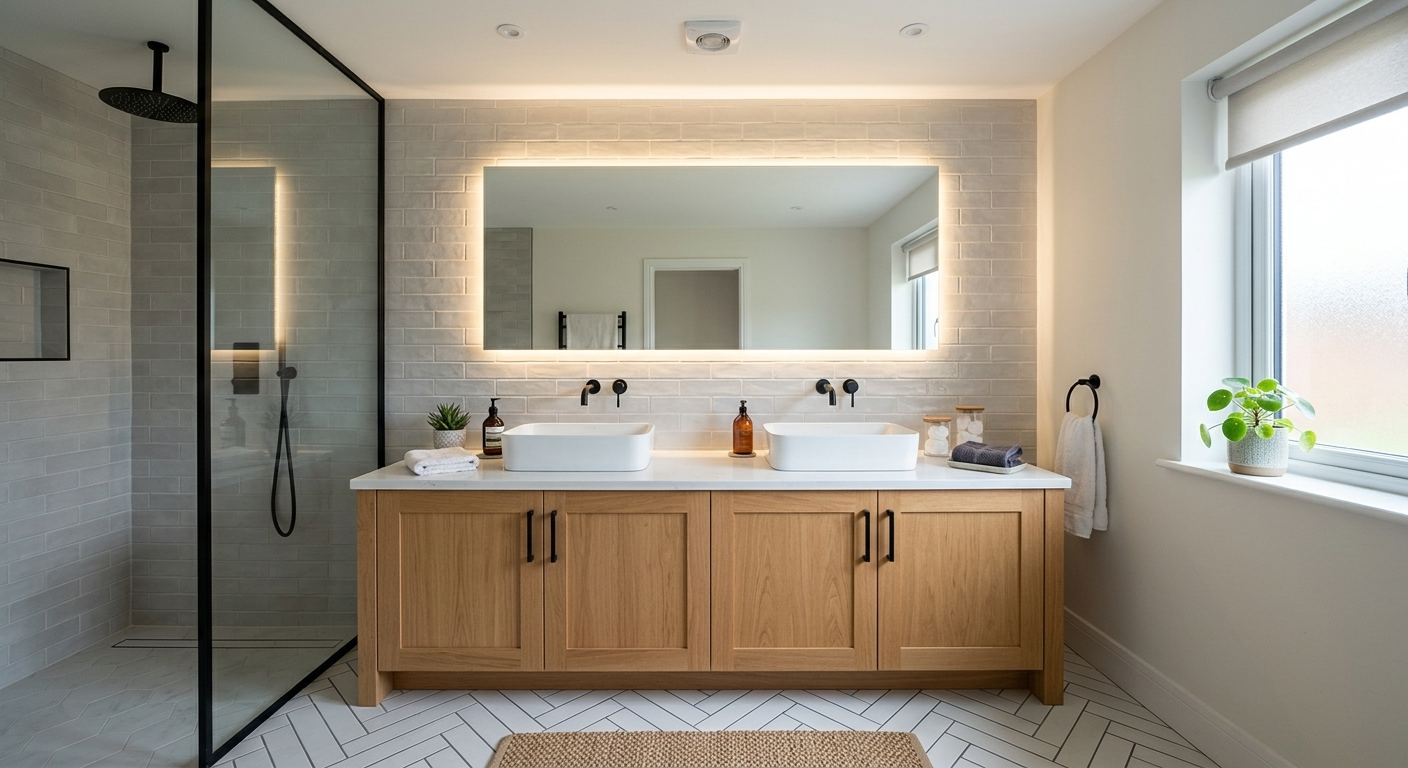
Bathroom renovation options and costs in Terra Nova
In Terra Nova, British Columbia, homeowners usually start by comparing options: a quick cosmetic refresh versus a full redesign. With a population of 5,447 (Statistics Canada, 2021 Census), the local housing market is tightly linked to the broader Lower Mainland–Southwest demand, so pricing tends to be labour-led rather than purely material-led. Just as important, many homes here are mid-century or older, and in pre-1980 builds it’s common to find dated drain layouts, older supply piping, and occasional asbestos-containing materials in floor tile or drywall compound—discoveries that can expand scope quickly once walls come open.
The Lower Mainland–Southwest area also has relatively high construction labour costs, driven by strong demand for plumbers, tilers, and electricians across Metro Vancouver and nearby communities. That labour environment affects everything from demolition and waterproofing prep to electrical tie-ins for new exhaust fans and heated floors. Climate plays a supporting role: bathrooms in coastal BC need durable waterproofing and ventilation to handle persistent indoor humidity, but in practice contractors’ availability and the age of the existing plumbing and wiring are the bigger cost drivers than rainy weather alone. In Terra Nova, trades are especially in demand around the local waterfront neighbourhood pockets where access can be tight and projects often require careful scheduling for haul-away and dust control.
Below is a realistic snapshot of typical project levels you can expect for Terra Nova. Use it as a baseline, then tighten the scope once you’ve identified what’s original behind the walls.
| Renovation Scope |
What’s Included |
Typical Duration |
Price Range |
| Cosmetic refresh (paint, fixtures, accessories only) |
Repaint, replace vanity and toilet (if no plumbing relocation), swap lighting/sconces if reusing existing wiring, refinish tub as applicable, caulking and new accessories |
3–7 days |
$18,000 – $25,000 |
| Mid-range full renovation (new tile, vanity, tub/shower, electrical) |
Demo and disposal, new vanity and hardware, new tub/shower surround tile, updated exhaust fan (with electrical tie-in), new waterproofing system, basic lighting refresh, confirm/repair existing rough-in as needed |
2–4 weeks |
$25,000 – $35,000 |
| High-end full renovation (custom tile, steam shower, heated floors) |
Custom layout, higher-end tile and setting materials, heated floor system, steam shower package, upgraded venting/controls, designer fixtures and recessed lighting, improved waterproofing and niche detailing |
4–7 weeks |
$35,000 – $45,000 |
| Shower-only installation (convert tub to walk-in shower) |
Remove tub, build new shower base, waterproofing, install walk-in glass enclosure, new drain and valve trim (as required), tile walls and floor to match |
2–3.5 weeks |
$8,000 – $25,000 |
| Bathtub replacement or tub-liner install |
Remove and replace tub (or liner install where suitable), new trim and caulking, minor surround updates, reconnect plumbing, leak test and seal |
5–10 days |
$1,500 – $6,000 |
| Tile-only installation (floor + surround, existing layout kept) |
Remove existing finish, prep substrate, install waterproofing, tile floor and shower surround (no valve relocation), grout, seal and caulk upgrades |
1.5–3 weeks |
$2,000 – $8,000 |
Prices are estimates only and vary by project scope, site access and material selection.
What affects the price of bathroom renovation in Terra Nova
Across the Lower Mainland–Southwest, it’s normal to see quotes for the “same” bathroom differ by 30–50%. In British Columbia, that spread is usually not because the weather is wildly different between days—it’s because labour rates and the age of the housing stock dominate the work. Once walls and floors are opened in older Terra Nova homes, hidden conditions often trigger extra trades and permitable upgrades: drain stack changes, ventilation updates, or electrical corrections for bathroom circuits.
For example, a straightforward bathroom refresh can sit closer to the mid-range full renovation band when you factor in new tile and electrical tie-ins; whereas a job that starts as “tile-only” can drift upward toward full renovation pricing if waterproofing substrate repairs and rough-in adjustments are required. In pre-1980 homes, it’s also common to encounter cast-iron or galvanized piping and, in some cases, asbestos-containing materials in flooring or drywall compound. If asbestos abatement is required, budgets commonly rise by about $1,500–$5,000+ depending on what’s disturbed and how containment is handled.
Two concrete Terra Nova scenarios that push costs up are: (1) converting a tub to a walk-in shower when the existing drain location forces re-routing; and (2) installing large-format porcelain where subfloor flatness must be corrected to avoid cracked tiles or lippage. Costs can drop when layouts remain unchanged and the substrate is sound—keeping shower valves and drains where they are, and limiting demo to finishes only. In practice, the Lower Mainland labour market and older home surprises are what move the needle more than climate alone, even though every bath here still needs moisture-resistant assemblies to keep mould risk low.
| Price Factor |
Why It Matters |
Cost Impact |
| Layout change — moving drain or supply lines requires rough-in work |
New rough-in means more demo, plumbing labour, and likely inspections |
Often adds $3,000–$10,000+ |
| Tile selection — large-format porcelain vs. mosaic vs. ceramic |
Harder substrates, more cutting, and higher material waste for intricate patterns |
Often adds $1,000–$5,000 |
| Fixture tier — builder-grade vs. mid-range vs. designer brands |
Trim complexity, finish options, and matching accessories increase both labour and material cost |
Often adds $500–$4,000 |
| Subfloor condition — rot or unlevel concrete adds scope |
Repairs and flattening extend prep time and can change waterproofing approach |
Often adds $1,000–$6,000 |
| Electrical — adding GFCI outlets, exhaust fan, heated floor circuit |
Bathroom wiring upgrades require licensed electrical work and sometimes permit updates |
Often adds $800–$4,500 |
| Waterproofing method — membrane type and extent |
Full coverage and correct transitions prevent failure and rework |
Often adds $500–$3,000 |
| Older-home surprises — asbestos tile, cast-iron drains, galvanized pipes |
Abatement, drain replacement, and pipe upgrades add trades, schedule, and disposal |
Often adds $1,500–$15,000+ |
| Bathroom size — sq ft drives tile and labour time directly |
More surface area means more waterproofing, set time, and cleanup |
Often scales the total by 10–30%+ |
Permits & regulations in British Columbia
In British Columbia, many “cosmetic” bathroom updates rarely need permits. Swapping a vanity, replacing a toilet, repainting, re-caulking, and even retiling within the existing layout are typically considered finishing work. However, you should plan for permits when the project affects building services, especially in Terra Nova where older plumbing and electrical systems are common.
Permits are typically required when you: (1) relocate plumbing, such as moving a drain or supply lines; (2) add or upgrade an exhaust fan with new electrical wiring; (3) change structural walls or remove load-bearing elements; and (4) make significant changes to existing plumbing rough-in. Electrical work must meet British Columbia electrical code requirements and be performed by a licensed electrician (or signed off as required). Plumbing rough-in changes generally require permits and inspection before walls close.
Here’s how a homeowner can verify a contractor in steps, using documents you can request before work starts. First, ask for the contractor’s current British Columbia trade licence information and confirm it matches the trade they’re claiming. Second, request a certificate of liability insurance and check that it’s active and covers renovation work on occupied dwellings. Third, for workplace coverage, ask how they handle workers’ compensation (coverage typically provided through WCB/WSIB-equivalent frameworks in BC) and request the relevant clearance documentation or proof of coverage. Finally, make sure the contractor clearly states whether permits will be pulled by them and list inspections as part of the schedule.
Choosing tile, waterproofing and fixtures for your Terra Nova bathroom
In Terra Nova, three material decisions tend to make or break your bathroom renovation budget: tile choice, waterproofing method, and fixture tier. First, tile selection: entry-level ceramic is often the lowest upfront cost, but porcelain usually offers better durability and water resistance for floors and shower walls—while natural stone (marble, travertine, slate) can look stunning yet demands careful sealing and more labour for installation. Second, waterproofing: a proper system is what prevents mould in British Columbia’s humid bathroom environment. In practice, paint-on membranes can be suitable in some situations, but most successful showers rely on either a bonded-sheet membrane or a well-detailed system (including correct overlap and corners). Third, fixture tier: builder-grade fixtures can keep your budget predictable, while mid-range and designer brands may raise the cost but often improve ergonomics, finish quality, and long-term durability—helping resale value.
Lower Mainland–Southwest market realities matter too. You’ll often pay more for skilled tile setting and waterproofing detailing here than in other regions, so it’s worth choosing a system you won’t regret. For example, moving from ceramic to porcelain might add roughly $1,000–$3,000 in materials and labour, but it can be justified if you’re using larger-format panels (cleaner look) and want fewer replacement headaches from chipping or staining. Conversely, spending heavily on stone may not pay back if the room layout is changing and you’ll need extra patching and transitions anyway—sometimes it’s smarter to allocate money to waterproofing quality and the shower enclosure, then choose a mid-tier porcelain that reads like stone.
Match the combination to your situation: keep layout changes minimal if you want to control labour, prioritize waterproofing and proper ventilation, and let tile complexity match your finish goals.
| Material / Option |
Pros |
Cons |
Price Range |
| Ceramic tile (floor + walls) |
Affordable, easy to find, good for wall surfaces, wide colour and finish options |
Can chip or wear faster on floors; less forgiving for heavy moisture exposure than quality porcelain |
$2,000 – $4,500 |
| Porcelain tile (floor + walls) |
Higher density, more consistent performance in wet areas, supports larger formats for a modern look |
Heavier and often needs more precise substrate prep; higher material cost than ceramic |
$4,000 – $7,500 |
| Natural stone (marble, travertine, slate) |
Premium appearance, unique veining and texture, strong visual impact for resale |
Requires sealing, can be more expensive and labour-intensive to install and maintain |
$6,000 – $12,000 |
| Frameless glass shower enclosure |
Brightens the space, modern look, typically easier to clean than partially enclosed designs |
More expensive hardware, needs precise waterproofing and framing/alignment |
$1,800 – $5,000 |
| Prefab tub surround (acrylic) |
Fast install, fewer tile labour hours, good water resistance with correct trim and sealing |
Fewer design options; can look less “custom” than full tile surrounds |
$600 – $2,500 |
| Custom shower pan (tile or linear drain) |
Creates a seamless premium shower base; linear drains improve drainage and modern styling |
More build time and detail work; requires excellent waterproofing and correct slope |
$2,500 – $9,000 |
How to choose a bathroom renovation contractor in Terra Nova
Choosing the right contractor in Terra Nova comes down to verifying trades credentials, insisting on itemised documentation, and protecting your budget with smart payments. Start with licensing: ask for proof of the British Columbia trade licence for any specialty work they’re claiming. Request their certificate of liability insurance and ensure it’s current and specifically covers renovation work in homes. For workers’ compensation coverage, request clearance or proof of coverage (WCB/WSIB-equivalent documentation in the appropriate framework), and confirm it aligns with the workforce actually on your job.
Next, get 2–3 written quotes that break down labour and materials—avoid one lump-sum if the scope includes tile, waterproofing, plumbing rough-in, or electrical tie-ins. Scope clarity matters in bathrooms: ask whether permits will be pulled by the contractor, whether disposal and dumpster fees are included, and what “demo” covers (e.g., old tile removal and substrate prep). Confirm whether lead/asbestos risks are addressed through testing or contingency procedures if an older home material is suspected.
For warranty, request two types: workmanship warranty (how long they stand behind installation) and manufacturer/product warranty details (and whether you’ll receive documentation). Ask if warranties are transferable if you sell the home. Finally, protect cash flow: never pay more than 10–15% upfront, and hold back a portion until the job is complete and deficiencies are corrected. Ask for a written start date and completion estimate, plus a plan for lead times (glass, vanities, tile) that are common in the Lower Mainland.
- Confirm British Columbia trade licence and the exact scope of work covered
- Verify liability insurance certificate is active and includes renovation work in homes
- Request proof of workers’ compensation coverage/clearance for their crew
- Get 2–3 itemised quotes (labour vs materials, and line items for tile/waterproofing and electrical)
- Ask what’s excluded (subfloor repair, waterproofing prep, permit fees, asbestos testing/abatement)
- Confirm permit pull responsibility and list inspections in the timeline
- Ensure disposal and debris haul-away are included or priced separately
- Require a waterproofing method description (membrane type, coverage, transitions at corners/thresholds)
- Ask how they handle older-home surprises (leaks found after demo, cast-iron/galvanized replacement options)
- Check for an itemised allowance for fixtures (to avoid budget creep from “allowance-priced” items)
- Review warranty length for workmanship and how issues are repaired if discovered later
- Lock payment schedule to milestones; keep holdback until punch list is completed
Red flags to watch for in Terra Nova: (1) vague scopes like “tile and plumbing as needed” with no allowance breakdown; (2) refusing to provide insurance/licence documentation; (3) asking for large upfront payments beyond 10–15%; (4) promising fixed pricing without stating how hidden conditions are handled after demo; and (5) skipping details on waterproofing steps (membrane, corners, and drain transitions) while still charging premium tile prices.
Frequently asked questions — bathroom renovation in Terra Nova
How long does a bathroom renovation take in Terra Nova?
In Terra Nova and the wider Lower Mainland–Southwest, timelines mainly depend on labour scheduling and how much “surprise work” shows up once walls open. A cosmetic refresh is often the quickest at roughly 3–7 days, while a mid-range full renovation typically lands around 2–4 weeks. Converting a tub to a walk-in shower commonly runs about 2–3.5 weeks, and high-end full renovations with heated floors and more complex waterproofing can take 4–7 weeks. Lead times for vanities, glass, and tile can add delays, especially when contractors are coordinating multiple trades.
Do I need a permit for a bathroom renovation in British Columbia?
In British Columbia, cosmetic changes like replacing a vanity, swapping a toilet, repainting, and retiling within the existing plumbing layout usually don’t require permits. You should expect permits when you relocate plumbing (moving drain or supply lines), add new exhaust ventilation with new electrical wiring, or make structural wall changes. Electrical upgrades must be completed or signed off by a licensed electrician. A practical approach in Terra Nova is to ask your contractor whether they will pull permits before demolition and to list inspections on the project schedule. If you see a quote that treats plumbing relocation as “no paperwork,” ask questions.
What's the best tile for a bathroom in Terra Nova?
For most Terra Nova bathrooms, porcelain tile is usually the best balance of durability and maintainability, especially on floors and shower walls where moisture exposure is constant. Ceramic can work well for certain wall applications, but porcelain is more forgiving under frequent cleaning and wet traffic. If you want a premium look, natural stone (marble/travertine/slate) can be beautiful, but it requires careful sealing and is more labour-intensive to install. Budget-wise, a typical tile scope often sits in the $2,000 – $8,000 range depending on tile type and the complexity of cuts. Choose porcelain if you want long-term performance without the extra maintenance demands of stone.
Should I do a tub-to-shower conversion?
A tub-to-shower conversion is popular in British Columbia because it improves daily usability and reduces the “step over” risk for some homeowners. It can also refresh the look of an older bathroom without the cost of a full re-layout. In Terra Nova, the key cost driver is whether the existing drain location can stay where it is; if not, plumbing rough-in work adds time and budget. In many cases, a shower-only conversion falls within the $8,000 – $25,000 band for a complete shower build with waterproofing and glass. If you’re planning to upgrade ventilation and address aging drain or supply components once opened, conversion is often a good moment to do it properly.
How do I prevent mold in a Terra Nova bathroom?
Mould prevention in Terra Nova comes down to controlling moisture at three points: waterproofing, ventilation, and drying. First, insist on a proven waterproofing method with correct membrane coverage and detailed sealing at corners and transitions—mould usually follows failed waterproofing, not just “humidity.” Second, upgrade the exhaust fan to a correctly sized unit with proper venting outdoors; steam and shower spray need an effective pathway out. Third, avoid chronic wet spots: use proper caulking, keep glass doors/liners clean, and ensure grout and sealers are maintained (particularly with stone). Older homes may have dated venting or hidden plumbing issues, so remediation discovered after demo should be treated quickly to prevent trapped moisture.
What adds the most resale value in a bathroom reno?
In British Columbia, buyers tend to value bathrooms that look current and function reliably—especially in homes with older plumbing and finishes. The biggest resale wins usually come from a well-executed shower system (good waterproofing, attractive tile, durable fixtures), updated lighting and ventilation, and modern, practical layouts. Heated floors are a strong “comfort” upgrade where the budget allows, and glass enclosures can make compact bathrooms feel larger. In Terra Nova, the value you see often correlates with choosing quality waterproofing and avoiding shortcuts. If you’re budgeting for a full renovation, the typical full bathroom range is $18,000 – $45,000, and spending more on waterproofing detail and ventilation usually protects performance better than spending heavily on purely decorative upgrades.