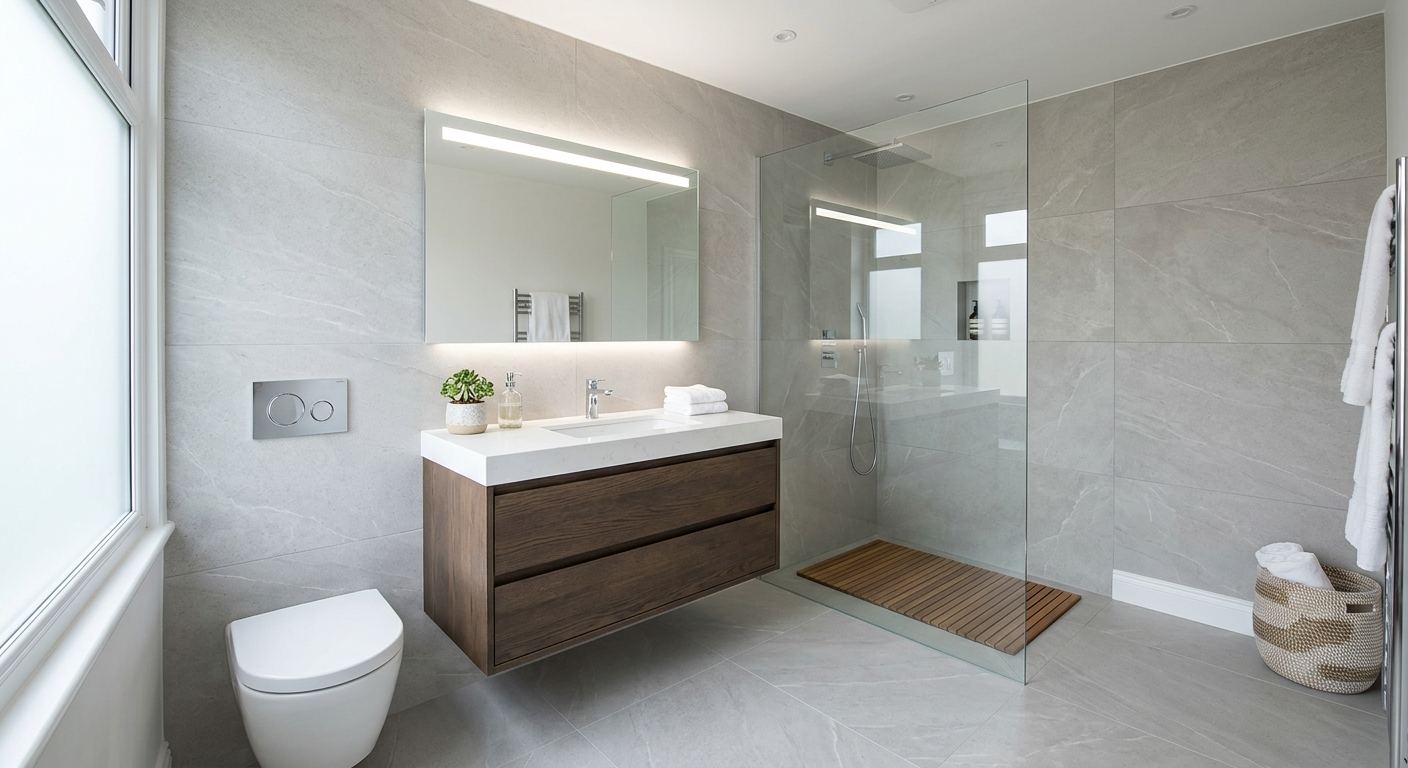
Bathroom renovation options and costs in Williams Lake
Bathroom renovations in Williams Lake usually start with a simple question: how much change do you want—fixtures only, a full rebuild, or something in between. With 62.8% of homes built before 1981, many local bathrooms sit in older layouts where drain routes, venting, and water supply piping were never designed for today’s code standards. That’s why two “same-size” jobs can end up far apart once walls open, and why we also plan for the possibility of dated floor tile texture or drywall compounds that may require careful handling. (Statistics Canada, 2021 Census.)
In the Cariboo region, pricing is shaped less by climate extremes and more by local labour availability and the age of the housing stock. British Columbia humidity makes ventilation and moisture management non-negotiable, but it’s typically the workmanship details (waterproofing continuity, exhaust fan sizing, and air sealing) that matter more than weather itself. Still, the demand is very real: trades often get booked faster around high-traffic renovation pockets such as the South Lakeside area of Williams Lake, where older single-detached homes are concentrated and homeowners tend to renovate in stages.
Below are realistic project bands homeowners in Williams Lake commonly see, so you can compare renovation “levels” before getting itemised quotes.
| Renovation Scope |
What's Included |
Typical Duration |
Price Range |
| Cosmetic refresh (paint, fixtures, accessories only) |
New vanity or countertop (keep plumbing where possible), swap toilet or sink fixtures, paint, re-caulk, replace towel bars/mirrors, patch minor drywall, basic trim touch-ups |
3–7 days |
$9,000–$14,000 |
| Mid-range full renovation (new tile, vanity, tub/shower, electrical) |
Demo and rebuild, new vanity, new tub/shower valve and surround, new tile floor and walls (typical sizes), exhaust fan with proper wiring, updated lighting/GFCI as needed, waterproofing and grout sealing |
2–4 weeks |
$14,000–$22,000 |
| High-end full renovation (custom tile, steam shower, heated floors) |
Custom layout, premium tile or large-format porcelain, steam unit/thermostatic controls, heated floors, upgraded electrical, premium hardware, higher-end waterproofing system, finishing details (niches, benches) |
4–6 weeks |
$22,000–$32,000 |
| Shower-only installation (convert tub to walk-in shower) |
Remove tub, build shower curb/recessed pan, new waterproofed walls and floor tile, new valve and trim, glass enclosure (or equivalent closure), exhaust fan check/update |
2–3 weeks |
$5,000–$15,000 |
| Bathtub replacement or tub-liner install |
Replace existing tub with new unit and matching surround, or install tub-liner where structure allows; re-caulk/finish; plumbing tie-ins and leak testing |
4–10 days |
$1,500–$8,000 |
| Tile-only installation (floor + surround, existing layout kept) |
Tile removal and replacement for floor and shower/tub surround, prep for flatness, waterproofing system for tiled areas, regrout/reseal, new edging and transitions |
1–2 weeks |
$2,000–$9,000 |
Prices are estimates only and vary by project scope, site access and material selection.
What affects the price of bathroom renovation in Williams Lake
In Williams Lake and across the Cariboo, it’s common to see bathroom quotes for the “same” renovation land 30–50% apart. The main reasons aren’t cosmetics—they’re regional labour rates, how many licensed trades must touch the job (plumbing, electrical, tile, drywall/paint), and the age of local housing stock. With many homes dating back decades, we frequently open walls and discover undersized drain venting, older shutoffs, supply piping that needs rework, or subfloor conditions that can’t hold modern tile assemblies. That’s when a “mid-range” plan can drift toward the full renovation bands of roughly $14,000–$22,000 or even higher if upgrades are required.
It’s also where discovery costs show up. In older homes (especially pre-1985), hidden materials can include asbestos-containing flooring texture or drywall compound. When that happens, safe abatement and clearance add budget—often $1,500–$5,000+ depending on how extensive it is. Climate plays a smaller role in cost than most homeowners expect, but moisture control is still critical in British Columbia: ventilation capacity, airtightness details, and water management around the wet area help prevent mould and callbacks.
Concrete examples from Williams Lake: (1) A shower valve replacement that requires moving the rough-in can add days because it means opening additional wall space and reworking framing; (2) switching from standard ceramic to larger-format porcelain can reduce tile count but increases labour for layout and flattening; (3) adding a heated floor circuit may mean panel changes and updated GFCI placement, pushing electrical scope into the higher band.
| Price Factor |
Why It Matters |
Cost Impact |
| Layout change — moving drain or supply lines requires rough-in work |
Moving plumbing adds demo, framing, rough-in plumbing labour, and often drywall patching and inspection requirements |
Often +$3,000–$8,000 within a full reno scope |
| Tile selection — large-format porcelain vs. mosaic vs. ceramic |
Different tiles require different cutting, setting techniques, and more time for preparation to keep floors/walls flat and consistent |
Typically +$1,000–$5,000 depending on tile and installation complexity |
| Fixture tier — builder-grade vs. mid-range vs. designer brands |
High-tier valves, vanities, and hardware cost more and sometimes require matching trim/components |
Often +$800–$4,500 |
| Subfloor condition — rot or unlevel concrete adds scope |
Repairs, new underlayment, and leveling affect waterproofing integrity and tile durability |
Commonly +$1,000–$6,000+ |
| Electrical — adding GFCI outlets, exhaust fan, heated floor circuit |
More circuits, correct ventilation wiring, and safe protected connections require licensed work |
Often +$1,200–$5,500 |
| Waterproofing method — membrane type and extent |
Premium membranes and full-coverage details reduce failure risk but increase material and labour |
Typically +$600–$3,000 |
| Older-home surprises — asbestos tile, cast-iron drains, galvanized pipes |
Abatement protocols, drain replacements, and supply line upgrades expand the job from cosmetic to systems work |
Often +$1,500–$10,000+ |
| Bathroom size — sq ft drives tile and labour time directly |
More floor/wall area means more tile, more waterproofing, more thinset/grout, and longer build times |
Small baths: leaner budgets; large baths can add +$2,000–$8,000 |
Permits & regulations in British Columbia
In British Columbia, cosmetic updates usually don’t require a permit. That includes swapping a vanity top, replacing fixtures in the same locations (like a sink faucet or toilet), painting, and retiling using the existing plumbing location—assuming you’re not altering plumbing rough-ins or structural walls. A homeowner can often proceed with straightforward “like-for-like” changes without pulling permits, but the moment you start moving water supply or drain lines, the project becomes more regulated.
In BC, work that typically DOES require a permit includes: relocating plumbing (moving a drain or supply), adding new plumbing fixtures or changing rough-in locations, and making structural wall changes (opening walls beyond simple repairs). Electrical work that adds circuits, alters the panel, or requires new wiring for an exhaust fan, lighting, or heated floors must be performed by a licensed electrician and meet the provincial electrical requirements. Work that typically does NOT require a permit includes swapping fixtures where the old connections remain in place, minor drywall patching, and installation of trim/finishes.
For a Williams Lake homeowner, verify in this order: (1) ask for the contractor’s BC trade licence details (and confirm it’s current via the relevant BC registry/search link); (2) request a certificate of liability insurance showing coverage for the work; (3) confirm WCB coverage (in BC this is managed under WorkSafeBC) so you’re not exposed if a worker is injured; and (4) request written proof (policy documents or letters) before scheduling. A reputable contractor should provide this quickly—no chasing.
Choosing tile, waterproofing and fixtures for your Williams Lake bathroom
In Williams Lake, your bathroom renovation budget is shaped most by three decisions: tile choice, waterproofing, and fixture tier. Start with tile. Ceramic tile is usually the entry-level option—great where you want predictable performance, straightforward installation, and less intensive subfloor tolerance. Porcelain is typically the mid-range sweet spot: denser, lower porosity, and better for wet-area durability, but it demands accurate layout and flat surfaces to prevent lippage. Natural stone (marble, travertine, slate) looks upscale but can be higher maintenance and more complex to install straight and consistent, especially over older floors that may need leveling.
Second is waterproofing—this is where British Columbia bathrooms win or lose. For moisture-prone conditions, paint-on membranes can work when the surface prep is excellent and the system is installed exactly as specified, but bonded sheet membranes or systems that include engineered components (often paired with a proper corner/junction strategy) are frequently chosen for better performance in tiled assemblies. The right approach helps prevent trapped moisture behind tile, mould growth, and grout staining—issues homeowners notice quickly in our humid, shoulder-season air.
Third is fixtures. Builder-grade valves and trim can keep costs down, but mid-range or designer brands often provide smoother cartridges, better finishes, and more stable performance over time—useful for resale in Cariboo where bathrooms are a “quality signal.” For example, moving from a basic tile plan at the lower end of the full-renovation range (closer to $14,000–$22,000) to premium tile plus improved waterproofing can be justified if you’re also improving ventilation and layout. But upgrading fixtures alone without addressing ventilation or waterproofing rarely delivers long-term value.
| Material / Option |
Pros |
Cons |
Price Range |
| Ceramic tile (floor + walls) |
Lower material cost, familiar installation methods, wide style selection |
Usually less water-resilient than porcelain; more sensitive to movement/flatness |
$2,500–$6,500 |
| Porcelain tile (floor + walls) |
High durability for wet areas, better long-term stain resistance, works well with modern large formats |
Requires careful prep and layout; larger tiles increase labour for precision |
$4,000–$9,000 |
| Natural stone (marble, travertine, slate) |
Premium look and depth, unique colour variation, strong curb appeal |
Higher material cost, more maintenance/sealing considerations, more complex detailing |
$7,000–$16,000 |
| Frameless glass shower enclosure |
Modern appearance, easier visual cleaning, good for smaller bathrooms |
Costly hardware, needs accurate framing/levelness, can add lead time |
$2,000–$7,000 |
| Prefab tub surround (acrylic) |
Faster install, consistent fit, often lower labour than full tile builds |
Fewer design options; edges/seams still require careful caulking |
$1,500–$5,000 |
| Custom shower pan (tile or linear drain) |
Best control of slope and drainage, elegant linear-drain look, can improve accessibility |
More skilled waterproofing and drain detailing; higher labour than simple prefab pans |
$3,500–$12,000 |
How to choose a bathroom renovation contractor in Williams Lake
Choosing the right contractor matters as much as the tile you pick. Start with credentials: in British Columbia, ask for their trade licence (as applicable to plumbing/electrical/general contracting), a current certificate of liability insurance, and proof of WorkSafeBC coverage. How to check: (1) confirm the licence details you’re given match the contractor name; (2) read the insurance certificate for the coverage dates and project/work description; and (3) ensure their WorkSafeBC account coverage is active—your contractor should provide documentation or letters, not excuses.
Next, get 2–3 itemised written quotes rather than a single lump sum. Itemisation should show labour categories (demo, rough-in coordination, tile setting, drywall/paint), materials (tile, membranes, setting materials, fixtures), and line items for waterproofing and caulking. Read the exclusions carefully: is permit pulling included (if required), is disposal/hauling included, and what happens with unexpected subfloor repairs? Make sure the quote specifies assumptions, like keeping the existing layout versus moving plumbing. That’s where many “budget” quotes understate scope.
For warranty, request: (1) workmanship warranty length (and what it covers), (2) manufacturer warranties on fixtures and shower components, and (3) whether those warranties transfer if you sell the home. On payments, never pay more than 10–15% upfront; use a holdback until the job is complete and inspected. Finally, demand a start date and completion estimate in writing, especially if you’re replacing tile that requires curing and careful sequencing.
- Licensed scope: confirm who is responsible for plumbing/electrical/tile and that each trade is appropriately qualified in BC.
- Certificate of liability insurance: coverage limits and dates.
- WorkSafeBC proof: request documentation before work starts.
- Two or three itemised quotes with labour + materials breakdown (not just “kitchen/bath style” estimates).
- Written waterproofing specification: membrane type, coverage area, and how corners/penetrations are treated.
- Clarify permit responsibility: is it pulled by the contractor where required?
- Disposal included: confirm demolition haul-away and waste management fees.
- Measurement and layout: confirm tile count/coverage and how niches/changes are costed.
- Subfloor strategy: how they handle unlevel surfaces, rot, or concrete issues.
- Plumbing details: confirm valve type, rough-in plan, and leak testing included.
- Warranty terms in writing: workmanship timeline and any exclusions.
- Payment schedule: keep to 10–15% upfront and hold a portion until completion.
Local red flags in Williams Lake include: contractors who won’t show insurance or WorkSafeBC proof, quotes that treat waterproofing as “optional,” vague scopes that don’t list disposal/permit responsibilities, pressure to pay the majority upfront, and timelines that ignore cure/inspection steps—especially when moving plumbing or adding an exhaust fan.
Frequently asked questions — bathroom renovation in Williams Lake
Can I live at home during a bathroom renovation in Williams Lake?
Often yes, but it depends on the sequence and how disruptive your scope is. In Williams Lake, if you’re doing a cosmetic refresh or a tile-only project that keeps existing plumbing in place, you can usually stay home with minimal interruptions. For a full renovation—especially where we’re replacing the tub/shower valve, retiling, and updating electrical—living arrangements can be more challenging because the shower/bath area is out of service for days to weeks. In many Cariboo homes built before 1981, we also sometimes uncover drain or supply issues once walls open, which can extend timelines and increase downtime. A practical approach is to plan a temporary bathroom setup (a family-use plan, temporary commode, or alternate shower access) and confirm your contractor’s phase plan in writing.
What's the best bathtub material for a Williams Lake home?
The “best” choice usually comes down to comfort, durability, and how much of your renovation scope you’re willing to open. If you’re replacing a tub in an older home in British Columbia, acrylic tubs are common because they’re lighter, install cleanly, and can be less labour-intensive than some heavier options. Fibreglass/acrylic units also pair well with a timed surround plan (including waterproofing at the right junctions). Cast-iron options are extremely durable but typically cost more and add weight considerations. If you’re keeping your existing footprint and want a faster, lower-impact approach, a tub-liner system may reduce demo—but it has limitations when the underlying surface is not solid. For many homeowners, bathtub replacement falls in the band of $1,500–$8,000, with the higher end when waterproofing work or trim changes require extra scope.
Is it worth renovating a bathroom before selling in Williams Lake?
Usually, yes—provided the renovation is functional and moisture-safe, not just “pretty.” Buyers in Williams Lake tend to notice the condition of the shower area, ventilation, and whether tile work is properly waterproofed. A bathroom refresh can improve perceived quality, but a weak point is when owners upgrade finishes while ignoring ventilation sizing or waterproofing continuity; those issues can show up as odours or staining later. For resale, a mid-range full renovation is often the strongest balance, commonly landing in the $14,000–$22,000 band. If you’re tempted to go very high-end, consider whether the rest of the home supports that level—an expensive steam shower won’t return value if the plumbing layout or electrical capacity is outdated. In older Cariboo housing stock, the biggest value comes from safe upgrades: updated fixtures, correct venting, and properly executed waterproofing.
How do I plan a bathroom renovation on a tight budget in Williams Lake?
Start by protecting the budget where it matters most: waterproofing, ventilation, and the “systems” pieces that prevent costly callbacks. If funds are limited, avoid moving plumbing unless you must—layout changes often increase rough-in labour and can push a project toward the upper end of the full renovation range. Focus on a targeted scope: a tile-only install (keeping layout) or a cosmetic refresh can be staged, while still ensuring the wet-area protection is correct. A shower-only conversion is another common budget path, often priced in the $5,000–$15,000 band depending on glass enclosure and tile extent. Also, request itemised quotes so you can see where money goes—tile selection, heated floors, and electrical additions quickly expand scope. Finally, confirm older-home risk points early: if your home is pre-1981, plan for possible subfloor repairs and allow contingencies for hidden surprises.
What's the difference between a cosmetic and a full bathroom renovation?
A cosmetic renovation typically keeps the plumbing and layout the same. It usually includes painting, swapping accessories, updating the vanity or fixtures, and sometimes re-caulking and regrouting. A full renovation goes beyond finishes: it usually includes demo down to new assemblies, new waterproofing, new tile floor/walls and fixtures, and often electrical updates such as a properly wired exhaust fan and GFCI protections. In Williams Lake, that distinction matters because many homes are older—when you open walls, dated venting, older supply lines, or drain issues may require upgrades to meet current standards. That’s why a full bathroom renovation band is commonly higher (for example, around $14,000–$32,000 depending on scope), while cosmetics and limited work are far more controlled. The best way to tell is to compare quotes line-by-line for demo extent, waterproofing scope, and whether rough-in plumbing/electrical is included.
How do I choose the right contractor for my bathroom in Williams Lake?
Choose a contractor who can prove qualifications and clearly itemise the work. In British Columbia, ask for their applicable trade licence details, current liability insurance, and WorkSafeBC proof (so you’re protected if a worker is injured). Then get 2–3 written quotes that break down labour and materials—tile setting, waterproofing method, electrical line items, and demolition/disposal. Read the scope carefully: is permit pulling included where required, and what’s excluded (for example, subfloor repairs or hidden plumbing upgrades)? Confirm warranty terms: workmanship coverage length, product/manufacturer warranty details, and whether warranties transfer if you sell. Payment should be staged; avoid paying most of the cost upfront. A reputable contractor will also schedule timeline milestones (demo, rough-in, waterproofing cure, tiling, finishing) rather than promising unrealistic completion speeds.