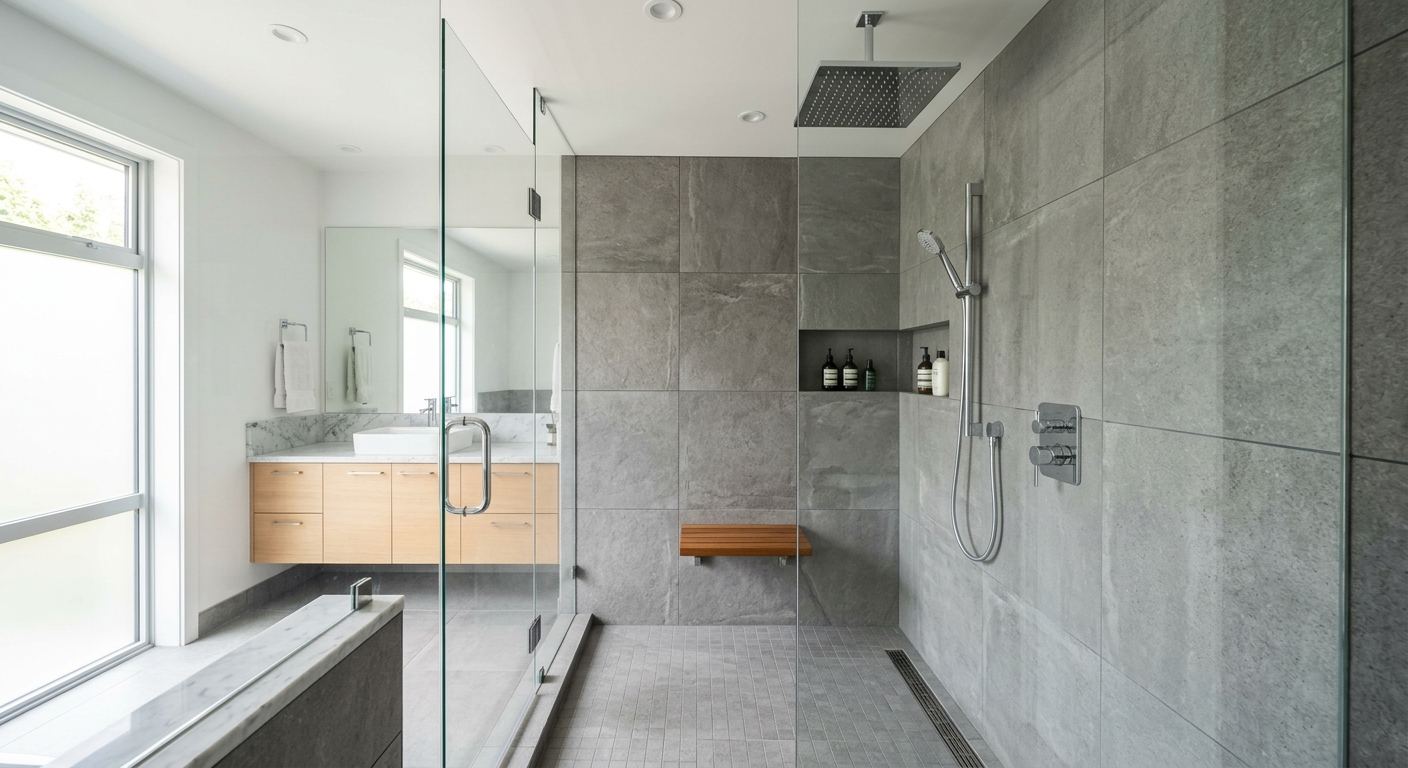
Bathroom renovation options and costs in Maple Bay
Bathroom renovations in Maple Bay are where design meets logistics: you’re updating a compact, high-moisture room in a community where housing demand is steady and labour capacity can tighten quickly. With Maple Bay’s population at 2,640 (Statistics Canada, 2021 Census), projects typically move at a local pace—but the Lower Mainland–Southwest market still drives prices up because skilled plumbers, tilers and electricians are in high demand across the region. Maple Bay’s housing mix also includes older stock, and pre-mid-century layouts often mean dated drain and supply runs that don’t line up neatly with modern fixtures. In many homes built before 1980, it’s not unusual to find things like galvanized supply lines, aging cast-iron drains, and hidden materials that may require careful handling during demolition.
In the Lower Mainland–Southwest region, the biggest cost drivers are labour rates and the age of the housing stock—not the temperature itself. That matters because once walls and floors are opened, bathroom renovations often expand into plumbing and venting upgrades to bring systems up to current British Columbia code. On top of that, wet-area detailing and waterproofing requirements are where “small changes” add real time.
Contractors are especially busy in well-established residential areas and older neighbourhood pockets, where demand clusters around mid-century homes and typical suite-style layouts. If you’re trying to compare options side-by-side, the table below shows common scopes, typical schedules, and the usual price bands for Maple Bay.
| Renovation Scope |
What's Included |
Typical Duration |
Price Range |
| Cosmetic refresh (paint, fixtures, accessories only) |
New vanity or faucet, toilet replacement (if no plumbing relocation), re-painted surfaces, swap lighting trims, toilet paper/rail accessories; no tile removal beyond spot repairs |
3–7 days |
$3,000–$8,000 |
| Mid-range full renovation (new tile, vanity, tub/shower, electrical) |
Demolition, plumbing fixture swaps, new tub or shower trim, wall and floor tile, vanity install, new exhaust fan, GFCI where needed, basic lighting updates, waterproofing |
2–3 weeks |
$18,000–$32,000 |
| High-end full renovation (custom tile, steam shower, heated floors) |
Custom shower system, premium tile layout, steam/advanced controls, heated floors, upgraded waterproofing system, electrical upgrades, higher-end lighting and finishes |
3–5 weeks |
$32,000–$45,000 |
| Shower-only installation (convert tub to walk-in shower) |
Remove tub, prep subfloor, new shower pan and waterproofing, install glass enclosure or curtain set, new drain connection, tile floor and surround |
1.5–3 weeks |
$12,000–$25,000 |
| Bathtub replacement or tub-liner install |
Replace tub with new unit and trim, reglaze/liner prep (if liner option), minor plumbing hookups, recaulk and finish trim; tile touch-ups as needed |
5–10 days |
$1,500–$6,000 |
| Tile-only installation (floor + surround, existing layout kept) |
Remove existing tile (where required), install new tile floor and wall surround, waterproofing, grout/seal, transitions and caulking; fixtures typically remain unless flagged |
7–14 days |
$2,000–$8,000 |
Prices are estimates only and vary by project scope, site access and material selection.
What affects the price of bathroom renovation in Maple Bay
In Maple Bay and across British Columbia, you can see the same “basic” bathroom job quoted 30–50% apart, especially when you compare Lower Mainland–Southwest bids to other regions. The reason is simple: labour rates are higher here, and the region’s older housing stock frequently exposes issues once demolition starts. Climate plays a role in day-to-day living, but in practice the construction budget is driven more by how bathrooms are built to prevent moisture problems—plus the cost of getting multiple trades to line up on a tight schedule.
Older homes in this region often hide cast-iron or galvanized drainage, outdated copper supply lines, and ventilation that doesn’t meet modern bathroom fan performance needs. When we open the walls, we regularly need extra rough-in work, new venting or drain adjustments, and electrical upgrades like proper GFCI protection for outlets and dedicated fan wiring. If asbestos-containing material is discovered (for example in some older floor tile, drywall compound or insulation materials from pre-1985 eras), remediation becomes a separate process with containment and disposal, which can add roughly $1,500–$5,000+ depending on extent and access.
Two local examples that move the budget in Maple Bay: (1) a tile-and-shower surround demo that reveals an out-of-level subfloor—often pushing costs toward the higher end of the $18,000–$32,000 full-reno band; and (2) a “simple” tub-to-shower conversion where the existing drain connection doesn’t align, which is when many projects drift from entry-level to the $12,000–$25,000 shower conversion range. In a market where trades are booked, quicker changeovers and tight scopes usually price better than open-ended “while we’re in there” surprises.
| Price Factor |
Why It Matters |
Cost Impact |
| Layout change — moving drain or supply lines requires rough-in work |
Relocation means opening walls/ceilings, re-plumbing, patching and inspection-ready workmanship |
Often +10–30% on labour and trades |
| Tile selection — large-format porcelain vs. mosaic vs. ceramic |
Higher-end materials can require more cutting time, better planning, and extra substrate prep |
Commonly +$1,000–$6,000 depending on area and waste |
| Fixture tier — builder-grade vs. mid-range vs. designer brands |
Better valves, finishes and trim increase material costs and sometimes require special trim/rough-in |
Often +$500–$5,000 |
| Subfloor condition — rot or unlevel concrete adds scope |
Needs replacement/levelling, additional waterproofing protection and longer cure times |
Can add +$1,000–$4,000+ |
| Electrical — adding GFCI outlets, exhaust fan, heated floor circuit |
Bathrooms usually need dedicated exhaust and correct protection; heated floors add circuit and controls |
Typically +$500–$3,500 |
| Waterproofing method — membrane type and extent |
More robust systems protect against mould and call-backs; labour increases with coverage and detail |
Usually +$400–$2,500 |
| Older-home surprises — asbestos tile, cast-iron drains, galvanized pipes |
Remediation, disposal, repairs and extra inspection time expand the scope |
Can add +$1,500–$10,000+ |
| Bathroom size — sq ft drives tile and labour time directly |
Tile surface area, setting time, thinset waste, and waterproofing labour scale with size |
Roughly +$1,000–$5,000 across typical sizes |
Permits & regulations in British Columbia
In British Columbia, cosmetic updates in a bathroom usually don’t trigger permits: swapping a vanity, replacing fixtures like taps or a toilet (without moving plumbing), repainting, and retiling using the existing plumbing layout are commonly treated as non-structural cosmetic work. However, permits typically become necessary when you relocate plumbing—such as moving a drain location, changing the supply line route, or reworking tub/shower rough-ins. Adding or upgrading mechanical ventilation (for example, installing a new exhaust fan duct or changing fan placement) often also involves permitable work, particularly when it requires new electrical circuits or structural changes. If you’re changing framing, removing load-bearing wall portions, or making structural modifications, you should expect the scope to require approvals.
Electrical work must meet provincial code and be completed or signed off by a licensed electrician, especially for GFCI protection and any heated floor circuit. Plumbing rough-in changes typically require a permit and inspection before walls are closed.
For Maple Bay homeowners, verifying a contractor is a step-by-step process:
- Ask for their British Columbia trade licence number and confirm it online through the provincial registry for their trade category.
- Request a Certificate of Insurance (liability) showing coverage limits and effective dates.
- Confirm workers’ compensation coverage (WCB/WSIB equivalent as applicable in BC) and ask for proof for the project.
- Have them list which tasks require permits and whether permit fees are included in the quote.
- Verify who pulls the permit (contractor vs. homeowner) and when inspections are expected.
Choosing tile, waterproofing and fixtures for your Maple Bay bathroom
For most Maple Bay bathroom renos, the biggest “budget levers” are tile choice, waterproofing approach, and fixture tier. In the Lower Mainland–Southwest, where humidity and daily moisture exposure are persistent, the goal is fewer call-backs later—so spending smartly on waterproofing often protects you more than upgrading every surface.
(1) Tile choice: ceramic is a solid entry option and works well when your design is straightforward. Porcelain generally offers better durability and lower water absorption, but it’s heavier and can require more careful substrate prep for large-format tiles. Natural stone (marble, travertine, slate) can look premium, but it tends to cost more and may require sealing routines and careful material matching.
(2) Waterproofing method: paint-on membrane can be fine for simpler assemblies, but for showers you’ll often see bonded sheet membranes or full systems (including compatible thinset and details) that handle transitions and curb/joint movement. Choosing the right system helps prevent mould and grout deterioration—key in British Columbia’s wet periods and temperature swings.
(3) Fixture tier: builder-grade valves and trims are typically reliable, while mid-range and designer options improve ergonomics, finish longevity, and sometimes flow performance. One practical dollar example: moving from basic wall tile to premium porcelain often costs a few thousand dollars more, but that spend is usually justified when you’re also upgrading waterproofing and detailing. If you’re keeping the same small shower footprint, the cost can be better spent on the shower system rather than chasing the most expensive tile.
To match your budget: pick the waterproofing you need first, then choose tile based on where water and cleaning pressure are highest (shower walls and floors), and finally align fixtures with your long-term maintenance comfort and resale expectations.
| Material / Option |
Pros |
Cons |
Price Range |
| Ceramic tile (floor + walls) |
Cost-effective, wide style selection, easier to match patterns; good for walls and many floors |
Generally higher water absorption than porcelain; may require more careful grout/seal maintenance |
$2,000–$5,500 |
| Porcelain tile (floor + walls) |
More durable and lower water absorption; ideal for shower floors and wet zones; handles heavy cleaning |
Harder to cut and set; larger formats increase layout planning and waste control needs |
$4,000–$8,000 |
| Natural stone (marble, travertine, slate) |
Premium look and depth; unique veining; excellent for feature walls and upscale styling |
Can be more expensive; may require sealing and extra labour for premium installs and consistent finishes |
$6,000–$14,000 |
| Frameless glass shower enclosure |
Brightens the bathroom, easy to clean, modern aesthetic; can increase perceived value |
More expensive hardware; installation must be precise on level and plumb walls |
$2,000–$6,500 |
| Prefab tub surround (acrylic) |
Quicker install, less labour for tiling, smooth surface that’s straightforward to maintain |
Design options can be more limited; not as “custom” as fully tiled walls |
$1,500–$4,000 |
| Custom shower pan (tile or linear drain) |
Superior water management, cleaner lines, tailored slopes; linear drains look modern |
More labour and detailing; requires correct waterproofing system and curing time |
$3,500–$12,000 |
How to choose a bathroom renovation contractor in Maple Bay
Choosing a contractor in Maple Bay is less about flashy photos and more about verification, communication and detailed pricing. Start by confirming British Columbia licensing for the specific trades involved and asking for proof of liability insurance—so you’re covered if there’s damage to your home or materials. Next, verify workers’ compensation coverage (WCB/WSIB equivalent as applicable in BC) so you aren’t taking on risk if a worker is injured on site.
Then, get 2–3 itemised written quotes that break out labour and materials instead of one lump sum. A proper bathroom quote should state what’s included in demolition, disposal, waterproofing, tile setting, subfloor prep, electrical scope, and any permit pull and inspection allowance. Read the scope carefully: confirm what’s excluded (for example, drywall replacement beyond a set area, subfloor replacement, or bringing old wiring up to current requirements). Ask whether asbestos or concealed plumbing issues are handled under change orders with a clear process.
Warranty matters in bathrooms. Look for a workmanship warranty length (often reflected in months/years), understand manufacturer warranties for products, and ask whether warranties are transferable if you sell your home. For payment, never agree to more than 10–15% upfront; hold back a portion until completion and final walkthrough are done. Finally, insist on a written start date and a completion estimate, not just a target week.
- Confirm trade licence and ask which components they self-perform vs. subcontract.
- Request Certificate of Insurance and confirm it covers renovation work at your address.
- Verify workers’ compensation coverage for site workers.
- Insist on permit responsibility in writing (who pulls it and when inspections occur).
- Ask for a moisture-test and waterproofing method plan before walls are closed.
- Get an itemised tile scope: area measurement, waste factor, grout/sealer included?
- Confirm disposal: is hauling included or charged separately?
- Clarify exclusions: subfloor rot, hidden leaks, asbestos testing/abatement.
- Ensure electrical and ventilation scope is clearly listed (GFCI, exhaust fan, switching).
- Ask who handles any required rough-in inspections and scheduling.
- Review warranty terms in writing, including transferability to future homeowners.
- Use a payment schedule tied to milestones—not just progress days.
Red flags I see in Maple Bay include: quotes that don’t detail waterproofing and waterproofing transitions, “we’ll figure out permits later” language, missing insurance/licence documentation, payment requests exceeding 20% upfront, and no written warranty terms for labour. If the scope is vague, the change orders usually aren’t.
Frequently asked questions — bathroom renovation in Maple Bay
How long does tile installation take in a Maple Bay bathroom?
In Maple Bay (and the broader Lower Mainland–Southwest), tile time depends on the room size, tile type, and how much prep is needed. For a typical floor + tub/shower surround, many crews can set tile in about 5–9 working days, assuming the subfloor is solid and level. If you’re doing porcelain or large-format tile, add planning and additional cutting time. Drying and cure times matter: thinset/waterproofing need proper curing before grout and final sealing. If your renovation budget is in the mid-range full renovation band (often $18,000–$32,000), tile is usually only one part of the schedule—plumbing rough-in, waterproofing, and electrical must align before walls get closed.
How much does a bathroom renovation cost in Maple Bay?
For Maple Bay homeowners, realistic full bathroom budgets typically fall into the regional bands driven by labour and older-home discovery. A cosmetic refresh can be around $3,000–$8,000, while a mid-range full renovation commonly lands around $18,000–$32,000. If you’re going high-end with custom detailing like heated floors and premium finishes, you may see projects approach $32,000–$45,000. Shower-only conversions are often priced in the higher shower band of about $12,000–$25,000 when the drain tie-in and waterproofing are fully rebuilt. Quotes vary because older homes may require plumbing/venting upgrades or asbestos-aware demolition protocols—especially when floors or drywall are opened.
How long does a bathroom renovation take in Maple Bay?
Most Maple Bay bathroom renovations take about 2–3 weeks for a mid-range full reno, while higher-end projects with custom glass, steam features or heated floors often run 3–5 weeks. The schedule is tied more to trade availability and inspection/cure times than to weather. In the Lower Mainland–Southwest, labour demand is high, so getting plumbers, electricians, and tilers on the same timeline can impact start and finish dates. If hidden issues show up—like cast-iron drain problems, inadequate ventilation, or subfloor repairs—your total duration can extend. A shower-only conversion is commonly 1.5–3 weeks when the existing drain and framing are workable; it stretches when rough-in alignment requires extra demolition and rework.
Do I need a permit for a bathroom renovation in British Columbia?
In British Columbia, many cosmetic updates don’t require a permit—like swapping fixtures, replacing a vanity, repainting, or retiling without moving plumbing. Permits are typically required when you relocate plumbing (moving drains/supplies), change venting/duct routing for exhaust, or do electrical work that adds new circuits or changes wiring. Electrical must meet code and be handled or signed off by a licensed electrician. Plumbing rough-in changes typically require a permit and inspection before walls are closed. For Maple Bay, confirm with your contractor who pulls the permit and whether permit fees are included. A good quote will clearly state the permit scope, inspection checkpoints, and what happens if additional work is discovered during demolition.
What's the best tile for a bathroom in Maple Bay?
The “best” tile is the one that matches your wet-zone needs and maintenance comfort. In Maple Bay’s Lower Mainland–Southwest environment, porcelain is often the best balance for shower floors and high-use areas because it’s durable and less absorbent than many ceramics. Ceramic is fine for many wall applications and lower-stress zones, but you’ll want the right product rated for the installation area. Natural stone looks beautiful, but it requires extra care (sealing routines and careful installation) and costs more. If you’re comparing budgets, a tile-only plan might fit around $2,000–$8,000, while a more premium porcelain scope can push toward the higher end due to material and labour planning.
Should I do a tub-to-shower conversion?
A tub-to-shower conversion is often a smart choice if you want easier access, lower maintenance, and a more modern layout—especially in bathrooms where people use showers daily. From a cost perspective in Maple Bay, shower-only conversions commonly run about $12,000–$25,000 depending on glass/enclosure, tile coverage, and whether the existing drain/supply layout can be reused. Conversions can also uncover older plumbing issues (like drain alignment or supply line condition), which can increase scope because bathrooms in older homes frequently need venting or plumbing upgrades. If you’re concerned about accessibility, ask your contractor to design a proper slope, waterproofing details, and appropriate grab-bar blocking. If you’re planning resale, a clean, well-waterproofed walk-in shower is usually a strong value signal.