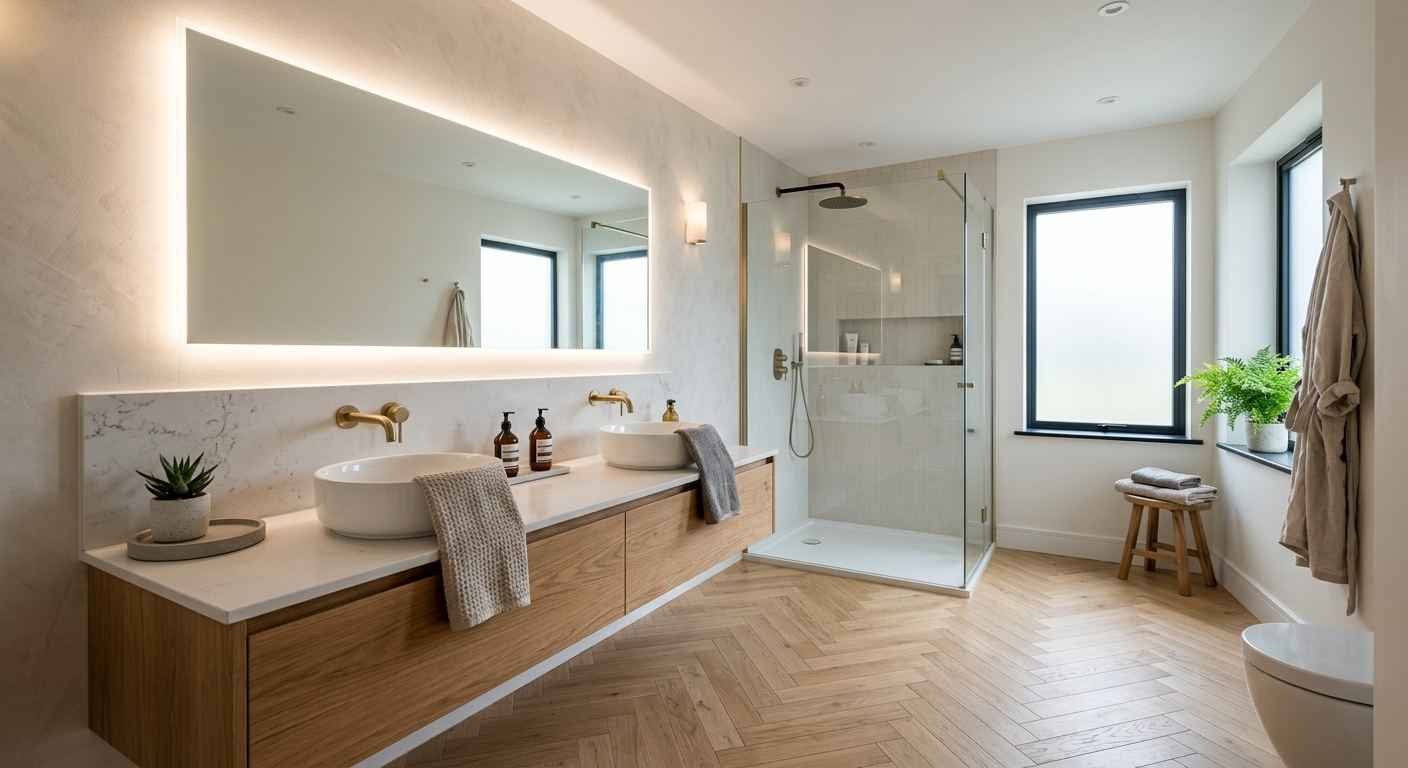
Bathroom renovation options and costs in Boundary
Bathroom renovation in Boundary, British Columbia typically starts with choosing the level of change you want, because even small rooms quickly become multi-trade projects. Boundary’s local population is small (1,585 people, Statistics Canada, 2021 Census), so workmanship availability can feel “spiky” when plumbers, tilers, and electricians are booked up for nearby Lower Mainland jobs. Just as important, many homes in the Lower Mainland–Southwest region are older—mid-century and pre‑1980 layouts are common—which means dated plumbing runs, potential cast-iron or galvanized components, and sometimes asbestos-containing materials in older floor or wall finishes. When walls open, those hidden conditions can expand scope beyond your initial plan.
In this region, labour rates and housing age drive costs more than climate itself. British Columbia bathrooms still face year-round humidity, but the real budget swing is that once contractors uncover venting gaps or drain-stack issues, they often need plumbing and electrical upgrades to meet current code. Even modest refreshes can also take longer because specialized trades in the Lower Mainland–Southwest have high demand and limited availability. In Boundary, you’ll feel that most in older home pockets and established streets where access is tight and trades must work around occupied spaces—especially near the core neighbourhoods where renovations are frequent.
To help you compare common project types, use the price bands below as a practical starting point.
| Renovation Scope |
What's Included |
Typical Duration |
Price Range |
| Cosmetic refresh (paint, fixtures, accessories only) |
Paint, vanity swap (no plumbing move), toilet replacement (no rough-in changes), lighting refresh, grab bars/accessories, caulking & minor trim |
3–6 days |
$8,000 – $16,000 |
| Mid-range full renovation (new tile, vanity, tub/shower, electrical) |
Demolition, waterproofing, floor + surround tile, new vanity & toilet, tub or tub/shower surround, exhaust fan upgrades (as needed), updated GFCI outlets, disposal & disposal site coordination |
2–4 weeks |
$22,000 – $35,000 |
| High-end full renovation (custom tile, steam shower, heated floors) |
Custom layout, premium tile/stone, heated floor system & proper circuit planning, steam shower (or high-spec shower), premium lighting, enhanced ventilation, higher-end waterproofing system |
4–6 weeks |
$35,000 – $55,000 |
| Shower-only installation (convert tub to walk-in shower) |
Remove tub, rough-in adjustments for drain/supply, waterproofing, new shower pan/liner, shower valve trim, glass/door allowance, tile walls & floor, exhaust verification |
2–3 weeks |
$16,000 – $28,000 |
| Bathtub replacement or tub-liner install |
Remove and reinstall tub (or install liner where appropriate), wall refinishing/caulking, trim replacement, plumbing tie-ins, test/inspection prep |
5–10 days |
$3,000 – $7,000 |
| Tile-only installation (floor + surround, existing layout kept) |
Surface prep, floor + wall tile installation, waterproofing improvements to match assembly, grout/caulk, reinstallation of existing fixtures where feasible |
7–14 days |
$6,000 – $14,000 |
Prices are estimates only and vary by project scope, site access and material selection.
What affects the price of bathroom renovation in Boundary
You can get the same-sounding bathroom renovation in British Columbia for noticeably different prices because Lower Mainland–Southwest quotes are driven by regional labour rates and the age of the housing stock more than by outdoor weather. In practice, homeowners often see 30–50% swings between bids even when the finish level looks similar, because one contractor allows for hidden plumbing, electrical, and waterproofing risks while another under-scopes them.
In the Lower Mainland–Southwest region, older homes commonly hide cast-iron or aging drain stacks that need replacement, outdated copper supply lines, insufficient venting, and inconsistent subfloor conditions. Those discoveries inflate scope and can change timelines—especially when plumbing and electrical rough-ins must be redone. For British Columbia’s bathroom assemblies, ventilation isn’t optional: if an exhaust fan route is blocked or wiring is unsafe, you can add electrical work and higher-end fans. In older homes, discovery of asbestos-containing materials in vinyl floor tile, drywall compound, or insulation (commonly pre‑1985) can trigger remediation protocols; that can add roughly $1,500 – $5,000+ to the budget depending on extent and access.
Here are a few examples I see in Boundary that move costs up or down: (1) keeping your vanity in place often keeps plumbing labour closer to the cosmetic bands (for instance, a refresh can land in the $8,000–$16,000 range), while moving the vanity typically forces drain/supply rough-in changes. (2) Switching from standard ceramic to porcelain may raise material and labour, but it’s usually justified when you want less staining and better wear. (3) Adding heated floor circuits can push you toward the upper full-reno band; a well-scoped mid-range renovation often lands around $22,000–$35,000, but custom work with heated floors commonly reaches the high-end band.
Even if climate feels “mild,” humidity and frequent temperature swings in bathrooms still test grout lines and waterproofing—so the right assembly and waterproofing method are where cost predictability starts.
| Price Factor |
Why It Matters |
Cost Impact |
| Layout change — moving drain or supply lines requires rough-in work |
New rough-in often means drywall removal, framing adjustments, and permit/inspection coordination |
$4,000 – $12,000 |
| Tile selection — large-format porcelain vs. mosaic vs. ceramic |
Material cost and labour time change with cuts, warpage tolerance, and difficulty of patterns |
$2,000 – $8,000 |
| Fixture tier — builder-grade vs. mid-range vs. designer brands |
Trim valves, shower sets, and vanities vary widely; premium parts can also require niche installs |
$1,500 – $7,000 |
| Subfloor condition — rot or unlevel concrete adds scope |
Repairs, underlayment changes, and more prep work are often needed for a flat tile surface |
$1,500 – $6,000 |
| Electrical — adding GFCI outlets, exhaust fan, heated floor circuit |
Electrical must meet code and be signed off; heated floors can require specific circuit planning |
$800 – $5,500 |
| Waterproofing method — membrane type and extent |
Proper coverage reduces failure risk; bathroom moisture control depends on assembly choices |
$1,000 – $4,000 |
| Older-home surprises — asbestos tile, cast-iron drains, galvanized pipes |
Remediation, pipe replacement, and additional trades/permits expand scope quickly |
$1,500 – $12,000+ |
| Bathroom size — sq ft drives tile and labour time directly |
More surface area means more tile, more thinset/grout, more waterproofing, more labour hours |
$3,000 – $15,000 |
Permits & regulations in British Columbia
In British Columbia, cosmetic updates—like swapping fixtures, repainting, replacing a vanity in the same location, or retiling without changing plumbing—typically do not require permits. The projects that usually do require permits are the ones that alter life-safety systems: moving plumbing, changing electrical circuits, or modifying structural components.
In Boundary, this commonly breaks down like this:
- Typically DOES require a permit: relocating or adding plumbing rough-ins (moving a toilet, changing drain locations, rerouting supply lines), adding or upgrading an exhaust fan where new wiring/circuits are required, installing a heated floor that needs an electrical circuit, and any electrical work beyond simple like-for-like fixture swaps.
- Typically DOES NOT require a permit: replacing a vanity top or cabinet in the same spot, swapping a toilet/vanity/sink with the same rough-in connections, painting, replacing accessories, and retiling where the plumbing and wiring are not being changed.
Step-by-step, verify your contractor before work starts:
- Trade licence: ask for the applicable BC trade number(s) and confirm it through the provincial online licence registry.
- Liability insurance: request a current certificate of insurance and ensure it shows bathroom renovation construction scope.
- Workers’ compensation: confirm WSIB/WCB coverage (ask for clearance letter/proof of coverage) so you’re not exposed if a worker is injured.
- Electrical and plumbing sign-off: ensure any permit-required rough-ins are completed by the appropriate licensed trades and that inspections are booked.
Getting these checks right early prevents delays later—especially in the Lower Mainland–Southwest where inspection scheduling can affect timelines.
Choosing tile, waterproofing and fixtures for your Boundary bathroom
In Boundary, your bathroom reno budget is usually decided by three material choices: tile type, waterproofing method, and fixture tier. If you pick the right combination up front, you avoid expensive rework later—something that’s especially important in British Columbia bathrooms where humidity is constant and grout lines are always under stress.
1) Tile choice: ceramic is a solid entry option for floors and walls, but it’s easier to chip and typically needs more careful handling during installation. Porcelain is denser, often more stain-resistant, and generally performs better in busy households; that usually nudges material cost and may slightly increase labour if you’re using larger-format pieces. Natural stone (marble, travertine, slate) looks premium and can dramatically lift resale appeal, but it requires more expertise and sealing/maintenance considerations, which increases installation complexity.
2) Waterproofing method: paint-on membranes can work for certain assemblies, but bonded sheet membranes or modern system approaches (including tile-ready systems) are often better aligned with long-term moisture control for shower areas. The key is that coverage, overlaps, and tie-ins at corners, niches, and valve penetrations are where failures are prevented.
3) Fixture tier: builder-grade valves and trims cost less but can feel dated faster. Mid-range often offers better adjustability and durability. Designer brands may be worth it when resale and daily feel matter to you, but they rarely justify a premium if the rest of the assembly is underbuilt.
A practical dollar example: if you’re choosing between porcelain and ceramic, spending more on porcelain can be justified when you’re also upgrading waterproofing and keeping the same layout; it improves wear without forcing additional plumbing. On the other hand, going high-end on stone while using a basic waterproofing approach often isn’t the best value in BC’s humid bathroom conditions.
| Material / Option |
Pros |
Cons |
Price Range |
| Ceramic tile (floor + walls) |
Good budget value, wide style selection, easier to install than harder tile varieties |
More prone to chipping; may stain more easily depending on grout and finish |
$2,500 – $6,000 |
| Porcelain tile (floor + walls) |
Denser and more durable, often better stain resistance, works well with larger formats |
Can be more expensive; larger formats require extra flatness and careful setting |
$4,000 – $8,000 |
| Natural stone (marble, travertine, slate) |
High-end look, unique veining, strong resale appeal when installed and finished properly |
Higher material and installation complexity; requires sealing/maintenance |
$7,000 – $14,000 |
| Frameless glass shower enclosure |
Modern appearance, easier visual cleaning, improves perceived space |
Premium hardware; accurate framing and waterproofing tie-ins are critical |
$2,500 – $6,500 |
| Prefab tub surround (acrylic) |
Faster install, fewer tile cuts, good water resistance when installed correctly |
Less custom look; limited design flexibility compared with tile |
$1,200 – $3,500 |
| Custom shower pan (tile or linear drain) |
Better long-term performance when built right; linear drains can modernize the look |
More labour and waterproofing detailing; requires tight slope and precision |
$3,000 – $8,000 |
How to choose a bathroom renovation contractor in Boundary
Start by confirming your contractor’s credentials for British Columbia work. Ask for their applicable BC trade licence number and verify it online. Request current liability insurance (certificate of insurance) and confirm their workers’ compensation coverage—WSIB/WCB—using a clearance letter or proof of coverage. Bathroom renovations involve multiple trades in a small, complex space, so you want to know who is responsible for what before demolition starts.
Next, get 2–3 itemised written quotes, not lump sums. The best quotes break out labour and materials by scope: demolition, plumbing rough-in, electrical, waterproofing, tile installation, and disposal. Make sure permits are clearly listed—if a permit is needed for plumbing/electrical changes, confirm who pulls it and whether inspection costs are included. Also verify what “disposal included” really means (dumpster/hauling, drywall and tile disposal, and whether hazardous materials are handled separately).
Warranty matters in bathrooms: request the workmanship warranty length (and what it covers) and get clarity on product/manufacturer warranties for valves, floors, and waterproofing systems. Ask if warranties are transferable if you sell the home. For payments, keep it controlled: never pay more than 10–15% upfront, and hold back a portion until punch-list items are completed. Finally, insist on a written timeline with a start date and an estimated completion date; schedule slips are common in the Lower Mainland–Southwest, but they should be managed transparently.
- Licence verified for the specific trades doing the work
- Liability insurance certificate requested and reviewed
- WSIB/WCB coverage proof provided
- Itemised quote with labour and material line items
- Clear scope: what’s included/excluded
- Permit pull responsibility stated in writing
- Disposal/hauling method and inclusions confirmed
- Waterproofing method and system brand specified
- Tile underlayment and subfloor prep described
- Warranty terms for workmanship and materials in the contract
- Payment schedule capped at 10–15% upfront and holdback on completion
- Start date and target completion date listed
Red flags I watch for in Boundary include: a quote that’s “too good to be true” for a full renovation without allowances for plumbing upgrades, vague waterproofing descriptions (“we’ll seal it”), asking for large upfront payments, no proof of insurance/licence, and a contract without warranty terms or a written start/completion timeline.
Frequently asked questions — bathroom renovation in Boundary
What's the best bathtub material for a Boundary home?
For most Boundary homeowners in British Columbia, the best-value tub replacement is usually either acrylic or a quality fiberglass/acrylic shell, because it’s lighter for installation, easier to level, and generally offers solid moisture performance when paired with a proper surround and caulking. Cast iron tubs are extremely durable but are heavy and often cost more once you factor in labour and plumbing adjustments. If you’re budgeting around a bathtub replacement band (for example, $1,500 – $6,000), acrylic is typically the most practical choice. If your home is pre‑1980 and you suspect older plumbing or venting issues, spend first on verifying the rough-in and drainage condition—material choice matters, but preventing leaks and ensuring proper ventilation matters more for long-term comfort in BC’s humid bathroom environment (Statistics Canada, 2021 Census).
Is it worth renovating a bathroom before selling in Boundary?
Often yes, but only when the renovation supports buyer expectations without overspending on finishes. In Boundary and the surrounding Lower Mainland–Southwest, bathrooms are a major decision point—clean tile, a modern vanity, and reliable ventilation tend to have the strongest “sellability” impact. A cosmetic refresh can be worth it if your plumbing is already sound and you can stay within the refresh pricing range (commonly $8,000 – $16,000) by updating paint, lighting, and fixtures. If your tub/shower is dated, a mid-range full renovation (roughly $22,000 – $35,000) can make a bigger impression, especially when you address ventilation and waterproofing properly. The biggest mistake is upgrading visible surfaces while ignoring hidden issues—older homes can hide cast-iron or galvanized drainage problems and those don’t disappear for showings.
How do I plan a bathroom renovation on a tight budget in Boundary?
Plan around what drives Lower Mainland–Southwest cost: labour and housing age-related surprises. Start with a scope that limits demolition and rough-in changes. For a tight budget in Boundary, consider a cosmetic refresh (paint, fixtures, vanity in the same location) and reserve expensive work for only the high-impact areas—like the shower waterproofing. If you need tile, focus on keeping the existing layout and choosing ceramic or mid-range porcelain rather than natural stone. Build a contingency into your budget for older-home conditions; asbestos discovery or drain stack upgrades can add meaningful cost. To stay predictable, request an itemised quote and ask the contractor what they already expect to find in older homes, then add a contingency line for discovery. Timing also matters: scheduling trades well can avoid costly rush labour.
What's the difference between a cosmetic and a full bathroom renovation?
A cosmetic renovation is mainly surface-level and like-for-like work: painting, swapping fixtures and accessories, replacing a vanity without moving plumbing, and sometimes re-caulking or updating lighting. In contrast, a full bathroom renovation typically involves demolition down to needed substrates, upgrading waterproofing, and replacing or relocating fixtures with plumbing and electrical changes. In Boundary (BC), the permit threshold usually tracks the difference: cosmetic updates generally avoid permits, while moving drain/supply lines or adding electrical circuits for exhaust fans or heated floors typically requires permits and inspections. Budget-wise, a cosmetic refresh may sit around $8,000 – $16,000, while a mid-range full renovation often lands around $22,000 – $35,000 once tile, ventilation, and reliable waterproofing are done properly.
How do I choose the right contractor for my bathroom in Boundary?
Choose a contractor who can prove British Columbia trade licensing for the trades involved, show current liability insurance, and confirm WSIB/WCB coverage with documentation (not just verbal reassurance). In Boundary, you should also expect older-home variability; ask how they handle discovery of issues like cast-iron drains, galvanized supply lines, or asbestos-containing materials if encountered. Get 2–3 itemised written quotes that break out labour and materials separately—especially for waterproofing, tile setting, plumbing rough-in, and electrical. Scope should specify what’s included (permit pull, disposal/hauling, fixture allowances) and what’s excluded. Confirm workmanship and product warranty terms, and ask if the warranty transfers if you sell. Finally, keep payments controlled: 10–15% upfront is typical, and hold back funds until the punch list is complete.
What's the most common mistake homeowners make in bathroom renovations?
The most common mistake I see in Boundary is under-scoping or assuming the bathroom is “simple” until the walls and subfloor are opened. Homeowners often choose finishes based on pictures, but they don’t plan for the real cost drivers in the Lower Mainland–Southwest: labour availability, older plumbing/venting, and waterproofing detailing. That’s how budgets get hit—someone discovers a drain stack condition, inadequate ventilation, or damaged subfloor and suddenly the project becomes a “full reno” instead of a refresh. Another frequent misstep is skipping waterproofing-spec clarity. In BC’s bathroom humidity, the right membrane system and proper tie-ins around niches and penetrations are what prevent mould and failed assemblies. If you want predictable costs, start with a contractor who’s explicit about waterproofing and permits, not just “we’ll make it work.”