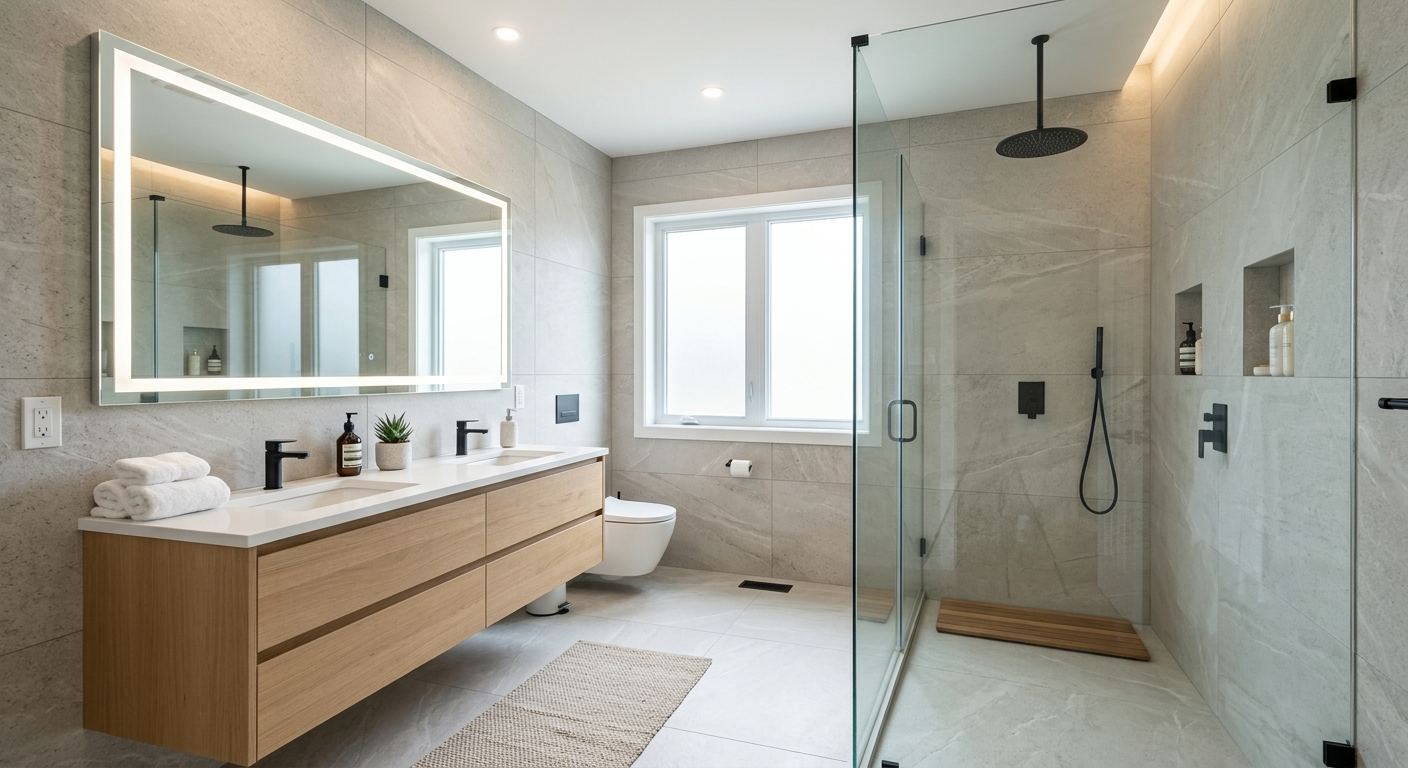
Bathroom renovation options and costs in Whonnock
If you’re planning a bathroom renovation in Whonnock, British Columbia, the first step is choosing the level of change you want—because in this part of the Lower Mainland–Southwest, the final cost is driven more by labour and what’s hidden behind the walls than by outdoor weather alone. Whonnock is a community with an established housing base (population 3,444, Statistics Canada, 2021 Census), and many homes here reflect mid-century construction patterns that can mean older plumbing runs and dated venting routes. In pre-1980 homes, it’s also not uncommon to discover issues like cast-iron or galvanized components and, less frequently, asbestos-containing materials around older flooring or drywall compound—any of which can expand scope once a contractor opens up the room.
In the Lower Mainland–Southwest, contractor availability and trade pricing tend to be higher than in other BC regions due to sustained demand around Metro Vancouver and surrounding cities. That matters for bathrooms because they require multiple specialized trades in a tight footprint: plumber/venting changes, electrical for GFCI and exhaust, and skilled tile setting. Even when the climate isn’t the “cause,” the region’s damp, humid indoor conditions make waterproofing and ventilation choices more critical to long-term performance. For homeowners near the Haney-style corridors and commuter routes in the Whonnock/Sherwood Park area, we often see high demand from busy families timing work around school schedules—so crews may prioritize well-scoped projects with confirmed rough-in findings.
Below are realistic cost bands you can use to compare contractor proposals, then we’ll break down what pushes pricing up or down.
| Renovation Scope |
What's Included |
Typical Duration |
Price Range |
| Cosmetic refresh (paint, fixtures, accessories only) |
Fresh paint, replace vanity top or vanity (if same location), new faucets, lighting swap, re-caulking, accessories; tile kept as-is |
3–7 days |
$4,000–$9,500 |
| Mid-range full renovation (new tile, vanity, tub/shower, electrical) |
Demo, disposal, new tub/shower surround tile (or tiled walls), new vanity and toilet, new exhaust fan (vented where applicable), GFCI upgrades, waterproofing, basic plumbing refresh if needed |
2–4 weeks |
$18,000–$32,500 |
| High-end full renovation (custom tile, steam shower, heated floors) |
Custom shower/tub, premium tile layout, membrane + QA waterproofing system, heated floor circuit, designer fixtures, niche/linear drain options, expanded electrical scope |
4–7 weeks |
$32,500–$45,000 |
| Shower-only installation (convert tub to walk-in shower) |
Remove tub, install walk-in shower pan/waterproofing, new glass or curtain setup, plumbing reconfiguration, exhaust and electrical checks |
2–3 weeks |
$14,000–$25,000 |
| Bathtub replacement or tub-liner install |
Swap existing tub for new (standard sizes) or install an approved liner system, seal and re-caulk, update faucet/trim if included |
2–5 days |
$1,500–$6,000 |
| Tile-only installation (floor + surround, existing layout kept) |
Remove tile, prep surfaces, waterproofing, set new tile for floor and wall areas (layout retained), new caulking/grouting |
1–3 weeks |
$2,000–$8,000 |
Prices are estimates only and vary by project scope, site access and material selection.
What affects the price of bathroom renovation in Whonnock
In Whonnock and the broader Lower Mainland–Southwest, it’s common to see quotes for the “same” bathroom end up 30–50% apart once labour schedules, hidden conditions, and trade scheduling are accounted for. The biggest reasons are regional labour rates and the age of local housing stock—more than the local climate itself. Metro Vancouver and nearby areas generally carry higher construction labour costs due to steady demand, limited availability of specialized installers (plumbers, tilers, and electricians), and in some trades a stronger union presence. When trades are booked out, even a small scope change can create additional mobilizations and scheduling costs.
Older homes in this region often hide the exact problems that inflate budgets: cast-iron or older drain stacks that need upgrading, galvanized supply lines that require replacement segments, and ventilation systems that aren’t sufficient for today’s bathroom moisture loads. If asbestos is encountered in older vinyl floor tile, drywall compound, or related materials (more common in pre-1985 homes), abatement protocols may be required, and that can add roughly $1,500–$5,000+ depending on what’s found and how much is impacted.
Concrete examples we see locally: a “simple” shower pan re-do can turn into rough-in plumbing plus venting work if the existing drain can’t meet slope. A tile-only job can become a waterproofing and subfloor correction job if the subfloor is out of level or shows rot at fasteners. And moving a vanity may look minor, but the additional electrical and plumbing tie-ins can push a bathroom from a mid-range band (often in the $18,000–$32,500 range) toward high-end pricing (commonly $32,500–$45,000) when heated floors or premium membrane systems are added.
| Price Factor |
Why It Matters |
Cost Impact |
| Layout change — moving drain or supply lines requires rough-in work |
Requires wall opening, drain re-routing, new venting considerations, and additional plumbing labour |
Often adds significant cost; can shift you from cosmetic into full-reno territory |
| Tile selection — large-format porcelain vs. mosaic vs. ceramic |
Harder cuts, increased waste, more precise setting, and longer installation time |
Higher tile + labour can add several thousand dollars |
| Fixture tier — builder-grade vs. mid-range vs. designer brands |
Premium fixtures cost more and sometimes need different rough-in or trim kits |
Can change budget by thousands even with the same layout |
| Subfloor condition — rot or unlevel concrete adds scope |
May require repairs, underlayment changes, or reworking waterproofing prep |
Can add patching, materials, and extra day(s) on site |
| Electrical — adding GFCI outlets, exhaust fan, heated floor circuit |
Bathroom electrical must meet current safety expectations and may require new wiring runs |
Typically pushes cost upward if new circuits are required |
| Waterproofing method — membrane type and extent |
Better systems reduce risk of leaks and mould; poor systems cost later |
Small line-item today, big risk reduction long-term |
| Older-home surprises — asbestos tile, cast-iron drains, galvanized pipes |
Discovery drives remediation, more trades, and sometimes permit/inspection requirements |
Can add $1,500–$5,000+ (or more) depending on extent |
| Bathroom size — sq ft drives tile and labour time directly |
More surface area increases set time, waterproofing coverage, and materials |
Direct proportional impact |
Permits & regulations in British Columbia
In British Columbia, the permit picture is mostly about whether you’re changing building services (plumbing/electrical) or structure—not about whether you’re replacing “pretty things.” Cosmetic updates like swapping a vanity, replacing a mirror/lighting, painting, and redoing fixtures without moving plumbing lines typically do not require permits. However, in practice, once you open walls for tile and surfaces, confirm what you’re actually changing and document it in your scope.
Work that does typically require permits and inspections includes: relocating plumbing (moving a drain or supply line), adding or changing a vented exhaust fan with new electrical/circuit work, and any structural changes (for example, altering framing or modifying a wall to accommodate new plumbing). Electrical work must meet provincial code and be done or signed off by a licensed electrician—this includes bathroom exhaust fan installation tied into a new circuit or adding heated floor controls if wired as part of the system.
To verify your contractor in Whonnock, do it in this order: (1) ask for their British Columbia trade licence information and check it using the applicable online registry; (2) request a current certificate of insurance for liability coverage showing the effective dates; (3) confirm they have WSIB/WCB coverage (or the correct equivalent coverage status for their work type). Then ask whether permits are pulled by the contractor or by you, and whether disposal and protective coverings are included. A thorough pre-start checklist and a clear permit plan protect you from budget surprises once walls are opened.
Choosing tile, waterproofing and fixtures for your Whonnock bathroom
In Whonnock, three material decisions usually shape your bathroom reno budget more than most people expect: tile choice, waterproofing method, and fixture tier. First, tile: entry-level ceramic can be a good fit when you’re keeping it straightforward and your layout minimizes complicated cuts. Mid-range porcelain is usually worth the upgrade because it’s denser, often more water-resistant, and stands up well in bathrooms that see frequent moisture swings. Natural stone (marble, travertine, slate) looks high-end, but it brings extra material cost and tighter installation requirements, including sealing and careful handling of the surface finish.
Second, waterproofing: in humid Lower Mainland–Southwest conditions, the right system is what prevents mould and leaks, not just the appearance of the grout. Paint-on membranes can work for certain wall applications, but full shower areas are better with a proven bonded sheet membrane or a well-detailed membrane system with correct overlap and compatible thinset. The goal is a continuous waterproof layer under the tile—not shortcuts at corners and transitions.
Third, fixtures: builder-grade taps and toilets save money upfront, while mid-range and designer lines improve user experience and often have better finishes. For resale in this region, buyers frequently notice the shower and floor, so spending where it matters can pay back. As a practical example, if your budget is tight, choosing mid-range porcelain plus a robust waterproofing system may deliver a better outcome than using premium stone tile with the same waterproofing. That often keeps you within a mid-range full renovation band (commonly $18,000–$32,500) while still achieving the clean “wow” look.
| Material / Option |
Pros |
Cons |
Price Range |
| Ceramic tile (floor + walls) |
Lower material cost, wide style variety, easy to match with common vanities |
Can be more prone to chipping; may require careful sealing/selection for wet areas |
$2,000–$5,500 |
| Porcelain tile (floor + walls) |
Denser and often more water-stable; great for high-traffic bathroom floors |
Higher tile cost; still requires accurate layout and solid substrate prep |
$3,000–$8,000 |
| Natural stone (marble, travertine, slate) |
Premium look and depth; unique variation that reads “luxury” |
Sealing/maintenance; more labour-intensive cutting/fitment and higher breakage risk |
$6,000–$14,000 |
| Frameless glass shower enclosure |
Bright, modern look; visually enlarges the shower area |
More precise installation; can be affected by small wall movements if framing isn’t solid |
$1,500–$5,500 |
| Prefab tub surround (acrylic) |
Faster install; fewer tile-cut complexities; good for budget-friendly refreshes |
Fewer design customizations; joins still require careful sealing |
$800–$2,800 |
| Custom shower pan (tile or linear drain) |
Clean slope control, modern linear drain option, premium built-in finish |
More waterproofing and framing work; increases labour and material coordination |
$3,500–$10,000 |
How to choose a bathroom renovation contractor in Whonnock
Choosing a contractor in Whonnock isn’t just about the lowest number—it’s about ensuring they can execute a bathroom correctly when conditions are hidden behind old tile, dated plumbing, or moisture-prone subfloors. Start with licensing and coverage. Ask who will be pulling permits (if required), then request their British Columbia trade licence details for the relevant trades and confirm they carry liability insurance. Also verify WSIB/WCB coverage status for the contractor’s staff and subcontractors—this matters if an injury happens on site.
Next, get 2–3 itemised written quotes. You want a labour-and-materials breakdown, not a lump-sum that doesn’t explain what’s included for demo, waterproofing, disposal, trim, and any electrical/plumbing rough-in work. Read exclusions line by line: what happens if they uncover cast-iron drains, old galvanized lines, or a ventilation deficiency? Make sure the scope addresses whether permits are included, whether disposal/hauling is included, and whether protection (floor coverings, dust control) is part of their process.
Warranty matters. Ask for workmanship warranty length and whether product/manufacturer warranties are provided in writing and whether they’re transferable to you as the homeowner. Finally, payment scheduling should protect you: never pay more than 10–15% upfront; the remainder should be tied to milestones, with a holdback until completion and final walkthrough. Get the timeline in writing, including a start date and a realistic completion estimate, plus how long materials (tile, glass, vanity) are expected to take to arrive.
- Provide BC trade licence details for each relevant trade (plumbing/electrical/general contracting as applicable)
- Show current certificate of liability insurance (effective dates visible)
- Confirm WSIB/WCB coverage status and provide proof on request
- Give 2–3 itemised quotes (labour + materials + allowance breakdown)
- Scope must list demo, disposal/hauling, and dust protection
- Clarify what’s included in waterproofing (membrane type, coverage areas, flood test if applicable)
- State whether electrical upgrades include GFCI and exhaust fan requirements
- List fixture allowances (toilet/vanity/faucet) and what happens if you upgrade
- Confirm permit responsibility and inspection scheduling (if needed)
- Provide a written schedule: start date, milestones, and estimated finish date
- Ask about workmanship warranty duration and exclusions
- Agree on payment milestones; limit upfront payment to 10–15% and hold back until final sign-off
In Whonnock, watch for red flags: (1) quotes that don’t specify waterproofing method or who performs it; (2) “no need for permits” statements when you’re moving drain/supply lines or adding exhaust with new electrical; (3) lump-sum pricing with no disposal or electrical/plumbing allowances; (4) payment requests above 10–15% upfront; and (5) no written warranty terms or vague timelines (e.g., “about a month”) without milestones.
Frequently asked questions — bathroom renovation in Whonnock
Do I need a permit for a bathroom renovation in British Columbia?
In British Columbia, cosmetic changes like swapping a vanity, replacing faucets/fixtures, painting, and retiling without moving plumbing lines typically don’t require permits. Permits are usually needed when you move plumbing (relocating a drain or supply line), add or change a vented exhaust fan circuit, or make structural changes to walls/framing. Electrical work must meet provincial code and be done or signed off by a licensed electrician, especially when adding GFCI outlets, new exhaust wiring, or heated floor circuits. For a Whonnock homeowner, the practical step is to confirm the exact scope in writing before demo—once walls are open, it’s harder to “undo” permit-required work. Ask your contractor to state whether permits are included in their quote and provide proof of licensing and coverage before work begins.
What's the best tile for a bathroom in Whonnock?
For most Whonnock bathrooms, porcelain tile is the best balance of performance and long-term value in British Columbia’s moisture conditions. Ceramic can work for budget refreshes, but porcelain usually offers better durability for floors and wet areas. If you want a luxury look, natural stone is beautiful, but it requires extra care (sealing/maintenance) and careful installation to avoid issues in a humid environment. Budget-wise, many homeowners who start with a tile-only plan in the $2,000–$8,000 band choose to move from ceramic to porcelain because the upgrade is often noticeable underfoot. The “best” choice ultimately depends on your subfloor prep and waterproofing—tile quality won’t compensate for a weak waterproofing system.
Should I do a tub-to-shower conversion?
A tub-to-shower conversion can be a great fit in Whonnock because walk-in showers are easier for daily use and often read as modern in resale. If you’re renovating for accessibility or you rarely use the tub, converting can also simplify future maintenance compared to older acrylic tubs. That said, conversions cost more when the drain/supply layout needs re-routing or venting updates. In the Lower Mainland–Southwest, labour and plumbing rough-in work are the main drivers, so it’s smart to budget realistically. For many conversions, pricing commonly lands in the shower installation band of $8,000–$25,000, depending on glass enclosure, waterproofing detail, and whether electrical upgrades are needed.
How do I prevent mold in a Whonnock bathroom?
Mould prevention in British Columbia comes down to three things: ventilation, waterproofing, and proper drying. First, ensure you have a correctly sized, vented exhaust fan (and that it’s controlled properly) so moisture doesn’t linger after showers. Second, don’t treat waterproofing as “just a coating”—use a proven membrane system with correct overlap and detailed transitions at corners and niches. Third, address any subfloor or backing board issues before tiling; old bathrooms with hidden rot or poor prep are mould risks even with nice finishes. In Whonnock’s housing stock, older builds sometimes have outdated venting or aging materials behind tile—if you discover issues during demo, it’s worth fixing them during the reno. Proper waterproofing and ventilation reduce the conditions mould needs to grow.
What adds the most resale value in a bathroom reno?
In the Lower Mainland–Southwest market around Whonnock, the most noticeable resale upgrades are usually the “systems + finishes” combo: a well-executed shower (proper waterproofing, clean tile layout, and modern glass), an updated vanity/toilet, and electrical/ventilation improvements that signal current safety and comfort. Heated floors are a premium add-on, and custom tile work can lift perceived value, but the foundation is always leak prevention and durability. Homeowners often see the strongest value when they invest in a mid-range full renovation band such as $18,000–$32,500, because it typically covers the essentials plus good materials. High-end scope (often $32,500–$45,000) can pay off for buyers seeking turnkey luxury, but only if the waterproofing and rough-ins are done cleanly and to code.
Can I keep my existing plumbing layout to save money?
Yes—keeping your existing plumbing layout is one of the best ways to control costs in Whonnock. When you don’t move drains or supply lines, you reduce rough-in openings, limit changes to venting, and typically lower the amount of specialized plumbing labour needed. That often helps keep you closer to cosmetic or mid-range pricing rather than pushing toward full conversion scope. It also reduces the likelihood of discovering and remediating hidden issues that can appear when walls are opened for re-routing. Even with an unchanged layout, you should still plan for upgrades that bring the bathroom up to current expectations (like GFCI and an upgraded exhaust fan where needed). As long as the waterproofing and substrate prep are solid, you can often get a big visual refresh without triggering the highest-cost plumbing and electrical work.