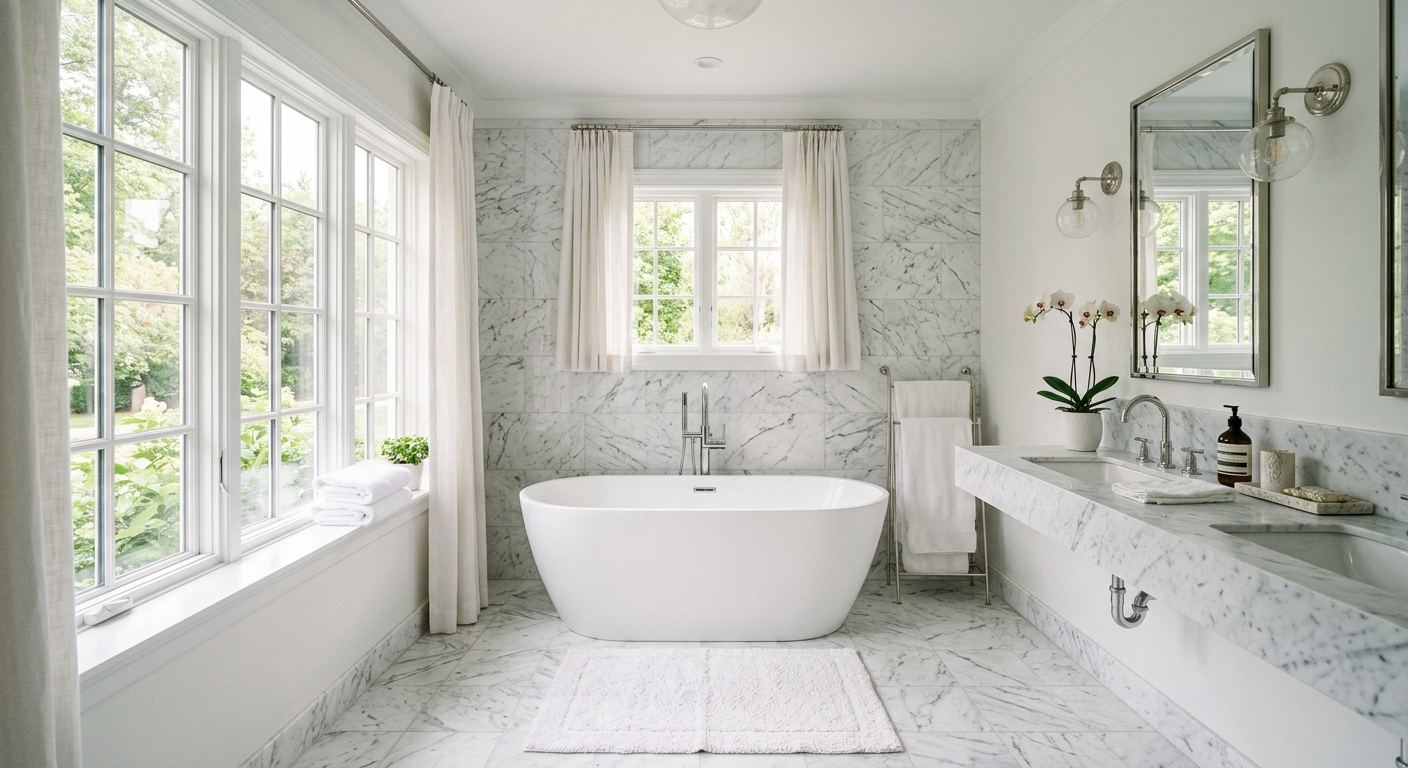
Bathroom renovation options and costs in Garden Village
Bathroom renovation planning in Garden Village starts with picking the right scope for your home and timeline. With Garden Village’s population at 10,087 residents (Statistics Canada, 2021 Census), the Lower Mainland–Southwest market is active enough that reputable crews—especially licensed plumbers and tilers—often book several weeks out. Just as important, many local neighbourhood homes reflect mid-century layouts and older build-ups, which means dated plumbing runs and sometimes hidden risk. In pre-1980 properties, it’s not unusual to open walls and find galvanized or cast-iron drainage, older copper supply lines, and floor tile materials that may require special handling if asbestos-containing products are present. Those “behind-the-wall” discoveries can turn a straightforward refresh into a full renovation with added trades and permitting.
Pricing here is shaped less by coastal weather extremes and more by labour rates and the housing stock age in the Lower Mainland–Southwest region. Metro Vancouver and surrounding areas like Surrey and Burnaby have consistently high construction labour costs, and that labour demand filters into Garden Village too—so even modest bathrooms carry a higher per-square-foot cost. Once walls and floors are opened, teams frequently expand the project to include plumbing and venting upgrades to meet current British Columbia requirements, which is why the same bathroom can vary widely in total cost. If you’re in higher-demand pockets near commuter corridors (where tenants/owners schedule renovations around work and school), you’ll often see tighter scheduling and quicker lead times for certain materials like vanities and glass.
Below are realistic cost ranges homeowners use in Garden Village to compare renovation directions—then your final quote depends on layout changes, waterproofing detail, and what turns up during demolition.
| Renovation Scope |
What's Included |
Typical Duration |
Price Range |
| Cosmetic refresh (paint, fixtures, accessories only) |
New vanity hardware or vanity swap (no plumbing moves), toilet seat/flush upgrades, lighting upgrades (no new circuits), paint, caulking, mirror |
3–7 days |
$3,000 – $8,000 |
| Mid-range full renovation (new tile, vanity, tub/shower, electrical) |
Demolition, new tub/shower surround or tile walls, vanity + mirror, new exhaust fan, GFCI if needed, new flooring tile/laminate waterproof underlayment as required, basic plumbing refresh |
3–5 weeks |
$18,000 – $32,000 |
| High-end full renovation (custom tile, steam shower, heated floors) |
Extensive tile work (custom layout/large-format), heated floor circuit, steam-ready shower plan, upgraded waterproofing system, premium fixtures, upgraded ventilation ducting, selective re-plumbing/venting |
6–10 weeks |
$32,000 – $45,000 |
| Shower-only installation (convert tub to walk-in shower) |
Remove tub, create walk-in shower, tile walls, new shower drain and waterproofing, updated exhaust/venting connection, new glass door or curtain option |
2–4 weeks |
$12,000 – $25,000 |
| Bathtub replacement or tub-liner install |
Old tub removal or liner install, re-set wall surround/trim, sealing, plumbing reconnections as needed, basic caulking and re-finish |
1–3 weeks |
$1,500 – $6,000 |
| Tile-only installation (floor + surround, existing layout kept) |
Remove existing finishes in wet area, install floor + wall tile, waterproofing build-up, re-caulk fixtures, grout sealing and finish detailing |
1–3 weeks |
$2,000 – $8,000 |
Prices are estimates only and vary by project scope, site access and material selection.
What affects the price of bathroom renovation in Garden Village
In Garden Village and across the Lower Mainland–Southwest, homeowners often get sticker shock when comparing quotes for the “same” bathroom—differences of 30–50% aren’t uncommon. The main reason is that bathroom work bundles multiple trades into a tight space. In this region, regional labour rates and the age of the local housing stock drive costs more than weather conditions. Even when the bathroom is small, plumbers, electricians, framers, tilers, and waterproofing specialists overlap on schedules, and that labour premium is real.
Older homes in the Lower Mainland–Southwest region frequently hide cast-iron or galvanized components that require upgrading once walls are opened. Supply lines can be older copper or galvanized; drains can be undersized or corroded; and ventilation may be inadequate, which pushes the scope toward exhaust fan upgrades and sometimes venting revisions. If you’re renovating a pre-1985 home, discovery of asbestos-containing vinyl floor tile or older drywall compound triggers abatement protocols—commonly adding about $1,500–$5,000+ depending on area size and accessibility. That kind of risk turns a budget-friendly plan into a full renovation even if your finish selections stay the same.
Concrete examples from Garden Village: (1) keeping the existing layout can keep you in the mid-range full renovation band (roughly $18,000–$32,000), while moving the drain or supply line tends to push labour and rough-in costs upward; (2) choosing large-format porcelain tile can reduce visible grout lines but increases substrate prep time—especially if the subfloor is slightly out of level; and (3) adding heated floors or a premium exhaust fan circuit often nudges the total toward the high-end range ($32,000–$45,000), but can be a worthwhile comfort upgrade.
Bottom line: build your quote around what’s behind the walls, not only what you see at the showroom counter.
| Price Factor |
Why It Matters |
Cost Impact |
| Layout change — moving drain or supply lines requires rough-in work |
New plumbing runs add demolition, framing, and inspection time |
Often +$3,000–$10,000 depending on distance and stack access |
| Tile selection — large-format porcelain vs. mosaic vs. ceramic |
Harder materials and bigger panels require more prep and precision |
Tile package +$1,000–$6,000; labour +$500–$2,500 |
| Fixture tier — builder-grade vs. mid-range vs. designer brands |
Premium valves, toilets, and vanities cost more and may require extra trim/parts |
Typically +$800–$5,000 across fixtures and accessories |
| Subfloor condition — rot or unlevel concrete adds scope |
Repairs, new backer board/underlayment, and flattening affect both tile success and schedule |
Often +$1,000–$4,000 |
| Electrical — adding GFCI outlets, exhaust fan, heated floor circuit |
Licensed electrical work and code-compliant routing drive cost |
Often +$800–$3,500 |
| Waterproofing method — membrane type and extent |
Better systems reduce failure risk but require proper build-up and curing |
Often +$500–$3,000 |
| Older-home surprises — asbestos tile, cast-iron drains, galvanized pipes |
Remediation and re-plumbing add trades, permits, and disposal |
Commonly +$1,500–$5,000+; can be more with extensive drain work |
| Bathroom size — sq ft drives tile and labour time directly |
More surface area means more tile, more thinset, more labour hours |
Small bathrooms: +/–$2,000–$6,000; larger: scales upward |
Permits & regulations in British Columbia
In British Columbia, many “looks-only” bathroom updates typically do not need a permit—swapping a vanity, replacing a toilet, painting, re-caulking, or retiling without moving plumbing usually falls under cosmetic renovation. However, permits generally are required when you relocate plumbing (moving a drain or changing supply line locations), add or move ventilation in a way that involves electrical circuits and ducting work, or make structural changes that affect walls or supports.
Electrical work must meet the applicable code and be performed by a licensed electrician (or otherwise properly signed off). Typical permitted/inspected electrical scope includes adding new circuits for an exhaust fan, adding GFCI protection where required, or wiring heated floors. Plumbing rough-in changes also typically require a permit and inspection—this includes changes to drain connections, venting adjustments, or any work that alters the water supply or drainage routes. If you discover older materials (for example, asbestos-containing flooring products), remediation must be handled according to safety and regulatory requirements, and that can affect schedule and documentation.
For a Garden Village homeowner, verify three things step-by-step: (1) Trade licence: ask for the contractor’s British Columbia trade licence number and confirm it using the province’s online licence registry; (2) Liability insurance: request a certificate of insurance showing sufficient general liability coverage, and ensure it matches the legal entity on the contract; (3) Coverage for workers: confirm their WCB coverage/clearance letter through their WCB account documentation (requested as proof). Keep copies with your contract, and ensure the insurance name aligns with the company performing the work.
Choosing tile, waterproofing and fixtures for your Garden Village bathroom
In Garden Village, the three material decisions that most affect your budget (and long-term performance) are tile choice, waterproofing system, and fixture tier. First: tile choice. Entry-level ceramic tile can be budget-friendlier, but it still requires correct substrate prep and solid waterproofing behind wet-area finishes. Porcelain is denser and often works better in high-splash zones, and mid-range porcelain installations can look more uniform because of wider, flatter surfaces. Natural stone (marble, travertine, slate) is the luxury route—stunning, but it demands tighter installation tolerances, extra sealing considerations, and more careful layout planning.
Second: waterproofing method. British Columbia bathrooms live with frequent humidity and seasonal swings, so waterproofing details matter. A paint-on membrane can work in some simpler applications, but bonded sheet membranes or systems designed for showers with tiled finishes tend to be more robust when properly installed. Using the right method prevents moisture migration, mould risk, and grout breakdown behind the wall assembly—exactly what you want in a region where basements and older framing cavities can hold moisture.
Third: fixture tier. Builder-grade fixtures keep costs down, mid-range is usually the sweet spot for reliability and resale appeal, and designer brands often add premium pricing without always adding performance.
Here’s a practical dollar example: upgrading from a basic tile surround to a mid-range porcelain installation often costs an incremental amount that can be justified if you also improve waterproofing build-up and choose larger-format tiles to reduce grout lines. Conversely, spending heavily on designer fixtures without investing in the waterproofing system rarely pays back.
| Material / Option |
Pros |
Cons |
Price Range |
| Ceramic tile (floor + walls) |
Good entry price, wide style selection, straightforward to match to existing finishes |
More variation in thickness/size; may require more grout lines for complex looks |
$2,000 – $5,500 |
| Porcelain tile (floor + walls) |
More consistent performance in wet areas, cleaner look with larger formats, durable surface |
Heavier panels can complicate handling; higher material cost |
$4,000 – $8,000 |
| Natural stone (marble, travertine, slate) |
High-end visual texture and value perception; unique veining and character |
Requires sealing strategy, extra care with installation tolerances and cleaning |
$6,000 – $12,000 |
| Frameless glass shower enclosure |
Modern look, improves perceived space, easier wiping than framed doors |
Cost depends heavily on size, thickness, hardware; installation must be precise |
$2,500 – $6,500 |
| Prefab tub surround (acrylic) |
Fast install, good water resistance when installed correctly, budget-friendly |
Less “custom” appearance; seam lines may be noticeable depending on layout |
$800 – $2,500 |
| Custom shower pan (tile or linear drain) |
Premium drainage lines, tailored slope and access; excellent long-term shower performance |
More labour time and waterproofing detail; higher material and trade coordination |
$3,500 – $10,000 |
How to choose a bathroom renovation contractor in Garden Village
Choosing a contractor in Garden Village starts with proof, not promises. First, verify British Columbia licensing and trade eligibility for the work they claim—ask for their licence number and confirm it using the provincial online registry. Next, request liability insurance (certificate of insurance) that clearly lists the legal name of the company doing the work and includes enough coverage for a renovation. For worker coverage, ask for WCB/WCB clearance documentation so you’re not left exposed if an injury occurs on site.
Then get 2–3 itemised written quotes, ideally split into labour and materials, with allowances stated for tile, fixtures, glass, waterproofing, and disposal. Make sure the scope details match: ask whether permit pulling is included (and who covers the cost), whether old material disposal is included, and whether you’re paying for skip/hauling separately. A bathroom quote should also outline what’s excluded—subfloor repairs, sub-tiling membranes, structural framing adjustments, or electrical panel upgrades—so there are no surprises once demolition begins.
Warranty matters. Look for a clear workmanship warranty (often 1–2 years for typical renovations) and confirm whether product warranties are manufacturer-backed and how they’re handled. If you’re planning to sell soon, ask if the warranty is transferable.
Payment schedule should be conservative: typically no more than 10–15% upfront, then staged payments tied to milestones (demo complete, rough-in approved, waterproofing signed off, tile/trim done, final completion). Never release the final holdback until fixtures, caulking, drainage, and waterproofing details are complete. Finally, insist on a written start date and a realistic completion estimate that accounts for lead times on tile, glass, and custom orders.
- BC trade licence number provided and confirmed in the provincial registry.
- General liability insurance certificate showing correct legal company name.
- WCB/WCB clearance documentation before work begins.
- Itemised quote: labour, materials, permits, disposal, and allowances separated.
- Clear scope: what’s included/excluded (subfloor repairs, framing tweaks, electrical upgrades).
- Waterproofing specified by product/system and coverage area (wet walls, transitions, floors).
- Tile plan includes substrate prep notes (leveling, backer board, crack isolation where needed).
- Electrical scope listed with expected outcomes (GFCI, exhaust fan, heated floor circuit if added).
- Plumbing scope described (rough-in changes, venting checks, shut-off/valve replacement).
- Schedule in writing with ordering timelines for glass, tile, and vanities.
- Warranty stated in writing for workmanship and confirmed product warranty handling.
- Payment schedule aligns with staged milestones; avoid large upfront deposits.
Red flags I see around Garden Village: vague quotes that lump “labour and materials” with no allowances, no stated waterproofing system or who supplies it, refusing to provide BC licence/insurance/WCB proof, demanding large deposits up front, and inconsistent start dates that keep slipping without explaining procurement delays.
Frequently asked questions — bathroom renovation in Garden Village
What's the ROI on a bathroom renovation?
In British Columbia, a bathroom renovation’s ROI depends on how much you change the function versus the finishes. A well-executed refresh—like improved lighting, updated vanity storage, and proper waterproofing for retiling—can be very attractive to buyers because it signals maintenance and reduces near-term risk. If you’re staying in the mid-range full renovation band (often around $18,000–$32,000 in the Lower Mainland–Southwest), you’re typically upgrading the “must-haves” without going so far that you outspend the local market. Major ROI drops usually happen when scope is oversized or when waterproofing details are cut to save money, leading to future repair costs. Also factor in your home’s age: older layouts often benefit from venting and plumbing updates, which improve both comfort and buyer confidence (Statistics Canada, 2021 Census).
Do I need waterproofing behind the tile?
Yes—almost always. For a tiled tub/shower surround or any shower area in a Garden Village bathroom, waterproofing behind the tile is the standard that protects the wall assembly from moisture. In the Lower Mainland–Southwest, humidity and frequent use make leaks expensive, especially in older homes where wall cavities and subfloors can hold moisture. A correct waterproofing approach includes membrane choice, proper overlap at corners and transitions, and correct curing time before tiling. Even when a contractor proposes “water-resistant drywall” only, ask what specific waterproofing system they’re using and how far it extends. If you’re planning retiling in the $2,000–$8,000 tile-only range, the waterproofing product and method should still be clearly included, not left as an afterthought.
How do I compare bathroom renovation quotes?
Start by comparing apples to apples: scope first, then pricing. A quote for $18,000 might be cosmetic plus tile, while another $18,000 might include electrical upgrades, updated exhaust ventilation, and plumbing rough-in checks. In Garden Village, ask for itemised labour and materials, including allowances for tile, fixtures, glass, and disposal. Confirm whether permits are included (and who pulls them) and whether demolition and haul-away are covered. Also compare waterproofing and substrate prep details—these are where many quote differences hide. If one contractor prices a mid-range renovation but doesn’t mention waterproofing method or doesn’t specify what happens if subfloor damage appears, you’ll likely see budget creep after demolition. Use the written schedule: lead times for glass and tile should be reflected in completion dates.
Can I live at home during a bathroom renovation in Garden Village?
Often, yes—but it depends on the scope and timing. With a cosmetic refresh or tile-only installation, you may be able to keep use of the bathroom with a phased plan. For mid-range full renovations (commonly in the $18,000–$32,000 range), expect at least a period when the tub/shower is out of service due to demolition, rough-in checks, waterproofing curing, and tile installation. If you convert a tub to a walk-in shower, plan for a longer disruption window. Many homeowners set up a temporary solution: a functional toilet elsewhere in the home and careful protection of adjacent spaces. Before starting, ask your contractor for the exact day the bathroom will become unusable and when it will be ready for safe showering and floor wet-use. Clear staging reduces stress and prevents accidental damage during the curing phases.
What's the best bathtub material for a Garden Village home?
The “best” depends on your priorities: cost, durability, and installation complexity. In many Lower Mainland–Southwest renovations, acrylic tubs are popular because they’re relatively straightforward to install and typically fit common rough-in dimensions. Fiberglass/acrylic also helps reduce unit weight for easier handling. If you want longevity and a premium feel, some homeowners prefer higher-end materials, but budget usually rises. For many renovation plans, bathtub replacement sits in the $1,500–$6,000 band, and the choice often comes down to whether you’re replacing the tub only or also redoing the surround and waterproofing. The real determinant of success is not just the tub material—it’s the sealant detailing, waterproofing behind the surround, and how the drain connection is executed and inspected.
Is it worth renovating a bathroom before selling in Garden Village?
Usually, yes—if you focus on the upgrades buyers notice and you don’t overspend. In Garden Village and the broader Lower Mainland–Southwest market, buyers respond well to clean, modern finishes, good ventilation, and updated plumbing/fixture performance. A bathroom that looks tired but is structurally sound can sometimes be upgraded efficiently with a cosmetic refresh plus targeted waterproofing and tile updates, rather than a full high-end rebuild. If you’re considering a full renovation, keeping your scope in the mid-range (often around $18,000–$32,000) tends to be a more predictable approach than going straight to the top end ($32,000–$45,000) unless your home is otherwise high-spec. If you discover older-home issues—like drainage upgrades or abatement needs—that can be a compelling reason to renovate before listing, because unresolved leaks or ventilation problems often become negotiating points during buyer inspections.