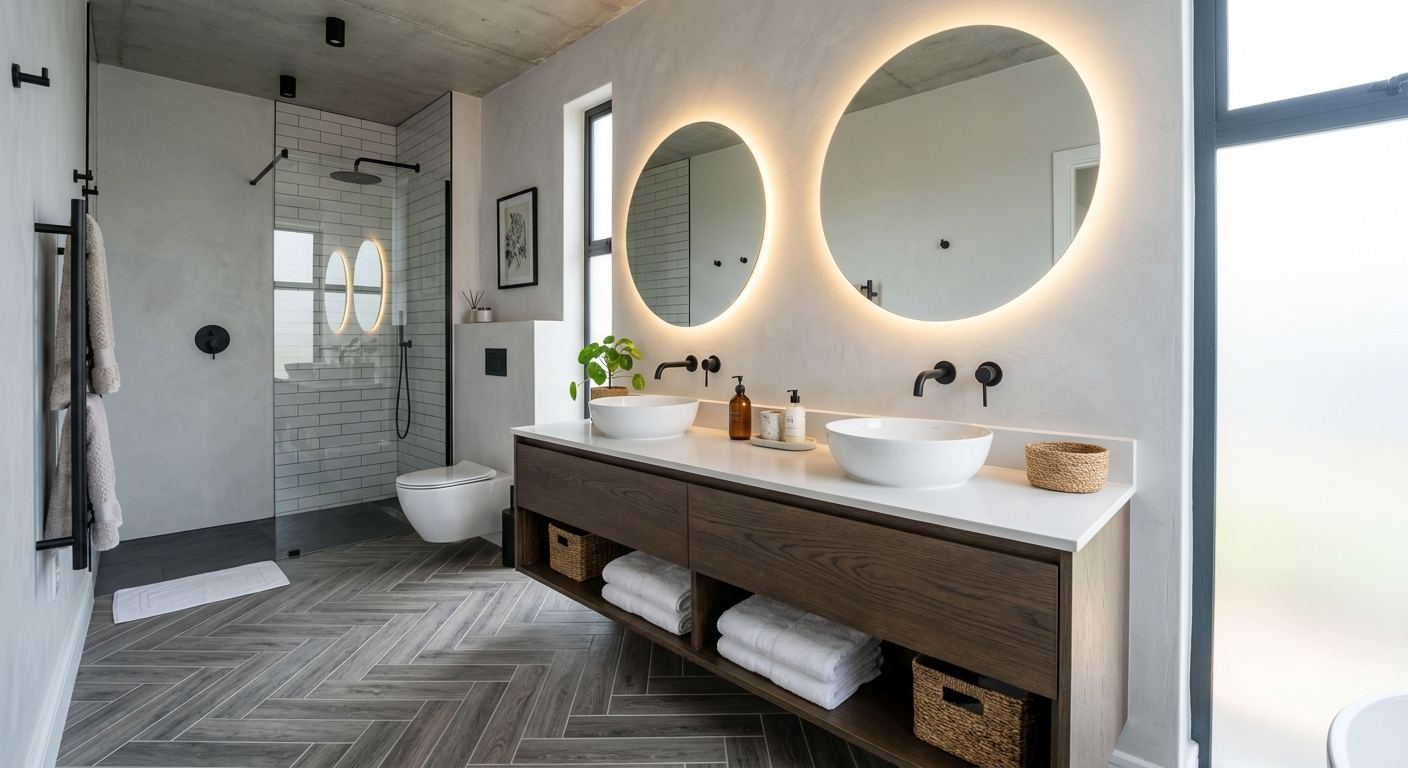
Bathroom renovation options and costs in Naramata
Naramata is a small lakeside community in the Lower Mainland–Southwest region of British Columbia, and that matters for bathroom renovations: even modest rooms can become multi-trade projects once walls are opened. Local housing age is a big driver. With a population of 1,625 (Statistics Canada, 2021 Census), many homes are older, and renovations in pre-1980 layouts often expose dated plumbing runs, drain materials, and the occasional asbestos-containing flooring or drywall compound. In those cases, costs shift from “finishes” to “repairs and compliance,” and the budget can move quickly.
In the Lower Mainland–Southwest, labour rates and housing stock age tend to drive price more than weather, but the market’s strong construction demand affects scheduling. Contractors and skilled trades (plumbers, tilers, electricians) can be booked out, and once you start, it’s common for scope to expand to include venting improvements, drain upgrades, and ventilation upgrades to current BC expectations. Natural humidity around Okanagan waterfront properties also makes waterproofing and ventilation choices feel less optional—doing them right the first time helps avoid costly rework later.
In Naramata, trades often see extra demand in older pockets around the waterfront and along the main corridor where many homes are mid-century. If your goal is predictable pricing, the best next step is to line up your scope and compare realistic ranges—see the table below for common options.
| Renovation Scope |
What's Included |
Typical Duration |
Price Range |
| Cosmetic refresh (paint, fixtures, accessories only) |
Paint, caulking, vanity refresh (swap top or entire vanity), lighting update, toilet/valve swap (no plumbing relocation), accessories; existing tile kept |
3–7 days |
$6,000–$12,500 |
| Mid-range full renovation (new tile, vanity, tub/shower, electrical) |
Remove to subfloor as needed, new shower/tub surround tile, new vanity and mirror/lighting, toilet, ventilation fan upgrade, basic electrical updates (GFCI, new fan circuit), waterproofing, modern trim |
2–4 weeks |
$18,000–$30,500 |
| High-end full renovation (custom tile, steam shower, heated floors) |
Custom walk-in shower or steam-ready build, premium tile layout and niche, heated floor wiring and controls, upgraded fan/ducting, higher-end fixtures, designer lighting, extended waterproofing and prep |
3–6 weeks |
$31,000–$45,000 |
| Shower-only installation (convert tub to walk-in shower) |
Demo, convert plumbing to a walk-in layout, new shower valve and controls, waterproofing, curb or barrier-free pan build, glass/door, new exhaust integration if needed |
1.5–3 weeks |
$10,500–$23,500 |
| Bathtub replacement or tub-liner install |
Replace tub with new unit and recaulk, new waste/overflow connections where applicable; liner install where structure allows |
4–10 days |
$2,000–$6,000 |
| Tile-only installation (floor + surround, existing layout kept) |
Tile removal and prep (as required), tile and grout, waterproofing system for shower walls/floor, new trim transitions; keep plumbing and layout unchanged |
1.5–3 weeks |
$7,500–$18,000 |
Prices are estimates only and vary by project scope, site access and material selection.
What affects the price of bathroom renovation in Naramata
Even when homeowners agree on the same “end result,” bathroom renovation quotes in the Lower Mainland–Southwest can differ by 30–50% versus other parts of British Columbia. The main reason isn’t climate—it’s that the region’s labour market is consistently busy, and bathroom work is labour-intensive in a tight space. When trades open walls, costs often rise due to hidden plumbing, venting, and waterproofing prep issues that can be unique to older homes. In Naramata, many properties reflect mid-century or older construction patterns, which increases the chance of encountering cast-iron drains, galvanized supply lines, or uneven subfloors.
Older-home surprises are a budget multiplier. If a contractor finds asbestos-containing material in flooring or drywall compound (common in some pre-1985 homes), you may need abatement before tile removal can proceed—typically adding about $1,500–$5,000+ depending on extent and access. On top of that, venting and drainage upgrades are often triggered once the rough-in is assessed. That is why a “mid-range” full renovation can land closer to $18,000 when everything is straightforward, or push toward $45,000 when plumbing remediation is required and additional trade work is added.
Concrete examples from Naramata jobs include (1) converting a tub to a walk-in shower—this usually requires rough-in changes, so the shower-only scope often sits in the $8,000–$25,000 band; (2) swapping to large-format porcelain—this may reduce grout lines but increases setting and substrate requirements; (3) adding an exhaust fan with proper ducting—if the pathway is blocked, labour and wall work increase.
In short, Lower Mainland–Southwest bathroom pricing is built on labour rates plus “unknowns once opened,” not on the everyday weather. The humidity you feel in bathrooms is the reason waterproofing and ventilation need to be engineered well—so you’re not paying for a second renovation later.
| Price Factor |
Why It Matters |
Cost Impact |
| Layout change — moving drain or supply lines requires rough-in work |
New rough-in means more demolition, piping changes, possible venting updates, and inspections |
Typically +$2,500–$8,000 |
| Tile selection — large-format porcelain vs. mosaic vs. ceramic |
Harder materials and larger panels demand better prep, more skilled labour, and sometimes extra waste |
Typically +$500–$4,500 |
| Fixture tier — builder-grade vs. mid-range vs. designer brands |
Higher-end faucets, shower valves, and toilets cost more and may have stricter install requirements |
Typically +$1,000–$6,000 |
| Subfloor condition — rot or unlevel concrete adds scope |
Soft subfloor or deflection can require replacement or underlayment changes before waterproofing |
Typically +$800–$5,500 |
| Electrical — adding GFCI outlets, exhaust fan, heated floor circuit |
New circuits mean licensed electrician time, panels/trace requirements, and sometimes wall/ceiling access |
Typically +$600–$3,500 |
| Waterproofing method — membrane type and extent |
Better systems (and proper detailing at corners/penetrations) improve durability and reduce mould risk |
Typically +$500–$2,800 |
| Older-home surprises — asbestos tile, cast-iron drains, galvanized pipes |
Remediation, disposal, and plumbing replacements add time and additional trades |
Typically +$1,500–$10,000+ |
| Bathroom size — sq ft drives tile and labour time directly |
More surface area means more setting time, materials, and waterproofing/detail work |
Typically +$1,200–$9,000 |
Permits & regulations in British Columbia
In British Columbia, cosmetic updates usually don’t require permits. If your plan is limited to swapping fixtures that don’t change plumbing positions—like replacing a toilet, vanity, mirror, lighting, or re-caulking and retiling without moving drains—most homeowners proceed without permit paperwork. However, bathroom renovations become permit-relevant when you change systems or structural elements.
Work that typically does require a permit includes: relocating plumbing (moving a drain or supply line), adding or relocating a bathtub/shower valve that requires rough-in changes, installing or upgrading an exhaust fan where it involves new ducting and/or a new electrical circuit, and any structural wall changes that alter framing or load paths. Electrical work must meet the BC electrical code and be performed by a licensed electrician (or signed off by one). Plumbing rough-in changes are also usually inspected before walls are closed, because the inspection checks for correct pressure testing, venting, and installation practices.
Here’s a practical step-by-step way a Naramata homeowner verifies a contractor before work starts:
1) Ask for the contractor’s BC trade licence number (and confirm it matches their legal business). 2) Request a certificate of liability insurance showing coverage limits and the work location. 3) If applicable to their trades, confirm workers’ protection coverage through WSBC/WCB documentation and ensure it’s current. 4) For major changes, ask how permits are handled—who pulls them, what inspections are required, and whether you receive copies. 5) Don’t accept “we’ll handle it later” language; get written confirmation before demolition begins.
Choosing tile, waterproofing and fixtures for your Naramata bathroom
For a Naramata bathroom reno, your budget usually hinges on three material decisions: tile choice, waterproofing method, and fixture tier. In the Lower Mainland–Southwest market, labour is expensive, so selecting higher-end products without upgrading the prep/waterproofing often backfires. The best approach is to match the system to how the bathroom is actually used.
1) Tile choice: Ceramic tile is the entry-level option—good value, but it can be more forgiving in the thickness and substrate requirements. Porcelain tile is denser and more water-resistant, and it generally performs better for floors and wet areas. Natural stone (marble, travertine, slate) looks luxury but can require extra sealing and more careful setting. Complexity rises with stone cuts, irregularities, and premium layouts.
2) Waterproofing: Paint-on membranes can work for some scenarios, but the safest path in BC humidity is a robust system with proper detailing at corners, seams, and penetrations. A bonded sheet membrane or a engineered system approach (often used with modern build-ups) is designed to prevent moisture migration—exactly what you need in bathrooms where steam and condensation are persistent.
3) Fixtures: Builder-grade faucets and shower valves are budget-friendly, while mid-range and designer brands often improve flow control, finishing, and long-term reliability. In resale terms, a well-finished shower and clean, consistent trim frequently matter more than the cheapest swap.
Where the price difference is justified: upgrading from basic ceramic to porcelain, plus using a high-quality waterproofing detail around the shower, can add roughly a few hundred to a couple thousand dollars—but it helps reduce redo risk. If you choose a “premium look” tile while keeping a weak waterproofing plan, you can end up paying twice for demolition and reinstallation.
| Material / Option |
Pros |
Cons |
Price Range |
| Ceramic tile (floor + walls) |
Affordable, wide design selection, easier to cut for complex trims |
Generally more porous than porcelain; performance depends on correct waterproofing |
$2,000–$5,500 |
| Porcelain tile (floor + walls) |
Better water resistance, durable for floors, great for modern large-format looks |
Heavier tile; needs proper substrate and skilled layout to avoid lippage |
$4,000–$8,500 |
| Natural stone (marble, travertine, slate) |
High-end look and unique veining; premium curb appeal |
Sealing/maintenance considerations; can cost more to install with precision cuts |
$7,000–$15,000 |
| Frameless glass shower enclosure |
Modern, bright look; easier visual “clean lines” for resale |
Higher material cost; requires precise wall alignment |
$2,500–$6,500 |
| Prefab tub surround (acrylic) |
Fast install, less labour than full tile; good value if layout is kept |
Less design flexibility; can show seams depending on unit quality |
$1,000–$3,000 |
| Custom shower pan (tile or linear drain) |
Barrier-reduced layouts, premium drainage aesthetics, excellent for modern bathrooms |
More labour and waterproofing detailing; may require additional rough-in work |
$3,000–$9,000 |
How to choose a bathroom renovation contractor in Naramata
When you’re hiring for a bathroom renovation in Naramata, you want a contractor who can coordinate multiple trades cleanly and document the work. Start by verifying British Columbia licensing: ask for the correct trade licence details for the work they’re performing (plumbing/electrical tiling/trades as applicable) and confirm the business is in good standing. Next, request proof of liability insurance—your contractor should provide a current certificate of insurance for the project dates and location. For workers’ protection coverage, ensure they can provide WSBC/WCB clearance or documentation relevant to their trades; don’t rely on verbal assurances.
Then get 2–3 itemised written quotes rather than one “lump sum.” A strong quote breaks labour and materials into categories (demo, disposal, waterproofing, tile setting, electrical, plumbing rough-in, fixtures, glass, and finish trim). Read the scope carefully: ask what’s excluded (tile underlayment? subfloor repairs? permit fees? disposal?), who pulls permits, and whether the quote includes backer board/membrane system materials and proper substrate prep.
Warranty is also a deciding factor. Ask for the workmanship warranty length and whether the manufacturer warranty applies to products (and whether it’s transferable if you sell your home). For payment, never pay more than 10–15% upfront. Use a holdback until the job is complete and key inspections/finish checks are done. Finally, insist on a written start date and completion estimate—bathrooms get delayed when scopes expand, and good contractors build contingency into their schedule.
- Confirm BC trade licence number(s) match the contractor’s legal business name
- Verify liability insurance certificate is current and specific to the job scope
- Request WSBC/WCB coverage documentation where applicable to their trades
- Use itemised quotes: labour vs materials vs allowances (not vague “allowance” buckets)
- Check whether demolition, disposal, and dump fees are included
- Confirm waterproofing system type and who supplies the membrane and boards
- Ask for an explicit scope for electrical (GFCI, exhaust fan circuit, lighting)
- Ask for plumbing scope details (valves, venting considerations, shutoff locations)
- Get the permit responsibility in writing: who pulls it and who covers inspections
- Require a detailed tile plan: layout, substrate prep, and grout colour allowance
- Review warranty terms: workmanship duration, product warranty, and transferability
- Set payment schedule with a final holdback until punch list is complete
Red flags I see in Naramata include: quotes that don’t separate labour from materials, no written waterproofing details, promises to “guarantee no permit is needed” for rough-in work, asking for 50%+ upfront, and vague timelines that don’t account for inspection scheduling or glass/fixture lead times.
Frequently asked questions — bathroom renovation in Naramata
Do I need a permit for a bathroom renovation in British Columbia?
In British Columbia, cosmetic updates—like swapping a vanity, changing lighting, repainting, or retiling while keeping the plumbing exactly where it is—often won’t require permits. Permits are typically required when you change plumbing rough-ins (moving a drain or supply line), add an exhaust fan with new ducting and/or electrical circuits, or make structural wall changes. Electrical work must be done by a licensed electrician and meet code, and plumbing rough-ins usually require inspection before walls are closed. For Naramata homeowners, the practical step is to ask your contractor what triggers permits on your specific scope and request the permit/inspection plan in writing before demolition begins. (Local pricing can land anywhere in the $18,000–$45,000 full renovation band depending on how much system work is required.)
What's the best tile for a bathroom in Naramata?
For most Naramata bathrooms, porcelain tile is a strong balance of durability and water performance, especially in wet zones like shower floors and tub surrounds. Ceramic can work well too, particularly when paired with a proven waterproofing system, but porcelain tends to be more forgiving for long-term wear and moisture exposure. Natural stone looks high-end, yet it can bring maintenance considerations and higher installation complexity. In the Lower Mainland–Southwest, labour cost is the main driver, so the “best” tile is usually the one that you can install correctly with the right substrate prep and waterproofing detailing. If you’re comparing budgets, ceramic + good waterproofing can be a lower-cost path, while switching to porcelain may add a few thousand but can improve longevity—often aligning with tile installation ranges like the $2,000–$8,000 band for tile-only scopes.
Should I do a tub-to-shower conversion?
A tub-to-shower conversion is worth considering if you want easier daily access, plan for ageing in place, or you’re aiming for a cleaner modern layout. In Naramata homes, it’s also common for conversions to reveal surprises: older drain assemblies, venting conditions, or outdated shutoffs—so the scope can expand beyond a simple swap. Pricing is usually tied to plumbing rough-in changes and the shower build complexity, which is why “shower-only installation” often falls in the $8,000–$25,000 band depending on glass, waterproofing build-up, and whether the drain location changes. If your tub area has dated surround framing, upgrading the waterproofing and ventilation details during the conversion is the most cost-effective time to do it.
How do I prevent mold in a Naramata bathroom?
Mould prevention in British Columbia is mainly about moisture control: proper waterproofing, fast drying, and correct ventilation. First, use a waterproofing system designed for showers and wet walls with correct detailing at corners and penetrations; cutting corners here leads to hidden moisture issues behind tile. Second, ensure your bathroom has an effective exhaust fan sized and ducted properly to the exterior, not just recirculated air. Third, confirm ventilation and fan electrical are correctly installed with a suitable circuit and controls. In older Naramata homes, you may also uncover inadequate subfloor prep or ventilation pathways once walls open, which can raise the scope. Doing it right typically keeps your renovation from turning into repeat repairs—the real goal is to avoid the need to redo waterproofing after a mould event.
What adds the most resale value in a bathroom reno?
In Naramata and across the Lower Mainland–Southwest, resale value usually follows visible quality and functional reliability: a well-finished shower, clean tile layout, modern vanity and lighting, and a bathroom that feels dry and bright. Buyers also notice ventilation performance—an updated exhaust fan and correct ducting can be as important as the finishes because it protects the surround from moisture damage. If your house is older, upgrading plumbing fixtures and addressing rough-in problems (when discovered) can prevent future expense and inspection issues. High-end upgrades like heated floors or steam features can add value for certain buyers, but they come with higher labour and electrical scope. For context, a well-planned mid-range full renovation often lands around the $18,000–$30,500 range, while higher-end scopes can reach the $31,000–$45,000 band when materials and custom builds drive the design.
Can I keep my existing plumbing layout to save money?
Yes—keeping the existing plumbing layout is one of the best ways to control cost in a Naramata renovation. When you don’t move drains and supply lines, you typically reduce demolition, rough-in labour, inspection complexity, and the risk of discovering hidden issues further inside the wall. That’s why “tile-only installation” or a refresh that retains the same fixture positions is usually less expensive than conversions that re-route plumbing. For example, if you keep the existing layout and focus on finishes, you can often stay within tile installation ranges like $2,000–$8,000 for simpler scopes, while full renovations that involve plumbing upgrades commonly sit higher in the $18,000–$45,000 band. If you do want changes, ask for an investigation and a contingency allowance—older BC homes sometimes hide drain and supply conditions that only become clear after opening up.