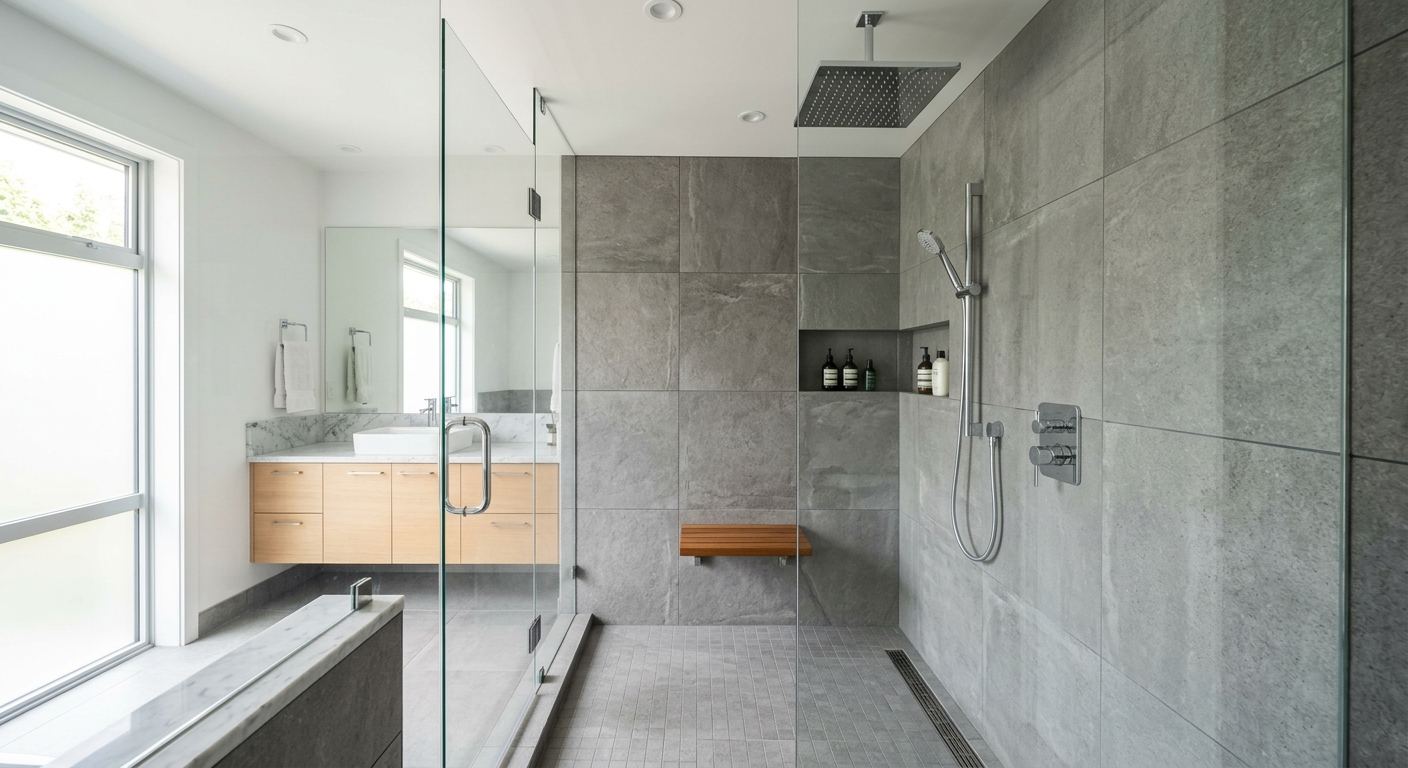
Bathroom renovation options and costs in Twin Creeks
Twin Creeks homeowners typically have a few clear paths when planning a bathroom renovation, and the best option usually depends on how much you want to change beyond fixtures. With a small local population of 2,577 (Statistics Canada, 2021 Census), trades availability can tighten during busy seasonal stretches, so scheduling matters. Also, Twin Creeks and surrounding Lower Mainland neighbourhoods include a lot of older housing stock, including pre-1980 layouts where dated plumbing and drainage routes are common; in some homes, that age increases the chance of surprises like cast-iron drains or hidden asbestos in older flooring materials or drywall compound. Those discoveries can expand scope and add time for remediation and coordination across trades.
In the Lower Mainland–Southwest, renovation costs are driven more by regional labour rates and the complexity of multi-trade work in a small room than by weather alone. British Columbia’s coastal humidity doesn’t “create” mould by itself, but it makes correct waterproofing and ventilation non-negotiable—contractors still spend extra time detailing moisture-safe assemblies, particularly around shower-to-wall transitions. In practice, once walls are opened, many projects expand to include plumbing and venting upgrades to align with current British Columbia code expectations, which affects both the budget and the timeline. In Twin Creeks, you’ll often see higher demand for licensed plumbers and tile setters in areas with older mid-century homes and higher volumes of repeat renovations.
Below is a realistic way to compare scopes before you request itemised quotes and plan your contingency.
| Renovation Scope |
What's Included |
Typical Duration |
Price Range |
| Cosmetic refresh (paint, fixtures, accessories only) |
Paint, vanity refresh or replacement (no plumbing moves), existing surround touch-up or light re-caulking, new faucets, mirror, toilet accessories, towel bars, basic deep clean |
2–4 days |
$2,500 – $8,000 |
| Mid-range full renovation (new tile, vanity, tub/shower, electrical) |
Demo and disposal, new vanity, faucet and toilet, tub/shower or updated shower system, tile floor + shower surround, new exhaust fan, GFCI where required, basic waterproofing and sealing, drywall repairs |
3–6 weeks |
$18,000 – $32,000 |
| High-end full renovation (custom tile, steam shower, heated floors) |
Full gut, custom tile work with premium waterproofing, steam shower or upgraded frameless shower system, heated floor circuit, higher-end fixtures, upgraded lighting plan, improved venting and coordination for plumbing upgrades |
6–10 weeks |
$32,000 – $45,000 |
| Shower-only installation (convert tub to walk-in shower) |
Demo tub, convert plumbing rough-in to shower layout, new shower base/pan and waterproofing, tile walls and floor, new glass door or enclosure, exhaust fan and lighting updates as needed |
2–5 weeks |
$8,500 – $25,000 |
| Bathtub replacement or tub-liner install |
Remove and install new tub with new fittings (or liner install where appropriate), new caulking and sealing, plumbing connection checks, re-trim at walls, faucet/trim updates if selected |
5–10 days |
$1,500 – $6,000 |
| Tile-only installation (floor + surround, existing layout kept) |
Tile removal where needed, new tile floor and shower surround, waterproofing and membrane system, re-grout and re-seal, baseboard/trim refinishing as required |
1–3 weeks |
$2,000 – $8,000 |
Prices are estimates only and vary by project scope, site access and material selection.
What affects the price of bathroom renovation in Twin Creeks
In Twin Creeks and across the Lower Mainland–Southwest, homeowners often see quotes for the same “type” of bathroom reno vary by 30–50%. The biggest drivers usually aren’t fancy finishes—they’re labour rates and how often the contractor has to open walls to correct what’s already there. British Columbia’s competitive trades market in metro areas (and the limited availability of top plumbers, tilers and electricians) can push labour upward compared with many parts of Canada. Housing age matters just as much here: older homes in the region commonly include cast-iron or galvanized elements and plumbing that doesn’t match today’s best practices for venting and water distribution, so discovery work expands the scope quickly.
Lower Mainland–Southwest renovations also tend to “start simple, then grow.” For example, converting a tub to a shower may seem like a $8,000 – $25,000 shower-focused project, but once the walls are open, the contractor may need to correct drainage slope, add proper waterproofing layers, and adjust ventilation. In pre-1985 homes, asbestos-containing materials can be found in older floor tile, drywall compound or insulation; if abatement is required, it can add roughly $1,500 – $5,000+ or more to the budget depending on extent and containment needs.
Two concrete Twin Creeks examples: (1) an “easy” vanity swap can become mid-range full renovation pricing if the supply lines are corroded or the shutoffs don’t function, requiring replumbing; (2) a tile-only job can jump into full renovation territory if the subfloor is uneven or rotten from past water exposure. Even if the climate doesn’t change, the moisture management does—good waterproofing is labour-heavy, and that’s reflected in the realistic full bathroom bands like $18,000 – $45,000.
| Price Factor |
Why It Matters |
Cost Impact |
| Layout change — moving drain or supply lines requires rough-in work |
Repositioning plumbing triggers labour-heavy rough-in, possible venting checks, and wall opening/patching |
Often adds $2,000 – $8,000 depending on distance and access |
| Tile selection — large-format porcelain vs. mosaic vs. ceramic |
Harder tiles can require more prep and skilled cutting; mosaic increases labour for layout and grouting |
Typically adds $500 – $4,000 for materials/installation complexity |
| Fixture tier — builder-grade vs. mid-range vs. designer brands |
Higher-end fixtures can cost more and may include specialty finishes or different install requirements |
Varies widely; often $1,000 – $6,000 difference |
| Subfloor condition — rot or unlevel concrete adds scope |
Uneven substrates require rebuild/leveling; rot requires removal and replacement to stop future movement |
Commonly $1,000 – $5,000+ if discovered after demo |
| Electrical — adding GFCI outlets, exhaust fan, heated floor circuit |
Bathroom circuits must be safe; new loads require proper wiring, testing and sometimes fan ducting coordination |
Typically $800 – $4,500 depending on what’s added |
| Waterproofing method — membrane type and extent |
Better systems reduce risk in humid BC conditions; it’s labour and material, especially at corners and seams |
Often $300 – $2,500 difference between basic and premium approaches |
| Older-home surprises — asbestos tile, cast-iron drains, galvanized pipes |
Remediation, disposal and additional plumbing replacement increase trades time and complexity |
Can add $1,500 – $10,000+ based on severity |
| Bathroom size — sq ft drives tile and labour time directly |
More surface area = more tile, more waterproofing, more setting and more curing time |
Often the difference between $18,000 and $32,000+ within full reno budgets |
Permits & regulations in British Columbia
In British Columbia, many cosmetic bathroom updates do not need permits. Typically, swapping fixtures without changing plumbing rough-ins—like replacing a vanity, faucet, toilet, mirror or retiling the same footprint—can often be done without a permit because you’re not relocating plumbing or altering electrical systems. However, permit requirements usually kick in when you relocate plumbing or introduce new electrical work. If you move the drain or supply lines (even a few inches), add a new exhaust fan that ties into a new circuit, or make structural wall changes, you should expect permitting and inspections.
Electrical work must comply with the BC electrical safety code and be carried out by a licensed electrician (or have appropriate sign-off). Plumbing rough-in changes generally require a permit and inspection so the rough work is verified before walls close. For your Twin Creeks project, start by asking the contractor what portion is permitted work and who pulls the permit. If they’re vague, that’s a risk.
To verify a contractor in Twin Creeks: (1) check their British Columbia trade licence online for the category that matches their scope (plumbing, electrical, general contracting as applicable); (2) request a certificate of insurance and confirm liability coverage is active and sufficient for renovations; (3) ask for proof of coverage for workers—WSIB/WCB clearance—so you’re not responsible if there’s an on-site injury; and (4) confirm what’s included for disposal and any required inspections. For step-by-step checking, only proceed once you can see the licence details and the insurance documents dated for your project period.
Choosing tile, waterproofing and fixtures for your Twin Creeks bathroom
In Twin Creeks, your tile, waterproofing and fixture choices are the three biggest levers that determine both budget and long-term performance. First, decide what level of tile you want: entry-level ceramic is often the most budget-friendly, mid-range porcelain is a better match for bathrooms because it handles moisture and wear well, and natural stone brings luxury but can be harder to install and maintain. More importantly than material type is installation complexity—tight layouts, niche corners, and floor slope all impact labour.
Second, waterproofing method matters more in British Columbia than most homeowners expect. With coastal humidity and the year-round need for moisture control, the “wrong” system can lead to mouldy grout lines, soft subfloors and failed caulking. Paint-on membranes can work in limited scenarios, while bonded sheet membranes and engineered systems (including modern shower system approaches) typically offer a more robust, seam-managed waterproofing build-up when installed correctly. Your installer should explain how they waterproof corners, transitions and penetrations, not just what product they’re using.
Third, fixture tier affects both budget and resale. Builder-grade fixtures keep costs down, while mid-range and designer brands usually offer better valve feel, finishes, and warranty packages. Here’s a practical dollar example: you might save a few hundred dollars on a basic surround kit, but spending an extra $500 – $2,500 on a proven waterproofing build and properly detailed tile edges is money well spent if you’re converting from tub to a shower or replacing a failing pan. That’s the difference between “looks good now” and “stays dry for years.”
| Material / Option |
Pros |
Cons |
Price Range |
| Ceramic tile (floor + walls) |
Budget-friendly, wide design selection, good for wall surfaces |
Can be less durable than porcelain under heavy wet use; more attention needed to grout and edge details |
$2,000 – $5,000 |
| Porcelain tile (floor + walls) |
Excellent moisture and wear resistance, consistent sizing, ideal for shower floors and high-traffic bathrooms |
Some styles are heavier or more expensive; larger formats require flat substrates |
$3,000 – $7,000 |
| Natural stone (marble, travertine, slate) |
High-end appearance, unique patterning, premium “spa” feel |
Requires extra care (sealing/maintenance), can be more variable; increases labour for layout and finishing |
$6,000 – $14,000 |
| Frameless glass shower enclosure |
Bright, modern look; helps visually open smaller bathrooms |
More expensive hardware; needs precise installation to avoid leaks and alignment issues |
$2,000 – $6,000 |
| Prefab tub surround (acrylic) |
Fast install, consistent finish, often easier to maintain |
Limited design flexibility; may not match your tile style goals; transitions still must be sealed correctly |
$1,500 – $4,500 |
| Custom shower pan (tile or linear drain) |
Custom slope and curb-free feel; linear drains look sharp and modern |
More labour and waterproofing complexity; requires careful substrate work for performance |
$2,500 – $10,000 |
How to choose a bathroom renovation contractor in Twin Creeks
Choosing the right bathroom renovation contractor in Twin Creeks starts with proof you can verify. For British Columbia licensing, ask for their licence details and confirm they match the work you’re paying for (plumbing/electrical/general contracting where applicable). Get a certificate of insurance and make sure liability coverage is active and adequate for a renovation. Finally, request documentation that confirms WSIB/WCB coverage—this matters because you want the contractor responsible for worker injuries, not you.
Next, don’t accept a single “lump sum” number without a breakdown. Request 2–3 itemised written quotes that separate labour and materials (tile, waterproofing components, fixtures, glass, disposal), and clearly identify what’s included versus excluded. Pay attention to the scope language: is permit pulling included, who schedules inspections, and is waste/disposal included? Confirm the waterproofing approach, subfloor prep, and whether you’re getting upgrades to ventilation if your bathroom currently lacks an efficient exhaust setup.
Warranty should be in writing. Ask for workmanship warranty length and whether it’s transferable to a future buyer. Also confirm product/manufacturer warranties for fixtures and glass. On payment, a safer approach is to keep upfront payments around 10–15% and tie the rest to milestones—especially holdback until the job is complete and the waterproofing/tile work has passed final checks. Finally, insist on a written start date and a completion estimate, so you can coordinate other trades and avoid long idle periods.
- Provide BC trade licence information that matches the specific trades in your scope
- Show proof of liability insurance (active dates) and ensure it’s adequate for renovation work
- Confirm WSIB/WCB coverage with documentation
- Use itemised quotes (labour vs. materials), not one total number
- List exclusions clearly (e.g., subfloor repairs, ducting/vent upgrades, permit fees)
- Confirm whether permit pulling and inspection scheduling are included
- Specify disposal and whether old tile/tub materials are removed and hauled away
- Ask how they handle waterproofing: product type, coverage, seam treatment and corner detailing
- Confirm grout and caulking specs (type/locations) and who supplies them
- Request a detailed schedule: demo, rough-in, inspections, tile, curing, trim, final walkthrough
- Discuss warranty terms: workmanship length, transferability, and what triggers service
- Keep payments milestone-based, with a small upfront deposit and a holdback on completion
Red flags I see too often in Twin Creeks: contractors who won’t provide their BC licence details, quotes that omit waterproofing method and subfloor prep, “cheap” electrical/plumbing assumptions without licensed trade involvement, no written warranty terms, and requests for large upfront payments with no milestone schedule.
Frequently asked questions — bathroom renovation in Twin Creeks
How do I choose the right contractor for my bathroom in Twin Creeks?
Start by verifying British Columbia trade licensing for the work they’ll do (especially plumbing and electrical) and confirm they carry active liability insurance. Also request WSIB/WCB coverage documentation so you’re not exposed if a worker is injured. Then compare 2–3 itemised quotes with the same scope: labour + materials, waterproofing method, ventilation/exhaust fan allowance, and whether permits/inspections are included. In Twin Creeks, older housing can hide cast-iron or galvanized issues, so ask how they handle “discovery” costs and whether they price a contingency. Finally, check workmanship warranty length and whether it’s transferable—this is where the best contractors distinguish themselves.
What's the most common mistake homeowners make in bathroom renovations?
The most common mistake is under-scoping the hidden work—especially waterproofing details and plumbing/venting checks once walls are opened. Homeowners may budget for a tile-only look, but if the subfloor is unlevel or there’s older drainage (common in mid-century homes), the project expands and costs rise. Another frequent issue is choosing materials without matching them to the waterproofing system and expected moisture conditions in British Columbia. Many “cheap” bathroom plans end up costing more because they ignore exhaust fan upgrades and proper moisture management. If you’re aiming for a realistic mid-range full reno, use the regional budget band as a guide: typically $18,000 – $45,000 depending on scope and surprises.
How long does tile installation take in a Twin Creeks bathroom?
For a typical Twin Creeks bathroom, tile installation time depends on whether you’re doing floor only or floor plus shower surround, and how much substrate prep is required. In many projects, tile work takes roughly 5–10 working days, but the calendar time is longer because of demo, waterproofing build-up, curing time, and grouting. If you’re installing large-format porcelain or doing a custom shower pan with a linear drain, plan for extra layout and cutting time. Also remember that older homes may need subfloor corrections before tile goes down, which can add days. Your contractor should provide a step-by-step schedule (including waterproofing cure times), not just “tile will be done next week.”
How much does a bathroom renovation cost in Twin Creeks?
In Twin Creeks, pricing generally aligns with the Lower Mainland–Southwest cost bands where labour and multi-trade complexity drive the budget. A cosmetic refresh is often only a few thousand dollars if plumbing isn’t moved, while full renovations typically sit in the $18,000 – $45,000 range. Shower-only conversions often fall around $8,000 – $25,000, and bathtub replacements can be as low as $1,500 – $6,000 depending on fixture and whether connections are changed. If your bathroom is in a pre-1980 home, plan for the possibility of additional costs if discovery reveals issues like cast-iron drains, outdated supply lines or asbestos-containing materials requiring remediation.
How long does a bathroom renovation take in Twin Creeks?
Most full bathroom renovations in Twin Creeks take about 3–10 weeks once you include demolition, rough-in, inspections, waterproofing, tile installation, drying/curing, trim work and final commissioning. A cosmetic refresh might take only a few days because it doesn’t require reworking plumbing or electrical. Shower-only conversions often fall around 2–5 weeks. Timeline slips usually come from inspection scheduling, material lead times (especially glass and specialty tile), and discovery work in older homes—such as replacing drains, correcting subfloor issues, or addressing asbestos-containing materials. Because the Lower Mainland–Southwest has higher labour demand, I recommend booking with a start date in writing and building in a realistic contingency if anything is found during demo.
Do I need a permit for a bathroom renovation in British Columbia?
In British Columbia, cosmetic changes typically don’t require permits—for example swapping fixtures, replacing a vanity, retiling within the same layout, or painting. Permits are commonly required when you relocate plumbing (moving drains or supply lines), add or change electrical circuits (such as new exhaust fan wiring or adding heated floor circuits), or make structural wall changes. Electrical and plumbing rough-in work usually needs inspections before the walls close. For your Twin Creeks renovation, confirm with your contractor which items trigger permits and who pulls them. Also ensure the work is completed or signed off appropriately by licensed trades, and verify the contractor’s BC licence and insurance before work begins.