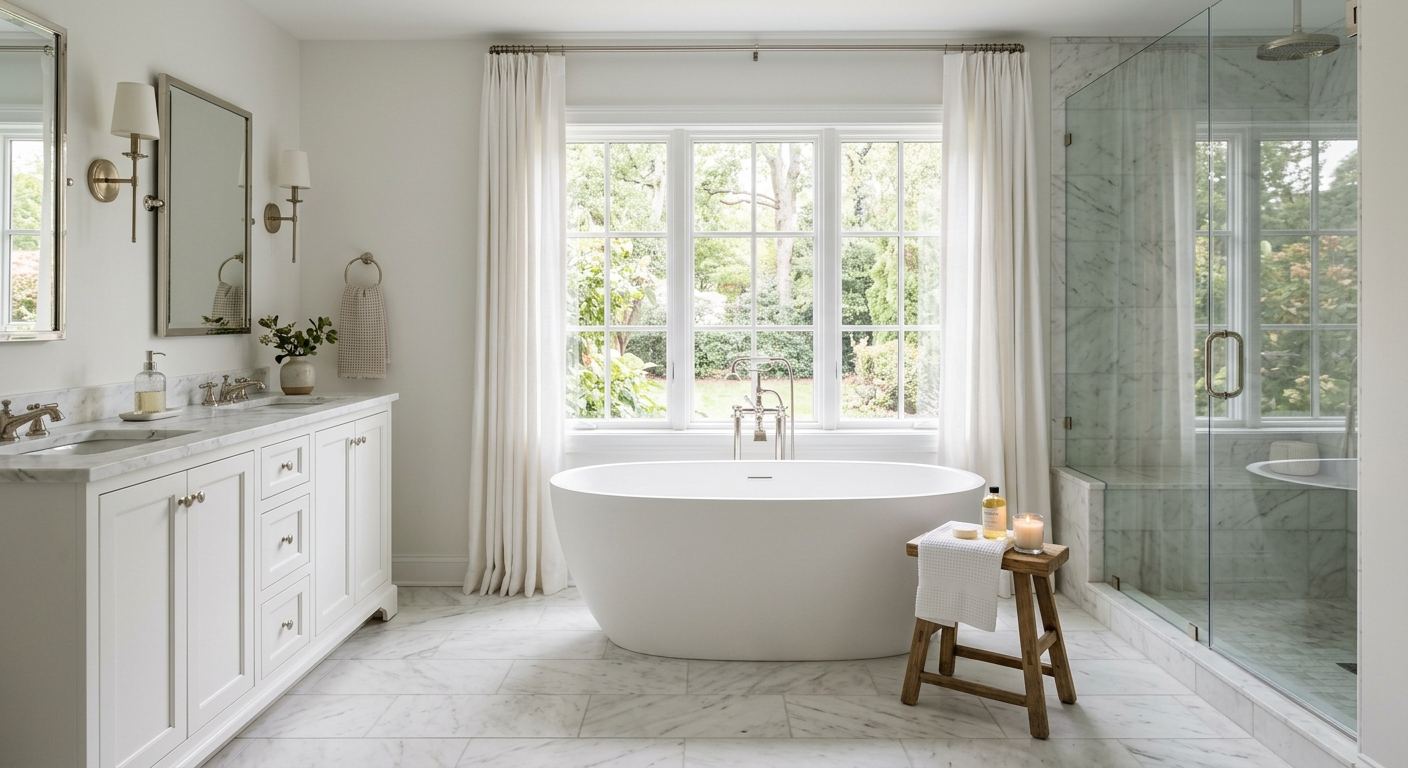
Bathroom renovation options and costs in Cedar
Cedar, British Columbia is a small community (population 2,836 per the Statistics Canada, 2021 Census) where bathroom renovations still come down to three big things: labour availability, the age of the home, and how quickly unexpected issues surface once walls and floors are opened. In the Lower Mainland–Southwest region, older mid‑century and pre‑1980 housing stock is common, and that’s where you’ll most often see dated plumbing layouts, aging drains (including cast‑iron or galvanized lines), and occasional asbestos-containing materials in older flooring or drywall compound. In practical terms, the “same” bathroom can price very differently once a contractor finds what’s behind the tile.
Cost is also shaped by local contractor capacity. Metro Vancouver and surrounding cities like Surrey, Burnaby, Richmond, and Abbotsford pull in skilled plumbers, tilers, and electricians, and that competition tends to keep labour rates higher than in other parts of BC. Even if Cedar-specific access is straightforward, the trades that travel here generally follow the same regional pricing pressures.
If you’re renovating a bathroom in older areas near local commercial hubs—where many homes were originally built for compact 3‑piece layouts—you’ll often find ventilation and rough‑in upgrades become necessary to meet current British Columbia requirements. That’s why your budget should include a realistic allowance for plumbing and venting work, not just the visible finishes. Use the table below to compare common renovation paths, then we’ll break down what drives the range.
| Renovation Scope |
What's Included |
Typical Duration |
Price Range |
| Cosmetic refresh (paint, fixtures, accessories only) |
Paint, swap vanity/sink and taps, replace mirror/light, update accessories; no wall removal; existing plumbing left as-is |
3–5 days |
$2,500 – $7,500 |
| Mid-range full renovation (new tile, vanity, tub/shower, electrical) |
Demo and rebuild of wet-wall surfaces, new tub or tub-surround tile, new vanity and toilet, updated exhaust fan (with electrical), basic waterproofing and re-tiling |
2–3 weeks |
$18,000 – $30,000 |
| High-end full renovation (custom tile, steam shower, heated floors) |
Custom tile work, upgraded waterproofing system, steam shower or premium shower package, heated floors (proper circuit), designer fixtures, upgraded lighting and ventilation |
3–5 weeks |
$30,000 – $45,000 |
| Shower-only installation (convert tub to walk-in shower) |
Remove tub, install walk-in shower base/pan, new tile surround, valve changes as needed, exhaust/venting check, waterproofing and grout sealing |
1.5–2.5 weeks |
$8,000 – $25,000 |
| Bathtub replacement or tub-liner install |
Replace old tub with new unit and re-seal; or install a liner system where compatible; address immediate surround issues and recaulk |
1–2 weeks |
$1,500 – $6,000 |
| Tile-only installation (floor + surround, existing layout kept) |
Remove existing tile where required, install new floor and wet-wall tile to a specified extent, basic waterproofing upgrades as needed at interfaces |
1–3 weeks |
$2,000 – $8,000 |
Prices are estimates only and vary by project scope, site access and material selection.
What affects the price of bathroom renovation in Cedar
In Cedar and across the Lower Mainland–Southwest, you can easily see quote differences of 30–50% for the “same” bathroom because the biggest variables aren’t the visible finishes—they’re the labour trades required and what’s hidden in older walls and floors. The regional market has higher construction labour costs than many other parts of British Columbia, mainly driven by demand and limited availability of specialized plumbers, tilers, and electricians. When you compare to lower-cost provinces, that gap can translate into a noticeable step change; even within BC, projects can swing widely depending on how many trades are needed once demolition reveals the true condition.
Housing age matters more here than climate. We don’t price bathrooms because of constant freezing or heavy snow load the way some regions do; instead, we price because older homes in this region often hide cast-iron or galvanized drains, outdated copper supply lines, and insufficient venting pathways. Those discoveries expand scope quickly—especially when plumbing and venting must be updated to current requirements. If asbestos-containing materials are encountered in pre‑1985 flooring, drywall compound, or insulation, abatement protocols can add roughly $1,500–$5,000+ to the budget, depending on access and what’s disturbed.
Two concrete Cedar examples: (1) converting a tub to a shower often turns into a plumbing and slope correction task, which is why shower-only scopes can land in the $8,000 – $25,000 band rather than the low end; (2) keeping the layout but changing tile can still climb toward the $2,000 – $8,000 tile-only band if subfloor prep and waterproofing upgrades are needed for a stable, mould-resistant install.
| Price Factor |
Why It Matters |
Cost Impact |
| Layout change — moving drain or supply lines requires rough-in work |
Shifting plumbing means opening walls, changing pipe runs, redoing venting tie-ins, and coordinating trade schedules |
Often +$5,000 to +$15,000 versus keeping layout |
| Tile selection — large-format porcelain vs. mosaic vs. ceramic |
Harder tile tolerances increase labour time; larger formats require flatter substrates and better installation technique |
Usually +$1,000 to +$6,000 depending on tile and substrate prep |
| Fixture tier — builder-grade vs. mid-range vs. designer brands |
Premium fixtures cost more and may require upgraded rough-in components and longer lead times |
Commonly +$800 to +$6,000 |
| Subfloor condition — rot or unlevel concrete adds scope |
Repairs, levelling, and waterproofing compatibility upgrades are required before tile can be set |
Often +$1,000 to +$5,000 |
| Electrical — adding GFCI outlets, exhaust fan, heated floor circuit |
Bathrooms require safety upgrades and code-compliant connections; heated floors add circuit complexity |
Commonly +$800 to +$4,500 |
| Waterproofing method — membrane type and extent |
Proper waterproofing reduces mould risk; higher-spec systems cost more and take extra install steps |
Typically +$500 to +$3,500 |
| Older-home surprises — asbestos tile, cast-iron drains, galvanized pipes |
Discovery triggers remediation, dust control, and potential pipe replacement |
Often +$1,500 to +$10,000+ depending on findings |
| Bathroom size — sq ft drives tile and labour time directly |
More surface area means more mortar, membranes, set and grout time; also impacts material quantities |
Varies widely; +$3,000 to +$12,000 for larger footprints |
Permits & regulations in British Columbia
In British Columbia, cosmetic updates—like swapping a vanity, changing taps, replacing a toilet, repainting, or retiling without moving plumbing—typically do not require a permit in the way structural or electrical system changes do. Where you start needing approvals is when you relocate plumbing, change electrical circuits, or alter walls/structural framing. In a Cedar bathroom, that usually means: (1) relocating a drain or supply line for a new shower layout, (2) adding a new exhaust fan with a new electrical circuit or significant electrical changes, and (3) any structural wall changes that require modifications to studs, blocking, or ventilation pathways. Plumbing rough-ins that involve changing the pipe work generally require permits and inspections.
Electrical work must meet provincial code and must be done by a licensed electrician, or properly signed off where applicable. Before the first demo day, ask the contractor to provide their British Columbia trade licence details (for the trades they’ll be performing) and a copy of liability insurance. For the injury-risk side, confirm coverage equivalent to Workers’ Compensation for the company’s workforce (commonly discussed as WCB coverage in BC). Then, compare that against what their quote says about permits, inspections, and disposal.
Step-by-step verification for homeowners in Cedar: (1) check the contractor’s licence number against the appropriate online British Columbia registry for their specific trade; (2) request a certificate of insurance and confirm it’s current and matches the address/project; (3) ask whether they carry WCB coverage for employees and get written confirmation; (4) keep the contractor’s permit/inspection responsibilities in writing so you know who pulls permits and who schedules inspections.
Choosing tile, waterproofing and fixtures for your Cedar bathroom
In Cedar, the fastest way to control your budget is to make three smart material decisions early: tile choice, waterproofing method, and fixture tier. Tile sets the tone and drives labour—especially in British Columbia’s coastal humidity where bathrooms must stay dry behind the scenes. Start with tile: ceramic is an entry option and works well for floors or walls when you accept simpler aesthetics; porcelain is typically stronger and denser for wet areas; natural stone (marble, travertine, slate) looks premium but can require more care and tighter workmanship, plus occasional sealing routines depending on the stone.
Next, match the waterproofing to the construction. Paint-on membranes can be cost-effective for select applications, but bonded sheet membranes and modern shower systems (including industry-standard engineered approaches) tend to give more reliable coverage at transitions. In a Cedar bathroom, proper waterproofing behind tile—especially at niches, corners, and the shower curb—helps prevent mould and moisture-related failure, which is a common long-term concern in the Lower Mainland’s damp indoor/outdoor environment.
Finally, choose fixture tier based on how long you’ll own the home and what buyers notice. Builder-grade fixtures can keep your total in the $18,000 – $30,000 mid-range renovation band, while designer brands and heated floor options often push budgets toward the $30,000 – $45,000 high-end band.
Example: upgrading from ceramic to porcelain may add a few thousand dollars in materials and prep, but it’s often justified if you’re doing heated floors or a full wet-wall renovation where you want durability and dimensional stability. The same money spent on waterproofing details is less glamorous, but it’s usually the better “value-for-longevity” decision.
| Material / Option |
Pros |
Cons |
Price Range |
| Ceramic tile (floor + walls) |
Good starter choice; wide colour variety; straightforward to source locally |
Can chip more easily; sometimes higher breakage if substrate isn’t well prepared |
$2,000 – $4,500 |
| Porcelain tile (floor + walls) |
More water-resistant and durable; handles wet areas well; many modern large-format designs |
Requires flatter substrate for large formats; slightly higher material cost |
$3,500 – $7,000 |
| Natural stone (marble, travertine, slate) |
Luxury look; unique veining; excellent when installed by experienced tile setters |
Higher maintenance/sealing considerations; more expensive material; higher labour risk |
$6,000 – $12,000 |
| Frameless glass shower enclosure |
Clean, modern look; visually opens up a small bathroom |
Costs more than framed options; requires accurate measurements and careful installation |
$2,000 – $6,500 |
| Prefab tub surround (acrylic) |
Fast install; predictable waterproofing surfaces; helps control labour time |
Less custom aesthetic than full tile; limited style options |
$1,500 – $3,500 |
| Custom shower pan (tile or linear drain) |
Modern, integrated look; linear drain can feel more spacious and easier to clean |
Most labour-intensive option; demands precise slope, membrane detailing, and drain alignment |
$4,000 – $12,000 |
How to choose a bathroom renovation contractor in Cedar
When choosing a bathroom contractor in Cedar, start with verification: British Columbia licensing for the specific trade work they’ll do, current liability insurance, and Workers’ Compensation coverage for their crew. How to check: ask for licence details and confirm them via the appropriate BC online registry for the trade category; request a certificate of insurance that lists the business and shows adequate coverage for property damage and liability; and ask for written confirmation of WCB/Workers’ Compensation coverage for employees (not just subcontractors). If a contractor can’t provide any of those promptly, consider that a serious red flag.
Then get 2–3 itemized written quotes. A good quote breaks labour and materials by line item (demo, framing adjustments if any, plumbing rough-in allowance, waterproofing, tile setting, electrical, fixtures, disposal) rather than only a lump sum. Read exclusions carefully: confirm whether permits are included, whether the contractor handles inspections, what “disposal” covers, and whether they include patching and paint after tile and trim work. Timeline clarity matters too—get a start date and a realistic completion estimate in writing.
For warranty, insist on two layers: a workmanship warranty (often several years) and the manufacturer/product warranty for fixtures, waterproofing components, and heated systems where applicable. Ask whether any warranty is transferable to you as the homeowner. Finally, avoid large upfront payments—never more than about 10–15% at the start, and use a holdback until the job is complete and deficiencies (if any) are addressed.
- Ask for BC trade licence details for each trade involved (plumbing/electrical where applicable) before signing.
- Confirm liability insurance is current and request the certificate in writing.
- Verify Workers’ Compensation coverage for employees (WCB/Workers’ Comp confirmation).
- Get at least two itemized quotes with labour and materials separated.
- Ensure the quote lists what’s included for demolition, disposal and site protection.
- Confirm who pulls permits and schedules inspections (and whether that cost is included).
- Ask for the waterproofing method name and scope (where it goes and how it’s detailed).
- Confirm tile prep expectations (subfloor flatness, backer prep, and leveling allowance).
- Require a clear schedule for tile lead times and ordering fixtures early.
- Check that exhaust fan upgrades include electrical scope and code-compliant installation.
- Request warranty terms in writing for workmanship and each major product.
- Use a payment schedule with only 10–15% upfront, and hold back until punch list completion.
In Cedar, common red flags include: (1) quoting a “full renovation” without stating whether plumbing venting or waterproofing is included; (2) refusing to provide licence/insurance/WCB documentation; (3) offering only lump-sum pricing with no exclusions or allowances; (4) asking for large deposits upfront; and (5) giving a vague schedule without specifying material lead times for tile, glass, or fixtures.
Frequently asked questions — bathroom renovation in Cedar
What's the most common mistake homeowners make in bathroom renovations?
The most common mistake I see in Cedar and across the Lower Mainland–Southwest is under-scoping the “hidden” work. Homeowners often budget for visible finishes but don’t account for what’s behind them—like upgrading aging drains, correcting venting, or improving ventilation when they open walls. In older pre‑1980 homes, you can also run into issues such as galvanized supply lines, cast-iron drains, or in rarer cases asbestos-containing materials in older flooring or drywall compound. When that happens, the scope expands quickly and the project can drift from a mid-range $18,000 – $30,000 plan to something closer to the upper band. The fix is simple: investigate plumbing and electrical early, and insist on an itemized quote with waterproofing and permit responsibilities clearly stated.
How long does tile installation take in a Cedar bathroom?
Tile timelines in Cedar usually depend on the bathroom size and the substrate condition, but a typical range is 7–15 working days for floor and wet-wall tile in a standard layout. The reason you may see longer schedules is substrate prep and waterproofing detailing—especially if the existing subfloor is uneven or if the contractor needs to bring it to a stable plane for large-format porcelain. If you’re doing a shower with a custom pan or a linear drain, tile time is longer because slope, drain alignment, and membrane cure times must be respected. For comparison, a complete renovation often lands in the 2–3 week window in the $18,000 – $30,000 mid-range band, while high-end custom work can stretch to 3–5 weeks as part of the $30,000 – $45,000 range.
How much does a bathroom renovation cost in Cedar?
In Cedar, realistic budgets usually start around the mid-range full renovation band and move up based on plumbing changes, tile complexity, and electrical needs. A mid-range full renovation—new tile, vanity, tub/shower, and electrical updates—commonly falls in the $18,000 – $30,000 range. If you’re aiming for higher-end finishes like heated floors, custom shower details, and premium tile/fixtures, many projects move into the $30,000 – $45,000 band. Smaller scopes can be cheaper: a shower-only conversion (from tub to walk-in) often lands in the $8,000 – $25,000 range depending on plumbing and waterproofing requirements. The wide ranges exist because older Cedar-area homes in the Lower Mainland–Southwest often hide drainage, venting, or wiring issues once the walls open up.
How long does a bathroom renovation take in Cedar?
Most full bathroom renovations in Cedar take about 2–3 weeks for a mid-range scope, assuming materials are on site and hidden issues don’t derail the schedule. If you’re doing high-end custom work—such as a steam shower, heated floors, and detailed tile layouts—plan for roughly 3–5 weeks. Timeline is strongly affected by trade coordination (plumber, electrician, tile setter) and by cure/inspection windows for waterproofing and electrical sign-offs where required. Shower-only conversions can be faster, often around 1.5–2.5 weeks, but older drain conditions or venting corrections can push timelines upward. To keep timelines predictable, choose fixtures early and request lead-time confirmations in your signed contract—especially for glass enclosures and specialty tiles.
Do I need a permit for a bathroom renovation in British Columbia?
In British Columbia, cosmetic updates like replacing a vanity, swapping fixtures, or retiling without moving plumbing often do not require the same level of permitting. Permits typically become necessary when you change plumbing rough-ins (for example, moving the drain or relocating supply lines), add new electrical circuits (like new exhaust fan wiring or heated floor circuits), or make structural changes that affect walls/ventilation pathways. Electrical work must meet provincial code and be completed or signed off appropriately by a licensed electrician. In Cedar, I recommend you ask your contractor to specify which permits are required and who pulls them before work starts. You can also confirm the contractor’s British Columbia trade licence details, ask for liability insurance, and request written confirmation of Workers’ Compensation coverage for their crew.
What's the best tile for a bathroom in Cedar?
For most Cedar bathrooms, porcelain tile is the best balance of durability and performance. It handles moisture and everyday cleaning well, and it’s available in many modern looks that suit both compact and larger layouts. Ceramic tile is fine for entry-level budgets, but porcelain tends to be the safer bet for wet areas and long-term durability—especially when you’re investing in correct waterproofing and substrate prep. Natural stone can look beautiful, but it adds cost and may require extra care (sealing and maintenance considerations depending on the stone). If you’re trying to keep the project in the $18,000 – $30,000 range, porcelain usually gives the best “value-to-longevity” without ballooning labour time. If your budget stretches toward the $30,000 – $45,000 range, custom stone and higher-spec shower assemblies can be justified—provided the waterproofing system and installation workmanship are top-tier.