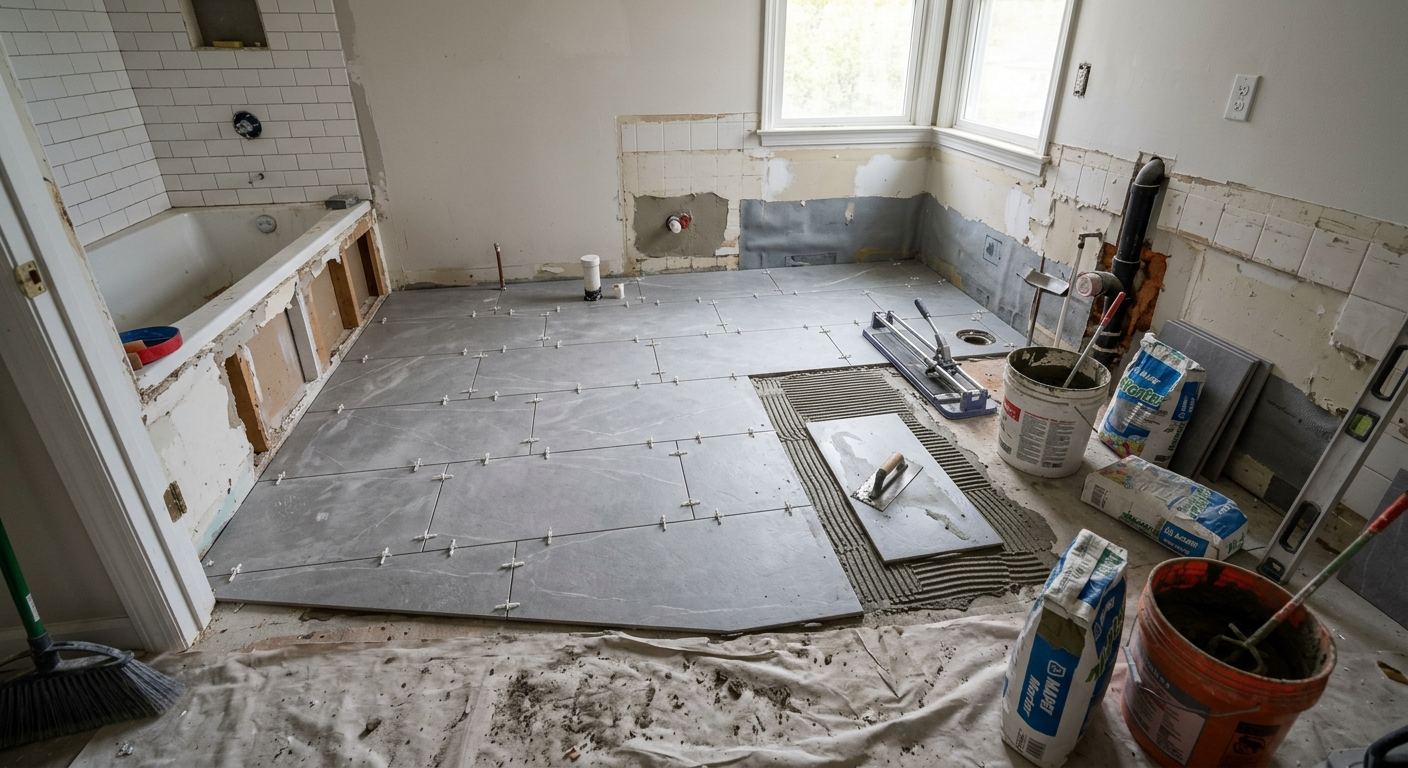
Bathroom renovation options and costs in Coronation Park
Bathroom renovation in Coronation Park starts with choosing the right level of upgrade for how long you plan to stay—and what your existing plumbing and waterproofing will allow. In a community of 1,468 residents (Statistics Canada, 2021 Census), many homes were built during waves that included mid-century layouts, and that often means older bathroom rough-ins are harder to adapt neatly without opening walls and floors. In the Lower Mainland–Southwest, labour rates and the age of housing stock are typically the biggest cost drivers—more than “weather” in the direct sense—because skilled plumbers, tilers, and electricians are in strong demand and are booked quickly. Once we open up the bathroom, it’s common to discover galvanized supply lines, older drain stacks, or poor ventilation paths that need upgrading to meet current British Columbia expectations.
Climate matters locally because bathrooms run in high-humidity conditions for long parts of the year; if waterproofing or ventilation is marginal, moisture can linger behind tile assemblies. In areas of the community where older mid‑century housing is common (people often mention the older residential streets near the central service corridor), this trade demand shows up as tighter scheduling for waterproofing and tile crews. You’ll also see scope expansion: a cosmetic plan can turn into a plumbing and venting upgrade once walls are opened. That’s why homeowners compare options using clear budget bands.
The table below shows realistic scopes and typical durations for Coronation Park bathroom work in the Lower Mainland–Southwest, and leads into how the biggest price factors can shift your quote by 30–50%.
| Renovation Scope |
What's Included |
Typical Duration |
Price Range |
| Cosmetic refresh (paint, fixtures, accessories only) |
Paint, replace vanity top or vanity, toilet (if desired), faucet, mirror, lighting (no circuit changes), accessories |
2–5 days |
$3,000 – $8,000 |
| Mid-range full renovation (new tile, vanity, tub/shower, electrical) |
Remove surfaces, tile floor and surround, waterproofing, new vanity, new tub/shower or reglaze + tile surround, basic electrical updates (GFCI/exhaust), disposal and haul-away |
2–3 weeks |
$18,000 – $30,000 |
| High-end full renovation (custom tile, steam shower, heated floors) |
Custom waterproofed shower/tub surround with premium tile, heated floor system, upgraded electrical for heated circuit, frameless glass (if included), higher-end fixtures/valves, additional trim and finishes |
3–5 weeks |
$30,000 – $45,000 |
| Shower-only installation (convert tub to walk-in shower) |
Demo and disposal, convert plumbing to shower outlet, waterproofing system, tile shower walls and floor (or niche work), new drain and glass/door allowance, exhaust fan check/upgrade if needed |
1–2 weeks |
$12,000 – $25,000 |
| Bathtub replacement or tub-liner install |
New tub drop-in replacement or tub-liner prep + install, tile touch-ups/reseal, plumbing reconnect, basic leak testing |
3–7 days |
$1,500 – $6,000 |
| Tile-only installation (floor + surround, existing layout kept) |
Tile removal, substrate evaluation and prep, waterproofing membrane, install new tile floor and wall surround, grout/seal, reinstallation of trim/fixtures (where applicable) |
1–2 weeks |
$2,000 – $8,000 |
Prices are estimates only and vary by project scope, site access and material selection.
What affects the price of bathroom renovation in Coronation Park
Two quotes for the “same” bathroom renovation in Coronation Park can differ by 30–50% because the Lower Mainland–Southwest market prices trades differently—and because older homes can force scope changes once walls and floors come off. In this region, labour rates and the age of local housing stock are the main cost drivers. Even when you’re not changing the layout, opening a wall frequently reveals dated rough-ins and ventilation paths that don’t match today’s best practice for moisture control. That’s why a job that sounds like a mid-range refresh can move toward full renovation pricing (for example, budgets in the $18,000–$30,000 band) once plumbing and electrical are corrected.
In many pre‑1980 homes common around the Lower Mainland–Southwest, renovators often encounter aging cast‑iron drain sections, galvanized supply lines, and outdated electrical junctions. If asbestos-containing materials are discovered (commonly discussed with pre‑1985 flooring, drywall compound, or insulation in older BC homes), remediation and additional trades can add roughly $1,500–$5,000+ to the budget depending on the extent of affected material. Venting upgrades also raise costs because the exhaust fan may require new duct runs and electrical updates.
Concrete examples from real Coronation Park bathroom jobs: (1) keeping your layout and replacing only fixtures can fit closer to the “cosmetic refresh” end, but (2) moving a drain even a few inches usually requires rough-in work and changes the tiling and waterproofing details, pushing cost upward; (3) switching from entry-level ceramic to large-format porcelain can increase labour and prep time due to heavier tiles and flatter substrate requirements, which is why high-end totals often approach the $30,000–$45,000 band when heated floors or premium shower systems are added.
| Price Factor |
Why It Matters |
Cost Impact |
| Layout change — moving drain or supply lines requires rough-in work |
More demolition, plumbing labour, and inspection coordination; waterproofing must be continuous around new penetrations |
Often +$5,000 – $12,000 |
| Tile selection — large-format porcelain vs. mosaic vs. ceramic |
Harder-to-cut formats demand precise substrate prep, more labour time, and higher waste rates |
Often +$500 – $4,000 |
| Fixture tier — builder-grade vs. mid-range vs. designer brands |
Higher-end valves, trims, and matching sets cost more and may require additional install detailing |
Often +$1,000 – $6,000 |
| Subfloor condition — rot or unlevel concrete adds scope |
Fixing flex/deflection and restoring flatness is required for long-lasting tile and waterproofing |
Often +$800 – $4,500 |
| Electrical — adding GFCI outlets, exhaust fan, heated floor circuit |
Licensed electrical work, new circuits, and safe placement in wet areas affect cost significantly |
Often +$500 – $3,500 |
| Waterproofing method — membrane type and extent |
Quality membrane systems and proper detailing around seams/penetrations affect durability and mould risk |
Often +$300 – $2,500 |
| Older-home surprises — asbestos tile, cast-iron drains, galvanized pipes |
Remediation, plumbing replacement, and additional disposal drive both cost and schedule |
Often +$1,500 – $8,000+ |
| Bathroom size — sq ft drives tile and labour time directly |
More surface area means more membrane, thinset/grout, labour hours, and time to cure |
Often +10% – 40% depending on size and complexity |
Permits & regulations in British Columbia
In British Columbia, cosmetic updates—like swapping a faucet, replacing a vanity, repainting, or retiling within the same footprint—often don’t require a permit. Where projects cross into “system changes,” permits and inspections become more common. Typical work that does require permits/inspections includes: relocating plumbing fixtures (moving a drain or supply line), changing the shower valve position, modifying the exhaust fan/ducting when new electrical work is involved, and any structural wall changes that impact framing or support. Electrical work must meet provincial code and be completed or signed off by a licensed electrician; adding a dedicated circuit for a heated floor or adding GFCI protection usually falls in this category.
Typical work that often does not require a permit is: replacing fixtures in the same locations, replacing trim/mirrors/lighting with like-for-like changes (no new circuits), and tile work that does not involve plumbing relocation. That said, permit requirements can hinge on how your contractor describes scope, so insist on itemised scope notes.
For Coronation Park homeowners, verify before signing: (1) check the contractor’s British Columbia trade licence online; (2) request a certificate of liability insurance and confirm it covers renovation work; and (3) ask for proof of workers’ compensation coverage (commonly handled through WCB/clearance documentation). Step-by-step, you should have the licence number, the valid insurance certificate (with expiry dates), and clearance wording in writing before demolition starts.
Choosing tile, waterproofing and fixtures for your Coronation Park bathroom
Your tile, waterproofing, and fixtures choices usually determine whether your renovation performs for years—or develops odours, staining, and mould risk. In Coronation Park’s Lower Mainland–Southwest environment, we design for persistent bathroom humidity: showers need a complete, properly detailed waterproof assembly, and the ventilation strategy has to match the moisture load.
First, tile choice: ceramic is typically the entry-level option and can be budget-friendly, but it still demands good prep for a flat surface. Porcelain is denser, handles moisture well, and is often worth the step up when you want a more durable finish and better longevity in wet areas. Natural stone (marble, travertine, slate) looks high-end but is more maintenance-sensitive and can be costlier because installation requires careful sealing and flatness.
Second, waterproofing method: paint-on membranes can work when applied correctly to a prepared substrate, but bonded sheet membranes and tested systems (including full-detailing around niches and corners) usually provide more dependable performance. The key is extending the waterproof layer to the right areas and sealing penetrations—this is what prevents moisture migrating behind tile.
Third, fixture tier: builder-grade fixtures can keep initial costs down, but mid-range or designer-valve systems can improve day-to-day performance and resale appeal. For example, swapping from entry-level ceramic to porcelain may add a few hundred to a couple thousand dollars in materials and install time, but it can be justified when you’re already in the renovation workflow. Likewise, choosing a bonded system and correct niche detailing is “where you should spend,” because it protects the structure and reduces future call-backs—especially compared with cutting waterproofing scope to chase a lower total.
| Material / Option |
Pros |
Cons |
Price Range |
| Ceramic tile (floor + walls) |
Budget-friendly, wide style selection, familiar install methods |
Often higher moisture absorption than porcelain; relies on correct grout and prep |
$2,000 – $5,000 |
| Porcelain tile (floor + walls) |
Durable in wet areas, lower absorption, modern look with many finishes and sizes |
Heavier tile can increase substrate prep and labour time |
$4,000 – $8,000 |
| Natural stone (marble, travertine, slate) |
Luxury appearance, unique character and depth |
Requires sealing/maintenance; installation and detailing can be more labour-intensive |
$6,000 – $12,000 |
| Frameless glass shower enclosure |
Brightens the room, modern aesthetic, durable hardware options |
More expensive than curtains/standard kits; requires precise wall alignment |
$2,500 – $6,500 |
| Prefab tub surround (acrylic) |
Faster install, consistent waterproof surface, generally easier to maintain |
Fewer design options; transitions and trim details must be done carefully |
$1,500 – $4,500 |
| Custom shower pan (tile or linear drain) |
Improves drainage and design; linear drain look is especially popular |
More detailed waterproofing and framing adjustments; higher labour coordination |
$4,000 – $12,000 |
How to choose a bathroom renovation contractor in Coronation Park
Picking the right contractor in Coronation Park comes down to verifying credentials, then matching their proposed scope to the way bathrooms actually fail (waterproofing, ventilation, and rough-in details). In British Columbia, confirm the contractor’s trade licence (and that the right trade is covering the right tasks), request liability insurance with a current certificate, and ask for workers’ compensation coverage documentation (WCB/clearance information). Don’t accept “we’re covered” without paperwork—look for the licence number and the insurer details, including policy expiry dates.
Next, get 2–3 itemised written quotes. You want labour and materials broken out by scope (demo/disposal, plumbing rough-in, waterproofing, tile install, electrical, ventilation, and trim), not one lump sum. Read the exclusions: is disposal included, are permits included, does the quote cover substrate repair, and what happens if concealed plumbing problems appear after demo? A well-scoped quote will explain how discoveries are handled and what contingency range applies.
Warranty matters too: ask for a workmanship warranty length and whether it aligns with the waterproofing and tile system, plus the manufacturer warranty on key products. Clarify if coverage is transferable if you sell the home. On payment schedule, never pay more than 10–15% upfront; use progress draws and hold back money until the job is complete and deficiencies are corrected. Finally, insist on a start date and completion estimate in writing.
- Confirm British Columbia trade licence for each trade involved (not just “general contractor” paperwork).
- Request liability insurance certificate and verify coverage applies to renovation work.
- Ask for WCB/clearance documentation for the crew who will be on site.
- Get itemised quotes with line-by-line labour/material breakdown (no blanket “allowance” without numbers).
- Check whether permits are included or listed as a separate line item.
- Confirm disposal/haul-away is included, including tile and demolition waste.
- Ask who supplies waterproofing materials and which membrane system is specified.
- Verify tile prep scope: substrate flatness, underlayment/repair, and crack treatment.
- Require an exhaust fan/ventilation plan where needed (ducting and electrical noted).
- Review schedule: lead times for glass, tile, and fixtures should be stated.
- Ask for workmanship warranty wording and manufacturer warranty details in writing.
- Use a payment schedule with a small deposit, progress payments, and a completion holdback.
Red flags I see in Coronation Park bathroom contractor proposals: vague scope (“new shower as required” with no waterproofing details), no mention of permits or licensed electrical/plumbing, refusing to provide insurance/clearance proof, cheap waterproofing substitutions after deposit, and quotes that omit demolition/disposal or substrate repair—then charge change-orders once walls are open.
Frequently asked questions — bathroom renovation in Coronation Park
How do I prevent mold in a Coronation Park bathroom?
Mold prevention in British Columbia comes down to moisture management: correct waterproofing behind tile, grout/grind-quality work, and ventilation that actually removes humid air. In Coronation Park homes, we often see issues start when bathrooms share an older vent path or when the shower waterproofing is interrupted at corners, niches, or around plumbing penetrations. Choose a waterproofing system designed for wet areas and ensure it’s detailed up to the right height and sealed at seams. Then confirm your exhaust fan is properly ducted (not just recirculating) and wired to run long enough after showers. Keep a stable temperature, fix slow leaks quickly, and avoid “partial re-grouts” without addressing underlying waterproofing.
What adds the most resale value in a bathroom reno?
In Coronation Park and across the Lower Mainland–Southwest, buyers tend to pay for visible quality and for “performance” features that reduce maintenance. Generally, best resale value comes from a clean, modern layout that works, durable tile work, reliable waterproofing, updated lighting, and efficient ventilation. Upgrading the shower (especially converting a tub to a walk-in with a strong waterproof assembly and quality glass/door) can be a major selling point when done properly. Heated floors and premium finishes can help, but they shouldn’t replace waterproofing fundamentals. On budgets, homeowners often feel the strongest balance of value versus cost in the mid-range full renovation band—commonly around $18,000 – $30,000—because it captures both aesthetics and the behind-the-wall updates many buyers care about.
Can I keep my existing plumbing layout to save money?
Yes—keeping the existing plumbing layout is one of the most effective ways to protect your budget in Coronation Park. When you don’t move the drain or supply lines, you typically reduce demo, rough-in labour, and inspection coordination. It also makes waterproofing easier because you’re working within the original pipe locations and existing penetrations. That said, “keeping the layout” doesn’t mean ignoring what’s behind the walls; older drains may still need replacement, and supply lines can be galvanized. In older Lower Mainland–Southwest homes, it’s common to find that plumbing upgrades are needed once walls are opened. A well-run renovation starts with an investigation plan so you can keep costs closer to the intended scope, rather than drifting from a mid-range plan into a higher band like $30,000 – $45,000 due to hidden remediation.
How much does a walk-in shower cost in Coronation Park?
A walk-in shower conversion (turning a tub into a shower) commonly lands in the shower-only installation band of $12,000 – $25,000 in the Lower Mainland–Southwest. The range depends on whether you’re doing extensive tile and niche work, whether you’re adding a frameless glass enclosure, the type of shower pan (traditional tiled pan vs linear drain details), and whether plumbing/venting upgrades are required once the walls are open. If your bathroom is larger or the substrate needs more prep, labour and material time increases. On the low end, it’s more likely when the layout is kept close to original and finishes are selected within a mid-range tier.
What's the ROI on a bathroom renovation?
ROI in British Columbia varies by home value, neighbourhood demand, and whether the renovation improves core function (waterproofing, ventilation, and fixture reliability). While exact resale ROI depends on your market and buyer preferences, homeowners in Coronation Park typically see better results when they focus on durability and moisture performance rather than only aesthetics. That’s why a well-executed mid-range full renovation—often around $18,000 – $30,000—tends to balance buyer appeal with practical improvements behind the walls. If you go high-end with heated floors, premium glass, and custom features (often near $30,000 – $45,000), you can increase comfort and potentially buyer interest, but it may not fully “cash back” depending on the buyer segment.
Do I need waterproofing behind the tile?
In nearly all bathroom renovations in Coronation Park, yes—you need waterproofing behind the tile in the wet areas, including shower walls and floors. British Columbia’s best practice focuses on preventing moisture movement into wall cavities and subfloors. Tile is not waterproof by itself; the grout can’t be relied on as the only barrier. The waterproof layer must be continuous and properly detailed around corners, seams, transitions, and plumbing penetrations. When you see failures in older Lower Mainland bathrooms, it’s often tied to incomplete waterproofing coverage or improper detailing during the install. A reputable contractor will specify the waterproofing method and explain how it will be installed and verified before tile goes on.