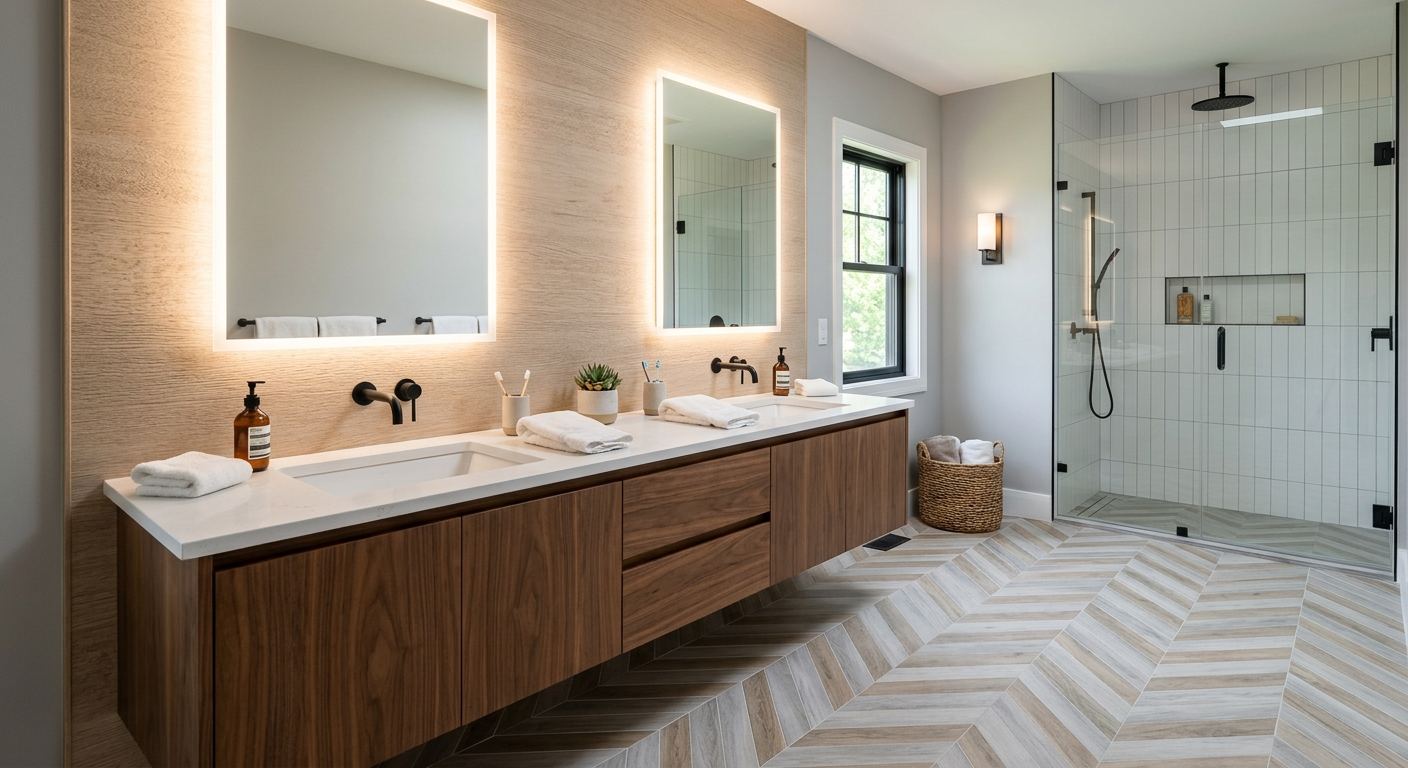
Bathroom renovation options and costs in Quesnel
Bathroom renovation costs in Quesnel typically fall into a few clear tiers, and your starting point depends on how much you change the layout, finishes and systems. In Quesnel, a large portion of homes are older—about 62.3% were built before 1981 (Statistics Canada, 2021 Census)—so it’s common to discover dated plumbing configurations, older venting approaches, and sometimes floor or ceiling materials that require extra care. That matters because Cariboo bathroom renos often include opening walls and floors to correct what’s hidden, not just replacing “what you can see.”
From a market perspective, Quesnel and nearby communities are served by the same trade network that supports Prince George, Quesnel and Williams Lake, so scheduling can be competitive during peak season. The Cariboo climate doesn’t usually drive cost as much as labour and housing age, but it does affect moisture management: exhaust fans, vent ducting, and insulation details around exterior walls can change the scope. In homes with older mechanical setups, we commonly need to upgrade ventilation capacity so the bathroom dries quickly after showers and baths—especially in winter when indoor humidity is harder to vent out.
In terms of where demand shows up, we frequently see bathroom work around downtown Quesnel and the older residential blocks along main corridors, where many houses match the pre-1981 profile. That’s also where homeowners often choose a mid-range refresh to get modern, water-safe performance without fully relocating plumbing.
Below is a practical comparison of typical options you can expect to see in Quesnel. Use this to pressure-test your quote against a realistic scope before you commit.
| Renovation Scope |
What's Included |
Typical Duration |
Price Range |
| Cosmetic refresh (paint, fixtures, accessories only) |
New vanity or faucet, toilet/trim as needed, paint, re-caulking, accessory updates; tile left as-is |
3–6 days |
$14,000–$18,000 |
| Mid-range full renovation (new tile, vanity, tub/shower, electrical) |
Remove existing finishes; new shower/tub surround tile; vanity + mirror; updated exhaust fan; electrical updates for code compliance |
10–18 days |
$18,000–$26,000 |
| High-end full renovation (custom tile, steam shower, heated floors) |
Custom shower system, premium tile layout; heated floor circuit; higher-end fixtures; enhanced waterproofing and ventilation planning |
3–5 weeks |
$26,000–$32,000 |
| Shower-only installation (convert tub to walk-in shower) |
Remove tub; rebuild waterproofing and shower base; new walk-in enclosure; new valve trim and controls if needed |
7–14 days |
$9,000–$15,000 |
| Bathtub replacement or tub-liner install |
Replace tub (or install liner if suitable); new surround re-tile/finish; re-caulk and seal; basic plumbing connections |
4–10 days |
$4,500–$8,000 |
| Tile-only installation (floor + surround, existing layout kept) |
Demo to tile depth; substrate prep; tile floor + wall surround; grout/seal; waterproofing as required |
5–12 days |
$2,000–$9,000 |
Prices are estimates only and vary by project scope, site access and material selection.
What affects the price of bathroom renovation in Quesnel
Two bathroom quotes in Quesnel can differ by 30–50% even when the visible finishes look similar. The biggest driver is that trades have to be mobilized (plumbing, electrical, tile, drywall/paint), and the older your house, the more likely it is that opening walls reveals upgrades that are mandatory to bring the bathroom up to current safety and moisture standards. In many Cariboo homes, labour scope grows faster than materials do.
Regional labour rates and housing age outweigh climate as cost drivers. Climate mainly changes how we build for moisture: fan sizing and duct routing, insulation continuity, and waterproofing details to handle winter condensation. But age is what pulls the budget upward. Older homes often have undersized or outdated venting, galvanized supply lines, and cast-iron or copper drain components that may not align with modern shower valves and code-compliant venting needs. That’s where the scope expands, particularly on full renos that fall into the mid-range band (often around $18,000–$26,000) and can climb toward the upper full-renovation band (around $26,000–$32,000) once wall openings and upgrades are required.
As an example, if we convert a tub to a walk-in shower, the walk-in plumbing rough-in can trigger additional waterproofing area and electrical work for fan and GFCI—pushing a “straight swap” toward a more complete shower installation scope (commonly $9,000–$15,000). Another cost jump we see in pre-1985 materials: discovery of asbestos in vinyl floor tile or textured ceiling/drywall compounds can require certified abatement, which often adds roughly $1,500–$5,000+ depending on extent and containment.
Concrete examples from Quesnel: (1) an older drain stack may need partial replacement to correct slope or tie-in locations; (2) poor ventilation can mean we must enlarge the exhaust pathway and upgrade the fan—so the project becomes both a moisture-control upgrade and a finish replacement; and (3) an unlevel subfloor can add prep labour and extra underlayment so tile doesn’t crack. Those local “hidden condition” discoveries are usually why the same-sized bathroom ends up priced very differently.
| Price Factor |
Why It Matters |
Cost Impact |
| Layout change — moving drain or supply lines requires rough-in work |
New plumbing routes require demo, blocking, and proper slope/valve placement |
Often +$3,000–$8,000 |
| Tile selection — large-format porcelain vs. mosaic vs. ceramic |
Harder tiles need better prep and more specialized cutting/setting time |
Often +$500–$3,500 |
| Fixture tier — builder-grade vs. mid-range vs. designer brands |
Valve trim, vanity hardware and shower systems vary widely in cost and install complexity |
Often +$1,000–$6,000 |
| Subfloor condition — rot or unlevel concrete adds scope |
Repairs and flattening are required to prevent grout/tile failure |
Often +$1,000–$5,000 |
| Electrical — adding GFCI outlets, exhaust fan, heated floor circuit |
Bathroom code requirements frequently trigger upgrades |
Often +$800–$4,500 |
| Waterproofing method — membrane type and extent |
System choice affects labour time, material coverage and risk of moisture issues |
Often +$500–$3,000 |
| Older-home surprises — asbestos tile, cast-iron drains, galvanized pipes |
Discovery can add inspections, remediation and replacement work |
Often +$1,500–$10,000+ |
| Bathroom size — sq ft drives tile and labour time directly |
More wall/floor area increases tile, waterproofing, and prep/dry times |
Often +$2,000–$12,000 |
Permits & regulations in British Columbia
In British Columbia, cosmetic updates usually don’t require a permit. For Quesnel homeowners, that typically includes things like swapping a vanity top, changing a faucet/toilet (without moving plumbing), painting, replacing accessories, or retiling within the existing footprint when you’re not altering structural walls. However, permits are commonly required when you relocate plumbing—such as moving a toilet location, changing the shower drain position, or running new supply lines—because that involves plumbing rough-in work and inspection.
Electrical work has a clearer line: if you add or modify wiring circuits, install new bathroom exhaust fans with a new circuit, or include heated floors, that electrical portion must meet British Columbia code requirements and be completed or signed off by a licensed electrician. Even if the rest of the reno is “finish only,” electrical upgrades often trigger inspection requirements. Structural changes or alterations to load-bearing walls also generally require permitting and engineered input where applicable.
To verify a contractor in Quesnel step-by-step, start by confirming their British Columbia trade licence/registration through the relevant online registry listings, then request a certificate of liability insurance (make sure it covers the scope of work and isn’t expired). Ask for proof of workers’ compensation coverage (WSIB/WCB) where applicable so the project is properly covered. When applicable, a contractor should also be able to provide documentation showing compliance with clearance/permit processes and provide the permit number if one is required for your specific scope.
Choosing tile, waterproofing and fixtures for your Quesnel bathroom
In Quesnel, your budget usually hinges on three material decisions: tile choice, waterproofing system, and fixture tier. Start with tile. Entry-level ceramic tile is often the most budget-friendly, but it can be more forgiving than porcelain when selecting thinset and layout—still, installation quality is what prevents failures. Porcelain tile typically costs more per square foot, but it’s denser and more durable for bathroom floors and wet areas, and it often looks better for large-format designs (which can reduce grout lines if your substrate is prepared well). For “wow factor,” natural stone like marble or travertine can be the most expensive, and it may require more careful sealing and detailing; it can also increase labour time because stone tolerances can vary.
Next is waterproofing, which is critical in British Columbia’s moisture conditions. A simple paint-on approach may be sufficient for certain systems, but many renos perform best with a properly detailed bonded sheet membrane or a proven system that integrates with the drain and corners. The right method prevents mould by stopping water from reaching framing and drywall—especially around exterior walls where winter condensation risk increases.
Finally, fixture tier affects both budget and resale. Builder-grade faucets and shower controls can work well, but mid-range valves and shower systems often offer better flow control, better finishes and longer life. As a concrete example: upgrading from standard ceramic to porcelain tile plus a more robust waterproofing plan might add a few thousand dollars, but it’s justified when you’re doing a full renovation where walls are open anyway. Conversely, spending heavily on custom tile while keeping limited waterproofing coverage isn’t where you want to put extra money.
| Material / Option |
Pros |
Cons |
Price Range |
| Ceramic tile (floor + walls) |
Lower material cost, wide selection, good for walls |
More vulnerable to chipping underfoot; needs careful slip selection for floors |
$2,000–$5,000 |
| Porcelain tile (floor + walls) |
Durable, better for floors, cleaner look with fewer grout lines for large formats |
More expensive; heavier tiles increase handling and prep requirements |
$4,000–$9,000 |
| Natural stone (marble, travertine, slate) |
Luxury appearance; high-end resale appeal |
Sealing/maintenance; more variable cutting and installation time |
$7,000–$14,000 |
| Frameless glass shower enclosure |
Modern look; improves perceived space; durable hardware when installed correctly |
Requires accurate walls and smooth waterproofing surfaces |
$3,000–$7,000 |
| Prefab tub surround (acrylic) |
Fast install; consistent fit; easier cleaning |
Limited design flexibility; needs correct sealing for moisture control |
$1,500–$3,500 |
| Custom shower pan (tile or linear drain) |
Top-level look and performance; linear drains improve water capture |
More labour and detailed waterproofing; depends on drain placement |
$5,000–$12,000 |
How to choose a bathroom renovation contractor in Quesnel
Choosing the right contractor in Quesnel starts with verifying British Columbia credentials and making sure you’re protected if something goes wrong. Ask for proof of licensing/registration relevant to their trades, plus a current certificate of liability insurance—this protects you if there’s accidental damage or injury during the project. You should also confirm workers’ compensation coverage (WSIB/WCB as applicable). If they can’t clearly provide documentation, that’s a major red flag.
Next, get 2–3 itemised written quotes. I recommend quotes that separate labour from materials (tile, grout, waterproofing membrane, backer board, fixtures, drains, glass, etc.) rather than one lump sum. Itemisation helps you compare apples-to-apples and spot omissions like disposal, permits, or what happens if a wall needs extra prep due to hidden rot.
Read the scope carefully: is permit pulling included if your scope involves plumbing relocation, electrical changes, or venting upgrades? Is jobsite disposal included, or do you need to provide a dumpster? Ask how they handle underlayment, substrate repair and waterproofing coverage, and whether they’ll correct unlevel subfloors before tile installation. Warranty matters too—look for a workmanship warranty length, a clear statement about manufacturer warranties for products, and whether warranties are transferable to future owners (often important for resale in Quesnel).
Finally, payment schedule should protect you: don’t pay more than about 10–15% upfront. Use a holdback until the job is complete and you’ve confirmed waterproofing continuity, caulking quality, and fixture operation. Get the start date and completion estimate in writing so you’re not guessing while trades are scheduled.
- Provide BC trade licence/registration details relevant to the scope
- Show valid liability insurance certificate (scope and expiry date confirmed)
- Provide WSIB/WCB coverage documentation
- Offer itemised quote (labour vs materials) instead of a single lump sum
- Specify what’s included for demo, disposal, and bathroom subfloor prep
- Confirm whether waterproofing is included and which system/membrane type
- Clarify permit pulling: included or extra, and which permit(s) apply
- State exhaust fan details (fan capacity, ducting plan, and code-compliance)
- Include electrical scope explicitly (GFCI, fan circuit, heated floor circuit)
- List fixture brands/models (or allow substitutions with documented approvals)
- Warranty terms in writing: workmanship length + manufacturer product coverage
- Payment schedule: keep upfront payment around 10–15% and hold back at end
In Quesnel, concrete red flags I watch for include: (1) quotes that exclude waterproofing or waterproofing “allowances” with vague language; (2) contractors who won’t document electrical or plumbing permit requirements when plumbing/electrical is changed; (3) overly low pricing that relies on skipping substrate repair or assumes “tile will cover everything”; (4) missing or expired insurance/coverage paperwork; and (5) refusing to put timeline, warranty and scope exclusions in writing.
Frequently asked questions — bathroom renovation in Quesnel
How do I prevent mold in a Quesnel bathroom?
Mold prevention in Quesnel is mostly about moisture control and correct installation details, not just cleaning. First, make sure you have an exhaust fan that actually evacuates humidity outdoors; weak or undersized ventilation is a common reason bathrooms stay damp in winter. Second, waterproofing needs to be continuous where water lands—around shower valves, corners, curb edges and the floor-to-wall transitions. Third, use proper caulking at changes of plane and ensure grout and sealants are suitable for wet areas. Because many Quesnel homes are older (with 62.3% built before 1981), the subfloor and framing may also need careful inspection during demo so moisture doesn’t get trapped in hidden cavities. A well-executed full renovation (often in the $18,000–$26,000 band) usually includes the waterproofing and ventilation upgrades that prevent repeated mold cycles.
What adds the most resale value in a bathroom reno?
For Quesnel buyers, resale value tends to come from visible upgrades plus safety and moisture reliability. High-impact items include a modern, properly ventilated shower/tub setup, updated fixtures, and tile work that looks clean and is installed with the right waterproofing system. A durable vanity and updated lighting also help. Just as important: bringing electrical and plumbing to a current standard where renovations require changes—especially in older homes built before 1981—reduces future “surprise repair” risk for new owners. If you’re considering budget allocation, a mid-range full renovation (often $18,000–$26,000) typically produces a stronger resale impression than a “cosmetic-only” approach, because it addresses leaks, ventilation and waterproofing together. In many cases, that bundle is what gives homeowners the best chance of ROI at resale in the Cariboo housing market (Statistics Canada, 2021 Census).
Can I keep my existing plumbing layout to save money?
Yes—keeping the plumbing layout is one of the most reliable ways to control cost in Quesnel. If you keep the drain and supply locations where they already are, the contractor usually can limit demolition to finishes (and some wall openings for access) rather than doing new rough-ins. That typically reduces labour and the number of licensed trade steps tied to relocating plumbing. It also reduces the chance of hitting hidden surprises like outdated venting routes or undersized components in older walls. However, you may still need updates even with “same layout,” such as modern shutoffs, correct valve type for your chosen shower, and ventilation upgrades to meet moisture goals. If you’re planning a tile-only renovation, for example, you can often stay closer to the tile band (commonly $2,000–$9,000) because the biggest plumbing cost drivers are avoided.
How much does a walk-in shower cost in Quesnel?
A walk-in shower typically costs more than a cosmetic refresh because it involves shower waterproofing, drain work, and often electrical and ventilation upgrades. In Quesnel, realistic budgeting often lands in the $9,000–$15,000 range for a shower-only installation (like converting from a tub to a walk-in), depending on enclosure type, tile complexity, and how much plumbing rough-in is needed. In older homes, hidden conditions can raise the cost—examples include cast-iron or outdated drain assemblies that don’t match modern slope requirements, or ventilation that needs to be upgraded so the bathroom dries quickly after use. If your quote is far below the range, ask what’s excluded (waterproofing system, disposal, permits, fan wiring, or substrate prep). A proper shower conversion should include a verified waterproofing approach, not just “tile over existing surfaces.”
What's the ROI on a bathroom renovation?
ROI varies with market conditions, finish choices, and whether you fix the problems buyers worry about most: water safety, ventilation, and dated plumbing. In Quesnel, where a meaningful share of the housing stock is older (Statistics Canada, 2021 Census), buyers often value renovations that reduce maintenance risk—especially proper waterproofing around showers and updated ventilation in winter. A high-quality bathroom can also improve “day one livability,” which affects saleability even if it doesn’t cover 100% of the cost. Practically, homeowners usually get the strongest return when they stay within a realistic full-reno range (commonly $14,000–$32,000 overall for complete projects in your tier), avoid overspending on luxury upgrades that don’t match the home, and invest in the systems that protect the structure. If you keep your layout and focus on moisture control, you’re more likely to recoup value while avoiding costly surprises.
Do I need waterproofing behind the tile?
In almost all shower and wet-area installations in British Columbia, yes—waterproofing behind tile is a must. Tile by itself is not a waterproof system; water can travel through grout joints and behind tile if the assembly isn’t designed to stop moisture. For Quesnel bathrooms, where winter humidity and cold surfaces can increase condensation risk, waterproofing becomes even more important. Good waterproofing includes proper membrane installation, correct transitions at corners and seams, and detailing around the drain and valve penetrations. In older homes built before 1981, we also have to be careful about what’s under the finish; if surfaces are damaged or unsuitable, waterproofing performance can be compromised without proper substrate preparation. A contractor should clearly describe the waterproofing method in the quote and include it as a scope item—especially if you’re in the mid-range full renovation band (often $18,000–$26,000), where the walls are commonly opened and properly rebuilt.