Bathroom renovation options and costs in Sparwood
Sparwood homeowners usually have a few clear paths when they’re planning a bathroom renovation, ranging from a simple face-lift to a full gut-and-rebuild. With 55.1% of local homes built before 1981, many projects start as “just updating the look” but quickly uncover dated layouts, aging supply lines, and drainage that may not meet modern expectations. In a market where 71.6% of households are owner-occupied (Statistics Canada, 2021 Census), homeowners often prioritize durability and resale—especially when bathrooms show wear from earlier installation methods and older ventilation systems.
In the Kootenays, costs are driven less by harsh weather than by labour availability and the scope hidden behind walls. The region’s smaller trade pool around nearby Cranbrook, Nelson, Castlegar, Kimberley and Trail can increase mobilization and scheduling, which is one reason similar bathrooms can land at different totals. Once walls are opened, contractors often price additional rough-in work for undersized vents, non-compliant drains, or replacement of materials that are difficult to match later. Older assemblies can also reveal asbestos-containing materials in flooring, plaster, or drywall compounds, which triggers abatement protocols and adds time and contingency.
For Sparwood, that means it’s common to see a “mid-range full renovation” align with typical mid-market expectations, while “high-end” options climb faster if plumbing rework and upgraded waterproofing are required. Below is a practical comparison to help you shortlist the right scope before you request an itemised quote.
| Renovation Scope |
What's Included |
Typical Duration |
Price Range |
| Cosmetic refresh (paint, fixtures, accessories only) |
New vanity (if plumbing stays in place), toilet, faucets, lighting, mirror, accessories, paint, caulking, and deep clean of existing tile |
2–5 days |
$3,000–$8,000 |
| Mid-range full renovation (new tile, vanity, tub/shower, electrical) |
Remove/replace vanity and fixtures, tub/shower or surround upgrade, updated exhaust fan, new tile floor and walls, basic electrical upgrades (GFCI as needed), improved waterproofing, disposal |
2–4 weeks |
$16,000–$28,000 |
| High-end full renovation (custom tile, steam shower, heated floors) |
Custom shower (or upgraded tub surround), premium tile layout, heated floor (electric), designer fixtures, upgraded waterproofing system, additional lighting/ventilation, possible plumbing optimization, stricter detailing |
4–6 weeks |
$28,000–$38,000 |
| Shower-only installation (convert tub to walk-in shower) |
Demolition of tub, new shower base/pan, tile surround, plumbing reconfiguration at the drain/supplies as needed, exhaust fan check, new glass door options |
1–3 weeks |
$10,000–$20,000 |
| Bathtub replacement or tub-liner install |
Replace existing tub with a new unit (or install a liner where suitable), new trim, reglaze/renew sealing, caulking, minor surround repairs, plumbing hookup |
4–10 days |
$1,800–$6,500 |
| Tile-only installation (floor + surround, existing layout kept) |
Tile removal (as required), underlayment and waterproofing prep, tile floor and wall surround, grout/sealing, transitions and trim work, re-connection checks |
1–2.5 weeks |
$2,500–$9,000 |
Prices are estimates only and vary by project scope, site access and material selection.
What affects the price of bathroom renovation in Sparwood
In Sparwood and across the Kootenays, it’s not unusual to see the same “size and style” bathroom come in 30%–50% apart once quotes are itemised. The reason is that bathroom work is labour-heavy, and the real budget impact is often discovered after demolition. While Kootenay weather can affect scheduling (snow and road conditions can slow deliveries), the bigger drivers are labour rates, contractor availability, and the age of the housing stock—55.1% of homes built before 1981 typically means more dated plumbing layouts, older drain assemblies, and ventilation that no longer performs as well as it should. (Statistics Canada, 2021 Census.)
Older bathrooms frequently hide cast-iron or galvanized drain and supply components that require upgrading to reduce long-term leak risk and to support modern waterproofing details. Ventilation matters in British Columbia because bathrooms stay humid longer—especially when exhaust fans are undersized—so upgrading an exhaust path can add both parts and labour. Discovery of asbestos-containing materials (commonly in older floor tile, plaster, or drywall compound) triggers abatement protocols and can add roughly $1,500–$5,000+ depending on extent.
Two concrete Sparwood examples that change cost quickly are: (1) replacing a tub with a walk-in shower when the drain needs shifting—this can push you toward a shower-only band closer to $6,000–$16,000, or even higher if rough-in must be reworked; and (2) a tile-only scope on an uneven subfloor, where rot or unlevel concrete requires prep/leveling before waterproofing and tile set, which is often why tile ranges like $2,500–$9,000 can climb with added substrate work. When the scope becomes “full renovation” (often $16,000–$38,000), the contingency is primarily about what’s behind the walls and how much of the rough-in needs renewal.
| Price Factor |
Why It Matters |
Cost Impact |
| Layout change — moving drain or supply lines |
Requires rough-in work, wall opening, and re-plumbing at new locations |
Often +$4,000–$10,000 vs. keeping layout |
| Tile selection — large-format porcelain vs. mosaic vs. ceramic |
Harder cuts, more pattern accuracy, more labour for detailing and edges |
Often +$1,500–$5,000 depending on coverage and complexity |
| Fixture tier — builder-grade vs. mid-range vs. designer brands |
Higher-end faucets, valves, and shower kits cost more and may require matching trim |
Often +$500–$4,000 in material delta |
| Subfloor condition — rot or unlevel concrete adds scope |
Deflection and uneven surfaces demand prep, leveling, and sometimes structural correction |
Often +$1,000–$6,000+ |
| Electrical — adding GFCI outlets, exhaust fan, heated floor circuit |
More circuits, fan ducting adjustments, and code-compliant connections |
Often +$600–$4,000 |
| Waterproofing method — membrane type and extent |
Better systems require correct overlap, curing, and proper drain integration |
Often +$800–$3,500 depending on coverage |
| Older-home surprises — asbestos tile, cast-iron drains, galvanized pipes |
Abatement/remediation and plumbing replacement increase time and cost |
Often +$1,500–$5,000+ (sometimes more) |
| Bathroom size — sq ft drives tile and labour time directly |
More surface area means more setting, grouting, waterproofing and trim |
Typically scales +$2,000–$8,000 from small to larger baths |
Permits & regulations in British Columbia
In British Columbia, the rule of thumb is that cosmetic work usually doesn’t trigger permits, but work that changes plumbing, electrical, or structural elements often does. Swapping fixtures (like replacing a vanity, toilet, or faucet) or retiling using existing plumbing positions typically does not require a permit. If you’re relocating plumbing—moving the drain or supply lines for a shower, relocating a vanity to a new location, or adding/relocating shower valves—then permits and inspections are commonly required for plumbing rough-in work. Installing or upgrading a bathroom exhaust fan can also require permits when it involves adding new electrical circuits or making changes to wiring.
Electrical work must meet provincial code and be completed or signed off by a licensed electrician. For anything that touches wiring—like adding GFCI outlets near the sink, running new power to a heated floor system, or connecting a new ventilation fan—confirm the electrician’s licence and that the work will be inspected where required.
Step-by-step for Sparwood homeowners: (1) Ask for the contractor’s BC trade licence number (or business number) and verify it on the BC government licence registry; (2) Request a certificate of liability insurance showing coverage for your project scope (and confirm the effective dates); (3) Confirm WSIB/WCB coverage for the trades involved—your certificate should list the applicable coverage; and (4) Request documentation for permits/inspections if the scope includes plumbing/electrical changes. Don’t rely on “we’ll handle it” without seeing who is pulling permits and when inspections are scheduled.
Choosing tile, waterproofing and fixtures for your Sparwood bathroom
In Sparwood, your three biggest material decisions are tile, waterproofing, and fixtures—and they interact with local humidity and how older homes are built. First, tile choice: ceramic tile is often the entry option, generally easier to source and typically less expensive in material. Porcelain tile costs more but is tougher for floors and wet areas, and it can reduce future cracking or chipping when installed correctly. Natural stone (marble, travertine, slate) looks premium, but it usually needs extra labour for sealing, layout planning, and careful selection—especially if you want consistent veining.
Second, waterproofing method: in British Columbia, bathrooms stay humid, so the waterproofing system has to be installed perfectly and extended to the right wet areas. A paint-on membrane can be a budget start, but a bonded sheet membrane or a system designed for tile assemblies (including proper corner and drain details) tends to provide a more robust approach when showers are used daily. The right waterproofing prevents mould by keeping water out of wall assemblies and reducing freeze-thaw moisture cycling around penetrations.
Third, fixture tier: builder-grade fixtures can help if your layout is straightforward and you’re staying near the mid-range renovation band (for example, $16,000–$28,000). Designer brands pay off mainly when you value finishes and longevity—plus better valves and shower components can reduce maintenance. A practical example: upgrading from ceramic to porcelain tile might add a few thousand dollars in materials and labour; that cost is most justified when you’re also doing a full renovation and replacing waterproofing properly. If you’re doing a cosmetic refresh only, that same upgrade usually isn’t worth it because the return is limited if the wet areas aren’t being improved.
| Material / Option |
Pros |
Cons |
Price Range |
| Ceramic tile (floor + walls) |
Affordable, wide design selection, easier to cut than many porcelain types |
Can be less durable than porcelain for floors if not selected correctly |
$2,500–$6,000 |
| Porcelain tile (floor + walls) |
More water- and wear-resistant, better for busy bathrooms, cleaner long-term |
Higher material cost; premium looks require precise layout |
$5,000–$9,000 |
| Natural stone (marble, travertine, slate) |
Luxury appearance and unique character; great for statement walls |
Sealing/maintenance required; can add labour and more waste from matching patterns |
$8,000–$14,000 |
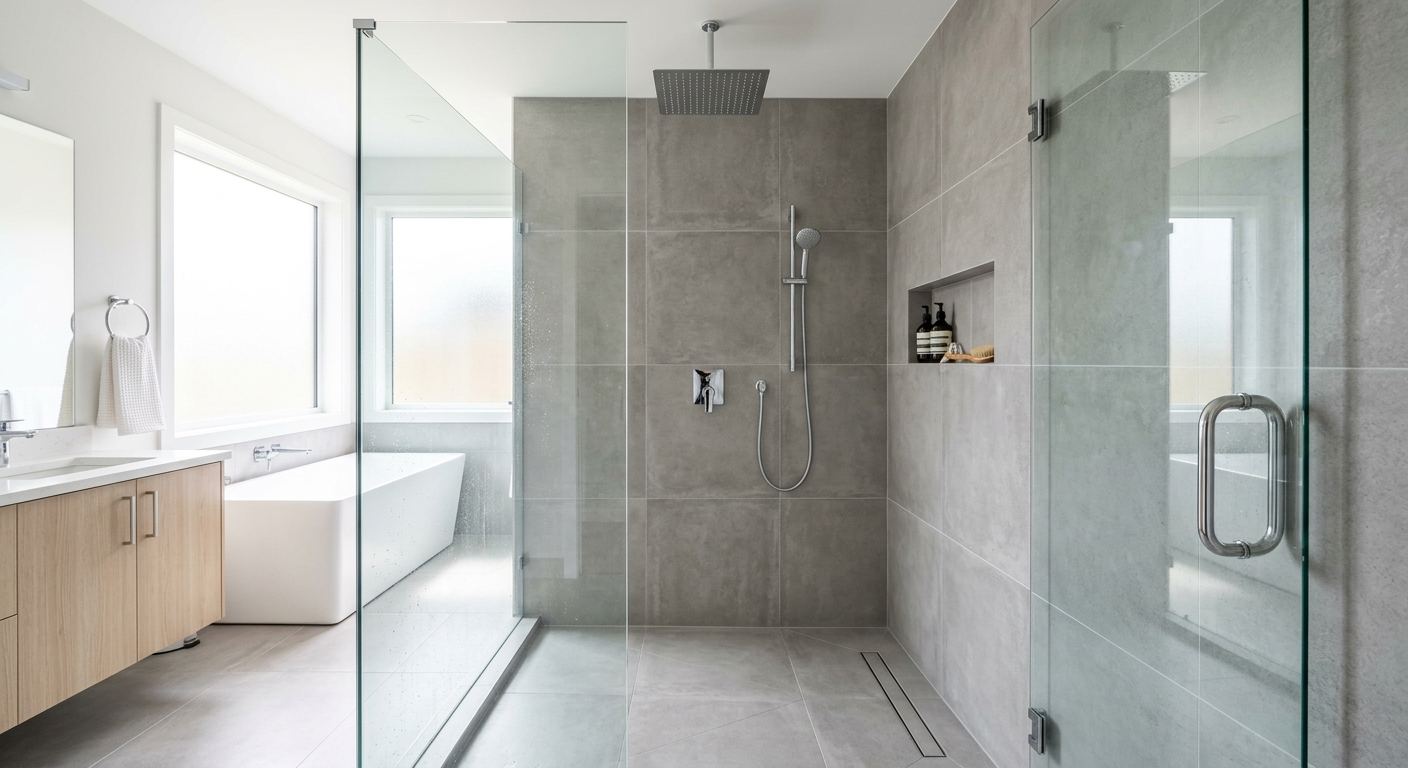
| Frameless glass shower enclosure |
Brightens the room, modern look, easy to wipe when installed correctly |
Requires accurate framing/leveling and stronger waterproofing detailing |
$2,000–$6,000 |
| Prefab tub surround (acrylic) |
Faster install, less tile cutting, good for keeping costs predictable |
Limited design options; can underwhelm visually vs tile |
$1,000–$3,500 |
| Custom shower pan (tile or linear drain) |
Best integration for your design; can reduce thresholds and improve drainage aesthetics |
More labour-intensive waterproofing and careful drain slope work |
$4,000–$10,000 |
How to choose a bathroom renovation contractor in Sparwood
Choosing the right contractor is mostly about verifying credentials and preventing scope surprises. In British Columbia, confirm the contractor’s trade licence information (where applicable to their scope), and request proof of liability insurance showing the policy is active for the project period. For coverage, ask for WSIB/WCB clearance for the workers who will be on site—before work starts, not after. If they can’t provide documents quickly, that’s a major timing risk for you in Sparwood where scheduling slots can be tight.
Next, get 2–3 written quotes that are itemised, not just lump sums. A good bathroom quote breaks labour and materials separately (demo, framing adjustments, waterproofing, tile setting, electrical components, disposal). Read the exclusions carefully: confirm whether permits are included, whether disposal and recycling are included, and what happens if hidden issues are found (for example, asbestos confirmation, cast-iron drain condition, or subfloor rot). For warranty, ask for the workmanship warranty length and what it covers, plus the product/manufacturer warranty for tile, waterproofing, fixtures and shower components—and whether any warranties are transferable to a future owner.
For payment, avoid large deposits. A common best practice is 10%–15% upfront, then hold back a portion until key milestones are verified (waterproofing inspected, tile completed, and final walkthrough done). Require a start date and a realistic completion estimate in writing, including lead times for tile, glass, and fixtures.
- Verify licence/registration details and request proof in writing.
- Confirm current liability insurance with your project dates.
- Ask for WSIB/WCB clearance for all workers who enter your home.
- Require itemised quotes: labour vs materials vs allowances.
- Confirm whether permits and inspections are included (and who pulls them).
- Check disposal: is demo haul-away and recycling included?
- Ensure waterproofing scope is specified by method and coverage areas.
- Ask what happens if asbestos is found during demo.
- Verify electrical scope: GFCI, exhaust fan, and heated floor circuit details.
- Get a plumbing plan: what’s staying, what’s replacing, and why.
- Clarify tile and subcontractor responsibility (who sets tile and who guarantees it).
- Agree to a payment schedule with milestones and a final holdback.
In Sparwood, common red flags include: (1) quotes that don’t describe waterproofing method or shower drain integration; (2) a contractor who won’t show insurance/coverage documents before you sign; (3) “allowances” for tile/fixtures that are far too low to match the finish you want; (4) missing permit/inspection responsibilities in writing; and (5) asking for more than 15% upfront without a clear contract schedule and milestone plan.
Frequently asked questions — bathroom renovation in Sparwood
Is it worth renovating a bathroom before selling in Sparwood?
If you’re selling in Sparwood, a bathroom renovation is often worth it when it improves safety, function and perceived cleanliness—especially in homes built before 1981, where dated plumbing and ventilation can be a turn-off. With owner-occupied households at 71.6% (Statistics Canada, 2021 Census), buyers often expect durable upgrades rather than temporary cosmetic fixes. If your bathroom is showing moisture issues or poor exhaust performance, a mid-range full renovation (commonly in the $16,000–$28,000 range) typically offers more value than a cosmetic refresh because it addresses waterproofing and fixtures. If the layout is already solid and plumbing stays put, a cosmetic refresh can help, but it won’t fix structural or drain/vent problems uncovered later during a home inspection.
How do I plan a bathroom renovation on a tight budget in Sparwood?
Start by choosing the scope that matches your risk. On a tight budget in Sparwood, the safest approach is often to keep the existing plumbing footprint—avoid moving the drain or supply lines—because layout changes are where costs can jump 30%–50% once rough-in work is required. If you want impact without a full rebuild, consider a cosmetic refresh plus selective upgrades: replace the vanity and fixtures, upgrade lighting, and improve ventilation. If you’re doing tile, prioritise waterproofing and prep rather than chasing the most expensive tile—porcelain flooring can be a good balance compared with natural stone. As a reference point, a tile-only installation often lands around $2,500–$9,000, while a shower conversion can run higher (commonly $10,000–$20,000). Keep contingency for older-home surprises, including possible asbestos abatement protocols.
What's the difference between a cosmetic and a full bathroom renovation?
A cosmetic refresh is mainly surface-level: painting, replacing fixtures that connect to existing supply/drain points, updating accessories, and sometimes redoing caulking and grout. It typically doesn’t change plumbing rough-in or electrical circuits beyond like-for-like replacements. A full renovation usually includes demolition, new waterproofing, new tile or shower/tub assembly, and often electrical upgrades like an exhaust fan and additional GFCI outlets. In Sparwood, full renovations frequently require more time because older homes can hide issues behind the walls—undersized ventilation paths, non-compliant drains, or supply lines needing replacement. That’s why cosmetic work can be comparatively lower (for example, $3,000–$8,000), while full renovations commonly fall within $16,000–$38,000 depending on materials and whether rough-in surprises are found.
How do I choose the right contractor for my bathroom in Sparwood?
Choose based on documentation and clarity, not just price. In British Columbia, ask for evidence of liability insurance and confirm WSIB/WCB coverage for the workers who will be on site. Verify the contractor’s BC trade licence details relevant to their scope, then request an itemised quote that breaks labour and materials rather than one lump number. Read the scope line-by-line: confirm whether permits are included (especially if plumbing/electrical rough-in changes), whether disposal is included, and how hidden conditions are handled if asbestos or damaged subfloor is found. Also ask for warranty terms: workmanship coverage length and product warranty details (and whether warranties transfer). Finally, protect your cash flow—avoid paying more than 10%–15% upfront and hold back until waterproofing and tile are completed and inspected.
What's the most common mistake homeowners make in bathroom renovations?
The most common mistake is under-budgeting for what happens after walls come down, especially in older Sparwood homes. Many homeowners plan for finishes but not for rough-in realities: aging supply lines, cast-iron drains, undersized or poorly routed exhaust ventilation, or substrate issues that must be corrected before waterproofing and tile. Another frequent error is choosing a “cheap” waterproofing approach or skipping details like correct drain integration and proper membrane transitions—this can lead to persistent moisture problems in British Columbia’s humid bathroom conditions. Finally, some people sign quotes that don’t specify scope exclusions clearly, then face unexpected change orders. If you’re trying to stay within a $16,000–$28,000 mid-range budget, build contingency and insist on a written waterproofing and electrical plan before demolition begins.
How long does tile installation take in a Sparwood bathroom?
Tile timelines in Sparwood vary mainly by bathroom size, whether walls need substrate repairs, and how complex the layout is (niche placement, diagonal floors, linear drains). For many typical bathrooms, tile installation (including prep and waterproofing coordination) is commonly about 7–14 days in the field, with additional time for curing and setting between stages. If your scope is tile-only and the subfloor is already flat and sound, the schedule can be faster; if the project is part of a mid-range full renovation, tile is often one of the later steps after plumbing/electrical and waterproofing are completed. For a tile-only project budget band of $2,500–$9,000, plan for more time when there’s extra prep, unevenness, or increased cutting around fixtures. Your contractor should provide a day-by-day schedule and confirm curing timelines for the waterproofing and grout.