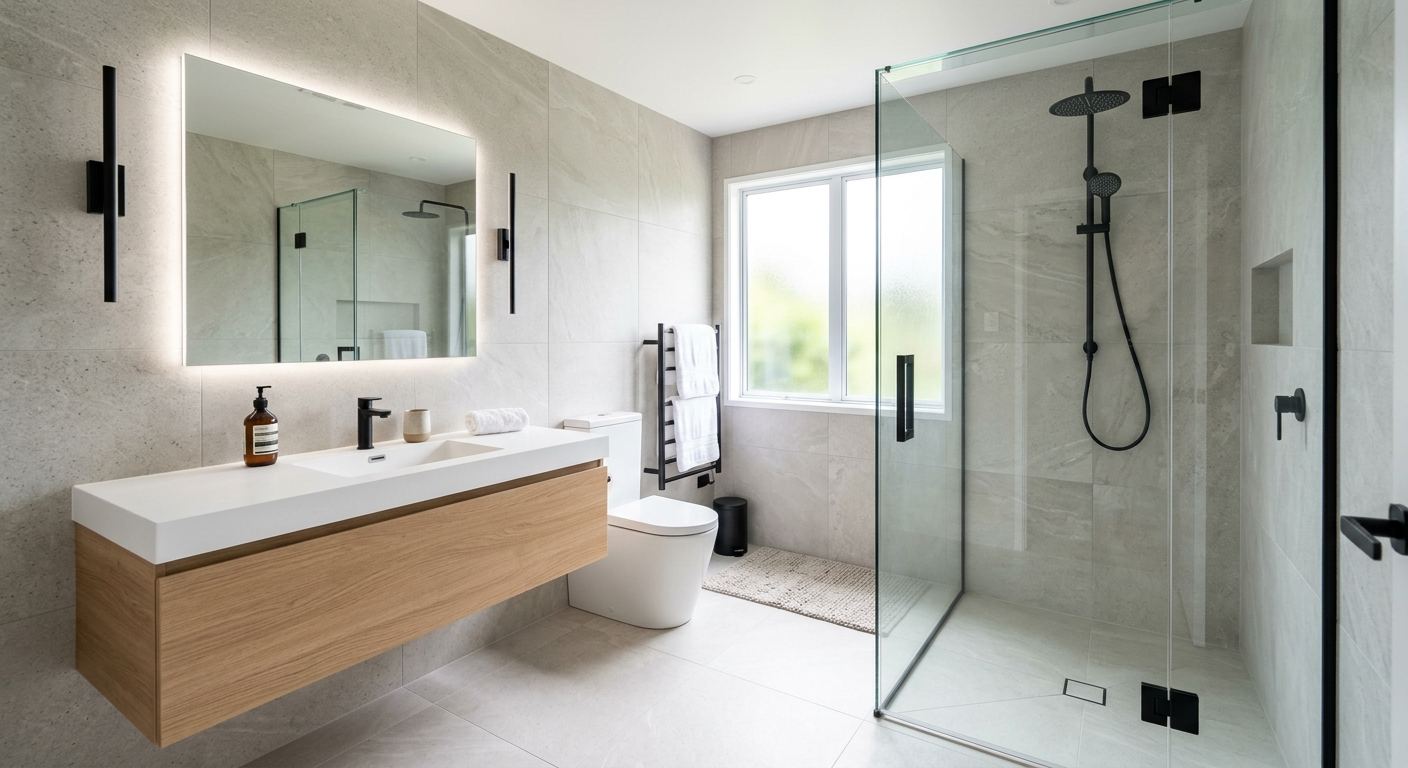
Bathroom renovation options and costs in Marpole South
In Marpole South, British Columbia, your bathroom renovation cost typically starts with what level of change you want—because the region’s trades and housing conditions can turn “simple” work into multi-trade coordination. In a community of 7,150 residents (Statistics Canada, 2021 Census), many homes reflect mid-century layouts and older in-wall systems. In pre-1980 houses, it’s not unusual to find cast-iron or aging drain sections, dated copper supply lines, or materials that may require careful handling during demolition, all of which can increase scope once walls are open.
In the Lower Mainland–Southwest, labour rates and the age of the housing stock are the main cost drivers for bathroom renos more than day-to-day weather. That means contractor availability—especially for plumbers, tilers, and electricians—matters a lot for your schedule and final budget. When crews start work in neighbourhood pockets like the Marine Drive–Cambie corridor area, demand is often strong because access is straightforward but timelines can be tight, so scheduling and lead times for tile, glass, and specialty waterproofing assemblies can affect the cost.
Climate still plays a role: British Columbia bathrooms see high indoor humidity, so waterproofing quality and ventilation upgrades are not optional. In practical terms, many projects land in the “mid-range full renovation” or “full high-end renovation” bands, particularly when plumbing and venting upgrades are discovered during demolition. Below is a clear comparison to help you map your goals to a realistic budget before you request quotes.
| Renovation Scope |
What's Included |
Typical Duration |
Price Range |
| Cosmetic refresh (paint, fixtures, accessories only) |
Paint, lighting updates (like-for-like), vanity replacement (no plumbing relocation), toilet/trim swaps, accessories, caulking, basic resealing |
3–7 days |
$18,000–$25,000 |
| Mid-range full renovation (new tile, vanity, tub/shower, electrical) |
Demolition, new tile floor + shower surround, vanity + countertop, tub/shower valve or shower set, exhaust fan upgrade, GFCI where needed, waterproofing, disposal |
2–4 weeks |
$25,000–$35,000 |
| High-end full renovation (custom tile, steam shower, heated floors) |
Custom layout refinements, premium tile (larger formats or specialty patterns), steam shower components, linear drain, heated floor system, upgraded electrical, enhanced ventilation, designer fixtures |
4–8 weeks |
$35,000–$45,000 |
| Shower-only installation (convert tub to walk-in shower) |
Demo tub area, new walk-in shower valve, tile pan, waterproofing, frameless or semi-frameless enclosure allowance, exhaust fan refresh if needed |
2–3 weeks |
$15,000–$25,000 |
| Bathtub replacement or tub-liner install |
New tub swap OR liner system, prep, re-tiling at tub deck where required, new caulking/seals, basic plumbing reconnect |
4–10 days |
$1,500–$6,000 |
| Tile-only installation (floor + surround, existing layout kept) |
Tile removal, surface prep, waterproofing where required, tile installation (floor + walls), grout/caulking, limited patching |
1–3 weeks |
$10,000–$22,000 |
Prices are estimates only and vary by project scope, site access and material selection.
What affects the price of bathroom renovation in Marpole South
In Marpole South and across the Lower Mainland–Southwest, the same bathroom reno can come in 30–50% apart from another bid because quotes are driven less by “weather” and more by labour rates, trade scheduling, and what the contractor expects to uncover once walls and floors are opened. British Columbia’s strong demand for skilled plumbers, tilers, and electricians—and the reality that bathrooms are complex, multi-trade spaces—can amplify costs compared with other provinces. In older mid-century homes, hidden issues are common enough that contractors price in contingency differently, which is where variance shows up.
Older homes in this region can hide cast-iron or galvanized/aged plumbing, copper supply line corrosion, and ventilation that no longer meets today’s expectations. When venting is insufficient, you often need fan ducting work and sometimes electrical upgrades. If asbestos-containing materials are suspected or identified in pre-1985 assemblies (for example, certain vinyl flooring or old drywall compound), abatement protocols can add significant cost—commonly in the range of $1,500–$5,000+ depending on extent and remediation requirements. Those discoveries alone can push a “cosmetic” plan into a full scope, especially if new waterproofing and re-tiling must follow remediation.
Concrete examples I see frequently in Marpole South: converting a tub to a walk-in shower can be priced higher because the drain and valve rough-in may need repositioning; large-format porcelain tile can reduce grout lines but increases labour and breakage allowances; and adding a heated floor circuit adds electrical complexity even when the tile plan stays the same. If you keep the layout, many projects still land near the mid-range full renovation band (often around $25,000–$35,000), while major upgrades—like steam shower components or linear drain systems—commonly move you toward the high-end band (up to about $35,000–$45,000).
| Price Factor |
Why It Matters |
Cost Impact |
| Layout change — moving drain or supply lines requires rough-in work |
Relocation means demolition, rough-in plumbing, possible subfloor reinforcement, and inspection coordination |
Often +$5,000–$15,000 |
| Tile selection — large-format porcelain vs. mosaic vs. ceramic |
Harder tiles need skilled setting time, better substrate prep, and have higher material and labour risk |
Often +$1,500–$8,000 |
| Fixture tier — builder-grade vs. mid-range vs. designer brands |
Higher-end fixtures add product cost and can require different valves/trim packages |
Often +$1,000–$6,000 |
| Subfloor condition — rot or unlevel concrete adds scope |
May require repairs, leveling compounds, additional waterproofing prep, or replacement of affected materials |
Often +$1,000–$7,500 |
| Electrical — adding GFCI outlets, exhaust fan, heated floor circuit |
Bathrooms need safe circuits; heated floors add wiring, sensors, and specialized installation |
Often +$800–$5,000 |
| Waterproofing method — membrane type and extent |
Correct membrane system reduces mould risk; higher-spec systems can cost more but reduce long-term failure |
Often +$1,000–$4,000 |
| Older-home surprises — asbestos tile, cast-iron drains, galvanized pipes |
Remediation, disposal, and additional plumbing replacement increase trades and inspection steps |
Often +$1,500–$10,000+ |
| Bathroom size — sq ft drives tile and labour time directly |
More surface area means more setting time, waterproofing materials, thinset/grout, and drying cycles |
Often scales +$3,000–$12,000 |
Permits & regulations in British Columbia
In British Columbia, many “cosmetic” bathroom updates typically do not require permits—things like swapping a vanity, repainting, replacing like-for-like fixtures (toilet, faucet trim), changing lighting where the wiring is not being altered, and re-caulking/recurring surface finishing. However, once you relocate plumbing, modify the electrical layout, or change structural elements, permits and inspections commonly come into play. In the Lower Mainland–Southwest, I recommend treating this as a budget line item because delays can occur if required documents aren’t ready.
Work that typically DOES require a permit: moving or adding plumbing rough-ins (drain and supply line relocation), adding or modifying venting or exhaust fan ducting, electrical work that adds new circuits or changes the wiring beyond like-for-like replacement (for example, new GFCI receptacles, adding a heated floor circuit), and any structural wall changes. Work that typically does NOT: paint, accessory swaps, toilet/faucet replacement where connections are unchanged, and tile refresh where plumbing/electrical aren’t relocated—still subject to the contractor’s determination and local inspection requirements.
For a homeowner in Marpole South, verify your contractor’s British Columbia trade licence and liability coverage first: (1) check the contractor’s licence details on the appropriate online provincial registry for their trade category; (2) request a certificate of insurance that includes liability coverage and ensure the name matches your contractor entity; (3) ask for documentation showing coverage for workers (often referenced as WCB/WSIB depending on the classification—your contractor should provide clearance proof). Finally, confirm whether a permit pull will be handled by the contractor and whether the inspection booking is included in the quote. If they can’t produce licence and insurance paperwork before starting, pause and request it.
Choosing tile, waterproofing and fixtures for your Marpole South bathroom
In Marpole South, the budget usually comes down to three material decisions: tile choice, waterproofing method, and fixture tier. First, tile selection changes both price and installation complexity. Entry-level ceramic tile can be economical, but it may require more careful layout planning because it’s less forgiving if your substrate isn’t perfectly flat. Mid-range porcelain often holds up better in wet areas and can justify the cost with improved durability and consistency—especially helpful in British Columbia’s consistently high indoor humidity. Natural stone (marble, travertine, slate) looks premium but adds labour and sealing requirements, and it’s typically more expensive to install correctly.
Second, waterproofing method is what keeps mould and odours from becoming a long-term problem. In humid Lower Mainland bathrooms, a proper waterproofing system matters more than tile brand. Paint-on membranes can work for limited assemblies but require correct surface prep and correct coverage. Bonded sheet membranes and systems like a metal-reinforced, engineered approach (often installed with a compatible kit of parts) usually provide more robust protection when installed to spec, including corners and changes of plane.
Third, fixture tier impacts both cost and resale. Builder-grade fixtures can be fine if quality valves and durable trim are used, but designer brands often add smoother operation, better finishes, and improved long-term wear. If you’re trying to match your budget, one smart approach is to upgrade the waterproofing and core valves while keeping tile in the porcelain mid-range. For example, upgrading from ceramic to porcelain plus better waterproofing can be worth it when it avoids rework—whereas spending heavily on natural stone just to cover a small shower niche may not give the same value as investing in a steam-ready layout or stronger ventilation.
| Material / Option |
Pros |
Cons |
Price Range |
| Ceramic tile (floor + walls) |
Lower material cost, wide style selection, good for straightforward layouts |
More variation in thickness/sizing, may be less forgiving in wet-zone performance than porcelain |
$2,000–$6,000 |
| Porcelain tile (floor + walls) |
Denser, more durable, typically better for repeated wetting; consistent sizing helps finish quality |
Higher material cost, can increase labour if large formats require extra care |
$4,000–$10,000 |
| Natural stone (marble, travertine, slate) |
Luxury look, unique veining, strong curb appeal and resale appeal when done well |
Sealing/maintenance, higher breakage risk, demands experienced setting and detailing |
$8,000–$20,000 |
| Frameless glass shower enclosure |
Clean modern look, can make a small bathroom feel larger, easy to maintain with proper install |
Cost can climb with custom sizes; installation requires precision and correct waterproofing details |
$2,500–$7,500 |
| Prefab tub surround (acrylic) |
Faster install, fewer tile cuts, budget-friendly for tub replacements |
Less “designer” look; joints and waterproofing details must be handled carefully |
$1,000–$3,500 |
| Custom shower pan (tile or linear drain) |
Highest custom look; better floor slopes and drainage when executed properly; supports linear drain aesthetics |
More labour and waterproofing complexity; requires experienced tilers and correct substrate |
$4,000–$12,000 |
How to choose a bathroom renovation contractor in Marpole South
Choosing the right contractor in Marpole South starts with proof, not promises. First, verify British Columbia trade licensing for the trades you’re hiring—especially plumbing and electrical. Ask for their licence numbers and confirm them via the provincial licence registry. Next, request liability insurance and read the certificate: make sure it’s current, the coverage limits make sense for a renovation project, and the named insured matches the contracting company you’re signing with. For worker coverage, ask for proof of workers’ compensation coverage/clearance documentation (your contractor should provide the appropriate letter or proof for their workforce). If they can’t provide these documents before quoting, that’s a red flag.
Then get 2–3 itemised written quotes (not just one lump-sum). A strong quote breaks labour and materials separately and clearly states what’s included and what’s excluded—like permit pull, disposal, subfloor repairs, waterproofing membrane system, and any allowance for tile/glass. Pay attention to warranty terms: workmanship warranty length, product/manufacturer warranties, and whether warranties are transferable if you sell your home.
For payment schedule, never pay more than 10–15% upfront. Use milestones tied to completion of measurable steps, and hold back a portion until the job is complete and deficiencies are corrected. Finally, insist on a start date and a realistic completion estimate in writing; bathroom renos in the Lower Mainland–Southwest often depend on tile lead times, waterproofing cure times, and inspection scheduling, so timeline clarity helps protect your budget.
- Confirm BC trade licence numbers for plumbing and electrical (and any other specialized trades).
- Request current liability insurance and ensure the contractor entity matches your contract.
- Ask for workers’ compensation/clearance proof for their workforce.
- Get 2–3 itemised quotes separating labour vs materials vs allowances.
- Verify whether permits are included and who pulls them; confirm inspection responsibility.
- Check what disposal includes (dump fees, drywall/tile removal, hazardous material handling if discovered).
- Make sure the quote specifies the waterproofing system and coverage areas (corners, transitions, shower benches).
- Confirm tile prep requirements (flatness, substrate type, leveling/patching) are included.
- Ask for a demolition plan and dust control method (bathrooms are small; containment matters).
- Review electrical scope: GFCI locations, exhaust fan, and heated floor circuit if included.
- Understand warranty: workmanship start date, claim process, and whether it transfers to buyers.
- Use a payment schedule with no large upfront deposits and a holdback until punch list completion.
Concrete red flags I’ve seen with bathroom renovation contractors in Marpole South: they won’t provide licence/insurance proof; they quote “tile included” without specifying the waterproofing method; they insist on a large upfront payment with no milestones; they give only a lump-sum with no exclusions/disposal details; or they avoid discussing older-home surprises like cast-iron drains, galvanized supply lines, or potential asbestos-containing materials in pre-1985 finishes.
Frequently asked questions — bathroom renovation in Marpole South
Can I live at home during a bathroom renovation in Marpole South?
Often yes in Marpole South, but it depends on how much you’re changing. If you’re doing a cosmetic refresh or a tile-only project with limited plumbing work, you can typically keep a functional bathroom for most of the schedule. For a mid-range full renovation, you may lose full bathroom access during demolition and waterproofing cure cycles, but a contractor can sequence work so toilet and basic sink use are preserved temporarily. The key is planning demolition carefully and confirming whether plumbing rough-ins will be shut down for a short window. In the Lower Mainland–Southwest, scheduling and inspection timing can affect how long you’re displaced, so ask for a step-by-step timeline before you start. Budget-wise, even a partial plan often ranges toward the mid-range full renovation band (commonly $25,000–$35,000) once electrical and waterproofing are properly included.
What's the best bathtub material for a Marpole South home?
“Best” usually means matching the installation method to your subfloor condition and your desired longevity. For tub replacements, acrylic tubs are common because they’re lighter and install efficiently in older homes with limited access. If your goal is maximum stiffness and a clean finish, a solid surface or properly installed acrylic tub typically performs well in British Columbia’s humid environment when the surrounding waterproofing and sealing are done correctly. If your existing tub is structurally sound and you want to control cost, a tub-liner approach can be faster, but it’s only a good fit when prep and adhesion conditions are right. In terms of price guidance, bathtub replacement or a tub-liner install is commonly within about $1,500–$6,000, but note that if you later discover subfloor rot or require additional plumbing/venting work, the total project can move toward the mid-range full renovation pricing.
Is it worth renovating a bathroom before selling in Marpole South?
It can be, especially if your bathroom is outdated, poorly ventilated, or showing wear that affects buyer confidence. In Marpole South and the broader Lower Mainland–Southwest, buyers often notice waterproofing quality, mould-safe finishes, and modern ventilation. If your bathroom has aging plumbing fixtures or no effective exhaust fan, a renovation that improves function and durability can support resale value. However, avoid overspending on choices that don’t fit the home’s context—like very high-end stone finishes in a small primary bathroom—unless your overall scope is high quality. For most sellers, a mid-range full renovation (often $25,000–$35,000) tends to balance upgrades like proper waterproofing, updated vanity and lighting, and safe electrical (GFCI, exhaust fan) without going straight into the high-end band. If your plumbing is nearing end-of-life (cast-iron drains or dated supply lines), addressing it before sale is usually a better investment than deferring repairs.
How do I plan a bathroom renovation on a tight budget in Marpole South?
Start by deciding what you will not change. On a tight budget in Marpole South, the biggest savings usually come from keeping the layout (no moving drain/supply lines) and limiting electrical scope to essentials like exhaust fan upgrades and GFCI requirements. Choose mid-range porcelain tile for durability and fewer failures, and invest in waterproofing rather than chasing the most expensive tile patterns—waterproofing is what protects you from costly redo work. A practical strategy is to do a cosmetic refresh plus selective upgrades: new vanity, refreshed lighting, and better ventilation, while reserving a full re-tile for later only if the substrate is sound. For example, a tile-only installation (floor + surround, existing layout kept) can often sit in a workable range, while many full renovations that include electrical and waterproofing land around $25,000–$35,000. Also build a contingency for older-home surprises common in this region; even $1,500–$5,000+ can swing the budget if asbestos-containing materials or aged plumbing conditions are discovered.
What's the difference between a cosmetic and a full bathroom renovation?
A cosmetic renovation focuses on finishes and surface-level updates without changing plumbing or major electrical routing. In British Columbia, cosmetic work like repainting, swapping fixtures, updating the vanity, and replacing accessories usually doesn’t require permits, assuming no relocation of plumbing/electrical and no structural changes. A full bathroom renovation goes further: demolition, new waterproofing systems, re-tiling (often floor and shower walls), bathtub/shower valve upgrades, and often electrical and ventilation upgrades like a proper exhaust fan and GFCI receptacles. Full renos also typically involve more coordination and inspection steps, which is why quotes can differ substantially. In Marpole South, many “full” projects land in the $25,000–$35,000 mid-range band when they include tile + vanity + tub/shower + electrical, while high-end builds with steam shower features and heated floors can push toward $35,000–$45,000. The biggest distinction is whether plumbing rough-in and waterproofing scope expands once walls come open.
How do I choose the right contractor for my bathroom in Marpole South?
Choose based on documentation, scope clarity, and workmanship details—not just the lowest bid. Verify the contractor’s British Columbia trade licence for any plumbing/electrical work and ask for proof of current liability insurance and workers’ coverage/clearance. Then request 2–3 itemised written quotes that break labour and materials and specify allowances (tile, glass, fixtures) and whether permit pull and disposal are included. For bathrooms, also ask exactly what waterproofing system they use and how they handle corners, transitions, and the shower floor slope—this matters for mould prevention in British Columbia’s humidity. Review warranty terms: workmanship coverage, start date, and whether product warranties are manufacturer-backed and transferable. Finally, keep payment modest at the start (10–15% max), and hold back until the punch list is complete. If a contractor won’t discuss older-home realities common to the Lower Mainland–Southwest—like aged drains, ventilation issues, or possible asbestos-containing materials in older finishes—keep looking.