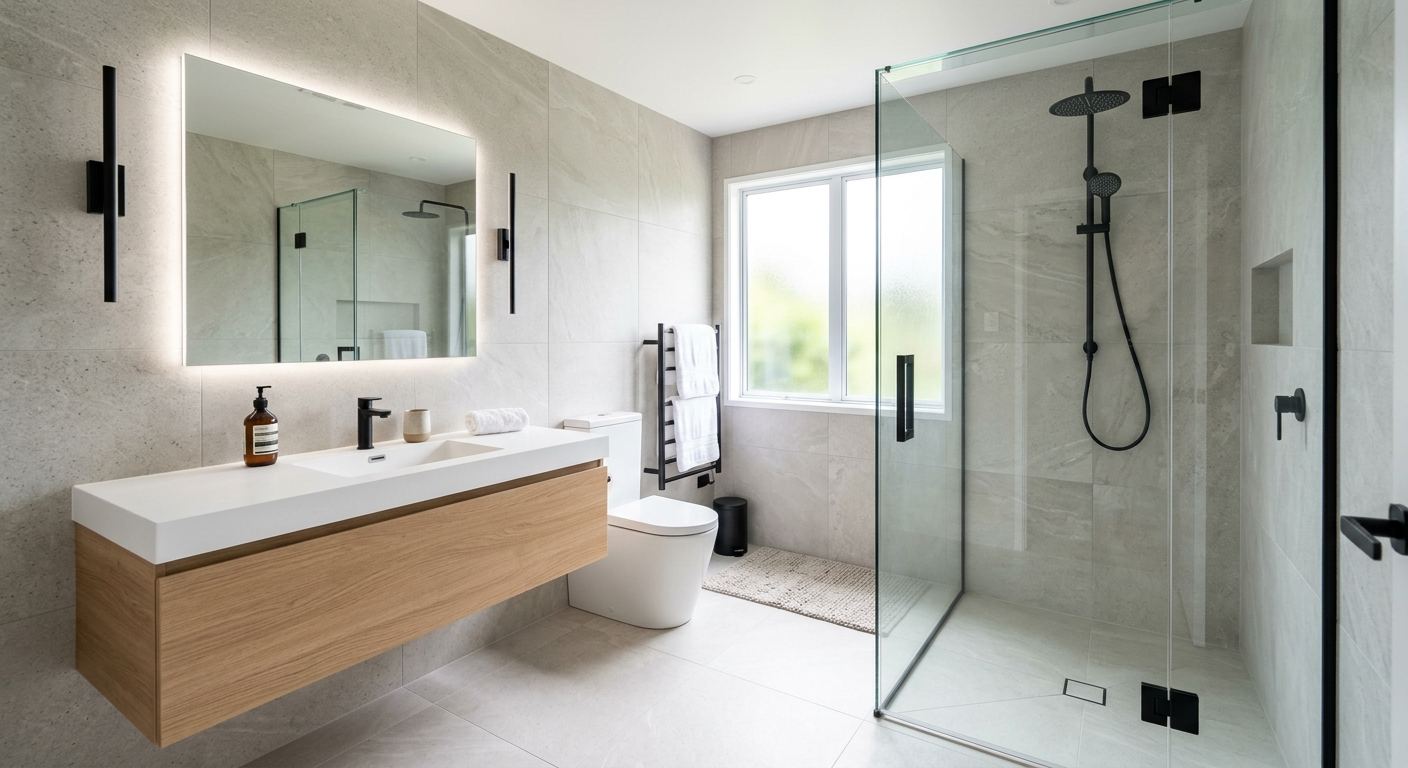
Bathroom renovation options and costs in Gibsons
Bathroom renovations in Gibsons typically come down to how much you change—surface refresh versus a full rebuild that updates plumbing, electrical, and waterproofing. With 37.3% of homes built before 1981 in the area, many projects start with dated plumbing layouts and sometimes older drain stacks or supply lines, which can expand the scope once walls are opened. In a market where 75.2% of households are homeowners (Statistics Canada, 2021 Census), homeowners often want durable, “stay put” upgrades that work well for Lower Mainland–Southwest living.
In the Lower Mainland–Southwest, renovation cost is driven more by regional labour rates and the age of the housing stock than by temperature swings. Metro Vancouver and nearby communities—including Gibsons—see consistently strong demand for plumbers, tilers, and electricians, and that availability affects scheduling and final pricing. Once trades mobilize, even a mid-sized bathroom can become a multi-trade project (framing, rough-in, waterproofing, electrical, tile, and final trim), so a “simple” renovation can land in a higher band if discovery work triggers venting, drain, or electrical upgrades.
If you’re near the busy core around Gibsons Landing, trade access and parking plans are usually tighter, which can slightly influence labour time and disposal logistics. With that context, the comparison below helps you map typical Gibsons budgets to the level of work you want.
| Renovation Scope |
What's Included |
Typical Duration |
Price Range |
| Cosmetic refresh (paint, fixtures, accessories only) |
New vanity and/or taps, toilet swap, fresh paint, caulking, hardware, re-hang mirror; no plumbing relocation; existing surround left as-is |
3–7 days |
$3,000–$8,000 |
| Mid-range full renovation (new tile, vanity, tub/shower, electrical) |
Demo and disposal; new backer/wall prep; tile floor and tub/shower surround; vanity and mirror; tub or ready-for-tile surround; exhaust fan upgrade; GFCI protection as needed |
2–3 weeks |
$18,000–$28,000 |
| High-end full renovation (custom tile, steam shower, heated floors) |
Higher-end tile and layout detailing; heated floor circuit; custom shower elements; premium fixtures; steam or upgraded shower system where feasible; ventilation upgrade; reinforced waterproofing system |
3–6 weeks |
$30,000–$45,000 |
| Shower-only installation (convert tub to walk-in shower) |
Remove tub; prep subfloor; waterproofing and shower pan; new walk-in shower walls/door; new valve trim; plumbing rework to rough-in as required |
2–4 weeks |
$10,000–$25,000 |
| Bathtub replacement or tub-liner install |
Remove and replace tub with code-compliant fit; new drain trim; re-seal and minor surround updates; or install a tub liner where layout allows |
5–10 days |
$1,500–$6,000 |
| Tile-only installation (floor + surround, existing layout kept) |
Remove old tile; prep surface; install floor tile and wall surround; grout/seal; waterproofing updates limited to what’s needed for the tile scope |
1–2 weeks |
$2,000–$8,000 |
Prices are estimates only and vary by project scope, site access and material selection.
What affects the price of bathroom renovation in Gibsons
In Gibsons and across the Lower Mainland–Southwest, you can see the same bathroom renovation job priced 30–50% apart between contractors or quotes—even when the “look” is similar. The main drivers are regional labour costs and the age of the housing stock, not the coastal climate itself. In older homes, opening walls and floors often reveals plumbing and venting systems that don’t match today’s expectations, and that’s when costs jump from a surface plan into a rough-in-and-finish scope.
Lower Mainland labour is frequently higher because there’s strong demand for specialty trades and fewer crews available at any given time. That means a delayed start, extra mobilization time, or a change in tile/waterproofing approach can affect your total. In pre-1980 homes (37.3% locally, Statistics Canada, 2021 Census), it’s common to encounter cast-iron or aging galvanized drains, older copper supply lines, and older wiring patterns; if knob-and-tube or undersized circuits are found, electrical scope can expand. If you discover asbestos-containing materials in older flooring, drywall compound, or insulation, remediation isn’t optional—abatement planning and certified handling can add roughly $1,500–$5,000+ depending on what’s affected.
Here are a few concrete Gibsons examples that raise or lower cost. A tub-to-shower conversion often pulls into shower pan waterproofing and new rough-in, which is why many land near the $10,000–$25,000 range for shower installations. A tile-only job usually stays in the $2,000–$8,000 band if the subfloor is sound and the existing layout doesn’t change. However, if your subfloor is uneven or rotted (common where older bathrooms leaked), tilers may need additional prep and stabilization, stretching labour and materials. Ventilation upgrades also matter in British Columbia bathrooms: an undersized fan or no properly ducted exhaust can force more work during commissioning and inspection readiness.
| Price Factor |
Why It Matters |
Cost Impact |
| Layout change — moving drain or supply lines requires rough-in work |
Relocating plumbing means cutting subfloor/walls, adding or altering venting, and redoing waterproofing around new fixtures |
Often adds several thousand dollars; major driver of 30–50% quote variation |
| Tile selection — large-format porcelain vs. mosaic vs. ceramic |
Harder materials and complex patterns increase cutting, setting time, and waste; substrate prep requirements rise |
Small to large increases depending on thickness, format, and specialty trim |
| Fixture tier — builder-grade vs. mid-range vs. designer brands |
Higher tiers cost more and may require specific rough-in parts, trims, and installation clearances |
Can shift budgets materially within the $18,000–$45,000 full-reno bands |
| Subfloor condition — rot or unlevel concrete adds scope |
Water damage and uneven framing require replacement, plywood/underlayment correction, and extra waterproofing attention |
Common “hidden” change that can add time and materials |
| Electrical — adding GFCI outlets, exhaust fan, heated floor circuit |
Bathrooms require code-compliant GFCI protection and safe ventilation control; heated floors add circuit design and testing |
Typically increases labour and licensed trades time |
| Waterproofing method — membrane type and extent |
Correct system choice protects against moisture migration, especially in humid BC bathrooms |
Better systems add cost upfront but reduce failure risk and rework |
| Older-home surprises — asbestos tile, cast-iron drains, galvanized pipes |
Unexpected remediation and plumbing replacement expand scope and require additional coordination |
Can add $1,500–$5,000+ for abatement, plus more for drain/supply replacement |
| Bathroom size — sq ft drives tile and labour time directly |
More area increases setting time, waterproofing coverage, thinset/grout, and material waste |
Even “minor” expansions can move you into a higher renovation band |
Permits & regulations in British Columbia
In British Columbia, many bathroom updates are considered cosmetic and typically don’t require permits—for example, swapping a vanity, replacing taps/trim, re-caulking, painting, or retiling that doesn’t change the plumbing layout. If your plan stays “in place” (fixtures removed and replaced in the same locations) and you’re not modifying structure or ventilation ducting, it usually falls into the no-permit category.
Permits and inspections are commonly required when you relocate plumbing (moving drain or supply lines), change the structural wall framing, or add/upgrade ventilation that involves electrical circuits and ducting changes. Electrical work must be carried out and/or signed off by a licensed electrician, especially if you’re adding circuits for an exhaust fan, GFCI protection, or heated floors. Plumbing rough-in changes typically require a permit and inspection because the system must be pressure-tested and verified before walls close.
How to verify a contractor in Gibsons, step by step: (1) Ask for their British Columbia trade licence number (and confirm it matches the company doing the work). (2) Request a certificate of insurance showing liability coverage and appropriate endorsements. (3) Ask for WSIB/WCB coverage documentation and make sure it’s current for the trades involved. (4) Use the contractor’s licence number to check the online registry entry, and keep a copy of the certificate of insurance and any clearance letters in your files. A reputable bathroom contractor will provide these up front with your written quote and scope.
Choosing tile, waterproofing and fixtures for your Gibsons bathroom
In Gibsons, your bathroom budget usually gets decided by three material choices: tile, waterproofing, and fixture tier. First, tile choice affects both material cost and installation complexity. Ceramic tile is typically the entry point and can work well when your substrate is sound and your layout is straightforward. Porcelain tile costs more but often performs better in a wet bathroom because it’s denser and handles moisture well. Natural stone (like marble, travertine, or slate) can look exceptional, but it often requires extra sealing, careful selection for water exposure, and more labour for finishing and layout—so the “luxury look” can add noticeably to the $30,000–$45,000 end of a full renovation.
Second, waterproofing is what prevents mould and long-term failures in British Columbia bathrooms. Even with good tile, the system has to be right: paint-on membranes can be fine for some smaller applications, but larger shower areas often benefit from a bonded sheet membrane or a robust prefabricated/shower-system approach. Choosing the right method matters because bathrooms in the Lower Mainland–Southwest see persistent indoor humidity from showering, and any seam or penetration detail can become a risk if not properly executed.
Third, fixture tier impacts both budget and resale. Builder-grade fixtures can keep costs in check, while mid-range and designer brands bring better finishes and smoother valves, but they don’t automatically justify a higher total unless your layout, waterproofing, and tile base are also upgraded. For example: upgrading from standard ceramic to porcelain tile may add several hundred to a few thousand dollars, and that’s worth it when you’re already doing a full tile surround—otherwise, a tile-only scope can keep the spend closer to the $2,000–$8,000 band.
Pairing premium tile with a proven waterproofing system and a sensible fixture tier is the most reliable way to spend for value in Gibsons—without paying twice for failures.
| Material / Option |
Pros |
Cons |
Price Range |
| Ceramic tile (floor + walls) |
Entry-level cost; wide style selection; good for straightforward layouts when substrate is prepared |
May be more prone to chipping; requires careful grout selection and proper waterproofing beneath |
$2,000–$5,000 |
| Porcelain tile (floor + walls) |
Dense and durable; strong moisture performance; better for larger formats and modern looks |
Often higher material cost; heavier tile can increase labour for cutting and setting |
$4,000–$8,000 |
| Natural stone (marble, travertine, slate) |
High-end appearance; unique veining and texture |
More sealing/maintenance; can be uneven in thickness—raises installation time; higher risk with hard water staining |
$8,000–$15,000 |
| Frameless glass shower enclosure |
Brightens the room; modern look; good for curb-free shower designs |
Can be costly; needs solid wall anchoring and careful waterproofing around mounts |
$2,500–$7,000 |
| Prefab tub surround (acrylic) |
Faster install; fewer tile joints; easy maintenance; good for budget-focused renos |
Limited design options; transitions and trim details still need good sealing |
$1,500–$4,000 |
| Custom shower pan (tile or linear drain) |
Premium drainage design; cleaner sightlines; can achieve curbless look with correct pitch |
Requires precise subfloor prep and a detailed waterproofing system; labour-intensive |
$6,000–$18,000 |
How to choose a bathroom renovation contractor in Gibsons
When you’re choosing a contractor for a bathroom renovation in Gibsons, verify licensing, insurance, and coverage in the right order. Start with their British Columbia trade licence (for the trades they’ll actually perform). Ask for liability insurance documentation and confirm the certificate matches the legal entity on the contract. For coverage, request proof of WSIB/WCB status for the workers assigned to your job. If a contractor can’t provide these documents quickly, pause and get the answers in writing before anything starts.
Next, get 2–3 itemised written quotes that separate labour and materials instead of using a single “lump sum.” You want clear line items for demo/disposal, rough-in allowances, waterproofing system, tile install (including backer prep), electrical scope, and the exhaust fan details. Review the exclusions carefully: is permit pulling included or billed separately? Is old material disposal included? Are there allowances for fixtures and tile that match your selections? These details are where budgets drift in the Lower Mainland–Southwest.
Warranty matters too. Confirm the workmanship warranty length, whether it covers waterproofing failures, and if it’s transferable if you sell your home. Product warranties should be listed separately from installation warranties, with the manufacturer name and model numbers. For payments, don’t pay more than 10–15% upfront; keep a holdback until key completion milestones (tile/waterproofing signed off and final inspection readiness) are reached. Finally, get the start date and completion estimate in writing, including how delays from material lead times will be handled.
- Ask for proof of BC trade licence for each relevant trade and confirm names match the quote.
- Request liability insurance and keep the certificate on file before demo.
- Confirm WSIB/WCB coverage for workers scheduled on your project.
- Get a detailed demolition and disposal line item (what’s hauled away and what isn’t).
- Ensure waterproofing method is specified (membrane type/system, not “we’ll waterproof”).
- Require an exhaust fan plan: model/CFM rating and ducting path, not just “fan upgrade”.
- Ask whether electrical includes GFCI and whether heated floors need a dedicated circuit plan.
- Verify tile prep scope: subfloor flatness requirements and what happens if floors are uneven.
- Check whether your quote includes permit pulling and inspections if rough-in changes are required.
- Confirm warranty terms in writing, including what’s covered and the claim process.
- Use milestone-based payments; avoid large upfront draws.
- Get timelines tied to materials (tile, glass enclosure, vanity) and allowances for lead times.
Concrete red flags I see in Gibsons: (1) “We don’t need to know the plumbing until we demo”—no exploratory plan for older homes; (2) quotes that don’t list waterproofing system details; (3) skipping a clear permit/disposal/electrical scope section; (4) asking for a large upfront payment (beyond 10–15%) before work begins; and (5) vague warranties (“manufacturer warranty applies”) with no workmanship term.
Frequently asked questions — bathroom renovation in Gibsons
How much does a bathroom renovation cost in Gibsons?
In Gibsons, most full bathroom renos typically fall into the $18,000–$45,000 range depending on how much you change and whether plumbing/electrical upgrades are needed. Because 37.3% of local homes were built before 1981 (Statistics Canada, 2021 Census), many projects uncover dated drains, older supply lines, or ventilation issues once walls open, pushing budgets toward the higher end. If you’re doing a smaller scope—like replacing fixtures without moving plumbing or redoing all tile—costs can be much lower. As a reference point, shower-only conversions (like replacing a tub with a walk-in) often price around $10,000–$25,000, especially when waterproofing and rough-in adjustments are required.
How long does a bathroom renovation take in Gibsons?
Timelines in British Columbia are often determined by trade availability in the Lower Mainland–Southwest and by whether discovery work expands your scope. A cosmetic refresh can be as quick as 3–7 days. A mid-range full renovation generally takes about 2–3 weeks, while a higher-end project with custom tile detailing, steam/shower systems, or heated floors commonly lands around 3–6 weeks. Shower-only conversions frequently take about 2–4 weeks. Delays usually come from permitting schedules, fixture lead times (vanities, glass enclosures), and drying/curing time tied to waterproofing and tile setting. A good contractor will give you a written start/completion estimate and state how they’ll handle material backorders.
Do I need a permit for a bathroom renovation in British Columbia?
It depends on what you change. In British Columbia, purely cosmetic updates—like swapping a vanity, replacing fixtures in the same locations, painting, and retiling without moving plumbing—typically do not require a permit. However, permits are commonly required if you relocate plumbing (moving drain or supply lines), add or alter ventilation ducting and circuits, or make structural wall changes. Electrical work must meet provincial code and generally must be done by or signed off by a licensed electrician. Plumbing rough-in changes also usually require permits and inspections before walls close. For a Gibsons homeowner, the practical step is to have your contractor list which items trigger permits in the written scope, then confirm permit responsibility (who pulls it) before you sign.
What's the best tile for a bathroom in Gibsons?
The “best” tile is usually the one matched to your waterproofing system and your lifestyle. Porcelain is often the top choice in Gibsons because it performs well in wet areas and tends to handle moisture and cleaning better than entry-level ceramic. Ceramic can be fine for budget-friendly renos, particularly when your substrate is flat and waterproofing is done correctly. Natural stone (marble, travertine, slate) looks luxurious but can require more maintenance like sealing and careful grout/stone selection for stain resistance. Whatever you choose, the bigger determinant of long-term performance is the waterproofing under the tile—thinset coverage, membrane continuity at corners, and properly sealed penetrations matter more than the tile brand.
Should I do a tub-to-shower conversion?
For many Gibsons homeowners, a tub-to-shower conversion makes sense because it improves accessibility and reduces the “tub-caulk” maintenance cycle that shows up over time. It can also open the floor plan visually, especially if you use a glass enclosure. Financially, it often lands in the $10,000–$25,000 range for shower installation, mainly because converting usually requires new waterproofing, shower pan design, and plumbing rough-in adjustments. It’s a smart move when you’re already doing a full renovation and your layout can accommodate a shower drain location. If you only want minor cosmetic changes, staying with the existing tub may keep costs down—especially if you’re avoiding a plumbing permit-triggering relocation.
How do I prevent mold in a Gibsons bathroom?
Mould prevention starts before the first tile goes down: a correct waterproofing system and detailed sealing are essential, especially in British Columbia bathrooms where humidity can linger after showers. Make sure the bathroom has proper exhaust ventilation that vents to the exterior (not just into an attic space). Use code-appropriate fan installation with correct ducting and a well-positioned humidistat/timer where feasible. During renovation, ensure waterproofing continuity at corners and around plumbing penetrations, and select grout/sealant appropriate for wet areas. After the reno, consistent airflow matters—run the fan during and after showers and keep surfaces dry. In older Gibsons homes, hidden moisture pathways can come from aging plumbing or improper venting, so a scoped inspection before walls close helps prevent future mould problems.