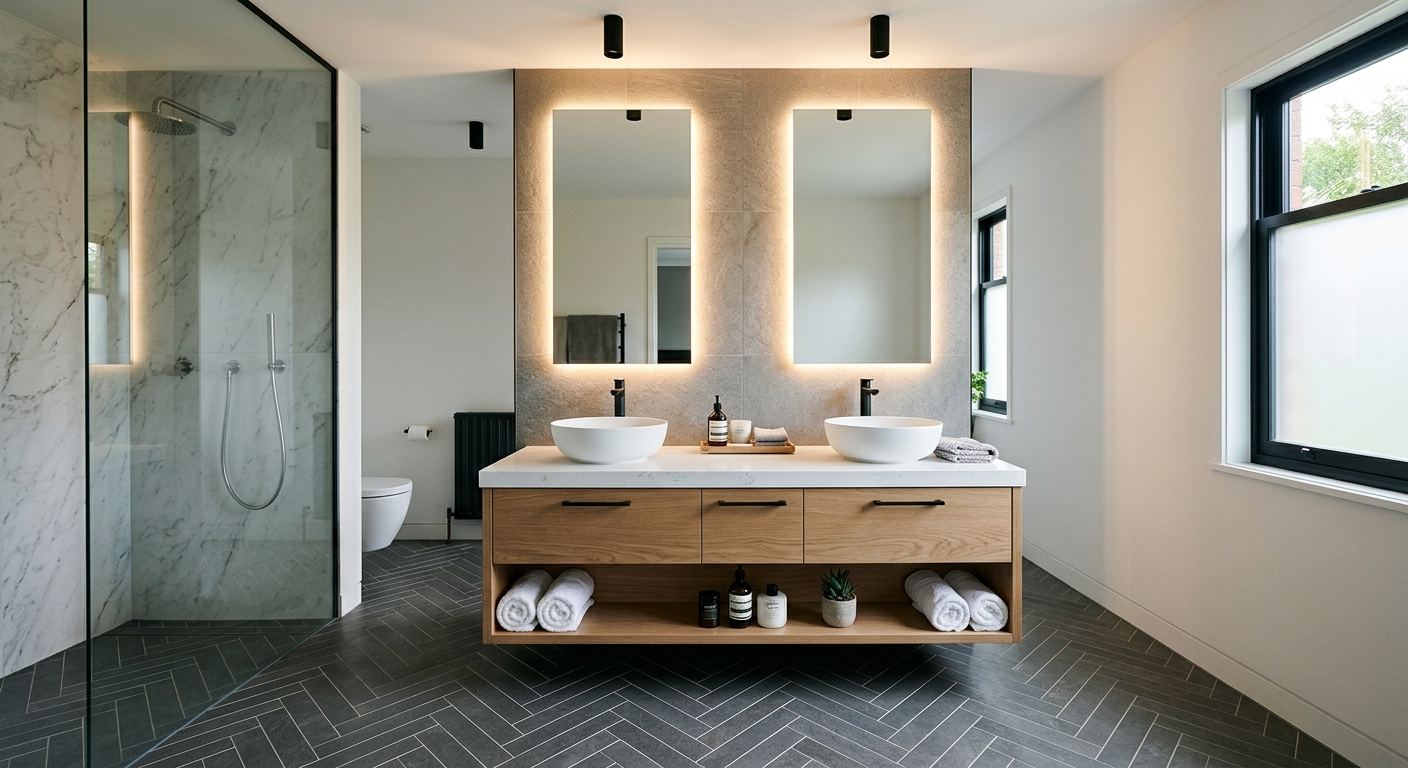
Bathroom renovation options and costs in Ladysmith
Ladysmith bathroom renovations can run the gamut from quick cosmetic updates to full rebuilds, and the cost story is heavily influenced by local housing age and labour availability. In Ladysmith, 44.7% of homes were built before 1981 (Statistics Canada, 2021 Census), which matters because older plumbing layouts, legacy drain materials, and dated electrical are more likely to be uncovered once walls or flooring are opened. That’s why many homeowners start with “just tile and a vanity” and end up budgeting for rough-in work. For context, Ladysmith also has 80.8% of households owning their home (Statistics Canada, 2021 Census), so many projects are planned to last—more storage, better ventilation, and longer-term finishes.
On Vancouver Island and the Coast, the climate is mild and maritime, but it doesn’t eliminate bathroom risk: bathrooms still see frequent moisture cycles, and ventilation quality determines how quickly surfaces dry. Costs are driven more by the regional market than the weather—labour rates for general contractors on southern Vancouver Island typically land in the 80–120 per hour range, while plumbers and electricians are often 100–150 per hour. In older neighbourhood pockets like downtown Ladysmith and the Chemainus-facing corridor, trades are especially busy because multiple homes need similar legacy updates.
Below are realistic project bands you can use to compare quotes before site measurements and selections. If you want the fastest path to an accurate number, bring a floorplan photo, measure your bathroom footprint, and specify whether you’re keeping the plumbing location or moving it—because that’s usually where the budget swings.
| Renovation Scope |
What's Included |
Typical Duration |
Price Range |
| Cosmetic refresh (paint, fixtures, accessories only) |
Paint, swap vanity/sink or fixtures, replace lighting accessories, caulking, toilet or mirror if kept in place, basic clean-and-prep; no wall/floor opening |
2–5 days |
$2,000–$6,000 |
| Mid-range full renovation (new tile, vanity, tub/shower, electrical) |
Demo and disposal, waterproofing system, floor + surround tile, new vanity and toilet, tub/shower refresh, exhaust fan upgrade, limited electrical updates (e.g., GFCI), plumbing adjustments as needed |
2–3 weeks |
$15,000–$25,000 |
| High-end full renovation (custom tile, steam shower, heated floors) |
Extended demo, higher-spec waterproofing, custom tilework (premium formats), heated floor (dedicated circuit), designer fixtures, frameless glass, upgraded lighting, steam shower system, upgraded ventilation and rough-in coordination |
3–5 weeks |
$25,000–$40,000 |
| Shower-only installation (convert tub to walk-in shower) |
Remove tub, build shower walls/pan with waterproofing, new drain assembly, glass/door, new exhaust fan as required, new trim/fixtures; plumbing changes if relocating drain |
1–2 weeks |
$8,000–$15,000 |
| Bathtub replacement or tub-liner install |
Remove and replace tub (or install liner where feasible), seal and re-tile as needed, new tub surround trim, leak testing, accessory updates, limited electrical/ventilation tie-ins |
4–10 days |
$3,000–$7,000 |
| Tile-only installation (floor + surround, existing layout kept) |
Remove existing tile, prep substrate, waterproofing, set new floor and/or surround tile, grout/seal, reinstall fixtures where applicable; plumbing left as-is |
1–2 weeks |
$2,500–$10,000 |
Prices are estimates only and vary by project scope, site access and material selection.
What affects the price of bathroom renovation in Ladysmith
Two quotes for the “same” bathroom can differ by 30–50% on Vancouver Island and Coast because the big variables aren’t the weather—they’re the regional labour market and what’s hidden behind walls and floors. In older homes, the age of the building matters more than the climate: with 44.7% of Ladysmith housing built before 1981 (Statistics Canada, 2021 Census), it’s common to encounter outdated rough-ins that require upgrades before tile can go back down. That’s one reason full renovations often land in the $10,000–$35,000 band even when your finish choices are modest.
Labour is a major driver because bathroom renos are labour-intensive: demo, substrate prep, waterproofing, tile setting, and detailed sealing. On the Vancouver Island and Coast market, general contractors often bill 80–120 per hour, with plumbers and electricians commonly in the 100–150 per hour. Once walls open up, older supply lines or drain configurations may force additional rough-in work, which pushes mid-range projects toward high-end scope.
In many pre-1980 homes, contractors also plan for the possibility of asbestos-containing materials. If asbestos is found in vinyl floor tile, drywall compounds, or insulation, you may need professional abatement, which can add roughly $1,500–$5,000+ to your budget depending on extent and test results. Here are two common Ladysmith cost shifters: (1) discovering a cast-iron drain section that needs replacement for correct slope and connection; (2) finding ventilation that simply isn’t moving moisture—leading to an upgraded exhaust fan and ducting changes.
Conversely, costs can drop when you keep the existing plumbing layout and limit wall openings. That’s how some homeowners keep projects closer to the lower end of the $10,000–$35,000 full-reno range, rather than hitting the upper band.
| Price Factor |
Why It Matters |
Cost Impact |
| Layout change — moving drain or supply lines |
Requires rough-in work, patching, and more wall/floor opening to maintain correct slope and code clearances |
Often adds major scope; can move a job from mid-range toward the full-reno upper band |
| Tile selection — large-format porcelain vs. mosaic vs. ceramic |
Harder tile increases setting time, layout cutting, and labour; natural stone can need special handling and sealing |
Can swing the tile-and-install line item by several thousand dollars |
| Fixture tier — builder-grade vs. mid-range vs. designer brands |
Higher tiers often cost more for valves, trims, and finish consistency; installation may still require the same labour |
May increase total budget without changing labour much, especially in cosmetic-heavy projects |
| Subfloor condition — rot or unlevel concrete adds scope |
Water damage and movement must be corrected before tile and waterproofing systems go in |
Can add rebuild time and materials; pushes timelines and cost upward |
| Electrical — adding GFCI outlets, exhaust fan, heated floor circuit |
Bathrooms require safe wiring practices; heated floors and upgraded fans need dedicated planning |
Often noticeable in hourly trade costs; adds material plus electrician labour |
| Waterproofing method — membrane type and extent |
Good waterproofing reduces mould risk and protects framing; more complex systems take more labour and materials |
Typically increases cost, but can prevent expensive failures later |
| Older-home surprises — asbestos tile, cast-iron drains, galvanized pipes |
Testing/abatement and replacement work can’t be skipped once discovered |
May add approximately $1,500–$5,000+ (and more for drainage/electrical upgrades) |
| Bathroom size — sq ft drives tile and labour time directly |
Bigger bathrooms require more tile coverage, thinset, waterproofing, and time to set and finish |
Direct proportional increase in materials and labour time |
Permits & regulations in British Columbia
In British Columbia, many straightforward cosmetic updates in Ladysmith don’t require a permit. Typically, swapping fixtures that don’t change plumbing locations—like replacing a vanity, toilet (on the same rough-in), mirror, lighting accessories, or repainting—usually falls under “no permit” work for most homeowners. Re-tiling or refreshing surfaces can often be handled without permits if you’re not changing the building envelope in a way that affects structure or moving services.
Permits are commonly required when you relocate plumbing or do new rough-in work—examples include moving a sink, changing where the toilet connects, relocating a shower drain, or altering supply lines. Exhaust fan upgrades may also require permitting if new ducting is introduced or if a new electrical circuit is needed. Electrical work must meet BC electrical code and be completed by a licensed electrician (or signed off by one). Structural changes and any work that affects load-bearing elements will also trigger permitting and inspections.
To verify a contractor properly, start with the BC licence check (confirm their trade licence is active and appropriate for the work being proposed), then request a certificate of insurance showing current liability coverage. For coverage, ask whether their team is covered through the applicable workplace compensation system for employees (commonly verified via a clearance letter) and ensure subcontractors provide their own documentation. Finally, get confirmation in writing that permits (if required) will be pulled and inspection schedules will be coordinated—don’t rely on “we’ll take care of it” without details.
Choosing tile, waterproofing and fixtures for your Ladysmith bathroom
In Ladysmith, the fastest way to control cost is to make smart material decisions early—tile choice, waterproofing method, and fixture tier each affect both the budget and the long-term performance you want. With Vancouver Island’s real-world bathroom moisture cycles, the waterproofing decision matters because it’s what prevents mould and protects framing after steam showers, baths, and daily showers.
1) Tile choice: Ceramic tile is usually the entry option—good value and simpler to source, but it can vary in durability by grade. Porcelain tile is often the mid-range sweet spot for floors and walls because it’s denser and typically handles moisture better. Natural stone (marble, travertine, slate) looks premium but can add cost through material price, layout planning, and extra sealing or finishing considerations.
2) Waterproofing method: A paint-on membrane can work in some assemblies, but bonded sheet membranes or systems designed with specific components (like corner reinforcement and preformed details) generally provide a more robust build-up for wet areas. Schluter-style systems (or similar engineered waterproofing assemblies) help with consistency at corners and transitions—where leaks usually start.
3) Fixture tier: Builder-grade fixtures may be fine for function, while mid-range and designer brands often justify cost through better valve controls, finish longevity, and smoother operating mechanisms. That’s especially valuable for showers used multiple times daily.
A practical dollar example: if your total bathroom is trending around $15,000–$25,000, swapping from basic ceramic to porcelain might add a few hundred to a couple of thousand dollars depending on coverage and layout, but it often reduces replacement risk and improves wear—so it can be justified. However, jumping straight to natural stone for every surface without upgrading waterproofing is where homeowners can overspend without gaining performance.
| Material / Option |
Pros |
Cons |
Price Range |
| Ceramic tile (floor + walls) |
Good entry value; broad style selection; easy to match trim and patterns |
Can be more sensitive to chipping and wear depending on grade; not always ideal for high-traffic floors |
$2,500–$6,500 |
| Porcelain tile (floor + walls) |
Denser and generally more durable; wide format options; holds up well in wet-area assemblies |
Can be more expensive; large-format increases layout precision and cutting time |
$5,500–$10,000 |
| Natural stone (marble, travertine, slate) |
Luxury look and unique veining; excellent visual impact for feature walls |
Needs extra care; sealing/maintenance may be required; installation complexity can increase |
$8,000–$16,000 |
| Frameless glass shower enclosure |
Bright, modern look; easier to clean than older framed units |
Higher material cost; requires precise waterproofing and wall alignment |
$2,000–$6,500 |
| Prefab tub surround (acrylic) |
Fast install; fewer grout lines; often reduces leak points compared to some tiled surrounds |
Limited design flexibility; may not match premium tile aesthetics |
$1,200–$3,800 |
| Custom shower pan (tile or linear drain) |
Great design control; improves drainage performance; linear drains can modernize the look |
More labour and waterproofing detailing; requires strict slope and membrane continuity |
$3,500–$12,000 |
How to choose a bathroom renovation contractor in Ladysmith
Choosing the right contractor in Ladysmith is mostly about proof: proof they’re licensed for the work they’re proposing, proof they can cover their people, and proof they’ve built bathrooms like yours before. Start by confirming their British Columbia trade licence for the scope included—especially electrical and plumbing-related portions. Ask for a certificate of liability insurance and verify the policy is active and covers the project. For worker coverage, request documentation that confirms the applicable workplace compensation coverage status (often provided via a clearance letter). If subcontractors are used, make sure their documentation is provided as well—don’t assume it’s included.
Next, request 2–3 itemised written quotes. You want labour and materials broken out, not a single lump sum. Look for a line that clearly states waterproofing method, tile scope, electrical work inclusions, permit responsibility, and disposal handling. Carefully read what’s excluded: old mould remediation, subfloor replacement, permit pulls, and lead/asbestos testing or abatement—these should be addressed up front, not treated as “extras” later.
Warranty matters in bathrooms. Ask for the workmanship warranty length and whether it’s transferable if you sell your home. Also confirm manufacturer warranties for key products (fans, membranes, glass enclosures).
For payments, keep it safe: don’t pay more than 10–15% upfront, and consider holding back a portion until completion and final walkthrough. Get the timeline and completion estimate in writing, including the anticipated start date and how long the rough-in, tile, and trim phases will take.
- Licence and insurance copies provided before work starts
- Clear scope list: what gets demolished, what stays, and what gets rebuilt
- Explicit waterproofing system and who installs it (with method details)
- Permit pull responsibility stated (included vs homeowner vs contractor)
- Disposal and hauling included (and whether curbside/transfer fees are covered)
- Ventilation plan: exhaust fan size, duct route, and roof/wall termination details
- Electrical plan includes GFCI outlets where applicable and heated-floor circuit if selected
- Tile layout and substrate requirements described (backer board/underlayment type)
- Drain and slope plan for showers (especially if converting from tub)
- Material allowances clearly stated for fixtures, tile, glass, and vanity
- Change-order process explained, including how “discovery” items are handled
- Warranty terms in writing for workmanship and key products
Concrete red flags in Ladysmith to watch for: (1) a quote that won’t specify the waterproofing method; (2) no discussion of older-home surprises like asbestos testing/abatement or how plumbing issues will be handled; (3) insisting on a large deposit upfront; (4) vague promises like “we’ll handle permits” without stating who pulls them; and (5) refusing to provide licence/insurance documentation in writing.
Frequently asked questions — bathroom renovation in Ladysmith
Should I do a tub-to-shower conversion?
In Ladysmith and across Vancouver Island and the Coast, tub-to-shower conversions are common—especially when homeowners want easier daily access and lower maintenance in the long run. If you keep the existing plumbing layout, you can often control the budget; typical shower-only conversion work falls around $8,000–$15,000. The biggest cost swing happens when the drain location or supply lines need to move, which triggers rough-in work and more labour. In older homes built before 1981 (Statistics Canada, 2021 Census), the hidden condition of drains, subfloor, and ventilation can add scope, so plan for a proper inspection once walls open. If you choose glass and a quality waterproofing system, the conversion tends to feel like a modern upgrade rather than a compromise.
How do I prevent mold in a Ladysmith bathroom?
Mould prevention starts with moisture control, not just cleaning. In a bathroom reno in Ladysmith, make sure you install (or upgrade to) a properly sized exhaust fan and vent it correctly so humidity doesn’t linger after showers. Then focus on the build-up: use the right waterproofing system in wet areas, seal changes of plane (corners, niches, and transitions), and don’t skip substrate prep—unlevel or damaged subfloor can lead to cracking and water paths. The Vancouver Island and Coast climate is maritime, so bathrooms still experience repeated wet-dry cycles; if ventilation is weak, surfaces stay cooler and moisture hangs around longer. Finally, choose materials and grout lines thoughtfully and verify the contractor does leak testing before closing up.
What adds the most resale value in a bathroom reno?
Resale value comes from “usefulness + durability.” For many Ladysmith homeowners, the best return is achieved by upgrading what buyers see and what prevents problems: good ventilation, reliable plumbing fixtures, durable tile and waterproofing, and modern lighting. A mid-range full renovation (commonly around $15,000–$25,000) often brings a stronger perception of value than cosmetic-only work because it refreshes performance and finishes. Walk-in showers, better storage, and frameless glass can also be attractive. That said, don’t overspend on premium stone if the ventilation plan or waterproofing is basic—buyers will still worry about future repairs. In older homes (44.7% pre-1981 statewide locally), addressing hidden rough-in and moisture risks is what tends to hold up when inspected.
Can I keep my existing plumbing layout to save money?
Yes—keeping the plumbing layout is one of the most effective ways to save money in Ladysmith. If you don’t move the drain and supply locations, contractors can often limit wall and floor openings, which reduces labour and the likelihood of encountering additional surprises behind old finishes. That’s why many projects can stay closer to the lower end of the full renovation band (for example, moving toward $10,000–$35,000 rather than hitting the top end) when the plumbing stays put. When layout changes are unavoidable, ask for a detailed explanation of the new rough-in plan, how the contractor will maintain proper slopes, and whether permits are required for the plumbing/electrical scope. In pre-1980 homes, “keeping layout” still should include checking drain condition and venting.
How much does a walk-in shower cost in Ladysmith?
A walk-in shower cost in Ladysmith typically depends on whether you’re converting from a tub, the tile scope, and whether glass, niches, and a linear drain are included. For many homeowners doing a tub-to-shower conversion, prices commonly fall in the $8,000–$15,000 range for a quality installation when waterproofing, shower pan work, and new trim are included. Premium items like heated floors, frameless glass, custom niches, and high-end porcelain or custom shower pans can push the job higher. If the existing plumbing layout needs changes (new drain location, moving supply lines, or upgrading ventilation), expect labour and rough-in costs to increase. In homes built before 1981, factor in additional scope if hidden plumbing or older materials are discovered during demo.
What's the ROI on a bathroom renovation?
ROI varies, but in BC markets like Ladysmith it’s usually strongest when you balance performance and appeal—ventilation, waterproofing quality, and durable finishes. Cosmetic-only upgrades can help, but they don’t always reduce the “will this last?” concern buyers have when the home is older (44.7% of Ladysmith homes built before 1981 (Statistics Canada, 2021 Census)). A well-executed mid-range full renovation (often around $15,000–$25,000) tends to produce the most buyer-friendly mix of cost and confidence because it modernizes both appearance and function. To improve your ROI, avoid overspending on high-end finishes without matching them to moisture management and substrate prep. The best ROI plan is also the one that gets permits correctly, includes waterproofing detail, and doesn’t cut corners on electrical safety and exhaust ducting.