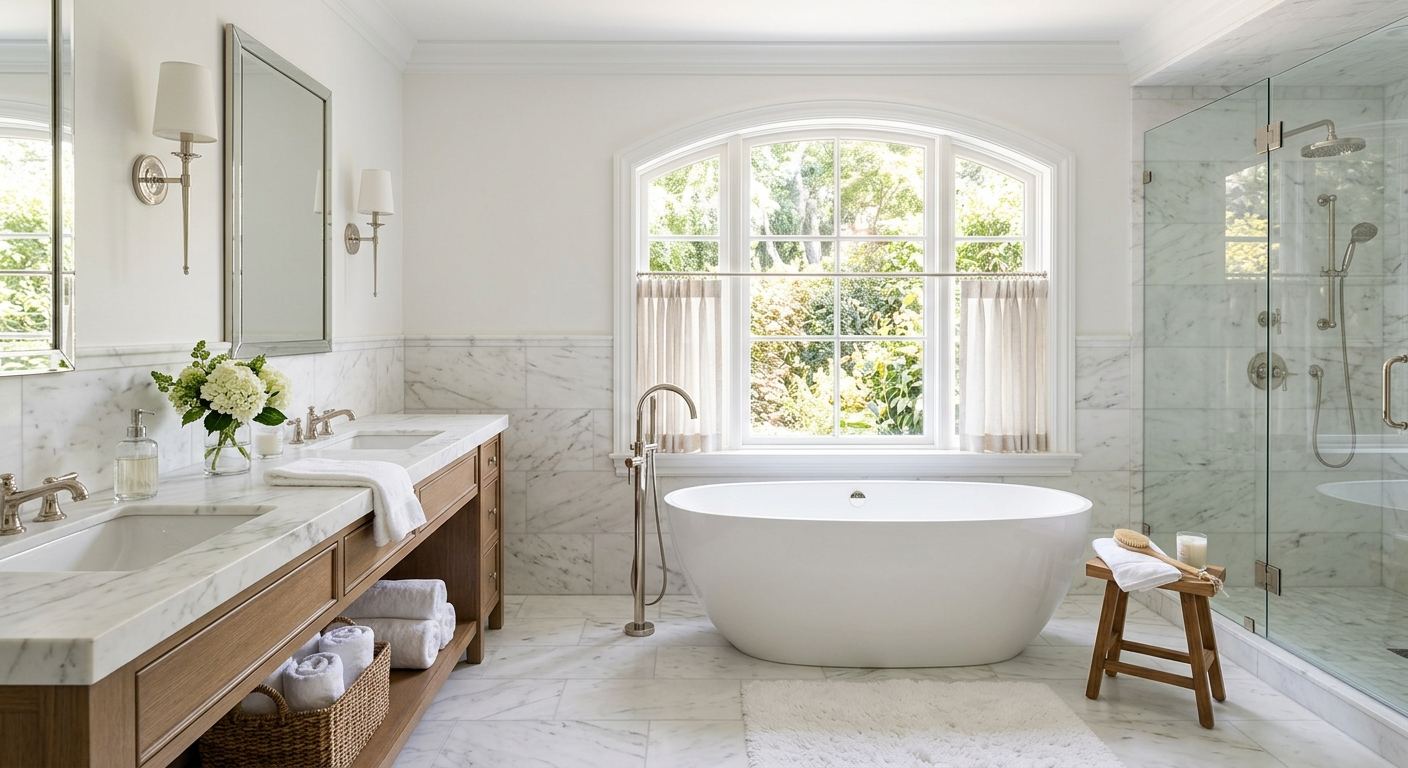
Bathroom renovation options and costs in Aloha Estates
Aloha Estates homeowners usually start with a simple question—“What will this cost?”—but the right answer depends on how much you want to change. With a population of 3,098 (Statistics Canada, 2021 Census), demand for trades is steady, and the Lower Mainland–Southwest market can feel busy when multiple renovations are scheduled at once. You’re also more likely to be renovating an older, mid-century home in this region, where dated bathroom layouts and plumbing runs are common. In many pre-1980 houses across the Lower Mainland–Southwest, renovators regularly uncover issues like cast-iron or galvanized piping and, sometimes, asbestos-containing materials in older floor tile or drywall compound, which can meaningfully expand the job scope.
In Aloha Estates specifically, cost is driven less by weather “damage” and more by labour rates and the housing stock age. Even if the bathroom is small, it involves multiple trades—plumbing, electrical, waterproofing and tile setting—and those specialized crews tend to book quickly in the Lower Mainland. Once walls and floors are opened, it’s common to add plumbing and venting upgrades to bring systems up to current British Columbia code, especially when drain stacks or supply lines show deterioration. That’s why two quotes for the same bathroom size can differ: one contractor scopes a “like-for-like” refresh, while another plans for the realities of opening up an older assembly.
Below are realistic options and typical budgets you’ll see for Aloha Estates, leading into the comparison table.
| Renovation Scope |
What's Included |
Typical Duration |
Price Range |
| Cosmetic refresh (paint, fixtures, accessories only) |
New vanity top or vanity swap (no plumbing move), toilet refresh (if replacing same rough-in), paint, caulking, mirror/light fixture, towel bars, drain cover if applicable |
3–7 days |
$3,500–$9,000 |
| Mid-range full renovation (new tile, vanity, tub/shower, electrical) |
Demo and disposal, waterproofing, floor and wall tile, vanity, tub/shower or surround, basic electrical updates (GFCI, exhaust fan), plumbing valve/trim replacements |
2–4 weeks |
$18,000–$32,000 |
| High-end full renovation (custom tile, steam shower, heated floors) |
Custom layout as needed, high-end tile/stone detailing, heated floor system, advanced waterproofing, steam shower or premium shower package, upgraded electrical plan and ventilation |
4–7 weeks |
$32,000–$45,000 |
| Shower-only installation (convert tub to walk-in shower) |
Demo tub, plumbing adjustments at shower drain/supply, new curb or linear-drain shower pan assembly, tile, glass enclosure, new exhaust fan/lighting (if scoped) |
2–3 weeks |
$12,500–$25,000 |
| Bathtub replacement or tub-liner install |
Remove and replace tub with new unit (or liner where feasible), plumbing trim updates, re-caulk/reseal, localized surround work |
5–10 days |
$1,500–$6,000 |
| Tile-only installation (floor + surround, existing layout kept) |
Floor and surround tile, new grout/sealant work, surface prep, waterproofing at tiled areas (as required), minor electrical/plumbing trim-only adjustments |
1–2 weeks |
$2,000–$8,000 |
Prices are estimates only and vary by project scope, site access and material selection.
What affects the price of bathroom renovation in Aloha Estates
In the Lower Mainland–Southwest, it’s common to see quotes for the “same” bathroom end up 30–50% apart. The big reason isn’t climate—it’s labour rates and how quickly skilled trades can start—plus the age of the housing stock. Across British Columbia, older bathrooms often hide plumbing and ventilation problems that only appear after demo. In many pre-1980 homes, cast-iron or older drain stacks may need upgrading, galvanized supply lines can be undersized or deteriorated, and ventilation may not meet modern performance expectations. Those discoveries expand the scope from “finish work” into rough-in work, which is where budgets move.
Another cost swing comes from hazardous material findings. If asbestos-containing materials are present—such as older vinyl floor tile or drywall compound—abatement protocols add labour, containment and disposal time. In Aloha Estates projects, that typically lands as an added $1,500–$5,000+ item, depending on how much needs to be removed. Even when a bathroom is renovated to the same visual level, a job that includes full waterproofing and proper venting may cost more upfront but reduces callback risk.
Concrete examples: (1) keeping the existing layout and retiling often keeps you near the $18,000–$32,000 band for a mid-range full renovation; (2) moving the drain to improve a walk-in shower usually increases labour for rough-in and can push budgets closer to the $32,000–$45,000 high-end range when combined with heated floors or steam features. Conversely, a straightforward tile-only scope can remain in the $2,000–$8,000 range because you’re not opening walls for plumbing changes.
| Price Factor |
Why It Matters |
Cost Impact |
| Layout change — moving drain or supply lines requires rough-in work |
Rough-in plumbing has to be opened, re-routed and pressure-tested; may require venting changes |
Often adds $2,500–$10,000 depending on distance and access |
| Tile selection — large-format porcelain vs. mosaic vs. ceramic |
Material cost and installation complexity (pattern matching, substrate flatness requirements) |
Typically shifts tile portion by $500–$4,000 |
| Fixture tier — builder-grade vs. mid-range vs. designer brands |
Premium valves, trims, and shower systems cost more and may include advanced functions |
Can move total budget by $1,000–$6,000 |
| Subfloor condition — rot or unlevel concrete adds scope |
Needs replacement/patching, new underlayment, and extra waterproofing prep |
Commonly adds $500–$5,000 |
| Electrical — adding GFCI outlets, exhaust fan, heated floor circuit |
Licensed electrical work, additional wiring runs and panel capacity checks |
Often adds $800–$4,500 |
| Waterproofing method — membrane type and extent |
Better systems and correct coverage reduce moisture risk in humid BC bathrooms |
Usually adds $400–$3,000 depending on system |
| Older-home surprises — asbestos tile, cast-iron drains, galvanized pipes |
Remediation and trade coordination increase demo time and require additional permits/inspections |
Can add $1,500–$12,000+ |
| Bathroom size — sq ft drives tile and labour time directly |
More square footage increases tile setting time, waterproofing area and material |
Often shifts total by $2,000–$10,000 across similar scopes |
Permits & regulations in British Columbia
In British Columbia, cosmetic bathroom updates—like swapping a vanity, replacing a toilet with like-for-like, repainting, or retiling without moving plumbing—often do not require a building permit. If you’re only updating finishes, contractors typically handle it as a renovation with no change to the building’s structure or service locations.
Permits are more likely required when the work changes a system’s “as-built” condition. Examples that typically DO require a permit and inspection include relocating plumbing rough-ins (moving a drain or supply line), adding or significantly altering electrical components (for example, running new circuits or substantial electrical upgrades), and any structural wall changes. Adding a new exhaust fan also usually triggers permitting if it involves new wiring, venting changes, or electrical circuit work. Any electrical work must meet the provincial code and be performed by, or signed off by, a licensed electrician.
For Aloha Estates homeowners, the practical verification process should look like this: (1) ask for the contractor’s British Columbia trade licence details and confirm them through the provincial registry; (2) request a certificate of insurance showing general liability coverage (and the required coverage for the trades involved); (3) confirm worker coverage documentation—commonly referenced as WSIB/WCB coverage—especially if subcontractors are on site; (4) ask whether permits (if needed) are included in the quote and who pulls them; (5) retain proof of coverage before work begins.
Choosing tile, waterproofing and fixtures for your Aloha Estates bathroom
In Aloha Estates and throughout the Lower Mainland–Southwest, three material decisions typically determine both your budget and your long-term comfort: tile choice, waterproofing system, and fixture tier. First, tile: ceramic is a good entry option, while porcelain generally handles moisture and is less prone to chipping in a high-use bath. Natural stone looks upscale but can require more prep, sealing and careful installation to avoid maintenance headaches.
Second is waterproofing. British Columbia’s humidity and shower steam mean your bathroom assembly has to perform consistently year-round. A paint-on membrane can work in limited scenarios, but many renovations perform better with a bonded sheet membrane or a tested system approach (including compatible mortar, membranes and details at corners and transitions). The biggest mistake we see in older homes is “good-looking” tile installed over a waterproofing approach that isn’t specified for wet-area coverage.
Third is fixtures. Builder-grade options keep budgets closer to the $18,000–$32,000 mid-range renovation band. Mid-range and designer brands may push you toward the $32,000–$45,000 high-end range mainly by increasing hardware costs and sometimes adding specialty features. A clear example: upgrading from a standard shower valve trim to a designer system can add $800–$3,000, which is justified if the finish ties into your vanity and glass package and improves durability and function. If you’re purely chasing cosmetics, that money may be better spent on waterproofing and tile layout rather than premium trim.
| Material / Option |
Pros |
Cons |
Price Range |
| Ceramic tile (floor + walls) |
Best entry-level option; wide style selection; predictable installation for standard layouts |
Generally less durable than porcelain for heavy wear; requires careful sealing/grout maintenance |
$2,000–$4,500 |
| Porcelain tile (floor + walls) |
More moisture-friendly and durable; supports sleeker large-format looks; strong performance in wet areas |
More expensive material; large-format increases demand for a flat, well-prepped substrate |
$3,500–$8,000 |
| Natural stone (marble, travertine, slate) |
Luxury appearance; unique veining/texture; high-end resale appeal |
Higher maintenance (sealers); substrate prep matters; installation can be more labour-intensive |
$6,000–$14,000 |
| Frameless glass shower enclosure |
Modern look; makes the bathroom feel larger; easier cleaning with fewer visual barriers |
Can be costly; needs precise measurements and a properly squared opening |
$1,800–$5,500 |
| Prefab tub surround (acrylic) |
Fast install; solid waterproof surface; usually reduces tile labour on surround areas |
Less custom look; may not match premium tile aesthetics |
$900–$2,800 |
| Custom shower pan (tile or linear drain) |
Better drainage design; supports a seamless, luxury finish; linear drains improve slope management |
More skilled labour and waterproofing detail; plan layout carefully to avoid fit issues |
$3,500–$10,000 |
How to choose a bathroom renovation contractor in Aloha Estates
Start by verifying British Columbia licensing and coverage the same way you would for any high-liability home project: ask for documentation, not promises. For each contractor or lead trade, request proof of the relevant trade licence (and confirm it through the provincial online registry), a current certificate of general liability insurance, and worker coverage documentation commonly referenced as WSIB/WCB coverage. If subcontractors are coming in for plumbing or electrical, ask for their certificates as well—coverage gaps are where homeowners get stuck.
Next, get 2–3 itemised written quotes. You want labour and materials separated, with specific allowances for tile, waterproofing products, glass, fixtures, and electrical/plumbing rough-in changes. A lump-sum quote can hide exclusions that later become change orders—like permit fees, disposal, or substrate prep.
Read the scope line-by-line: is demolition included, who handles permit pulling (if required), and is disposal (dump fees, hauling) included? Confirm the warranty: workmanship should be clearly stated (often in months/years), product warranties should be named, and ask whether warranties are transferable to a future homeowner. Finally, keep the payment schedule controlled—never more than 10–15% upfront. Hold back a portion until the job is complete, including final caulking, waterproofing inspection steps (where applicable), and finish quality checks. Get a start date and completion estimate in writing, with key milestones like rough-in completion, tile setting, and final walkthrough.
- Confirm the contractor’s British Columbia trade licence and the listed scope of work matches your project.
- Request a current certificate of insurance (general liability) and verify expiry dates.
- Ask for proof of WSIB/WCB coverage for workers on site.
- Require itemised quotes (labour + materials) rather than a single lump sum.
- Confirm whether permits are included and, if not, who pulls them.
- Clarify what disposal includes (demo debris, dump fees, hauling).
- Ask who is responsible for substrate assessment before tile goes down.
- Verify the waterproofing method and product names in writing (not just “proper membrane”).
- Get details on glass enclosure measurement responsibilities and tolerances.
- Request a workmanship warranty length and the process for warranty service.
- Confirm the product/manufacturer warranty terms and whether they’re transferable.
- Keep payments staged and holdback until final inspection and caulking are complete.
Red flags to watch for in Aloha Estates: a quote that doesn’t break out plumbing/electrical scope; no discussion of waterproofing or substrate prep; pushing for large upfront payments; refusing to provide licence/insurance documentation; and “verbal only” timelines with no written start/completion dates.
Frequently asked questions — bathroom renovation in Aloha Estates
Should I do a tub-to-shower conversion?
A tub-to-shower conversion is often a smart move in British Columbia because it modernizes daily use and can reduce maintenance time (no tub sealing every year). In Aloha Estates specifically, conversions are common when homeowners want better accessibility or a more spacious feel. Budget-wise, a shower-only installation (including the conversion and typical materials) often lands in the $12,500–$25,000 band, depending on whether you keep the existing layout or move the drain/supplies. If your home is older, conversion scope can expand if drain stacks or venting aren’t up to current expectations after demo. If you’re planning a full refresh anyway, it can be cost-efficient—because you’ll already be opening the same walls and floor areas.
How do I prevent mold in a Aloha Estates bathroom?
Mold prevention is mostly about controlling moisture the moment it enters the bathroom assembly. In Aloha Estates, focus first on the waterproofing system: the correct membrane type and full coverage in wet zones (including transitions, corners and curb edges) matter more than grout colour. Second, ensure ventilation is properly sized and ducted—bathroom exhaust fans with good airflow reduce the long drying times that encourage mould growth. Third, use quality caulking at all wet-area transitions and avoid gaps around the tub/shower surround. If you have an older home, also watch for subfloor or framing issues discovered during demo; unlevel or damaged substrates can trap moisture. A properly executed bathroom at the mid-range full renovation level (often $18,000–$32,000) gives you the best foundation for long-term mould resistance in Lower Mainland–Southwest humidity.
What adds the most resale value in a bathroom reno?
Resale value tends to come from the “function + finish” combo: updated waterproofing, a well-planned layout, and durable, modern finishes. Homebuyers usually notice the shower condition, flooring stability, and whether the bathroom looks clean and bright—not whether the vanity has the most expensive hardware. In the Lower Mainland–Southwest market, a sensible upgrade path is often a mid-range full renovation (commonly $18,000–$32,000) where you replace aging finishes and address ventilation/electrical safety. If you go high-end, features like heated floors or premium shower systems can improve buyer confidence, but they’re not always ROI-maximizing if the rest of the bathroom is basic. The biggest “value protectors” are correct waterproofing and plumbing/venting upgrades discovered during demo in older homes.
Can I keep my existing plumbing layout to save money?
Yes—keeping the existing plumbing layout is one of the most reliable ways to control costs in Aloha Estates. When you don’t move drain or supply lines, you avoid extensive rough-in work and potential access surprises behind walls. In practice, it often keeps you closer to predictable budgets like $18,000–$32,000 for a mid-range full renovation, because tile and finish labour dominate rather than major re-piping. You may still need updates (like valve trim, venting confirmation, or replacing worn galvanized/cast-iron components if discovered), but you typically reduce the labour for relocating lines. If you’re considering upgrades, a practical approach is to keep the footprint and focus your budget on waterproofing quality, tile selection, and ventilation performance.
How much does a walk-in shower cost in Aloha Estates?
A walk-in shower price varies mainly by whether you convert from an existing tub (and how much plumbing must be changed) and how custom the shower base and glass enclosure are. For most conversions, homeowners commonly land around the $12,500–$25,000 range for shower-only installation, which includes the conversion work, waterproofing and typical finishes. If you choose premium glass, linear drains, or heated-floor wiring, costs rise. If your bathroom is in an older home with hidden plumbing issues, conversion scope can expand after demo due to drainage and venting upgrades to meet current British Columbia code. A good contractor will confirm feasibility during the pre-demo assessment so you’re not surprised later.
What's the ROI on a bathroom renovation?
ROI depends heavily on what you replace and the condition you start with. In Aloha Estates and across the Lower Mainland–Southwest, bathrooms are a key decision room, but buyers pay most for reliability: leak-free waterproofing, safe electrical, and updated fixtures rather than only cosmetic changes. A cosmetic refresh can help, but it usually won’t deliver the same buyer confidence as a proper full renovation where plumbing/venting and waterproofing are addressed. Many homeowners aiming for strong return choose a practical mid-range full renovation (often within $18,000–$32,000) because it balances quality upgrades with scope control. If you discover older-home issues like cast-iron drainage or galvanized supply deterioration, addressing them may feel expensive, but it protects you from future failure costs and improves inspection outcomes for potential buyers.