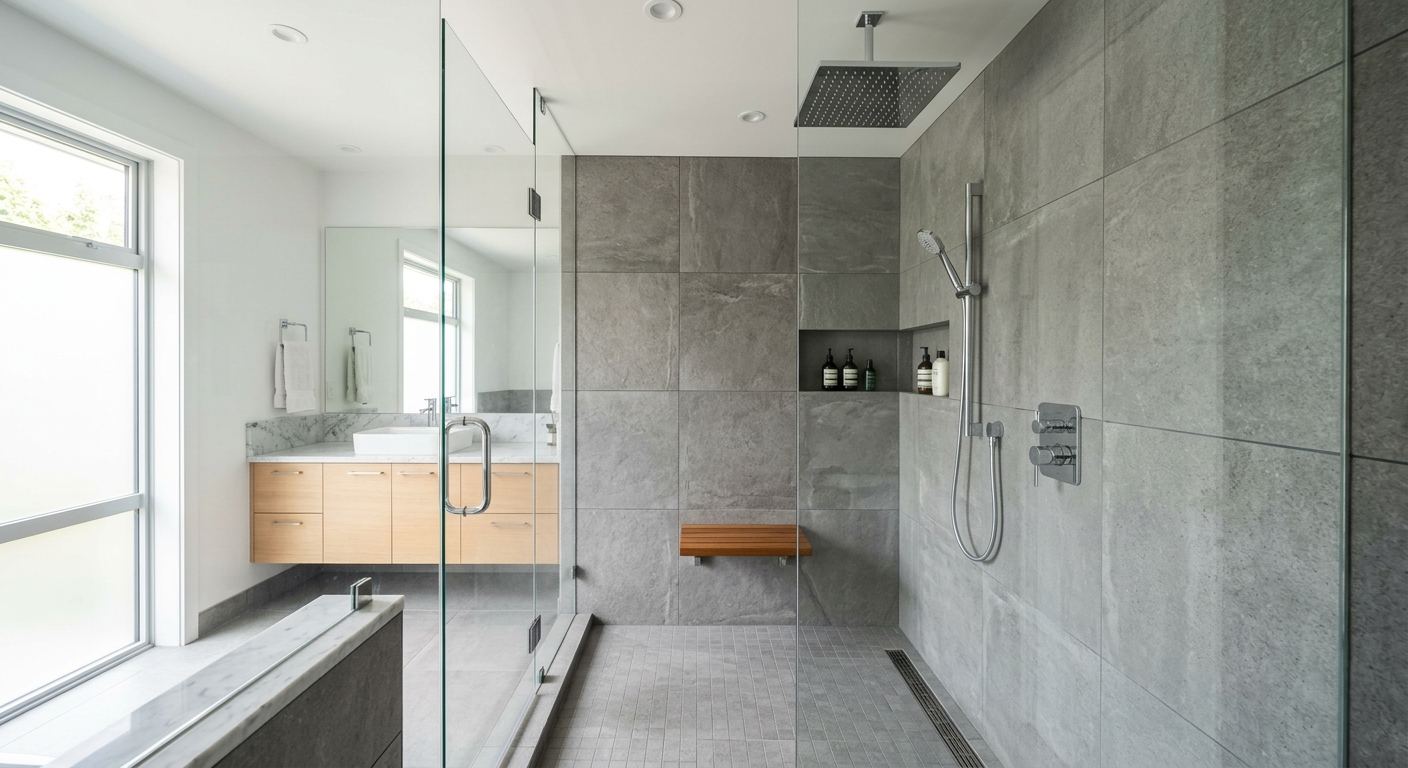
Bathroom renovation options and costs in Kitsilano
Kitsilano homeowners can choose from several bathroom renovation paths, and the price swings can be dramatic even when the final look is similar. In this part of the Lower Mainland–Southwest, many homes are older—Kitsilano’s population was 43,045 in 2021 (Statistics Canada, 2021 Census)—and it’s common to find dated bathroom layouts, older drain materials, and patchwork repairs behind existing tile. In pre-1980 and mid-century buildings, contractors often uncover issues like cast-iron drain sections or galvanized supply lines, plus the occasional asbestos-containing material in older floor tile or drywall compound. When those surprises show up mid-demo, the job usually expands to include plumbing/venting upgrades and remediation steps, which is why two quotes for “the same” bath can differ by 30–50%.
Lower Mainland–Southwest costs are driven more by labour rates and housing stock age than by temperature extremes. Metro Vancouver and nearby areas such as Kitsilano’s immediate trade catchment (including points north and east across the city) have consistently high demand for plumbers, electricians, and tilers. Once you open walls and floors, scheduling multiple trades in a tight urban window can also raise costs and extend timelines—especially when permits and inspections are required.
If you’re deciding between a cosmetic refresh and a true full renovation, the table below outlines typical scope, duration, and realistic price bands for Kitsilano so you can compare options clearly.
| Renovation Scope |
What's Included |
Typical Duration |
Price Range |
| Cosmetic refresh (paint, fixtures, accessories only) |
Repaint, replace vanity faucet and light fixture, swap toilet if included, add accessories, re-caulk, deep clean; no wall/floor plumbing changes |
3–7 days |
$3,000–$8,500 |
| Mid-range full renovation (new tile, vanity, tub/shower, electrical) |
Demo and rebuild, new vanity, updated tub/shower surround or wall tile, ventilation upgrade, GFCI where needed, new waterproofing system, basic electrical updates |
2–4 weeks |
$22,000–$32,000 |
| High-end full renovation (custom tile, steam shower, heated floors) |
Custom shower/tub layout, higher-end tile, linear drain or custom pan, heated floor mat/circuit, premium fixtures, upgraded lighting, enhanced ventilation, steam-ready planning where applicable |
4–7 weeks |
$35,000–$45,000 |
| Shower-only installation (convert tub to walk-in shower) |
Remove tub, install walk-in shower framing/pan, waterproofing, new tile, new valve trim, glass enclosure options, exhaust fan check or upgrade |
1.5–3.5 weeks |
$12,000–$25,000 |
| Bathtub replacement or tub-liner install |
Remove and install new tub (or tub-liner system), refinish surrounding surfaces as needed, re-caulk, minor plumbing changes if required |
1–2.5 weeks |
$1,800–$6,000 |
| Tile-only installation (floor + surround, existing layout kept) |
Tile removal and re-tile, new membrane and waterproofing for wet areas, grout and sealers, basic surface prep; plumbing remains as-is unless accessibility requires otherwise |
1.5–3 weeks |
$6,000–$14,000 |
Prices are estimates only and vary by project scope, site access and material selection.
What affects the price of bathroom renovation in Kitsilano
In Kitsilano and the broader Lower Mainland–Southwest, homeowners often see quote differences of 30–50% for the “same” bathroom, mainly because labour rates and the age of local housing stock affect how much hidden work a contractor must perform. This region’s construction market has strong demand for specialized trades—plumbers, electricians, and tilers—so schedules tighten and labour pricing stays elevated compared with many other parts of Canada. Climate matters too, but here the bigger cost driver is how often we uncover dated plumbing, ventilation gaps, and older material assemblies once walls and floors are opened.
In older Lower Mainland bathrooms, contractors frequently encounter cast-iron drain sections, galvanized supply lines, and sometimes electrical that doesn’t meet today’s safety expectations. Those findings can turn a “tile refresh” into a coordinated plumbing/venting upgrade plus electrical updates. If asbestos-containing materials are discovered (more common in older flooring, drywall compound, or insulation), remediation protocols and extra controls may add roughly $1,500–$5,000+ to the budget.
Concrete examples from Kitsilano projects: moving a toilet or vanity can require new rough-in work, which pushes labour and permit/inspection steps upward; choosing large-format porcelain can reduce grout lines but increases labour time for layout and subfloor prep to prevent lippage. On a typical conversion, a mid-range full renovation commonly sits around $22,000–$32,000, while a higher-end build with heated floors and premium tile can reach $35,000–$45,000 once the electrical scope and waterproofing details are fully defined.
| Price Factor |
Why It Matters |
Cost Impact |
| Layout change — moving drain or supply lines requires rough-in work |
New piping runs, added labour for demolition and reinstatement, and additional inspection steps |
Often adds several thousand dollars; can shift a job into a higher price band |
| Tile selection — large-format porcelain vs. mosaic vs. ceramic |
Harder materials need precise subfloor prep and careful setting; mosaics increase setting time |
Can add meaningful labour cost even if tile unit price is similar |
| Fixture tier — builder-grade vs. mid-range vs. designer brands |
Higher-end valves, trims, vanities and lighting typically cost more and may require custom fit |
Varies widely; premium fixtures can move total cost by thousands |
| Subfloor condition — rot or unlevel concrete adds scope |
Compensation may include floor build-up, membrane changes, or additional waterproofing prep |
Can add significant labour and material costs |
| Electrical — adding GFCI outlets, exhaust fan, heated floor circuit |
Bathrooms require safe, compliant wiring; adding circuits increases electrician time |
Common in full renos; can be a major driver in higher-end work |
| Waterproofing method — membrane type and extent |
Better systems prevent moisture intrusion; poor prep leads to redo costs |
Higher-quality systems add cost upfront but reduce failure risk |
| Older-home surprises — asbestos tile, cast-iron drains, galvanized pipes |
Discovery can expand scope, add remediation, and require replacement of failing components |
Can add roughly $1,500–$5,000+ (and more if plumbing overhaul is needed) |
| Bathroom size — sq ft drives tile and labour time directly |
Larger areas mean more tile setting, more prep, and longer curing/batching windows |
Directly affects labour hours; scales project cost |
Permits & regulations in British Columbia
In British Columbia, many bathroom refresh items are considered cosmetic and typically don’t require permits—for example: swapping a vanity, replacing a faucet/trim, repainting, exchanging accessories, or re-caulking. If your contractor is only removing and reinstalling fixtures without moving plumbing lines, the scope is often straightforward from a permitting perspective.
Work that usually DOES require permits (and inspections) includes: relocating plumbing (moving a drain or supply line), changing the layout of a shower/vanity that affects rough-in, adding or significantly modifying electrical circuits (especially when adding an exhaust fan circuit, new GFCI provisions, or heated floor circuits), and any structural changes that alter walls or framing. Electrical work must comply with the BC electrical safety requirements and be performed by a licensed electrician, with the permit/inspection steps handled accordingly.
How to verify before work starts in Kitsilano:
- Ask for the contractor’s licence information for their BC trade(s) and confirm it in the online registry relevant to their trade.
- Request a certificate of insurance (liability) and check the coverage limits and effective dates.
- Confirm workers’ coverage/clearance for WCB/WSIB equivalents as applicable in BC, and ask for proof of active coverage.
- For plumbing/electrical scopes, ask which parts are permitted and whether inspections will be scheduled before closing walls.
- Get permit numbers and inspection steps documented in writing where possible.
Skipping these checks is a common reason “small renovations” become expensive mid-project when stopped for compliance or missing documentation.
Choosing tile, waterproofing and fixtures for your Kitsilano bathroom
In Kitsilano, three material decisions drive both the budget and the long-term performance of your bathroom: tile choice, waterproofing method, and fixture tier. British Columbia’s frequent humidity and indoor condensation mean bathrooms need a well-built moisture barrier, not just pretty surfaces.
(1) Tile choice: ceramic tile is usually the entry-level option and works well for budget-conscious renos when paired with solid subfloor prep. Porcelain is often a better mid-range value because it’s denser and more forgiving for floors. Natural stone (marble, travertine, slate) looks luxurious but can be higher in material and installation complexity, sometimes requiring specialty sealing and extra care during layout.
(2) Waterproofing method: a paint-on membrane can be appropriate in some systems, but bonded sheet membrane or a proven shower-system approach with a consistent detail strategy (corners, transitions, drains) generally offers stronger protection in real-world wet-area use. The goal is to stop water behind tile—especially where tubs or showers meet walls—so you don’t get mould or hidden deterioration.
(3) Fixture tier: builder-grade fixtures are typically easiest to fit and keep costs predictable. Mid-range and designer brands can lift resale appeal because of fit, finishes, and valve performance, but they can also increase project cost because of trim compatibility and specialty installation.
Where price differences are justified: converting to a walk-in shower with a properly detailed waterproofing system and quality drain assembly is where your money protects the structure. A typical shower-only installation sits around $8,000–$25,000, and moving from basic waterproofing to a robust system can be a small portion of that total—often worth it when you consider the cost of redoing failed waterproofing.
| Material / Option |
Pros |
Cons |
Price Range |
| Ceramic tile (floor + walls) |
Budget-friendly, good variety of colours/patterns, generally easier to source and match |
Can be less durable than porcelain for floors; requires solid substrate prep for long-term stability |
$2,000–$5,500 |
| Porcelain tile (floor + walls) |
More durable and moisture-resistant; great for floors; many modern large-format styles |
More demanding installation; requires flatter subfloor to avoid lippage |
$4,500–$8,000 |
| Natural stone (marble, travertine, slate) |
High-end look and texture; unique character per slab |
Sealing/maintenance; more labour-intensive cutting and finishing; can be pricier to source and install |
$7,000–$14,000 |
| Frameless glass shower enclosure |
Modern, brighter look; shows off tile work; durable tempered glass |
Can increase installation complexity; needs correct alignment and strong framing/waterproofing |
$2,000–$5,500 |
| Prefab tub surround (acrylic) |
Faster installation; consistent surfaces; easier to clean |
Less custom look than tile; may limit future design flexibility |
$1,200–$3,000 |
| Custom shower pan (tile or linear drain) |
High performance when detailed correctly; modern look with linear drain options; seamless feel |
More labour and materials; depends heavily on waterproofing and slope planning |
$3,500–$10,000 |
How to choose a bathroom renovation contractor in Kitsilano
Choosing the right contractor in Kitsilano starts with verification. First, confirm the contractor’s British Columbia trade licensing for every trade they’re claiming to manage or perform (plumbing/electrical where applicable). Next, request a current certificate of liability insurance and check the coverage is active for the project period. For work that involves hiring trades, ask for proof of workers’ coverage/clearance as required in BC—your contractor should be able to provide documentation rather than “just say they’re covered.”
Then compare quotes the right way: get 2–3 itemised written quotes that separate labour and materials. You want to see line items for demo, framing, waterproofing, tile setting, electrical, plumbing rough-in, ventilation, glass, disposal, and any permit costs. Avoid “lump sum only” bids where exclusions are tucked into a short paragraph. Read the scope carefully: is permit pulling included? Is asbestos or hazardous material handling included if discovered? Is disposal (dump fees and hauling) included?
Warranty should be explicit: ask for workmanship warranty length, whether it covers leaks and waterproofing failures, and whether product/manufacturer warranties are provided with serial numbers and paperwork. Also check if warranties are transferable if you sell your home.
Payment schedule matters: never pay more than 10–15% upfront. Use milestone payments tied to completed phases and keep a holdback until the job is finished and cleaned. Finally, confirm the start date and completion estimate in writing so you aren’t guessing while trades are booked.
- Verify BC trade licence(s) matching the work scope.
- Confirm liability insurance is active and adequate.
- Request proof of workers’ coverage/clearance documentation for BC requirements.
- Use itemised quotes: labour vs. materials, not one blended number.
- Confirm permit pulling responsibility and inspection inclusion.
- Check disposal/dump fees and site protection are included.
- Ask what happens if asbestos is discovered—written remediation scope.
- Ensure waterproofing system brand/type and application method are specified.
- Require details on ventilation/exhaust fan and electrical/GFCI scope.
- Confirm tile substrate prep requirements (leveling, backer, membrane details).
- Get start date and completion target in the contract.
- Use warranty terms in writing (workmanship vs. product warranty, transferability).
Red flags in Kitsilano bathroom renovations: (1) a quote that won’t break out waterproofing and electrical/plumbing line items, (2) no stated permit/inspection plan even when layout changes are proposed, (3) willingness to accept large upfront payments beyond 10–15%, (4) vague warranties (“we’ll fix it” without duration and leak/waterproofing coverage), and (5) contractors who don’t ask about existing subfloor/drain age or who dismiss older-home risk without inspecting behind walls.
Frequently asked questions — bathroom renovation in Kitsilano
What adds the most resale value in a bathroom reno?
In Kitsilano and the Lower Mainland–Southwest, buyers tend to pay for bathrooms that feel updated, safe, and moisture-proof—especially when there are visible finishes and credible waterproofing. The biggest value bump usually comes from a well-executed “mid-range full renovation,” where new tile surfaces, a modern vanity, and reliable ventilation are part of the package (often in the $22,000–$32,000 range depending on size and layout). Walk-in showers with good glass, durable flooring, updated lighting, and compliant electrical (including proper GFCI where needed) also help. Just as important: buyers notice when plumbing and drains are upgraded after older-home surprises—hidden issues can undermine value even if surfaces look good.
Can I keep my existing plumbing layout to save money?
Yes, keeping your plumbing layout usually saves money because it reduces rough-in work, demolition depth, and the number of trades coordinating around inspections. In many Kitsilano renos, a “tile + vanity + ventilation” approach can be much cheaper than relocating drains or supplies. When you keep the same location for toilet, vanity, and shower/tub, you’re typically avoiding the higher-cost portion of a bathroom renovation: new drain routing, supply line changes, and extra permitting/inspection steps. If your existing layout is functional, you can often target a mid-range facelift or a tile-focused project. That said, if older cast-iron drain sections or dated galvanized supply lines are failing, you may still need plumbing upgrades for long-term reliability.
How much does a walk-in shower cost in Kitsilano?
A walk-in shower conversion in Kitsilano commonly falls in the $8,000–$25,000 range based on how complex the change is and what you choose for waterproofing, pan/drain, tile, glass, and electrical/ventilation. If you’re converting from a standard tub and keeping the same drain location, costs are often closer to the lower end of that band. If you move the drain, install a linear drain, add heated flooring, or upgrade electrical for an upgraded exhaust fan, you’ll typically land higher. Because Lower Mainland labour and trade availability are major drivers, it’s especially important to confirm scope and site conditions up front so you don’t get surprise add-ons after walls are opened.
What's the ROI on a bathroom renovation?
ROI varies by home condition, neighbourhood demand, and how much of the renovation is addressing functional problems vs. purely cosmetic upgrades. In Kitsilano, buyers typically pay for bathrooms that look modern and have dependable moisture control—so waterproofing quality, ventilation, and durable finishes are key to recouping value. A full renovation can range from $18,000–$45,000 in this tier, but ROI is highest when the renovation corrects issues like poor ventilation, outdated finishes that show wear, or aging plumbing that can cause leaks. The most cost-effective path is usually to match your renovation level to the problem level: if your plumbing layout is sound, you can improve value without overspending on demolition-heavy changes.
Do I need waterproofing behind the tile?
For any tiled shower or tub surround, waterproofing behind the tile is strongly recommended and is typically part of modern BC best practice for wet areas. In British Columbia’s humid indoor conditions, bathrooms can hold moisture, and grout isn’t the barrier—waterproofing systems prevent water from reaching framing and subfloor. Your contractor should describe the waterproofing method (for example, a membrane system with correct preparation, detailing at corners/transitions, and a properly integrated drain assembly). Skipping or weakening waterproofing is one of the most common causes of hidden damage. Even if you’re doing a tile-only installation, ensure the quote includes waterproofing, not just tile setting.
How do I compare bathroom renovation quotes?
Start by comparing like-for-like scope. Ask each contractor to itemise labour and materials and to specify waterproofing type, ventilation scope (fan and ducting approach), electrical work (including GFCI where relevant), and plumbing rough-in details if any layout changes are planned. Confirm what’s included in permits and disposal (dump fees and hauling). In Kitsilano older homes, ask whether they have a plan for discovery of cast-iron drains, galvanized supply lines, or asbestos-containing materials in pre-1985 materials—this can shift cost by thousands. Finally, compare warranty terms and the payment schedule: never accept more than 10–15% upfront and hold a portion until completion. A “lowest price” quote that’s missing critical line items often becomes the most expensive later.