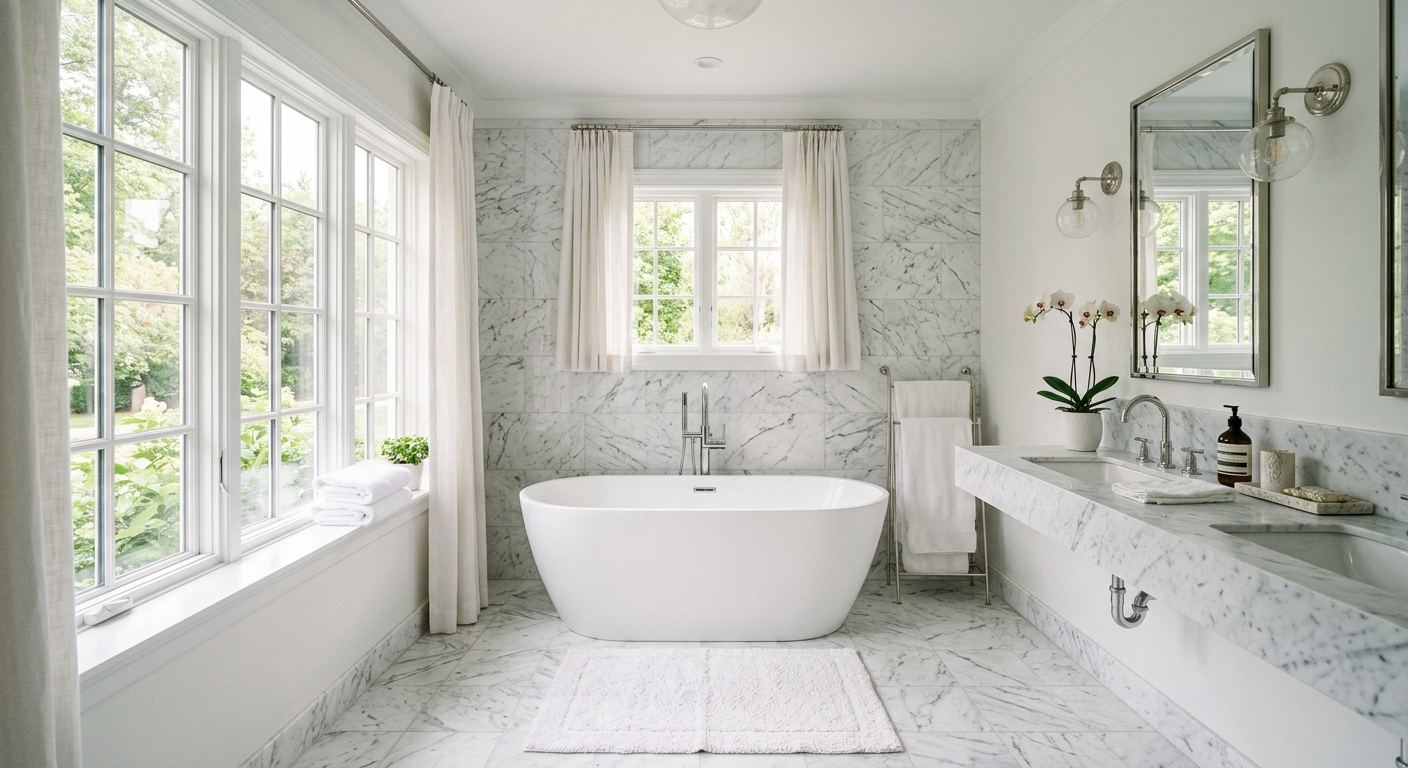
Bathroom renovation options and costs in College Park
College Park homeowners have several good bathroom renovation paths, but the right one depends on how much you want to change and what’s hiding behind the walls. With College Park’s population at 7,396 (Statistics Canada, 2021 Census), local contractors often balance steady demand with the reality that many homes here are older mid-century properties, meaning the plumbing layout may be dated and the subfloor may need closer inspection. In pre-1980 and mid-century houses across the Lower Mainland–Southwest, it’s not uncommon to encounter aging drain components, older supply piping, or drywall and floor materials that require special handling if contaminants are found. That’s one reason your scope can expand once walls are opened.
Costs in the Lower Mainland–Southwest are driven more by labour rates and housing stock age than by weather itself. Even in a relatively mild coastal climate, bathrooms are unforgiving: once ventilation, waterproofing, and venting are reviewed, projects frequently include upgrades to bring systems in line with current British Columbia expectations. Also, the region’s high demand for plumbers, tilers, and electricians around Metro Vancouver can affect availability and scheduling, so competitive pricing depends on having a clear scope and verified rough-in conditions early. In College Park’s older neighbourhood pockets—where mid-century homes are common—tile and plumbing trades tend to be especially in demand because renovation work often clusters in older housing runs.
Use the ranges below as planning anchors, then compare quotes against what’s truly included (especially waterproofing, electrical scope, and disposal).
| Renovation Scope |
What's Included |
Typical Duration |
Price Range |
| Cosmetic refresh (paint, fixtures, accessories only) |
Paint, swap vanity or taps (no plumbing relocation), replace toilet (if same rough-in), new mirror and accessories, caulking and trim touch-ups |
2–5 days |
$4,000–$9,000 |
| Mid-range full renovation (new tile, vanity, tub/shower, electrical) |
Demo and disposal, shower/tub area re-tiled, new vanity, new tub or upgraded surround, new exhaust fan + GFCI-ready circuit (where required), basic waterproofing system, plumbing trim updates |
2–3 weeks |
$18,000–$32,000 |
| High-end full renovation (custom tile, steam shower, heated floors) |
Premium tile package, custom waterproofing build, heated floor circuit and controls, upgraded electrical and lighting, designer vanity, larger-format stone-look finishes, steam shower or high-spec shower system |
3–5 weeks |
$32,000–$45,000 |
| Shower-only installation (convert tub to walk-in shower) |
Convert tub opening to shower, new valve trim, slope/pan work, tile floor and walls, glass door or enclosure, ventilation upgrade as needed |
1.5–3 weeks |
$14,000–$25,000 |
| Bathtub replacement or tub-liner install |
Replace tub with like-for-like or near-like size, re-tile or re-finish mating surfaces, new tub trim and caulking; liner option includes prep and surface coating |
3–7 days |
$2,500–$6,000 |
| Tile-only installation (floor + surround, existing layout kept) |
Tile floor and walls (existing fixtures retained), demo of finishes as needed, waterproofing upgrades limited to the tiled areas, grouting/sealing where applicable |
1–2 weeks |
$2,000–$8,000 |
Prices are estimates only and vary by project scope, site access and material selection.
What affects the price of bathroom renovation in College Park
Even when two contractors quote the “same” bathroom, budgets in the Lower Mainland–Southwest can come in 30–50% apart because bathroom renos are multi-trade projects in a small, complex space. In practice, differences show up in labour rates, how much investigation is done before pricing, and whether the quote properly accounts for what’s behind older walls. Across British Columbia, the biggest swings usually aren’t tied to coastal weather—they’re tied to labour demand around Metro Vancouver and the age of the housing stock. In older College Park homes, it’s common for contractors to discover cast-iron or galvanized components that need upgrading when lines are opened for a modern shower valve, better venting, or a code-compliant exhaust fan.
Lower Mainland–Southwest budgets also tend to account for realistic “discovery” costs. For example, if asbestos-containing materials are found in pre-1985 flooring or drywall compound, abatement protocols can add roughly $1,500–$5,000+ and require additional trades and scheduling. If you’re doing a mid-range full renovation, you may plan around the broader full-reno band, often aligning with the local expectation of something like $18,000–$32,000. But if the work stays cosmetic-only, you can sometimes keep costs nearer the refresh range—though even small scope creep (like moving a valve) can quickly move you closer to a full renovation budget.
Concrete examples from College Park renos: (1) moving a toilet 150–300 mm to align with tile frequently triggers drain rough-in and increases labour time; (2) adding heated floors usually requires a separate circuit plan and careful substrate prep, which can add several thousand dollars even with the same tile; and (3) bathrooms with out-of-level floors require more floor prep and thinset/leveling work before tile can be installed properly.
Those same factors can raise or lower your cost more than any humidity argument—because in this region, the bottlenecks are skilled labour and what you uncover once demolition starts.
| Price Factor |
Why It Matters |
Cost Impact |
| Layout change — moving drain or supply lines |
Requires rough-in work, potential chases in walls, and additional inspection steps |
Often +$3,000–$10,000 |
| Tile selection — large-format porcelain vs. mosaic vs. ceramic |
Harder tiles demand better substrate prep, more precise cuts, and different labour time |
Often +$1,000–$6,000 |
| Fixture tier — builder-grade vs. mid-range vs. designer brands |
Better valves, finishes, and mirrors usually cost more and may require specialized installation |
Often +$500–$4,500 |
| Subfloor condition — rot or unlevel concrete adds scope |
Needs replacement/leveling before tile or shower waterproofing can be installed |
Often +$1,500–$7,000 |
| Electrical — adding GFCI outlets, exhaust fan, heated floor circuit |
New circuits and ventilation upgrades require qualified electrical work and materials |
Often +$800–$5,500 |
| Waterproofing method — membrane type and extent |
A full waterproofing system protects against water migration behind tile |
Often +$800–$3,500 |
| Older-home surprises — asbestos tile, cast-iron drains, galvanized pipes |
Triggers remediation, additional plumbing labour, and permit/inspection coordination |
Often +$1,500–$12,000+ |
| Bathroom size — sq ft drives tile and labour time directly |
More area means more materials, longer prep, and more waterproofing coverage |
Often +$2,000–$10,000+ |
Permits & regulations in British Columbia
In British Columbia, many straightforward cosmetic updates can be done without permits—swapping fixtures in place, repainting, replacing a vanity, or retiling on the existing footprint typically falls under “like-for-like” finishing. Where permits become important is when you change the plumbing or electrical scope, or when you alter structural elements. Relocating plumbing (moving a drain or supply lines), adding a new exhaust fan with new wiring/circuit work, or making structural wall changes generally requires a permit and inspection process.
Electrical work must meet the provincial safety code and be performed by, or signed off by, a licensed electrician. Plumbing rough-in changes typically require a permit and inspection as well—especially when drain lines are opened, re-routed, or replaced to match modern expectations. For anything involving shower valves, venting considerations, or major drainage modifications, assume permits are likely required.
To verify a contractor’s British Columbia trade licence and coverage, ask for three documents and check them before work starts: (1) a clear copy/photo of their relevant BC trade licence number(s); verify the number using the applicable online licensing registry for the trade; (2) a certificate of liability insurance showing the contractor’s name, active policy dates, and adequate coverage limits; and (3) proof of required worker coverage (WCB/WSIB-equivalent coverage in BC) or confirmation letter where applicable. If they can’t provide these or won’t share them up front, treat that as a planning risk—especially in an older College Park bathroom where hidden issues are common.
Choosing tile, waterproofing and fixtures for your College Park bathroom
In College Park, the three material decisions that most reliably shape your renovation budget are tile choice, waterproofing method, and fixture tier. First, tile: ceramic is usually the entry-level option and can work well for budget-conscious renovations, but installation complexity rises when you choose small mosaics, intricate patterns, or higher-end looks. Porcelain is denser and more consistent for floors and wet areas, often reducing long-term wear and making it a strong mid-range choice for $2,000–$8,000 tile-only scope (depending on area and layout). Natural stone (marble, travertine, slate) looks premium, but it adds cost through material price and careful installation and sealing requirements.
Second, waterproofing: in British Columbia’s coastal humidity and wet indoor use, the right waterproofing system prevents mould by stopping water migration behind tile. Paint-on membranes may be acceptable for certain limited applications, but bonded sheet membranes or a modern system like a bonded membrane over proper board is commonly used for showers because it’s designed for sustained wet exposure. Third, fixtures: builder-grade trims can keep the budget in check, while mid-range or designer brands improve feel, finish durability, and sometimes functionality (like better shower valves and controls), which often supports resale value.
Match your mix to your situation. For example, if you’re choosing between tile-only updates and a full renovation path, spending a little more on waterproofing and a more reliable shower system is usually justified—especially when replacing an older tub/shower in a mid-century home where subfloor conditions and venting may need correction. If your goal is keeping costs predictable, focus money where it stops water problems, not where it only changes appearance.
| Material / Option |
Pros |
Cons |
Price Range |
| Ceramic tile (floor + walls) |
Good entry-level value, wide design selection, easier to source locally |
Can be less durable for floors than porcelain; higher wear with heavy foot traffic |
$2,000–$5,500 |
| Porcelain tile (floor + walls) |
More consistent, typically better water/wear resistance, ideal for wet-area flooring |
Higher material cost; may require better substrate flatness for large-format pieces |
$3,500–$8,000 |
| Natural stone (marble, travertine, slate) |
Luxury look and uniqueness, strong appeal for resale when installed carefully |
Higher material and labour; sealing/maintenance needed; variations require skilled layout |
$6,000–$14,000 |
| Frameless glass shower enclosure |
Modern appearance, easier visual cleanliness, can make small bathrooms feel larger |
Higher hardware and fabrication cost; relies on solid wall framing |
$2,500–$6,500 |
| Prefab tub surround (acrylic) |
Fast install, predictable performance, budget-friendly for tub areas |
Design flexibility is limited; may not match custom tile aesthetics |
$1,200–$4,000 |
| Custom shower pan (tile or linear drain) |
Best-in-class look for tiled showers; linear drains can improve slope and appearance |
More skilled labour; requires meticulous waterproofing and correct slope |
$3,000–$10,000 |
How to choose a bathroom renovation contractor in College Park
Choosing the right contractor in College Park starts with proof, not promises. First, verify British Columbia licensing for the trades involved (plumbing, electrical, and any related work). Ask for their licence number(s) and confirm them using the relevant online licensing tools for the trade, then cross-check that the person/company on your quote matches the licence. Next, request liability insurance and confirm it’s active; the certificate should list the contractor and show coverage dates and limits. Finally, confirm worker coverage status (WCB/WSIB-equivalent coverage in BC) with a clearance letter or documentation—especially important in multi-trade jobs where subcontractors touch walls, drains, and electrical.
Get 2–3 itemised written quotes that break out labour and materials separately (not a single lump sum). A good quote will clearly list what’s included and what’s excluded: permit pull included or not, disposal included or extra, drywall repair included or patch-only, and whether subfloor prep and waterproofing coverage are fully described. Look for a clear start date and a realistic completion estimate in writing—bathrooms often include curing/inspection time, so aggressive timelines can be a warning sign.
Warranty matters. Ask for the workmanship warranty length (how long your waterproofing/tile installation is covered), the manufacturer warranty for products, and whether warranties are transferable if you sell the home. For payment, never accept a schedule that demands more than 10–15% upfront; hold back a portion until key milestones are complete and final touch-ups are done.
- Ask for BC trade licence numbers before signing, not after.
- Confirm liability insurance is active and request a certificate copy.
- Verify worker coverage documentation for subcontractor-heavy schedules.
- Use itemised quotes: labour, materials, and allowances separated.
- Ensure scope includes waterproofing method and coverage area.
- Clarify what disposal costs include (dump fees, hauling, recycling).
- Confirm permit pull responsibility and inspection scheduling.
- Get a written timeline with curing and inspection checkpoints.
- Ask who provides glazing/glass enclosure measurements and installation.
- Request product specs (valves, fans, membrane systems) listed by brand/model.
- Confirm warranty details in writing, including transferability.
- Set a holdback strategy (keep funds until punch-list is complete).
Red flags in College Park bathroom renovation quotes include: vague waterproofing details (no membrane system or coverage description), “cheap” electrical or plumbing language that doesn’t mention licensing/inspection responsibilities, lowball pricing that omits disposal or subfloor prep allowances, pressure for large upfront payments, and refusal to provide licence/insurance documentation. Any of these should trigger follow-up questions or a second quote before you commit.
Frequently asked questions — bathroom renovation in College Park
Can I live at home during a bathroom renovation in College Park?
Yes—many College Park homeowners do, but it depends on the scope and how your contractor phases the work. For cosmetic refreshes, you can often stay home comfortably because the bathroom may be minimally disrupted. For a mid-range full renovation, expect a period where the shower/tub area is partially unavailable while tile, waterproofing, and electrical are completed; many crews can work in sections to keep some access. In older College Park homes, discovery of issues like subfloor unevenness or drainage upgrades can extend downtime. If you’re aiming to stay livable, plan for a temporary wash setup and set expectations: a full renovation typically aligns with the local full-reno band (for example, $18,000–$32,000), which usually means a short disruption window rather than zero inconvenience.
What's the best bathtub material for a College Park home?
The “best” bathtub material depends on your budget, how your existing rough-in matches, and the look you want. If you’re keeping the tub area and want reliable performance, acrylic tub systems (including tub-liner or tub-with-surround solutions) are often the most cost-predictable in College Park because they’re efficient to install. For homeowners prioritizing durability and a longer lifespan, cast iron or higher-end enameled options can be excellent but usually cost more upfront and can be heavier. If your renovation involves converting to a shower instead, the best choice may be a high-quality shower pan and valve system rather than a new tub. As a baseline, bathtub replacement or liner work commonly falls in the $2,500–$6,000 range—so the “best” material is the one that fits your scope and installation constraints without creating extra subfloor or drainage surprises.
Is it worth renovating a bathroom before selling in College Park?
Often, yes—because bathrooms are high-impact rooms for buyers, especially in older Lower Mainland–Southwest homes. A well-executed renovation can improve inspection outcomes and reduce buyer uncertainty about waterproofing and ventilation, which matters in British Columbia’s wet indoor usage patterns. That said, if your current bathroom has hidden issues (outdated plumbing, inadequate exhaust, or signs of moisture damage), addressing those problems usually delivers more value than purely cosmetic changes. For sellers, many homeowners choose a mid-range full renovation approach rather than an ultra-high-end finish, aiming for durable tile, proper waterproofing, and modern fixtures while staying realistic on budget. Local market pricing typically places many full renovations around $18,000–$45,000, so it’s important to compare upgrades against expected buyer preferences and the condition of the surrounding flooring and drainage.
How do I plan a bathroom renovation on a tight budget in College Park?
Start by deciding what you won’t change. Keeping the layout (no moving drains or supply lines) is the biggest way to control labour costs in College Park because rough-in work is where quotes can expand. Consider a cosmetic refresh if your plumbing is sound and the surfaces aren’t failing—these projects can be planned closer to $4,000–$9,000. If you need more improvement, a tile-only scope can be a smart middle ground (often $2,000–$8,000 depending on area and finish). Protect your budget by insisting the quote clearly states waterproofing work and waterproofing coverage, because cutting corners there can create expensive repairs later. Finally, add a contingency for older-home surprises. In many pre-1980 layouts, it’s not unusual to discover dated plumbing components once walls are opened.
What's the difference between a cosmetic and a full bathroom renovation?
A cosmetic refresh focuses on visible finishes and accessories without changing the plumbing or major electrical scope. Think paint, swapping fixtures in place, replacing a vanity, re-caulking, and updating mirrors and hardware—usually keeping the same layout and rough-ins. By contrast, a full bathroom renovation typically includes demolition to address tile surfaces, waterproofing systems, exhaust/ventilation improvements, and often electrical updates (like adding properly protected outlets and fan circuits). It frequently includes plumbing trim updates or more extensive plumbing work when upgrading to modern shower controls and drainage performance. In local planning terms, cosmetic refresh projects commonly sit around $4,000–$9,000, while mid-range to high-end full renovations often land in the $18,000–$45,000 range depending on tile complexity, heated floors, and whether any plumbing and venting upgrades are needed.
How do I choose the right contractor for my bathroom in College Park?
Choose based on documentation, clarity, and risk control. For British Columbia, verify the contractor’s trade licence(s) relevant to your scope and confirm it matches the person/company on the quote using the online licensing registry for that trade. Ask for liability insurance and check the certificate is current, then confirm worker coverage documentation. Next, request 2–3 itemised quotes that separate labour and materials, and read the exclusions: disposal, permit pull responsibility, demolition limits, and whether subfloor prep and waterproofing are fully specified. For timeline, get a start date and completion estimate in writing, including curing/inspection steps. Finally, look for a realistic payment schedule—keep upfront deposits low (10–15% max) and hold back until the punch list is done. If a quote for a shower-only conversion seems too good compared with the local band (often up to $8,000–$25,000), that’s a reason to ask what’s missing.