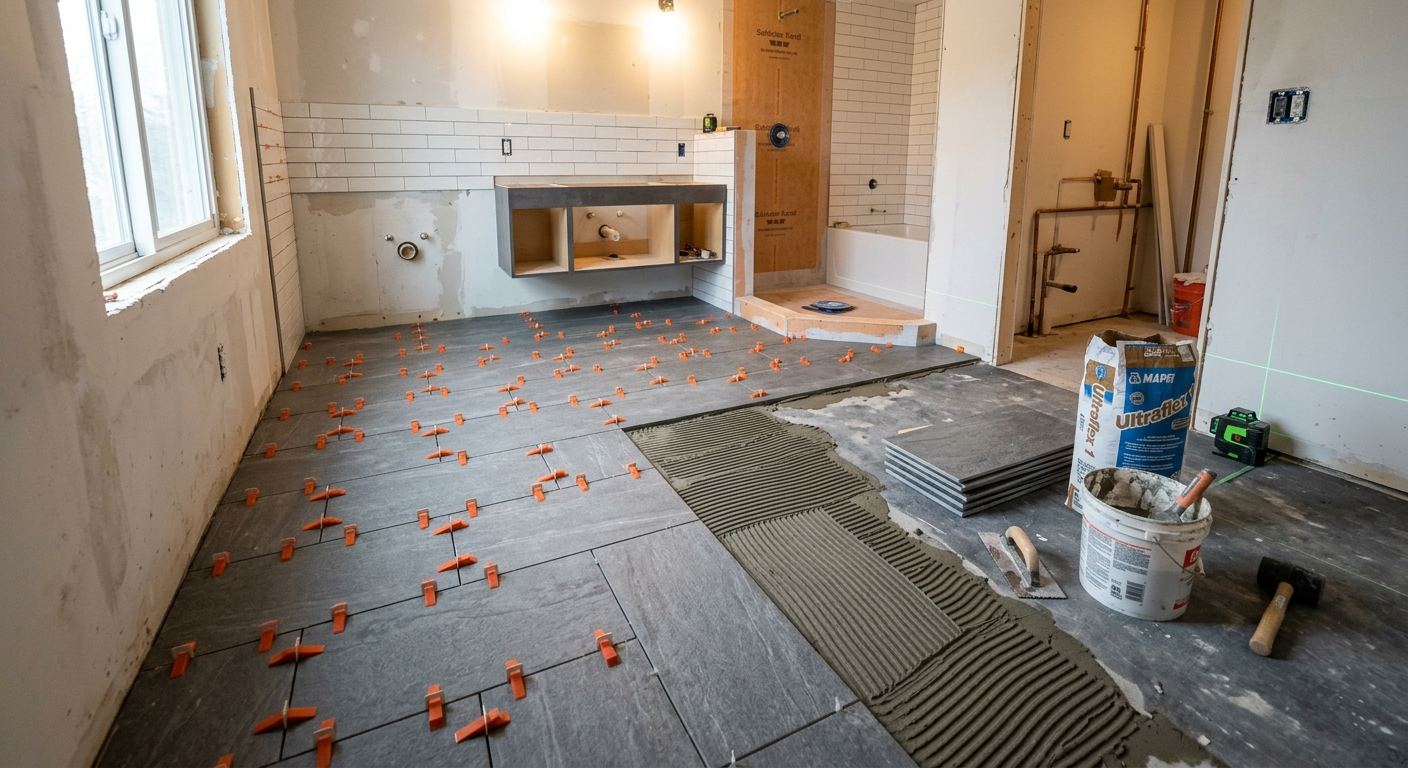
Bathroom renovation options and costs in Stride Hill
In Stride Hill, bathroom renovation costs can feel all over the map, even when you’re starting with a similar tub. That’s partly because local housing stock is often older: across the region you’ll frequently see dated plumbing layouts and mid-century building details, and in a neighbourhood like the Chapman Heights–Fleetwood area of the broader market, trades are especially busy with knockdowns and “open-wall” repairs. With Stride Hill’s population sitting at 6,019 (Statistics Canada, 2021 Census), demand is steady, but it’s the Lower Mainland–Southwest workload that pushes availability and labour pricing. In pre-1980 homes, it’s also common to discover aging galvanized supply lines or older drain stacks after walls come down; occasionally, asbestos-containing materials can be present in floor tile or drywall compound in homes built before the mid-1980s, which triggers added remediation steps.
Even though British Columbia’s coastal climate brings winter dampness and humidity, bathroom costs here are driven more by labour rates and discovery of hidden problems than by weather alone. In the Lower Mainland–Southwest, skilled plumbers, tilers, and electricians are in high demand, and once a contractor opens the room, projects often expand to include plumbing and venting upgrades to meet current British Columbia expectations. That’s why a “like-for-like” refresh can land very differently than a true full renovation with electrical and waterproofing upgrades.
Use the table below to compare scopes and realistic budget ranges, then we’ll break down the price factors that typically explain the biggest gaps in quotes.
| Renovation Scope |
What's Included |
Typical Duration |
Price Range |
| Cosmetic refresh (paint, fixtures, accessories only) |
New vanity taps/fixtures, toilet swap (if already compatible), paint, caulking refresh, towel bar/accessories; no plumbing relocation |
2–5 days |
$4,000 – $10,000 |
| Mid-range full renovation (new tile, vanity, tub/shower, electrical) |
Demo and haul-away, waterproofing, tub/shower surround tile, new vanity and mirror, new exhaust fan (where needed), updated GFCI as required, basic plumbing updates only |
2–3 weeks |
$18,000 – $32,000 |
| High-end full renovation (custom tile, steam shower, heated floors) |
Custom layout, premium tile and installation, heated floor circuit, steam shower (or high-end shower system), higher-tier fixtures, enhanced waterproofing build-up |
3–5 weeks |
$32,000 – $45,000 |
| Shower-only installation (convert tub to walk-in shower) |
Remove tub, add shower valve/trim, new waterproofed shower base, glass enclosure or hinged door, tiling, exhaust fan upgrade if needed |
1–2.5 weeks |
$12,000 – $25,000 |
| Bathtub replacement or tub-liner install |
Replace tub (or liner system where applicable), re-seal, tile touch-ups at deck, verify and renew drain connections as required |
3–7 days |
$1,500 – $6,000 |
| Tile-only installation (floor + surround, existing layout kept) |
Remove and reset tile (including prep), waterproofing to code-ready standard, grout/caulk, re-finish edges; fixtures usually reused |
1–2 weeks |
$2,000 – $8,000 |
Prices are estimates only and vary by project scope, site access and material selection.
What affects the price of bathroom renovation in Stride Hill
In the Lower Mainland–Southwest, two quotes for the “same” bathroom can differ by 30–50% because labour costs and how quickly hidden issues get discovered can be very different from job to job. British Columbia isn’t a one-size-fits-all market: in busy areas, the cost of skilled trades (plumbers, tilers, electricians) tends to run higher, and that alone can push a mid-range renovation up from the lower end of the $18,000 – $32,000 band toward the top end once schedules, removals, and coordination are counted. When your home is older, those risks rise further.
For Stride Hill homeowners, local housing stock often means older drain stacks (including cast-iron or aging systems) and older supply plumbing (sometimes galvanized or outdated copper runs). Once walls open, contractors frequently find inadequate venting, corroded connections, or slope issues that require upgrades—work that isn’t visible in photos. Another cost driver is ventilation: many older bathrooms have weak exhaust fan setups, and improvements can add electrical scope. In pre-1985 builds, it’s also possible to find asbestos-containing materials in vinyl floor tile, drywall compound, or insulation; if abatement is required, it can add roughly $1,500 – $5,000+ depending on the extent and access. That’s one reason full renos can land anywhere within the $18,000 – $45,000 range.
Concrete examples we see in the Stride Hill service area include: (1) adding a new exhaust fan and tie-in to a nearby circuit—often changes drywall work and scheduling; (2) switching to large-format porcelain tile—can increase labour due to substrate prep and layout planning; (3) converting a tub to a walk-in shower—can require re-routing rough-in piping, which usually costs more than a simple tub swap (staying closer to the $1,500 – $6,000 band). British Columbia’s coastal humidity makes waterproofing and drying time critical, but the labour-heavy “open-wall” discoveries are what usually move the budget.
| Price Factor |
Why It Matters |
Cost Impact |
| Layout change — moving drain or supply lines requires rough-in work |
New piping runs, patching, and inspection coordination |
Often adds several thousand dollars vs. keeping the existing layout |
| Tile selection — large-format porcelain vs. mosaic vs. ceramic |
More precise cutting, substrate prep and labour time |
Can shift the tile portion from “economy” up to “premium” ranges |
| Fixture tier — builder-grade vs. mid-range vs. designer brands |
Material cost plus sometimes additional trim/valve compatibility |
Frequent driver for budget creep during final selections |
| Subfloor condition — rot or unlevel concrete adds scope |
Needs repair, flattening, and sometimes extra underlayment |
Common cause of mid-reno surprises |
| Electrical — adding GFCI outlets, exhaust fan, heated floor circuit |
Licensed electrical time and circuit/box modifications |
Typically pushes jobs above “cosmetic refresh” pricing |
| Waterproofing method — membrane type and extent |
Coverage and system build-up affect performance and longevity |
Can add cost upfront but reduces call-backs and moisture risk |
| Older-home surprises — asbestos tile, cast-iron drains, galvanized pipes |
Remediation and replacement add trades and delays |
May add roughly $1,500 – $5,000+ depending on findings |
| Bathroom size — sq ft drives tile and labour time directly |
Tile quantity, thinset/waterproofing, and installation labour scale |
Smaller bathrooms still cost “per trade” but material/labour scale less |
Permits & regulations in British Columbia
In British Columbia, many bathroom updates are treated as cosmetic and typically do not require a permit—swapping a vanity, replacing fixtures (like a toilet or sink faucet) when you’re not moving plumbing, repainting, re-caulking, and doing straightforward retiling over properly prepared surfaces are usually in the “no permit” category. Where bathrooms cross into more regulated work is when you change the plumbing or electrical systems, or alter structural elements.
In practice, the work that does typically require a permit/inspection includes: relocating plumbing (moving a drain or supply lines, changing the location of a shower valve), adding or changing exhaust fan wiring that involves new circuits or modifications, and any structural wall changes. Electrical work must meet Canadian electrical code requirements and should be completed or signed off by a licensed electrician. Plumbing rough-in changes generally require a permit and inspection after rough-in and again before final close-up.
For a Stride Hill homeowner, a reliable step-by-step check is: (1) request the contractor’s British Columbia trade licence number and confirm it through the appropriate online registry; (2) ask for proof of liability insurance (certificate of insurance) that matches the scope; (3) confirm worker coverage/WSIB-style protections—commonly via a clearance letter or coverage proof; and (4) keep copies of everything with your contract. If a contractor can’t provide documents promptly or hesitates when you ask, it’s usually a red flag for future claims and delays.
Choosing tile, waterproofing and fixtures for your Stride Hill bathroom
In Stride Hill, the three material decisions that most consistently shape your renovation budget are tile choice, waterproofing system, and fixture tier. First, tile: ceramic is the entry-level option and can be a good fit for smaller bathrooms where you want to stay near the economy end, but it often means more careful handling during installation. Porcelain is denser, handles moisture better, and typically costs more for both material and the extra precision needed for a clean layout. Natural stone (marble, travertine, slate) creates a high-end look, but it brings higher material cost and can require additional finishing and careful selection for consistency.
Second, waterproofing: in British Columbia’s humid bathroom conditions, a paint-on membrane is workable in the right system, but bonded sheet membranes and modern tiled shower systems (often installed with detail-focused components) usually provide more robust protection when done correctly at all corners, seams, and transitions. The right method matters as much as the brand, because failed waterproofing is what turns a “pretty reno” into mould call-backs.
Third, fixtures: builder-grade gets you function, mid-range gives better valve/trim and long-term feel, and designer brands can be worth it for pressure balance, finish durability, and consistent styling—especially for resale. A realistic example: moving from standard tile to mid-range porcelain with a full waterproofing system may add a few thousand dollars, but it can be justified when you’re already doing a full demo and you want to avoid cracking/grout issues in a room that’s used daily.
| Material / Option |
Pros |
Cons |
Price Range |
| Ceramic tile (floor + walls) |
Lower material cost, good variety of colours/patterns, easier to source |
Can be more prone to chipping; requires good prep for long-term performance |
$2,000 – $4,500 |
| Porcelain tile (floor + walls) |
Durable in moisture, typically better for floors, strong long-term look |
Higher material cost; larger formats may need extra substrate planning |
$4,000 – $8,000 |
| Natural stone (marble, travertine, slate) |
Luxury appearance and unique veining; strong curb appeal |
More expensive; may need sealing and careful compatibility checks |
$6,000 – $12,000 |
| Frameless glass shower enclosure |
Bright, modern look; easy to clean; no bulky frame lines |
Higher hardware cost; requires accurate walls and plumb during install |
$2,000 – $6,000 |
| Prefab tub surround (acrylic) |
Fast install; easier waterproofing with less tile labour; clean finish |
Fewer design options; may not match premium tile styling |
$1,500 – $4,000 |
| Custom shower pan (tile or linear drain) |
Modern drainage line look; improves slope consistency; strong performance when built right |
More labour and system coordination; more subfloor prep |
$3,000 – $10,000 |
How to choose a bathroom renovation contractor in Stride Hill
Choosing the right contractor in Stride Hill starts with verifying licensing, coverage, and the quality of documentation. In British Columbia, ask for their trade licence details (and confirm them), proof of general liability insurance (certificate of insurance), and proof of worker coverage—commonly through a clearance letter or coverage documentation. Then confirm the scope: a contractor should clearly state which trades they’ll self-perform and which require licensed subcontractors (for example, electrical for GFCI/exhaust/heated floors).
Next, get 2–3 itemised written quotes—labour and materials broken out, not just a lump sum. A bathroom quote should list demo and haul-away, waterproofing system, tile install method, drain/valve allowances, electrical allowances, glass enclosure pricing (if applicable), and whether the permit pull is included. Look for clarity on exclusions like asbestos testing/abatement, subfloor replacement, and disposal. Scope gaps are where budgets usually go sideways.
Warranty is also a key selection factor: confirm workmanship warranty length, what’s covered (leaks, movement cracking, waterproofing failures), and whether the product/manufacturer warranty transfers to you. Payment schedule matters: never pay more than about 10–15% upfront; hold back a meaningful portion until the job is complete and reviewed. Finally, insist on a written timeline with start date and a completion estimate so you can plan around the bathroom being out of service.
- Provide BC trade licence info and contact details for verification.
- Show proof of liability insurance (certificate of insurance) before you sign.
- Confirm worker coverage via clearance/coverage documentation.
- Use itemised quotes (tile, waterproofing system, labour, electrical, plumbing allowances).
- State whether permits/inspections are included and who pulls the permit.
- Include disposal/haul-away explicitly (what’s removed and where it goes).
- List exclusions for asbestos testing/abatement and subfloor damage repairs.
- Document the waterproofing method (membrane type and key coverage areas).
- Confirm who measures and orders tile/glass to reduce delays.
- Provide a workmanship warranty and any conditions for it to remain valid.
- Agree on a payment schedule with a holdback until final punch list.
- Get schedule details in writing: start date, milestones, and realistic drying times.
Concrete red flags in the Stride Hill bathroom market: (1) quoting a “full renovation” without mentioning waterproofing system details; (2) offering to “handle electrical” without a licensed electrician noted; (3) refusing itemised pricing and hiding allowances under vague line items; (4) requesting large upfront payments beyond 10–15%; and (5) skipping a site visit or inspection of plumbing/electrical conditions before finalising scope.
Frequently asked questions — bathroom renovation in Stride Hill
Is it worth renovating a bathroom before selling in Stride Hill?
Often, yes—especially if your bathroom is dated, cramped, or shows ongoing moisture issues. In Stride Hill and the wider Lower Mainland–Southwest, buyers tend to reward clean finishes, modern waterproofing, and reliable ventilation. If your layout is workable, a mid-range full renovation can bring you close to the $18,000 – $32,000 band while still improving functionality (exhaust fan upgrades, better tile coverage, updated fixtures). If the only issue is cosmetic tiredness, a cosmetic refresh can be lower risk, but it won’t fix hidden drainage or ventilation problems. For best value, focus on waterproofing, lighting, and ease of use; those choices hold up better in showings and inspections.
How do I plan a bathroom renovation on a tight budget in Stride Hill?
Start by deciding what you will not change. Tight budgets do best when you keep the existing plumbing layout and reduce “open-wall” surprises. For example, if you’re aiming to stay near the lower end of the $18,000 – $45,000 spectrum, consider keeping the tub configuration and choosing mid-range tile rather than natural stone, while still investing in a proper waterproofing system. Another strategy is to separate work: do waterproofing and essentials first, then upgrade accessories later. In older homes common in the Lower Mainland–Southwest, allow a contingency for subfloor repairs, exhaust improvements, or minor plumbing renewals—otherwise the quote can stretch once demo reveals what’s behind the walls. If asbestos is suspected due to age and materials, budget for appropriate testing and possible remediation.
What's the difference between a cosmetic and a full bathroom renovation?
A cosmetic refresh typically includes paint, new fixtures that fit the existing plumbing, accessories, and sometimes re-caulking and minor touch-ups—without moving plumbing lines or changing the shower valve/drain locations. A full renovation usually means demo, new waterproofing, tile reinstallation, replacement of the vanity and often the exhaust fan, plus electrical updates such as GFCI outlets where required. In many Stride Hill projects, a “full reno” also includes plumbing and venting upgrades discovered during rough-in, which is why costs can move from the cosmetic zone into the $18,000 – $32,000 mid-range or higher. If any structural wall changes or plumbing relocation is planned, the job behaves like a full renovation even if the room looks “simple” on the surface.
How do I choose the right contractor for my bathroom in Stride Hill?
Choose a contractor who can prove they’re set up for British Columbia work: verify their BC trade licence details, request a certificate of liability insurance, and confirm worker coverage through a clearance/coverage letter. Then require itemised quotes that separate labour and materials (tile, waterproofing, exhaust fan, electrical, glass, and plumbing allowances). Pay attention to exclusions—especially disposal, permit pulls, subfloor damage, and asbestos-related contingencies if the home is older. A reputable contractor should also explain waterproofing approach and show a clear payment schedule (small deposit, then milestone payments with a holdback until the punch list is complete). If you can’t get those basics in writing, you’re taking a bigger risk than the savings are worth.
What's the most common mistake homeowners make in bathroom renovations?
The most common mistake is under-scoping the work and assuming the “visible” plan matches the “behind-the-wall” reality. In Stride Hill and across the Lower Mainland–Southwest, older bathrooms often hide issues like dated drain connections, insufficient ventilation, or subfloor that isn’t flat enough for tile. Another frequent error is choosing materials based on appearance alone and not pairing them with the right waterproofing method for British Columbia humidity. Some homeowners also skip proper electrical planning and then discover late that a new exhaust fan or heated floor needs additional licensed electrical work. Budget overruns happen when the contract doesn’t clearly state what’s included—especially permits, disposal, and waterproofing system details. A good contractor will investigate plumbing and electrical conditions early.
How long does tile installation take in a Stride Hill bathroom?
Tile timelines depend on size, layout complexity, and the prep required. In many Stride Hill renos, actual tile installation might take about 3–7 working days, but the overall schedule is longer because of demolition, substrate prep, waterproofing cure times, and grout/caulk curing. If you’re doing tile-only with an existing layout kept, you’ll often see projects closer to the $2,000 – $8,000 tile band, and the work can complete within about 1–2 weeks including prep and dry time. In full renovations, tile is only one part of the sequence; if you also install a shower pan with a linear drain or premium custom details, drying and inspection steps extend the schedule. Expect momentum to improve after waterproofing is complete and surfaces are ready.