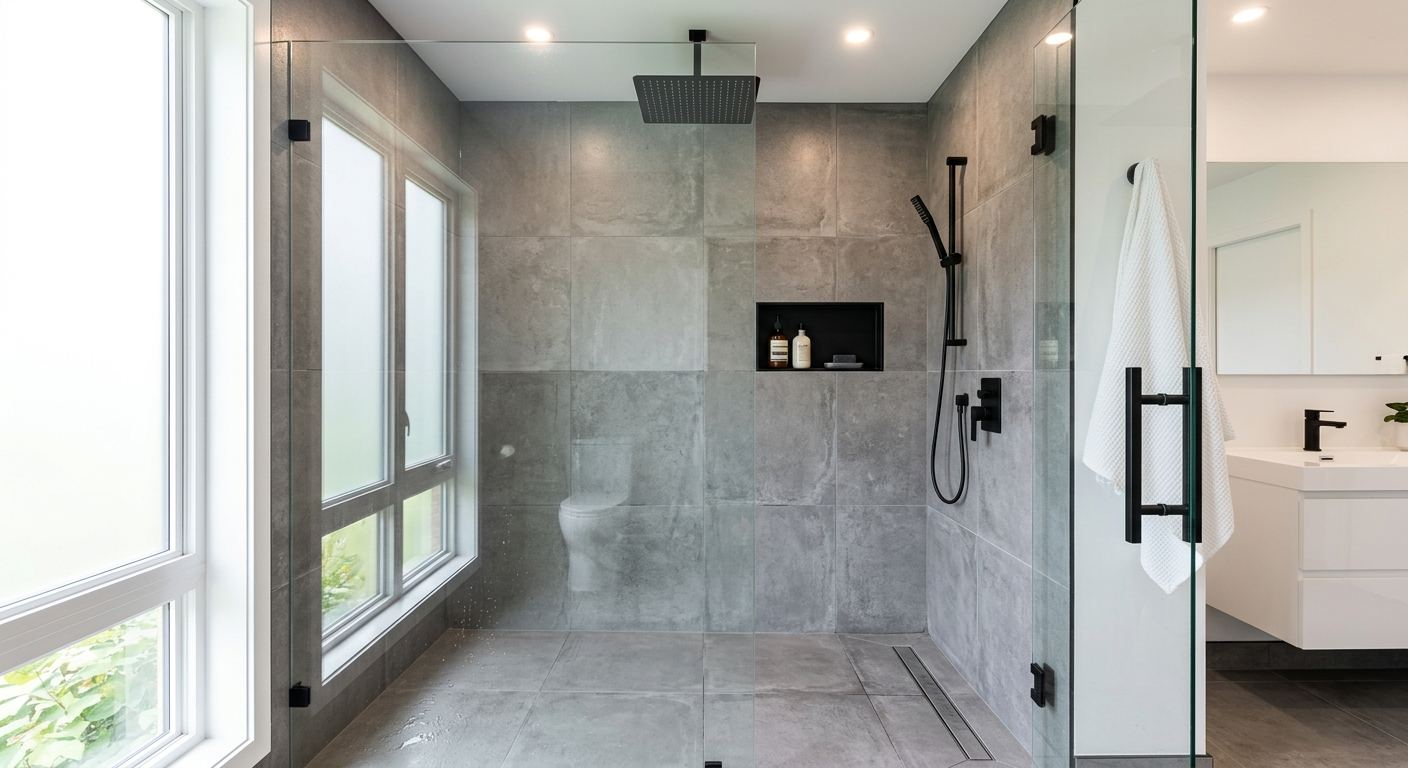
Bathroom renovation options and costs in Capitol Hill
Renovating a bathroom in Capitol Hill is a popular upgrade in Lower Mainland–Southwest, and it helps to start with the right scope before you compare quotes. With a local population of 6,330 (Statistics Canada, 2021 Census), the neighbourhood has a steady mix of older homes and mid-century properties where plumbing layouts are often dated—meaning it’s not unusual to uncover cast-iron drains, galvanized supply lines, or even asbestos-containing materials in floor tile, drywall compound, or insulation during demo. Those are the kinds of “surprise” conditions that can push a modest refresh into a deeper renovation once walls are opened.
In Metro Vancouver and nearby areas, labour rates and the age of the housing stock drive costs more than the weather itself. Even though we don’t renovate because of climate, the region’s high demand for skilled plumbers, tilers, and electricians can reduce availability and increase labour pressure. Projects also frequently expand to include plumbing and venting upgrades to bring existing systems up to current British Columbia requirements. In Capitol Hill, you’ll often see the most scheduling pressure for trades working around Hastings–Capitol Hill and the surrounding transit-access streets, where access constraints and older plumbing are common.
Below are realistic options and typical ranges you can use to sanity-check estimates, before we dig into what moves the price up or down.
| Renovation Scope |
What's Included |
Typical Duration |
Price Range |
| Cosmetic refresh (paint, fixtures, accessories only) |
Paint, caulking refresh, new vanity or mirror, tap/trim replacements, lighting swaps, toilet seat or toilet swap, accessories (towel bar, etc.) with no plumbing relocation |
3–7 days |
$6,000–$12,000 |
| Mid-range full renovation (new tile, vanity, tub/shower, electrical) |
Demo and disposal, waterproofing system, ceramic/porcelain tile floor and surround, vanity installation, tub/shower or tub-to-shower conversion as scoped, basic electrical updates (e.g., exhaust fan, GFCI if needed) |
2–4 weeks |
$22,000–$34,000 |
| High-end full renovation (custom tile, steam shower, heated floors) |
Higher-end tile layout, custom shower (tile or linear drain), heated floor circuit, premium fixtures, expanded electrical/venting, upgraded waterproofing details, premium finishes |
4–7 weeks |
$38,000–$55,000 |
| Shower-only installation (convert tub to walk-in shower) |
Remove tub, rough-in adjustments, waterproofing, tile or surround system, new shower valve/trim, glass enclosure (if included in scope), drain improvements as required |
2–3 weeks |
$14,000–$28,000 |
| Bathtub replacement or tub-liner install |
Remove and set new tub (or install tub liner), new caulking and trim, associated drain/valve tie-ins as needed, basic wall finishing and sealing |
5–10 days |
$3,000–$7,500 |
| Tile-only installation (floor + surround, existing layout kept) |
Tile demo (as needed), substrate prep, waterproofing for shower areas, tile supply and install for floor and walls, grouting/sealing, final caulking; plumbing/electrical typically not relocated |
1–2.5 weeks |
$7,000–$14,000 |
Prices are estimates only and vary by project scope, site access and material selection.
What affects the price of bathroom renovation in Capitol Hill
In the Lower Mainland–Southwest region, you can see bathroom renovation quotes for the “same” job land 30–50% apart, even when the finishes look similar. The biggest driver is labour rate plus the amount of hidden work uncovered after demo—more than any outdoor weather factor. In practice, Lower Mainland schedules and skilled-trade availability can be tight, and once walls are opened in older Capitol Hill homes, the scope often expands to include venting and plumbing upgrades to meet current British Columbia requirements.
Older housing stock in this region frequently hides issues that immediately change the budget: cast-iron or aging drain stacks that need replacement, galvanized supply lines that won’t pass inspection, and ventilation that’s insufficient for a bathroom’s moisture load. If you discover asbestos-containing materials (commonly in pre-1985 vinyl floor tile or drywall compound), abatement protocols can add about $1,500–$5,000+ depending on what’s impacted and how contained the area is. That’s why a “mid-range” full renovation budget (commonly around $22,000–$34,000) can drift upward if rough-in updates become necessary.
Concrete local examples I see in Capitol Hill: (1) moving a drain a few inches to achieve a better shower slope often triggers additional rough-in and inspections, changing labour and material totals; (2) installing heated floors in an older slab can require extra electrical planning and careful substrate prep; (3) choosing large-format tile increases layout complexity and waste, especially where walls aren’t perfectly flat. Those are the kinds of realities that push some projects into high-end territory (often $38,000–$55,000).
| Price Factor |
Why It Matters |
Cost Impact |
| Layout change — moving drain or supply lines requires rough-in work |
New pipe routes and wall/ceiling access increase labour and trades coordination |
Often +$3,000–$10,000 |
| Tile selection — large-format porcelain vs. mosaic vs. ceramic |
Harder materials and more cutting/layout time increase installation labour and waste |
Often +$1,500–$6,000 |
| Fixture tier — builder-grade vs. mid-range vs. designer brands |
Higher tiers cost more and can require specific trims/valves and more careful installation |
Often +$1,000–$5,000 |
| Subfloor condition — rot or unlevel concrete adds scope |
Repairs, leveling, and new backer/waterproofing prep extend schedule and materials |
Often +$1,000–$7,000 |
| Electrical — adding GFCI outlets, exhaust fan, heated floor circuit |
May require new circuit work, panel modifications, and licensed electrical sign-off |
Often +$800–$4,500 |
| Waterproofing method — membrane type and extent |
Better systems reduce long-term moisture risk but add materials and labour steps |
Often +$600–$3,000 |
| Older-home surprises — asbestos tile, cast-iron drains, galvanized pipes |
Discovery can require remediation, replacement, and additional inspections |
Often +$1,500–$12,000 |
| Bathroom size — sq ft drives tile and labour time directly |
More surface area means more prep, setting bed, waterproofing, grouting, and labour hours |
Often +$2,000–$8,000+ |
Permits & regulations in British Columbia
In British Columbia, not every bathroom update triggers a permit. Cosmetic changes—like swapping fixtures (taps, toilet trim), replacing a vanity in the same location, retiling with no plumbing relocation, or repainting—typically do not require municipal-level permitting on their own. However, permits and inspections are usually required when you change the plumbing system (for example, moving a drain or supply lines), make structural changes, or add/alter electrical circuits and components.
In particular, you should expect a permit for: (1) plumbing rough-in changes (new drain routing, moving the toilet flange, adjusting supply piping, venting changes); (2) electrical work that adds circuits or changes load—such as wiring a new exhaust fan, upgrading receptacles (including required GFCI protection), or adding a heated floor circuit; and (3) any work that affects walls/ceilings structurally or involves significant demolition beyond straightforward finishes.
To verify your Capitol Hill contractor properly, do this step-by-step: first, confirm the contractor’s British Columbia trade licence information (ask for the licence number and check the online registry the contractor provides); second, request a certificate of liability insurance showing they’re covered for the job and the right coverage amount; third, confirm their workers’ protection coverage (commonly referred to as WSIB/WCB coverage) by asking for proof or a clearance letter; and fourth, ensure the quote clearly separates permit-pull responsibility and inspection scheduling. A careful contractor won’t just promise compliance—they’ll document it.
Choosing tile, waterproofing and fixtures for your Capitol Hill bathroom
In Capitol Hill, three material choices tend to decide whether your budget lands comfortably or drifts upward: (1) tile type, (2) waterproofing method, and (3) fixture tier. Start with tile. Ceramic tile is often the entry level choice, but it can be more forgiving on price while still performing well when installed correctly. Porcelain is denser and generally more durable for wet floors and backsplashes, and it’s a common mid-range pick when homeowners want longevity without going fully luxury. Natural stone (marble, travertine, slate) can look exceptional, but installation and finishing are more complex, and maintenance can add up.
Next is waterproofing. In British Columbia’s humid indoor conditions—especially where bathrooms don’t have strong, properly ducted exhaust—waterproofing quality matters. Paint-on membranes can be workable for some surfaces, but the most dependable systems for showers typically involve a bonded sheet membrane or a specialist schluter-style drainage and waterproofing approach. The right method helps prevent mould and failure at transitions and corners.
Finally, match fixture tier to your resale priorities. Builder-grade fixtures can look fine, but mid-range or designer brands often justify the cost through better valves, smoother finishes, and a more consistent feel over time. As a dollar example: upgrading from basic tile to a porcelain floor and a full waterproofed shower surround can add noticeable cost, but that increment is often more “protected value” than spending heavily on decorative trim while leaving waterproofing basic.
For Lower Mainland–Southwest, also consider trade availability: the more complex the tile and waterproofing system, the more it benefits from an experienced tiler to keep schedule predictable.
| Material / Option |
Pros |
Cons |
Price Range |
| Ceramic tile (floor + walls) |
Lower material cost, wide style selection, good performance with proper waterproofing |
More colour variation and chipping risk during transport/cutting than porcelain; not always ideal for very high-traffic wet floors |
$2,000–$5,500 |
| Porcelain tile (floor + walls) |
Higher durability, better stain resistance, often smaller maintenance burden, works well with modern large-format looks |
Larger-format tiles increase layout complexity and waste; premium sheets add material cost |
$3,500–$8,000 |
| Natural stone (marble, travertine, slate) |
Luxury appearance, distinctive character, strong curb appeal and resale perception |
Sealing/maintenance required, harder to install, more sensitive to uneven substrates |
$6,000–$14,000 |
| Frameless glass shower enclosure |
Bright, modern look; improves the “open” feel of small bathrooms |
More expensive hardware; requires precise leveling and careful installation to avoid leaks and misalignment |
$2,000–$6,500 |
| Prefab tub surround (acrylic) |
Fast install, often fewer leak-risk joints than tiled surrounds when selected correctly, good for budget-conscious renos |
Fewer design options than full tile; may not match higher-end finishes as well |
$800–$2,800 |
| Custom shower pan (tile or linear drain) |
Improves water capture and modern “wet-room” look; linear drains can be very functional |
More prep and waterproofing steps; requires accurate slope and drain alignment |
$2,000–$7,500 |
How to choose a bathroom renovation contractor in Capitol Hill
Choosing a bathroom contractor in Capitol Hill is mostly about verification and documentation. First, confirm British Columbia licensing and accountability: ask for the trade licence number and proof that the contractor is appropriately registered for the scopes you’re hiring them to do. Second, request liability insurance—your contractor should provide a certificate of insurance naming coverage that matches the job size. Third, ensure workers’ protection coverage is in place (often referred to as WSIB/WCB coverage). Don’t accept vague answers; ask for proof or a clearance letter.
When you request quotes, insist on 2–3 itemised written estimates rather than one lump sum. You want a breakdown of labour vs. materials, line items for demo/disposal, waterproofing system, tile installation, electrical work, and what happens with permits. Read scope carefully: is permit pull included, are inspections included, and is waste disposal included? For bathrooms, these details commonly change the real cost.
Also review warranty terms. You should get a workmanship warranty length in writing, plus clarity on product/manufacturer warranties. Ask whether warranties are transferable if you sell your home (important for resale). Finally, plan the payment schedule: never pay more than 10–15% upfront. Use a holdback until key milestones are complete.
Timeline matters too. Get a written start date and an estimated completion window. In the Lower Mainland–Southwest, tile and waterproofing lead times can affect schedule, so a contractor should explain how they manage materials and trade coordination.
- Verify BC licence and confirm what trades they personally cover vs. subcontract.
- Request liability insurance and review coverage limits on the certificate.
- Ask for proof of WSIB/WCB coverage (clearance letter or equivalent documentation).
- Get 2–3 itemised quotes (labour and materials separated), not just one number.
- Confirm who pulls permits and who pays permit/inspection fees.
- Confirm disposal: demolition debris haul-away included or added separately.
- Ensure waterproofing scope is specific (membrane type and shower-area coverage).
- Ask what’s included in electrical updates (exhaust fan, GFCI, heated floor circuit if chosen).
- Confirm tile prep includes substrate evaluation and leveling/repair.
- Review warranty: workmanship duration and manufacturer warranty terms.
- Use a payment schedule that caps upfront at 10–15% and includes a holdback.
- Get a written start date and a realistic completion estimate with contingencies.
Red flags to watch for in Capitol Hill: (1) vague scope language like “plumbing as needed” with no allowance or process for discoveries; (2) refusing to provide licence/insurance proof; (3) asking for large deposits beyond 10–15% upfront; (4) no written waterproofing details in a shower renovation; and (5) a flat quote without discussing older-home risks like galvanized plumbing, cast-iron drains, or asbestos-containing materials in pre-1985 finishes.
Frequently asked questions — bathroom renovation in Capitol Hill
How do I choose the right contractor for my bathroom in Capitol Hill?
Start by verifying British Columbia licensing and asking for documentation: licence information, liability insurance (certificate of insurance), and proof of workers’ protection coverage (WSIB/WCB). For bathroom renos in Capitol Hill, also request an itemised quote that clearly separates labour and materials, including waterproofing, tile installation, and electrical work. Compare at least 2–3 bidders and make sure the scope matches: permit pull included or not, disposal included or not, and what’s excluded. If you’re doing a full renovation, align expectations with local price bands—most full bathroom work is often in the $18,000–$45,000 range depending on finishes and hidden plumbing conditions. A contractor who investigates existing plumbing and venting early is usually the one who keeps your budget predictable.
What's the most common mistake homeowners make in bathroom renovations?
The most common mistake in British Columbia (including Capitol Hill) is under-scoping the “unknowns” that appear after demo—especially plumbing rough-in, venting, and waterproofing details. Homeowners sometimes budget for tile and fixtures but assume the drain stack, supply lines, subfloor, and electrical are already in perfect condition. In older mid-century homes, discovery of galvanized or cast-iron plumbing issues can expand the project, and pre-1985 materials can trigger asbestos abatement if found in vinyl floor tile or drywall compound. If your starting point is a mid-range plan, a realistic contingency strategy helps; otherwise, you can end up paying for added trades and rework. A properly scoped quote also explains what triggers additional charges and how decisions get approved before work continues.
How long does tile installation take in a Capitol Hill bathroom?
Tile time depends on tile type, bathroom size, and how much prep is needed. In Capitol Hill, a typical tile-only project (floor plus walls) often takes about 1–2.5 weeks of install time once the substrate is ready. Porcelain and mosaic can take longer due to cutting and layout precision, while larger-format tile may require extra attention to flatness and alignment. If the job includes a full waterproofed shower area with new pan details, prep and waterproofing steps run in parallel with tile, which can extend the overall schedule for the full reno. If you’re comparing quotes, ask how many working days they allocate to prep, waterproofing, tile setting, grouting, and caulking—those steps are where schedules often stretch in the Lower Mainland–Southwest.
How much does a bathroom renovation cost in Capitol Hill?
For Capitol Hill, most full bathroom renovations commonly land in the $18,000–$45,000 range, driven mainly by labour rates and the age of the housing stock in the Lower Mainland–Southwest region. If you keep plumbing and electrical mostly unchanged and focus on finishes, you may be closer to the lower end. If the renovation includes shower conversions, expanded waterproofing, upgraded exhaust/venting, and plumbing rough-in adjustments discovered during demo, budgets often move toward the mid-to-upper end. For example, shower-only conversions (like converting a tub to a walk-in shower) frequently land in the $8,000–$25,000 band depending on tile complexity and any drainage changes. A contractor who can document the scope and inspection needs is usually the one who gives the most reliable estimate.
How long does a bathroom renovation take in Capitol Hill?
Typical timing in Capitol Hill depends on whether you’re doing a cosmetic refresh, tile-focused work, or a full renovation with plumbing and electrical updates. Cosmetic refresh projects are often a quick 3–7 days. A mid-range full renovation commonly takes about 2–4 weeks, while higher-end work with custom shower details and heated floors can run 4–7 weeks. The schedule is affected by trade availability in the Lower Mainland–Southwest (plumbers, tilers, and electricians are in strong demand) and by lead times for tile, glass, and specialty waterproofing materials. Also, older-home surprises—like subfloor repairs or upgraded drainage—can add time if remediation or additional inspections are required. The best contractor will give you a written start date, a realistic completion estimate, and a simple plan for how they handle discoveries as they happen.
Do I need a permit for a bathroom renovation in British Columbia?
In British Columbia, cosmetic updates typically don’t require a permit—think swapping fixtures, repainting, replacing a vanity in the same location, or retiling without moving plumbing or major structural changes. Permits are generally required when you relocate plumbing (moving drain or supply lines), add or change electrical circuits (for example, installing or rewiring a new exhaust fan, adding GFCI-protected receptacles, or running a heated floor circuit), or make structural wall changes. For Capitol Hill homeowners, the easiest way to confirm is to ask your contractor to specify what tasks trigger permits and to confirm permit responsibility in the written scope. If plumbing rough-in or electrical circuit changes are part of your project, plan for inspections and licensed trade sign-off as part of the process.