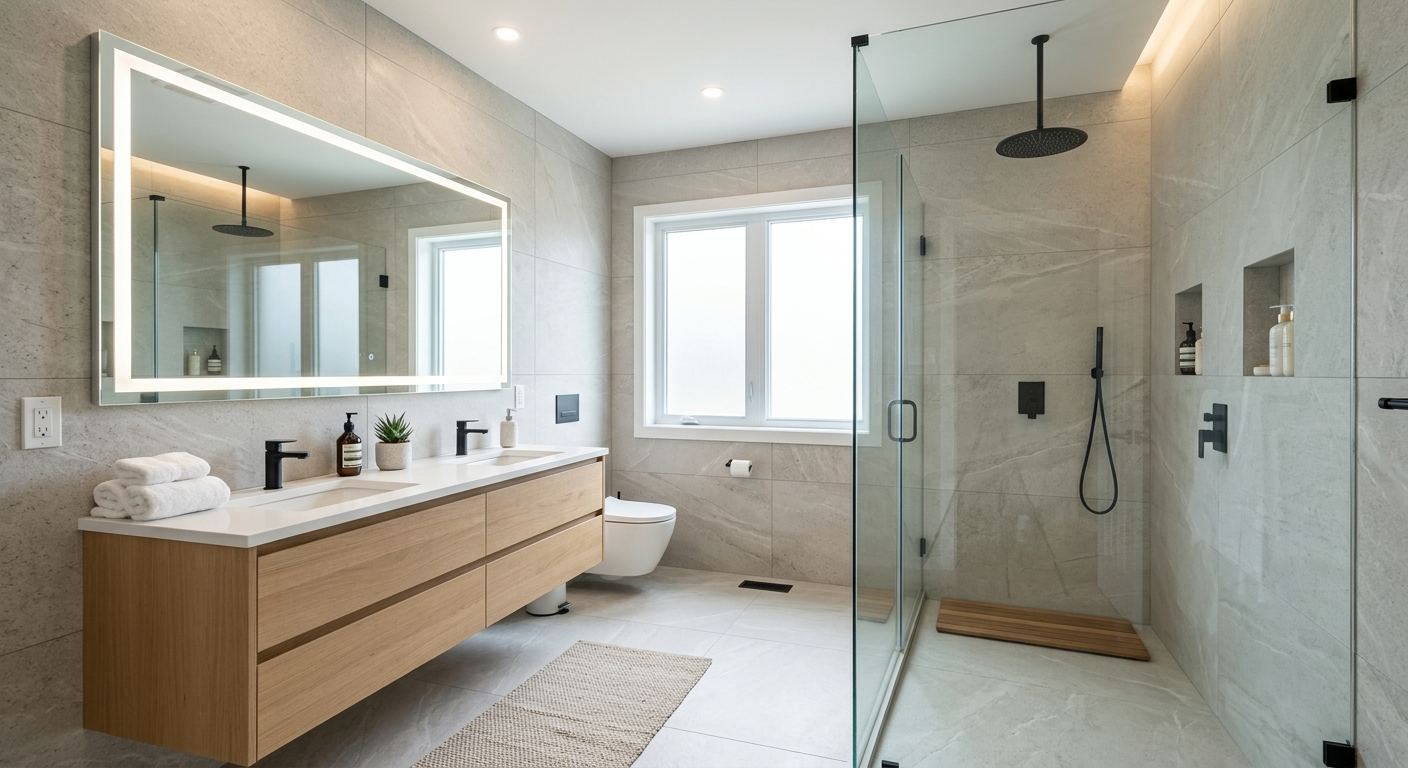
Bathroom renovation options and costs in Yennadon
Bathroom renovation in Yennadon typically starts with a simple question: do you want a quick refresh, or do you want to rework the plumbing, ventilation, and waterproofing? With a population of 7,116 (Statistics Canada, 2021 Census), Yennadon is small enough that word-of-mouth contractor availability can swing week to week—yet it still sits in the Lower Mainland–Southwest labour market where skilled plumbers, tilers, and electricians are in high demand. That labour pressure, combined with the fact that many homes in the region are mid-century or older, means bathroom layouts often hide issues like aging drains, dated supply lines, and the occasional asbestos-containing material in older floor tile or drywall compound (especially in pre-1985 builds). When walls come open, projects in this area frequently expand to include plumbing and venting upgrades to match current British Columbia code.
Even though Yennadon’s coastal, humid conditions don’t usually “ruin” renovations overnight, they do make proper moisture control non-negotiable. Wet-area ventilation, correct waterproofing systems, and grout/tile adhesion matter more than you’d think—so reputable crews spend time on prep and membrane work. In practice, that’s one reason a “same-looking” bathroom can land on very different budgets across the Lower Mainland–Southwest.
Because Yennadon homeowners often compare options side-by-side, here are realistic cost bands to help you set expectations before you start getting quotes for your scope.
| Renovation Scope |
What's Included |
Typical Duration |
Price Range |
| Cosmetic refresh (paint, fixtures, accessories only) |
Update vanity or faucet, swap toilet (if staying put), fresh paint, re-grout or small-area touch-ups, add/replace accessories (towel bars, mirrors, lighting) |
2–5 days |
$3,500–$9,500 |
| Mid-range full renovation (new tile, vanity, tub/shower, electrical) |
Demo and rebuild of wet walls/floor as needed, new tile (floor + surround), new vanity and toilet, tub/shower refresh, new exhaust fan, basic electrical updates (GFCI where required), waterproofing system |
2–4 weeks |
$18,000–$32,000 |
| High-end full renovation (custom tile, steam shower, heated floors) |
Custom layout work, premium tile and accents, steam-ready shower system, heated floor circuit and floor system, higher-end fixtures, upgraded ventilation and trim carpentry, enhanced waterproofing coverage |
4–7 weeks |
$32,000–$45,000 |
| Shower-only installation (convert tub to walk-in shower) |
Remove tub, install walk-in shower pan, waterproofing, tile surround, new glass (if selected), ventilation check/update, plumbing modifications for new drain location |
1.5–3.5 weeks |
$8,000–$18,500 |
| Bathtub replacement or tub-liner install |
Remove and replace tub (or install tub liner where suitable), recaulk and reseal, wall surround touch-ups, plumbing connections checked, leak test |
5–12 days |
$1,500–$6,000 |
| Tile-only installation (floor + surround, existing layout kept) |
Remove and set new tile for floor and/or shower surround, membrane where required, re-grout, transition trims, sealing and finishing |
1–2.5 weeks |
$2,000–$8,000 |
Prices are estimates only and vary by project scope, site access and material selection.
What affects the price of bathroom renovation in Yennadon
If you’ve received two quotes for the same bathroom in Yennadon, it’s not unusual to see a 30–50% spread—especially in the Lower Mainland–Southwest. The biggest drivers here aren’t the weather; they’re regional labour rates and the age of the housing stock. In older homes, the contractor often needs to discover (and then correct) what’s behind the wall: cast-iron or corroded drains, galvanized supply lines, incomplete venting, or patchy moisture protection. Once rough-in work starts, it can trigger more trades and inspections, pushing the job into the “mid-range full renovation” territory (often around $18,000–$32,000) rather than staying in a smaller “tile-only” scope (often $2,000–$8,000).
Asbestos is a particular budget wildcard in pre-1985 flooring and drywall compound. If it’s present, abatement requirements and controlled removal can add roughly $1,500–$5,000+ depending on how much material is impacted and how the area is isolated. Waterproofing also matters in coastal BC: the wrong method or rushed prep can lead to rework, mould concerns, and premature grout failure—meaning contractors price in time for proper membrane systems and leak testing.
Concrete examples I see in Yennadon: (1) Moving a toilet or changing a shower drain position adds rough-in plumbing work and increases drywall/demo time; (2) Upgrading from ceramic to large-format porcelain often raises material and installation difficulty because of flatness and movement joints; (3) A dated exhaust fan venting to an incorrect location can force ducting changes, which is typically more expensive than homeowners expect.
| Price Factor |
Why It Matters |
Cost Impact |
| Layout change — moving drain or supply lines requires rough-in work |
Plumbing rough-in, wall opening, patching, and re-testing are time-intensive in tight bathrooms |
Can add thousands versus keeping fixtures in place |
| Tile selection — large-format porcelain vs. mosaic vs. ceramic |
Harder tiles require better prep and more precise setting; large-format needs flat substrates |
Typically increases labour + materials |
| Fixture tier — builder-grade vs. mid-range vs. designer brands |
Premium valves, trims, and toilets cost more and may require compatibility checks |
Often shifts the project into a higher band |
| Subfloor condition — rot or unlevel concrete adds scope |
Weak subfloor means extra framing/patching and more underlayment/membrane work |
Common cause of budget overruns in older homes |
| Electrical — adding GFCI outlets, exhaust fan, heated floor circuit |
New circuits involve an electrician, permitting/inspection steps, and safe wiring routes |
Can meaningfully raise the labour + permit component |
| Waterproofing method — membrane type and extent |
A correct system needs the right product, correct overlap/coverage, and leak testing |
Higher-spec systems cost more but reduce rework risk |
| Older-home surprises — asbestos tile, cast-iron drains, galvanized pipes |
Discovery expands scope and may require specialized remediation and extra trades |
Can add significant contingency to the budget |
| Bathroom size — sq ft drives tile and labour time directly |
More walls/floor area means more tile setting, waterproofing, and materials |
Small changes in square footage affect the total quickly |
Permits & regulations in British Columbia
In British Columbia, many cosmetic bathroom updates typically do not require a permit—things like swapping a vanity, replacing fixtures while keeping plumbing locations the same, retiling as long as you’re not changing the structure, and repainting. That changes once you move beyond “like-for-like.” If you relocate plumbing (moving a drain line or supply line), add or relocate an exhaust fan venting method, or make structural changes to walls, you should expect permits and inspections.
Electrical work also has clear rules: any work that adds new circuits, installs heated floor wiring, or changes bathroom lighting that impacts wiring must be completed by (or signed off by) a licensed electrician to meet BC electrical code requirements. Plumbing rough-in changes are also typically a permit/inspection item because they affect safety and leak integrity.
For a homeowner in Yennadon, the practical verification steps are straightforward. First, ask the contractor for their trade licence details (and any company registration info applicable in BC) and confirm it via the provincial online registry linked from the trade’s official resources. Second, request a certificate of liability insurance and ensure it’s active and covers renovations (not just general business). Third, ask about WSIB/WCB coverage—either for the company and named subcontractors or clear proof they’re covered for their workers. Finally, get everything in writing: what permits the contractor will pull, who pays for inspections, and what’s the timeline once permits are approved.
Choosing tile, waterproofing and fixtures for your Yennadon bathroom
In a Yennadon bathroom renovation, your budget usually hinges on three material decisions: tile choice, waterproofing approach, and fixture tier. First, tile: ceramic is the entry-level option and can work well when you keep layouts simple, but it’s often more forgiving than premium stone. Porcelain is denser, handles moisture better, and is usually the sweet spot for Lower Mainland–Southwest bathrooms when you want durability and a cleaner look. Natural stone (marble, travertine, slate) is gorgeous but can bring higher material costs and more careful installation/finishing requirements, especially around shower areas.
Second, waterproofing: in BC’s humid coastal environment, the right system prevents mould and grout breakdown. Paint-on membranes can be budget-friendly for some applications, but bonded sheet membrane or a well-detailed schluter-style system is often chosen where water exposure is highest. The “cheap” choice is rarely the cheapest if it forces rework later.
Third, fixtures: builder-grade faucets, valves, and shower trims keep the initial cost down, while mid-range and designer brands can improve reliability, finish consistency, and long-term resale appeal. For example, upgrading to higher-end shower hardware might cost a few hundred to over a thousand dollars more than basic sets, but it’s often justified when you’re already investing in a full shower rebuild and want consistent performance and finish quality.
To keep the cost aligned with your goals, pair durable porcelain and a proven waterproofing system, then spend on fixture finishes only after the waterproofing and substrate prep are locked in.
| Material / Option |
Pros |
Cons |
Price Range |
| Ceramic tile (floor + walls) |
More affordable, widely available, good appearance with straightforward patterns |
Can be less durable than porcelain for high-traffic floors; glaze chips if substrate isn’t solid |
$2,000–$5,500 |
| Porcelain tile (floor + walls) |
Excellent moisture resistance, durable for wet areas, many sizes for modern looks |
Needs flatter subfloor for large formats; higher material cost |
$4,000–$8,000 |
| Natural stone (marble, travertine, slate) |
Premium look and unique veining, strong curb appeal |
Higher cost; sealing/maintenance often required; tile layout and finishing are more labour-intensive |
$6,000–$12,000 |
| Frameless glass shower enclosure |
Bright, modern feel; improves perceived space; easy to clean |
More expensive hardware; must be installed carefully for alignment |
$1,500–$5,500 |
| Prefab tub surround (acrylic) |
Faster install, typically lower labour; fewer tile-mortar variables |
Less “custom” look; limited style selection; edges/joints need correct finishing |
$800–$2,500 |
| Custom shower pan (tile or linear drain) |
More integrated design; supports custom slope and modern linear drain options |
More labour and waterproofing detailing; requires accurate rough-in for drain placement |
$2,000–$7,500 |
How to choose a bathroom renovation contractor in Yennadon
Choosing a contractor in Yennadon isn’t just about the lowest price—it’s about protecting your schedule and your waterproofing. Start by verifying British Columbia licensing for relevant trades and confirming they carry proper liability insurance. Ask for a certificate of insurance and check that it’s current, includes renovation activities, and lists the correct insured entity. For worker coverage, request proof of WSIB/WCB coverage (or confirmation that subcontractors provide their own clearance coverage). If you can’t get clear documents up front, pause the process; bathroom renovations involve multiple trades packed into one tight area, and missing coverage is where disputes get expensive.
Next, get 2–3 itemised written quotes—not one lump-sum. You want line items that separate labour vs. materials, and clarity on what’s included for waterproofing, disposal, tile setting, electrical scope, and whether the contractor handles permit applications and inspections. Read the exclusions carefully: is demolition included? Is drywall patching included? Is the exhaust fan ducting included if the vent route needs changes?
Warranty matters. Ask for the length of workmanship warranty (how long they stand behind labour), plus manufacturer warranties for products like membranes, tile, valves, and glass. Confirm whether warranties transfer to you if you sell your home.
Finally, payment terms should protect you: never pay more than 10–15% upfront, and hold back a portion until the job is complete and any punch-list items are done. Get a start date and completion estimate in writing so you can plan around work schedules and material lead times.
- Provide BC licence details and trade responsibilities by scope (plumbing/electrical/tiling).
- Show an active liability insurance certificate before the contract is signed.
- Confirm WSIB/WCB coverage for the company and named subcontractors.
- Give itemised quotes (labour + materials) with quantities or clear assumptions.
- Spell out permit responsibility: who pulls permits and who pays for inspections.
- State disposal/dump fees policy (included vs. extra).
- Confirm waterproofing method and coverage areas in writing (pan, walls, seams, corners).
- Include a leak test step in the scope for showers.
- List the specific products/brands for fixtures, membranes, and glass.
- Provide a workmanship warranty length and what it covers (and what voids it).
- Agree on a realistic schedule with start/completion targets and lead-time assumptions.
- Set clear payment milestones; keep most money for after key inspections and final completion.
Red flags I see in Yennadon: a contractor who won’t put waterproofing details in the contract; promises to “keep it the same” when they haven’t confirmed drain/vent condition behind walls; vague quotes that don’t show electrical/plumbing responsibilities; insisting on large upfront payments (above 15%); or avoiding written timelines and warranty terms. If any of these show up early, it’s worth finding another team.
Frequently asked questions — bathroom renovation in Yennadon
Is it worth renovating a bathroom before selling in Yennadon?
Often, yes—especially if your bathroom is dated, inefficient, or has moisture concerns. In Yennadon and the Lower Mainland–Southwest, buyers expect modern waterproofing, reliable ventilation, and clean-looking finishes because homes here are frequently older and may have older drain/venting details once walls open. A cosmetic refresh can help if fixtures are still sound, but it typically won’t address hidden issues that affect inspection outcomes. If you’re planning a full rebuild, your return is usually strongest when the renovation improves layout usability and waterproofing quality. For example, a mid-range full renovation often falls around $18,000–$32,000, which is more likely to move buyer perception than a small paint-and-accessories change. When possible, prioritize shower waterproofing, exhaust fan performance, and basic fixture upgrades over luxury extras.
How do I plan a bathroom renovation on a tight budget in Yennadon?
Start by defining what must change versus what can stay. If your plumbing and drain locations work, you can save money by avoiding layout changes and keeping the same fixture positions. That typically lets you focus on tile and fixtures, where you can choose options that fit your budget. For tight budgets, consider a tile-only upgrade (often $2,000–$8,000) paired with a cosmetic refresh, then allocate contingency for surprises common in older homes. In the Lower Mainland–Southwest, labour rates and skilled trade availability drive costs more than the climate, so controlling scope matters. Build a contingency amount for older-home discoveries like cast-iron or galvanized pipe conditions and potential asbestos-containing materials in pre-1985 components. Finally, ask your contractor for an itemised quote so you can trim responsibly—cutting waterproofing quality or ventilation scope rarely saves money long-term.
What's the difference between a cosmetic and a full bathroom renovation?
A cosmetic renovation is typically “surface-level”: repainting, replacing accessories, swapping fixtures while keeping plumbing locations the same, and sometimes re-grouting or refreshing a surround without moving major components. A full bathroom renovation usually involves demolition, addressing subfloor/substrate condition, installing a new waterproofing system, and often replacing tile floor and shower walls or the bathtub/shower assembly. In British Columbia, cosmetic updates like fixture swaps without relocating plumbing generally don’t need permits, but changing drain/supply locations or adding new electrical circuits does. In the Lower Mainland–Southwest, the cost difference is largely tied to labour trades (plumber, electrician, tiler) and the time needed for prep, waterproofing, and inspection steps. As a practical reference, a cosmetic refresh may start around $3,500–$9,500, while a mid-range full renovation commonly lands in the $18,000–$32,000 range.
How do I choose the right contractor for my bathroom in Yennadon?
Choose a contractor who can prove they’re ready to build to BC standards and who will spell out the scope in writing. In Yennadon (BC), confirm the contractor’s trade licence responsibilities where applicable and ask for active liability insurance before work starts. Verify WSIB/WCB coverage for workers and subcontractors so you’re not caught in liability gaps. Then request 2–3 itemised quotes with labour and materials broken out—especially waterproofing method, disposal fees, and permit responsibility. Be sure the contract names the exhaust fan scope, membrane type, and whether a shower leak test is included. Also, look at warranty: workmanship warranty for labour, manufacturer warranty for products, and whether warranties transfer if you sell. Avoid contractors who require large upfront payments or won’t provide a clear timeline and start date.
What's the most common mistake homeowners make in bathroom renovations?
The most common mistake I see in Yennadon is under-scoping the waterproofing and rough-in checks, then expecting a “budget” finish to stay maintenance-free in a humid coastal environment. Homeowners sometimes start with tile selections but don’t confirm substrate condition (flatness, rot, or old membrane failures) and ventilation performance, which can lead to mouldy grout lines and premature sealant breakdown. Another frequent error is assuming that keeping the same layout means “no surprises”—older homes can still require plumbing or venting upgrades once walls are opened, especially around cast-iron drains or outdated supply lines. A third mistake is relying on lump-sum quotes without itemised scope; when upgrades are discovered, costs jump because change orders aren’t anchored to a clear baseline. If you want predictable budgeting, insist on a waterproofing scope, electrical scope clarity (GFCI/exhaust/heated floor if included), and a contingency plan for older-home conditions.
How long does tile installation take in a Yennadon bathroom?
Tile timing depends on bathroom size, tile type, and how much prep is required (subfloor repairs, backer board, waterproofing cure times). In Yennadon, a straightforward tile-only project (floor and/or shower surround with an uncomplicated layout) often takes about 1–2.5 weeks total on site, with additional time for membrane application and curing before tiling. For a full renovation, tile is usually part of a larger schedule that can run 2–4 weeks for mid-range jobs, because demolition, plumbing/electrical rough-in, substrate work, waterproofing, and inspection steps come before setting tile. Porcelain and large-format tiles may take longer because setters need precise alignment and a properly flat surface. If your quote is only focused on “days to set tiles” but doesn’t include waterproofing and cure windows, the timeline will likely be optimistic.