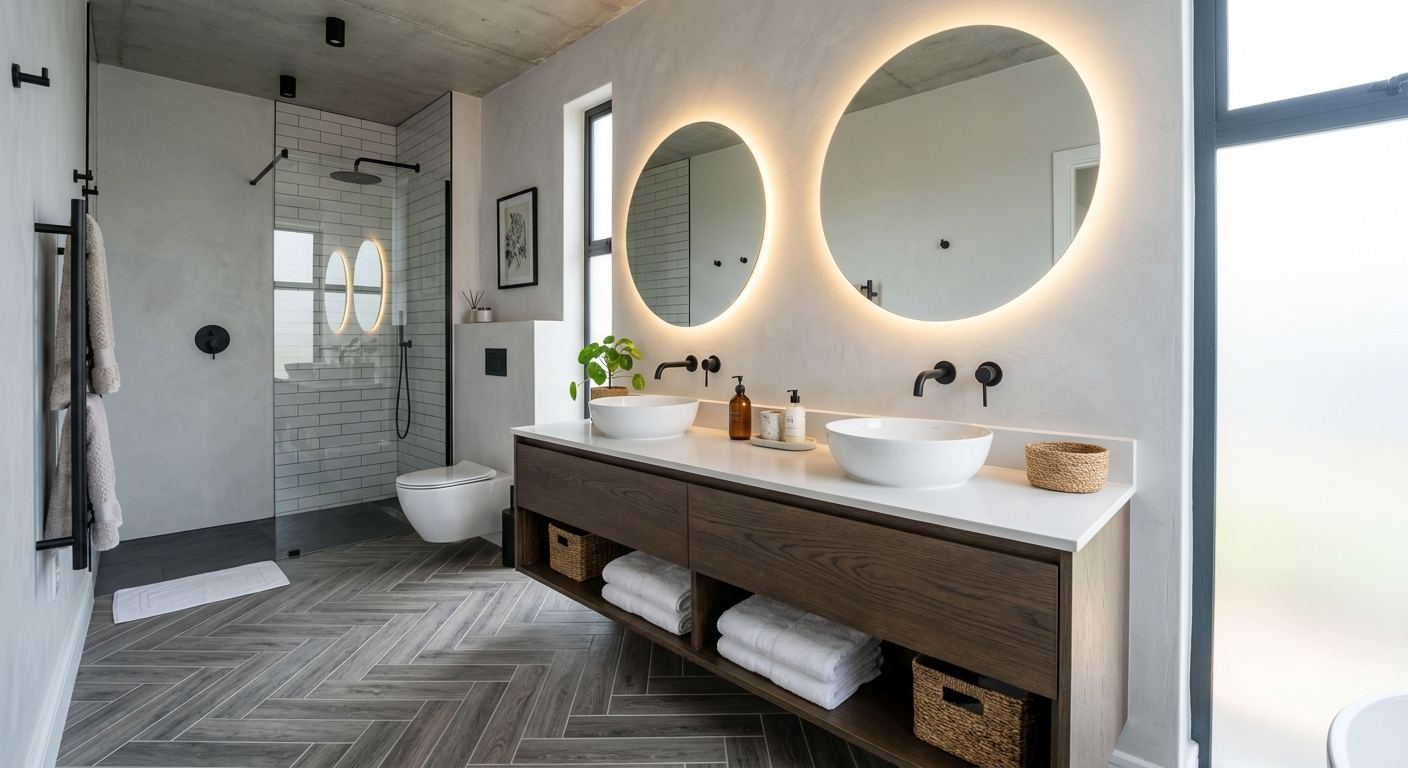
Bathroom renovation options and costs in Bells Corners
Bells Corners bathroom renovations are a familiar homeowner project in the Toronto area, and the cost usually follows your finish level and how much hidden plumbing work gets uncovered. In the Toronto economic region, many households live in older housing stock—so even a “simple refresh” can turn into a fuller job once contractors open walls for venting and drain corrections. With a 2021 population of 9,272 in Bells Corners (Statistics Canada, 2021 Census), the local contractor pool is sized for steady demand, which helps, but competition for skilled tilers and plumbers can still push scheduling and labour rates up during peak periods.
In this part of Ontario, pricing is driven far more by labour rates and the realities of older Toronto-area plumbing than by climate alone. Basements and exterior walls can hide cast-iron or undersized drains, galvanized supply lines, and ventilation challenges that require bringing the bathroom up to current Ontario code. If asbestos-containing materials are found (commonly in older floor tile or older wall materials), abatement protocols can add several thousand dollars and extend timelines. You’ll also see demand run especially high around the commercial corridor and service pockets close to Jockvale Road, where many homeowners are planning upgrades alongside broader home improvements.
Below is a practical comparison of common renovation paths and what they typically include, so you can align quotes to the same scope before you compare prices.
| Renovation Scope |
What's Included |
Typical Duration |
Price Range |
| Cosmetic refresh (paint, fixtures, accessories only) |
Paint, toilet/vanity swap (no plumbing relocation), mirrors, accessories, caulking refresh, basic hardware, existing fan kept (or cleaned/serviced) |
2–4 days |
$3,000–$7,000 |
| Mid-range full renovation (new tile, vanity, tub/shower, electrical) |
Demo and disposal, tub-to-tile or reglaze as applicable, new vanity and fixtures, tile floor + surround, exhaust fan upgrade, new shut-offs where required, waterproofing system, new or updated electrical (GFCI as needed) |
2–3 weeks |
$12,000–$20,000 |
| High-end full renovation (custom tile, steam shower, heated floors) |
Custom shower/tile build-out, heated floor prep and mat/circuit, premium waterproofing, niche(s), frameless glass, designer vanity, upgraded electrical and venting strategy, higher-end fixtures and trim |
3–5 weeks |
$20,000–$30,000 |
| Shower-only installation (convert tub to walk-in shower) |
Remove tub, prep subfloor, install shower pan and waterproofing, tile surround or barrier-free finish, frameless or semi-frameless glass, relocate drain if required, update shut-offs |
1–2.5 weeks |
$10,000–$18,000 |
| Bathtub replacement or tub-liner install |
Remove and replace bathtub (or liner system), new tub surround finishes, re-seal joints, faucet connection checks, leak testing, matching caulking and trim |
3–7 days |
$1,200–$3,500 |
| Tile-only installation (floor + surround, existing layout kept) |
Tile demolition and re-tile, waterproofing as required for shower areas, new grout/caulking, layout kept (no major rough-in changes) |
1–2 weeks |
$7,000–$14,000 |
Prices are estimates only and vary by project scope, site access and material selection.
What affects the price of bathroom renovation in Bells Corners
In Bells Corners, you can see the same bathroom renovation come in 30–50% apart between quotes, even when the “look” sounds identical. The main drivers are regional labour rates in the Toronto economic region and the age of the housing stock—not outdoor climate. Toronto-area skilled trades cost more per hour, and bathroom work is labour-intensive once walls are open, especially for tiling, custom showers, and any rework to plumbing pathways.
Older homes commonly require plumbing and venting adjustments to meet current Ontario code. You might also discover cast-iron or undersized drain assemblies that don’t perform as expected, plus galvanized supply lines that need replacement or new shut-offs. A second cost jump often comes from ventilation: if the existing exhaust fan ducting can’t support effective moisture removal, contractors may add duct runs, electrical work, or reconfigure the fan location. Discovery of asbestos-containing materials in pre-1985 floor tile or certain older drywall compounds triggers abatement protocols and can add $1,500–$5,000+ to the budget depending on scope and disposal.
Concrete examples we see in Bells Corners: (1) keeping the same tub footprint can keep you closer to a mid-range full renovation budget band around $12,000–$20,000; (2) converting a tub to a walk-in shower with a relocated drain frequently pushes scope toward the higher end of local ranges, especially when a custom tile receptor and glass enclosure are included; (3) replacing the fan and adding GFCI protection is usually far less expensive than opening floors to address a bad subfloor or rework waterproofing prep.
The bottom line: in the Toronto market, hidden-condition risk and labour time dominate. Even if material choices are modest, bringing the plumbing and waterproofing details up to modern standards often determines whether you land closer to the mid-range or the high-end band approaching $20,000–$30,000.
| Price Factor |
Why It Matters |
Cost Impact |
| Layout change — moving drain or supply lines requires rough-in work |
Plumbing rough-in is more labour-heavy than fixture swaps and may require venting changes |
Typically adds $2,000–$8,000 |
| Tile selection — large-format porcelain vs. mosaic vs. ceramic |
Harder tile means slower installation, more cuts, and sometimes extra labour for performance |
Typically adds $1,000–$6,000 |
| Fixture tier — builder-grade vs. mid-range vs. designer brands |
Higher tiers increase product costs and often require premium trim and valves |
Typically adds $800–$4,500 |
| Subfloor condition — rot or unlevel concrete adds scope |
Rot and deflection force more prep, patching, and proper underlayment for tile |
Typically adds $1,000–$5,000 |
| Electrical — adding GFCI outlets, exhaust fan, heated floor circuit |
Electrical adds licensed work and may require new circuit routing |
Typically adds $600–$3,500 |
| Waterproofing method — membrane type and extent |
Better membranes and full coverage reduce call-backs for leaks and mould |
Typically adds $700–$3,000 |
| Older-home surprises — asbestos tile, cast-iron drains, galvanized pipes |
Abatement and plumbing upgrades can be time-consuming and require specialized handling |
Typically adds $1,500–$12,000+ |
| Bathroom size — sq ft drives tile and labour time directly |
More surface area increases labour, membrane, and materials |
Typically shifts total by $2,000–$7,000 |
Permits & regulations in Ontario
In Ontario, many bathroom updates are considered cosmetic and typically do not require permits. If you’re only swapping finishes—like replacing a vanity with the same footprint, repainting, changing mirrors or accessories, or retiling without moving plumbing—permits often aren’t required. However, when you relocate plumbing (moving a drain or supply line), add or reposition an exhaust fan with new wiring/circuits, or change structural elements (like altering load-bearing framing), permits and inspections are commonly required.
Electrical work has its own rules: any changes to circuits, new outlets (including GFCI where required), or adding heated floors must meet Ontario electrical code and be performed by a licensed electrician or completed under their direction with the proper sign-off. Plumbing rough-in changes—especially anything that affects venting or drain routing—typically require a permit and inspection. For older Bells Corners homes, this is where project scope can expand quickly, because upgrades may be needed for modern venting, shut-offs, and correct drain slope.
To verify your contractor before work starts: (1) ask for their Ontario trade licence details (and confirm the registration with the appropriate online registry/search tools your contractor provides), (2) request a certificate of insurance showing liability coverage and confirm active coverage dates, and (3) ask for WSIB/WCB clearance documentation (and confirm it matches the company name doing the work). If abatement is needed, ensure separate licensed parties handle it and that the primary contractor coordinates schedules and documentation.
Choosing tile, waterproofing and fixtures for your Bells Corners bathroom
In Bells Corners, three material decisions typically control both the look and the budget: tile choice, waterproofing method, and fixture tier. First, tile selection drives not only material pricing but installation complexity. Entry-level ceramic is often more affordable but can be less forgiving on certain floor conditions; porcelain usually offers better durability and stain resistance for bathrooms in the Toronto market. Natural stone (like travertine or slate) looks premium, but it often requires extra labour for sealing, layout planning, and sometimes more careful leveling for a consistent finish.
Second, waterproofing is what protects your renovation from Ontario’s day-to-day humidity. The right approach matters as much as the tile: paint-on membranes can work for some systems and surfaces, but a bonded sheet membrane or a modern Schluter-style system often provides more robust protection where water exposure is highest (shower floors, transitions, curb and wall junctions). Poor waterproofing is a common reason bathrooms develop mouldy odours and grout failure—especially if exhaust performance is weak.
Third, fixtures: builder-grade taps and shower valves are budget-friendly, while mid-range and designer brands can justify the spend through smoother operation, better finishes, and long-term reliability. For example, upgrading a standard valve to a mid-range thermostatic trim package can cost a few hundred to over a thousand dollars, but it’s usually well justified when you’re already doing a $12,000–$20,000 mid-range full reno where the valve access requires opening walls.
Match your budget to your situation: if you’re keeping the same layout, you can often “spend smart” on porcelain, reliable waterproofing, and a practical mid-range vanity. If you’re converting to a custom shower, allocate more to waterproofing and labour, because that’s where longevity is won.
| Material / Option |
Pros |
Cons |
Price Range |
| Ceramic tile (floor + walls) |
Good entry price, wide style selection, easy to source |
May wear quicker on floors than porcelain; can be more prone to chipping if subfloor isn’t perfectly prepped |
$3,500–$8,500 |
| Porcelain tile (floor + walls) |
More durable for bathroom traffic, strong moisture performance, modern large-format options |
Heavier and often slower to cut/install; requires careful leveling for large-format pieces |
$5,500–$12,000 |
| Natural stone (marble, travertine, slate) |
Luxury look, unique veining/texture |
Higher sealing and maintenance expectations; irregular surfaces may increase installation time |
$8,000–$18,000 |
| Frameless glass shower enclosure |
Modern appearance, makes bathrooms feel larger, durable tempered glass |
Higher material and hardware costs; installation must be perfectly aligned |
$2,000–$6,500 |
| Prefab tub surround (acrylic) |
Fast install, consistent waterproofing when installed correctly, lower labour risk than full tile walls |
Less “custom” than tile; can show seams and may not suit every layout design |
$900–$2,800 |
| Custom shower pan (tile or linear drain) |
Best integration for modern layouts, improved drainage where installed properly |
More labour-intensive waterproofing and slope work; small prep issues can create high-impact problems |
$4,000–$12,000 |
How to choose a bathroom renovation contractor in Bells Corners
Choosing the right contractor in Bells Corners starts with verifying Ontario requirements and protecting yourself against surprises. Ask for proof of Ontario trade licensing where applicable to the work being performed, a current certificate of liability insurance (with policy dates matching the renovation period), and WSIB/WCB clearance documents. For homeowners, the practical approach is simple: request documents in writing, confirm the company name matches the work contract, and keep copies for your records.
Next, get 2–3 itemised written quotes that separate labour and materials instead of one lump sum. Look for line items for demo/disposal, plumbing rough-in, electrical changes, waterproofing (membrane type and coverage), tile installation (including substrates/patching), and glass/trim components. Carefully read what’s excluded: permit pulling, haul-away, subfloor remediation, and any allowance for fixtures can dramatically affect the “real” price at completion.
On warranty: request the workmanship warranty length and whether it covers waterproofing and grout failure, plus the manufacturer warranty terms for the specific brands installed. Confirm whether the warranty is transferable to you as the homeowner. Payment schedule matters too—never pay more than about 10–15% upfront. Hold back a portion until the job is complete and key checks (leak testing, caulking, final hardware alignment) are done.
Finally, ask for a written start date and a completion estimate. In the Toronto area, tile lead times and inspection scheduling can influence duration—so a clear timeline reduces downtime for you.
- Verify trade licence details and the exact scope each trade will perform.
- Confirm liability insurance is active and request the certificate before work begins.
- Request WSIB/WCB clearance documentation and confirm it matches the contractor’s legal entity.
- Get quotes with line-by-line pricing for labour, demo, waterproofing, and tile labour.
- Ask if permits are pulled by the contractor or by you (and if included in the quote).
- Confirm disposal/haul-away is included, including for old fixtures and tile debris.
- Ask what’s included in waterproofing: membrane type, how far up the walls, and seams treatment.
- Require leak testing steps and whether they’re included in the scope.
- Request a detailed schedule: demo day, rough-in, waterproofing, tiling, trim, final inspection.
- Check warranty terms for both workmanship and products; get them in writing.
- Use a payment schedule with small deposits and a holdback until punch-list completion.
- Confirm accessibility for materials (stairs, parking, elevator limits if applicable) and how site protection is handled.
Common red flags in Bells Corners include: vague scopes that don’t specify waterproofing and waterproofing coverage, quotes that skip electrical/plumbing allowances and then add “discovery charges,” contractors asking for large upfront deposits, missing proof of insurance or WSIB/WCB clearance, and no clear timeline or warranty details in writing.
Frequently asked questions — bathroom renovation in Bells Corners
What's the ROI on a bathroom renovation?
In Ontario, ROI varies by finish level and whether the renovation solves functional issues (ventilation, leaks, inefficient layouts). A well-executed bathroom update often helps buyer perception and can make the home easier to sell, particularly if your current bathroom is dated or poorly ventilated. That said, luxury upgrades don’t always return 100% of the cost. For context in the Toronto economic region, typical full renovations commonly land in the low-to-mid five figures—around $12,000–$20,000 for mid-range work. If you’re targeting value, prioritize durable waterproofing, reliable fixtures, and clean, consistent tile coverage rather than the most expensive stone finishes.
Do I need waterproofing behind the tile?
Yes, in most shower and wet-area installations you should plan for waterproofing behind the tile system. In Bells Corners, where indoor humidity from showers is constant, waterproofing is the main barrier that prevents moisture migration into walls and subfloors. A contractor should use an appropriate waterproofing method for the application—often a bonded sheet membrane or a well-specified membrane system—at least in the shower area, around niches, and at changes of plane (corners, curb, and tub/shower interfaces). Even when “tile is the waterproofing,” grout is not a waterproof barrier. If a quote doesn’t clearly describe the membrane type and coverage, ask for clarification before signing.
How do I compare bathroom renovation quotes?
Start by comparing scope line-by-line. Ask each contractor the same questions: will they pull permits if required, what waterproofing system is included, what exact tile sizes and underlayment assumptions are used, and whether electrical work includes GFCI and an exhaust fan upgrade. Ensure you’re comparing the same levels of finish: a “tile bathroom” quote can mean anything from basic ceramic to porcelain with premium installation details. Also compare allowances for fixtures and glass. In the GTA, labour-intensive items like custom showers and plumbing rework can swing totals widely within the local bands—so if one quote targets a mid-range budget (around $12,000–$20,000) but includes tub-to-shower conversion and drain relocation, it may be missing key items or materials.
Can I live at home during a bathroom renovation in Bells Corners?
Often, yes—depending on how extensive the work is and whether you can use another bathroom. Cosmetic refreshes (paint/fixtures only) can usually be done with minimal disruption. For a full renovation, many homeowners can remain in the home but limit access to the bathroom and plan for dust control. If you’re converting a tub to a walk-in shower, you’ll typically have periods where fixtures are removed and the plumbing is open for rough-in. That’s usually where daily routines get hardest. Expect noise, temporary shut-offs, and some schedule uncertainty for tile curing and inspections in the Ontario process. If you have only one bathroom, plan for a short “no-use” period and confirm the daily cleaning and protection approach in the contract.
What's the best bathtub material for a Bells Corners home?
For most Ontario homes in Bells Corners, the “best” tub material depends on weight tolerance, subfloor condition, and the look you want. Acrylic tubs are popular because they’re lighter and easier to install, often with fewer structural concerns, and they’re generally efficient for mid-range budgets. Cast iron tubs are extremely durable but heavier and may require extra handling and sometimes more careful subfloor prep. If you’re dealing with limited access or want minimal demolition, a tub-liner option can be a cost-effective alternative, especially when the existing tub is in good condition. In local pricing terms, bathtub replacement or tub-liner installs often fall around $1,200–$3,500, but the “best” choice is the one that matches your subfloor and waterproofing plan so the surround stays sealed long-term.
Is it worth renovating a bathroom before selling in Bells Corners?
Usually, it’s worth it if your bathroom has visible dated finishes, moisture/odour problems, or functional issues like weak ventilation, failing caulking, or worn tile/grout. A buyers’ first impression matters, and many buyers will discount a bathroom that looks tired or smells musty. Renovations that improve reliability—solid waterproofing, proper exhaust fan performance, and clean modern finishes—often help the sale process more than cosmetic-only changes. If your budget is around the mid-range renovation band ($12,000–$20,000), you can often achieve a strong “move-in ready” outcome without overspending on the most premium materials. The best approach is to match the renovation level to your home’s overall condition and the expectations of the Toronto-area market.