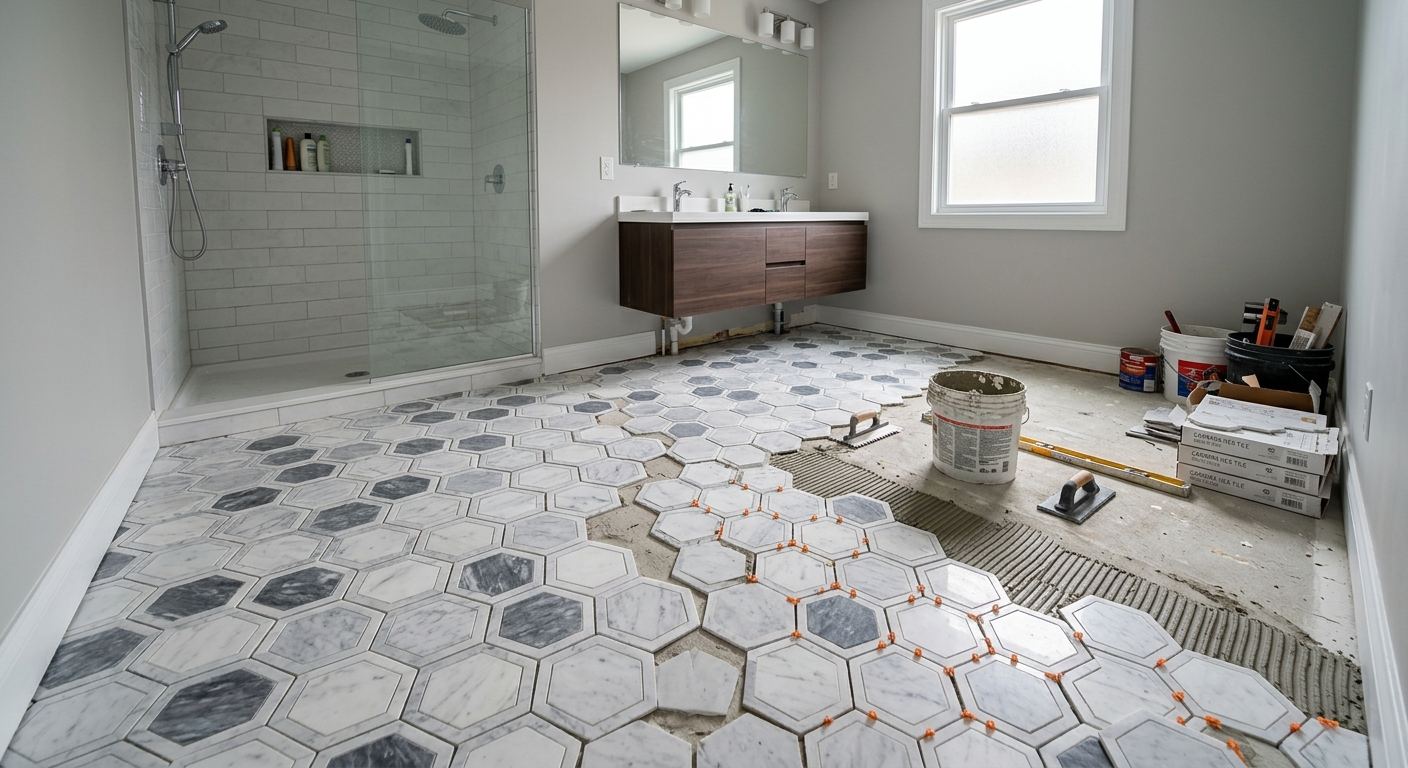
Bathroom renovation options and costs in Hanover
In Hanover, homeowners typically renovate bathrooms for two reasons: style upgrades and practical fixes for older plumbing systems. With 64.2% of local homes built before 1981 (Statistics Canada, 2021 Census), many bathrooms start with dated valve locations, older drain assemblies, and layouts that don’t match today’s waterproofing expectations. That matters because on the Stratford–Bruce Peninsula, pricing is driven more by what contractors discover behind tile and around the tub/shower than by weather alone. Hanover’s housing mix also means trade crews can be booked tighter during peak spring-to-fall renovation seasons, which can nudge labour rates upward for demolition days, rough-in scheduling, and material ordering.
Renovation costs here can swing noticeably—even for the “same size” bathroom—because older houses often hide cast-iron or copper drainage, galvanized supply lines, and inadequate venting. If asbestos-containing materials are found during demo (commonly associated with older finishes), abatement protocols can add time and budget. For day-to-day planning, it’s helpful to think in bands: a cosmetic refresh can stay close to a few thousand dollars, while a full renovation often lands in the mid-teens to low-thirties depending on plumbing updates and finish level.
In Hanover’s downtown area and around the residential pockets near the Speed River corridor (where many homes are older and renovations are more frequent), bathroom contractors are especially in demand for quick scheduling after demolition and for careful waterproofing tie-ins.
Below is a practical comparison of common scopes you’ll see in local quotes, so you can translate contractor proposals into apples-to-apples expectations.
| Renovation Scope |
What's Included |
Typical Duration |
Price Range |
| Cosmetic refresh (paint, fixtures, accessories only) |
Clean, patch, paint; swap vanity or toilet/vanity faucet; replace accessories (rails/holders); re-caulk; keep existing tile and plumbing positions |
2–5 days |
$3,000–$8,000 |
| Mid-range full renovation (new tile, vanity, tub/shower, electrical) |
Demo to prepared substrate; new waterproofing; floor + wall tile; new vanity/top; tub or surround replacement; exhaust fan with electrical tie-in; basic plumbing refresh where needed |
2–4 weeks |
$14,000–$26,000 |
| High-end full renovation (custom tile, steam shower, heated floors) |
Higher-spec tile layouts; premium waterproofing system; steam-ready shower plan; heated floor circuit; upgraded trim/fixtures; possible venting and plumbing upgrades once opened |
3–6 weeks |
$26,000–$35,000 |
| Shower-only installation (convert tub to walk-in shower) |
Remove tub; create shower pan and waterproofing; install glass/enclosure; tile floor + surround; rework drain to fit slope and maintain code-clearance; exhaust fan check |
2–3 weeks |
$16,000–$30,000 |
| Bathtub replacement or tub-liner install |
Drain/valve service as required; set new tub or install a liner where compatible; re-caulk and re-seal; targeted wall prep; minor tile touch-ups |
3–10 days |
$1,500–$5,500 |
| Tile-only installation (floor + surround, existing layout kept) |
Tile removal and disposal; prep/leveling; waterproofing as specified; install floor and shower/tub surround tile; replace caulking and grout; keep plumbing locations unchanged |
1–3 weeks |
$6,000–$18,000 |
Prices are estimates only and vary by project scope, site access and material selection.
What affects the price of bathroom renovation in Hanover
In Hanover and the wider Stratford–Bruce Peninsula region, two quotes for the same bathroom can differ by 30–50% because the “hard part” isn’t the visible tile—it’s the labour required to correct what’s beneath it. Local labour rates and the age of the housing stock drive most cost variance here, because older homes often need extra rough-in work once walls and floors are opened. In our area, it’s common to find hidden issues like older venting routes, undersized or corroded supply lines, and drain setups that don’t match modern slope and sealing requirements. That’s why a bathroom that looks straightforward on day one can move from a mid-range full renovation budget into the upper end of the band once discovery work starts.
Ontario’s regulatory expectations also influence scope. If asbestos-containing vinyl floor tile or older drywall compounds are encountered during demo (more likely in pre-1981 homes—Statistics Canada, 2021 Census), abatement protocols add labour and sequencing time. Even when asbestos isn’t present, you may still face subfloor preparation, which can add cost quickly when the base is unlevel or compromised by past leaks.
Concrete examples from Hanover jobs: (1) moving a shower valve or drain can add rough-in labour and change waterproofing details, pushing a job closer to the $14,000–$35,000 full-renovation range; (2) upgrading from builder-grade to designer fixtures can raise material costs, but it’s usually the tile layout complexity that expands labour time; (3) adding a heated floor circuit typically increases electrical coordination time, but it’s predictable when planned early.
To keep budgeting realistic, local contractors often carry contingency for unknowns beneath tile, behind the tub/shower assembly, and around ventilation paths—especially in homes built before 1981.
| Price Factor |
Why It Matters |
Cost Impact |
| Layout change — moving drain or supply lines requires rough-in work |
Relocation means cutting, re-plumbing, pressure testing, and rebuilding waterproofing details |
+ $3,000–$10,000 |
| Tile selection — large-format porcelain vs. mosaic vs. ceramic |
Large format increases substrate requirements; mosaics add cutting and installation time |
+ $1,200–$6,000 |
| Fixture tier — builder-grade vs. mid-range vs. designer brands |
Higher tiers cost more and may require better trim/valve compatibility |
+ $500–$5,000 |
| Subfloor condition — rot or unlevel concrete adds scope |
Repairs, leveling, and rebuild of membrane substrate prevent future cracking and leaks |
+ $1,500–$8,000 |
| Electrical — adding GFCI outlets, exhaust fan, heated floor circuit |
May require new circuits, fan ducting tie-ins, and coordination with a licensed electrician |
+ $800–$4,500 |
| Waterproofing method — membrane type and extent |
Correct system selection affects durability and mould risk in Ontario humidity |
+ $800–$3,500 |
| Older-home surprises — asbestos tile, cast-iron drains, galvanized pipes |
Discovery changes demolition pace, adds abatement, and may require drainage upgrades |
+ $1,500–$5,000+ |
| Bathroom size — sq ft drives tile and labour time directly |
More floor/wall area means more prep, thinset, waterproofing, and set time |
+ $1,000–$8,000 |
Permits & regulations in Ontario
In Ontario, not every bathroom renovation needs a permit, but the work that changes plumbing, ventilation, or structure typically does. In general, cosmetic updates—like swapping a vanity, repainting, replacing accessories, or installing fixtures in the same locations—rarely require permits. Where permits commonly come into play is when you relocate plumbing (moving a drain or supply line), add or re-route a dedicated exhaust fan with new electrical work, or make structural changes (like modifying walls or openings).
Electrical work must meet Ontario code requirements and be done or signed off by a licensed electrician. That includes new GFCI outlets, fan wiring, and any heated floor circuit. Plumbing rough-in changes (new supply routes, changes to the drain arrangement, or significant valve relocation) typically require a permit and inspections before the final finishes are installed.
For Hanover homeowners, the practical checklist is simple: 1) ask your contractor for their Ontario trade licence number and confirm it through the appropriate online registry for the trade they represent; 2) request a certificate of insurance showing liability coverage, and ask whether they carry WSIB/WCB coverage for workers (or provide clearance documentation); 3) before demo, get the permit plan in writing—who is pulling the permit, what inspections are expected, and whether disposal is included. Clear documentation protects you if something is found behind the tile during the build.
Choosing tile, waterproofing and fixtures for your Hanover bathroom
Budgeting a Hanover bathroom renovation starts with three material decisions that strongly influence both the final price and long-term performance: tile choice, waterproofing system, and fixture tier. First, tile: entry-level ceramic is usually the lowest material cost, but it can be more forgiving to install incorrectly only on floors with simple layouts. Porcelain is denser and often better for floors and wet areas, and it typically holds up better in high-moisture bathrooms; however, it demands a flatter substrate and careful setting, especially with larger formats. Natural stone (marble, travertine, slate) looks premium but adds cost in materials and labour due to cutting, sealing, and layout complexity.
Second, waterproofing: in Ontario, bathroom humidity cycles make the waterproof layer non-negotiable. A paint-on membrane may work for certain scoped applications, but bonded sheet membranes and professionally compatible systems (including detail-focused approaches around corners and penetrations) generally provide more robust protection when installed correctly. The “right” method is the one that matches your shower design and tile system—not just the one with the lowest material price.
Third, fixture tier: builder-grade fixtures control upfront cost, mid-range balances quality and finish consistency, and designer brands often add value through better valves, trim, and warranty coverage. A real example: upgrading a shower trim and valve set may add only a few hundred dollars, but paying for better waterproofing and a properly sloped shower pan is what prevents mould and costly rework. That’s where the money is justified—especially in older Hanover homes where hidden subfloor or drain issues can appear once demo begins (64.2% of homes built before 1981, Statistics Canada, 2021 Census).
| Material / Option |
Pros |
Cons |
Price Range |
| Ceramic tile (floor + walls) |
Budget-friendly; wide colour/style selection; good for many standard bathroom layouts |
Can chip or wear faster than porcelain in some settings; requires proper substrate |
$1,200–$4,500 |
| Porcelain tile (floor + walls) |
Denser and more water-resistant; holds up well; supports a cleaner, modern look |
More expensive; larger tiles require extra prep and skilled setting to avoid lippage |
$2,500–$6,000 |
| Natural stone (marble, travertine, slate) |
Premium appearance and unique texture; can increase perceived value |
Higher material and labour costs; often needs sealing and careful maintenance |
$4,000–$10,000 |
| Frameless glass shower enclosure |
Light, modern look; helps visually open the bathroom; easier wipe-down than heavy curtains |
More expensive than basic kits; installation must be precisely aligned |
$1,800–$4,500 |
| Prefab tub surround (acrylic) |
Fast installation; fewer tile cuts; good water performance when installed correctly |
More limited design options; can look less “custom” than tile |
$900–$2,800 |
| Custom shower pan (tile or linear drain) |
Allows sleek linear drains; improved slope control; more tailored to your layout |
Higher labour and waterproofing complexity; requires careful rough-in coordination |
$3,000–$9,000 |
How to choose a bathroom renovation contractor in Hanover
Choosing a contractor in Hanover starts with verifying Ontario licensing, liability insurance, and WSIB/WCB coverage—because the trades involved in a bathroom (carpentry, tile, plumbing, electrical) are where risk lives. Ask for the Ontario trade licence details relevant to their role, and confirm coverage in writing. For liability insurance, request a certificate of insurance that lists them as the insured and includes the correct project address or an endorsement for renovation work. For WSIB/WCB, you want proof that workers are covered or clearance documentation that aligns with Ontario requirements for employer coverage.
Next, get 2–3 itemised written quotes with line items for labour and materials rather than a single lump sum. You’re looking for clarity on demolition, subfloor prep, waterproofing method, tile setting, fixture supply, electrical scope, and disposal. Confirm whether the contractor will pull permits (if needed) and who pays for inspections. Also request warranty terms: workmanship warranty length, manufacturer warranties for fixtures (often separate), and whether warranties are transferable if you sell the home.
For payment schedule, use a rule of thumb: never pay more than 10–15% upfront, and keep a holdback until completion and walk-through punchlist are done. Lock the timeline in writing with a start date and a realistic completion estimate, including how long the bathroom will be out of service and what conditions can delay it (like material lead times or discovery work under old tile).
- Ask for the exact scope breakdown (demo, substrate, waterproofing, tile, plumbing/electrical coordination).
- Confirm permit responsibility in the quote and whether permit fees are included.
- Get waterproofing method named (membrane type, coverage, and how corners/penetrations are treated).
- Request disposal inclusion (dump fees, hauling, and recycling where available).
- Check that plumbing/electrical relocations are listed and will be done/signed off by licensed trades.
- Verify liability insurance limits and project-specific coverage dates.
- Provide WSIB/WCB clearance or proof of coverage for workers.
- Review the warranty: workmanship (months/years), what’s excluded, and call-back response times.
- Confirm materials allowances (vanity, tile, glass) to avoid budget “creep.”
- Use a realistic payment schedule with a holdback at substantial completion.
- Request a written schedule with key milestones: demo completion, rough-in inspections, tile day start, final trim.
- Ask about how they handle unexpected subfloor issues once tile is removed.
Red flags specific to Hanover bathroom renovations: contractors who won’t show itemised scopes; promises of “no permit needed” even when plumbing will move; refusing to provide insurance/WSIB/WCB documentation; asking for most payment upfront (beyond 10–15%); and vague warranties like “we stand behind it” without a written workmanship period.
Frequently asked questions — bathroom renovation in Hanover
What's the difference between a cosmetic and a full bathroom renovation?
A cosmetic renovation in Hanover usually keeps the plumbing locations and the waterproofing footprint the same. Think of repainting, swapping accessories, replacing a vanity or toilet in the same spot, updating lighting, and doing touch-up caulking. Because the walls and floors are not opened to the substrate, there’s typically less hidden-scope risk—so it’s usually closer to the lower end of local budgets. A full bathroom renovation is different: it involves demolition to prepared surfaces, new waterproofing, new tile (often floor + walls), updated tub/shower assemblies, and may include exhaust fan and electrical upgrades. Full projects commonly land in the $14,000–$35,000 range depending on layout changes and plumbing updates.
How do I choose the right contractor for my bathroom in Hanover?
Start by verifying Ontario trade licensing where applicable, and ask for liability insurance plus WSIB/WCB coverage documentation before any demo. Then compare quotes that are itemised—not lump sums—so you can see what’s included for waterproofing method, tile setting, disposal, and electrical/plumbing scopes. In Hanover, where 64.2% of homes were built before 1981 (Statistics Canada, 2021 Census), ensure the contractor explains how they handle hidden issues once tile is removed (subfloor repairs, venting adjustments, or older drain/supply complications). Confirm the warranty is written (workmanship and product terms separately) and that the payment schedule stays within a sensible upfront limit (10–15%).
What's the most common mistake homeowners make in bathroom renovations?
The biggest mistake is under-scoping the “unknowns” stage. Homeowners often budget for visible finishes while assuming the substrate is solid. In Hanover’s older housing stock, once walls and floors are opened, you can find unlevel subfloors, previous leak damage, outdated venting, and sometimes problematic materials that require additional care during demo. Another common error is picking tile first without aligning the waterproofing system and shower details—if the waterproofing and drain slope aren’t coordinated, you can pay again to correct failures. If you’re planning a full remodel, it’s safer to budget toward the mid-range full renovation band—often $14,000–$26,000—and include contingency for hidden work.
How long does tile installation take in a Hanover bathroom?
Tile installation timing depends on whether you’re doing floor only, full walls, or a custom shower surround. In Hanover, a typical tile-only scope (keeping the layout) can take about 1–3 weeks when you include demo, substrate prep, waterproofing cure time, tile setting, and grouting. For a full mid-range renovation with floor + tub/shower wall tile, plan around 2–4 weeks total for the whole project, with tile work often consuming the middle portion of that schedule. Lead times for tile and glass can extend timelines. The bigger factor is substrate preparation: if older surfaces require additional leveling or repairs, tile days may be shorter, but prep days increase.
How much does a bathroom renovation cost in Hanover?
In Hanover, costs depend on scope and whether plumbing or ventilation moves. Cosmetic refreshes can be relatively contained (commonly in the low thousands), but full renovations tend to follow local bands. A mid-range full renovation typically falls around $14,000–$26,000, while high-end full renovations with features like custom tile layouts, premium shower systems, or heated floors often reach toward $26,000–$35,000. Shower-only conversions (like converting a tub to a walk-in) can also be substantial once the drain and waterproofing details are rebuilt—often pushing into the mid-to-upper portion of those full-renovation bands. Because 64.2% of homes were built before 1981, some projects add cost after discovery of hidden subfloor and plumbing issues (Statistics Canada, 2021 Census).
How long does a bathroom renovation take in Hanover?
For a cosmetic refresh, many jobs are achievable in 2–5 days since plumbing locations and waterproofing footprint are usually unchanged. For a mid-range full renovation, a realistic expectation in Hanover is about 2–4 weeks, assuming materials arrive on time and there are no major surprises behind tile. High-end full renovations often take 3–6 weeks because custom details require more setting time, longer waterproofing/cure sequencing, and additional coordination for features like heated floors or more complex shower builds. If the contractor finds hidden issues during demo in older homes (64.2% built before 1981), timeline can extend due to subfloor repairs, drain/supply upgrades, or other correction work needed before finishes go back on.