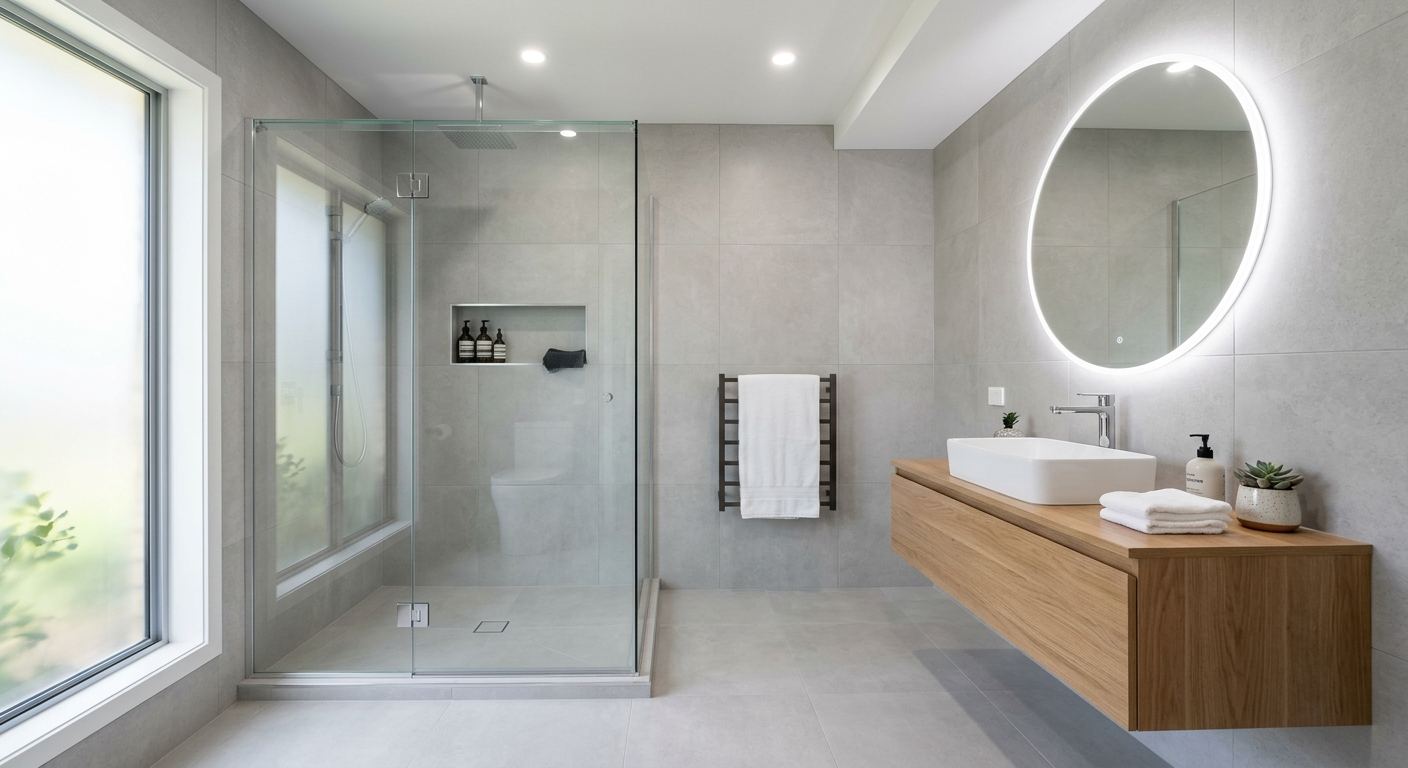
Bathroom renovation options and costs in Eastbridge
Eastbridge homeowners have a few clear paths for getting a better bathroom, but the best option depends on how much of the plumbing, ventilation, and finishes you want to change. With Eastbridge sitting in the Toronto economic region (and housing that often reflects post-war builds), it’s common to find older, dated rough-ins that affect budgets. In this area, the neighbourhoods that most frequently see renovations tend to be the established pockets near commuter corridors—where homeowners are working through homes that can be decades old and may contain materials that complicate wall and floor openings. And with a local population of 6,840 (Statistics Canada, 2021 Census), contractor availability is solid, but scheduling can still tighten during peak renovation months.
Costs in Toronto aren’t driven by extreme bathroom “climate” swings as much as by labour rates and what the contractor discovers once the walls open. Ontario’s skilled trades premiums mean that tiling, custom shower builds, and plumbing upgrades carry a cost bump compared to national averages. If you’re in a 1960s–1980s home, it’s also more likely you’ll run into cast-iron drain sections, galvanized supply lines, or undersized venting—issues that typically require reconfiguration to meet current Ontario expectations. On top of that, discovery of asbestos-containing materials (for example in older vinyl floor tile or certain drywall compounds) can trigger licensed abatement and add material handling time.
Because the “unknowns” are a big part of why realistic GTA budgets land in the low-to-mid five figures for full work, compare these common scopes first, then decide how far you want to go before calling for an itemised quote.
| Renovation Scope |
What's Included |
Typical Duration |
Price Range |
| Cosmetic refresh (paint, fixtures, accessories only) |
Paint, vanity light swap (where no wiring changes), new accessories, caulking, re-grout where applicable; no wall/floor removal |
2–4 days |
$3,000–$7,000 |
| Mid-range full renovation (new tile, vanity, tub/shower, electrical) |
Demolition; tub/shower refresh or swap; vanity and toilet replacement; tile on walls + floor; waterproofing; new exhaust fan and GFCI; basic plumbing updates as needed |
2–3 weeks |
$12,000–$20,000 |
| High-end full renovation (custom tile, steam shower, heated floors) |
Custom shower/tub solution, premium tile layout; heated floor wiring/circuit; designer vanity; upgraded exhaust and lighting; more extensive plumbing/vent corrections if required |
3–6 weeks |
$22,000–$30,000 |
| Shower-only installation (convert tub to walk-in shower) |
Remove tub; rough-in adjustments for drain/supply; shower pan, waterproofing, tile surround; new glass enclosure; exhaust fan if upgrading ventilation |
1–2 weeks |
$10,000–$18,000 |
| Bathtub replacement or tub-liner install |
Option A: Replace tub + re-caulk and reseal; Option B: Tub liner install with proper prep and sealing; limited tile touch-ups |
3–7 days |
$2,000–$4,500 |
| Tile-only installation (floor + surround, existing layout kept) |
Remove/replace tile only; re-waterproof where appropriate; new grout/caulk; keep vanity/toilet placement unless minor adjustments are needed |
1–2 weeks |
$6,000–$13,000 |
Prices are estimates only and vary by project scope, site access and material selection.
What affects the price of bathroom renovation in Eastbridge
In Eastbridge (Toronto economic region), two quotes for the same “looking” bathroom can differ by 30–50% because the true drivers are labour availability, the complexity of tile and waterproofing, and what must be corrected once trades open up walls and floors. While Ontario weather isn’t the main cost trigger, the Toronto region’s labour market is: skilled tilers, plumbers, and electricians cost more here, and bathrooms are labour-intensive jobs (especially custom showers, complex layouts, and drainage/venting corrections).
Housing age matters more than people expect. Older homes in the Toronto region often hide cast-iron or undersized drains that need upgrading, galvanized supply lines that don’t meet modern expectations, and ventilation setups that are insufficient for today’s moisture loads. When discovery happens—like asbestos-containing materials in pre-1985 floor tile or drywall compound—abatement can add roughly $1,500–$5,000+ depending on scope and the extent of affected materials. Those “small” surprises are a big reason mid-range full renovations often land toward the $12,000–$20,000 band, while homes that need additional plumbing/vent work can push beyond that and into the upper local range.
Concrete examples from Eastbridge renos: (1) keeping an existing shower footprint can reduce drain rework and help a shower-only conversion stay closer to the lower end of the local shower range; (2) choosing large-format porcelain may reduce grout lines but demands tighter subfloor prep—if your substrate is uneven, extra labour and patching increase costs; (3) upgrading an exhaust fan from an older vent path often requires more electrical and duct routing than homeowners anticipate.
| Price Factor |
Why It Matters |
Cost Impact |
| Layout change — moving drain or supply lines |
Requires rough-in work, opening ceilings/walls, and sometimes structural considerations |
Often +$3,000–$8,000 |
| Tile selection — large-format porcelain vs. mosaic vs. ceramic |
Material cost varies, and cutting precision/time increases with mosaics and custom layouts |
Often +$1,500–$6,000 |
| Fixture tier — builder-grade vs. mid-range vs. designer brands |
Higher tiers cost more and may require additional prep/adapter parts |
Often +$500–$4,000 |
| Subfloor condition — rot or unlevel concrete adds scope |
Warps and movement affect tile durability and require additional prep/underlayment |
Often +$1,000–$5,000 |
| Electrical — adding GFCI outlets, exhaust fan, heated floor circuit |
Bathrooms require specific safety measures; heated floors add dedicated circuits |
Often +$900–$4,500 |
| Waterproofing method — membrane type and extent |
Correct waterproofing coverage is what prevents leaks and mould problems long term |
Often +$500–$3,500 |
| Older-home surprises — asbestos tile, cast-iron drains, galvanized pipes |
Triggers abatement, demolition changes, drain venting updates, and extra licensed labour |
Often +$1,500–$10,000+ |
| Bathroom size — sq ft drives tile and labour time directly |
More area means more prep, waterproofing, tile-setting time, and materials |
Often +$2,000–$7,000 |
Permits & regulations in Ontario
In Ontario, the permit question is mainly about whether you’re moving plumbing, changing structure, or altering electrical. Cosmetic updates—swapping fixtures, replacing a vanity without moving drain/supply connections, painting, and retiling without changing plumbing—typically do not trigger the same permit requirements as a full rough-in rework. However, permit involvement becomes much more likely when you relocate plumbing (for example, moving the drain for a tub-to-shower conversion), add or move an exhaust fan with new electrical circuits, or make structural wall changes.
Electrical work must meet Ontario electrical code requirements and be completed by (or signed off by) a licensed electrician. Plumbing rough-in changes usually require a permit and inspection so the drainage and venting are verified before walls and floors close up. Because bathroom work commonly involves both trades, it’s smart to ask for the permit plan before demolition starts.
For an Eastbridge homeowner, verify in this order: (1) Ontario trade licence—ask for the contractor’s licence details and confirm using the province’s online licensing/search tools; (2) liability insurance—request a certificate of insurance showing active coverage and the job address; (3) clearance/coverage confirmation for workers—ensure WSIB/WCB coverage is in place (and request documentation showing the account is current). When you receive documentation, check dates, scope, and coverage limits, and keep copies for your records.
Choosing tile, waterproofing and fixtures for your Eastbridge bathroom
Your budget in Eastbridge usually rises or falls based on three material decisions: tile choice, waterproofing system, and fixture tier. First, tile: ceramic is the entry point, often best for simple layouts and smaller bathrooms where labour time is lower. Porcelain is the middle ground—denser and more suitable for frequent moisture—with better durability for floors and wet-wall applications. Natural stone (marble, travertine, slate) can look luxurious, but it often costs more and requires careful sealing and labour-intensive installation for consistent finishing.
Second, waterproofing: Ontario’s winters and humid summer shoulder seasons still mean bathrooms see cycles of moisture. A paint-on membrane can work for some scopes, but a bonded-sheet system or a structured schluter-style approach usually improves reliability at corners, seams, and around niches. The “right” method isn’t about the sticker price—it’s about coverage and correct sequencing under tile, which is what prevents mould-causing moisture behind walls.
Third, fixtures: builder-grade saves money up front, but mid-range or designer lines can improve resale appeal—especially when finishes coordinate (chrome vs. matte black) and the shower system functions smoothly. As a practical example, upgrading from a basic tub/shower kit to a more robust valve and enclosure package can add about $2,000–$6,000, but the spend is justified if you’re already retiling and correcting ventilation.
Match these choices to your bathroom’s layout complexity and your goal—quick refresh versus long-term, low-risk waterproofing—so your renovation stays worth the cost over time.
| Material / Option |
Pros |
Cons |
Price Range |
| Ceramic tile (floor + walls) |
Good budget control; wide style selection; straightforward installation for simpler patterns |
More prone to chipping than porcelain; still needs careful waterproofing and substrate prep |
$3,000–$7,000 |
| Porcelain tile (floor + walls) |
Better durability for floors; less water absorption; more consistent for large-format layouts |
Higher material cost; large-format increases prep/flatness requirements |
$5,000–$10,000 |
| Natural stone (marble, travertine, slate) |
Premium look; unique variations; strong demand at resale when finished well |
Sealing/maintenance; requires skilled setting to manage lippage and finish |
$8,000–$16,000 |
| Frameless glass shower enclosure |
Modern appearance; easier visual “space” in small baths; durable when correctly installed |
Needs solid framing/support and accurate waterproofing; hardware costs add up |
$2,500–$7,500 |
| Prefab tub surround (acrylic) |
Fast install; fewer tile lines; great for tight budgets and quick turnover |
Less custom look than tile; seams and edges require careful sealing |
$1,200–$3,500 |
| Custom shower pan (tile or linear drain) |
More accessibility and a premium finish; linear drains suit modern layouts; strong water management when built right |
More labour; slope/flatness and drain placement must be exact |
$4,000–$12,000 |
How to choose a bathroom renovation contractor in Eastbridge
Choosing the right contractor in Eastbridge comes down to proof and process, not just price. Start by verifying Ontario licensing: ask for their trade licence details and confirm through Ontario’s online licensing tools. Next, request a certificate of liability insurance showing the job address is covered and that coverage is active. For worker safety coverage, confirm WSIB/WCB coverage documentation; don’t rely on verbal assurances—get it in writing.
Then collect 2–3 itemised quotes that break out labour and materials. You want to see line items for demolition, waterproofing, tile installation, fixtures, electrical work (like exhaust fan and GFCI), plumbing rough-in changes (if any), and disposal. A lump-sum number without scope clarity is where budgets blow up. Read the scope carefully for exclusions: is permit pulling included, are old materials disposed properly, and is there allowance for unexpected substrate repairs?
Warranty also matters. Ask for workmanship warranty length and whether the manufacturer’s product warranty is included for installed products. Check if the warranty is transferable to future homeowners—important for resale in the Toronto market. Finally, payment schedule: never pay more than 10–15% upfront. Use a holdback until key milestones finish, and get start and completion dates in writing with an estimated timeline based on sequencing (demo → rough-in → waterproofing → tile → trim).
- Provide Ontario trade licence details and confirm them online before signing.
- Show certificate of liability insurance with job-address coverage.
- Provide WSIB/WCB coverage proof in the quote package.
- Use an itemised labour + materials breakdown (not a single lump sum).
- Clearly list inclusions/exclusions for demolition and disposal.
- State who pulls permits (and whether that cost is included).
- Confirm waterproofing method and coverage area in writing.
- Specify which fixtures/brands are included versus allowances.
- Confirm tile underlayment/subfloor prep plan if the substrate is uneven.
- Use a realistic schedule with waterproofing/tile cure times.
- Warranty the work (not just products) and confirm length in the contract.
- Keep deposits to 10–15% and hold back until the job is complete.
Red flags to watch in Eastbridge: contractors who won’t provide licence/insurance/WSIB documentation; quotes without waterproofing specifics; pressure to pay a large deposit upfront; vague scope language like “extras as needed” without allowances; and no written start/completion dates or warranty terms. If any of those show up, step back and ask for revisions.
Frequently asked questions — bathroom renovation in Eastbridge
Should I do a tub-to-shower conversion?
In Eastbridge and across Ontario, a tub-to-shower conversion is often worth it when you want lower maintenance and better accessibility. A walk-in shower can also help if your current tub is hard to use or you plan for aging in place. Budget-wise, the work typically includes demolition, a new shower pan, waterproofing, and often electrical/ventilation upgrades, which is why “shower-only” conversions frequently sit in the $10,000–$18,000 range locally. If your existing plumbing layout can stay close to the current drain location, you avoid some rough-in costs; moving drains tends to increase labour and permit scope. Ask your contractor to include a clear plan for waterproofing and venting before you commit.
How do I prevent mold in a Eastbridge bathroom?
Mould prevention is mostly about moisture control and correct waterproofing, not just wiping surfaces. In Eastbridge, bathrooms get humid during showers and then cycle through Ontario’s seasonal temperature swings—so good ventilation is key. Make sure you install (or upgrade to) a properly sized exhaust fan vented to the exterior, and ensure it’s on its own circuit with appropriate protection. On the building side, require a full waterproofing system under tile—including corners, seams, and around niches—because leaks behind walls create mould that’s expensive to remediate. Good grout and caulking matter too, but they’re not a substitute for waterproofing. If your contractor finds older substrates or compromised subflooring, insist they address that before tile goes back on, which helps keep moisture from getting trapped.
What adds the most resale value in a bathroom reno?
Buyers in the Toronto area usually pay for “comfort + reliability.” The biggest resale value boosts typically come from a full, clean-looking refresh: updated vanity and lighting, modern tile floors and shower walls, a well-functioning fan/exhaust setup, and plumbing that feels current. High-impact items also include a durable shower design (often tile with a proper pan and waterproofing) and finishes that won’t look dated in a few years. You’ll often see homeowners choosing mid-range full renovations in the $12,000–$20,000 band because they balance cost with the visible improvements buyers notice. If your home layout or venting is problematic, correcting that—rather than only replacing fixtures—tends to pay off more. In short: workmanship and moisture safety outperform cosmetic changes alone.
Can I keep my existing plumbing layout to save money?
Yes—keeping the existing plumbing layout is one of the most reliable ways to reduce costs in Eastbridge. When the drain and supply locations remain where they are, the contractor avoids additional rough-in work, ceiling access, and potential venting corrections. That means fewer labour hours and fewer surprises once walls are opened. If you’re staying with a similar vanity position and keeping the tub/shower footprint, your budget is more likely to stay in the lower-to-mid end of the local ranges. As soon as you move fixtures (especially drains for a shower), costs typically rise due to rough-in complexity and permit/inspection requirements. For best results, ask your contractor to confirm rough-in feasibility before you choose finishes, and to include any necessary plumbing adjustments in the itemised quote rather than as an “allowance.”
How much does a walk-in shower cost in Eastbridge?
For Eastbridge homeowners, a walk-in shower cost depends on whether it’s a true shower conversion (tub removed) and what you choose for tile, pan/linear drain, and enclosure. In the Toronto economic region, a typical shower-only installation often comes in around $10,000–$18,000. If you’re adding premium glass, a complex tile layout, or extensive waterproofing with upgraded drainage details, budgets can move toward the upper side. If your contractor is also correcting older plumbing or ventilation—common in older neighbourhood housing—expect the quote to reflect that scope, because it’s labour-intensive and may involve permit work. To keep it transparent, request a quote that breaks out shower pan build, waterproofing, tile labour, glass enclosure, and electrical/exhaust updates separately.
What's the ROI on a bathroom renovation?
ROI depends on the condition of your starting bathroom, the level of finishing you choose, and whether you solve moisture and functional issues—not just aesthetics. In the Toronto market, bathrooms that prevent water problems (correct waterproofing, venting, and safe electrical) tend to hold value better than “surface only” updates. If your reno is comparable to local market expectations, you can often recover a meaningful portion at resale, especially when you replace worn fixtures and create a modern, durable shower solution. In practice, many homeowners land in the $12,000–$20,000 full renovation band for a balance of visibility and risk reduction, because that scope is usually enough to impress buyers without overspending on ultra-luxury features. If you go high-end (custom steam options and heated floors), returns may still be strong but are more sensitive to buyer pool and whether the rest of the home matches. For a more precise ROI, compare your renovation scope to recent nearby comps and keep documentation of permits and warranty coverage.