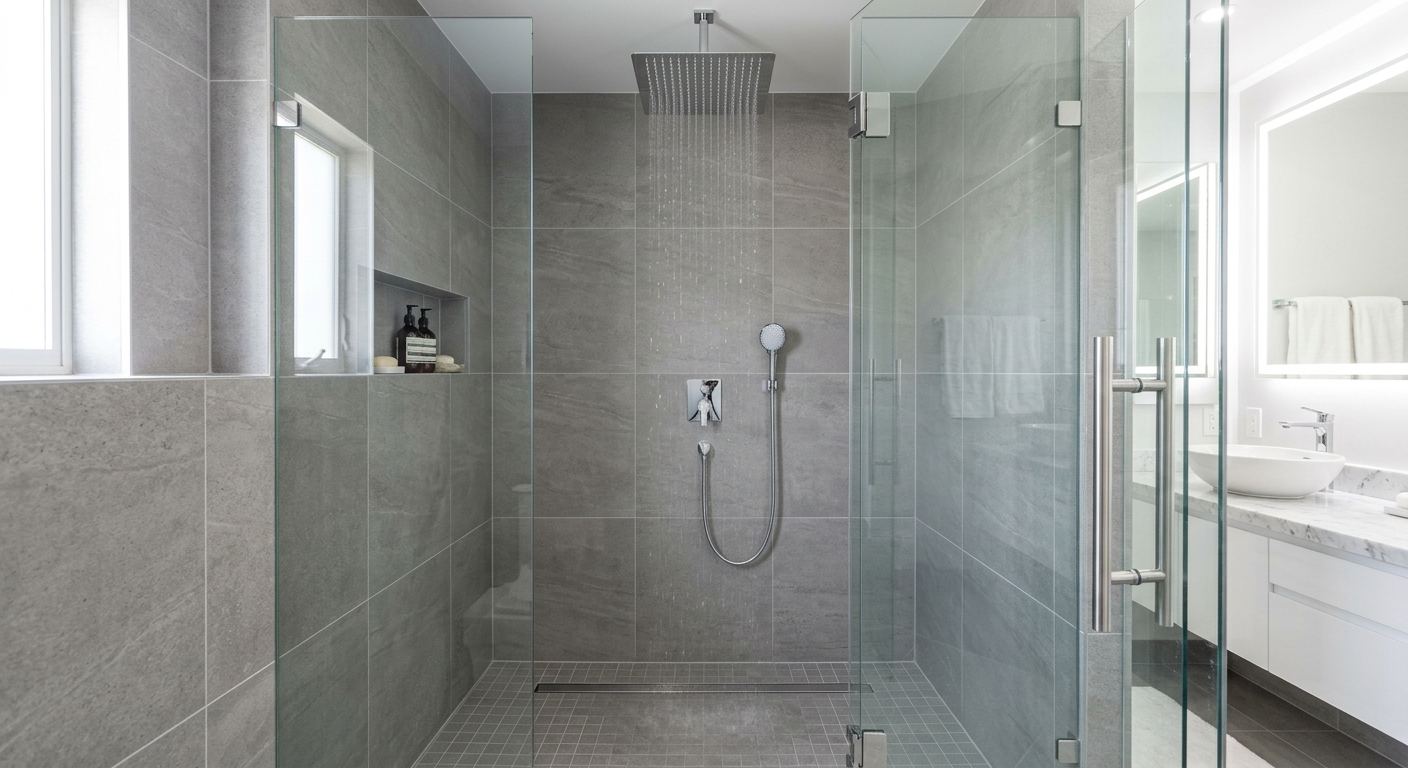
Bathroom renovation options and costs in Whitby
Renovating a bathroom in Whitby usually comes down to three things: how much you change, what finishes you choose, and what your existing plumbing and walls are hiding. With 24.8% of homes in the region built before 1981, many Whitby bathrooms sit on older drain and vent layouts that can be undersized or difficult to service once walls come open, sometimes requiring reconfiguration to match current Ontario expectations. In older floors, it’s also not uncommon to find hidden risk materials around tile and backing, which can add time and licensed scope.
In the Toronto economic region, costs are driven more by skilled-labour availability and hourly trade rates than by climate alone. Bathroom work is labour-intensive—especially tiling, custom shower builds, and plumbing tie-ins—so labour premiums can widen the gap between a basic refresh and a full renovation. You’ll also notice that contractor demand is often highest in established neighbourhoods with lots of mid-century housing stock and active owner-occupied remodels—areas like North Whitby, including segments around Taunton Road and the east-side retail corridors, tend to see faster scheduling and more competitive material lead times.
Most homeowners budget within the low-to-mid five-figure range for a complete 3-piece refresh in Whitby, and higher-end finishes can push totals toward the upper bands once electrical upgrades, waterproofing details, and hidden-condition contingencies are included. To help you compare apples to apples, here are typical Whitby price ranges by scope—then we’ll break down what makes quotes move up or down.
| Renovation Scope |
What's Included |
Typical Duration |
Price Range |
| Cosmetic refresh (paint, fixtures, accessories only) |
New fixtures in place, fresh paint, mirror/accessories, caulking and minor sealing; usually no plumbing or wall changes |
3–7 days |
$3,000–$7,500 |
| Mid-range full renovation (new tile, vanity, tub/shower, electrical) |
Tile floor + walls, vanity swap, tub/shower replacement or surround, updated lighting, exhaust fan updates, basic electrical changes, disposal |
2–3 weeks |
$12,000–$20,000 |
| High-end full renovation (custom tile, steam shower, heated floors) |
Custom shower (or steam unit), premium tile/grout details, heated floor mat + controls, upgraded electrical, enhanced waterproofing system, niche shelving |
3–6 weeks |
$20,000–$30,000 |
| Shower-only installation (convert tub to walk-in shower) |
Demo of tub, linear or standard drain option, waterproofing, new glass enclosure, new tile surround; includes plumbing rough-in changes as needed |
2–4 weeks |
$15,000–$24,000 |
| Bathtub replacement or tub-liner install |
Replace tub with similar footprint (or install tub-liner where applicable), sealant and finishing, test for leaks, matching wall finishing at seams |
3–10 days |
$2,500–$6,500 |
| Tile-only installation (floor + surround, existing layout kept) |
Remove existing finishes, set new tile, waterproofing as required by system, grout sealing; minimal plumbing changes |
1–2 weeks |
$7,500–$15,000 |
Prices are estimates only and vary by project scope, site access and material selection.
What affects the price of bathroom renovation in Whitby
It’s common to see quotes for the “same” bathroom differ by 30–50% in Toronto and across Ontario. The main drivers aren’t climate—Toronto’s seasonal swings don’t uniquely break bathrooms—but labour rates, the complexity of wet trades, and the condition of older assemblies. In Whitby specifically, many bathrooms were built on layouts from the post-war to early 1980s era; with 24.8% of homes built before 1981, there’s a higher chance you’ll uncover cast-iron or undersized drains, older galvanized supply lines, and ventilation that doesn’t meet modern exhaust expectations. Once you open walls and floors, that hidden plumbing and venting scope can add several thousand dollars by requiring drain reconfiguration, vent corrections, new shut-offs, and additional labour coordination.
Asbestos discovery is another cost swing. If asbestos-containing materials are present in vinyl floor tile, old joint compound, or related layers, abatement triggers licensed work, containment steps, and extended timelines. In practice, that can add about $1,500–$5,000+ or more depending on what’s found and how much needs removal.
Two concrete Whitby examples: (1) a tub-to-shower conversion often looks “straightforward” until the drain location forces cutting and reworking the subfloor to maintain slope, pushing the project into mid-range full renovation territory (often near the $12,000–$20,000 band). (2) choosing large-format porcelain can lower visible grout lines, but it increases risk of lippage and subfloor sensitivity; if the floor is out of level, you may spend extra on prep to keep tile flat—sometimes tipping the job toward the upper-end full renovation budget ($20,000–$30,000).
| Price Factor |
Why It Matters |
Cost Impact |
| Layout change — moving drain or supply lines |
Requires rough-in work, access from behind walls/ceilings, and coordinated waterproofing and finishing afterward |
$2,000–$8,000 |
| Tile selection — large-format porcelain vs. mosaic vs. ceramic |
More expensive tile increases material cost; large-format and mosaics also demand more skilled installation time |
$1,500–$6,000 |
| Fixture tier — builder-grade vs. mid-range vs. designer brands |
Brand tier affects faucet trims, valves, vanities, mirrors, and sometimes rough-in compatibility |
$800–$4,500 |
| Subfloor condition — rot or unlevel concrete adds scope |
Tiles fail when the substrate moves; subfloor repair and additional leveling are labour-intensive |
$1,000–$5,000 |
| Electrical — adding GFCI outlets, exhaust fan, heated floor circuit |
Wet-area code requirements raise the need for licensed electrical work and safer circuit design |
$600–$3,500 |
| Waterproofing method — membrane type and extent |
Better systems and correct detailing reduce mould risk and warranty disputes |
$500–$3,000 |
| Older-home surprises — asbestos tile, cast-iron drains, galvanized pipes |
Triggers abatement, drain upgrades, shut-off replacements, and extra coordination/testing |
$1,500–$8,000+ |
| Bathroom size — sq ft drives tile and labour time directly |
More surface area increases tile setting, waterproofing coverage, and finishing hours |
$1,000–$6,000 |
Permits & regulations in Ontario
In Ontario, many bathroom updates are considered cosmetic and typically do not require a permit—things like swapping a vanity, changing the mirror, replacing the toilet with the same rough-in, painting, or retiling without moving plumbing or changing the structure. However, permits are usually needed when you relocate plumbing (moving a drain or supply line), add or modify ventilation such as an exhaust fan with new ducting or wiring, and when you make structural changes (for example, removing framing to open a wall for new rough-in). Any electrical work must meet Ontario code requirements and be done or signed off by a licensed electrician.
Here’s a practical, step-by-step way a homeowner in Whitby can verify a contractor’s Ontario compliance before the first demo day:
- Check the contractor’s Ontario trade licence/registration through the appropriate online registry for their business type (your contractor should be able to provide licence details upfront).
- Request a current certificate of insurance (liability) and confirm the coverage is active for the project dates and addresses.
- Ask how WSIB/WCB coverage is handled for their workers. You should receive proof/clearance documentation upon request.
- Verify any electrical contractor used is licensed; keep the invoice/permit info tied to the job.
- For plumbing rough-in changes, confirm the contractor will pull the correct permits and schedule inspections.
If a quote is “permit-free” for work that clearly includes relocating plumbing or new circuits, treat it as a red flag. In Ontario, inspection-ready work protects your home and your investment.
Choosing tile, waterproofing and fixtures for your Whitby bathroom
In Whitby, the quickest way to overspend—or under-spend and regret it later—is to treat tile, waterproofing, and fixtures as separate decisions. They actually work as one system, especially in Ontario bathrooms where indoor humidity and steam from showers can linger if ventilation isn’t ideal. Start with tile: ceramic is the entry-level choice and can be a good fit when you want solid value and simpler design lines. Porcelain is denser and more consistent, which helps in high-traffic areas and wet zones; it also typically costs more because materials and installation time rise, especially with large-format pieces. Natural stone (marble, travertine, slate) looks premium, but it adds labour and finishing considerations like sealing and careful layout.
Next, waterproofing. A paint-on membrane can work for certain systems, but it must be paired with the right tile method and details at corners/penetrations. Bonded sheet membranes and Schluter-style systems tend to be more robust because they create a continuous barrier when installed correctly, reducing mould risk. Third, fixtures: builder-grade faucets and shower valves save money upfront, while mid-range or designer brands often justify their cost through smoother performance, better valve engineering, and longer service life. This matters for resale in an owner-heavy market (82.1% of households are homeowners in the area per Statistics Canada, 2021 Census).
A clear dollar example: swapping ceramic to porcelain tile often costs a bit more at install time, but it can be justified if you’re also doing full waterproofing and want a longer-lasting finish—especially if you’re targeting a full renovation budget in the $12,000–$20,000 range. If you’re already nearing $20,000–$30,000 for heated floors or a steam feature, you can usually “spend once” on premium tile and proper waterproofing instead of cheaping out and paying to rework later.
| Material / Option |
Pros |
Cons |
Price Range |
| Ceramic tile (floor + walls) |
Good value, many styles, generally easier to match trims and simple patterns |
Less dense than porcelain, may be more prone to chips; subfloor flatness still matters |
$3,000–$8,000 |
| Porcelain tile (floor + walls) |
Higher durability, lower water absorption, consistent performance in wet areas |
More expensive materials; larger tiles require higher skill to prevent lippage |
$6,000–$12,000 |
| Natural stone (marble, travertine, slate) |
Luxury look, unique veining, strong visual impact |
Needs sealing/maintenance, more variable cutting and layout time |
$10,000–$18,000 |
| Frameless glass shower enclosure |
Modern appearance, easier cleaning than framed units, can elevate a mid-range reno |
Higher material and fabrication cost; requires precise tile/curb alignment |
$2,000–$6,500 |
| Prefab tub surround (acrylic) |
Fast install, fewer grout joints, good waterproofing when used correctly |
Fewer design options; seams/joints may be visible vs. full tile |
$1,200–$3,500 |
| Custom shower pan (tile or linear drain) |
Best fit for layout, cleaner look with linear drains, excellent long-term performance |
More labour and waterproofing detail; requires careful slope and trim planning |
$4,500–$12,000 |
How to choose a bathroom renovation contractor in Whitby
Choosing the right contractor in Whitby starts with verification, not glossy photos. First, confirm Ontario licensing/registration for the contractor and ensure you’re dealing with insured professionals. Ask for their liability insurance certificate and proof related to WSIB/WCB for their workers—then review the documents for validity dates and job-specific coverage. For any electrical scope (GFCI outlets, exhaust fan wiring, heated floor circuits), ensure a licensed electrician is involved and that the work aligns with Ontario code.
Next, collect 2–3 itemised written quotes. You want line items that separate labour and materials: demo, rough-in changes, waterproofing system, tile install hours, glass enclosure supply/fabrication, electrical, and disposal. Avoid lump-sum quotes that don’t specify what’s included. Read the exclusions: is permit pulling included, is asbestos abatement contingency handled, and is waste disposal/haul-away included? A clear scope is what protects you when the project hits hidden-condition discoveries.
For payment scheduling, a safe rule is never more than 10–15% upfront. Hold back a portion until substantial completion and walkthrough sign-off, especially after waterproofing and final caulking are done. Finally, get a timeline with a start date and completion estimate in writing so you can plan for access, ventilation, and any inspection steps.
- Verify licensing/registration details in writing and match them to the named contractor on your contract.
- Request liability insurance certificate and check the coverage is active for Whitby dates.
- Ask for WSIB/WCB proof/clearance and confirm who carries coverage (you vs. them).
- Get 2–3 itemised quotes (labour + materials), not a single lump sum.
- Confirm permit pulling responsibilities for plumbing/electrical/ventilation changes.
- Ask what disposal haul-away includes (bath demolition, tile debris, and any concrete/subfloor waste).
- Review waterproofing details: membrane type, layers, corner/penetration treatment, and cure times.
- Check tile prep expectations: subfloor flattening, underlayment, and crack repair.
- Confirm what happens if asbestos-containing materials are discovered (abatement process and cost handling).
- Request workmanship warranty length, what it covers, and whether it’s transferable.
- Set a payment schedule with a holdback until after final inspection/caulking and leak test.
- Get a written start date, milestones, and completion window tied to inspections.
Red flags I commonly see in Whitby bathroom jobs include: quotes with no itemization, promises of “no permits needed” for plumbing/electrical changes, vague waterproofing descriptions, missing insurance/WSIB/WCB documentation, and payment demands that front-load too much cash (beyond 10–15% upfront).
Frequently asked questions — bathroom renovation in Whitby
What's the ROI on a bathroom renovation?
ROI depends on how much you change and how well the renovation matches what buyers in Whitby expect. In general, mid-range full renovations tend to return value better than luxury upgrades that exceed the rest of the home, especially when the job improves usability (better shower layout, ventilation, safer electrical). If you’re starting from a dated tub/shower and tired finishes, moving into the “mid-range full renovation” band—often around $12,000 – $20,000 in Whitby—can make the home feel current without over-customizing. That said, ROI isn’t just resale: a renovated bathroom also reduces future maintenance surprises from older plumbing, ventilation, and waterproofing issues common in pre-1981 homes (Statistics Canada, 2021 Census).
Do I need waterproofing behind the tile?
Yes—if you want a long-lasting bathroom, waterproofing is essential behind the tile system. In Ontario humidity and frequent shower steam, water can migrate through grout joints and minor movement in substrates. A reputable Whitby contractor will waterproof the wet areas using the correct membrane system and detail it properly at corners, niches, seams, and around penetrations (shower valve, pipes, linear drain). Even if you’re doing “tile-only installation,” waterproofing should be part of the scope to protect subfloor and wall framing. When older bathrooms are opened, we sometimes find ventilation and substrate issues that make waterproofing even more important. If you’re budgeting in the tile-only or mid-range bands, make sure waterproofing is explicitly included, not assumed.
How do I compare bathroom renovation quotes?
Compare quotes like a project manager, not like a consumer. Ask each contractor for an itemised breakdown: demo, plumbing rough-in (if any), waterproofing method, tile labour (and substrate prep), electrical items (GFCI, exhaust fan, heated floor circuit), glass enclosure, and disposal. Confirm what permits are included—especially if you’re moving a drain or adding a new exhaust fan with wiring. It’s also worth comparing product tiers (valves, vanity, fan) and verifying whether the warranty is workmanship-only or backed by specific manufacturers. If one quote lands in the lower end of a local range, like $12,000 – $20,000, and another is near $20,000 – $30,000, the difference should be explained by scope upgrades (custom shower pans, heated floors, premium tile) or allowances, not hidden exclusions.
Can I live at home during a bathroom renovation in Whitby?
Often you can, but it depends on whether your contractor can keep one bathroom functional. In Whitby, most full renovations take 2–6 weeks, and the “wet trade” phases (demo, rough-in, waterproofing, tile setting, grouting and cure) usually require careful scheduling and drying time. If you have a second full bathroom or a powder room you can use, living at home is usually workable. If it’s your only bathroom, you may need a temporary setup (for example, a portable toilet and a temporary wash station) while the shower/tub is removed. Good contractors will also plan dust control, protect floors, and coordinate venting and drying. Ask for a milestone schedule in writing, so you know when you’ll realistically regain access to a working shower.
What's the best bathtub material for a Whitby home?
For Whitby homes, the “best” bathtub material is the one that fits your plumbing footprint, desired maintenance level, and budget. Common options include acrylic tubs (often the most cost-effective and easy to install) and, where used, cast-style or enamel-coated options that can be more durable but may be heavier or require more prep. If you’re upgrading a tub because of leaks or aging fixtures, acrylic is typically a smart value in the $2,500 – $6,500 replacement band. If you’re doing a full conversion to a walk-in shower, a custom shower pan with proper waterproofing often outperforms tub maintenance over time. In pre-1981 homes, it’s also wise to confirm drain condition and supply line condition before you choose a new tub, because older drains can require additional work once accessed.
Is it worth renovating a bathroom before selling in Whitby?
In many Whitby sell scenarios, yes—renovating can help buyers see your home as move-in ready, especially when bathrooms are dated or show maintenance issues. The value is highest when you target visible, functional pain points: updated tile and fixtures, improved ventilation, safer electrical (GFCI where required), and solid waterproofing. If you only do a cosmetic refresh, ROI may be limited because plumbing and venting issues can still be discovered during inspections. A well-scoped mid-range full renovation (often near $12,000 – $20,000) can make the bathroom feel current while avoiding over-customization that buyers may not value. Since 82.1% of households in the area own their homes (Statistics Canada, 2021 Census), buyer expectations often align with practical, long-life upgrades rather than ultra-personal designs.