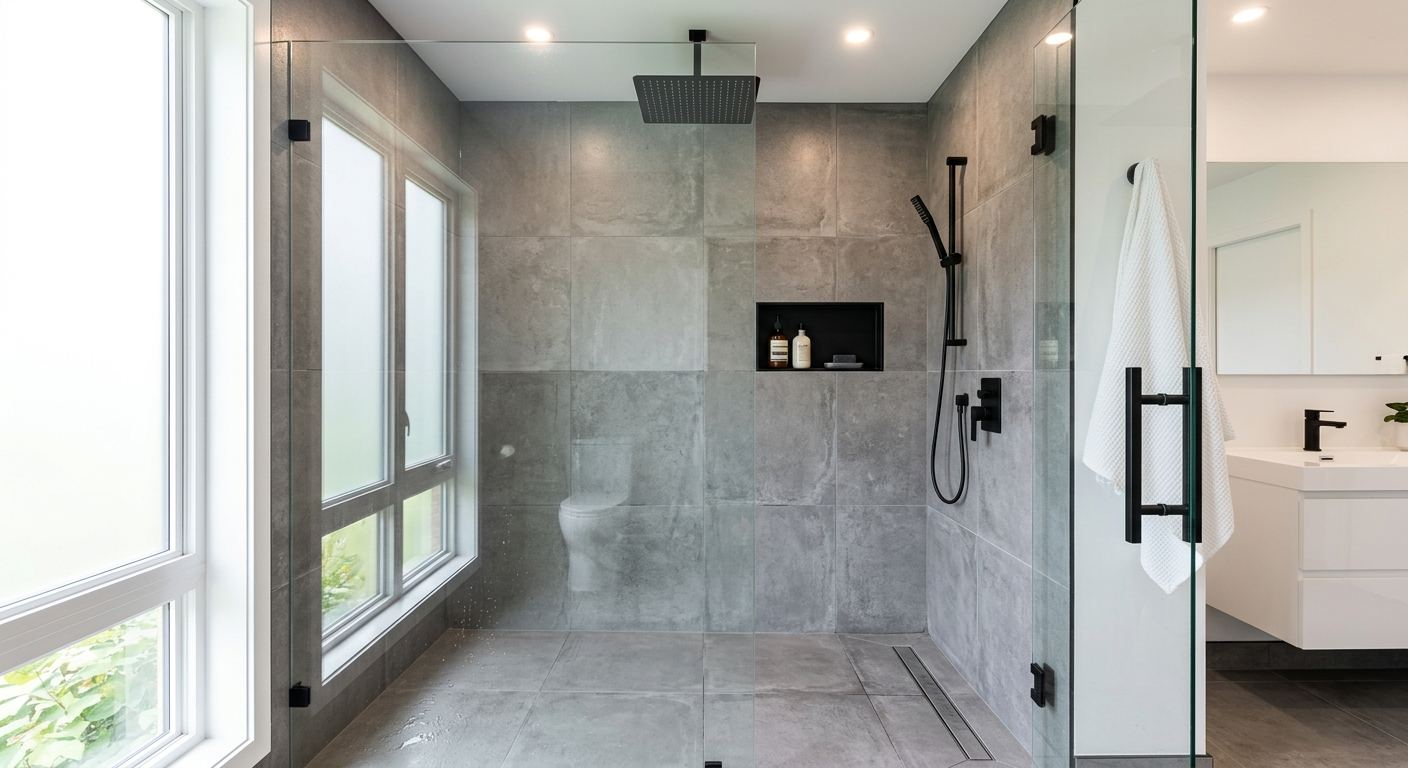
Bathroom renovation options and costs in Fort Erie
Fort Erie homeowners typically have several bathroom-renovation paths, and the right one depends on how much you want to change once the walls come down. In Fort Erie, 62.1% of homes were built before 1981, so many projects start with “cosmetic” plans and then uncover older plumbing layouts, dated vents, or hidden water-damage. That’s why a bathroom that sounds straightforward on paper can shift into a plumbing-and-finishing upgrade once demolition begins.
On the Hamilton–Niagara Peninsula, renovation pricing is driven more by the region’s housing age and the availability of qualified trades than by year-round weather alone. Winter freeze-thaw cycles and moisture loads mean bathrooms still need robust waterproofing and ventilation, but labour pricing and discovery risks are what widen budgets. In older neighbourhood pockets—especially around the Fort Erie downtown and Ridge Road area, where housing stock is commonly older—contractors often see cast-iron or older supply lines that may require upgrades to meet current practice.
Most contractors price Fort Erie jobs using the full scope first (waterproofing, tile quantities, fixture locations), then confirm any “behind the wall” work after initial inspection. As you compare your options, use these budget ranges to anchor the conversation—then ask your contractor what triggers the higher end for your specific bathroom. See the comparison table below to match scope to cost and timeline.
| Renovation Scope |
What's Included |
Typical Duration |
Price Range |
| Cosmetic refresh (paint, fixtures, accessories only) |
New vanity top or faucet, toilet/lighting swap if existing plumbing is kept, paint, caulking, towel bars, mirror; no wall opening; grout re-seal where applicable |
3–5 days |
$2,500 – $6,000 |
| Mid-range full renovation (new tile, vanity, tub/shower, electrical) |
Demo and reset tile (floor + surround), new vanity and mirror, tub or tub-to-shower plan, new exhaust fan and GFCI circuit where needed, waterproofing upgrade, new trim/fixtures |
2–3 weeks |
$12,000 – $22,000 |
| High-end full renovation (custom tile, steam shower, heated floors) |
Custom-format tile layout, higher-end fixtures, heated floor prep and install, steam or premium shower package, expanded waterproofing system, enhanced lighting/ventilation |
3–5 weeks |
$22,000 – $30,000 |
| Shower-only installation (convert tub to walk-in shower) |
Remove tub, build shower pan and waterproofing, new shower valve and trim, frameless or standard enclosure option, tile to ceiling or full-height, plumbing tie-ins |
2–3 weeks |
$7,000 – $14,000 |
| Bathtub replacement or tub-liner install |
Swap old tub/fixtures (or install a tub liner where suitable), re-seal and retile around tub as needed, plumbing tie-ins, caulking, basic ventilation check |
5–10 days |
$1,500 – $6,000 |
| Tile-only installation (floor + surround, existing layout kept) |
Tile removal and re-set, waterproofing prep, grout and caulking, new floor tile + tub/shower surround tile; vanity stays unless a swap is requested |
1–2 weeks |
$3,000 – $8,000 |
Prices are estimates only and vary by project scope, site access and material selection.
What affects the price of bathroom renovation in Fort Erie
In Fort Erie and across the Hamilton–Niagara Peninsula, quotes for the “same” bathroom can swing by 30% to 50% because renovation scope is often discovered after demolition. Even if your fixture list looks identical, one home may need drain upgrades, a better venting solution, or electrical updates for code compliance, while another may not. That’s especially true here because the local housing stock is older: with 62.1% of homes built before 1981, the likelihood of dated plumbing rough-ins is high.
Labour rates in the Niagara/Hamilton labour market and the need to open walls for hidden repairs tend to outweigh any direct “climate-only” effect on pricing. The humidity and wet-use of bathrooms in Southern Ontario still require strong waterproofing and fan performance, but the bigger budget drivers are what the contractor finds: cast-iron drain sections that don’t drain well, copper runs that require re-routing, galvanized supply lines that may be undersized, and inadequate ventilation ducts.
Discovery matters for dollars. For example, if asbestos-containing materials are encountered (commonly older vinyl floor tile or older drywall compounds in pre-1985 homes), abatement protocols can push the budget up by about $1,500 to $5,000+. If you stay within a mid-range full renovation like $12,000–$22,000, you can usually control cost by keeping the same drain locations and using a consistent tile format. If you open walls and expand the rough-in scope, high-end builds around $22,000–$30,000 become more common.
Two concrete Fort Erie scenarios that raise or lower costs: (1) keeping the same tub footprint and drain elevation can keep you near the mid-range band; (2) changing the shower location, switching from a standard pan to a custom linear drain, or adding heated floor circuits often adds labour and electrical coordination, pushing toward the upper end.
| Price Factor |
Why It Matters |
Cost Impact |
| Layout change — moving drain or supply lines |
Requires plumbing rough-in work, potential joist and subfloor adjustments, and more tile cutting and detailing |
$2,000 – $8,000+ |
| Tile selection — large-format porcelain vs. mosaic vs. ceramic |
Harder-to-cut formats, more precise subfloor requirements, and different labour intensity |
$500 – $4,000+ |
| Fixture tier — builder-grade vs. mid-range vs. designer brands |
Valves, trim finishes, and accessory sets vary in price and install complexity |
$500 – $4,500+ |
| Subfloor condition — rot or unlevel concrete adds scope |
May require rebuilding underlayment, moisture barrier corrections, and longer waterproofing timelines |
$800 – $6,000+ |
| Electrical — adding GFCI outlets, exhaust fan, heated floor circuit |
New circuits mean licensed electrical work, additional materials, and inspection requirements |
$500 – $3,500+ |
| Waterproofing method — membrane type and extent |
More complete systems reduce failure risk but add labour, materials, and cure time |
$800 – $4,000+ |
| Older-home surprises — asbestos tile, cast-iron drains, galvanized pipes |
Can trigger abatement steps and drain/supply upgrades when lines don’t meet modern performance |
$1,500 – $10,000+ |
| Bathroom size — sq ft drives tile and labour time directly |
More square footage increases tile, thinset, grout, backer prep, and finishing time |
$1,000 – $7,000+ |
Permits & regulations in Ontario
In Ontario, not every bathroom upgrade requires a permit, but some work absolutely does. As a rule of thumb for Fort Erie homeowners: cosmetic updates that don’t change the plumbing or electrical pathways rarely need a permit—things like swapping a vanity or faucet (keeping existing connections), repainting, replacing accessories, and retiling without moving plumbing fixtures are typically considered low-risk updates when done to standard and without structural changes.
By contrast, the work that does require permitting and inspections commonly includes: relocating plumbing (moving a drain or supply line), installing or modifying new exhaust fans with new circuits, adding or moving electrical components that require wiring changes, and any structural wall changes. Plumbing rough-in changes usually require permits and inspection because the line pressure, venting, and proper trap/drain setup must be verified. Any electrical work must meet Ontario code and be completed or signed off by a licensed electrician.
Step-by-step verification you can do before signing: (1) ask for the contractor’s Ontario trade licence number and check it in the appropriate provincial registry; (2) request a Certificate of Insurance and confirm liability coverage limits and effective dates; (3) confirm WSIB/WCB coverage—look for clearance letters or documentation that matches the work type; (4) make sure these documents are current before work begins, and keep copies for your records.
Choosing tile, waterproofing and fixtures for your Fort Erie bathroom
In Fort Erie, your biggest “budget vs. performance” decisions usually come down to three material choices: tile, waterproofing, and fixture tier. Ontario humidity and frequent shower use demand waterproofing that stays intact at seams and around changes-of-plane, not just a good-looking finish. So, choose the combination that matches how much you’re willing to invest upfront.
1) Tile choice: entry-level ceramic is often the best fit when you’re keeping costs closer to a cosmetic refresh or a smaller tile-only scope. Mid-range porcelain offers better durability and consistency for floors and wall fields, and it’s usually worth it when you plan full-height wall tiling. Natural stone can look stunning, but it typically adds cost through material selection and careful installation practices, plus extra sealing/maintenance considerations.
2) Waterproofing method: paint-on membranes can work in limited situations, but bonded sheet membranes or a full system (including proper corners, fasteners, and compatible thinset) is what most homeowners want for long-term protection in a wet room.
3) Fixture tier: builder-grade fixtures keep you nearer the mid-range band (for example, many mid-range full renovations fall into the $12,000–$22,000 range), while designer brands and premium shower valves can push costs upward even if the layout stays the same.
A realistic example: upgrading from basic ceramic to porcelain tile may add roughly a few hundred to a couple thousand dollars on materials and labour time depending on format. If that upgrade helps you choose a more forgiving tile and a more consistent installation, it’s often money well spent. But if you’re planning to convert a tub to a shower or add heated floors, the waterproofing and electrical upgrades may justify the larger portion of the budget before you splurge on stone.
| Material / Option |
Pros |
Cons |
Price Range |
| Ceramic tile (floor + walls) |
Budget-friendly; wide variety of colours; good for standard layouts |
May be less durable than porcelain on floors; more attention needed for slip resistance and installation flatness |
$3,000 – $6,000 |
| Porcelain tile (floor + walls) |
Denser and more durable; consistent sizing; often better for larger-format installations |
Costs more per tile; heavier and may require stricter subfloor prep |
$4,000 – $8,000 |
| Natural stone (marble, travertine, slate) |
High-end look; unique veining; strong curb appeal |
Higher material cost; installation and detailing take longer; sealing and maintenance typically required |
$6,000 – $12,000 |
| Frameless glass shower enclosure |
Clean, modern look; easy visual line; typically pairs well with tile-heavy showers |
Requires accurate opening measurements; hardware adds cost |
$1,800 – $5,500 |
| Prefab tub surround (acrylic) |
Faster install; lower labour; easy to maintain; good for quick updates |
Less custom look than tile; may be less forgiving for design flexibility |
$1,500 – $4,000 |
| Custom shower pan (tile or linear drain) |
Best long-term integration; cleaner finishes; linear drains improve water flow and modern styling |
Higher labour; requires precise slope and waterproofing details |
$4,500 – $10,000 |
How to choose a bathroom renovation contractor in Fort Erie
Choosing the right contractor in Fort Erie is less about the lowest line item and more about proof. Start with Ontario licensing: ask for the contractor’s Ontario trade licence information and confirm it through the proper provincial registry. Next, request liability insurance and verify it’s current via the certificate of insurance—check effective dates and coverage details. Finally, confirm WSIB/WCB coverage by asking for a clearance letter or documentation showing they’re insured for workers on your project.
Then get 2–3 itemised written quotes. You want a breakdown that separates labour and materials (tile removal, waterproofing labour, plumbing tie-ins, electrical components, disposal, and any permit/pull costs). A good quote won’t hide the hard parts behind a single lump sum.
Read the scope carefully. Confirm what’s included and what’s excluded: is old tile and debris disposal included? Is an exhaust fan included and does it include ducting work to the nearest route? Is permit pull included if required, and who handles inspections? Make sure waterproofing steps are explicitly mentioned so you’re not paying for a “finish-only” job.
Warranty matters too: look for a workmanship warranty length in writing, and ask how long product warranties last and whether they transfer if you sell your home. For payment schedule, don’t give a contractor big cash up front—typically keep the first payment around 10–15%, then hold back until milestones are complete. Finally, insist on a start date and a completion estimate in writing so you can plan around the reality of tile and waterproofing cure times.
- Ask for proof of Ontario trade licence and verify it before booking demolition.
- Request a current Certificate of Insurance (liability) and confirm coverage limits.
- Confirm WSIB/WCB coverage with clearance documentation.
- Use itemised quotes: labour vs materials, not just totals.
- Confirm who pulls permits (and whether that cost is included).
- Check disposal is included (tile, drywall, and packaging).
- Verify waterproofing steps and materials are named (not “waterproofing included”).
- Clarify electrical scope: exhaust fan, GFCI, heated floors, and who installs.
- Ask about plumbing scope if you have an older home (shutoffs, traps, venting).
- Confirm timeline with cure time for membranes and grout/caulk.
- Review warranty terms: workmanship length and product warranty transferability.
- Use a milestone-based payment schedule and hold back until final inspection.
Red flags I commonly see in Fort Erie bathroom projects: contractors who won’t provide written scope and itemisation; vague language like “standard waterproofing” without product/method details; refusing to show insurance/WSIB documentation; pushing for high upfront deposits; and quoting without addressing older-home risks (venting, traps, or drain performance) even when the house is pre-1981.
Frequently asked questions — bathroom renovation in Fort Erie
How long does tile installation take in a Fort Erie bathroom?
In Fort Erie, tile timelines depend on size, layout complexity, and whether demolition reveals a subfloor that needs flattening or repair. For many typical bathrooms, floor + surround tile installation usually takes about 5–10 working days, not including membrane cure or dry-fit time. If you’re doing a tub-to-shower conversion or custom shower pan details (including curbs, niches, or a linear drain), it can extend the tile phase because prep and waterproofing details must be done correctly. The good news is that your total project timeline still hinges on waterproofing and curing—not on rush schedules—so reputable crews plan for membrane and grout/capsule curing before final caulking. If your home is built before 1981, also expect extra prep time if the framing or subfloor is uneven.
How much does a bathroom renovation cost in Fort Erie?
Bathroom renovation pricing in Fort Erie generally fits the local market bands: a full renovation commonly lands around $12,000–$30,000 depending on scope, tile intensity, plumbing/electrical changes, and whether hidden repairs are needed. If your project is more focused—like retiling plus a vanity and fixture refresh—you might be closer to the mid-range ranges, while major changes (heated floors, steam shower, premium tile layouts) tend toward the upper end. For a tub-to-shower conversion, homeowners often budget in the $7,000–$14,000 range because plumbing tie-ins and waterproofing details increase labour. In older Fort Erie homes (many built pre-1981), additional plumbing upgrades can raise the total by a few thousand when drains, vents, or shutoffs need updating.
How long does a bathroom renovation take in Fort Erie?
A typical Fort Erie bathroom renovation takes about 2–3 weeks for a mid-range full renovation, assuming materials are on hand and the scope stays as planned. High-end builds with custom tile patterns, heated floors, and more extensive waterproofing can take 3–5 weeks. Schedules vary mainly because tile and waterproofing systems require cure time between steps, and because older-home demolition sometimes uncovers extra work behind walls. If your home is built before 1981, plan extra time for any plumbing updates or subfloor repairs once the contractor confirms what’s hidden. The best way to keep your timeline realistic is to ensure your quote includes an explicit waterproofing method, and to ask how the contractor handles discoveries (what triggers a change order and how quickly they’ll advise you).
Do I need a permit for a bathroom renovation in Ontario?
In Ontario, it depends on what you change. In most cases, cosmetic updates—swapping fixtures, repainting, and retiling without moving plumbing—typically do not require permits. However, you usually do need permits when you relocate plumbing (moving drain or supply lines), make electrical changes such as adding new circuits or modifying wiring for an exhaust fan, or alter walls structurally. Plumbing rough-in changes and new electrical work must meet code and often require inspections. For your Fort Erie project, verify your contractor is properly licensed for the work and ask who is responsible for permit pulls and inspections when required. Also confirm they carry liability insurance and WSIB/WCB coverage before the first day of demolition.
What's the best tile for a bathroom in Fort Erie?
The “best” tile for a Fort Erie bathroom depends on performance needs and how you’re using the space. In wet areas, porcelain is often the strongest all-around choice because it’s denser and more durable than many ceramics, and it tends to hold up well under frequent water exposure. Ceramic can still be a great value for walls, and it fits well when you’re targeting a lower-cost tile-only scope. Natural stone looks premium, but it usually requires more careful installation and maintenance (including sealing). Whichever you choose, prioritise proper slip resistance on floors, correct substrate preparation, and a waterproofing system that matches the tile installation method. If your renovation budget is around the mid-range band ($12,000–$22,000), porcelain typically gives better long-term results without pushing you into the most expensive luxury options.
Should I do a tub-to-shower conversion?
A tub-to-shower conversion can be a smart upgrade in Fort Erie when you want easier daily access and better use of the bathroom footprint, especially if you’re planning for aging-in-place or you don’t use the tub much. The main trade-off is cost and scope: conversions often land in the $7,000–$14,000 range because the contractor must remove the tub, build a proper shower pan, waterproof the entire envelope, and update plumbing tie-ins to match the new layout. In older homes built before 1981, you may also uncover venting or drain issues once the walls open, which can add budget. It’s usually worth it if you commit to a reliable waterproofing approach and a well-designed shower floor (including slope and drain details). If you want lower disruption, another option is a resurfacing/tub-liner approach, but that’s only suitable for some existing tubs and conditions.