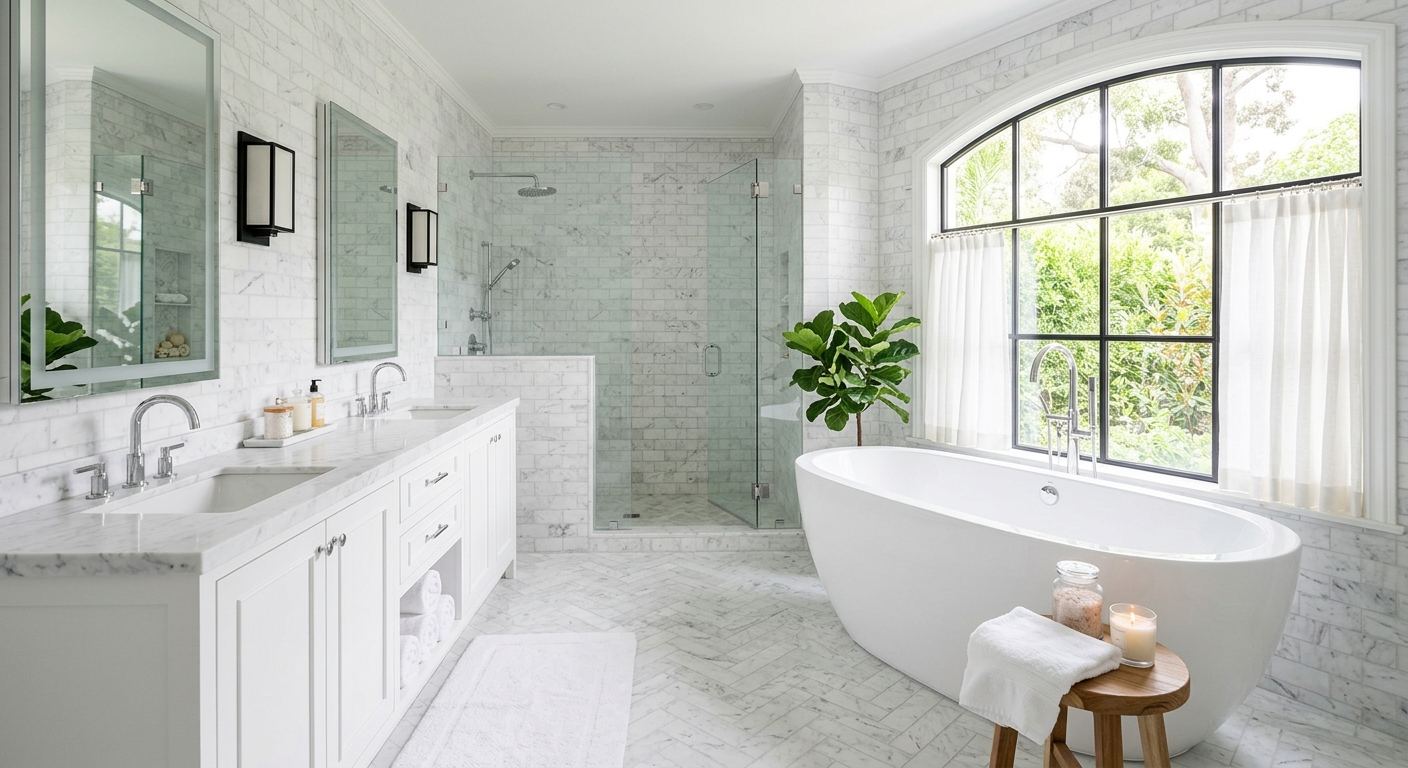
Bathroom renovation options and costs in Almonte
In Almonte, a bathroom renovation can range from quick updates to a full rebuild, and the right option depends on how much of your plumbing, waterproofing, and finishes need attention. With a population of 5,039 (Statistics Canada, 2021 Census), Almonte homeowners tend to renovate the “homes they’re already in,” including older stock that’s more likely to have dated drain layouts and hidden materials behind tile. In the wider Toronto economic region, it’s especially common to find post-war and 1960s–1980s construction patterns, which can mean cast-iron or undersized drainage components and the potential for asbestos-containing materials in older floor tile or adhesives. That’s one reason budgets often land above national averages.
Costs in Almonte are influenced more by the Toronto-area labour premium and by how much the contractor must open walls and floors than by weather. Ontario’s indoor humidity still matters—bathrooms that aren’t properly waterproofed and vented will develop mould risk regardless of season—but the real cost driver is the time-intensive work once surfaces are opened. Tile setting, custom shower builds, and complex plumbing layouts are labour-heavy, and skilled trades availability in the GTA can affect scheduling and pricing. In Almonte’s older pockets near downtown and along the Mississippi River area, demand for waterproofing, tiling, and plumbing upgrades is steady because many renos follow long-term wear on tubs, drains, and ventilation.
Below is a practical comparison of the most common bathroom renovation paths you’ll see in Almonte, so you can line up your priorities with realistic numbers.
| Renovation Scope |
What's Included |
Typical Duration |
Price Range |
| Cosmetic refresh (paint, fixtures, accessories only) |
New paint, vanity/sink swap, tap/stop changes as needed, mirror and lighting refresh, accessory upgrades, caulking and touch-ups (no major tile removal) |
3–5 days |
$3,000–$7,000 |
| Mid-range full renovation (new tile, vanity, tub/shower, electrical) |
Remove existing finishes, new vanity and toilet, tub/shower surround or tiled surround, updated exhaust fan (often with GFCI), basic electrical adjustments, waterproofing system, disposal |
2–4 weeks |
$12,000–$22,000 |
| High-end full renovation (custom tile, steam shower, heated floors) |
Custom tiled shower (often with linear drain), heated floor prep and controls, designer fixtures, expanded waterproofing, upgraded lighting, upgraded rough-in where required, detailed finishing and trim |
4–7 weeks |
$22,000–$30,000 |
| Shower-only installation (convert tub to walk-in shower) |
Demo tub, rough-in adjustments as needed, tiled shower pan/membrane, new curb-free/low-threshold entry (where feasible), glass enclosure allowances, rework drain and venting coordination |
2–3 weeks |
$10,000–$18,000 |
| Bathtub replacement or tub-liner install |
Replace bathtub and faucet set (or install tub liner where appropriate), re-caulk and water testing, minor surround updates, disposal, basic plumbing connection verification |
5–10 days |
$1,200–$4,000 |
| Tile-only installation (floor + surround, existing layout kept) |
Tile floor and shower/tub surround on existing footprint, surface prep, waterproofing, tile supply allowance, grout and sealing as applicable (no major plumbing relocations) |
1–2 weeks |
$6,000–$14,000 |
Prices are estimates only and vary by project scope, site access and material selection.
What affects the price of bathroom renovation in Almonte
Two homeowners in Almonte can receive quotes that differ by 30–50% for what sounds like the same bathroom—because labour and hidden-condition risk are not equal. In the Toronto economic region, skilled trades pricing is driven heavily by hourly labour rates and by the age of the housing stock, not by outdoor climate. When a contractor must open walls and floors, the scope can expand quickly: drain reconfiguration, vent corrections, and new shut-offs can add several thousand dollars, especially in older homes where plumbing components may be undersized or deteriorated.
Ontario humidity doesn’t change the labour rate, but it does increase the cost of “doing it right,” particularly waterproofing and ventilation. If discovery includes asbestos-containing materials in pre-1985 floor tile or drywall compound, reputable contractors typically add licensed abatement steps—commonly adding $1,500–$5,000+ depending on the extent and containment requirements. Also, if galvanized supply lines are present, replacing shut-offs and sections of piping during demo is often the difference between a short-lived fix and a renovation that performs.
In practice, one Almonte bathroom might stay in the mid-range full renovation band (about $12,000–$22,000) if the layout remains stable and the subfloor is sound. Another can move toward high-end full renovation pricing (up to $22,000–$30,000) when heated floors, larger-format porcelain, and a custom shower require more labour-intensive prep, membrane work, and finish detailing.
For example: (1) keeping the drain where it is lowers costs, while moving the drain for a linear shower often triggers more rough-in work; (2) replacing a cracked, unlevel subfloor or rot behind an old tub base can add days; (3) adding a second GFCI-protected circuit for a heated floor can change both electrical scope and inspection steps.
| Price Factor |
Why It Matters |
Cost Impact |
| Layout change — moving drain or supply lines |
Requires plumbing rough-in, potential venting updates, and more demolition/patching |
Often +$3,000–$8,000+ |
| Tile selection — large-format porcelain vs. mosaic vs. ceramic |
Harder cuts, flatter substrate demands, higher material waste and setting time |
Often +$1,000–$5,000 |
| Fixture tier — builder-grade vs. mid-range vs. designer brands |
Higher fixture price, plus sometimes more complex rough-in and trim compatibility |
Often +$500–$4,000 |
| Subfloor condition — rot or unlevel concrete adds scope |
May require sistering/underlayment replacement, re-leveling, and extended waterproofing prep |
Often +$800–$3,500 |
| Electrical — adding GFCI outlets, exhaust fan, heated floor circuit |
Can trigger permit/inspection needs and requires a licensed electrician’s time |
Often +$1,000–$6,000 |
| Waterproofing method — membrane type and extent |
Better systems add materials and labour but reduce long-term mould and failure risk |
Often +$800–$3,000 |
| Older-home surprises — asbestos tile, cast-iron drains, galvanized pipes |
Abatement procedures, disposal logistics, and plumbing upgrades expand time and subcontract requirements |
Often +$1,500–$10,000+ |
| Bathroom size — sq ft drives tile and labour time directly |
More surface area increases setting time, thinset, grout, and waterproofing labour |
Often +$1,000–$6,000 (by size) |
Permits & regulations in Ontario
In Ontario, cosmetic updates to a bathroom—like swapping a vanity, replacing a faucet, painting, or retiling without changing plumbing routes—typically do not require a permit. If you’re keeping the existing fixtures where they are and you’re not altering structural walls, you can often stay in the “no-permit” zone. That said, bathroom renovations frequently cross the line into permit-required work once you relocate plumbing, add electrical, or change how moisture is managed.
Work that DOES commonly require permits/inspections in Ontario includes: (1) moving plumbing, such as relocating a toilet drain, shifting a shower drain location, or changing supply line locations; (2) adding or altering electrical circuits—especially new exhaust fan wiring, new GFCI outlets, or any heated floor circuit; and (3) any structural wall changes or work affecting load-bearing elements (and sometimes modifications that require review based on the scope). Work that typically does NOT require a permit includes: surface-level fixture replacement where rough-in doesn’t change, paint, accessory swaps, and routine tile replacements on the same footprint.
To verify your contractor in Almonte, start with their Ontario trade licence (ask for the licence number and confirm it via the applicable online registry), then request a certificate of insurance showing liability coverage appropriate for renovations. For workers, confirm WSIB/WCB clearance (the most common practical check is that they can provide clearance documentation or a clearance letter upon request). Before signing, ask whether permits will be pulled (if required), who submits them, and whether disposal and post-install testing are included in writing.
Choosing tile, waterproofing and fixtures for your Almonte bathroom
In an Almonte bathroom, three material decisions usually determine whether you end up closer to a mid-range renovation or a high-end build: tile choice, waterproofing system, and fixture tier. First, tile: ceramic is typically the entry-level option and can be the most budget-friendly, but it’s also more sensitive to uneven substrates and often looks best with simpler layouts. Porcelain is denser, handles moisture well, and supports cleaner large-format designs—so it tends to suit Ontario bathrooms where you want a durable finish. Natural stone (marble, travertine, slate) looks premium, but it can be more demanding to seal and maintain, and the installation is usually more labour-intensive.
Second, waterproofing: paint-on membranes can work for certain applications, but for a reliable shower, many contractors prefer bonded sheet membrane or a system approach with proper overlaps and detailing. This matters because bathroom humidity in Ontario plus daily water exposure is unforgiving—good waterproofing is what protects the structure behind the tile and helps prevent mould. Third, fixtures: builder-grade can be cost-effective, mid-range often balances performance with longevity, and designer brands usually add both material cost and sometimes more complex trim/valve compatibility. If you’re aiming for a budget like $12,000–$22,000, you’ll usually get the biggest “value per dollar” by spending on waterproofing and the shower/tub interface while keeping fixture upgrades reasonable.
Here’s a concrete example: choosing porcelain large-format can cost more upfront than basic ceramic, but it may justify itself if it reduces visual grout lines and doesn’t require extra labour due to a carefully prepared substrate. If the subfloor is unlevel or shows rot, the best tile won’t perform well—so fixing prep can be the better “spend” than buying the most expensive stone.
| Material / Option |
Pros |
Cons |
Price Range |
| Ceramic tile (floor + walls) |
Lower material cost, good variety of colours/patterns, straightforward installs when substrate is flat |
More prone to chipping under heavy impact, can show imperfections if substrate isn’t well-prepped |
$3,000–$7,000 |
| Porcelain tile (floor + walls) |
High moisture resistance, durable for busy households, works well with modern large-format layouts |
Requires excellent substrate flatness; higher material cost and potentially higher labour from precise cuts |
$5,000–$10,000 |
| Natural stone (marble, travertine, slate) |
Luxurious look, unique veining and depth, premium “statement” effect |
Seal/maintenance requirements, can be softer or more variable; more labour for fitting and finishing |
$8,000–$16,000 |
| Frameless glass shower enclosure |
Bright, modern appearance; helps make smaller bathrooms feel larger |
More expensive; needs proper waterproofing and precise framing/anchoring |
$2,500–$7,500 |
| Prefab tub surround (acrylic) |
Fast installation, consistent surfaces, often easier cleanup and fewer tile cracks |
Less design flexibility than full tile; seams can be visible and require careful caulking |
$1,200–$3,500 |
| Custom shower pan (tile or linear drain) |
Best drainage design, clean lines with linear drains, supports a fully waterproofed shower system |
More labour-intensive; increases scope if drain location must be changed |
$4,000–$12,000 |
How to choose a bathroom renovation contractor in Almonte
Choosing the right contractor in Almonte starts with verifying the basics the right way—licensing, liability insurance, and worker coverage. Ontario requires that any electrical work be done by a licensed electrician, and credible contractors will coordinate that cleanly. For you as the homeowner, ask for their Ontario trade licence details (and confirm online via the appropriate registry using their licence number), then request a certificate of insurance for general liability with coverage that matches renovation work. For WSIB/WCB clearance, a reputable contractor can provide clearance information or a clearance letter on request. These aren’t “nice-to-haves”—they protect you if something goes wrong during a labour-intensive build.
Next, get 2–3 itemised written quotes. A good bathroom quote breaks labour and materials out separately, lists the exact scope (demo, disposal, waterproofing system, tile method, fixture supply allowances), and states what’s excluded. Watch for “lump sum” quotes that don’t mention permit pull (if needed), shutdown/shut-off work, or disposal of old materials. Confirm warranty details: workmanship warranty length (often the most important), the manufacturer warranty for fixtures/products, and whether warranties are transferable if you sell your home. For payment, never pay more than about 10–15% upfront; use a staged payment schedule and keep a holdback until key milestones are complete. Finally, request a written start date and completion estimate so you’re not guessing when tile, waterproofing cure times, and inspections are involved.
- Ask for licence number(s) and confirm via Ontario’s public registry.
- Request a certificate of insurance naming you as an additional insured where applicable.
- Get WSIB/WCB clearance confirmation or clearance letter before work begins.
- Require itemised quotes: labour hours, line-item materials, and allowances.
- Confirm exactly which waterproofing system is used (membrane type and coverage).
- Confirm tile substrate prep requirements (leveling, backer type, fasteners).
- Ask who pulls permits and includes inspection scheduling (if needed).
- Clarify disposal: demo waste removal, recycling/landfill, and any fees.
- Set expectations for unexpected findings (asbestos tile, cast-iron drains) with a written contingency approach.
- Verify warranty: workmanship duration, what it covers, and how claims are handled.
- Use a staged payment plan with a holdback until walkthrough/deficiency list is closed.
- Get a written schedule that accounts for curing times and leadbacks for glass/fixtures.
Red flags I look for in Almonte bathroom bids: (1) quotes with no mention of waterproofing method or membrane details; (2) “we’ll handle permits” without stating who is responsible and what scope triggers permits; (3) no proof of liability insurance/WSIB clearance; (4) forcing large upfront deposits; and (5) vague exclusions like “plumbing repairs if needed” without a defined process or pricing approach.
Frequently asked questions — bathroom renovation in Almonte
What's the most common mistake homeowners make in bathroom renovations?
In Almonte, the most common mistake I see is choosing finishes first and delaying decisions about waterproofing and plumbing rough-in until after demo. Once walls are open, it’s easy to discover issues like uneven subflooring or aged drain/vent components, and then homeowners feel pressured to cut corners to keep the schedule. Another frequent error is assuming that “retiling” automatically means no risk—if the shower pan and membrane aren’t detailed correctly, moisture can work its way behind the tile. A well-built bathroom is usually a better long-term value than upgrading fixtures on a weak foundation. Use itemised quotes and confirm the waterproofing system in writing before tile orders go in.
How long does tile installation take in a Almonte bathroom?
Tile timelines in Almonte depend on bathroom size, tile type, and how much substrate prep is required. For a typical floor plus shower/tub surround where the layout stays the same, tile installation commonly takes about 5–10 working days, not counting waterproofing cure times and grout/caulk completion. If you’re doing large-format porcelain or a custom shower with a more complex pan (especially with a linear drain), plan extra time for precise cutting and detailing. If your contractor finds subfloor issues during demo, the tile schedule can shift. For reference, many full renovations in the $12,000–$22,000 range run around 2–4 weeks overall because tile work is only one part of the workflow.
How much does a bathroom renovation cost in Almonte?
Most Almonte homeowners fall into the full renovation bands similar to the Toronto-area pricing reality. A mid-range full bathroom renovation typically lands around $12,000–$22,000, while higher-end builds with custom shower detailing, heated floors, and designer finishes can move toward $22,000–$30,000. If you’re converting a tub to a walk-in shower, shower-focused work often pushes into the $4,000–$12,000 shower installation band and can be higher when plumbing/vent adjustments are discovered. Cosmetic refreshes are usually lower, but they’re only appropriate if the waterproofing and plumbing are already in good shape. The biggest cost swings usually come from labour-intensive tiling and the age-related surprises that appear once walls and floors are opened.
How long does a bathroom renovation take in Almonte?
Timing varies by scope, but a realistic Almonte schedule looks like this: a cosmetic refresh may take 3–5 days, while a mid-range full renovation typically runs about 2–4 weeks. High-end projects with custom showers, heated floors, and extensive finish detailing often run 4–7 weeks. If plumbing work is more involved (for example, rerouting drains or addressing venting), that can add time due to permit/inspection steps and lead times. Also remember that tile and waterproofing need cure time, and glass enclosures or speciality fixtures can affect the calendar. When contractors give timelines, ask for a written schedule that includes inspections and staged milestones—so you know when you’re waiting versus when work is actively progressing.
Do I need a permit for a bathroom renovation in Ontario?
In Ontario, many bathroom projects don’t require a permit if you’re staying cosmetic and keeping plumbing where it is—like replacing a vanity, fixtures, mirrors, and doing redecoration or tile on the same footprint. However, permits are commonly required when you change plumbing routes (moving drain or supply lines), add or alter electrical circuits (like new GFCI outlets, exhaust fan wiring, or heated floors), or make structural wall changes. In Almonte, you’ll also want to confirm how asbestos or other hazardous materials are handled if older materials are uncovered. Practically, verify the scope with your contractor in writing and ensure they explain what triggers permits, who submits them, and how inspections will be coordinated before covering walls and floors.
What's the best tile for a bathroom in Almonte?
“Best” depends on how you balance durability, appearance, and maintenance. For most Almonte bathrooms, porcelain is often the sweet spot: it’s moisture-resistant, holds up well in wet areas, and supports modern large-format looks that reduce visual grout lines. Ceramic tile can be a good entry option when the budget is tight and the substrate prep is done well. Natural stone can look spectacular, but it typically needs more sealing and careful maintenance to keep it looking sharp and to manage stains. If you’re choosing tile for a shower, the more important decision is often the waterproofing system and correct installation method—not just the tile brand. If you’re budgeting around $12,000–$22,000, investing in a proven waterproofing approach with porcelain tile is usually the most reliable long-term combination.