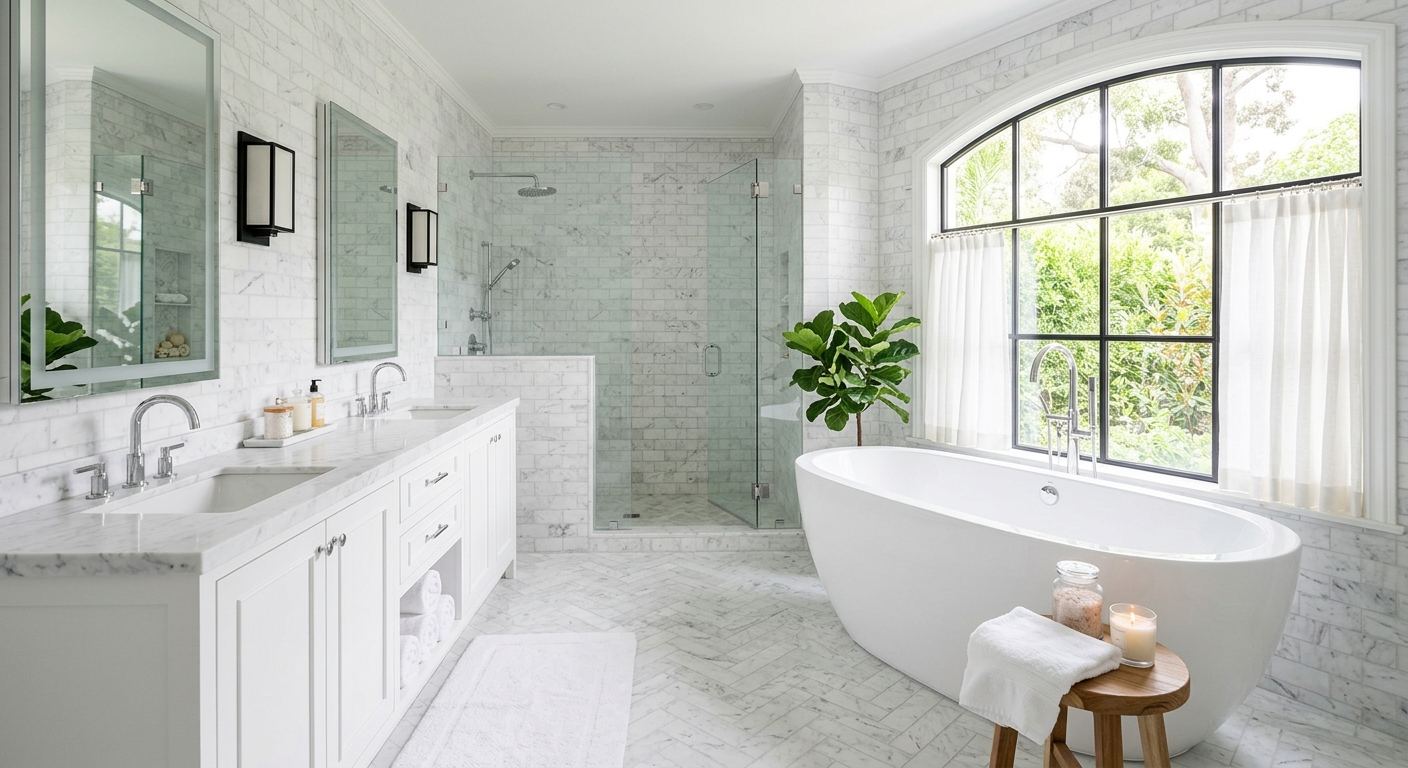
Bathroom renovation options and costs in Mississauga
Bathroom renovation in Mississauga is mostly about labour, site conditions, and how old your home is—not about “extreme” climate like some provinces. With 37.9% of local homes built before 1981, many bathrooms sit inside older plumbing and framing setups where drain routes, venting, or supply pressure don’t always match today’s expectations. That matters because once we open walls and floors, it’s common to find undersized drain piping, older shut-offs, or remnants of materials that may require special handling. If you live in a neighbourhood with a higher share of post-war housing—such as parts of Erin Mills or Meadowvale—bathroom trades are especially busy as homeowners update dated layouts and finishes.
In the Toronto economic region, skilled trades command premium hourly rates, and bathroom work is labour-intensive for tiling, custom showers, and complex plumbing. Toronto-area contractors also factor in the extra time for careful waterproofing and code-aligned exhaust ventilation, which helps prevent callbacks. As a rule of thumb, a full 3-piece renovation typically starts in the low-to-mid five-figure range (for many Mississauga homes you’ll see budgets near $12,000–$30,000 depending on finishes and how much plumbing/electrical is rerouted).
Whether you’re keeping your footprint or moving to a tub-to-shower conversion, the best way to compare quotes is to match the scope first. Use the table below as a practical baseline for what’s commonly included in Mississauga bathroom projects, then we can refine it to your exact needs.
| Renovation Scope |
What's Included |
Typical Duration |
Price Range |
| Cosmetic refresh (paint, fixtures, accessories only) |
Clean-up, paint, swap vanity top or vanity, replace toilet/vanity fixtures (no plumbing relocation), update lighting (like-for-like), re-caulk, accessories |
3–7 days |
$3,000 – $7,000 |
| Mid-range full renovation (new tile, vanity, tub/shower, electrical) |
Demo and disposal, new vanity, tub/shower replacement or refinishing with new surround tile, floor tile, waterproofing, exhaust fan upgrade, GFCI where needed, minor plumbing/electrical adjustments |
3–4 weeks |
$12,000 – $22,000 |
| High-end full renovation (custom tile, steam shower, heated floors) |
Extended waterproofing and custom waterproofing system, premium large-format tile or custom niches, heated floors, steam shower components, upgraded electrical planning, reinforced framing where required |
4–6 weeks |
$22,000 – $30,000 |
| Shower-only installation (convert tub to walk-in shower) |
Remove tub, build walk-in shower base, waterproofing, install glass or curtain system, drain reconfiguration, new valve trim, re-tile shower walls and often the floor |
2–3.5 weeks |
$8,000 – $16,000 |
| Bathtub replacement or tub-liner install |
Remove and replace tub (or install tub-liner where applicable), new caulking/trim, test for leaks, re-tile localized areas or refresh surround as needed |
1–2.5 weeks |
$1,200 – $3,500 |
| Tile-only installation (floor + surround, existing layout kept) |
Tile demo (as needed), substrate prep, waterproofing to code for wet areas, install tile floor and tub/shower surround, grout/seal, final caulking |
1.5–3 weeks |
$3,000 – $10,000 |
Prices are estimates only and vary by project scope, site access and material selection.
What affects the price of bathroom renovation in Mississauga
Two contractors can quote the “same” bathroom renovation and still land 30–50% apart in the Toronto region because Mississauga projects are driven by labour rates, scheduling availability, and what’s hidden behind the walls—not just the visible tile and fixtures. In the GTA, the bathroom trades have to plan for careful waterproofing, dust control, and code-aligned rough-ins, so the hourly premium shows up fast once demo begins. If your home is one of the 37.9% built before 1981, older construction often means dated drain and venting routes, older supply lines, and framing that may not be perfectly flat for modern tile assemblies.
Older-home surprises are a common budget driver. For example, discovery of asbestos-containing materials in older vinyl floor tile or historic drywall compound (common in pre-1985 homes) typically triggers abatement protocols, adding roughly $1,500–$5,000+ depending on extent and containment. You may also see cast-iron or undersized drain runs that need upgrading, along with galvanized or undersized supply piping. Even when the renovation is “just finishes,” these conditions can force plumbing and vent corrections before waterproofing and tile go in.
Here are a few practical Mississauga examples that change the total: (1) converting a tub to a walk-in often costs more because drain reconfiguration and new valve placement are labour-heavy; (2) large-format porcelain can reduce grout lines but increases labour for layout, substrate prep, and handling; (3) improving ventilation—especially adding a properly vented exhaust fan and ensuring electrical protection—helps prevent moisture issues in a region where bathrooms can stay humid after showers. In real budgets, a mid-range full renovation often lands near the lower end of $12,000–$30,000, while custom showers and heated flooring push you toward the upper band.
| Price Factor |
Why It Matters |
Cost Impact |
| Layout change — moving drain or supply lines requires rough-in work |
Re-routing plumbing means opening walls, adding/repairing subfloor, and bringing venting/shut-offs to current expectations |
Often +$3,000–$8,000 |
| Tile selection — large-format porcelain vs. mosaic vs. ceramic |
Harder materials and larger panels require more precise substrate prep, cutting, and setting technique |
Often +$1,000–$6,000 |
| Fixture tier — builder-grade vs. mid-range vs. designer brands |
Higher-end trims, valves, and toilets cost more and may require extra labour for integration |
Often +$500–$5,000 |
| Subfloor condition — rot or unlevel concrete adds scope |
Water-damaged substrates must be repaired before waterproofing and tile can be installed |
Often +$1,000–$4,000 |
| Electrical — adding GFCI outlets, exhaust fan, heated floor circuit |
Bathroom electrical upgrades must meet code and require licensed work for safe connections |
Often +$500–$3,500 |
| Waterproofing method — membrane type and extent |
The better the system and detailing, the longer it takes and the more materials are used |
Often +$800–$4,000 |
| Older-home surprises — asbestos tile, cast-iron drains, galvanized pipes |
Special handling, possible abatement, and replacement of risky materials adds cost and time |
Often +$1,500–$10,000+ |
| Bathroom size — sq ft drives tile and labour time directly |
More surface area increases waterproofing coverage, tile setting time, and material quantities |
Often +$1,000–$7,000+ |
Permits & regulations in Ontario
In Ontario, many cosmetic bathroom updates typically do not require permits. Swapping a vanity, replacing a toilet with a like-for-like model, painting, installing new accessories, or retiling without changing plumbing rough-ins are usually considered straightforward renovation work. That said, permits and inspections become more likely when you relocate plumbing (moving drain or supply lines), add or relocate fixtures in a way that changes rough-in locations, or make structural changes to walls. Electrical work also matters: adding new circuits, installing a new exhaust fan where no appropriate wiring exists, or updating outlets/heated-floor wiring generally requires the work to be done to Ontario electrical code and be handled by a licensed electrician.
In Mississauga, as a homeowner, verify your contractor using a simple step-by-step process. First, confirm they carry the right Ontario trade licence for the work they’re advertising, and ask for a copy of their licence details. Second, request a certificate of liability insurance and verify it’s current, with coverage that matches the job value and includes renovation work. Third, ask for WSIB/WCB coverage (or provide evidence of compliance). You can also ask for a clearance letter or confirmation depending on the contractor’s status and trade. Finally, make sure the proposal clarifies who pulls permits (if needed), who schedules inspections, and what’s included in the disposal and site protection plan.
Choosing tile, waterproofing and fixtures for your Mississauga bathroom
When you renovate in Mississauga, your budget usually hinges on three material decisions: tile choice, waterproofing method, and fixture tier. First, tile: ceramic is the entry-level option and can look great, but it’s generally easier to chip and may require more careful planning for wet-area durability. Porcelain offers higher density and water resistance for floors and walls, and it usually costs more—yet it often reduces long-term maintenance because it’s tougher under daily use. Natural stone (marble, travertine, slate) is a luxury finish with unique veining, but it needs the right sealers and extra labour for layout and installation, which is why stone projects commonly sit in the upper end of local full-reno budgets like $22,000–$30,000.
Second, waterproofing. In Ontario’s indoor humidity, proper waterproofing is what prevents mould and failures. Paint-on membranes are budget-friendly but are best for limited scopes and must be installed exactly per product requirements. Bonded sheet membrane systems and carefully detailed schluter-style approaches typically cost more up front, but they provide a more robust, consistent barrier under tile assemblies. Third, fixtures: builder-grade faucets and toilets save money initially, while mid-range or designer brands can add value through better valves, finish quality, and smoother long-term performance. For resale in the GTA, that “first two seconds” impression—clean lines, good lighting, and a high-end shower experience—often outweighs small cost savings on hardware.
Concrete example: upgrading from ceramic to porcelain for the shower walls and floor might add about $800–$2,500 in materials and install time, but it’s often justified if you’re also doing a full waterproofing system and upgrading ventilation. If you’re keeping scope minimal, that upgrade may not be the best return; instead, spend on waterproofing and exhaust fan performance first.
| Material / Option |
Pros |
Cons |
Price Range |
| Ceramic tile (floor + walls) |
Lower material cost, wide style selection, good for updates where layout is simple |
May be less forgiving for wear; requires careful substrate prep for long-term grout stability |
$3,000 – $7,500 |
| Porcelain tile (floor + walls) |
Denser and more durable; better longevity for floors and wet-area use; cleaner look with fewer grout lines |
Heavier/harder to cut; higher labour demands for large-format panels |
$5,500 – $10,000 |
| Natural stone (marble, travertine, slate) |
High-end appearance and unique character; premium spa feel |
More expensive; sealing/maintenance required; layout and installation time increases |
$9,000 – $18,000 |
| Frameless glass shower enclosure |
Modern look; improves perceived space; easier cleaning than some curtain systems |
Higher hardware cost; installation must be perfectly aligned; potential added support detailing |
$2,000 – $5,500 |
| Prefab tub surround (acrylic) |
Faster install; less labour-intensive than full tile; good for tight renovation schedules |
Limited style options; can look less custom than tile; may still require careful sealing details |
$1,200 – $3,500 |
| Custom shower pan (tile or linear drain) |
Maximum design control; linear drain can look sleek; best integration with custom tile waterproofing |
Most labour-intensive option; requires precision slope and waterproofing detailing |
$4,000 – $12,000 |
How to choose a bathroom renovation contractor in Mississauga
Choosing a bathroom contractor in Mississauga starts with verification, not just price. For Ontario trade licensing, ask the contractor for their licence details and confirm they’re licensed for the type of work they’re doing. Next, request liability insurance documentation—this should show current coverage and be specific to renovation work. For WSIB/WCB coverage, ask for evidence of coverage or a clearance letter, and verify the certificate date so it’s not expired. If a contractor can’t provide these documents readily, treat it as a serious warning sign.
Then, get 2–3 itemised written quotes. You want labour and materials broken out (demo, framing/subfloor, waterproofing, tile installation, electrical/plumbing rough-in, fixtures, glass), not a single lump sum. Read the scope carefully for what’s excluded: permit pull, disposal/haul-away, bathroom fan ducting to exterior, and whether you’re responsible for replacing any damaged subfloor or drywalled areas discovered during demo.
Warranty matters too. Confirm the workmanship warranty length and whether it’s transferable if you sell the home. Product warranties (for tile, membranes, fixtures) can differ from install warranties, so ask who covers what if a waterproofing issue occurs. Payment schedules should be conservative—avoid paying more than 10–15% upfront and use a holdback until completion and final walkthrough. Finally, lock in the start date and a realistic completion estimate in writing.
- Provide proof of Ontario trade licence for the work they’re doing
- Show current liability insurance and renovation-specific coverage limits
- Confirm WSIB/WCB coverage (or provide clearance letter evidence)
- Quotes are itemised: labour vs. materials, line by line
- Scope includes permits (or clearly states who pulls them) if rough-in changes occur
- Disposal/haul-away and jobsite protection are explicitly included
- Waterproofing method and system details are named (not “we waterproof”)
- Ventilation/exhaust fan plan is included where required
- Electrical allowances specify GFCI and heated-floor circuit requirements where applicable
- Plumbing rough-in changes are priced separately and tied to a clear test/inspection step
- Workmanship warranty length is in writing and covers the correct scope
- Payment schedule: 10–15% max upfront; holdback until punch list is complete
Red flags in Mississauga bathroom renovations: vague scopes with no waterproofing details, contractors who skip asbestos/older-material contingency planning in pre-1981 homes, quotes that don’t mention disposal or permit responsibility, requests for large deposits early, and warranties that are “verbal” or don’t cover workmanship.
Frequently asked questions — bathroom renovation in Mississauga
Should I do a tub-to-shower conversion?
If you want easier access and a more modern look, a tub-to-shower conversion is one of the most common Mississauga upgrades. It often costs more than a straightforward refresh because you’re changing the drain routing/valve location and rebuilding the shower waterproofing details. In local GTA pricing, a shower-only conversion typically sits around $8,000 – $16,000, especially when you’re replacing the surround and floor as well. That expense can be worth it if your existing tub surround is aged, ventilation is weak, or the layout limits your daily use. If you truly love the tub, consider a liner or a refinishing approach instead, but remember those options still need good caulking and waterproofing at the edges.
How do I prevent mold in a Mississauga bathroom?
Mold prevention in Ontario’s humid indoor conditions comes down to three things: ventilation, waterproofing, and moisture control. First, make sure you have an exhaust fan sized for the space and vented properly to the exterior (not just into an attic/cavity). Second, insist on a tested waterproofing system for wet walls and floors—paint-on alone can be insufficient for complex tile assemblies unless installed with strict product detailing. Third, manage routine moisture: use the fan during and after showers, wipe standing water, and keep grout and caulk in good shape. If you’re renovating in a home built before 1981 (a significant share locally), pay extra attention to subfloor condition and previous leak history—hidden water damage is what turns into recurring mould.
What adds the most resale value in a bathroom reno?
In the Mississauga/Toronto market, buyers typically pay attention to the shower experience, overall cleanliness, and reliability. High-impact upgrades include a well-built shower (often tile with a properly waterproofed pan), updated vanity and lighting, and a dependable exhaust fan. Heated floors are a strong “comfort” feature that can make the bathroom feel premium, and high-quality glass enclosures add a modern look. From a budget perspective, most homeowners see best value by targeting the mid-range full renovation band—commonly around $12,000 – $22,000—then upgrading selectively with a higher-end shower or better tile if the foundation work is already solid. If your bathroom needs plumbing/vent corrections due to older layouts, addressing those properly protects both resale and long-term performance.
Can I keep my existing plumbing layout to save money?
Yes—keeping the existing plumbing layout is one of the most reliable ways to control cost in Mississauga. If you don’t move the drain or supply lines, you usually reduce rough-in labour, wall openings, and the chances of hitting surprises like undersized piping or venting that can’t be easily corrected. That’s why many projects land closer to the lower portion of the local full-reno range when plumbing stays put. For example, a mid-range full renovation can often be planned around $12,000 – $22,000 when changes are mainly finishes and like-for-like fixture positioning. If you do want a different layout (like moving the vanity or converting the tub to a different shower configuration), expect rough-in work to push the budget upward.
How much does a walk-in shower cost in Mississauga?
A walk-in shower cost depends on whether you’re converting from a tub, changing the floor layout, and how complex the waterproofing and drainage details are. In Mississauga and the broader Toronto region, shower-only installations commonly fall into about $8,000 – $16,000, with higher costs if you’re adding a linear drain, premium glass, or significant drain reconfiguration. If your existing floor framing is in good shape and you’re keeping the rough-in path, you can often reduce cost by using a simpler valve/tray setup and focusing dollars on the waterproofing system and tile detailing. If you’ve got older plumbing runs or venting issues typical of pre-1981 homes, the price can shift upward once walls are opened.
What's the ROI on a bathroom renovation?
Bathroom renovations can provide strong value in the Toronto-area housing market, but the exact ROI depends on the quality of workmanship, how well it’s built for moisture performance, and whether the renovation matches what local buyers expect. In practical terms, a well-executed mid-range update typically recoups more than a cosmetic-only refresh because it modernizes core elements: waterproofing, ventilation, shower usability, and durable finishes. For Mississauga homeowners, many projects are planned around $12,000 – $30,000 depending on the level of tile, shower complexity, and electrical/plumbing corrections. The best ROI usually comes when you spend first on what affects longevity—proper waterproofing and code-aligned electrical ventilation—then upgrade finishes within a budget that fits your home’s overall condition.