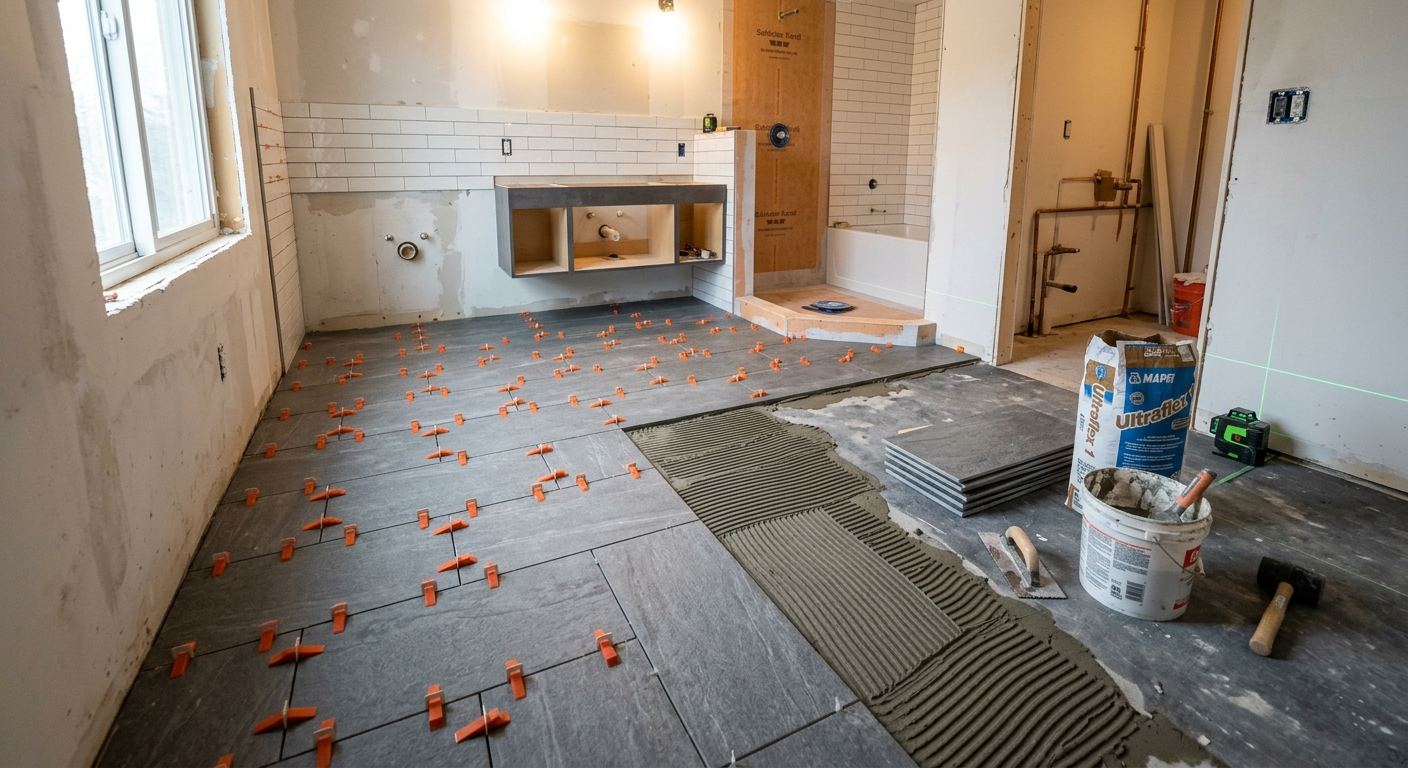
Bathroom renovation options and costs in Centreville Chicopee
Bathroom renovation options in Centreville Chicopee can look surprisingly similar on paper, but the real differences show up once contractors price labour and uncover what’s behind the walls. In Centreville Chicopee, the local housing base is relatively small (population 10,434 in 2021, Statistics Canada, 2021 Census), and most renovation work is tied to older, established neighbourhoods where dated plumbing layouts are common. In the GTA market, it’s also typical to see pre-renovation finishes that may include older floor tile materials and adhesives—conditions that can raise the chance of asbestos-containing materials in some homes.
Toronto-area bathroom costs are less about “climate” and more about labour availability and the age of the housing stock. After walls and floors are opened, it’s not unusual to find cast-iron or undersized drains, knob-and-tube remnants, or galvanized supply lines that need upgrading to meet current Ontario requirements. That’s why bathroom work in the Toronto economic region often sits above national averages, even for standard layouts: tiling and waterproofing are labour-intensive, and any plumbing venting correction can add several thousand dollars.
Within Centreville Chicopee, trade demand tends to concentrate around established residential pockets like the older parts near the Main St/Chicopee area, where homeowners frequently update aging 3-piece baths and convert tubs to showers. Once you know which option you’re aiming for, it’s much easier to compare realistic budgets side-by-side—see the table below.
| Renovation Scope |
What's Included |
Typical Duration |
Price Range |
| Cosmetic refresh (paint, fixtures, accessories only) |
New vanity or faucet, toilet replacement, paint, new accessories; typically no wall/floor opening |
2–5 business days |
$2,000–$6,000 |
| Mid-range full renovation (new tile, vanity, tub/shower, electrical) |
Demo, subfloor inspection, tile floor/surround, new vanity/toilet, tub/shower valve replacement or upgrade, exhaust fan upgrade, basic electrical updates (e.g., GFCI) |
2–4 weeks |
$12,000–$20,000 |
| High-end full renovation (custom tile, steam shower, heated floors) |
Custom shower/tub surround, premium tile, heated floor circuit, higher-end plumbing fixtures, advanced waterproofing system, expanded electrical and exhaust |
3–6 weeks |
$22,000–$30,000 |
| Shower-only installation (convert tub to walk-in shower) |
Remove tub, rough-in adjustments as needed, waterproofed shower pan/liner or membrane, glass enclosure, new controls/valve, new drain location if required |
1–3 weeks |
$7,000–$16,000 |
| Bathtub replacement or tub-liner install |
Swap tub and re-tile limited areas or apply a tub-liner; new trim kit, seal and caulk renewal, plumbing tie-ins |
3–7 business days |
$1,200–$4,500 |
| Tile-only installation (floor + surround, existing layout kept) |
Tile floor and/or walls, grout/seal, waterproofing upgrades at tile surfaces; limited plumbing work (typically none) |
1–2 weeks |
$3,500–$10,000 |
Prices are estimates only and vary by project scope, site access and material selection.
What affects the price of bathroom renovation in Centreville Chicopee
In Centreville Chicopee and across the Toronto economic region, two homeowners can receive quotes for the “same” bathroom and still see 30–50% differences. The biggest driver is regional labour rates: bathroom work is labour-intensive, especially for tiling, custom showers, and any complex plumbing layouts. The second driver is housing age. Older post-war and 1960s–1980s homes common in the region can require drain reconfiguration, vent corrections, and new shut-offs once walls open up—costs that don’t show up on a quick pre-demolition walkthrough.
Older builds also hide systems differences that directly change scope. For example, you might find cast-iron or copper drain stacks that need upgrading, galvanized or undersized supply lines, and insufficient bathroom ventilation. A second-order cost is asbestos risk: if asbestos-containing materials are discovered in vinyl floor tile, drywall compound, or older patching materials, licensed abatement is required, and budgets can increase by roughly $1,500–$5,000+ depending on what’s affected and how much containment is needed.
Concrete examples we see locally: (1) keeping the existing tub footprint usually limits plumbing changes, which helps you stay closer to the $12,000–$20,000 mid-range band for a full renovation; (2) moving the shower drain to a linear drain often pushes you into higher labour time for slope, pan, and waterproofing details; (3) replacing a tired exhaust fan with a properly ducted unit typically adds cost, but it’s one of the best anti-mould investments for Ontario humidity.
| Price Factor |
Why It Matters |
Cost Impact |
| Layout change — moving drain or supply lines |
Requires plumbing rough-in work, possible venting changes, and patching back to code |
Often +$3,000–$8,000+ |
| Tile selection — large-format porcelain vs. mosaic vs. ceramic |
Harder tile increases cutting, setting time, and risk of rework |
Often +$1,500–$5,000 |
| Fixture tier — builder-grade vs. mid-range vs. designer brands |
Higher tiers cost more in materials and sometimes need additional trim/valves |
Often +$800–$3,500 |
| Subfloor condition — rot or unlevel concrete adds scope |
Demolition, rebuild, and prep work increases labour and materials |
Often +$1,000–$6,000 |
| Electrical — adding GFCI outlets, exhaust fan, heated floor circuit |
New circuits and fan/heat controls must be installed and inspected/signed off |
Often +$800–$4,500 |
| Waterproofing method — membrane type and extent |
Better membranes cost more but reduce call-backs and mould risk |
Often +$500–$3,000 |
| Older-home surprises — asbestos tile, cast-iron drains, galvanized pipes |
Triggers abatement and/or re-plumbing to modern expectations |
Often +$1,500–$10,000+ |
| Bathroom size — sq ft drives tile and labour time directly |
More surface area means more materials, setting time, and cure/wait times |
Often +$2,000–$8,000+ |
Permits & regulations in Ontario
In Ontario, the permit reality is usually straightforward: cosmetic updates typically don’t require permits, but any work that changes plumbing, electrical circuits, or structural elements often does. For a Centreville Chicopee bathroom, swapping fixtures (like replacing a vanity, toilet, or faucet) and retiling with no moving of plumbing is commonly treated as cosmetic/finish work. In contrast, relocating a drain or supply line, adding or changing an exhaust fan that involves new wiring, or modifying structural walls usually requires permits and inspections.
Electrical work must meet provincial code and be performed by, or signed off by, a licensed electrician. Plumbing rough-in changes (moving a valve location, changing the drain path, or altering vents) generally require permits and inspection at key stages—especially before walls are closed. Always ask your contractor to confirm which permits are required for your exact scope rather than assuming.
Step-by-step verification for homeowners in Centreville Chicopee: (1) ask for the contractor’s Ontario trade licence information (and confirm it on the applicable online registry), (2) request a current certificate of liability insurance naming you as the certificate holder or with appropriate coverage language, and (3) ask for proof of clearance/coverage for WSIB/WCB (as applicable to the contractor and scope). If the contractor can’t provide these documents promptly, treat it as a red flag and move to the next quote.
Choosing tile, waterproofing and fixtures for your Centreville Chicopee bathroom
In Centreville Chicopee, the budget usually rises or falls based on three material decisions: tile choice, waterproofing method, and fixture tier. First, tile: entry-level ceramic is often the best value for straightforward layouts, while porcelain is denser, typically more water-resistant, and handles wet-room use with less wear. Natural stone (marble, travertine, slate) can look exceptional but brings higher material cost and more intensive installation and sealing requirements.
Second, waterproofing: Ontario bathrooms can stay humid even with good ventilation, so the “right” system matters. A paint-on membrane may be suitable for certain areas, but for wet areas like tub surrounds and steam-style shower environments, many homeowners prefer a bonded sheet membrane or a proven system (including controlled overlaps and correct terminations) that creates a reliable barrier behind the tile. The goal is mould prevention at the assembly level—not just on the surface.
Third, fixtures: builder-grade valves and trim are budget-friendly but may limit longevity and water/temperature control. Mid-range often offers better cartridges and smoother performance, and designer brands can increase resale appeal.
A practical dollar example: upgrading from standard ceramic to porcelain tile might add around $1,500–$4,000 across a typical small bathroom, but that cost is justified when the porcelain reduces movement/crazing and holds up to daily splashes and frequent cleaning. Meanwhile, spending the waterproofing budget is usually the better “value for money” than chasing the cheapest tile.
| Material / Option |
Pros |
Cons |
Price Range |
| Ceramic tile (floor + walls) |
Good value, wide style selection, straightforward install for standard sizes |
Can chip; may show wear sooner than porcelain; requires careful substrate prep |
$3,000–$7,500 |
| Porcelain tile (floor + walls) |
Denser and more durable; often better water resistance; holds up well long-term |
Can be heavier/harder to cut; larger formats need flatter surfaces |
$5,000–$10,000 |
| Natural stone (marble, travertine, slate) |
Luxury look and depth; unique veining (each tile is different) |
Higher material and install labour; sealing/maintenance required |
$9,000–$16,000 |
| Frameless glass shower enclosure |
Modern look, easier cleaning, durable glass systems when installed correctly |
Higher cost; requires precise tile plane and waterproofing detailing |
$2,500–$7,500 |
| Prefab tub surround (acrylic) |
Faster installation, fewer grout lines, consistent finish |
Design flexibility limited; seams and transitions must be detailed carefully |
$1,200–$3,500 |
| Custom shower pan (tile or linear drain) |
Premium wet-room look; better accessibility; can improve drainage performance |
More labour for slope, pan build-up, and membrane transitions |
$4,000–$12,000 |
How to choose a bathroom renovation contractor in Centreville Chicopee
Choosing a bathroom renovation contractor in Centreville Chicopee starts with verifying Ontario compliance and then confirming that your scope is priced correctly. First, licensing and coverage: ask for the contractor’s Ontario trade licence details (and confirm them on the relevant online registry), a current certificate of liability insurance, and proof they’re properly covered under WSIB/WCB for their employees and subcontractors. If the contractor won’t share documents or hesitates to put details in writing, it’s a sign the project could become expensive later.
Next, get 2–3 itemised written quotes. You want a breakdown that separates labour and materials—tile setting and waterproofing labour should be distinguishable from tile supply, and disposal/haul-away should be clearly listed. Read exclusions: verify whether permits are included, whether asbestos/abatement is handled if discovered, and what happens if plumbing or venting corrections are required.
Warranty matters for both workmanship and products. Ask how long the contractor’s workmanship warranty lasts, whether it’s transferable if you sell the home, and whether manufacturer warranties apply directly to the products you’re buying. For payment, avoid large upfront deposits: a safe approach is keeping deposits around 10–15%, then paying the remainder after key milestones. Finally, get the start date and completion estimate in writing so there’s no ambiguity around timeline and trades coordination.
- Ask for Ontario trade licence number and confirm it on the appropriate registry.
- Request certificate of liability insurance (current date) and review coverage limits.
- Verify WSIB/WCB clearance/coverage for the contractor and major subs.
- Require itemised quotes (labour vs materials; tile and waterproofing broken out).
- Confirm whether permits are included or billed separately.
- Ask who handles disposal/hauling and whether it includes construction debris.
- Ensure waterproofing method is specified (membrane type, overlap, and installation steps).
- Check the schedule of work (demo, rough-in inspections, waterproofing, tile, trim).
- Demand a clear scope for electrical and exhaust fan ducting.
- Clarify the allowance amounts (tile, fixtures, glass enclosure) and who approves changes.
- Ask for a workmanship warranty term and whether it’s transferable to future owners.
- Set a payment schedule with a holdback until punch-list completion.
Common red flags in Centreville Chicopee include: (1) quotes that are all lump sum with no line items for waterproofing, tile labour, and electrical; (2) contractors who won’t discuss permits/inspections or list what triggers them; (3) missing or outdated insurance/WSIB/WCB documents; (4) promises to “keep everything exact” without acknowledging older-home plumbing and subfloor surprises; and (5) demanding a large upfront payment with no milestone-based agreement.
Frequently asked questions — bathroom renovation in Centreville Chicopee
What's the best bathtub material for a Centreville Chicopee home?
For most Centreville Chicopee and Ontario homes, the “best” tub material is the one that matches your use and your renovation scope. Fibreglass/acrylic tubs are often the most cost-effective and install quickly, which can keep a tub replacement closer to the $1,200–$3,500 band when the plumbing tie-ins don’t change. Cast iron is very durable and holds heat well, but it can be heavier and may complicate removal, increasing labour. Steel tubs are a middle ground. If you’re doing a full renovation and you’re concerned about long-term performance, prioritise a properly prepped subfloor and correct waterproofing transitions. In older housing stock (common in the GTA market), the supporting framing and subfloor flatness can drive whether the tub seals correctly—this matters more than the brand name.
Is it worth renovating a bathroom before selling in Centreville Chicopee?
Usually, yes—if the renovation targets the highest “visual and functional” pain points for Ontario buyers: water damage prevention, modern ventilation, and a clean, updated layout. In Centreville Chicopee, where the local home pool is smaller (population 10,434 in 2021, Statistics Canada, 2021 Census), buyers may be more sensitive to visible cleanliness and safety details. A cosmetic refresh can help, but it won’t fix underlying issues like poor exhaust, failing caulking, or plumbing venting problems. A mid-range full renovation is commonly where homeowners get the most peace of mind; typical budgets land in the $12,000–$20,000 range depending on whether you need electrical and rough-in updates. If your tub-to-shower conversion is appealing and you’re upgrading waterproofing and ventilation, it often supports buyer confidence. If you suspect hidden problems behind walls, plan for the possibility of added scope to avoid selling delays.
How do I plan a bathroom renovation on a tight budget in Centreville Chicopee?
Start by protecting the two budget killers: unnecessary layout changes and rushed material decisions. If you keep the existing plumbing footprint (same drain and valve locations), you can often avoid the higher-cost rough-in work that pushes totals toward the upper full-renovation band. Consider a cosmetic refresh plus targeted updates first—new vanity, toilet, faucet, paint and accessories—then allocate remaining funds to what prevents future damage: waterproofing detail and ventilation. If you’re set on tile, pick a tile strategy that fits your bathroom size and surface condition: porcelain is durable, but ceramic can still look great if the substrate is prepared properly. For many Centreville Chicopee homeowners, a practical path is: do tile + fixtures while limiting changes to plumbing and electrical to essentials. If you need a shower-only installation, expect costs that typically fall into the shower conversion band (often $7,000–$16,000), and be ready for drain and subfloor corrections once demolition begins.
What's the difference between a cosmetic and a full bathroom renovation?
A cosmetic renovation focuses on finishes without moving major systems: replacing fixtures like a vanity, toilet, or faucet, repainting, updating lighting, and sometimes replacing accessories. A full bathroom renovation typically involves demolition, opening walls and floors, then redoing tile, waterproofing, electrical (often including GFCI protection), and plumbing elements. In Ontario, cosmetic updates often proceed without permits, while relocating plumbing (moving a drain or supply line) and electrical changes frequently require permits/inspection steps. The cost difference reflects that labour and risk factor: once you open the bathroom, older-home surprises can add scope—cast-iron or galvanized components, ventilation upgrades, or asbestos-containing materials if they’re present in older materials. That’s why realistic GTA budgets for a full renovation commonly fall into the $12,000–$30,000 range, while cosmetic refreshes generally stay far lower because walls and floors remain closed.
How do I choose the right contractor for my bathroom in Centreville Chicopee?
Choose a contractor based on proof and process, not just the lowest number. In Centreville Chicopee, confirm Ontario licensing and ask for certificate of liability insurance. Also request WSIB/WCB clearance/coverage documentation for the contractor and subcontractors involved. Next, compare itemised quotes: you should see separate line items for labour vs materials, waterproofing method, tile setting, electrical updates (like exhaust fan and GFCI), and disposal. Ask whether permits are included and what triggers additional charges (for example, venting corrections or asbestos abatement). A reputable contractor will outline the scope, schedule, warranty terms for workmanship and products, and a sensible payment schedule—generally no more than 10–15% upfront, then milestone payments with holdback until punch-list completion. If they avoid written details, can’t produce coverage documents quickly, or won’t explain hidden-condition risks in older GTA homes, keep looking.
What's the most common mistake homeowners make in bathroom renovations?
The most common mistake is treating the renovation like a surface update and under-budgeting for what’s behind the walls. In Centreville Chicopee and the wider Toronto market, older homes may have hidden drainage/venting limitations, galvanized supply lines, insufficient ventilation, or subfloor issues that become obvious only after demo. Another frequent error is choosing tile and fixtures first while assuming waterproofing and waterproofing details are “standard”—but waterproofing approach and membrane terminations are what prevent mould and failures in Ontario humidity. Finally, homeowners sometimes overlook electrical requirements for damp locations (GFCI protection and proper exhaust fan wiring), which can add cost and delay if discovered late. A smart approach is to set a realistic range from the start (for example, $12,000–$20,000 for a mid-range full renovation) and require a written, itemised scope that covers permits, disposal, and what happens if conditions change once walls are opened.