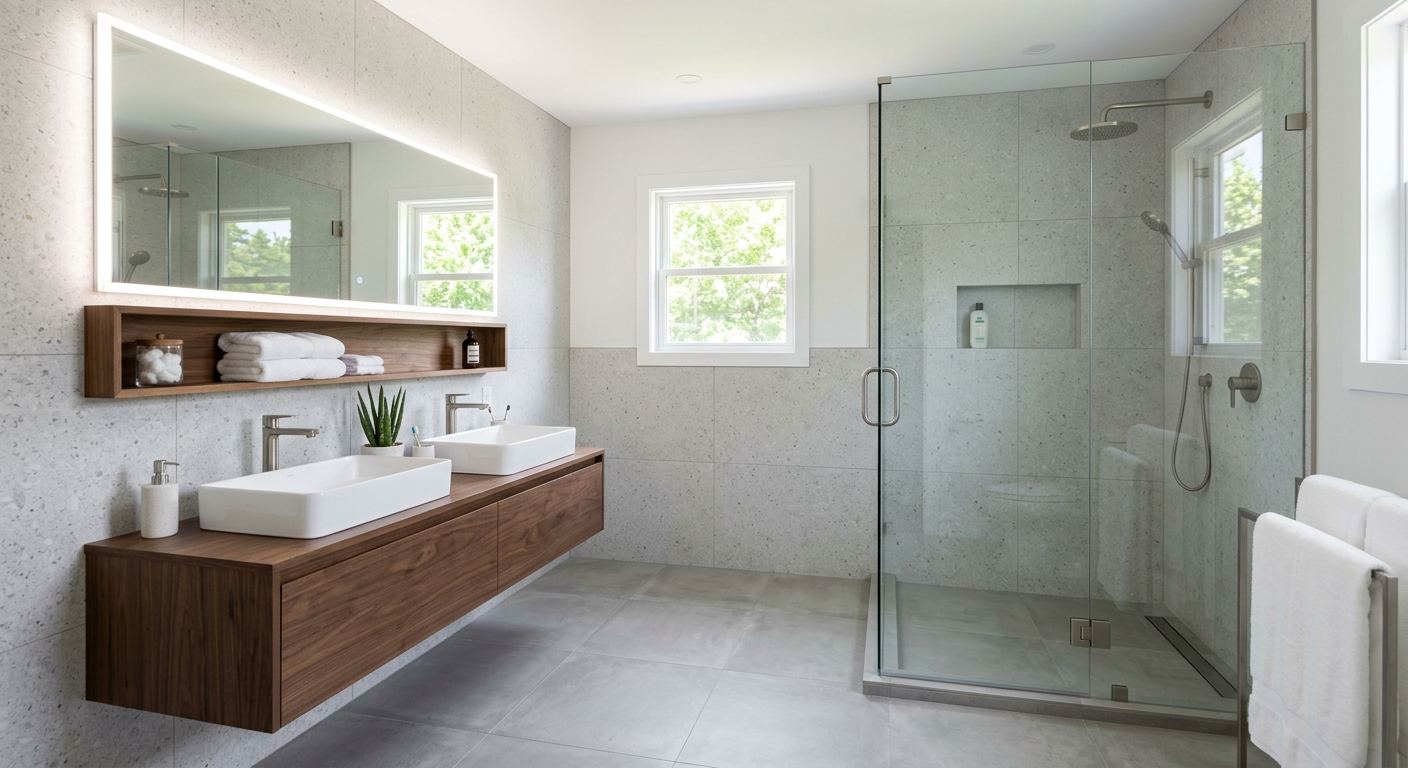
Bathroom renovation options and costs in Danforth
Danforth is a great place to renovate, especially when you’re updating a tired post-war or mid-century bathroom. In the Toronto economic region, the housing profile is often older—Danforth itself has a population of 9,666 (Statistics Canada, 2021 Census)—and that usually shows up in the walls and behind the fixtures: dated venting, older drain runs, and occasional floor-tile residue that can be tied to asbestos-containing materials in pre-1985 renovations. While Toronto’s weather isn’t the main driver of cost the way it is for exterior work, bathroom renovations still feel “market-tight” because skilled labour is scarce and every uncovered issue is labour-intensive to correct once the tile is off.
Renovations around Woodbine and the broader Danforth Village area (near the main strip and transit corridors) tend to be in higher demand year-round. The competitive local market means reputable contractors often price in scheduling, material availability, and the typical labour premium for tiling, custom shower work, and plumbing rework. For a lot of Danforth homeowners, the biggest cost swings come from what’s discovered after demo—not the outside temperature.
To make quotes easier to compare, here are realistic renovation options and typical durations, using the Toronto economic-region pricing bands homeowners usually see for a full 3-piece bath. From there, you can pick a scope that fits your comfort level and budget before we talk about what drives the final numbers in Ontario.
| Renovation Scope |
What's Included |
Typical Duration |
Price Range |
| Cosmetic refresh (paint, fixtures, accessories only) |
Paint, vanity swap (no plumbing move), toilet replacement (if compatible), faucet swap, mirror/light upgrade, accessories; existing tile left as-is |
2–4 days |
$12,000–$18,000 |
| Mid-range full renovation (new tile, vanity, tub/shower, electrical) |
Demo and disposal, new vanity and toilet, new tub/shower valve and fittings, wall and floor tile, waterproofing, basic electrical (GFCI + exhaust fan as needed), plumbing updates to current standards where required |
10–16 business days |
$18,000–$24,000 |
| High-end full renovation (custom tile, steam shower, heated floors) |
Custom layout updates, premium tile/grout, steam shower (or high-spec walk-in), heated floors, upgraded exhaust/controls, deeper plumbing/vent corrections, premium fixtures and trim |
3–5 weeks |
$24,000–$30,000 |
| Shower-only installation (convert tub to walk-in shower) |
Remove tub, convert drain configuration, new waterproofing and tile shower surround, new glass door/enclosure, new valve trim, exhaust improvements if needed |
10–14 business days |
$12,000–$18,000 |
| Bathtub replacement or tub-liner install |
Remove and replace tub and trim (or install a liner where conditions allow), recaulk and reseal, basic surround refresh, plumbing connections checked for compatibility |
4–7 business days |
$1,200–$3,500 |
| Tile-only installation (floor + surround, existing layout kept) |
Remove existing tile (as required), prep and leveling, waterproofing, set new floor and wall tile around tub/shower, grout and sealing; fixtures remain if compatible |
7–12 business days |
$3,000–$10,000 |
Prices are estimates only and vary by project scope, site access and material selection.
What affects the price of bathroom renovation in Danforth
If you ask three contractors for the “same” Danforth bathroom renovation, it’s common to see spreads of 30–50% across Toronto and Ontario. The reason isn’t the weather—it’s the labour premium in the GTA and what older local homes hide once the walls and floors come off. Toronto-area bathroom work is labour-intensive: tiling (especially custom showers), plumbing rework, and waterproofing systems all drive man-hours. In Danforth and the broader region, older post-war and 1960s–1980s houses frequently need plumbing and venting brought up to current Ontario code, which can add several thousand dollars for drain reconfiguration, vent corrections, and new shut-offs.
Older homes can also reveal hidden conditions that push labour scope quickly. For example, discovery of asbestos-containing materials in vinyl floor tile or older drywall compound (pre-1985) triggers abatement protocols and often adds about $1,500–$5,000+ depending on how much area is affected and whether materials must be removed and disposed under licensed procedures. You might start with a mid-range full renovation budget (often aligning with the $18,000–$24,000 band), but once drain stacks, supply lines, or venting require changes, the project can drift toward the higher-end $24,000–$30,000 range.
Two concrete Danforth examples I see often: (1) a “simple” tub-to-shower conversion where the drain needs re-positioning, which increases labour for rough-in and waterproofing precision; and (2) a floor tile replacement where the subfloor is unlevel—leveling and prep add time, and heated-floor installs add wiring and testing. In short, the Toronto market shapes availability and hourly rates, while housing age shapes the real scope once demo begins.
| Price Factor |
Why It Matters |
Cost Impact |
| Layout change — moving drain or supply lines |
Requires rough-in work, patching, and sometimes vent corrections |
Often adds several thousand dollars in labour/materials |
| Tile selection — large-format porcelain vs. mosaic vs. ceramic |
Harder tiles increase cutting time, layout complexity, and labour skill requirements |
Can shift the tile-only portion by roughly thousands |
| Fixture tier — builder-grade vs. mid-range vs. designer brands |
Higher tiers cost more and may require extra trim/valving compatibility checks |
May add $1,000–$5,000+ depending on brand and quantity |
| Subfloor condition — rot or unlevel concrete adds scope |
Prep and reinforcement are required for tile longevity and warranty comfort |
Commonly adds $500–$3,000+ in prep work |
| Electrical — adding GFCI outlets, exhaust fan, heated floor circuit |
Licensed electrical work, wiring runs, and code-compliant installations |
Can add $800–$3,000+ depending on complexity |
| Waterproofing method — membrane type and extent |
Proper systems protect against moisture migration and mould |
Upfront material cost may be moderate, but it prevents costly failures |
| Older-home surprises — asbestos tile, cast-iron drains, galvanized pipes |
Abatement, drain stack upgrades, and plumbing replacements expand scope and timelines |
Often adds $1,500–$5,000+ for asbestos-related discovery; more for plumbing |
| Bathroom size — sq ft drives tile and labour time directly |
More coverage means more setting time, grout work, and waterproofing |
Size increases can shift totals by several thousand dollars |
Permits & regulations in Ontario
In Ontario, not every bathroom update needs a permit. Cosmetic changes—think swapping fixtures that don’t require moving plumbing (like replacing a vanity that uses the existing rough plumbing), painting, replacing a mirror or light, or retiling without relocating drains or supplies—typically do not trigger permit requirements. The situations that do usually require a permit and inspection are the ones that change life-safety systems or building services: moving plumbing rough-ins (changing where the drain or supply lines sit), adding or reconfiguring mechanical ventilation (for example, installing a new exhaust fan that requires new wiring and venting), making structural wall changes, or doing electrical work that extends circuits beyond like-for-like replacement.
Electrical work must meet Ontario electrical safety requirements and be performed by (or signed off by) a licensed electrician. Plumbing rough-in changes (anything that alters the drain, vents, or supply connections beyond simple swaps) typically require permits and inspections. Before work starts, a reputable contractor should tell you what permits they’ll pull and provide proof of inspection sign-offs if required.
To verify properly in Danforth, start by checking the contractor’s Ontario trade licensing credentials and ensuring their certificate of insurance is current (liability coverage). For workers, ask about WSIB/WCB coverage and confirm the clearance letter details. If anything is unclear, request it in writing before signing—good contractors will cooperate quickly, because it’s part of protecting you and their crew.
Choosing tile, waterproofing and fixtures for your Danforth bathroom
In Danforth, your bathroom renovation budget is usually won or lost in three material decisions: tile choice, waterproofing method, and fixture tier. First, tile selection drives both cost and installation complexity. Entry-level ceramic can be a solid pick for simpler layouts, but porcelain often behaves better for floors and wet areas because it’s denser and typically more suitable for durability demands. Natural stone (marble, travertine, slate) is a luxury move—beautiful, but it often needs extra prep, careful sealing, and slower installation rates to meet tolerances.
Second, waterproofing is where homeowners protect themselves from future mould and grout failure—especially in a bathroom that will see Ontario humidity and seasonal swings. A paint-on membrane can be sufficient for certain systems and areas, but for most full shower builds, many installers prefer a more robust approach such as a bonded sheet membrane or an engineered system that includes preformed corners/edges. The key is using the correct method with the correct prep and extending it where water actually goes.
Third, fixture tier impacts both upfront cost and resale perception. Builder-grade fixtures keep budgets tighter, while mid-range and designer lines often justify their price through smoother valves, better finishes, and longer-life components.
Here’s a clear dollar example: if you’re choosing between a mid-range porcelain system and a premium natural stone surround, spending the extra on premium tile can be justified when it’s used as an accent or in smaller areas. If you upgrade every surface to luxury stone in a standard 3-piece bath, you may pay a lot more without a proportional comfort gain—often better to allocate that budget toward waterproofing quality and waterproofing accessories, because that’s what prevents expensive callbacks.
| Material / Option |
Pros |
Cons |
Price Range |
| Ceramic tile (floor + walls) |
Lower cost, many style options, good for wall applications |
Can be less durable for floors depending on grade; more variation if not carefully selected |
$3,000–$6,500 |
| Porcelain tile (floor + walls) |
Highly durable, excellent for wet areas, strong wear resistance |
Heavier/denser tiles can increase labour due to cutting and layout precision |
$5,000–$10,000 |
| Natural stone (marble, travertine, slate) |
Unique look and luxury feel, premium material palette |
Requires careful sealing/maintenance; higher installation labour and material breakage risk |
$8,000–$15,000 |
| Frameless glass shower enclosure |
Modern appearance, easier visual openness in smaller baths |
Higher material and hardware cost; must be installed perfectly for alignment |
$4,000–$12,000 |
| Prefab tub surround (acrylic) |
Fast install, consistent surfaces, lower labour than custom tile |
Less custom design flexibility; seams and edges require careful sealing |
$1,200–$3,500 |
| Custom shower pan (tile or linear drain) |
Better slope control, integrated drainage, premium look (especially with linear drains) |
More trades coordination and waterproofing detail; higher labour time |
$4,000–$12,000 |
How to choose a bathroom renovation contractor in Danforth
Choosing the right contractor in Danforth is mostly about verifying credentials and insisting on clear, itemised paperwork. Start with Ontario licensing: ask for their trade licence details (and confirm they’re performing the work they’re claiming). For liability, request a certificate of insurance showing coverage limits suitable for renovation work, and verify the contractor’s WSIB/WCB coverage so you’re not exposed if a worker is injured on site. Don’t accept verbal assurances—request documents.
Next, get 2–3 itemised written quotes. A good quote separates labour and materials (tile, waterproofing membrane, fixtures, glass, electrical parts) and describes what’s included and excluded. Watch for vague lines like “repairs as needed”—you want a clear allowance approach for known uncertainties and a process for change orders. Ask whether permits are included in the price and who pulls them, whether disposal (demo and hauling) is included, and whether they’ll protect floors/doorways during tile work.
Warranty matters. A reputable contractor provides a workmanship warranty for the installation (often the waterproofing and tile setting), plus product/manufacturer warranty documentation for fixtures. Ask if the warranty is transferable to future homeowners, which can matter for resale in the Danforth area.
Finally, payment scheduling should protect you. Never pay more than about 10–15% upfront, and use a holdback until key milestones are completed. Get the start date and completion estimate in writing, along with what happens if materials arrive late.
- Verify Ontario licence and that the licence matches the scope (plumbing/electrical where applicable).
- Confirm liability insurance (current certificate) before work begins.
- Confirm WSIB/WCB clearance or coverage details in writing.
- Request itemised quotes: labour, materials, allowances, and contingency process.
- Ask exactly what’s included in waterproofing (membrane type, seams, curbs, corners).
- Clarify permit responsibility: who pulls permits, inspection expectations, and lead times.
- Confirm disposal/hauling is included (demo debris removal, recycling where required).
- Inspect their plan for protecting the rest of your home during demolition and tile work.
- Ask about substrate prep (leveling, backer board, subfloor evaluation).
- Get a written warranty for workmanship and confirm it covers waterproofing and tile installation.
- Use a payment schedule with a holdback until completion and final walkthrough sign-off.
- Require an estimated schedule with start date, key milestones, and day-to-day work expectations.
Red flags in Danforth bathroom renovations: (1) quotes that are “lump sum” with no line items or allowances; (2) refusal to provide insurance/WSIB/WCB documentation; (3) vague waterproofing descriptions or no warranty covering waterproofing; (4) payment requests that exceed 10–15% upfront; and (5) no clear plan for permits/inspections when plumbing or electrical is changing.
Frequently asked questions — bathroom renovation in Danforth
Do I need waterproofing behind the tile?
In nearly all shower and wet-wall areas in Ontario, yes—waterproofing behind the tile is a best-practice requirement, not an optional upgrade. In Danforth bathrooms, the day-to-day humidity is real, and grout lines are not a waterproof barrier by themselves. When you remove old tile, you’re effectively exposing the system layers that stop water from travelling into framing and subfloor. A proper assembly includes correct substrate prep and an appropriate waterproofing method (membrane type, thickness, overlap at seams, and proper detailing at corners, niches, and transitions). If your contractor is only planning “water-resistant paint” or minimal membrane coverage, ask how they’re meeting long-term durability expectations. Budget-wise, even within a mid-range full renovation (often in the $18,000–$24,000 range), waterproofing materials and installation time are a significant part of what keeps you from expensive call-backs.
How do I compare bathroom renovation quotes?
To compare quotes in Danforth fairly, insist on identical scope and itemisation. First, check whether each quote is labour + materials broken out (tile, waterproofing, plumbing rough-in changes, electrical allowances, glass hardware, and disposal). Next, confirm what’s included in permits and inspections if plumbing or electrical is being altered. Third, compare allowances—if one quote uses a low vanity or standard fixtures while another uses mid-range brands, you’ll see a misleading difference. Also compare waterproofing approach and how they handle substrate prep and levelling; poor prep can void workmanship expectations. As a quick anchor, reputable Toronto-region full renovation budgets commonly fall within $12,000–$30,000 depending on finish level and plumbing scope. If one contractor lands inside the $24,000–$30,000 end but describes detailed venting/drain corrections, it may be more realistic than a “low” quote that’s hiding unknowns.
Can I live at home during a bathroom renovation in Danforth?
Often you can, but it depends on the scope. Cosmetic refresh and tile-only work can be done with limited disruption, and some homeowners keep living space accessible by protecting floors and setting up dust control. However, for full renovations—especially where the shower/tub is removed, plumbing is opened, or electrical is updated—most households choose to stay put only if they have another bathroom option in the home or nearby. In the Danforth area, lead times and scheduling can also mean work phases overlap (demo, rough-in, waterproofing, tile setting). A typical mid-range full renovation may run 10–16 business days, so you’ll want a plan for water access and a clear “critical path” schedule. If you’re converting a tub to a walk-in shower, expect more disruption during rough-in and waterproofing. For that reason, it’s worth asking your contractor for a day-by-day timeline in writing before deciding to remain in the home.
What's the best bathtub material for a Danforth home?
The “best” tub material depends on your priorities: durability, comfort, weight for installation, and finish preferences. Acrylic tubs are popular because they’re lightweight and offer a comfortable surface for daily use; they also make installation easier in many Ontario homes. Fibreglass/solid-surface options can be cost-effective, while cast-iron tubs are extremely durable but heavier and often harder to install—sometimes requiring additional site coordination. For older Danforth housing stock, the key is not just the tub material, but the quality of the plumbing connections, venting considerations, and proper sealing at transitions. If your goal is a budget-friendly refresh, bathtub replacement budgets commonly fall within $1,200–$3,500, but that assumes the surrounding walls, waterproofing approach, and plumbing conditions are straightforward. If the contractor discovers drain or vent issues, you’ll likely shift more into the full-renovation scope rather than a simple swap.
Is it worth renovating a bathroom before selling in Danforth?
Usually, a bathroom reno is worth it when it solves a visible problem (water damage, outdated fixtures, poor ventilation, cracked tile/grout) rather than chasing purely high-end aesthetics. In Danforth and the broader GTA market, buyers pay attention to cleanliness, modern waterproofing systems, and functionality—especially shower usability. If your current bathroom has dated plumbing or ventilation issues, fixing those can improve inspection outcomes and reduce buyer negotiation risk. That said, overspending on luxury finishes in a modest layout may not return full value. A practical approach is to target a mid-range full renovation scope (commonly $18,000–$24,000) or a shower conversion if the current tub configuration limits accessibility and daily use. Make sure the quote includes correct waterproofing and any necessary plumbing code updates; “pretty” work without durable systems can hurt you later. If you’re unsure, ask your contractor for a scope designed to pass scrutiny and look current without unnecessary upgrades.
How do I plan a bathroom renovation on a tight budget in Danforth?
On a tight budget in Danforth, the goal is to spend where failure is most expensive and skip where upgrades won’t change performance. Start by separating cosmetic items from structural/waterproofing work. If your layout is staying the same, you can often keep plumbing scope limited, which reduces labour and permitting complexity. Consider a “tile-only + smart fixtures” strategy: upgrade the wet-wall waterproofing system and replace tile where it matters most, while keeping compatible fixtures. You can also choose a durable mid-range porcelain tile and focus on correct waterproofing details rather than expensive natural stone. Realistically, you can still land in the broad renovation bands—tile-only can be around $3,000–$10,000 and a full reno often sits in the $12,000–$30,000 range—so set your budget by scope, not by brand names. Finally, plan for contingencies: older homes can require asbestos abatement or drain/vent corrections, so build some cushion into your allowances and avoid committing to a “minimum scope” that won’t cover surprises once walls open.