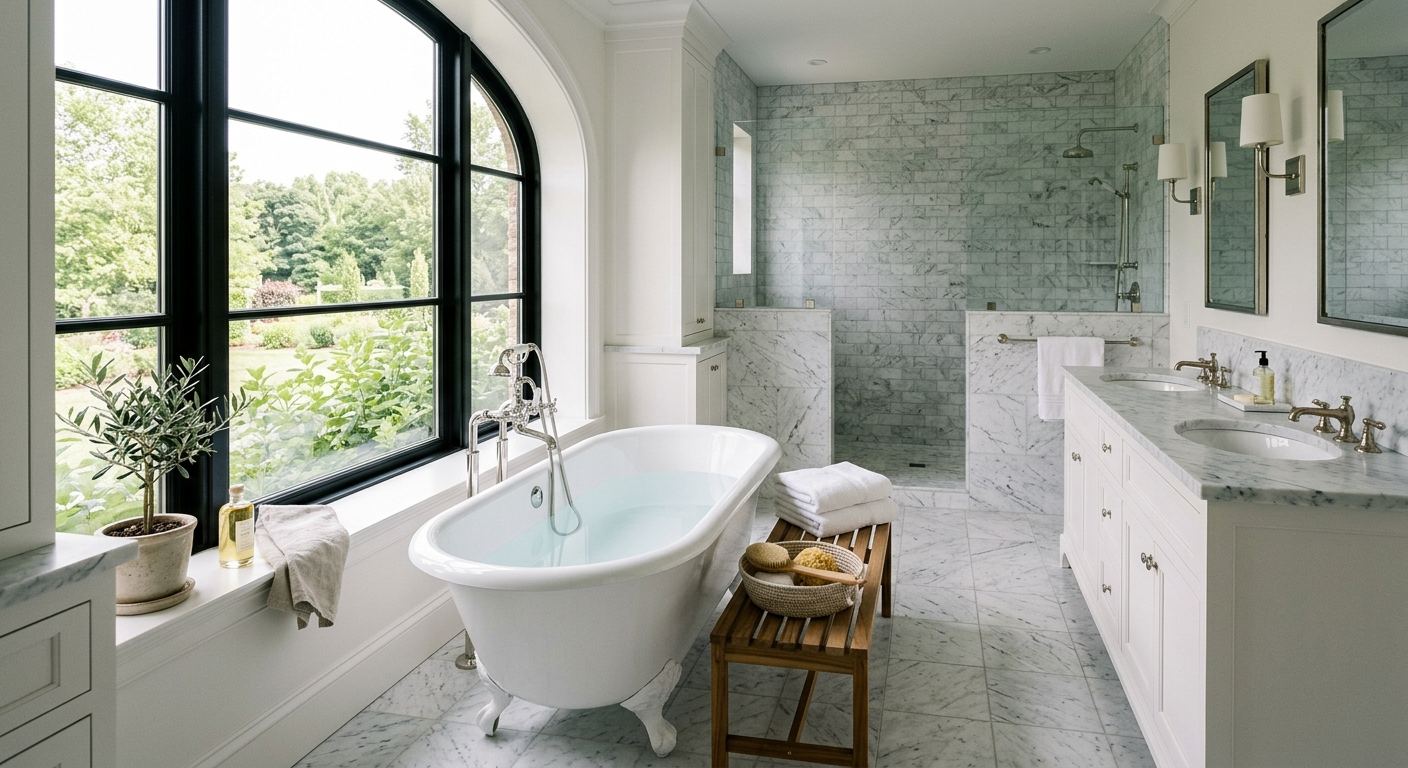
Bathroom renovation options and costs in Metcalfe
Metcalfe homeowners can renovate a bathroom in several different ways, but costs tend to track the scope of plumbing and surface work, not just the look. With a Metcalfe population of 1,776 (Statistics Canada, 2021 Census), the town’s renovation activity is smaller than the GTA core, so scheduling often depends on crews travelling in from the broader Toronto economic region. Also, many nearby post-war and 1960s–1980s homes are older than the materials we buy today; in practice, that often means dated drain layouts, the possibility of cast-iron or galvanized components behind walls, and occasional asbestos-containing floor tile or drywall compound in pre-1985 renovations. (Those hidden conditions are a big reason GTA budgets commonly land above national averages.)
In the Toronto region, labour rates and housing age usually drive pricing more than climate exposure. Ontario’s winter indoor-to-outdoor moisture swing still matters—steam, wet-room heat loss, and condensation can magnify any waterproofing mistakes—yet the main cost driver is the labour-intensive nature of tiling, custom shower builds, and bringing rough-in plumbing and venting up to current Ontario code. In high-demand pockets around Ottawa-area growth and commuter corridors (including the “Metcalfe to Stittsville/Orleans corridor” style of local demand), bathroom crews are especially booked when multiple homes are being renovated at once. Next, compare typical scopes in the table below to sanity-check your quote.
| Renovation Scope |
What's Included |
Typical Duration |
Price Range |
| Cosmetic refresh (paint, fixtures, accessories only) |
New paint, swap vanity faucet/lighting, replace toilet or sink (if existing plumbing stays), re-caulk, vanity top replacement, accessories; no wall/floor opening |
2–5 days |
$3,000–$8,000 |
| Mid-range full renovation (new tile, vanity, tub/shower, electrical) |
Remove surfaces, new vanity, tub and surround or tub/shower upgrade, tile floor and partial wall tile, ventilation fan upgrade, basic electrical updates (GFCI/exhaust), new waterproofing system, disposal |
2–3 weeks |
$12,000–$20,000 |
| High-end full renovation (custom tile, steam shower, heated floors) |
Custom tiled shower with niche/bench, premium tile and layout, heated floor circuit, upgraded ventilation, designer vanity and hardware, extensive waterproofing, possible plumbing/vent corrections, higher-end finishes |
3–5 weeks |
$20,000–$30,000 |
| Shower-only installation (convert tub to walk-in shower) |
Remove tub, install linear/standard shower base and tile or surround, new valve/trim, new glass door frame or curtain rail, waterproofing build-up, drain rework as needed, ventilation improvement |
1.5–3 weeks |
$10,000–$18,000 |
| Bathtub replacement or tub-liner install |
Replace tub with new unit and refinishing/finishing system, new wall surround where needed, new faucet/trim (if included), re-caulk and seal, basic waterproofing at seams |
1–2 weeks |
$1,200–$4,500 |
| Tile-only installation (floor + surround, existing layout kept) |
Tile removal (as required), prepare substrate, install tile floor and tub/shower surround, grout/seal, waterproofing membrane at wet areas, minor trim/caulking; plumbing stays where possible |
1–2.5 weeks |
$6,000–$14,000 |
Prices are estimates only and vary by project scope, site access and material selection.
What affects the price of bathroom renovation in Metcalfe
In Metcalfe and across the Toronto economic region, you can see bathroom quotes swing by 30–50% even for the “same” bathroom on paper. The usual reason isn’t the market—it’s labour intensity and what gets discovered after walls and floors are opened. Skilled trade availability and hourly rates in the GTA are higher than many parts of Ontario, and bathroom work is labour-intensive for tiling, waterproofing, and precise plumbing alignment. The other big driver is housing age: older homes often hide cast-iron or undersized drains, galvanized supply lines, and ventilation setups that don’t match today’s expectations for moisture control. When rough-in work must be corrected, that can push a project from a mid-range plan into a full renovation budget near the upper band of $12,000–$30,000.
Concrete examples we regularly price around in Metcalfe include: (1) converting a tub to a walk-in shower, where drain height and slope force extra drain reconfiguration and additional waterproofing build-up; (2) updating an exhaust fan, where a new circuit and vent routing can add materials and labour; and (3) tiling over an unlevel subfloor, which can require underlayment or subfloor correction before a warranty-grade tile install is possible. If asbestos-containing materials are found—most often in older floor tile or some older drywall finishes—abatement and safe disposal can add roughly $1,500–$5,000+ to the total budget. Even in Ontario’s relatively stable climate compared with coastal regions, moisture still has to be managed correctly; that’s why waterproofing method and substrate prep frequently matter as much as the tile choice. For homeowners, a practical way to interpret this is: if your quote is closer to $12,000–$20,000, ask what assumptions were made about hidden plumbing and electrical; if it’s closer to $20,000–$30,000, it likely includes more corrections and higher labour content upfront.
| Price Factor |
Why It Matters |
Cost Impact |
| Layout change — moving drain or supply lines requires rough-in work |
Shifting fixtures means breaking floors/walls, adjusting venting, and rebuilding rough-ins to current code |
$2,000–$8,000+ |
| Tile selection — large-format porcelain vs. mosaic vs. ceramic |
Harder/different materials require more skilled cutting, more waste, and tighter tolerances |
$1,000–$6,000 |
| Fixture tier — builder-grade vs. mid-range vs. designer brands |
Brand tiers affect trim complexity, valve compatibility, and finish hardware |
$800–$4,000 |
| Subfloor condition — rot or unlevel concrete adds scope |
Tile fails when the substrate moves; rot fixes, leveling and membrane prep add labour and materials |
$1,000–$5,000 |
| Electrical — adding GFCI outlets, exhaust fan, heated floor circuit |
New circuits and correct fan venting require licensed work and careful load planning |
$900–$4,500 |
| Waterproofing method — membrane type and extent |
Membrane choice impacts build-up, cure time, and longevity of the tile system in wet areas |
$600–$3,000 |
| Older-home surprises — asbestos tile, cast-iron drains, galvanized pipes |
Discovery can trigger abatement, replacement, and extra venting/drain rework |
$1,500–$10,000+ |
| Bathroom size — sq ft drives tile and labour time directly |
More floor and wall area increases tile quantities, setting labour, and waterproofing coverage |
$2,000–$8,000 |
Permits & regulations in Ontario
In Ontario, cosmetic bathroom updates typically don’t require permits—meaning swapping fixtures and finishes without changing plumbing routes or structural elements. Examples of work that usually DOES NOT need a permit include painting, replacing a vanity (keeping existing supply/drain connections), swapping a toilet or faucet where the plumbing location stays the same, changing mirror/accessories, and re-caulking. Replacing a bathtub with the same basic footprint can sometimes stay in this “like-for-like” zone, depending on how much rough-in has to be opened.
Work that typically DOES require a permit includes relocating plumbing (moving a drain or supply lines, changing the shower valve location), adding or modifying an exhaust fan with new wiring/circuit changes, and any electrical work that affects circuits beyond simple replacement in-place. Electrical upgrades must meet provincial code and must be done or signed off by a licensed electrician. Plumbing rough-in changes usually require permit and inspection at key stages (rough-in and sometimes final). If you’re altering walls structurally (removing/adding load-bearing elements) or making major changes to framing, that’s also more likely to trigger permitting.
To verify a contractor for a Metcalfe job, homeowners should: (1) ask for the contractor’s Ontario trade licence details and confirm the status through the appropriate online registry; (2) request a current certificate of insurance showing general liability—plus WSIB/WCB clearance where applicable for workers; and (3) request a clearance letter or proof of coverage for the specific renovation date range. A reputable contractor will provide these documents promptly with your proposal.
Choosing tile, waterproofing and fixtures for your Metcalfe bathroom
In Metcalfe, three material decisions tend to shape the budget more than anything else: tile choice, waterproofing method, and fixture tier. For tile, ceramic is the entry-level option—fine when you’re keeping a simple layout and don’t need highly precise large-format cuts. Porcelain is usually a better mid-range bet because it handles wet areas well and often stays looking sharp even with frequent cleaning. Natural stone (marble, travertine, slate) can be stunning, but it adds cost through both material price and installation requirements; some stone needs sealing and extra care during setting.
Second is waterproofing. In Ontario homes, moisture management matters because bathrooms run humid most days, and winter heating can create drying cycles that still test membranes. A paint-on membrane can work for certain systems, but many homeowners prefer bonded sheet membranes or a proven schluter-style system for showers because it creates a continuous waterproof layer with fewer weak points. Pair that with correct substrate preparation and you significantly reduce mould and grout breakdown risk.
Third is fixture tier. Builder-grade fixtures can be reliable, but designer brands often add better internal components, quieter operation, and nicer trim—factors that improve daily use and can help resale appeal. The Toronto market also rewards “done-right” upgrades: if you’re spending near $12,000–$20,000, a practical mix is mid-range porcelain tile plus a robust waterproofing system. A common example: upgrading from ceramic to porcelain tile might add a few thousand dollars total, but it’s often justified when it reduces staining risk and improves longevity—whereas jumping straight to natural stone for every surface usually isn’t cost-effective unless the design is truly the selling feature of the bathroom.
| Material / Option |
Pros |
Cons |
Price Range |
| Ceramic tile (floor + walls) |
Lower material cost, good appearance for most styles, easier to match patterns |
Not as durable as porcelain in some conditions; higher chance of chipping on impact |
$3,000–$7,000 |
| Porcelain tile (floor + walls) |
Better water resistance, strong in wet zones, holds finish longer |
Higher material cost and more precise layout/cutting for large formats |
$5,000–$12,000 |
| Natural stone (marble, travertine, slate) |
High-end look, unique veining/texture, premium feel |
Sealing/maintenance, more labour/time, higher waste from complex cuts |
$8,000–$18,000 |
| Frameless glass shower enclosure |
Modern, brighter bathroom look, easier to clean than curtains |
Higher hardware cost; requires precise tile plane and waterproofing edges |
$2,000–$6,000 |
| Prefab tub surround (acrylic) |
Faster install, fewer tile-cutting hours, good water resistance when properly sealed |
Less custom look than tile; limited pattern flexibility |
$1,000–$3,500 |
| Custom shower pan (tile or linear drain) |
Best look and functionality for modern layouts; linear drain improves water management |
Most labour-intensive; requires correct slope and waterproofing detailing |
$4,000–$12,000 |
How to choose a bathroom renovation contractor in Metcalfe
Choosing the right contractor in Metcalfe starts with proof—not promises. First, verify Ontario licensing for the relevant trades and request documentation showing liability insurance. Then confirm worker coverage and clearance for the project period through WSIB/WCB documentation. The easiest approach is to ask for three items up front: (1) licence/trade registration details for the trades they’ll subcontract; (2) certificate of insurance (general liability) naming the insured parties and covering the renovation scope; and (3) WSIB/WCB clearance letter or proof of coverage. If they can’t provide these quickly, that’s a sign to slow down.
Next, get 2–3 itemised written quotes with a labour and materials breakdown rather than a single lump sum. Itemisation helps you compare tile quantities, waterproofing approach, disposal fees, and whether permits are included. Carefully read the exclusions: for example, is asbestos testing/abatement assumed if discovered, are drywall repairs included, and is subfloor leveling included if the substrate is out of plane? Warranty matters too—ask for the workmanship warranty length, whether it covers labour for tile/waterproofing failures, and whether product warranties are transferred to you. Finally, payment schedule should be controlled: never pay more than about 10–15% upfront, and keep a holdback until the job is complete and defects are addressed. For timeline, ask for a start date and completion estimate in writing so you can plan around schedules.
- Request licence numbers and verify current status for Ontario trades involved.
- Confirm general liability insurance with a current certificate.
- Provide WSIB/WCB clearance or proof of coverage for workers.
- Ask for at least two bathroom references with similar scope (shower builds, not only cosmetic work).
- Get 2–3 itemised quotes (labour + materials), not lump sums.
- Ensure demolition, disposal, and dump fees are explicitly included or listed.
- Clarify waterproofing method (membrane type) and how far it extends.
- Confirm what substrate prep is included (leveling, backer/underlayment, rot repairs).
- Ask whether permits and inspections are included in the price when plumbing/electrical changes are done.
- Read the warranty terms: labour vs materials, duration, and exclusions.
- Use a holdback—don’t release final payment until caulking, silicone, and grout are fully complete.
- Ask for a written schedule: start date, milestone dates, and estimated completion.
Red flags in Metcalfe include contractors who (1) won’t provide insurance/licence/WSIB documentation, (2) quote only “best effort” dates without a written timeline, (3) leave waterproofing scope vague or skip waterproofing details in writing, (4) ask for large upfront payments (beyond 10–15%), and (5) provide a non-itemised lump sum that makes it hard to compare apples-to-apples for tile labour and plumbing corrections.
Frequently asked questions — bathroom renovation in Metcalfe
What's the ROI on a bathroom renovation?
In Ontario, a bathroom renovation typically provides stronger ROI when it improves function (better shower access, ventilation, and reliable waterproofing) and when finishes are durable and timeless. In Metcalfe and the broader Toronto economic region, buyers often value “done-right” moisture control—especially when the contractor includes proper waterproofing and addresses older plumbing venting or drain issues. If your reno stays in the cosmetic lane, ROI can be more predictable, but it’s also easier for buyers to view it as “surface level.” If you’re targeting a full refresh near the low-to-mid range of $12,000–$20,000, you usually get the biggest value from removing hidden risks (subfloor leveling, membrane, fan upgrades) rather than just upgrading fixtures. For high-end, buyers may pay more, but recovery varies more by the rest of the home’s condition and the quality of the waterproofing/tiling workmanship. (Statistics Canada, 2021 Census)
Do I need waterproofing behind the tile?
Yes—if you’re tiling in a wet zone (shower walls, tub surround, and typically the entire shower area floor), waterproofing behind the tile is essential. Ontario bathrooms experience frequent moisture loads, and improper waterproofing is a common cause of mould and grout failure. In a proper build, waterproofing isn’t just a “paint on” layer—it’s a system: correct membrane type, correct overlaps at seams, correct detailing around niches, valves, and corners, and proper cure time before tile. This matters even more in older Metcalfe homes where opening walls can reveal questionable substrate conditions or older materials. When quotes are realistic, waterproofing methods should be clearly described in the scope. If you see a quote that says only “tile install” without specifying waterproofing and substrate prep, ask questions—because the tile system is only as good as the waterproof layer underneath.
How do I compare bathroom renovation quotes?
Start by comparing scopes line-by-line. The biggest quote differences in Metcalfe usually come from labour-intensive items: tile layout and cutting, waterproofing system coverage, drain reconfiguration, and electrical work like GFCI outlets or exhaust fans. Don’t compare only the bottom-line number—compare what’s included for demolition, disposal, subfloor prep, and whether permits/inspections are assumed when plumbing or electrical changes are done. If one quote lands around the mid-range of $12,000–$20,000 and another is closer to $20,000–$30,000, ask what hidden risks they allowed for (cast-iron/copper drains, galvanized supplies, vent corrections, or asbestos-containing materials). Also request itemised material selections (tile type, membrane type, fixtures) so you can confirm like-for-like comparisons. A good contractor will explain the “why” behind allowances and contingencies.
Can I live at home during a bathroom renovation in Metcalfe?
Often you can stay in the home, but it depends on schedule and whether you’re doing a full renovation or major plumbing changes. For cosmetic refreshes or tile-only work that doesn’t require long periods with the plumbing disconnected, many homeowners remain in place—though you’ll need a plan for dust control and access to a functional bathroom. For full renovations or tub-to-shower conversions, the bathroom may be out of service for days to weeks while demolition, waterproofing, rough-ins, and tile cures take place. In Metcalfe and the surrounding Ontario market, timelines can lengthen slightly when crews need additional inspections after permit-required rough-in work. A typical strategy is to arrange a temporary bathroom solution (a second bathroom, portable shower access, or scheduling the most disruptive stages first). Confirm with your contractor when the toilet/sink will be functional and whether they’ll protect surfaces and ventilation during the work.
What's the best bathtub material for a Metcalfe home?
The “best” tub material depends on what you value—durability, maintenance, and installation method. For many Ontario homeowners, a new acrylic tub is a practical balance: it’s lighter than older cast-iron units, installs efficiently, and generally has a good finish when properly fitted and sealed. Cast-iron tubs are extremely durable but often cost more to replace due to weight and handling, and they can increase labour scope if the surround must be rebuilt. If your goal is to reduce disruption, a tub-liner or refinishing approach can be viable, but it requires correct surface prep and bonding so moisture doesn’t creep at seams. If you’re comparing budgets, bathtub replacement or tub-liner projects commonly fall in the range of $1,200–$4,500—with more cost if plumbing access is needed. If your existing plumbing or drain is older, the “best” choice is the one that fits the waterproofing and seal plan your contractor will warranty.
Is it worth renovating a bathroom before selling in Metcalfe?
Usually it’s worth it when the bathroom is dated, poorly ventilated, or shows signs of moisture damage—because buyers notice those issues immediately. In Metcalfe and across Ontario, a renovation that improves waterproofing reliability, ventilation performance, and everyday usability (like a safer shower access) can make your home more competitive, even if the rest of the home is unchanged. However, if the job is purely cosmetic—painting and fixture swaps without addressing waterproofing and subfloor—ROI may be less compelling because buyers may still anticipate future repairs. A realistic approach is to budget for the fixes that protect the structure: proper membrane installation, correct slope/drain detailing, and any required updates to plumbing venting if discovered. For many homeowners aiming at the mid-range renovation level of $12,000–$20,000, the value often comes from reducing buyer uncertainty. If your bathroom is already modern and problem-free, consider whether small upgrades (lighting, fan, hardware) provide enough impact before you take on a full tear-out.