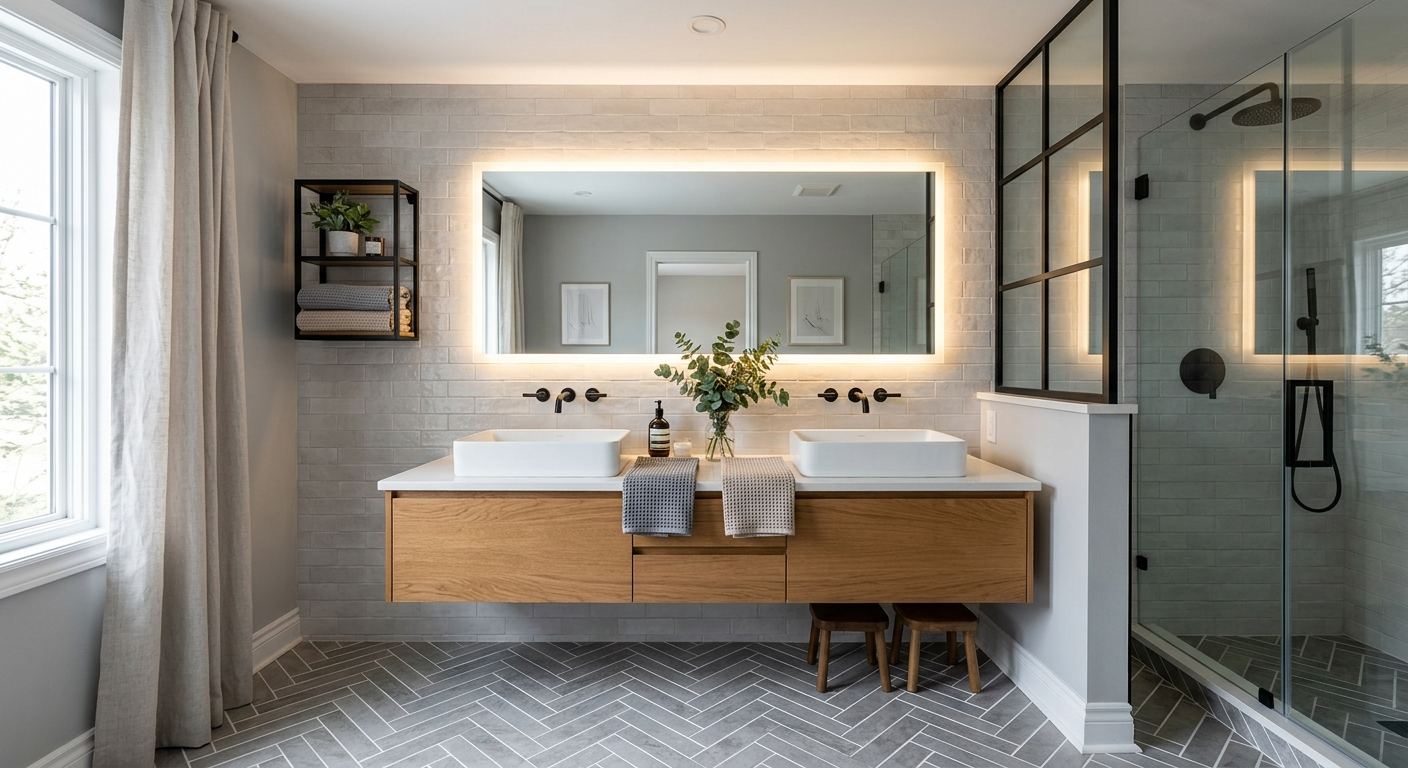
Bathroom renovation options and costs in Woodstock
In Woodstock, Ontario, bathroom renos can look straightforward on paper, but the final price depends heavily on what’s behind the walls. With 50.4% of homes built before 1981 in the broader area, many projects start with dated plumbing layouts, older venting paths, and finishes where substrate and wiring aren’t as predictable. That’s also why hidden issues—like questionable waterproofing history or older drainage connections—tend to show up once demolition begins.
London-area renovation costs are driven more by local labour rates and the condition of the existing bathroom than by climate alone. Even though Ontario’s winters don’t “raise” bathroom costs dramatically, moisture management still matters: humid shoulder seasons and frequent steam showers mean the waterproofing system you choose has to be right the first time. Contractor availability can also shift the budget because most reliable crews schedule multiple jobs back-to-back, especially in high-demand pockets around Downtown Woodstock, where older housing stock is common and access can be tighter.
To help you compare realistic options, here are common scopes and what they typically include. Then we’ll break down the key price factors that move quotes up or down.
| Renovation Scope |
What's Included |
Typical Duration |
Price Range |
| Cosmetic refresh (paint, fixtures, accessories only) |
Paint, caulking refresh, toilet/vanity faucet swap, towel bars, mirrors, existing fan check (no major rewiring), minor hardware updates |
3–5 days |
$2,000–$5,500 |
| Mid-range full renovation (new tile, vanity, tub/shower, electrical) |
Demo and disposal, new vanity and countertop, new tub or shower base, tile floor + surround, waterproofing, new exhaust fan (standard ducting), updated GFCI where needed, basic lighting/venting coordination |
2–3 weeks |
$18,000–$24,000 |
| High-end full renovation (custom tile, steam shower, heated floors) |
Full gut, higher-grade tile, custom shower system, heated floor circuit, premium fixtures, improved ventilation strategy, higher-end lighting, more detailed framing/substrate correction |
3–5 weeks |
$25,000–$38,000 |
| Shower-only installation (convert tub to walk-in shower) |
Remove tub, new walk-in shower pan/base, tile surround, new drain connection (if needed), waterproofing, exhaust fan/fan housing check, new glass or curtain-ready prep |
10–16 days |
$7,000–$14,000 |
| Bathtub replacement or tub-liner install |
Replace tub with new unit, new trim/fastening, plumbing hook-ups, sealant and caulking, re-tile or re-finish as needed around edges; liner includes surface prep and bonding |
5–10 days |
$1,500–$6,500 |
| Tile-only installation (floor + surround, existing layout kept) |
Tile removal of select areas, substrate assessment, waterproofing as required, tile floor + walls, grout/seal, re-install fixtures if retained |
1–2 weeks |
$4,500–$12,000 |
Prices are estimates only and vary by project scope, site access and material selection.
What affects the price of bathroom renovation in Woodstock
It’s common to see two quotes for what sounds like the “same” bathroom move by 30–50% across London and Ontario. In Woodstock specifically, the biggest drivers are regional labour rates and the age and condition of the existing bathroom—not local climate. Our region’s housing stock is older: 57.5% of dwellings are single-detached homes, which usually means more interior space but also more variations in how plumbing and ventilation were originally installed. Older systems can hide cast-iron or galvanized components that need upgrading once walls or floors are opened.
Older London-area bathrooms often require extra plumbing and venting work, especially when the current venting route doesn’t properly exhaust moisture. If asbestos-containing materials are discovered in older vinyl floor tile or old joint compound (common in pre-1985 builds), abatement can add $1,500–$5,000+ depending on scope and containment requirements. This is why a “simple” update can quickly move from the mid five-figure range toward the upper band of a full renovation.
Concrete examples from Woodstock projects: (1) a tub-to-shower conversion that keeps the same footprint can still cost more if the drain height or slope is incompatible with a modern shower base; (2) adding a new exhaust fan often reveals ducting that can’t be extended without opening more drywall; (3) tile selection changes labour because larger-format porcelain increases lippage risk and requires flatter substrates and better layout planning. These differences are why full renovations commonly land around $14,000–$30,000, while shower-only conversions often sit in the $3,500–$10,000 range on paper but can grow when plumbing and waterproofing details change.
| Price Factor |
Why It Matters |
Cost Impact |
| Layout change — moving drain or supply lines requires rough-in work |
New rough-in usually means opening walls/floors, reworking venting, and more testing and tie-ins |
Often adds $2,000–$7,000 |
| Tile selection — large-format porcelain vs. mosaic vs. ceramic |
Tile size and hardness affect substrate prep, labour time, and breakage allowance |
Typically $500–$4,000+ difference |
| Fixture tier — builder-grade vs. mid-range vs. designer brands |
Higher tiers cost more but may reduce replacement frequency and improve finishes/valving |
Commonly $300–$3,000+ |
| Subfloor condition — rot or unlevel concrete adds scope |
Repairs, backer/support corrections, and additional waterproofing layers may be required |
Often adds $800–$6,000 |
| Electrical — adding GFCI outlets, exhaust fan, heated floor circuit |
Wiring, permits/inspection needs, and safe routing affect labour and material |
Usually $500–$3,500+ |
| Waterproofing method — membrane type and extent |
Proper membranes protect against moisture that drives mould risk in Ontario bathrooms |
Varies; typically $600–$3,500 |
| Older-home surprises — asbestos tile, cast-iron drains, galvanized pipes |
Discovery changes demolition plan, disposal, and replacement scope |
Often adds $1,500–$6,000+ |
| Bathroom size — sq ft drives tile and labour time directly |
More surface area increases materials, layout time, and setting/grouting labour |
Often shifts total by $1,500–$8,000 |
Permits & regulations in Ontario
In Ontario, many bathroom renovations can be done without pulling a permit, but the moment you move plumbing, expand electrical, or touch structure, permits and inspections often come into play. As a rule of thumb for Woodstock homeowners: cosmetic work such as swapping a vanity, replacing a toilet, painting, re-caulking, and redoing finishes over the same surfaces typically doesn’t require a permit.
What does usually require a permit and inspection includes relocating plumbing (moving a drain line or supply lines), adding/relocating a bathroom exhaust fan that requires new ducting and/or new electrical work, and any electrical changes (for example, adding GFCI outlets, new light circuits, or wiring a heated floor). If the project involves structural changes to walls or changes that affect load paths, you’ll also need the appropriate approvals. Any electrical work should be performed or signed off by a licensed electrician to meet Ontario electrical requirements.
Step-by-step, here’s how to verify a contractor in Woodstock: (1) Ask for their Ontario trade licence details and check the licence information on the appropriate Ontario registry for their trade; (2) request a certificate of insurance (liability) showing active coverage—verify the dates and business name match the proposal; (3) ask for evidence of WSIB/WCB coverage (workplace safety coverage). (4) Request a clear clearance letter or proof document and keep it with your contract paperwork.
Choosing tile, waterproofing and fixtures for your Woodstock bathroom
In Woodstock (and across the London market), your bathroom budget is decided less by “style” and more by three material choices: tile, waterproofing, and fixtures. Because older homes can have uneven substrates and unknown waterproofing history, the right system prevents failures that Ontario homeowners see as slow leaks, musty odours, and premature grout breakdown.
1) Tile choice: ceramic tile is usually the most budget-friendly, and it’s a good fit when you’re keeping costs closer to the lower end of a full renovation. Porcelain is denser and often performs better on floors, but it may require more labour if your subfloor isn’t perfectly flat. Natural stone (like slate or travertine) looks premium, but it can add installation complexity due to variation and finishing needs.
2) Waterproofing method: paint-on membranes can be acceptable for some applications, but in tub/shower areas you’ll typically want a more robust approach, especially with higher-use families. Bonded sheet membranes and modern system methods create a more consistent barrier—key for controlling mould risk in Ontario humidity.
3) Fixture tier: builder-grade fixtures keep budgets lean, mid-range provides better valves and finish quality, and designer brands can improve feel and longevity. If your goal is value for resale, mid-range is often the sweet spot. For example, upgrading from basic to a mid-range shower valve and drain system might add a few hundred dollars, but it can be justified because it reduces call-backs for leaks and drips—issues that are costly once tile is set.
Match your budget to your situation: if you’re working with an older pre-1981 home layout, prioritise waterproofing and substrate correction first, then spend your “pretty money” on tile and fixtures where it counts.
| Material / Option |
Pros |
Cons |
Price Range |
| Ceramic tile (floor + walls) |
Lower material cost, good look variety, straightforward installation for standard floors and walls |
Can be less durable on floors than porcelain; may be more prone to chipping if substrate flexes |
$2,000–$6,000 |
| Porcelain tile (floor + walls) |
Denser and more durable, often better for floors, wider range of realistic “stone-look” options |
May require tighter substrate tolerances; larger formats can increase labour |
$3,500–$9,000 |
| Natural stone (marble, travertine, slate) |
Luxury appearance, high-end resale appeal, unique texture/color |
More expensive materials, sealing/maintenance needs, heavier handling and layout work |
$6,000–$16,000 |
| Frameless glass shower enclosure |
Modern appearance, visually “opens” the bathroom, easy to clean |
Higher cost and careful measurement; needs solid wall backing and proper sealing |
$1,500–$6,000 |
| Prefab tub surround (acrylic) |
Fast install, less tile labour, good water resistance when installed correctly |
Limited design/size choices; fewer premium aesthetics than full tile |
$700–$2,500 |
| Custom shower pan (tile or linear drain) |
Better long-term drainage, modern linear look, can be tailored for wheelchair/low-threshold needs |
More prep and waterproofing detail; requires correct slope planning |
$2,500–$9,500 |
How to choose a bathroom renovation contractor in Woodstock
Choosing the right bathroom contractor is where you protect both your budget and your waterproofing. Start by verifying Ontario licensing and insurance. Ask the contractor directly for their Ontario trade licence (for their trade) and a certificate of liability insurance showing active coverage. Then confirm workplace coverage for their staff by requesting proof of WSIB/WCB coverage (or a clearance letter, depending on their documentation). If any of this is missing, ask again—reputable firms can produce documents quickly.
Next, get 2–3 itemised written quotes. You want a breakdown that separates labour from materials (demolition, plumbing rough-in, electrical, waterproofing, tile setting, disposal). A lump-sum quote with unclear inclusions often leads to change orders once walls are open. Read the scope line-by-line: is permit pulling included (when required), who pays for dumpsters/disposal, and what’s excluded (for example, moving drywall for ducting, subfloor repair, or glass enclosure hardware)?
Warranty matters. Ensure you have a workmanship warranty length (often tied to waterproofing and tile systems), plus the manufacturer warranty on products. Ask if warranties are transferable to future homeowners. For payments, never pay more than 10–15% upfront; use progress payments and hold back a portion until key milestones are complete. Also request a start date and completion estimate in writing.
- Verify Ontario trade licence number and match it to the company name on the quote.
- Request certificate of insurance (liability) and confirm coverage limits.
- Confirm WSIB/WCB coverage and keep the clearance letter/document.
- Insist on an itemised quote: demo, rough-in, waterproofing, tile, fixtures, electrical, disposal.
- Ask who pulls permits and who schedules inspections (when required).
- Get a written project timeline with milestones (demo, plumbing/electrical rough-in, waterproofing, tiling, trim).
- Check how change orders are handled and what triggers them.
- Confirm the specific waterproofing system and how it’s applied at floor-to-wall transitions.
- Ask for tile layout details, grout selection, and whether large-format tile will be used safely.
- Verify warranty coverage: workmanship, product, and whether it’s in writing.
- Use a payment schedule with a holdback until punch list completion.
- Confirm cleanup/disposal plan for demolition debris (dump fees included or not).
Red flags in Woodstock to watch for: vague “lump sum” quotes with no line items; refusing to provide licence/insurance/WSIB documentation; no written warranty for waterproofing or tile; promising “no surprises” while excluding subfloor/plumbing discovery work; and requesting large upfront payments beyond 10–15% before any demolition or ordering is underway.
Frequently asked questions — bathroom renovation in Woodstock
What's the best bathtub material for a Woodstock home?
For Woodstock homes, the “best” bathtub material is usually the one that matches your existing plumbing footprint and subfloor condition. If you’re keeping costs controlled in an older house, a quality acrylic tub is often the best balance of weight, installation speed, and durability. It typically fits well for replacement projects in the $1,200–$6,000 band, depending on whether you’re swapping the whole unit or adding a liner/tub surround. For heavier cast-iron options, you may need extra attention to the framing/subfloor, which can raise labour if your base isn’t solid. Either way, prioritise proper sealing and waterproofing at the tub edges—Ontario humidity and cold shoulder seasons can expose minor installation gaps quickly.
Is it worth renovating a bathroom before selling in Woodstock?
Often yes, but only if you renovate in a way that improves perceived cleanliness, function, and moisture reliability. In Woodstock, buyers commonly focus on the shower/tub condition, exhaust fan performance, and whether finishes feel dated. A cosmetic refresh can help if the plumbing is already sound, but if you’re seeing recurring grout issues or weak ventilation, a full renovation is the safer long-term bet. Typical full bathroom renovations in the London region commonly sit around $14,000–$30,000, so you want the scope to match the home’s overall condition—especially in houses built before 1981. Consider a mid-range full renovation (new tile, vanity, and updated electrical/GFCI where needed) rather than chasing luxury upgrades that don’t pay back.
How do I plan a bathroom renovation on a tight budget in Woodstock?
Start by choosing what not to change. If your layout works, keep the plumbing footprint and focus the budget on waterproofing, the exhaust strategy, and the most visible finishes. For many Woodstock homeowners, “tile-only” upgrades plus a vanity/fixture swap can deliver a strong look without triggering the high costs of moving drain lines. It’s also smart to use the mid-range approach: aim for a mid-range full renovation around the $18,000–$24,000 estimate band when you do need new tile, a tub/shower refresh, and electrical updates. If you discover older-home surprises (cast-iron drainage, galvanized supplies, or asbestos-containing materials), build a contingency so the project doesn’t stall. Even on a tight budget, don’t cut corners on membranes and correct substrate prep.
What's the difference between a cosmetic and a full bathroom renovation?
A cosmetic renovation is surface-level: paint, replacing fixtures and accessories, and sometimes retiling limited areas while keeping the layout and major systems as-is. A full renovation is a gut or near-gut approach: it typically includes demolition to access plumbing/electrical, new waterproofing, new tile floor and walls, fixture installs, and often updated exhaust fan/venting and electrical safety updates such as GFCI. In practical terms, a cosmetic refresh can cost far less than a full renovation, while a mid-range full bathroom renovation in Woodstock commonly lands in the $14,000–$30,000 range depending on finishes and any hidden issues found behind walls or floors. In older homes—many built before 1981—full renos are more likely to uncover scope increases.
How do I choose the right contractor for my bathroom in Woodstock?
Choose a contractor you can verify. In Ontario, ask for the contractor’s relevant Ontario trade licence, a certificate of liability insurance, and proof of WSIB/WCB coverage (and clearance documentation if they provide it). Then require 2–3 itemised written quotes, with clear inclusions: permits (when required), disposal, waterproofing system, tile scope, and what’s excluded. Make sure the workmanship and product warranties are in writing, and ask whether warranties are transferable. For payment, avoid large upfront deposits—stick to roughly 10–15%—and hold back until key milestones and the punch list are complete. A good contractor will also explain how they handle older-home surprises common in the Woodstock/London area, such as cast-iron drainage or outdated venting.
What's the most common mistake homeowners make in bathroom renovations?
The most common mistake is choosing the look first and the waterproofing/substrate plan second—then being surprised when problems show up after use. In Woodstock and across the London region, older housing stock can have uneven floors, unknown moisture history, and dated plumbing/venting routes. If the quote doesn’t clearly define the waterproofing method and the preparation required, you can end up paying for rework later. Another frequent mistake is underestimating how quickly a “shower-only” or “tile-only” plan can expand once the team opens walls and confirms drain slope, ventilation, and any hidden materials. If your budget targets a shower installation in the $3,500–$10,000 band but the drain or venting needs upgrading, the project may realistically move toward a higher full-reno scope.