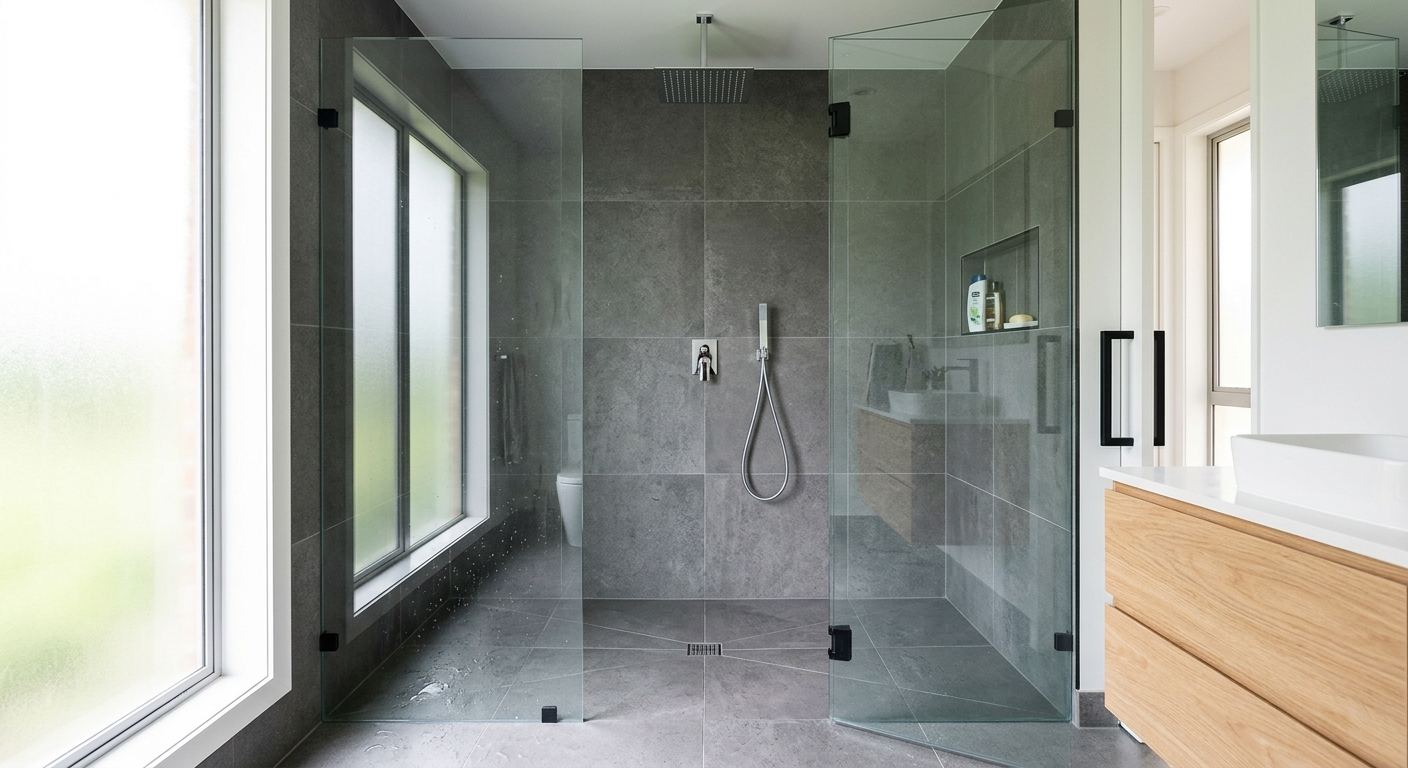
Bathroom renovation options and costs in East End
In East End, Ontario, bathroom renovations are a major project because many homes were built long before today’s plumbing layouts and ventilation standards. In the Toronto economic region, the local housing stock tends to reflect older post-war styles, and that matters: when floors and walls come open, dated drain routing and venting gaps can surface, and older tile or compound can sometimes contain asbestos. Even in a small East End pocket (for example, 1,446 residents in the local profile area, according to the Statistics Canada, 2021 Census), homeowners are still competing in the same skilled-trades market as the broader GTA.
Toronto pricing is shaped less by “weather damage” to bathrooms and more by labour rates and the scope revealed during demolition. In this market, skilled work—tiling, custom shower builds, and rough plumbing—carries a premium, and older homes may need drain reconfiguration, vent corrections, new shut-offs, and sometimes licensed abatement. That’s why realistic budgets for a full 3-piece renovation in East End commonly land above national averages, typically within the local full-renovation band of $12,000–$30,000.
If you’re near areas where contractors are frequently booked for older-housing retrofits—such as around the Greektown/Beach neighbourhood corridor—expect higher demand for tilers and plumbers during peak season. The good news: once you know your option level, you can budget more accurately before demolition. Use the comparison table below to match your goals to likely timelines and cost ranges.
| Renovation Scope |
What's Included |
Typical Duration |
Price Range |
| Cosmetic refresh (paint, fixtures, accessories only) |
New vanity or faucets, toilet accessories, fresh paint, light fixture swap, caulking, and minor sealing; tile refresh only if replacing small areas |
2–4 days |
$3,000–$8,000 |
| Mid-range full renovation (new tile, vanity, tub/shower, electrical) |
Demo and disposal, new vanity and toilet, re-tiling floor and shower surround, bathtub or tub-to-tile surround replacement, exhaust fan upgrade, GFCI-ready electrical work, new waterproofing system |
2–3 weeks |
$12,000–$22,000 |
| High-end full renovation (custom tile, steam shower, heated floors) |
Extensive plumbing updates, custom shower/bench niches, premium tile layouts, heated floor circuit, higher-end fixtures, frameless glass, upgraded ventilation, detailed waterproofing and curbing |
3–5 weeks |
$22,000–$30,000 |
| Shower-only installation (convert tub to walk-in shower) |
Remove tub, build walk-in shower base, new tile surround and niche(s), linear or standard drain option, waterproofing, exhaust fan check/upgrade as needed |
1.5–3 weeks |
$4,000–$12,000 |
| Bathtub replacement or tub-liner install |
Remove and replace tub and re-secure plumbing connections; new trim/caulking; liner option if existing tub condition allows |
3–7 days |
$1,200–$3,500 |
| Tile-only installation (floor + surround, existing layout kept) |
Tile removal and reinstallation, new grout/caulking, waterproofing improvements where accessible, reset fixtures if needed, limited plumbing touches only if required to tile cleanly |
1–2.5 weeks |
$3,000–$10,000 |
Prices are estimates only and vary by project scope, site access and material selection.
What affects the price of bathroom renovation in East End
It’s normal to see quotes for the “same” bathroom in the Toronto area vary by 30–50%. In East End, that spread usually comes from how much labour is needed to make the existing plumbing and building envelope work to current Ontario code, not just the tile you pick. Even when climate is the same for everyone in the region, bathrooms still face Ontario humidity cycles—so ventilation upgrades and proper waterproofing are what ultimately protect your investment. The Toronto economic region’s labour demand also means skilled trades cost more per hour than in many parts of Canada, which pushes up labour-intensive tasks like tiling and complex plumbing rough-ins.
Older housing stock is the main driver of scope. In many GTA homes, you may encounter cast-iron or undersized drains that need replacement, galvanized or aging supply lines that may require shut-offs, and bathroom ventilation that’s undersized or ducted incorrectly. When walls and floors open, discovery can inflate budgets fast: if asbestos-containing materials show up in old vinyl floor tile or in dated drywall compound (commonly seen in pre-1985 homes), licensed abatement can add $1,500–$5,000+ depending on extent and containment needs. That’s one reason a renovation that looks like a “$12,000–$22,000” mid-range job can drift toward full mid-to-upper band pricing.
Concrete East End examples: (1) Keeping the same layout usually keeps costs closer to the tile-only band of $3,000–$10,000; moving the drain to suit a new shower style often triggers additional rough-in work. (2) Switching to a larger-format porcelain can reduce grout lines, but it demands flatter substrates—if subfloor is unlevel, prep time rises. (3) If your exhaust fan ducting can’t be corrected without patching joists or rerouting, your “cosmetic” plan can become an electrical-and-ventilation upgrade. Overall, price shifts here are usually driven by hidden conditions and labour hours, not by weather alone.
| Price Factor |
Why It Matters |
Cost Impact |
| Layout change — moving drain or supply lines requires rough-in work |
More demolition and new plumbing rough-in, plus testing and finishing coordination |
Can add $3,000–$8,000 depending on distance and access |
| Tile selection — large-format porcelain vs. mosaic vs. ceramic |
Harder materials increase cutting time, installation difficulty, and substrate prep requirements |
Typically $1,000–$4,000 variance in labour/materials |
| Fixture tier — builder-grade vs. mid-range vs. designer brands |
Valve compatibility, finish quality, and supply/lead times affect install complexity |
Often $800–$5,000+ difference |
| Subfloor condition — rot or unlevel concrete adds scope |
Requires patching, new backer/subfloor build-up, and longer prep and curing time |
Can add $1,200–$6,000 |
| Electrical — adding GFCI outlets, exhaust fan, heated floor circuit |
Licensed work, circuit additions, fan ducting considerations, and code-compliant wiring |
Commonly $600–$3,500 for add-ons |
| Waterproofing method — membrane type and extent |
Better systems and full coverage reduce mould risk but increase material and labour |
Typically $800–$2,500 |
| Older-home surprises — asbestos tile, cast-iron drains, galvanized pipes |
Abatement, higher-cost removal, disposal, and plumbing replacement for safe long-term performance |
Frequently $1,500–$7,000+ |
| Bathroom size — sq ft drives tile and labour time directly |
More area means more tile cuts, drying time, grout/membrane labour, and finishing effort |
Can shift totals by $2,000–$10,000 across similar finishes |
Permits & regulations in Ontario
In Ontario, the permit picture is fairly straightforward for bathroom work in East End. Cosmetic updates—like replacing a vanity, swapping faucets, re-caulking fixtures, painting, or retiling without moving plumbing—typically do not require a permit. However, permits are usually required when you change the “systems” side of the bathroom. That includes relocating plumbing fixtures (moving a drain or water supply lines), making structural changes (like opening walls for rough-in reroutes), and adding or modifying ventilation that involves new wiring or a new duct route. If you’re replacing an exhaust fan with a new one and it requires electrical work and changes to the fan circuit, the electrical portion must be done to code by a licensed electrician.
Any electrical work must comply with provincial electrical code requirements and be completed by, or signed off by, a licensed electrician. Plumbing rough-in changes typically require a permit and inspection for both rough and final stages. A good contractor will also include proper disposal and confirm whether the scope triggers permit pulls before work starts.
How to verify before you sign:
- Request the contractor’s Ontario trade licence number (and confirm it matches their legal name).
- Ask for a current certificate of insurance (liability) showing active coverage for renovation work.
- Verify WSIB/WCB coverage documents for workers (not just subcontractors).
- Keep a copy of your contract scope and any permit responsibility statement in writing.
- If asbestos removal is suspected, ensure the contractor uses properly licensed abatement personnel and provides documentation for disposal and handling.
Choosing tile, waterproofing and fixtures for your East End bathroom
In East End, your bathroom budget is shaped by three material decisions that directly affect labour time: tile choice, waterproofing method, and fixture tier. First, tile selection. Ceramic tile is typically the entry-level option—fine for budget-friendly floors and walls if your substrate is prepared well. Porcelain tile usually costs more, but it’s denser and performs better in wet areas; it can also be installed with fewer grout lines when you choose large-format panels, which improves the look and reduces maintenance points. Natural stone (marble, travertine, slate) can be stunning, but it often requires additional prep, sealing routines, and extra care in selection and layout.
Second is waterproofing. Ontario bathroom humidity makes waterproofing non-negotiable. A paint-on membrane can work for certain systems, but bonded sheet membranes or a well-executed schluter-style approach usually deliver more predictable coverage and detailing at corners, changes of plane, and around niches. Paying for the right waterproofing is often what protects you from future grout breakdown and mould recurrence.
Third is fixture tier. Builder-grade fixtures keep first costs down, while mid-range and designer brands can raise your material spend—but sometimes reduce long-term headaches with better valves, finishes, and compatible components. For example, if you’re deciding between standard tub/shower surround finishes and a full tiled shower, the shower conversion band of $4,000–$12,000 is often justified when you’re already retiling and updating waterproofing. If you’re keeping the existing layout and only refreshing, the cosmetic path can be dramatically cheaper than opening everything.
| Material / Option |
Pros |
Cons |
Price Range |
| Ceramic tile (floor + walls) |
Good entry price, wide design selection, familiar installation methods |
Can be less durable than porcelain for some conditions; requires careful substrate prep |
$3,000–$7,000 |
| Porcelain tile (floor + walls) |
High water resistance and durability, cleaner look with larger formats |
Heavier and can be harder to cut; demands flatter surfaces |
$5,000–$10,000 |
| Natural stone (marble, travertine, slate) |
Luxury appearance, unique character, strong premium resale appeal |
More prep and sealing; can stain or etch depending on stone type |
$8,000–$16,000 |
| Frameless glass shower enclosure |
Modern look, easy to clean, maximizes light in smaller bathrooms |
More expensive components and precise measurements; possible coordination with tile thickness |
$2,000–$6,000 |
| Prefab tub surround (acrylic) |
Faster install, good water management when correctly sealed, lower labour |
Limited design options; may not match high-end tile aesthetics |
$1,200–$3,500 |
| Custom shower pan (tile or linear drain) |
Better layout flexibility, modern drainage lines, cleanable slope for daily use |
More labour-intensive waterproofing and detailing; schedule impact for curing |
$4,000–$12,000 |
How to choose a bathroom renovation contractor in East End
Choosing the right contractor in East End comes down to proof—licensing, insurance, workmanship standards, and how clearly they itemize scope. Start by verifying Ontario trade licensing: ask for their licence number and make sure the work matches their trade authorization. For insurance, request a current certificate of liability that specifically covers renovation and installation work. Also confirm WSIB/WCB coverage for workers (and ask subcontractors for their own documentation). If a contractor hesitates to provide documents, that’s a sign to slow down.
Next, get 2–3 itemised written quotes. You want a breakdown that shows labour and materials separately—especially for demo/disposal, plumbing rough-in, waterproofing method, tile setting, electrical additions (like GFCI and exhaust fan), and glass/shower accessories. Avoid “all-in” numbers that don’t show what’s included. Read the exclusions carefully: disposal included or not, permit pull responsibility, whether subfloor repairs are priced as an allowance, and what happens if asbestos or rotten subfloor is discovered.
Warranty matters too. Ask for the workmanship warranty length (often covering water ingress or installation defects) and whether it’s transferable if you sell. For products, separate manufacturer warranties from contractor warranties. Payment schedule should stay sensible: never pay more than 10–15% upfront; hold back until major milestones are complete and final walkthrough items are addressed. Finally, demand a written timeline with a start date and completion estimate that reflects curing and inspection steps for plumbing/electrical.
- Provide Ontario licence information and match it to their legal business name.
- Show certificate of insurance (liability) before you start.
- Confirm WSIB/WCB coverage for workers and request proof documents.
- Use written contracts with an itemized breakdown (labour vs materials).
- Confirm what’s included: permits, disposal, patching/painting, and any allowances.
- Ask which waterproofing system is used and how it’s applied at corners/niches.
- Request tile install details: substrate prep, underlayment/backer, and grout selection.
- Verify how electrical and exhaust fan work will be handled (licensed electrician).
- Get a clear schedule including demolition, rough-in, inspections, and final finishes.
- Confirm payment milestones and keep holdback until completion and punch list are done.
- Ask who manages jobsite protection (dust control, floor protection, door protection).
- Review warranty terms: workmanship length, product coverage, and transferability.
Red flags in East End: contractors who won’t share documentation for licensing/insurance/WSIB; quotes that omit waterproofing scope; “cheap” pricing that skips permit pulls or electrical responsibility; no clear demolition/disposal plan; and a warranty that’s vague or not offered in writing.
Frequently asked questions — bathroom renovation in East End
Can I live at home during a bathroom renovation in East End?
Yes, many homeowners in East End renovate while staying in the home, but it depends on scope and layout. A cosmetic refresh is usually the easiest to manage since it typically won’t require major plumbing shut-downs. For a full renovation, expect periods where the toilet or shower is unavailable while plumbing is capped, waterproofing cures, and inspections are completed. If you’re staying home, plan for a workable temporary routine: a second bathroom is ideal, and we often schedule demolition and rough-in first so finishing can proceed faster. In the typical mid-range band of $12,000–$22,000, coordination and dust control matter—ask your contractor how they protect floors and HVAC returns.
What's the best bathtub material for a East End home?
For most East End homes, the “best” bathtub material is the one that matches your subfloor condition, install method, and your goal (durability vs lowest mess). Acrylic tubs are popular because they’re lightweight and install quickly; they work well in renovations where access is limited. Cast iron is extremely durable but heavier and can be harder to replace without structural checks. If your existing tub is in good shape, a tub-liner or refinishing approach can reduce cost and demo disruption, but it requires clean adhesion surfaces and correct sealing. As a reference point, bathtub replacement and liner installs commonly fall around $1,200–$3,500. The right choice is less about “what’s trendy” and more about what your current plumbing and framing can support safely.
Is it worth renovating a bathroom before selling in East End?
Often, yes—especially if your bathroom is dated, has functional issues, or shows signs of moisture problems. In Ontario’s climate and humidity swings, buyers pay attention to ventilation performance, caulking/grout condition, and whether the shower is properly waterproofed. If you have the budget, a mid-range full renovation that updates the vanity, improves lighting, and replaces shower components can modernize the space and reduce buyer concerns. However, over-customizing can limit return if your neighbourhood has different preferences or if the rest of the home doesn’t match. A practical strategy is to target the “pain points” first: leaks, poor ventilation, and accessibility. If you’re staying in the local full band of $12,000–$30,000, focus money where it reduces maintenance fears rather than chasing every premium finish.
How do I plan a bathroom renovation on a tight budget in East End?
On a tight budget in East End, the key is reducing “expensive surprises” before you sign. Start by keeping the layout if possible—moving drains or supply lines triggers rough-in labour and inspection steps, which can push costs up quickly. Consider a staged approach: tile-only updates and fixture swaps can deliver a noticeable refresh without a full demolition. For many homeowners, the tile-only band of $3,000–$10,000 is the sweet spot when the plumbing is functional and the subfloor is sound. Build a contingency for older-home conditions (galvanized supply issues, older drainage, or ventilation gaps). Also, ask your contractor to price waterproofing clearly—skimping here usually costs more later.
What's the difference between a cosmetic and a full bathroom renovation?
A cosmetic renovation focuses on visible surfaces and fixtures without changing the bathroom’s core systems. Think paint, swapping a vanity, replacing faucets and light fixtures, updating accessories, and sometimes retiling limited areas while keeping plumbing in place. A full renovation goes further: it typically includes demolition, new waterproofing, new tile throughout (floor and walls), toilet and vanity replacement, and often electrical and ventilation updates. In older East End homes, “cosmetic” work can become more involved once walls are opened—hidden wiring, dated plumbing, or moisture issues can’t be seen until demolition. That’s why realistic pricing usually distinguishes cosmetic refresh budgets from full projects that commonly sit in the $12,000–$30,000 range.
How do I choose the right contractor for my bathroom in East End?
Choose a contractor who can prove compliance, clearly itemize scope, and explain how they handle waterproofing, plumbing rough-in, and electrical coordination. In East End, verify their Ontario trade licence, request a current certificate of liability insurance, and confirm WSIB/WCB coverage for workers. Then get 2–3 itemised written quotes—labour and materials should be separated, and inclusions/exclusions should be explicit (permits, disposal, patching, and allowances). Ask about warranty: workmanship length, product/manufacturer warranty, and whether it’s transferable for future resale. Also confirm payment terms: never pay more than 10–15% upfront, and hold back until completion. A reputable team will welcome questions and provide clear timelines, not vague “we’ll figure it out” promises.