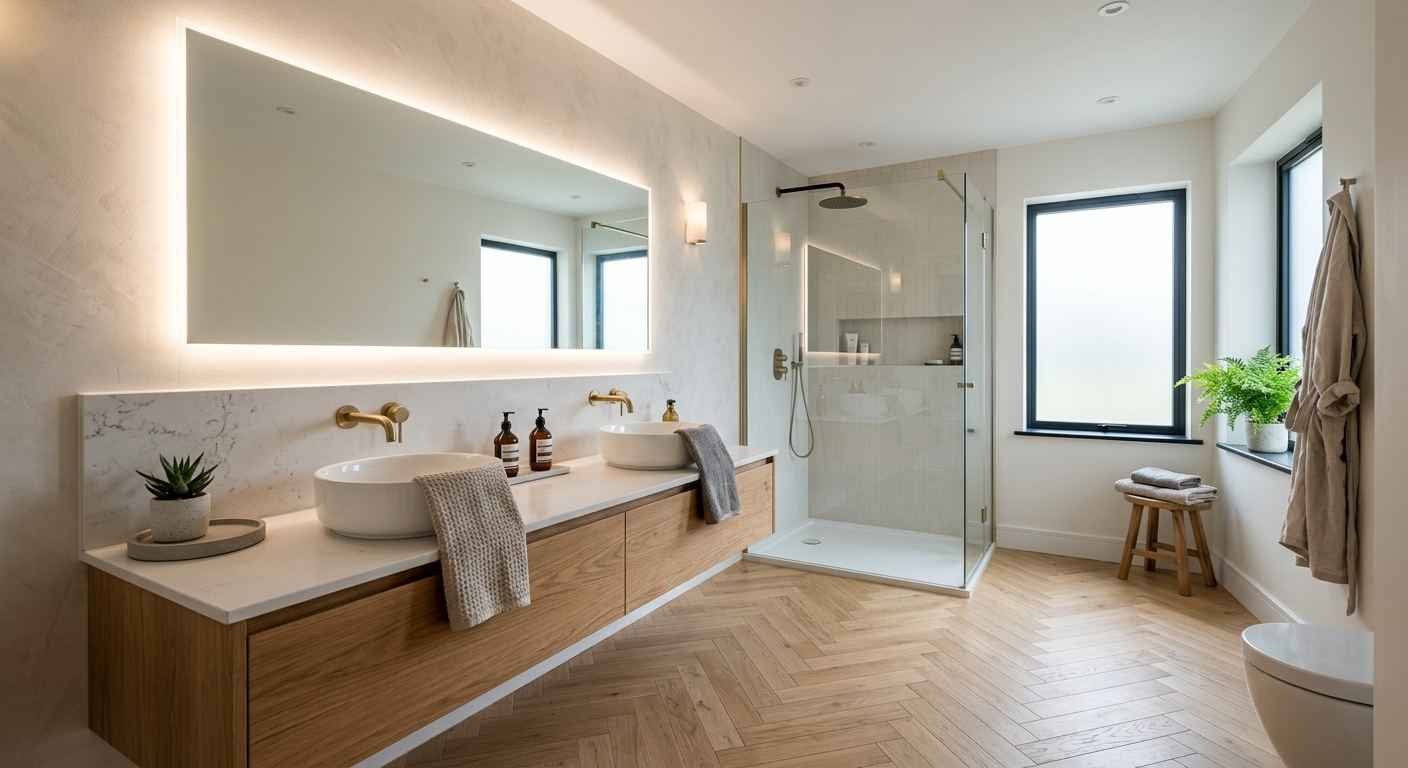
Bathroom renovation options and costs in Church-Yonge Corridor
Bathroom renovation in Church-Yonge Corridor usually starts with a reality check: you’re renovating in a dense, older housing patchwork where jobs can uncover surprises. In this part of Toronto, the local population is about 31,340 (Statistics Canada, 2021 Census), and the surrounding GTA housing stock includes many post-war and 1960s–1980s homes. That age often means dated plumbing routes, older venting, and—once walls and floors are opened—an increased chance of asbestos-containing materials in floor tile or older drywall compounds. The Toronto economic region’s costs are driven more by labour rates and the complexity of bringing rough-in systems up to current Ontario expectations than by climate itself; winters and humidity still matter for durability, but the big budget swings are typically what contractors discover once access is gained.
In neighbourhoods like Yonge-Eglinton (high turnover, lots of condo-adjacent townhomes and older mid-rise stock), demand for skilled tilers, licensed plumbers, and electricians is constant—so timelines and scheduling can affect pricing. If your bathroom is cramped and requires re-routing drains, adding an exhaust fan with a proper electrical circuit, or upgrading shut-offs, you’ll feel the GTA premium. With that in mind, here are realistic budget ranges for the most common bathroom renovation paths, so you can compare contractor quotes apples-to-apples.
| Renovation Scope |
What's Included |
Typical Duration |
Price Range |
| Cosmetic refresh (paint, fixtures, accessories only) |
Paint, caulking refresh, toilet/vanity top or fixture swaps (no plumbing relocation), new lighting trim, towel bars, accessories, deep clean |
3–6 days |
$3,000 – $7,500 |
| Mid-range full renovation (new tile, vanity, tub/shower, electrical) |
Demo and disposal, new vanity and countertop, tub/shower replacement, tile floor + surround, exhaust fan (electrical tie-in), waterproofing, new shut-offs (as needed), basic electrical upgrades, minor plumbing adjustments |
2–4 weeks |
$12,000 – $20,000 |
| High-end full renovation (custom tile, steam shower, heated floors) |
Premium waterproofing system, custom tile layout, steam shower or high-spec shower system, heated floors (with proper electrical circuit), designer vanity, upgraded exhaust/venting, potentially more extensive drain reconfiguration, higher-end lighting and finishes |
4–7 weeks |
$20,000 – $30,000 |
| Shower-only installation (convert tub to walk-in shower) |
Tub removal and prep, new waterproofing and shower pan, walk-in shower enclosure (framed or semi-frameless), plumbing modifications for shower valve/drain, exhaust fan refresh if needed, tile floor or shower surround |
1.5–3 weeks |
$8,000 – $15,500 |
| Bathtub replacement or tub-liner install |
Option A: new tub with new trim and reseal, tile touch-ups, recaulk; Option B: tub-liner installation (prep and fastening), liner-friendly sealant and drainage checks |
2–5 days |
$1,200 – $3,500 |
| Tile-only installation (floor + surround, existing layout kept) |
Tile removal and floor/surface prep, waterproofing membrane (as required by your substrate), tile floor and wall surround, grouting/sealing, trim and silicone, disposal of tile debris |
1–3 weeks |
$3,000 – $10,000 |
Prices are estimates only and vary by project scope, site access and material selection.
What affects the price of bathroom renovation in Church-Yonge Corridor
In Church-Yonge Corridor and the broader Toronto economic region, two contractors can quote the “same” bathroom reno and still differ by 30–50%. The reason is usually not the weather—it’s the labour market and the hidden work that shows up once walls are opened. Skilled trades in the GTA price in schedule pressure and the time-intensive nature of bathroom installs, especially for tiling, custom showers, and careful plumbing fit-up. On top of that, older housing stock is common, and it can include cast-iron or undersized drain stacks, older venting arrangements, and galvanized or worn supply lines. When a contractor has to bring plumbing and venting up to current Ontario expectations, it can add thousands for drain reconfiguration, vent corrections, and new shut-offs.
As an example, if you’re aiming for a mid-range full renovation budget that sits around mid-to-low five figures, you might plan around new tile and fixtures; but if asbestos-containing materials are discovered (often in older floor tile or surrounding materials), abatement can add roughly $1,500–$5,000+ depending on extent and containment needs. Conversely, if your layout stays in place and you only replace fixtures, the job can be closer to a cosmetic refresh range. A second lever is electrical scope: adding a proper GFCI-protected circuit and upgrading an exhaust fan is often modest when access is easy, but can climb when walls or ceilings must be opened.
Concrete examples from typical Church-Yonge Corridor basements and townhomes: (1) a slightly shifted drain location can force extra demolition and mortar bed work; (2) large-format porcelain changes labour time because of layout cuts and subfloor flatness requirements; (3) an older subfloor that’s uneven may require floor prep before tile—otherwise you risk failure and rework. For planning, remember the local full renovation bands commonly land in the $12,000–$30,000 range, while shower and tile-only paths each have their own costs when labour and waterproofing are included.
| Price Factor |
Why It Matters |
Cost Impact |
| Layout change — moving drain or supply lines requires rough-in work |
Relocating plumbing means opening walls/floors, altering rough-in, and sometimes adjusting venting |
Often adds several thousand dollars; can push a bathroom toward the upper end of full-reno bands |
| Tile selection — large-format porcelain vs. mosaic vs. ceramic |
Harder cuts, more labour for layout, and stricter substrate prep increase time |
Can shift the project by roughly $2,000–$6,000 depending on size and complexity |
| Fixture tier — builder-grade vs. mid-range vs. designer brands |
Cost difference in fixtures is real, but so is installation detail and finish coordination |
Typically $800–$4,000+ swing depending on selections |
| Subfloor condition — rot or unlevel concrete adds scope |
Uneven surfaces require build-up/levelling; rot may require replacement materials |
Commonly $500–$3,000+ additional prep and materials |
| Electrical — adding GFCI outlets, exhaust fan, heated floor circuit |
Requires licensed electrical work; hidden routes may require more demolition |
Often adds $600–$3,500+ depending on fan/heat extent |
| Waterproofing method — membrane type and extent |
Bathrooms fail from moisture intrusion; better systems cost more but reduce risk |
Usually $600–$2,500 difference; helps avoid expensive redo work |
| Older-home surprises — asbestos tile, cast-iron drains, galvanized pipes |
Discovery can trigger licensed abatement and additional plumbing upgrades |
Can add $1,500–$5,000+ for abatement; more for drainage/stack replacement |
| Bathroom size — sq ft drives tile and labour time directly |
More surface area means more waterproofing, thinset, setting time, and curing time |
Small bathrooms might be near the low end; larger baths push toward upper band |
Permits & regulations in Ontario
In Ontario, cosmetic updates in a bathroom—think swapping a vanity, replacing fixtures like faucets and toilets without moving plumbing, re-caulking, and repainting—rarely require a permit. However, when you relocate plumbing (moving a drain line or supply lines), add or change electrical components like exhaust fans tied into a new circuit, or make structural changes to walls, permits and inspections become part of the process. Electrical work must meet Ontario code and must be completed by a licensed electrician (or done under their direction and signed off as required). Plumbing rough-in changes—such as altering how the drain routes or changing venting—typically require a permit and inspection.
For a homeowner in Church-Yonge Corridor, the practical step-by-step check is straightforward. First, ask for your contractor’s Ontario trade licence details and confirm them against the appropriate online registry. Second, request a current certificate of insurance showing general liability and confirm coverage amounts match the project scope; for renovation crews, you should also confirm whether they carry WSIB/WCB coverage (or provide proof of clearance/coverage status, as applicable). Third, request a clearance letter or equivalent proof if they’re claiming coverage status via WSIB/WCB. Finally, ensure the quote clarifies who pulls permits (and whether permit fees are included), and confirm disposal and protection measures are stated in writing.
Choosing tile, waterproofing and fixtures for your Church-Yonge Corridor bathroom
In a Church-Yonge Corridor bathroom renovation, three material choices steer both the budget and the long-term performance: (1) tile type, (2) waterproofing system, and (3) fixture tier. For tile, ceramic is typically the entry point, and it’s easiest to budget for if you’re using a standard layout. Porcelain is denser and more water-tolerant, but it’s heavier and often harder to cut cleanly—so installation time can be higher. Natural stone (marble, travertine, slate) can look stunning in Toronto homes, yet it demands more care in selection, sealing, and finishing, which increases labour and material handling complexity.
Waterproofing is where “cheap” can become expensive. Toronto-area humidity and day-to-day shower moisture mean the right system helps prevent mould and substrate damage. A paint-on membrane can work in limited scenarios, but bonded sheet membranes or well-installed systems (including specialized board systems where appropriate) are commonly chosen for showers and higher-risk wet areas. Finally, fixture tier affects both cost and resale: builder-grade components keep budgets under control, while mid-range and designer brands often last better and look more cohesive with your tile and lighting.
Here’s a dollar example to make the decision real: if you’re comparing a mid-range full renovation around $12,000–$20,000 to a plan that pushes toward the upper band near $20,000–$30,000, the step-up is often justified by switching to premium porcelain, adding a stronger waterproofing approach, and upgrading to heated floors or a more detailed shower build. The goal is to spend where failures are prevented—water management—rather than only where surface finish looks good on day one.
| Material / Option |
Pros |
Cons |
Price Range |
| Ceramic tile (floor + walls) |
Budget-friendly, wide design availability, comfortable underfoot for many applications |
More variation in performance by product; can chip if substrate prep is poor; grout maintenance |
$3,000 – $7,000 |
| Porcelain tile (floor + walls) |
Durable, strong moisture resistance, often ideal for consistent finishes and modern looks |
Heavier tile may require excellent subfloor prep; more precise cutting for large formats |
$6,000 – $10,000 |
| Natural stone (marble, travertine, slate) |
Luxury appearance, unique veining and depth that can elevate resale |
Higher labour for layout and finishing; sealing and care required; variation may increase waste |
$8,000 – $14,000 |
| Frameless glass shower enclosure |
Brightens the room, modern look, easy to clean with the right door hardware |
More expensive hardware; requires accurate framing and waterproofing details |
$3,000 – $7,000 |
| Prefab tub surround (acrylic) |
Faster install, consistent fit, lower tile labour than custom walls |
Limited design flexibility; seams and edges need careful sealing; not as premium as tiled surrounds |
$1,200 – $3,500 |
| Custom shower pan (tile or linear drain) |
Custom drainage feel, clean modern lines, strong performance when waterproofed correctly |
More labour and detailing; requires careful slope/leveling and membrane work |
$6,500 – $12,000 |
How to choose a bathroom renovation contractor in Church-Yonge Corridor
When you’re choosing a bathroom renovation contractor in Church-Yonge Corridor, verify the basics first: Ontario licensing, liability insurance, and WSIB/WCB coverage. Start by requesting licence numbers and confirming them through Ontario’s online registry for the relevant trades. Next, ask for a certificate of insurance naming you as an interested party if possible, and check the coverage dates and limits. Then confirm WSIB/WCB status—either via proof of coverage or a clearance letter—so you’re not left holding risk if someone is injured on your job.
After that, get 2–3 itemised written quotes. “Itemised” should mean labour and materials broken out line-by-line (demo, waterproofing, tile setting, plumbing fixtures, electrical items, disposal, and any permit-related line items), not just a single lump sum. Read exclusions carefully: Are permits included? Is hauling and disposal included? Will they protect floors and stairways during demolition? For warranty, ask for both workmanship warranty length and what manufacturer warranties apply to products; also confirm whether warranties are transferable to you at closing.
For payment, keep it conservative: never pay more than about 10–15% upfront, and use a holdback until the job is complete and deficiencies are corrected. Finally, ask for a written timeline with a start date and completion estimate that reflects typical GTA scheduling, especially for tile cure times and shower waterproofing.
- Confirm Ontario trade licence details for each relevant trade (plumbing/electrical/contracting as applicable).
- Request a current certificate of liability insurance and verify coverage dates and limits.
- Verify WSIB/WCB status with proof of coverage or a clearance letter.
- Get a fully itemised quote: labour + materials, not just totals.
- Ask who pulls the permit and whether permit fees are included in the quote.
- Confirm disposal/haul-away is included (tile debris can add surprise costs).
- Review the scope for waterproofing specifics: membrane type, coverage, and drain treatment.
- Ask about tile prep requirements (flatness, substrate repairs) and how failures are prevented.
- Request the exact fixtures and make/model numbers to avoid “equivalent” swaps.
- Confirm electrical scope: exhaust fan, GFCI protection, heated floor circuits if included.
- Clarify warranty terms: workmanship duration, product warranty, and transferability.
- Set a payment schedule with small milestone payments and a defined holdback.
In Church-Yonge Corridor, red flags I see often include: quoting a “low” bathroom renovation without disclosing allowances for waterproofing or tile substrate prep, refusing to provide an itemised labour/material breakdown, starting demo before permits are discussed for plumbing/electrical scope, giving vague warranty language (“we stand behind it”), and asking for large upfront deposits beyond 10–15%.
Frequently asked questions — bathroom renovation in Church-Yonge Corridor
How do I prevent mold in a Church-Yonge Corridor bathroom?
Mould prevention in Church-Yonge Corridor is mostly about stopping water intrusion and drying the space fast. Start with proper waterproofing behind tile in wet zones (shower walls, tub surrounds, and any area splashing near the controls). Use a high-quality membrane and correct detailing around the drain, corners, and transitions. Next, ensure your bathroom has a properly sized exhaust fan vented to the exterior; if you’re renovating, it’s usually the moment to upgrade the fan and add correct electrical provisions. Finally, control ventilation habits: run the fan during and for a period after showers. If your home is older, ask whether asbestos-containing materials are present in the floor tile area—remediation protects both safety and the condition of surfaces during repair. (Statistics Canada, 2021 Census)
What adds the most resale value in a bathroom reno?
Resale value in Ontario often comes from improvements buyers can “see” and trust: a modern, well-laid tile installation, a clean and functional shower/tub upgrade, updated lighting, and reliable ventilation. In the Toronto market, bathrooms that feel bright and dry—especially with an upgraded exhaust fan and good waterproofing—tend to stand out. Also, replacing outdated fixtures (toilet, vanity top, faucets) and installing new flooring that matches the rest of the home help buyers imagine living with it. If you’re budgeting, think of a mid-range full renovation path that can land around $12,000–$20,000 as the zone where buyers typically recognize “real reno” quality. If you’re going higher, the ROI improves when the spend targets durability upgrades like heated floors or a properly detailed shower pan, not only expensive finishes.
Can I keep my existing plumbing layout to save money?
Yes—keeping your plumbing layout is one of the most reliable ways to save money in a Church-Yonge Corridor bathroom renovation. When the toilet, tub/shower valve, and drain locations remain where they are, the contractor can reduce rough-in alterations, which lowers demolition, scheduling complexity, and inspection-related admin. This also helps limit the chance of finding hidden issues like corroded lines or older drain stacks that would require replacement or vent corrections. Practically, you can still refresh the look by swapping the vanity, updating fixtures, and retiling using the same footprint. Many homeowners choose a shower/tile strategy because it focuses labour in one area. If your goal is value with less risk, a shower-only installation or a tile-only installation is often more cost-controlled than relocating drain and vent runs—assuming your existing rough-in is in decent shape.
How much does a walk-in shower cost in Church-Yonge Corridor?
In Church-Yonge Corridor, converting from a tub to a walk-in shower usually lands in the mid-range for labour-intensive work, because the drain, shower valve, waterproofing, and often enclosure all need to be done carefully. For most typical projects, shower installation budgets are commonly in the ballpark of $4,000–$12,000 for the shower scope, but a full tub-to-shower conversion with tile surrounds, shower pan detailing, and plumbing adjustments often pushes the project closer to $8,000–$15,500. If you’re adding heated floors, a frameless enclosure, or a linear drain, you should plan toward the upper end. Also remember older-home surprises: if you discover supply or venting issues when walls are opened, pricing can move upward even if you don’t change the layout.
What's the ROI on a bathroom renovation?
ROI varies by home condition, neighbourhood demand, and how much of the cost is spent on durability versus purely cosmetic upgrades. In Ontario, buyers respond strongly to functional updates (ventilation, waterproofing quality, modern fixtures) because bathrooms fail in ways that aren’t visible until moisture damages surfaces. That’s why spending on waterproofing and a properly detailed shower pan can be a better long-term bet than chasing the most expensive tile. In terms of planning, many homeowners treat a bathroom reno in the $12,000–$20,000 mid-range as a “balance” between noticeable upgrades and affordability for resale. If your project grows toward $20,000–$30,000, ROI typically improves when the added features are durable and cohesive—like heated floors, high-quality enclosure, and a premium waterproofing method—rather than just higher-priced fixtures alone.
Do I need waterproofing behind the tile?
Yes, you should assume waterproofing behind tile in a shower area is required for a safe, long-lasting result—especially in a Toronto-area bathroom where humidity and frequent water exposure are normal. In a properly built shower, waterproofing is not optional; it protects the wall surfaces, framing, and subfloor from moisture migration. The specific system matters: a paint-on membrane can be suitable for some applications, while bonded sheet membranes and well-executed system builds are often chosen for higher-risk wet areas. The contractor should also waterproof transitions, corners, and drain details using the correct products and compatible membranes. When a home is older, surfaces may have remnants of outdated finishes or compromised substrates; that’s another reason waterproofing should be planned as part of the scope, not treated as an upgrade add-on.