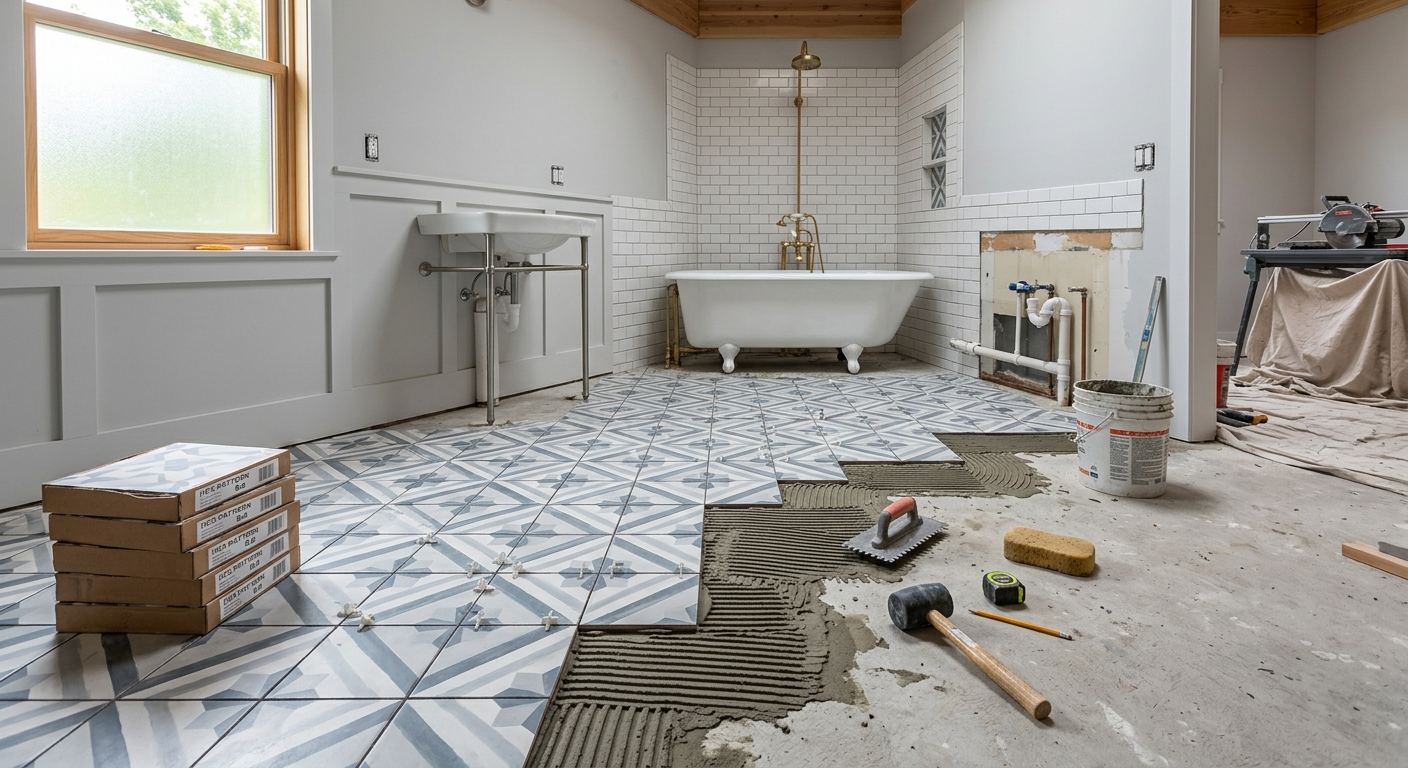
Bathroom renovation options and costs in New Hamburg
In New Hamburg, homeowners typically choose between several renovation paths—ranging from a quick cosmetic update to a full rebuild—based on how old the plumbing and waterproofing really are. With a population of 13,595 (Statistics Canada, 2021 Census), New Hamburg may be smaller than the GTA, but it still feels the same labour-driven pricing pressures when contractors from the Toronto economic region are booked. Many homes here reflect post-war and mid-century construction patterns common across the Toronto economic region, where plumbing layouts and drain setups are often dated. That matters because once walls come down, you can uncover issues like undersized drains, older venting runs, or even asbestos-containing materials in older floor coverings.
Toronto-region demand also shapes your budget more than climate. Bathrooms are labour-intensive in the GTA: tiling, custom showers, and complex plumbing layouts require specialized crews, and those skilled trades command premium hourly rates. Contractors also tend to price in “unknowns” more realistically—especially in older homes where bringing drainage and ventilation up to current Ontario code can add several thousand dollars.
If your home is in a higher-trade-demand pocket—many homeowners renovating around Main Street and the nearby residential blocks find scheduling is tighter because multiple projects compete for the same crews—so a well-defined scope usually gets you a better price and timeline. Below is a practical comparison of common options you’ll see in local quotes; use it as a starting point before you compare itemized bids.
| Renovation Scope |
What's Included |
Typical Duration |
Price Range |
| Cosmetic refresh (paint, fixtures, accessories only) |
Paint, vanity tap swap or new vanity, toilet/trim replacements, mirror and accessories; no plumbing relocation; no tile demo beyond minor touch-ups |
3–7 days |
$4,000–$8,000 |
| Mid-range full renovation (new tile, vanity, tub/shower, electrical) |
Demo, subfloor checks, new waterproofing, tile floor and surround, new vanity and lighting, exhaust fan with proper wiring, tub/shower valve replacement or reseating |
2–3 weeks |
$12,000–$20,000 |
| High-end full renovation (custom tile, steam shower, heated floors) |
Custom shower or steam-ready system, premium large-format tile, linear drain, heated floor wiring, upgraded ventilation/controls, upgraded plumbing trim and designer vanity |
3–5 weeks |
$20,000–$30,000 |
| Shower-only installation (convert tub to walk-in shower) |
Remove tub, install walk-in shower pan and waterproofing, tile enclosure, new valve trim, curb or barrier-free framing, exhaust fan if needed |
1.5–2.5 weeks |
$8,000–$14,000 |
| Bathtub replacement or tub-liner install |
Replace tub (or install liner where suitable), surface prep, new tap/trim, recaulk, limited surround updates |
2–5 days |
$1,200–$3,500 |
| Tile-only installation (floor + surround, existing layout kept) |
Tile floor and/or wall surround, waterproofing included where required, new grout/seal plan; no moving drains or electrical rough-in |
1–2 weeks |
$3,000–$10,000 |
Prices are estimates only and vary by project scope, site access and material selection.
What affects the price of bathroom renovation in New Hamburg
In New Hamburg—and across Ontario—two bids for the “same” bathroom can easily diverge by 30–50%. The biggest reasons are not things like outdoor temperatures; it’s usually regional labour rates and the age of the housing stock. When your project requires drywall removals, tile backer prep, detailed waterproofing, and then tiling, you’re paying for skilled hours. In the Toronto economic region, those skilled trades command a premium, and older homes commonly require plumbing and venting brought up to current Ontario code. That’s where budgets swell.
For example, a bathroom that looks like it’s in the $12,000–$20,000 range can jump upward if the contractor finds cast-iron drain sections or an undersized/incorrect venting run that needs correction. Supply issues matter too: galvanized supply lines or older shut-offs can require replacement. Another common budget driver is asbestos discovery—often in older floor tile systems or related materials in pre-1985 construction. If abatement is required, it can add roughly $1,500–$5,000+, depending on extent and containment.
In New Hamburg, I also see cost swing based on two practical conditions. First, if the subfloor is uneven or shows rot after removal, labour increases because tile assemblies must be brought flat before installation. Second, if you’re adding or upgrading exhaust ventilation for moisture control, electrical rough-in and finishing time increase. Those differences, plus site access and bathroom size, are why a same-day “estimate” rarely holds once walls open and measurements confirm.
| Price Factor |
Why It Matters |
Cost Impact |
| Layout change — moving drain or supply lines |
Relocating rough-in means cutting, reinforcing, re-routing piping, and sometimes redoing vent connections |
Often adds $3,000–$8,000 depending on how far lines must move |
| Tile selection — large-format porcelain vs. mosaic vs. ceramic |
Harder tile types require more precision cutting and more labour time; large-format also increases risk of lippage if the floor isn’t flat |
Typical uplift $1,000–$4,000 on the same bathroom footprint |
| Fixture tier — builder-grade vs. mid-range vs. designer brands |
Higher-end faucets, valves, vanities and trim may require additional installation adjustments and sometimes different rough-in components |
Can move a job by $1,000–$5,000+ |
| Subfloor condition — rot or unlevel concrete adds scope |
Water exposure can compromise subfloor; you may need rebuild/leveling materials before tiling |
Often $800–$3,500 extra |
| Electrical — adding GFCI outlets, exhaust fan, heated floor circuit |
New circuits require licensed electrician involvement, rough-in, and inspection/finish work |
Commonly $600–$4,500 depending on features |
| Waterproofing method — membrane type and extent |
Better systems need correct prep and full coverage; they reduce mould risk but add materials and labour |
Often $500–$2,500 more |
| Older-home surprises — asbestos tile, cast-iron drains, galvanized pipes |
Discovery triggers abatement, pipe replacement, and code-compliant venting |
Adds roughly $1,500–$10,000+ if multiple issues show up |
| Bathroom size — sq ft drives tile and labour time directly |
More square footage means more waterproofing, more tile, more mixing/cutting and longer installation time |
Budget variance of 10–25% between similarly finished bathrooms |
Permits & regulations in Ontario
In Ontario, not every bathroom update needs a permit. Cosmetic changes—like swapping fixtures in the same locations, replacing a vanity, retiling where plumbing isn’t moved, or refreshing finishes—typically don’t require municipal permits, as long as you’re not altering structural walls or changing plumbing/electrical routes. However, permits are commonly required when you do plumbing rough-in changes (like moving a drain or supply line), make structural wall changes, or install/modify ventilation tied to new electrical work.
Electrical is the one area homeowners should not guess on. If you add a new exhaust fan circuit, update lighting, or add heated floor electrical components, the work must meet Ontario electrical code requirements and be completed or signed off by a licensed electrician. Plumbing rough-in changes generally require a permit and inspection before walls are closed. Always ask your contractor to confirm which inspections will be needed for your specific scope.
For New Hamburg homeowners, here’s a practical checklist to verify a contractor: (1) request their Ontario trade licence details and confirm the registration online; (2) ask for a current certificate of insurance for liability—ensure it matches the trade work being done; (3) confirm whether they carry WSIB/WCB coverage for their workers and obtain proof/clearance documentation. (4) get those items before work starts, not after demolition. Finally, request the contractor’s written plan for permits and how they handle inspection scheduling so your bathroom doesn’t get delayed at inspection time.
Choosing tile, waterproofing and fixtures for your New Hamburg bathroom
In New Hamburg, three material decisions shape your budget more than almost anything else: tile choice, waterproofing method, and fixture tier. First, tile: ceramic is a solid entry-level option for many bathrooms, but porcelain generally performs better in wet zones and takes longer to install correctly because it’s denser and demands careful leveling for a crisp layout. Natural stone—marble, travertine, slate—can look exceptional, yet it brings higher material cost and more labour for sealing, selection, and precise cuts.
Second, waterproofing: Ontario bathrooms see frequent moisture exposure year-round (showering, steam, and indoor humidity). A paint-on membrane may be fine for certain walls when used correctly, but bonded sheet membranes or a properly installed schluter-style system can provide more robust protection when detailed to corners, transitions, and penetrations. The right system is how you prevent long-term mould and loose tile.
Third, fixtures: builder-grade valves, tubs and shower trims are easier to hit budget with. Mid-range or designer brands usually raise costs, but they can also reduce maintenance problems and improve long-term performance—especially with better cartridges and shower valve components.
For a concrete budget example, if you’re choosing between standard wall tile work around the tub/shower and a premium tile + heated floor upgrade, it’s common to spend a few thousand dollars more to jump from a typical $12,000–$20,000 renovation profile toward the higher end, where waterproofing quality and custom layout details justify the increase. In New Hamburg, I recommend matching the waterproofing and ventilation to your shower usage first, and then upgrading tile and fixtures where you’ll notice it every day.
| Material / Option |
Pros |
Cons |
Price Range |
| Ceramic tile (floor + walls) |
Entry-level cost, wide style selection, good for many bathrooms when substrate is flat |
Less forgiving than porcelain in wet zones if grout/installation isn’t done carefully |
$3,000–$6,500 |
| Porcelain tile (floor + walls) |
More durable, better moisture performance, suits larger formats for modern looks |
More demanding installation tolerances; requires precise layout and flat subfloor |
$5,500–$10,000 |
| Natural stone (marble, travertine, slate) |
Luxury appearance, unique veining and texture |
Higher material and labour; sealing/maintenance required and some stones can stain |
$9,000–$16,000 |
| Frameless glass shower enclosure |
Brightens the space, modern look, easier to clean than many framed systems |
Higher hardware cost; needs precise framing and measurements |
$2,200–$6,500 |
| Prefab tub surround (acrylic) |
Faster install, consistent finish, often easier on tight budgets |
Limited design flexibility; can look less custom than tile |
$1,000–$3,500 |
| Custom shower pan (tile or linear drain) |
Highest custom feel; linear drains look modern and help manage water flow |
More complex waterproofing and slope planning; higher labour and material costs |
$4,000–$12,000 |
How to choose a bathroom renovation contractor in New Hamburg
Choosing the right contractor in New Hamburg comes down to proof, process, and clarity—not just the lowest number. Start with licensing and coverage: ask for their Ontario trade licence details, a current liability certificate of insurance, and confirmation they carry WSIB/WCB coverage for workers. To check: review the contractor’s licence info online through Ontario’s trade resources; verify the insurance certificate’s coverage dates and company name; and request proof of WSIB/WCB compliance or clearance documentation. If they can’t provide these documents quickly, move on.
Next, get 2–3 itemised written quotes with a labour and materials breakdown—avoid lump-sum quotes that don’t separate demo, framing, waterproofing, tile install, plumbing rough-in, and electrical. Read the scope like a contract: what’s excluded (for example, disposal fees, subfloor repairs, permit pulling), what materials allowances are used, and whether the quote includes waterproofing testing or only installation. Confirm warranty details: ask for a workmanship warranty length and whether product/manufacturer warranties apply to the specific brands installed. If you sell your home, find out whether the warranty is transferable.
Payment schedule matters. As a rule of thumb, never approve more than 10–15% upfront; hold back a portion until the job is completed and you’ve verified key steps (waterproofing continuity, caulking quality, and final trim alignment). Insist on a start date and a completion estimate in writing, plus a plan for what happens if plumbing or asbestos discovery expands scope.
- Provide Ontario trade licence details before signing.
- Show liability insurance certificate with correct business name and coverage.
- Provide WSIB/WCB clearance or proof of coverage.
- Get itemised quotes (labour vs materials vs allowances).
- Confirm disposal and dump fees are included or clearly excluded.
- Ask who pulls the permit and whether it’s included in the price.
- Verify waterproofing brand/type and coverage areas in writing.
- Require an approach for subfloor leveling/repairs if needed.
- Confirm tile layout method, grout selection, and caulking colours.
- Ask about drainage testing or waterproofing verification steps.
- Review the warranty: workmanship length and transferability.
- Use a conservative payment schedule and a written completion checklist.
In New Hamburg, I’ve seen red flags that often lead to overruns: contractors who won’t itemize or explain exclusions, who cannot show insurance/WSIB proof, who rush you to pay large deposits, who specify waterproofing vaguely (“we waterproof the shower”) without product details, and who treat permit responsibility as optional. Any one of these is reason to slow down and demand clarity before demo begins.
Frequently asked questions — bathroom renovation in New Hamburg
What's the most common mistake homeowners make in bathroom renovations?
In Ontario, the most common mistake I see in New Hamburg is choosing finish materials first—tile, vanity, fixtures—without confirming the plumbing, venting, and waterproofing plan. When older homes have dated drains, insufficient venting, or questionable shut-offs, the “pretty” part becomes secondary and costs climb quickly. Another frequent misstep is accepting a low, non-itemized number that underestimates demolition, substrate prep, and electrical tie-ins for exhaust fans or heated floors. If you start with a realistic full-renovation budget (often $12,000–$30,000 for a typical range, depending on scope and finish level), you’re less likely to run short when discovery issues appear after walls open.
How long does tile installation take in a New Hamburg bathroom?
Tile duration in New Hamburg usually depends on whether you’re doing floor only, wall surround only, or a full shower/tub surround. For many bathroom layouts where tile is installed on a straightforward footprint and the subfloor is already properly level, the tile portion often lands around 5–10 working days. If the project includes large-format porcelain, a custom shower curb, or more complex niches/linear-drain transitions, it can take longer because layout, cutting, and setting time increase. The waterproofing must be completed and cured on schedule, so the tile work isn’t just “lay and grout”—it’s coordinated. The overall bathroom can still fall within typical renovation windows, but tile requires careful timing.
How much does a bathroom renovation cost in New Hamburg?
For New Hamburg homeowners, a realistic planning range for a full bathroom renovation commonly falls in the low-to-mid five figures—typically $12,000–$30,000 depending on whether you’re keeping the layout and how custom the shower, tile, and electrical upgrades are. Cosmetic refreshes and small fixture swaps can be much less, while extensive rerouting of plumbing or electrical pushes the budget toward the upper range. If you’re converting a tub to a walk-in shower, shower-only projects frequently land around $4,000–$12,000 depending on whether it’s simple replacement or a true rough-in change. Because New Hamburg draws from the broader Toronto trades market for labour, hidden conditions in older homes can materially influence your final number.
How long does a bathroom renovation take in New Hamburg?
Timing varies mainly by scope and how often you discover work that wasn’t visible pre-demo. A cosmetic refresh is often about 3–7 days because it doesn’t require plumbing rough-in or full waterproofing rebuild. A mid-range full renovation typically takes 2–3 weeks, while higher-end custom projects with features like heated floors or steam-ready planning can run 3–5 weeks. Shower-only conversions are commonly 1.5–2.5 weeks. In older New Hamburg housing stock, plan for extra time if you need drain/venting corrections, asbestos abatement, or subfloor leveling after removal. The best contractors schedule inspections and allocate cure times for waterproofing and tile setting so you don’t get stalled.
Do I need a permit for a bathroom renovation in Ontario?
In Ontario, many cosmetic updates don’t require permits—like replacing a vanity, swapping fixtures in the same locations, and retiling when you’re not changing plumbing or electrical routes. However, you generally need permits when you do plumbing relocation (moving a drain or supply line), add or modify ventilation that involves new electrical circuits, or make structural wall changes. Electrical work must meet Ontario code and typically must be done or signed off by a licensed electrician. Plumbing rough-in changes usually require an inspection once rough work is complete. Your contractor should confirm permit scope in writing. If you’re unsure, ask specifically: “Will any permits be pulled for this scope, and who does it?”
What's the best tile for a bathroom in New Hamburg?
For most New Hamburg bathrooms, porcelain tile is the best overall choice because it performs well in wet zones and suits the humidity conditions created by regular showers. Ceramic tile can work, especially if it’s installed on a properly prepared and level substrate, but it’s less forgiving when the layout is complex or the subfloor isn’t perfectly flat. Natural stone looks high-end, but it needs extra care and sealing, so it’s best when you’re comfortable with maintenance. If you want a budget-friendly path, you can pair porcelain with a clean, simple pattern to control labour—tile labour is a major driver. Many full bathrooms land within $12,000–$20,000 when finishes are mid-range; pushing into higher-end stone and custom shower pans typically moves the project toward the upper bands.