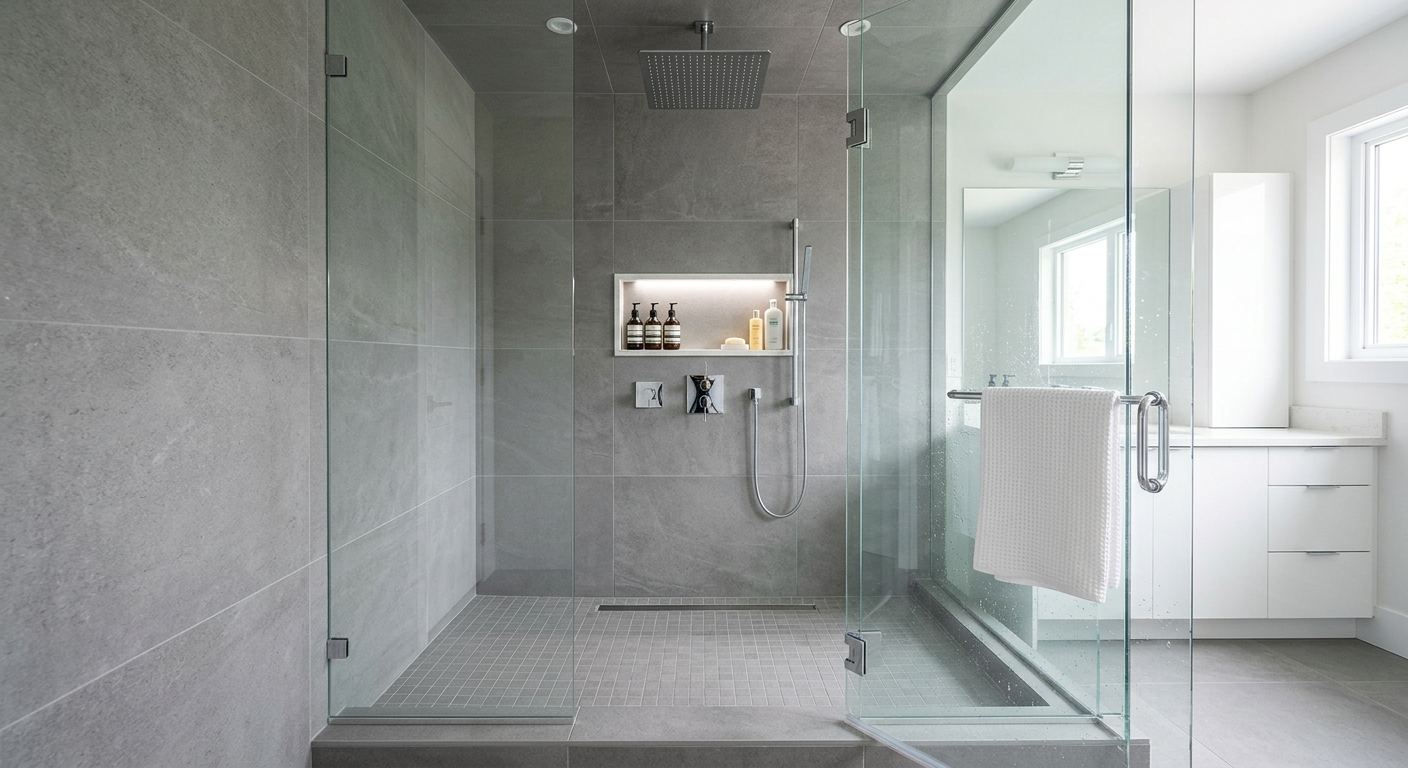
Bathroom renovation options and costs in Fergus
Renovating a bathroom in Fergus is often a mix of choice and reality: you can pick finishes, but the final cost is heavily shaped by labour and what your existing plumbing and subfloor will reveal once walls come down. Fergus’s population was 20,767 in 2021 (Statistics Canada, 2021 Census), and like much of the wider Toronto economic region, a lot of the housing stock dates back to post-war and mid-century builds—meaning older drain stacks, dated venting, and potential hidden materials that can expand scope. In many homes built before the major “modern” plumbing and electrical standards, you may see cast-iron or undersized drains, and occasionally asbestos-containing materials in older tile or related compounds (most commonly assessed during demolition). That’s why two homeowners with “the same bathroom size” can receive quotes that differ noticeably.
In the Toronto market, contractors are busy, so skilled trades (tile setters, plumbers, electricians) command premium hourly rates. The cost is less about local climate extremes and more about whether the bathroom needs code updates—especially for plumbing venting and electrical safety. This is especially common in Fergus neighbourhood pockets where older bungalow renovations are frequent, such as the broader West Fergus area where homeowners often keep the footprint but update systems. Once you start budgeting, the fastest way to align expectations is to pick your renovation option first—then use the table to compare realistic ranges.
| Renovation Scope |
What's Included |
Typical Duration |
Price Range |
| Cosmetic refresh (paint, fixtures, accessories only) |
Paint, caulking refresh, replace vanity or tap/trim only (no plumbing relocation), toilet swap, lighting swap (like-for-like), accessories |
3–7 days |
$3,000–$7,000 |
| Mid-range full renovation (new tile, vanity, tub/shower, electrical) |
Demo, disposal, new vanity and toilet, tub or shower replacement, updated exhaust fan, basic electrical upgrades (code-compliant), new tile floor/surround with waterproofing, patch/paint, sealing |
3–6 weeks |
$12,000–$22,000 |
| High-end full renovation (custom tile, steam shower, heated floors) |
Custom shower system, premium tile, heated floor circuit, upgraded plumbing package, higher-end fixtures, upgraded lighting, more extensive waterproofing and detailing |
6–10 weeks |
$22,000–$30,000 |
| Shower-only installation (convert tub to walk-in shower) |
Remove tub, rough-in adjustments as needed, new walk-in shower pan/liners or tile base, glass/door, tile surround, updated exhaust fan, updated finishes |
2–5 weeks |
$8,000–$16,000 |
| Bathtub replacement or tub-liner install |
Replace tub and fixtures, or install tub-liner where appropriate, re-caulk, localized tile trim changes, basic plumbing hookups, waterproofing at seams |
1–3 weeks |
$1,200–$5,000 |
| Tile-only installation (floor + surround, existing layout kept) |
Remove and replace tile floor/surround, re-spot waterproofing as required, new grout/caulk, limited drywall patching, no major plumbing relocation |
2–4 weeks |
$6,000–$14,000 |
Prices are estimates only and vary by project scope, site access and material selection.
What affects the price of bathroom renovation in Fergus
In Fergus and across the Toronto economic region, you can see quotes for the “same bathroom” swing by 30–50% because labour costs and hidden conditions drive the work—more than any single product choice. Skilled trades in the GTA are paid at premium rates, and bathroom renovations are labour-intensive: tile setting, custom shower waterproofing, plumbing tie-ins, and electrical safety checks all add hours quickly. The biggest cost accelerators are the age of local homes and what’s inside the walls once opened. In the {region} region, older post-war and 1960s–1980s houses often have cast-iron or undersized drain stacks, galvanized supply lines, and older venting setups. When these need corrections to meet current Ontario code expectations, drain reconfiguration, vent corrections, and new shut-offs can add several thousand dollars.
Hidden materials also matter. Discovery of asbestos-containing materials in older vinyl floor tile or drywall compound (more commonly associated with pre-1985 materials) triggers licensed abatement requirements and adds roughly $1,500–$5,000+ to the budget. That’s one reason mid-range full renovations often land in the $12,000–$22,000 band, while projects that include extensive plumbing updates and higher-end shower systems drift toward the $22,000–$30,000 band.
Concrete examples from Fergus jobs: (1) a “simple” shower conversion can become pricier if the drain needs to be re-pitched and vented correctly—often turning a surface change into rough-in work; (2) tile-only updates cost more when the subfloor is unlevel, because labour shifts from setting tile to making the surface correct; and (3) an updated exhaust fan can add cost if the existing wiring path doesn’t support new code-compliant installation and requires an electrician to open ceilings or chase walls.
| Price Factor |
Why It Matters |
Cost Impact |
| Layout change — moving drain or supply lines requires rough-in work |
Moving plumbing triggers additional demolition, new rough-in, and often vent/drain tie-ins |
$2,000–$8,000 |
| Tile selection — large-format porcelain vs. mosaic vs. ceramic |
Harder tile increases labour for cutting and layout; larger tiles can reduce grout lines but demand flatter floors |
$500–$4,000 |
| Fixture tier — builder-grade vs. mid-range vs. designer brands |
Better valves, trim, and finishes cost more; premium items can also change installation details |
$1,000–$6,000 |
| Subfloor condition — rot or unlevel concrete adds scope |
Repairs and flattening reduce failure risk and prevent cracking in tile work |
$1,000–$5,000 |
| Electrical — adding GFCI outlets, exhaust fan, heated floor circuit |
GTA electricians charge premium labour; new circuits require wiring, testing, and code-safe connections |
$800–$4,500 |
| Waterproofing method — membrane type and extent |
Good waterproofing requires correct detailing around corners, niches, and transitions |
$700–$3,500 |
| Older-home surprises — asbestos tile, cast-iron drains, galvanized pipes |
Licensed abatement and drain/supply upgrades expand demolition and labour scope |
$1,500–$12,000+ |
| Bathroom size — sq ft drives tile and labour time directly |
More surface area means more tile, more setting time, more waterproofing and curing |
$1,500–$6,500 |
Permits & regulations in Ontario
In Ontario, a bathroom renovation can fall into two categories: updates that usually don’t require permits and work that typically does. Cosmetic changes—like swapping fixtures, replacing a vanity, re-caulking, or retiling where plumbing positions aren’t changed—generally do not trigger a permit on their own. However, permits and inspections are commonly required when you relocate plumbing (moving a drain or supply line), add or modify exhaust fans that require new electrical circuits, or make structural changes to walls or framing. Any electrical work must meet Ontario electrical code requirements and be performed by a licensed electrician (or signed off by one).
In practice for Fergus homeowners, the workflow should look like this: first, ask the contractor to list permit triggers in writing (plumbing rough-in changes, new circuits, any venting/drain reconfiguration). Next, confirm who will pull the permit and schedule inspections—your name is often involved, depending on the scope and local process. Then verify the contractor’s Ontario trade licence where applicable, and confirm liability coverage with a current certificate of insurance. For WSIB/WCB (workers’ compensation), you want to see proof coverage so you’re not left holding risk if a worker is injured on your property. Finally, keep copies of clearance letters or coverage evidence for your records.
Choosing tile, waterproofing and fixtures for your Fergus bathroom
For a Fergus bathroom, the three decisions that most directly shape both look and budget are tile choice, waterproofing method, and fixture tier. (1) Tile: ceramic is usually the entry-level option—fine for many floors and wall applications—but it’s less dense than porcelain and can be more limiting for wet-area durability. Porcelain typically offers better water resistance and wear performance, but it often requires more careful subfloor prep because the tile is less forgiving if the surface is not flat. Natural stone (marble, travertine, slate) looks exceptional, but it needs higher-finish installation discipline and sealing considerations; plan on premium labour and material handling. (2) Waterproofing: paint-on membranes can work for certain systems, but in Ontario’s humidity and frequent steam use, you’ll get the most consistent results when the system is installed as intended. Bonded sheet membranes and robust shower systems (including well-detailed corners and transitions) generally reduce the risk of moisture migration and mould—provided the substrate is sound. (3) Fixtures: builder-grade saves upfront, but mid-range or designer brands often improve perceived quality through smoother valves, better finishes, and more consistent parts that can matter at resale.
Where does the budget difference make sense? A common example is switching from a basic shower surround to a proper waterproofing + tiled shower pan with premium membranes. Even if it nudges a renovation toward the $12,000–$22,000 band from a more basic plan, it can avoid expensive leaks later—especially in older Fergus homes where substrate and plumbing conditions may already be compromised. In contrast, upgrading vanity and trim alone can look good quickly, but it won’t fix waterproofing weak points.
| Material / Option |
Pros |
Cons |
Price Range |
| Ceramic tile (floor + walls) |
Good entry-level value, wide colour selection, familiar install standards |
More variation and potential wear limitations than porcelain; can be harder to match perfectly on large areas |
$3,000–$8,500 |
| Porcelain tile (floor + walls) |
Durable for wet areas, consistent sizing, usually better long-term performance |
Requires flatter subfloor for best results; premium tile increases material cost |
$5,000–$12,000 |
| Natural stone (marble, travertine, slate) |
Luxury look, unique veining/texture, premium feel |
Sealing and maintenance expectations; tile labour and setting can be higher |
$8,000–$18,000 |
| Frameless glass shower enclosure |
Modern appearance, easy to clean, increases perceived space |
Higher hardware and glass cost; requires accurate framing and waterproof detailing |
$2,000–$8,500 |
| Prefab tub surround (acrylic) |
Faster install, generally more consistent surface, lower labour than full tile |
Less custom look; seams must be properly sealed to stay watertight |
$1,200–$3,500 |
| Custom shower pan (tile or linear drain) |
Best-in-class waterproofed shower solution, tailored slope, can support linear drain aesthetics |
More labour and detailing; requires careful measurements and curing time |
$4,000–$12,000 |
How to choose a bathroom renovation contractor in Fergus
Choosing the right contractor in Fergus comes down to proof, process, and clarity—because bathroom work is where hidden conditions can quickly become expensive. Start by verifying Ontario licensing and insurance. Ask for their current Ontario trade licence (when applicable for the work they’ll perform), liability insurance, and proof of WSIB/WCB coverage. Then check how they provide evidence: a certificate of insurance should list coverage and limits; WSIB/WCB confirmation should show active coverage status. Next, request 2–3 itemised written quotes—not lump sums—so you can see labour and materials breakdowns for demo, waterproofing, tile setting, plumbing, electrical, and disposal. That lets you compare “apples to apples” rather than comparing different assumptions.
Read the scope line-by-line: confirm what’s excluded (for example, subfloor repairs, asbestos testing/abatement, permit fees, or mould remediation). Ask whether the contractor pulls permits and includes inspections, and whether debris disposal and bathroom fixtures haul-away are included. Warranty matters: request workmanship warranty length (not just product warranties) and confirm whether the warranty is transferable if you sell your home. On payment, never pay more than 10–15% upfront; hold back a portion until the job is complete and deficiencies are corrected. Finally, get a start date and completion estimate in writing, including how long materials curing time (like waterproofing and mortar) will affect the schedule.
- Confirm Ontario trade licence for the scope they’re quoting (especially plumbing/electrical-related trades).
- Request liability insurance certificate and verify the effective dates.
- Verify WSIB/WCB coverage for workers on site.
- Get 2–3 itemised quotes with labour vs. material costs separated.
- Ask what waterproofing system is specified (product type and where it’s used).
- Confirm permit responsibility: who pulls it, and whether inspection fees are included.
- Ask how disposal is handled (dump fees, haul-away, and drywall/tile waste).
- Review the demolition plan: dust control, bathroom access, and subfloor assessment timing.
- Demand a detailed scope for electrical: exhaust fan, GFCI, lighting, and heated floors (if included).
- Check warranty terms in writing for workmanship and whether it’s transferable.
- Use a payment schedule with milestone-based payments (10–15% max deposit).
- Get a written schedule including lead times for tile, glass, and custom shower components.
Red flags in Fergus: contractors quoting “cash deal” lump sums with no line items; refusing to provide proof of insurance or WSIB/WCB; vague waterproofing details (“we’ll make it waterproof” with no membrane/system named); starting work without a clear permit plan where plumbing/electrical relocation is involved; and asking for large deposits (more than 10–15%) before any work begins.
Frequently asked questions — bathroom renovation in Fergus
What's the ROI on a bathroom renovation?
ROI in Fergus is strongest when the renovation solves real, visible issues: poor ventilation, outdated fixtures, cracked tile, or a layout that’s hard to use. In the Toronto economic region, buyers often pay attention to waterproofed showers, code-safe electrical (like GFCI where required), and modern vanities/lighting. On average, a bathroom renovation tends to recoup a meaningful portion of its cost rather than matching dollar-for-dollar in all cases—especially if you over-upgrade beyond what the home will support. If your scope is in the $12,000–$22,000 mid-range band, ROI is typically more realistic than jumping straight to the upper $22,000–$30,000 high-end path unless your home’s finishes and overall condition align. (Statistics Canada, 2021 Census)
Do I need waterproofing behind the tile?
Yes—when you’re tiling a shower area or wet wall in an Ontario bathroom, waterproofing behind the tile is standard practice for a durable result. The “why” is simple: even with good grout, water can migrate through tiny joints over time, especially in humid conditions common to Ontario homes. A proper system combines a waterproofing membrane (paint-on or sheet, depending on the assembly) with correct installation at corners, seams, niches, and transitions. In Fergus and the broader GTA, older homes may have uneven substrates or prior patchwork; that’s why the waterproofing choice and substrate prep matter as much as the tile itself. Your contractor should specify the membrane type and show the waterproofing plan in the quote.
How do I compare bathroom renovation quotes?
Compare quotes by scope and assumptions, not by bottom-line price alone. Ask each contractor for itemised breakdowns: demolition, plumbing rough-in changes, electrical (exhaust fan, GFCI, heated floor circuit if included), waterproofing system, tile labour, glass enclosure (if any), disposal, and permit handling. A “shower-only” conversion can look cheaper until you see what’s included for drain reconfiguration, vent corrections, or shut-off upgrades—common in older Toronto-area homes. If one quote keeps the layout and another moves drains, the difference is not “overcharging”; it’s different work. Also check allowances for tile/fixtures and verify warranty terms. Use the budget bands—mid-range work around $12,000–$22,000 versus higher-end around $22,000–$30,000—to sense-check whether the quote matches your stated finish level.
Can I live at home during a bathroom renovation in Fergus?
Often yes, but it depends on the scope and whether a shower/tub will be functional. For cosmetic refreshes, living in the home is usually straightforward—bathroom access remains largely available. For mid-range full renovations or shower conversions, you may be without full shower access while waterproofing cures and tile is installed; plan for the “temporary bathroom” approach (using the main floor shower if you have one, or a short-term schedule to rely on another bathroom). In Fergus, many households can manage with one operational bathroom, but you should confirm dust control, debris staging, and how plumbing shut-offs are handled during the rough-in phase. If you’re in a single-bathroom home and the renovation is likely to run 3–6 weeks, schedule a practical temporary routine before work begins.
What's the best bathtub material for a Fergus home?
The “best” tub material depends on whether you want long-term durability, quick install, and how your floor and surround are being handled. In typical Fergus renovations, replacement tubs are often acrylic or fiberglass-reinforced for their balance of weight, cost, and installation speed—especially if the floor framing is older. If you’re keeping the existing surround and switching the tub, an acrylic approach can be a good fit, provided waterproofing at seams is done correctly. If your plan is a full high-end shower/tub remodel with extensive tile and updated plumbing, your value tends to come from the assembly quality rather than only the tub shell. Many homeowners also choose to convert to a walk-in shower for accessibility and reduced maintenance risk. For budgeting, tub replacement (or tub-liner style solutions) commonly sits around $1,200–$3,500, while full shower conversions generally move much higher due to rough-in and waterproofing.
Is it worth renovating a bathroom before selling in Fergus?
It can be worth it if your current bathroom issues are likely to influence buyers’ decisions—mouldy caulking, outdated fixtures, weak ventilation, cracked tile, or a layout that feels cramped. A bathroom that’s clean, waterproofed, and code-safe usually photographs well and reduces buyer “unknowns,” which can help during showings. If your reno budget is closer to a mid-range full renovation (often $12,000–$22,000 in the Toronto region), you typically get the biggest improvement per dollar when the contractor addresses ventilation, waterproofing, and fixtures—not just surface cosmetic updates. If you’re planning a high-end transformation closer to $22,000–$30,000, match it to the home’s overall condition; overcapitalizing can reduce resale lift. Also consider that renovations can reveal older-home surprises (like cast-iron drains or asbestos-containing materials), which may affect timeline—so plan your sell timeline carefully.