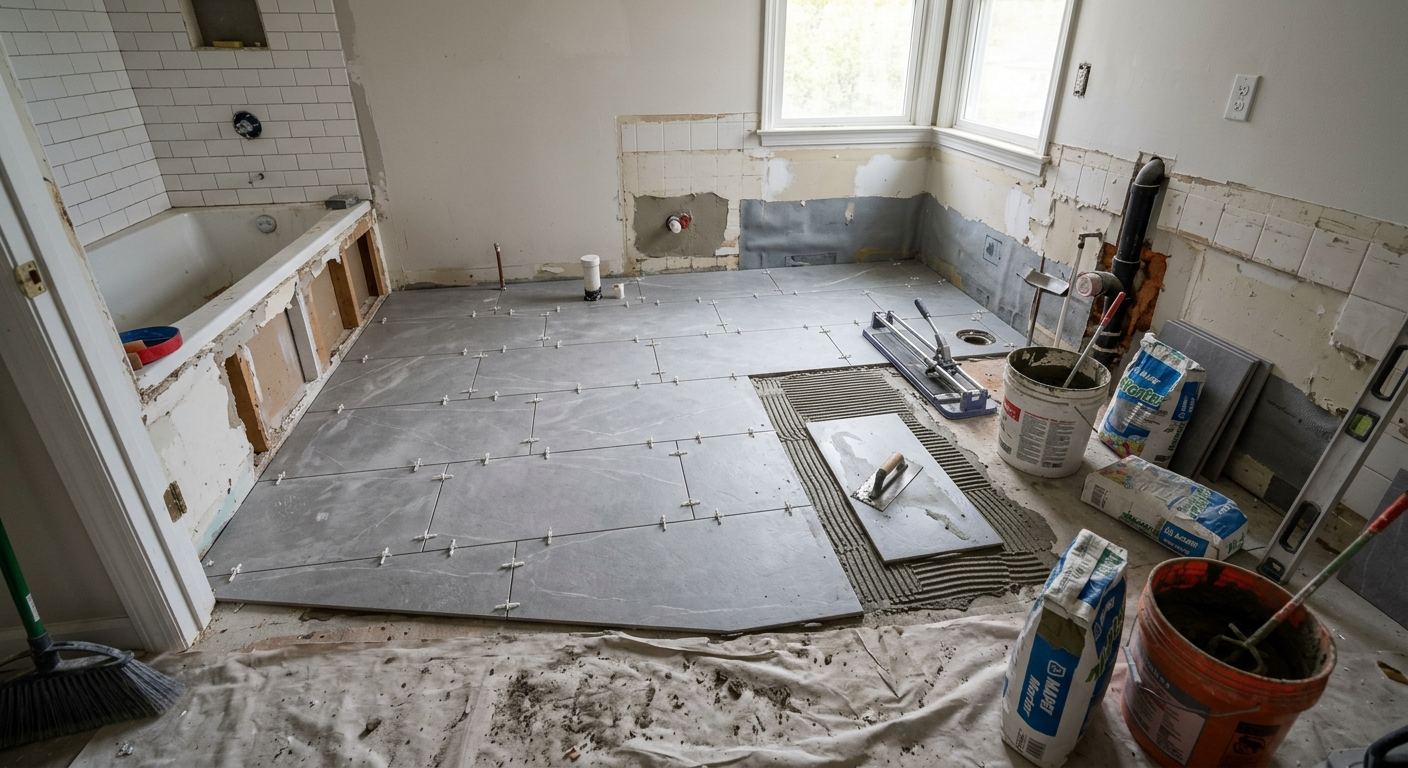
Bathroom renovation options and costs in Moosonee
Moosonee bathroom renovations range from quick refreshes to full tear-outs, and the best option depends on your budget, your plumbing condition, and how modern you want the space to feel. In Moosonee, a big driver is the age of local housing stock: about 39.8% of homes were built before 1981, which often means older drain assemblies, dated venting strategies, and a higher chance of hidden issues once walls are opened. Another reality homeowners run into is that many bathrooms show wear that isn’t just cosmetic—so “updating” can quickly become “upgrading.” The Northeast market conditions also matter. In the Moosonee area, bathroom work depends on a limited pool of qualified trades; when schedules tighten, labour can land toward the higher end of typical Ontario ranges. Weather isn’t usually the main cost driver inside the bathroom envelope, but moisture management is still critical because improper ventilation will show up as odours, surface staining, and faster grout failure.
If you live near the waterfront or in established residential pockets such as Moosonee’s town core, contractors may prioritize your project when access is straightforward and there’s less hauling time for materials and disposal. The most common starting point is a cosmetic refresh if the subfloor and plumbing test out, while mid-range and high-end full renovations usually come into play when waterproofing needs renewal or when fixtures can’t be upgraded without addressing rough-in plumbing and electrical. Use the table below to compare typical scopes and budgets, then we can narrow down what fits your specific layout and condition.
| Renovation Scope |
What's Included |
Typical Duration |
Price Range |
| Cosmetic refresh (paint, fixtures, accessories only) |
New vanity (swap-in), updated taps, toilet if replacing, paint, caulking refresh, mirrors/accessories; no wall opening and no plumbing relocations |
3–7 days |
$4,500–$9,500 |
| Mid-range full renovation (new tile, vanity, tub/shower, electrical) |
Demo and disposal, new vanity and toilet, tub/shower or glazed surround, tile floor and walls, new exhaust fan with proper venting, GFCI where required, basic plumbing fixture swaps |
2–3 weeks |
$15,000–$28,000 |
| High-end full renovation (custom tile, steam shower, heated floors) |
Full tear-out, premium waterproofing system, custom tile layout, frameless or upgraded enclosure, steam shower components, heated floor circuit, enhanced lighting, more complex electrical |
3–5 weeks |
$28,000–$35,000 |
| Shower-only installation (convert tub to walk-in shower) |
Demo tub, new shower pan and waterproofing, tile surround, niche/shelf, new valve trim, enclosure door, exhaust fan check/upgrade, drain tie-in |
1.5–3 weeks |
$10,000–$18,000 |
| Bathtub replacement or tub-liner install |
Remove and set new tub with proper sealing, re-caulk and re-tile minor areas as needed; liner install only where the existing tub is sound |
5–10 days |
$2,000–$6,000 |
| Tile-only installation (floor + surround, existing layout kept) |
Remove old tile where needed, install waterproofing and new tile floor and shower/tub surround, grout/seal, limited plumbing touch-ups |
1.5–3 weeks |
$4,500–$12,000 |
Prices are estimates only and vary by project scope, site access and material selection.
What affects the price of bathroom renovation in Moosonee
Homeowners often see wide variation in quotes for the same bathroom reno—commonly 30% to 50% across Ontario—because labour availability and hidden work drive the budget more than surface finishes. In Moosonee and the Northeast Ontario region, the biggest swing factor is the condition of what’s behind the walls. In the broader Northeast market context, bathroom work tends to price mid-range to higher because trades are in shorter supply and travel/disruption adds labour hours. The age of the housing stock is a key reason: with roughly 39.8% of homes built before 1981, it’s common to encounter cast-iron or older drain assemblies that don’t connect cleanly to modern shower drains, plus galvanized supply lines that may need partial replacement when fixtures are changed.
As for moisture control and ventilation, older bathrooms frequently have exhaust that’s weak or ducted poorly. Correcting that may involve opening more wall space and adding new wiring or a fan circuit. Another cost escalator is asbestos exposure risk: if asbestos-containing materials are discovered in vinyl floor tile or older drywall compound (especially pre-1985 material), abatement can push budgets up by about $1,500–$5,000 or more, depending on the area and containment requirements. These surprises help explain why a “refresh” can become a project closer to a full renovation budget (for example, moving from a cosmetic approach up toward the $15,000–$28,000 band).
Conversely, you can sometimes hold cost down by keeping the existing layout and doing fixture swaps only—especially when your subfloor is solid and the ventilation already meets performance expectations. If you’re staying in the tile-only or mid-range range (think around $35–$90 per square foot equivalent tile labour/material patterns), the budget stays more predictable. If you’re planning a shower conversion, the combination of drain tie-in, waterproofing labour, and enclosure build can push closer to $10,000–$18,000 for a shower-only installation, even before you add higher-end fixtures.
| Price Factor |
Why It Matters |
Cost Impact |
| Layout change — moving drain or supply lines |
Requires plumbing rough-in, patching subfloor, and potentially structural/joist checks |
Often +$3,000–$8,000 |
| Tile selection — large-format porcelain vs. mosaic vs. ceramic |
Coverage rate, cutting complexity, and labour time increase with smaller mosaics and larger rectified panels |
Typically +$1,000–$5,000 |
| Fixture tier — builder-grade vs. mid-range vs. designer brands |
Valves, trims, and toilets vary widely; higher tiers often require more precise installation |
Typically +$800–$4,500 |
| Subfloor condition — rot or unlevel concrete adds scope |
Soft spots and uneven surfaces force rebuild of backer boards/underlayment and slower tile prep |
Often +$1,200–$6,000 |
| Electrical — adding GFCI outlets, exhaust fan, heated floor circuit |
New circuits need code-compliant wiring, box locations, and sometimes panel capacity checks |
Typically +$1,000–$4,000 |
| Waterproofing method — membrane type and extent |
Premium membranes and correct overlap/details reduce long-term mould and failed grout |
Often +$800–$3,000 |
| Older-home surprises — asbestos tile, cast-iron drains, galvanized pipes |
Abatement procedures, disposal, and additional plumbing labour raise scope |
Can add $1,500–$10,000+ |
| Bathroom size — sq ft drives tile and labour time directly |
More area means more thinset, membrane, backer prep, and longer setting/curing |
Usually +$2,000–$12,000 across project sizes |
Permits & regulations in Ontario
In Ontario, cosmetic updates—like swapping a vanity, replacing a toilet, repainting, or retiling using the existing layout—typically do not need a permit. Where permits and inspections become necessary is when you change the building services or the structure. For example, relocating plumbing (moving a drain or supply lines), adding or changing a bathroom exhaust fan when it involves new wiring/circuits, and making structural wall changes generally require permits and inspection. Electrical work must meet the Ontario Electrical Safety Code requirements and must be done by a licensed electrician, including any new GFCI-protected outlet or heated floor circuit.
For your Moosonee project, verify the contractor’s Ontario trade licence and their liability coverage step-by-step. First, ask for the contractor’s licence details for the trades they perform (and confirm any subcontractors are licensed). Next, request a current Certificate of Insurance showing general liability and coverage limits; the insurer contact information should match what’s on the certificate. For workers, ask how WSIB/WCB coverage is handled for the crew—request a clearance letter or proof of account coverage (as applicable) so you’re not left with liability if an injury occurs. Then, confirm the permit process: if permits are required, the contractor should list who pulls them and include inspection milestones in the schedule. Finally, keep all documentation in a folder so you can match the quote scope to what is actually permitted and inspected.
Choosing tile, waterproofing and fixtures for your Moosonee bathroom
In Moosonee, your biggest budget levers usually come from tile choice, waterproofing strategy, and fixture tier—not from labour alone. Start with tile. Ceramic tile is typically your most economical entry point, but it can be less forgiving for shower floors and high-moisture zones unless you select the right grade and slip rating. Porcelain tile is a common mid-range sweet spot because it handles moisture well and is often less porous, which helps with long-term cleaning and stain resistance. Natural stone looks premium, but it adds cost through premium material pricing and extra installation considerations (sealing, substrate prep, and careful selection to avoid softness or staining). Next is waterproofing. For Ontario bathrooms, the right system matters more than brand names: choose a proper paint-on membrane for lighter, limited areas only when the substrate and system are proven for your application; bonded sheet membranes (and full-detailing around corners, niches, and drain transitions) are often the most robust option for shower walls. A well-installed schluter-style system is also common because it provides consistent geometry and detail integration.
Finally, fixtures: builder-grade taps, toilets, and shower valves can save upfront, but they may cost more in repairs or replacement over time if you’re not matching parts to water pressure and use patterns. If you’re comparing budgets, a realistic example is this: stepping up from mid-range porcelain plus standard valve trims to a higher-end valve trim and a premium tile layout can add $1,500–$3,500, but that’s often justified when it improves alignment, reduces rework, and gives you a better shower experience you’ll use daily.
Match your combination to your situation: if your home is older (many were built before 1981), plan for robust waterproofing and expect more prep time. That’s how you protect your renovation from mould risk and failed grout—especially when ventilation has to be corrected during the reno.
| Material / Option |
Pros |
Cons |
Price Range |
| Ceramic tile (floor + walls) |
Generally lower material cost; good for walls and many floors with correct thickness and slip rating |
Can be more porous; may require more sealing attention depending on product |
$35–$70 |
| Porcelain tile (floor + walls) |
Low absorption; durable for wet zones; clean lines with modern formats |
Higher material cost and sometimes more labour for layout consistency |
$55–$90 |
| Natural stone (marble, travertine, slate) |
High-end look; premium resale appeal; unique patterning |
Needs sealing/maintenance; requires careful substrate and selection |
$85–$130 |
| Frameless glass shower enclosure |
Modern appearance; better visual space; sturdy hardware |
Installation precision matters; costs rise with door complexity and custom sizes |
$1,200–$3,500 |
| Prefab tub surround (acrylic) |
Faster install; consistent waterproofing where installed correctly; good for budget timelines |
Less design flexibility; can show seams/edges over time |
$800–$2,000 |
| Custom shower pan (tile or linear drain) |
Improved accessibility and modern look; linear drains help with water evacuation |
More waterproofing and detail work; cost increases with drain system and layout |
$2,500–$7,000 |
How to choose a bathroom renovation contractor in Moosonee
Choosing the right contractor in Moosonee is mostly about verifying credentials and making sure the quote matches your expectations line by line. Start with Ontario licensing and coverage. If the contractor is doing electrical scope, confirm the electrician is licensed in Ontario and ask for the licence details. For liability insurance, request the Certificate of Insurance before work starts and ensure it lists the contractor and appropriate coverage limits. For worker protection, ask for WSIB/WCB proof or a clearance letter so you know the crew is properly covered.
Next, get 2–3 itemised written quotes—ideally with labour and materials separated and with allowances listed clearly (tile, membrane, fixtures, disposal, and any specialty items like heated floors). Read the scope carefully: confirm what’s excluded (for example, drywall replacement beyond a certain amount, subfloor repairs, permit fees, or fixture supply). Ask who pulls permits if they’re required and whether inspection fees are included. Disposal should be explicit, including how much material is hauled off and where it’s stored during the job.
Warranty is your protection. Confirm the workmanship warranty length and whether it applies to the waterproofing and tile installation specifically. Also ask whether product warranties are transferable. Payment schedule matters: never pay more than 10–15% upfront, and use a holdback until key milestones are completed (waterproofing inspection, enclosure install, and final clean-up). Finally, require a written timeline with start date and completion estimate.
- Request Ontario licence details for each trade involved and confirm who does the work vs subcontracting.
- Obtain a Certificate of Insurance and verify dates/coverage limits before the deposit.
- Ask for WSIB/WCB clearance or proof of coverage for the working crew.
- Get 2–3 itemised quotes with labour and materials broken out, not just lump sums.
- Confirm allowances for tile, vanity, fixtures, and membrane (no “TBD” items without pricing).
- Ensure disposal/rubbish removal and haul-away are included in the scope.
- Ask who pulls permits (if required) and whether permit fees are included.
- Verify electrical scope is signed off by a licensed electrician.
- Confirm waterproofing method and who supplies the membrane system details.
- Require a written workmanship warranty covering waterproofing and tile installation.
- Keep payment staged: limit initial deposit and hold back until punch list complete.
- Get a start date, milestones, and completion estimate in writing.
In Moosonee, red flags to watch for include: refusing to provide insurance/WSIB proof, quoting a “full renovation” without specifying waterproofing and electrical scope, asking for large deposits beyond 15% upfront, vague exclusions (especially around permit pulling and disposal), and missing start/completion dates in writing. If you’re uncertain, ask for a revised scope—legitimate contractors welcome clarity.
Frequently asked questions — bathroom renovation in Moosonee
How do I prevent mold in a Moosonee bathroom?
To prevent mould in a Moosonee bathroom, focus on three things: ventilation, waterproofing, and drying after use. First, make sure the exhaust fan is properly vented and sized for the bathroom—weak fans are a common reason older bathrooms get surface staining and odours. Second, use a complete waterproofing system behind the tile in wet zones, with correct membrane overlap at corners, niches, and drain transitions. Third, keep the fan running long enough after showers; steam and warm air can linger, especially in bathrooms with limited air exchange. If your home was built before 1981, plan for hidden material changes and don’t skip substrate prep, since poor adhesion or unlevel backing accelerates grout failure (Statistics Canada, 2021 Census).
What adds the most resale value in a bathroom reno?
In Ontario, bathroom buyers typically pay most attention to layout functionality, clean waterproofing, and modern finishes that look durable. The strongest value adds are usually (1) replacing outdated shower/tub solutions with a well-built shower system, (2) correct ventilation and electrical safety upgrades (like properly installed GFCI outlets and a good exhaust fan), and (3) installing tile and fixtures that will age well. Heated floors and premium glass enclosures can boost perceived value, but they’re most effective when the base waterproofing and substrate work are done right. In a Moosonee context, many projects land in the mid-range full renovation band—around $15,000 – $28,000—because the “invisible” improvements (plumbing rough-in, moisture control, and electrical) are often what buyers notice after inspection.
Can I keep my existing plumbing layout to save money?
Yes—keeping the existing plumbing layout is one of the most reliable ways to control cost in Moosonee. When you don’t move the drain or supply lines, you typically avoid a large portion of the rough-in plumbing labour and reduce wall opening and patching. That often keeps your budget closer to mid-range scopes instead of expanding into a higher full-reno tier. It’s also helpful for older homes, where hidden cast-iron or galvanized components can create surprises once walls open. If your plumbing pressure, shut-offs, venting, and waste line condition test out, you can still upgrade to modern fixtures and a refreshed tile finish. If you do move anything, expect it to push you toward the upper parts of the renovation pricing bands due to additional trades and inspection steps.
How much does a walk-in shower cost in Moosonee?
A walk-in shower conversion commonly costs more than a simple refresh because it involves demo, a shower pan and waterproofing system, drain tie-in, valve trim changes, and enclosure installation. For Moosonee, a realistic budget for “shower-only installation” (convert tub to walk-in) is typically about $10,000 – $18,000. The final number depends on tile choice (porcelain vs ceramic), whether you’re adding niches, the enclosure type, and how much hidden plumbing/venting work is uncovered—especially in pre-1981 homes. If you also upgrade electrical (for example, new fan and/or heated floors), that can move you toward the higher end of full-reno pricing.
What's the ROI on a bathroom renovation?
ROI varies with your home and local demand, but in Ontario most bathroom renos recoup a meaningful portion when they address reliability and moisture control—not just aesthetics. The most defensible ROI comes from improvements that reduce risk: proper waterproofing, modern exhaust ventilation, safe electrical (including GFCI protection), and fixing underlying plumbing issues rather than cosmetically covering them. A project in the $15,000 – $28,000 mid-range band often offers a good balance for many homeowners because it typically includes tile renewal and key safety upgrades. High-end features can feel luxurious, but they can be difficult to fully recover if the market doesn’t reward those specific upgrades in your neighbourhood. In Moosonee, where housing stock is older for a sizeable share of properties (Statistics Canada, 2021 Census), moisture and durability-focused renovations tend to hold buyer appeal.
Do I need waterproofing behind the tile?
Yes—if the area is a shower or tub surround, waterproofing behind the tile is non-negotiable for a lasting result in Ontario, including Moosonee. Tile itself is not a waterproof barrier; grout can crack, and water can travel through micro-gaps and edges. A proper waterproofing system (often a membrane designed for wet-area tiling) protects the substrate and reduces mould risk by preventing moisture from getting behind the walls. If your contractor is using a paint-on membrane, bonded sheet membrane, or a system-integrated approach, the key is that it’s installed correctly with proper overlap and detailing at corners, seams, and penetrations. In older bathrooms—especially those with dated ventilation—skipping waterproofing is a common reason for recurring grout failure and musty odours.