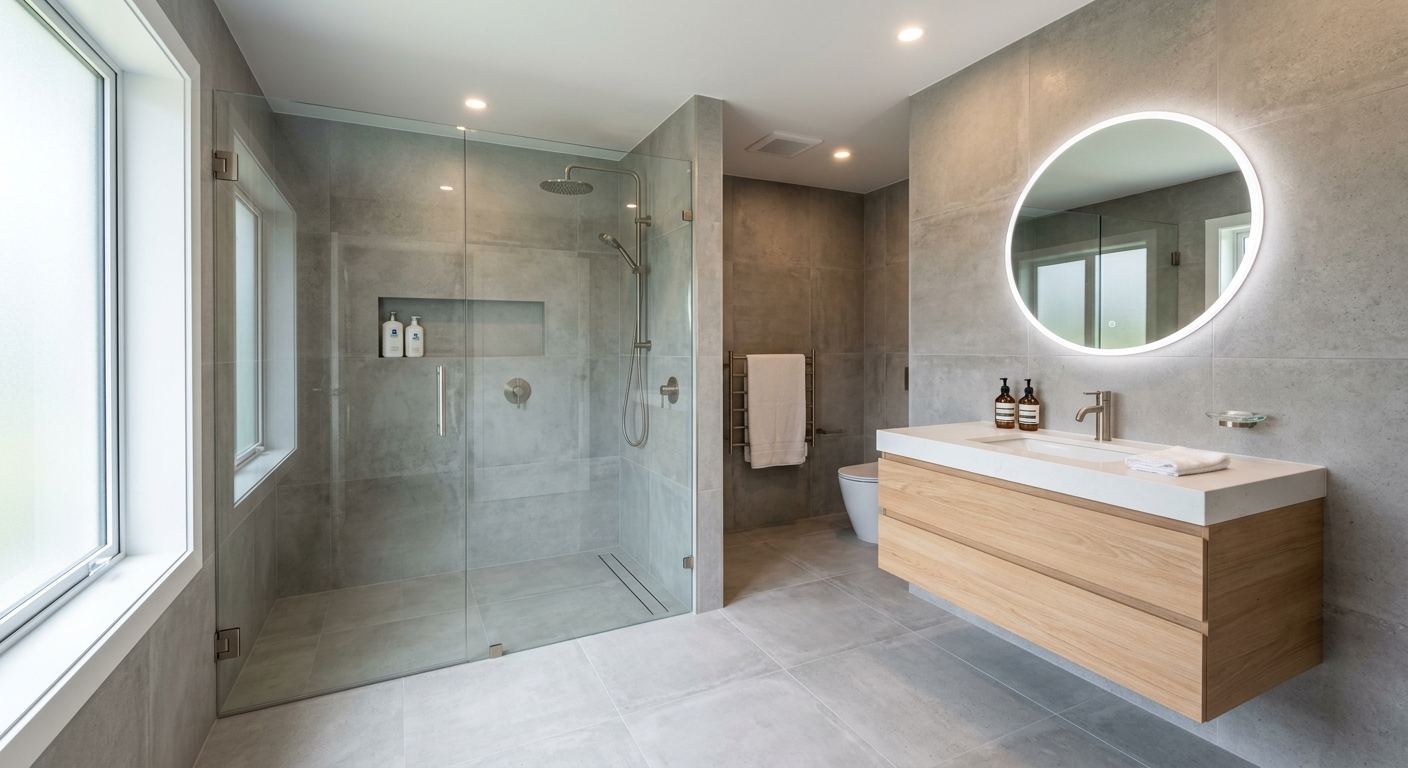
Bathroom renovation options and costs in Vaughan
Vaughan homeowners typically have three main paths for a bathroom upgrade: a cosmetic refresh, a mid-range full renovation, or a high-end full renovation with premium finishes. In Vaughan—where there are 323,103 residents and about 89,290 homeowner households (Statistics Canada, 2021 Census)—choice of scope matters because it drives how many trades get involved and how much hidden work is uncovered. One big driver is the age of the housing stock: only a portion is “new enough” to avoid dated plumbing layouts, with 7.6% of homes built before 1981 (Statistics Canada, 2021 Census). In older neighbourhoods, it’s common to open walls and find cast-iron or undersized drain components, older shut-offs, and sometimes older electrical remnants that must be brought up to current Ontario code when the work goes beyond surface-level changes. That’s why cosmetic-only plans usually land far below full renovation budgets.
In the GTA, renovation costs are shaped less by “weather damage” and more by labour intensity and labour rates. Bathroom work is labour-heavy—tiling, waterproofing, plumbing rough-ins, and venting—so quotes can swing even for similar layouts when the contractor estimates discovery risk (galvanized supply lines, vent corrections, or asbestos-containing materials). Contractor availability also tightens during peak periods when multiple trades are booking at once. In Vaughan, trade demand is especially strong in family-oriented pockets like Maple and Woodbridge, where lots of homes are older and homeowners often plan upgrades together.
Use the table below as a realistic starting point for budgeting, then compare quotes line-by-line for scope, exclusions, and allowances.
| Renovation Scope |
What's Included |
Typical Duration |
Price Range |
| Cosmetic refresh (paint, fixtures, accessories only) |
Paint, replace vanity/fixtures (no move), swap toilet if desired, re-caulk, update lighting/fixtures (same locations), replace towel bars/accessories |
2–5 days |
$3,000 – $7,500 |
| Mid-range full renovation (new tile, vanity, tub/shower, electrical) |
Demo and rebuild; new tile floor + surround; vanity and mirror; tub/shower refresh or replacement; waterproofing; new exhaust fan; GFCI where required; updated lighting |
2–4 weeks |
$12,000 – $20,000 |
| High-end full renovation (custom tile, steam shower, heated floors) |
Custom shower system; heated floor prep + install; premium tile and grout details; designer fixtures; enhanced waterproofing; venting corrections as needed; upgraded electrical for specialty controls |
4–7 weeks |
$20,000 – $30,000 |
| Shower-only installation (convert tub to walk-in shower) |
Remove tub; install walk-in shower with tile or pan; plumbing adjustments for drain/supply; waterproofing; new glass enclosure or curtain track (allowance); exhaust fan update if needed |
2–4 weeks |
$10,000 – $16,000 |
| Bathtub replacement or tub-liner install |
Replace tub and fittings (or install liner if suitable); re-caulk and re-seal; minor surface prep; new trim/valves (same rough-in) where feasible |
3–7 days |
$1,200 – $4,000 |
| Tile-only installation (floor + surround, existing layout kept) |
Tile floor + wall surround only; demo of existing tile; waterproofing to tile surfaces; grout and caulk; re-install fixtures if staying in place |
1–3 weeks |
$6,000 – $14,000 |
Prices are estimates only and vary by project scope, site access and material selection.
What affects the price of bathroom renovation in Vaughan
In Vaughan and across the Toronto economic region, it’s common to see quotes for “the same bathroom” vary by 30–50%. The reason isn’t usually climate—it’s the way the GTA trades price labour plus the likelihood of uncovering aged components once walls and floors are opened. Skilled labour is premium here, and bathroom renos are labour-intensive by nature: waterproofing steps, tile setting, plumbing rough-ins, and detailed finishing. Add in that older local housing stock may have cast-iron or undersized drains, plus galvanized supply lines or ventilation that doesn’t meet today’s expectations, and the scope can expand quickly.
Another cost swing comes from hidden conditions. For example, if asbestos-containing materials are discovered in vinyl floor tile or older drywall compound during demo, abatement may be required and that can add roughly $1,500–$5,000+ to your budget depending on how much is impacted. That’s also why “floor tile looks fine” until demo—then the budget changes overnight.
Two examples that frequently play out in Vaughan: (1) a layout that appears simple on paper can require drain reconfiguration to achieve proper slope and code-compliant venting—pushing a project toward the mid-range full renovation band of $12,000 – $20,000 or higher; (2) choosing large-format porcelain can reduce grout lines and look cleaner, but it increases underlayment precision needs, especially on older subfloors, sometimes nudging labour and tile installation toward the upper end. If your goal is a tighter budget, keeping plumbing where it is can keep you closer to targeted work like tile-only plans, which typically fall below full renovations.
In short, GTA bathroom costs rise most when the job shifts from finish work to rough-in work.
| Price Factor |
Why It Matters |
Cost Impact |
| Layout change — moving drain or supply lines requires rough-in work |
More demolition, new rough plumbing, venting corrections, and testing |
Adds about $2,000 – $8,000 depending on distance and wall access |
| Tile selection — large-format porcelain vs. mosaic vs. ceramic |
Material cost and more precise installation requirements for bigger tiles |
Typically shifts $500 – $3,500 in tile-and-labour costs |
| Fixture tier — builder-grade vs. mid-range vs. designer brands |
Higher-end valves, trims, and integrated features cost more |
Often $300 – $2,500+ between tiers |
| Subfloor condition — rot or unlevel concrete adds scope |
May require floor rebuild, additional waterproofing prep, and level-correcting membranes |
Adds about $800 – $4,500 if repairs are extensive |
| Electrical — adding GFCI outlets, exhaust fan, heated floor circuit |
Licensed electrical work, new circuits, and fixture/spec matching |
Typically $600 – $3,500 depending on upgrades |
| Waterproofing method — membrane type and extent |
Better systems protect against moisture intrusion behind tile |
Usually $500 – $2,500 more than minimal protection |
| Older-home surprises — asbestos tile, cast-iron drains, galvanized pipes |
Abatement, drain replacement, and supply line upgrades expand timeline and labour |
Frequently adds $1,500 – $7,000+ if discovered mid-demo |
| Bathroom size — sq ft drives tile and labour time directly |
More coverage means more tile, more membranes, and more setting time |
Costs commonly move by $1,500 – $6,000 across size differences |
Permits & regulations in Ontario
In Ontario, the permit picture is usually straightforward: cosmetic updates rarely need a permit, while changes that affect plumbing systems, electrical, or structural elements typically do. In practice for Vaughan homeowners, swapping a vanity, replacing a toilet or tub with like-for-like fixtures, repainting, and retiling without moving plumbing is often treated as “finishes work” and generally does not require a permit. Where homeowners should budget time, though, is when they choose to relocate plumbing. Moving a drain or supply lines, changing venting, or adding new plumbing features usually triggers permit requirements because rough-in work must be inspected. Adding or upgrading an exhaust fan often requires electrical work; if it involves new wiring, circuit changes, or additional outlets, it must be done by a licensed electrician and inspected where applicable.
Electrical work must comply with Ontario code and must be performed by a licensed electrician, even if you’re only adding a bathroom fan or heated-floor circuit. For plumbing rough-in changes (anything that alters how water drains or how vents are handled), expect permits and inspections.
To verify a contractor in Vaughan step-by-step: (1) ask for their Ontario trade licence and the trade category that matches bathroom work; (2) request a certificate of insurance and confirm it lists you as “additional insured” where possible; (3) confirm WSIB/WCB coverage—ask for proof, not just a verbal statement; and (4) request a clearance letter if the contractor’s insurer provides it. Always keep copies in writing before demo begins.
Choosing tile, waterproofing and fixtures for your Vaughan bathroom
For Vaughan bathrooms, three material decisions most directly shape both budget and long-term performance: tile choice, waterproofing method, and fixture tier. (Ontario humidity and everyday shower use don’t “ruin” bathrooms by themselves, but water that migrates behind tile will—so waterproofing quality is a budget decision, not just a luxury.)
1) Tile choice: Entry-level ceramic looks great at a lower materials cost, but it’s not always the best fit for high-impact zones or where subfloor movement is a concern. Porcelain is denser and more durable, and it’s typically smoother to maintain. Natural stone (marble, travertine, slate) can look spectacular, but it often needs more careful selection and sealing, and installation tolerances are tighter.
2) Waterproofing method: A paint-on membrane can work for certain applications, but bonded sheet membranes or proven systems designed for shower assemblies are generally more reliable where water exposure is constant. If you want fewer callbacks for mould or failed grout joints, budget for a full waterproofing approach—especially around niches, valves, and transitions.
3) Fixture tier: Builder-grade fixtures keep initial costs lower, while mid-range and designer brands add smoother valves, better finishing, and features that can improve daily use and resale appeal.
Here’s where the money is justified: if you upgrade from standard tile to premium porcelain and pair it with a higher-grade waterproofing system, the extra cost can prevent early rework. In contrast, if you spend on designer fixtures but use a minimal waterproofing approach, you can end up paying twice when moisture finds a weak point. Many Vaughan projects land in the $12,000 – $20,000 mid-range full renovation band when you balance durable porcelain, a proper waterproofing system, and a sensible fixture tier.
| Material / Option |
Pros |
Cons |
Price Range |
| Ceramic tile (floor + walls) |
Lower material cost, wide design selection, easy maintenance |
Can be less durable than porcelain in wet or high-traffic areas; may require careful slope prep |
$3,000 – $7,500 |
| Porcelain tile (floor + walls) |
Higher durability, better resistance to moisture, cleaner look with large formats |
Material and cutting complexity can raise labour; larger tiles require flatter subfloors |
$5,000 – $10,000 |
| Natural stone (marble, travertine, slate) |
Premium look, unique veining/texture, excellent resale appeal |
Can be more expensive, needs selection for slip resistance, often requires sealing and extra attention to grout joints |
$8,000 – $18,000 |
| Frameless glass shower enclosure |
Modern appearance, maximizes light, easier to keep organized with proper sealing |
More expensive glass and hardware; requires solid, correctly aligned framing/walls |
$2,500 – $6,500 |
| Prefab tub surround (acrylic) |
Faster install, fewer tile cuts, good water resistance when sealed properly |
Less custom look; limited pattern options; could be less premium than tile for resale |
$1,200 – $3,500 |
| Custom shower pan (tile or linear drain) |
Premium spa look; improved accessibility with linear drain options |
More complex waterproofing and grading; higher labour and specialty materials |
$4,000 – $12,000 |
How to choose a bathroom renovation contractor in Vaughan
When you hire a bathroom contractor in Vaughan, verify credentials before you sign. Start with Ontario licensing: ask for the specific trade licence relevant to the work they’re doing (and how it applies to your scope). Next, confirm liability insurance—request a certificate of insurance and check expiry dates. Then confirm WSIB/WCB coverage for worker protection; ask for proof and any clearance documentation your contractor’s insurer provides.
Get 2–3 itemised written quotes rather than a lump sum. You want a labour-and-materials breakdown, separate line items for demo, waterproofing, tile installation, plumbing rough-in changes, electrical updates, disposal, and any permit handling (if applicable). Read exclusions carefully: what is the quote excluding for fixtures you didn’t pick yet, grout colour, subfloor rebuild if rot is found, or asbestos contingency. A good bathroom renovator in the GTA will clearly state what’s included and what triggers change orders.
On warranty, ask for the workmanship warranty length and whether it’s backed by a written document. Also ask about product/manufacturer warranties and whether they are transferable if you sell the home. For payment, use a schedule that keeps your cash risk low—generally no more than 10–15% upfront, with a holdback until the job is fully complete and deficiencies are corrected. Insist on a start date and completion estimate in writing; bathroom schedules change less when trades are coordinated early.
- Confirm the contractor’s Ontario trade licence matches the scope being quoted.
- Request certificate of insurance and verify limits are appropriate for residential renovations.
- Verify WSIB/WCB coverage with proof before demo starts.
- Require a detailed written quote with labour vs. materials separated.
- Clarify permit responsibility: “Who pulls permits?” and whether costs are included.
- Confirm disposal and dump fees are included (or listed as an extra).
- Ask who handles waterproofing materials and what exact system is used.
- Ask about tile tolerances, grout width expectations, and trim details at transitions.
- Check whether they provide an on-site measurement for fixtures and glass enclosure.
- Review the change-order policy and what triggers extra charges.
- Get warranty details in writing, including workmanship duration.
- Use a payment schedule that caps early deposits at 10–15% and keeps a holdback.
Red flags: they won’t provide proof of Ontario licensing/insurance/WSIB/WCB; quotes that are not itemised and rely on “allowances” without numbers; no mention of waterproofing method or how transitions are sealed; requesting a large deposit (well above 10–15%) before any work begins; and no written timeline or clear completion criteria for final payment.
Frequently asked questions — bathroom renovation in Vaughan
How do I compare bathroom renovation quotes?
Start by comparing scope, not just totals. For Vaughan bathrooms, ask each contractor to itemise labour and materials: demo, disposal, waterproofing system, tile floor and wall quantities, plumbing rough-in changes (if any), electrical work (fan, lights, GFCI), and whether permits are included. If one quote says “full renovation” and another lists the exact waterproofing membrane and tile method, you’re not comparing apples to apples. Also compare allowances for fixtures and glass—an “allowance” can hide a big difference in final cost. As a reference point, a mid-range full renovation often sits around $12,000 – $20,000; if a quote is far below that without removing plumbing/venting risk, ask what’s missing or deferred.
Can I live at home during a bathroom renovation in Vaughan?
Often, yes—especially if the project is cosmetic or tile-focused with limited rough-in. For lived-in homes in Vaughan, you’ll typically need to manage dust control, temporary water access (if plumbing is disturbed), and a short period when the toilet or shower can’t be used. If the contractor is keeping plumbing in the same locations, projects may run closer to the lower end of timelines and you can usually plan around work windows. For mid-range full renovations, many homeowners arrange a temporary setup (a spare toilet and a wash schedule). During any plumbing venting or drain reconfiguration, expect brief downtime. The contractor should explain the sequence in writing and whether they can keep a functional bathroom through the job.
What's the best bathtub material for a Vaughan home?
The “best” depends on whether you’re replacing the tub outright or adding a liner. In Vaughan, homes vary widely in age, and that can affect how the rough-in sits behind the wall. For replacement, acrylic tubs are common because they’re lighter and can be easier to install, often landing in the $1,200 – $3,500 replacement/tub tier range depending on size and finish. If your goal is speed and minimal disruption, a tub-liner approach can be cost-effective when the existing tub is in good condition and properly prepared. For a more premium feel, higher-end materials and thicker surrounds can improve durability, but the total budget can move into full-reno territory once you include tile, waterproofing, and electrical updates. Ask your contractor to confirm compatibility with your existing tub base and sealing method.
Is it worth renovating a bathroom before selling in Vaughan?
In many Vaughan markets, a bathroom refresh can improve buyer confidence—especially when it updates dated finishes and improves ventilation and waterproofing reliability. However, ROI depends on the extent of repairs and whether you’re addressing “invisible problems” like old venting, slow drains, or moisture intrusion behind tile. If you’re planning to sell soon, prioritize changes that buyers notice: clean tile lines, updated lighting, modern fixtures, and a properly functioning exhaust fan. A full renovation can be justified when the bathroom layout or mechanicals are outdated; otherwise, a cosmetic refresh may deliver better value with less disruption. If your bathroom needs plumbing venting corrections or likely subfloor repairs, that pushes budgets higher, often aligning with $12,000 – $30,000 depending on scope. Consider asking for a plan that targets the highest-impact work without overspending on ultra-luxury finishes that may not match the neighbourhood’s buyer expectations.
How do I plan a bathroom renovation on a tight budget in Vaughan?
To make a budget work in Vaughan, control two variables: scope creep and unknowns once walls open. Start by deciding what you truly need—often you can get strong results by keeping the layout and plumbing where it is, then investing in tile and waterproofing quality rather than moving fixtures. A focused approach like tile-only installation or a shower-only conversion can be cheaper than a full overhaul when your plumbing is already serviceable. For example, many homeowners target a mid-range full renovation budget around $12,000 – $20,000 but adjust selections: choose porcelain for durability, keep glass enclosure upgrades to a practical style, and select mid-range fixtures instead of designer. Build in a contingency because older Vaughan homes can hide cast-iron drains, galvanized supply lines, or asbestos-containing materials. Ask contractors to include realistic allowances and to explain how change orders will be priced if surprises appear.
What's the difference between a cosmetic and a full bathroom renovation?
A cosmetic renovation is surface-level: it updates finishes without changing core plumbing or structural elements. In Ontario, that typically means paint, fixtures and accessories swaps, re-caulking, lighting changes at existing locations, and retiling only where it doesn’t require major changes to drains or vents. A full renovation goes beyond that and involves demo to the rough opening in many cases—new tile throughout, updated waterproofing, possible tub/shower replacement, electrical upgrades like exhaust fans and GFCI, and sometimes plumbing venting or rough-in corrections. Because full renovations require more labour-intensive steps and trade coordination, budgeting is higher—commonly in the $12,000 – $30,000 range in the GTA depending on finishes and whether plumbing/venting needs upgrading. In Vaughan, this distinction matters because older housing stock can turn “finish work” into “system work” once access is gained.