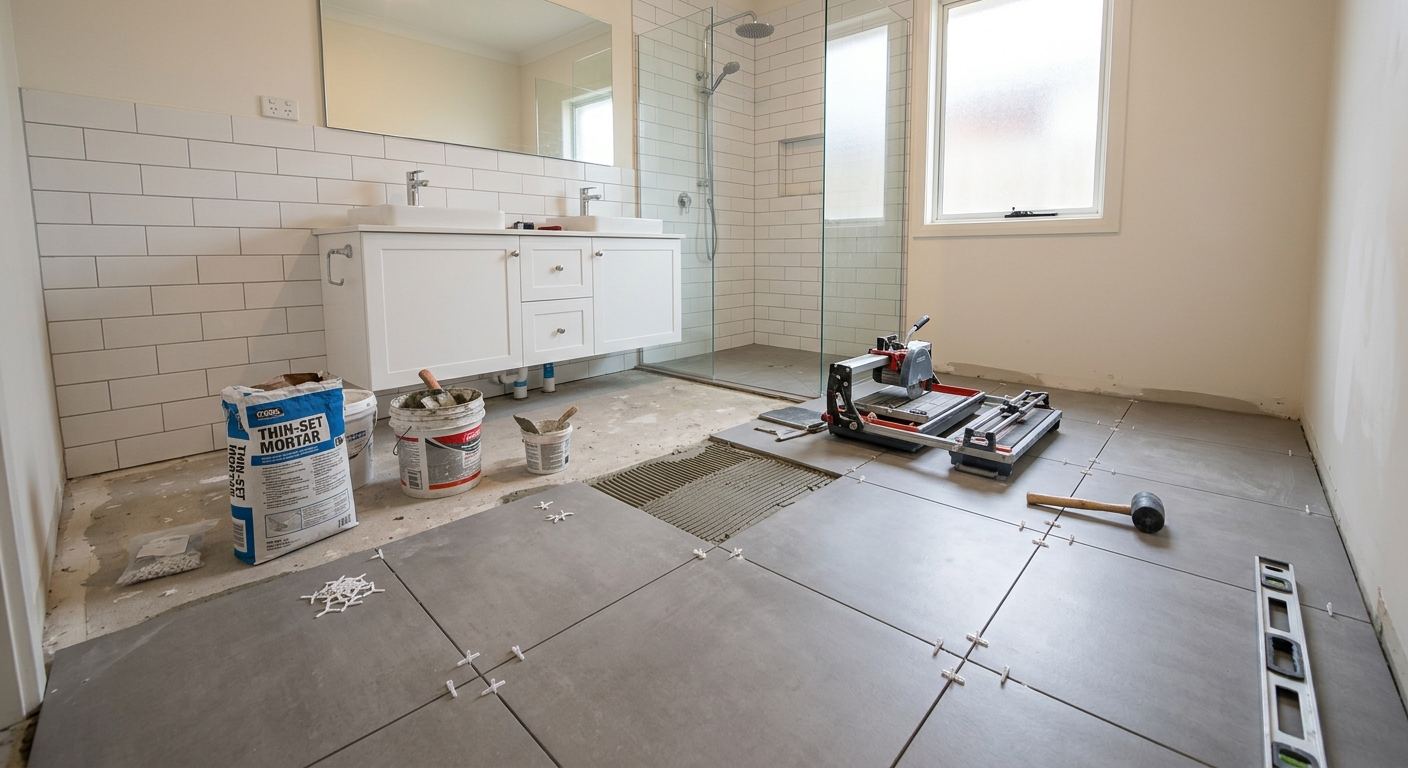
Bathroom renovation options and costs in West Nipissing
West Nipissing homeowners typically choose between a quick refresh and a full gut renovation, and the right option usually depends on how your plumbing, venting, and finishes are aging. With a population of 14,583 (Statistics Canada, 2021 Census), most work is driven by owner-occupied homes, including a lot of older post-war stock where fixtures, drains, and wiring don’t always meet today’s expectations. In the GTA market context (Toronto economic region), many bathrooms in older 1960s–1980s homes have dated rough-ins, which can mean cast-iron or undersized drains, and sometimes asbestos-containing materials in old tile or related compounds when floors are opened.
Ontario’s renovation costs aren’t driven much by “climate” in the way heating contractors are, but moisture control is still critical. The Toronto area’s humid summer weather makes airtight, poorly ventilated bathrooms a recipe for mould—so contractors often prioritize exhaust fans, proper waterproofing, and faster drying assemblies even when the visible scope looks simple. Contractor availability can also affect pricing: when high-demand periods hit in the wider Toronto labour pool, skilled tilers and plumbing crews may be booked further out, increasing minimum project charges and scheduling premiums.
In West Nipissing, service demand is especially common around Callander Road and the broader West Nipissing corridor, where many renovations are scheduled around family timelines and seasonal access. Below is a practical comparison of common bathroom options so you can anchor your budget before you review proposals.
| Renovation Scope |
What's Included |
Typical Duration |
Price Range |
| Cosmetic refresh (paint, fixtures, accessories only) |
New vanity or faucet, toilet swap (if required), paint, caulking/trim, light fixture replacement, towel bars, mirror; tile repairs only if minor and layout unchanged |
3–7 days |
$2,500–$7,000 |
| Mid-range full renovation (new tile, vanity, tub/shower, electrical) |
Demo and disposal, subfloor checks, waterproofing, new shower/tub surround tile, vanity, new fixtures, exhaust fan (often tied into updated wiring), new GFCI as needed, basic plumbing adjustments to match code |
2–4 weeks |
$12,000–$22,000 |
| High-end full renovation (custom tile, steam shower, heated floors) |
Custom walk-in/steam-ready shower design, premium large-format tile, upgraded waterproofing system, heated floor circuit, upgraded plumbing valves/trim, higher-end vanity and lighting, potential venting/drain corrections if discovered |
4–7 weeks |
$22,000–$30,000 |
| Shower-only installation (convert tub to walk-in shower) |
Remove tub, prep subfloor, linear or standard drain option, new waterproofing, tile to ceiling or full height, new glass door/enclosure, plumbing rough-in adjustments to achieve slope and code |
2–3 weeks |
$10,000–$16,000 |
| Bathtub replacement or tub-liner install |
Remove and replace tub (or install a liner where conditions allow), new tub surround tile/trim, caulking to perimeter, plumbing hookups, basic sealing and waterproofing upgrade at transitions |
5–12 days |
$1,200–$4,500 |
| Tile-only installation (floor + surround, existing layout kept) |
Surface prep, tile removal if needed, tile setting, grout/sealing, waterproofing upgrades to targeted areas, limited fixture reset while keeping plumbing locations |
1–3 weeks |
$3,000–$10,000 |
Prices are estimates only and vary by project scope, site access and material selection.
What affects the price of bathroom renovation in West Nipissing
Even when two homeowners ask for “the same bathroom,” Toronto economic-region pricing can swing by 30–50% because bathroom work is labour-intensive and heavily affected by what’s behind the walls. In the West Nipissing market, you’ll see the same pattern: labour rates are higher in the Toronto employment pool, and older housing stock means contractors spend more time on rough-in corrections, venting, and hidden conditions. That’s why a mid-range full renovation often starts in the low-to-mid $12,000 range, while more complex work can quickly move into the $22,000–$30,000 band once plumbing or electrical scope expands.
Older homes in the region frequently hide problems that only show up after demo: cast-iron or undersized drains that need reconfiguration, copper supply lines that are corroded, or insufficient ventilation that must be addressed to prevent moisture damage. If discovery includes asbestos-containing materials—such as in older vinyl floor tile or related drywall compounds—abatement protocols can add $1,500–$5,000+ depending on extent and access.
Here are a few concrete examples you’ll commonly see in West Nipissing: (1) keeping the toilet and vanity in the same locations can preserve existing drain and supply routing, keeping labour closer to a cosmetic-to-mid scope; (2) switching from a standard tub to a walk-in shower often requires re-slope planning for proper drainage, pushing the job toward the higher end of shower-only installation; and (3) upgrading an exhaust fan with new wiring and ducting typically raises cost, but it often prevents recurring mould complaints—so homeowners sometimes trade higher upfront costs for fewer call-backs.
In short, Ontario’s moisture needs don’t “drive” labour the way geography does, but the combination of Toronto-area trade premiums and hidden condition risk is what moves bids up or down by thousands.
| Price Factor |
Why It Matters |
Cost Impact |
| Layout change — moving drain or supply lines requires rough-in work |
New piping routes take time, may require wall/floor opening and code-compliant venting changes |
$2,000–$8,000+ |
| Tile selection — large-format porcelain vs. mosaic vs. ceramic |
Harder tile needs more precise setting, more cuts, and often longer labour time |
$500–$4,000 |
| Fixture tier — builder-grade vs. mid-range vs. designer brands |
Higher-end trims, valves, and tubs/glass typically cost more and may require specific installation |
$800–$6,000+ |
| Subfloor condition — rot or unlevel concrete adds scope |
May require structural repairs, new backer/underlayment, or additional levelling |
$600–$3,500 |
| Electrical — adding GFCI outlets, exhaust fan, heated floor circuit |
Licensed electrical work is required for many upgrades; circuit additions can be time-consuming |
$400–$2,500+ |
| Waterproofing method — membrane type and extent |
Proper membrane coverage reduces call-backs; thicker systems add material and labour |
$700–$3,000 |
| Older-home surprises — asbestos tile, cast-iron drains, galvanized pipes |
Can trigger abatement, drain replacement, valve swaps, and additional disposal |
$1,500–$10,000+ |
| Bathroom size — sq ft drives tile and labour time directly |
More surface area increases setting time, thinset/waste, and waterproofing labour |
$500–$6,000+ |
Permits & regulations in Ontario
In Ontario, many “like-for-like” cosmetic updates in a West Nipissing bathroom typically don’t require permits—for example, swapping a vanity, replacing a faucet, changing a mirror, painting, or retiling that doesn’t move plumbing locations. If you’re only refreshing finishes and keeping the existing layout, contractors usually proceed without municipal permit pulls.
Where permits commonly are required is when the work changes systems or structure. Examples that generally require a permit (and inspections) include relocating plumbing—such as moving a drain or supply line, altering venting pathways, or opening walls for rough-in changes. Adding or upgrading an exhaust fan that requires new wiring or a new electrical circuit also typically involves permitable electrical work, plus it must meet provincial electrical requirements. Any electrical work must be performed by a licensed electrician and be signed off/inspected as required.
Before work starts, homeowners should verify three things step-by-step: (1) check the contractor’s Ontario trade licence and whether the scope matches the licence category claimed; (2) request a current certificate of insurance showing liability coverage (and confirm the effective dates) and, where applicable, WSIB/WCB coverage for workers; and (3) ask for clearance letters or verification documents and ensure they align with the contract period. Finally, confirm who pulls permits: a reputable contractor will spell it out in writing and include inspection milestones in the schedule.
Choosing tile, waterproofing and fixtures for your West Nipissing bathroom
For West Nipissing bathroom renos, three material decisions usually control both comfort and budget: tile choice, waterproofing method, and fixture tier. First, tile selection: ceramic is an entry point and works well when you want good looks at a lower material and labour cost, but it can be less forgiving for durability in high-splash areas. Porcelain (often used for floor and wet-area walls) is denser and more consistent, which usually reduces problems like edge wear and chipping, though it’s more demanding to set cleanly. Natural stone—marble, travertine, slate—can look outstanding, but it often needs careful sealing and a skilled installer for cuts and flatness; that extra labour is part of why these jobs trend toward the upper end of local full-renovation ranges.
Second, waterproofing: in Ontario’s humidity, the right system helps prevent mould and grout failure. Paint-on membranes can work for some scenarios but require strict coverage and compatibility with the tile system. Bonded sheet membranes and reputable tile systems (including integrated fastening/waterproofing approaches) provide robust protection when installed correctly. Third, fixtures: builder-grade valves, trims, and basic glass often lower upfront costs but can affect long-term sealing performance and resale perception.
To ground it with a price difference: upgrading from a typical ceramic surround to porcelain for the same footprint can add roughly $1,000–$3,000 in combined materials and tiling labour, and it’s often worth it if your household uses the shower daily or you’re selling in the next few years. Meanwhile, spending that amount on better waterproofing coverage usually delivers more “problem avoidance” than changing from mid-range to designer trims.
| Material / Option |
Pros |
Cons |
Price Range |
| Ceramic tile (floor + walls) |
Best value, wide colour/style choices, easier for entry-level budgets |
More variation in performance; may be less durable for floors depending on glaze/rating |
$3,000–$6,500 |
| Porcelain tile (floor + walls) |
Hard-wearing, consistent sizing, good moisture/wear performance in wet areas |
Heavier tile and often more challenging layouts; may increase cutting time |
$5,500–$10,000 |
| Natural stone (marble, travertine, slate) |
Luxury look, unique veining and texture, strong curb appeal |
Sealing/maintenance, requires careful selection for moisture and installation precision |
$8,000–$15,000+ |
| Frameless glass shower enclosure |
Modern look, easy to clean, visually brightens the room |
Costs more than framed; correct measurement and support are critical |
$2,000–$6,000 |
| Prefab tub surround (acrylic) |
Faster install, consistent finish, good for straightforward upgrades |
Fewer design options; transitions and waterproofing seams must be done carefully |
$1,200–$3,500 |
| Custom shower pan (tile or linear drain) |
Better flow control and premium look; supports linear drain aesthetics |
More labour and planning; requires precise slope and waterproofing integration |
$4,000–$12,000 |
How to choose a bathroom renovation contractor in West Nipissing
When you’re comparing contractors for a West Nipissing bathroom, licensing and coverage are non-negotiable because the project touches electrical and sometimes plumbing rough-ins. Start by verifying Ontario trade licensing for the contractor’s scope (especially for work that involves plumbing/electrical coordination) and request a certificate of insurance with liability coverage that matches the contract value and dates. For worker protection, ask for WSIB/WCB status documentation or clearance letter—don’t accept vague assurances. If a contractor cannot provide documentation, that’s a risk you’ll feel later through delays or uncovered issues.
Next, demand 2–3 itemised written quotes—not lump sums. A proper quote breaks labour and materials (demo/disposal, waterproofing, tile setting, fixture supply, electrical allowance, plumbing rough-in allowances) and clearly states inclusions such as permit pull responsibility and whether disposal is included. Carefully read exclusions: some quotes omit subfloor repairs, membrane upgrades, glass enclosure allowances, or asbestos testing/abatement provisions. Warranty matters too: look for workmanship warranty length in writing, plus manufacturer warranties for products (and confirm whether they’re transferable to you as the homeowner).
Payment scheduling should be conservative. Never pay more than 10–15% upfront. A common safeguard is holding back the balance until key milestones are complete: waterproofing inspection (if applicable), tile completion, and final caulking/grout cure. Finally, get your start date and completion estimate in writing so you’re not stuck with indefinite timelines.
- Verify Ontario trade licence for the contractor’s claimed scope before work begins.
- Request and review current certificate of liability insurance and effective dates.
- Confirm WSIB/WCB coverage status with clearance documentation.
- Ask for itemised quote lines for labour vs materials, not “all-in” totals only.
- Check what’s included in waterproofing (membrane type, coverage area, corners/curbs).
- Confirm whether disposal and dumpster fees are included or billed separately.
- Ask who pulls permits and whether inspections are scheduled into the timeline.
- Confirm exhaust fan spec and ducting plan to address Ontario moisture issues.
- Clarify tile scope: floor-only, floor + surround, or full-height walls.
- Ask who supplies glass enclosure and whether it’s included in the quote allowance.
- Review warranty: workmanship duration and product/manufacturer warranty terms.
- Agree on payment milestones; keep 10–15% upfront max and hold back to completion.
Red flags we commonly see in West Nipissing bathroom projects include: vague scopes that don’t state waterproofing/membrane details, refusing to provide insurance or WSIB/WCB documentation, quoting “low” with no line items for electrical/plumbing allowances, asking for large upfront payments, and starting demolition before permits/inspections are sorted where they’re required.
Frequently asked questions — bathroom renovation in West Nipissing
Can I keep my existing plumbing layout to save money?
Yes—keeping the existing toilet, vanity, and shower/tub locations is usually one of the best ways to control costs in Ontario and the Toronto economic region. When you don’t move drains or supply lines, you avoid additional rough-in labour, potential venting corrections, and many of the hidden-condition surprises that can add thousands. In older West Nipissing homes, staying in the same layout can also reduce exposure to cast-iron or galvanized sections that might otherwise need replacement after opening walls and floors. If your current layout works functionally, you can often reach a mid-range full renovation budget (often starting around $12,000–$22,000) with improved finishes rather than major system rework.
How much does a walk-in shower cost in West Nipissing?
A walk-in shower conversion (from a tub to a shower) is typically priced as a shower installation plus plumbing adjustments and waterproofing. In the West Nipissing area, homeowners often land in the $10,000–$16,000 range depending on whether the drain is linear, the tile is porcelain or large-format, and how much glass enclosure work is required. If hidden conditions are discovered—like venting issues, undersized drains, or older supply line problems—the scope can move upward quickly. For a simpler conversion with straightforward access and standard finishes, bids may stay closer to the lower end of that band, but custom glass, premium waterproofing coverage, and extensive tile increases labour and materials.
What's the ROI on a bathroom renovation?
ROI varies by neighbourhood demand and how complete the renovation is (function, waterproofing reliability, and finish quality matter more than trends). In practical terms for Ontario homeowners, a well-executed renovation that fixes moisture control and uses durable materials often improves buyer confidence more than cosmetic-only changes—especially in older housing stock where ventilation and plumbing upkeep may be questionable. If you’re considering timing, renovations that avoid major plumbing relocation tend to be easier to keep on budget and schedule, which can be important for resale. Many projects land in the $12,000–$30,000 range overall; the “best ROI” is usually the job that reaches a dependable, code-compliant setup without overspending on finishes that you won’t recover.
Do I need waterproofing behind the tile?
In almost all tile shower and tub-surround situations, yes—waterproofing behind the tile (not just grout sealing) is what protects the structure from moisture. Ontario bathrooms experience real humidity loads, and grout can’t be your only defence. A reputable contractor will use an appropriate waterproofing method and ensure correct detailing at corners, seams, niches, and transitions. For West Nipissing bathrooms, the difference between “good-looking tile” and “no future mould/water damage” is the waterproofing system plus proper installation. If you’re comparing quotes, ask what membrane is used, how far up the walls it goes, and whether the plan includes curb/bench detailing and correct overlaps.
How do I compare bathroom renovation quotes?
Compare quotes line by line, not by the final number. Ask for an itemised breakdown: demo/disposal, waterproofing type, tile scope (floor, surround, full height), fixture allowance, exhaust fan and ducting plan, and electrical/plumbing work details. Confirm whether permits are included and who is responsible for pull/inspection scheduling—this matters in Ontario when plumbing or electrical circuits change. Look for allowances that may shift costs later (glass enclosure, heated floor, custom tile cuts). If a quote is dramatically below others, it often means missing scope or limited waterproofing detail. A fair comparison typically results in budgets within the expected full-renovation bands (commonly $12,000–$30,000 in this tier).
Can I live at home during a bathroom renovation in West Nipissing?
Often you can, but it depends on how disruptive the work is and whether you have another functional bathroom. For cosmetic refreshes or tile-only work, many homeowners continue living at home, using a spare washroom when dust control is needed. For full renovations—especially when demo is down to studs, plumbing is opened, or waterproofing is curing—living at home can be uncomfortable and sometimes impractical because you may have no safe shower/tub access for periods. In West Nipissing, weather and schedule timing also matter: work sequencing affects dust containment and drying time. If you must stay, plan for temporary toilet access, a covered work zone, and clear daily cleanup expectations; choose a contractor who provides a detailed timeline and milestone plan.