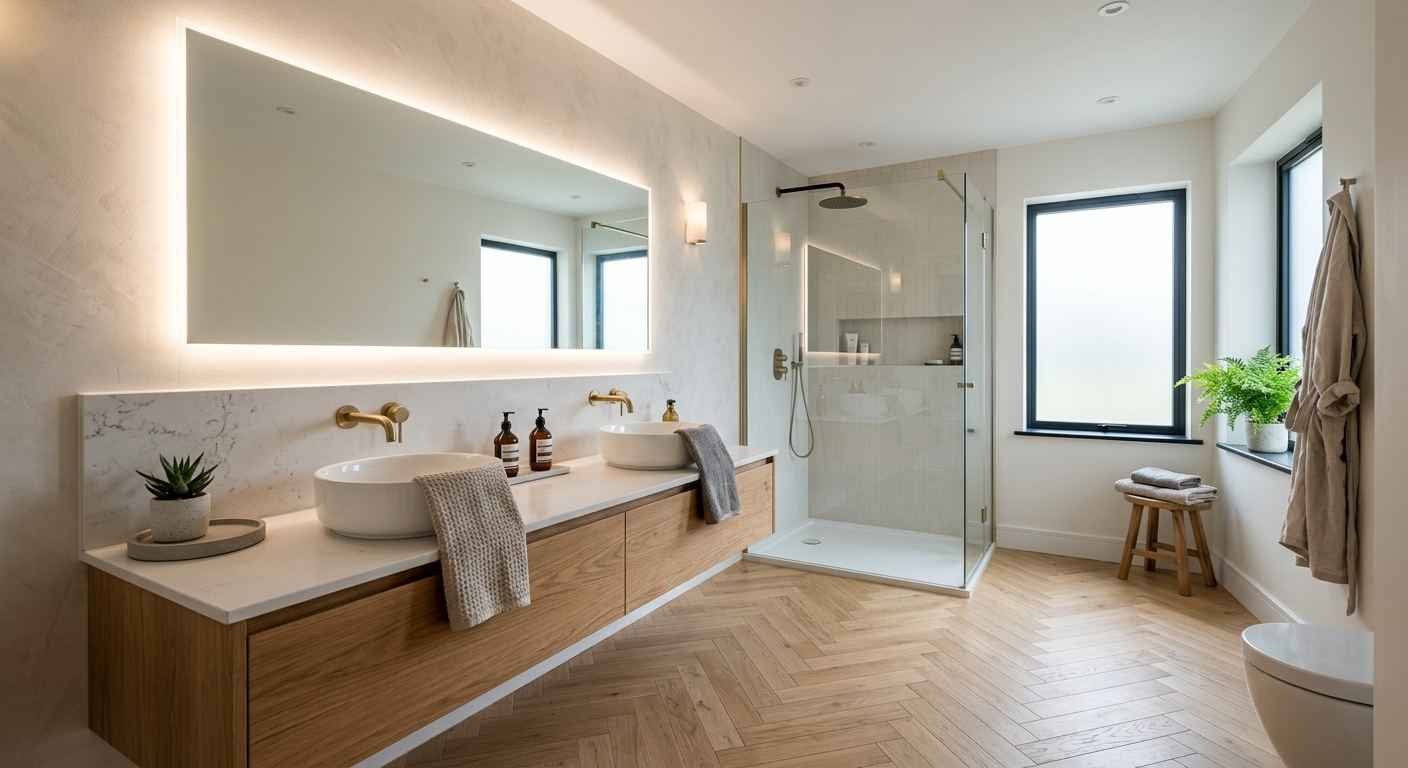
Bathroom renovation options and costs in Winchester
Bathroom renovation options in Winchester vary widely, but your biggest cost swings usually come down to finish level and the condition of what’s behind the walls. Winchester is a small community (Population: 2,394 in 2021, Statistics Canada, 2021 Census), so contractors often travel from the broader Toronto economic region when schedules open up. In older Winchester and nearby service areas, many homes reflect the kind of dated layouts common across the Toronto region—post-war and 1960s–1980s builds often mean older drain piping, less predictable waterproofing, and the chance of hidden material surprises when floors or tile are removed.
Even though bathroom renovations aren’t driven by “weather” the way exterior work is, Ontario humidity and temperature swings still matter: baths and showers create moisture loads that demand strong ventilation and reliable waterproofing, otherwise you’ll see grout failure and mould sooner. In the GTA market, skilled trades charge a premium, and bathroom work is labour-intensive—especially tiling, custom showers, and any plumbing reconfiguration to meet current Ontario requirements. That’s why realistic full renovation budgets in the Toronto economic region typically sit in the low-to-mid five figures, with higher-end builds trending toward the upper band.
In Winchester, trades demand often concentrates around the more established residential pockets where homeowners plan upgrades during homeownership turnovers—especially near the town’s core streets where parking and access can be tight. Next, you can compare the most common renovation paths and what they usually include in a budget-ready range.
| Renovation Scope |
What's Included |
Typical Duration |
Price Range |
| Cosmetic refresh (paint, fixtures, accessories only) |
New vanity or toilet (if replacing only), faucet and showerhead swaps, lighting/rough trim replacements, paint, re-caulking, accessories; tile kept as-is |
2–5 days |
$4,000–$8,000 |
| Mid-range full renovation (new tile, vanity, tub/shower, electrical) |
Demo and disposal, waterproofing, floor + surround tile, vanity install, tub/shower or standard surround, new exhaust fan and GFCI where needed, basic electrical updates |
10–18 days |
$12,000–$20,000 |
| High-end full renovation (custom tile, steam shower, heated floors) |
Full demo, premium tile layout and setting, custom shower system or steam-ready plumbing, heated floor mat and circuit, upgraded fixtures, recessed lighting/ventilation upgrades, enhanced waterproofing |
3–5 weeks |
$20,000–$30,000 |
| Shower-only installation (convert tub to walk-in shower) |
Convert plumbing and drain tie-in, new shower pan/waterproofing, wall tile or surround, glass enclosure, new exhaust fan if upgraded during the work |
7–14 days |
$14,000–$24,000 |
| Bathtub replacement or tub-liner install |
Swap existing tub for new unit or install a liner (only where substrate conditions allow), set and seal, recaulk and re-finish surround, basic plumbing connections, limited tile touch-ups |
4–10 days |
$1,200–$6,000 |
| Tile-only installation (floor + surround, existing layout kept) |
Tile demo (limited), re-build as needed on unlevel surfaces, waterproofing and tile installation (no major plumbing relocation), new caulking and grout, seal where appropriate |
7–14 days |
$3,000–$10,000 |
Prices are estimates only and vary by project scope, site access and material selection.
What affects the price of bathroom renovation in Winchester
Even when two homeowners in Ontario want “the same bathroom,” quotes can differ by 30–50% because labour rates and the number of unknowns behind the walls drive the schedule. In the Toronto economic region, bathroom work is highly labour-intensive—tiling, waterproofing, and any drain/vent corrections are time-consuming—so the same materials can cost far more once labour hours and skilled trade coordination are factored in.
Climate plays a smaller role than housing stock age in Winchester, but humidity still increases the penalty for shortcuts: if ventilation and waterproofing aren’t handled properly, repairs show up quickly. The bigger cost driver is that older homes across the region often hide cast-iron or undersized drains that need upgrading, galvanized supply lines that may be replaced, and ventilation that doesn’t meet current expectations. When contractors open up the walls, asbestos-containing materials can be discovered in older floor tile or related compounds; if abatement is required, that can add roughly $1,500–$5,000+ before finishes even start.
In Winchester, concrete examples tend to look like this: (1) keeping the existing tub footprint avoids rough-in work and can keep a project closer to the $12,000–$20,000 mid-range band, while moving to a new shower layout often pushes closer to the higher end due to drain reconfiguration; (2) choosing large-format porcelain usually increases material cost but can reduce grout lines—if the substrate is flat; on an older, uneven subfloor, it may actually raise labour scope to flatten and prep, moving you toward $20,000–$30,000 for a full upgrade; and (3) adding heated floors and a stronger exhaust system increases electrical and installation time, but it’s often justified where day-to-day comfort matters.
| Price Factor |
Why It Matters |
Cost Impact |
| Layout change — moving drain or supply lines requires rough-in work |
New rough-in means demolition, pipe rerouting, and often vent corrections |
$2,000–$8,000+ |
| Tile selection — large-format porcelain vs. mosaic vs. ceramic |
Harder installs require better prep and more skilled setting |
$1,000–$6,000 |
| Fixture tier — builder-grade vs. mid-range vs. designer brands |
Better valves, finishes, and trim drive higher material cost |
$500–$4,000 |
| Subfloor condition — rot or unlevel concrete adds scope |
Waterproofing demands stable substrates; repairs add labour and materials |
$800–$5,000+ |
| Electrical — adding GFCI outlets, exhaust fan, heated floor circuit |
Code-compliant wiring and new components increase licensed electrician time |
$600–$3,500+ |
| Waterproofing method — membrane type and extent |
Different systems change prep, build-up thickness, and labour time |
$500–$3,000 |
| Older-home surprises — asbestos tile, cast-iron drains, galvanized pipes |
Discovery triggers licensed protocols, disposal, and replacement costs |
$1,500–$10,000+ |
| Bathroom size — sq ft drives tile and labour time directly |
More surface area = more setting, prep, and drying time |
$2,000–$8,000+ |
Permits & regulations in Ontario
In Ontario, cosmetic bathroom updates usually don’t need permits. Swapping a vanity, replacing a toilet, changing a faucet, re-caulking, repainting, and even retiling with the plumbing left in place are typically treated as finishes, not major work. In Winchester, the moment you relocate plumbing—like moving a drain or supply line—or you alter framing in a way that changes a wall’s structure, that’s where permits can come into play. Installing or replacing an exhaust fan is also commonly associated with electrical work, which must be done to Ontario electrical code and signed off as required.
Electrical rules are a big deal: adding new circuits for heated floors, installing new GFCI protection where required, or running wiring for a new bathroom fan must be handled by a licensed electrician (and documentation may be needed for sale/insurance claims later). Plumbing rough-in changes—moving a drain location, reworking venting, or changing shut-offs—typically trigger permits and inspection steps because they affect sanitary drainage and code compliance.
How to verify before you sign: (1) request the contractor’s Ontario trade licence information and check it through the provincial/authorized online registry; (2) ask for a current certificate of insurance and confirm it lists you as an owner/“additional insured” where applicable; (3) confirm WSIB/WCB coverage—request clearance proof or proof of account status; and (4) keep copies of all certificates with your contract and invoice package.
Choosing tile, waterproofing and fixtures for your Winchester bathroom
To stay on budget in a Winchester bathroom renovation, you typically need to make three material decisions early: tile, waterproofing, and fixture tier. First is tile choice. Entry-level ceramic tile can be a cost-effective way to refresh floors and walls, but it’s often less forgiving on heavy-use patterns and may cost more in labour when lots of cuts are needed. Mid-range porcelain usually offers better durability and moisture resistance—helpful in a humid Ontario bathroom—while still being workable for professional installers. Natural stone (marble, travertine, slate) looks upscale, but it’s heavier, more demanding to seal, and may require extra labour for detailing and careful surface prep.
Second is waterproofing. A paint-on membrane can work for some applications, but the best long-term results usually come from a system designed for wet areas—either bonded sheet membrane or a structured method with a proven board/membrane approach. In Ontario’s moisture environment, the goal is a continuous, properly lapped waterproof envelope. Third is fixture tier. Builder-grade fixtures can fit a tighter budget, while mid-range or designer brands can improve everyday function (valves, flow, finishes) and help resale presentation.
For a specific budget example: if you’re comparing a standard tub-to-shower conversion using typical wall tile versus a premium porcelain-and-custom-pan approach, the difference may land near the $4,000–$12,000 shower installation band depending on glass and drain complexity. Paying more for waterproofing details and pan quality is usually more “worth it” than upgrading fixtures alone, because it reduces the risk of mould and rework.
| Material / Option |
Pros |
Cons |
Price Range |
| Ceramic tile (floor + walls) |
Lower material cost, good variety, straightforward installation |
More prone to chipping under impact, may need more grout and more frequent refinishing depending on use |
$3,000–$7,000 |
| Porcelain tile (floor + walls) |
Denser and more water-resistant, cleaner look with larger formats, better long-term durability |
Can require more precise substrate prep; premium selections cost more per sq ft |
$5,000–$10,000 |
| Natural stone (marble, travertine, slate) |
Luxury appearance, premium resale appeal, unique veining and texture |
Higher sealing/maintenance needs, more labour-intensive setting and finishing |
$8,000–$18,000 |
| Frameless glass shower enclosure |
Bright, modern look; easier visual maintenance; durable when installed correctly |
Costly, may require precise wall alignment; hinges and hardware add to parts |
$3,000–$8,000 |
| Prefab tub surround (acrylic) |
Fast install, predictable waterproofing when installed properly, lower labour risk |
Less custom look; edges and seams may be less attractive than tile long-term |
$1,200–$3,500 |
| Custom shower pan (tile or linear drain) |
Better slope and water management; modern linear drain option; supports high-quality finishes |
More build-up, more trades coordination; can push permitting/rough-in scope if drain moves |
$4,000–$12,000 |
How to choose a bathroom renovation contractor in Winchester
Choosing the right bathroom contractor in Winchester is mostly about verifying three things: licensing/trade compliance, insurance coverage, and whether the quote is detailed enough to protect you from scope creep. In Ontario, a legitimate contractor should provide clear proof of their Ontario trade licence (for work they perform), a certificate of liability insurance, and WSIB/WCB coverage so you’re not stuck if someone gets hurt on-site. To check: request the certificate of insurance directly, verify the policy is current, and ask for WSIB/WCB clearance proof; then confirm the licence details using the provincial online registry sources. Keep everything in your file—you’ll need it for warranty claims and any future sale disclosure.
Get 2–3 itemised written quotes (labour and materials broken out, not just a lump sum). Read exclusions carefully: is permit pulling included or paid separately? Is demolition and disposal included? Are subfloor repairs or waterproofing upgrades allowed for “unknown conditions,” or is it assumed at their risk? Ensure workmanship warranty length is in writing and ask whether it’s transferable to future owners.
Payment schedule matters: never pay more than 10–15% upfront. Hold back a portion until completion and final walkthrough, especially after tile and waterproofing cure times. Finally, require a start date and completion estimate in writing so you can plan bathroom access and manage disruptions.
- Confirm Ontario trade licence number(s) match the work scope in writing
- Request liability insurance certificate (and confirm it’s current for the renovation period)
- Verify WSIB/WCB coverage or clearance proof
- Use itemised quotes: labour, materials, tile/waterproofing system, and disposal
- Ask if permits are included and who pulls them
- Confirm plumbing/electrical work is done by licensed trades with documentation
- Get the waterproofing method named (product/system, not “we’ll waterproof”)
- Clarify what’s excluded: subfloor repairs, asbestos handling, vent changes
- Require warranty terms for workmanship (length and what triggers coverage)
- Request product/manufacturer warranty details for fixtures and tile systems
- Insist on a written schedule with milestone check-ins (demo, rough-in, waterproofing, tile)
- Set payment milestones and hold back 10–20% until punch-list completion
Red flags I see with bathroom contractors in Winchester: quotes that aren’t itemised (no waterproofing plan or drainage details), vague wording like “standard electrical” or “standard plumbing,” asking for a large deposit early, no proof of WSIB/WCB or insurance, and promises like “no permits required” when you’re relocating drains, adding fans, or changing exhaust/venting. Also watch for refusal to put warranty terms and start dates in writing.
Frequently asked questions — bathroom renovation in Winchester
Should I do a tub-to-shower conversion?
In Winchester and across Ontario, a tub-to-shower conversion is a common upgrade because it modernizes the space and often improves daily usability. If you replace the tub with a walk-in shower, your budget typically tracks with shower installation scope; in the Toronto economic region, many homeowners land in the $4,000–$12,000 shower installation band for the shower portion, but full conversions with new tile, glass, and plumbing tie-ins commonly sit above that within the broader bathroom renovation ranges.
It can also be a good idea for older homes where tub walls are showing wear and waterproofing needs attention. The key question is whether you can keep the plumbing layout or whether the drain needs relocation, because that’s where rough-in and venting scope can increase. If you want to minimize uncertainty, ask your contractor for a drain-path plan before demolition and confirm how they handle waterproofing and slope to prevent mould.
How do I prevent mold in a Winchester bathroom?
Mould prevention is mostly about moisture control and how well the renovation seals the wet envelope—especially in Ontario’s humidity cycle. Start with proper ventilation: an adequately sized exhaust fan ducted correctly and run long enough after showers makes a real difference. Next, use a full waterproofing system (not just paint or caulk) behind tile in all wet zones, with correct overlaps at seams and corners.
During a renovation in Winchester, pay attention to the details that fail first: grout cracking, poor caulking transitions at the tub/shower edges, and any missed substrate prep on older subfloors. If your home is from the pre-1985 era common in parts of the Toronto region, there’s also the possibility of asbestos-containing materials in old vinyl tile or related compounds—so proper abatement procedures help protect health and keep the worksite safe while you rebuild correctly. Done right, a properly waterproofed, ventilated bathroom dramatically reduces the chance of mould returning after year one.
What adds the most resale value in a bathroom reno?
In Winchester, resale value usually tracks with “functional upgrades plus clean modern finishes.” The biggest value drivers are reliable waterproofing, an attractive and durable tile finish, and fixtures that look current. Buyers notice when a shower is easier to use, when floors are level and well-finished, and when the bathroom feels bright and dry rather than damp.
From a budgeting standpoint, homeowners often get the best balance by focusing on the elements that prevent future problems—proper waterproofing and ventilation—before chasing luxury extras. If you’re planning a full renovation, Toronto-region budgets for a standard three-piece often fall in the $12,000–$30,000 range depending on finish level. Your best ROI tends to come from staying within a coherent mid-range design, ensuring waterproofing and venting are handled to code, and choosing porcelain tile and fixtures that age well.
Can I keep my existing plumbing layout to save money?
Yes—keeping your existing plumbing layout is one of the most practical ways to control cost in Ontario. If you’re not moving the toilet, tub/shower drain, or major supply lines, you avoid a lot of demolition and rough-in work. That typically keeps quotes closer to the renovation scope where you’re mostly paying for finishes, waterproofing, and labour.
In Winchester projects, the budget difference is often noticeable: plumbing relocation can push a bathroom closer to the upper local ranges because drain reconfiguration, vent corrections, and new shut-offs require skilled labour and sometimes additional trades. By contrast, a tile-only or partial refresh project can stay nearer the lower bands. For example, tile-only floor plus surround installations commonly land in the $3,000–$10,000 band when the layout is unchanged. Before you commit, ask for an inspection of access points and confirm what’s behind the walls so you’re not surprised by undersized drains, galvanized supplies, or older wiring remnants.
How much does a walk-in shower cost in Winchester?
A walk-in shower cost in Winchester depends on whether you’re converting from a tub, keeping existing drain positions, and what kind of enclosure and waterproofing system you choose. As a local planning benchmark in the Toronto economic region, shower installation work often falls in the $4,000–$12,000 range for the shower portion. Conversions that include new tile, a quality shower pan with linear drain or proper slope build-up, and a glass enclosure can push higher because labour is intensive and plumbing tie-ins add scope.
If your home is older, add another layer of caution: contractors may discover cast-iron drain components, ventilation issues, or other conditions that require upgrades to match current expectations. A good contractor will include a contingency line item or explain the likely cost impacts in writing before work starts.
What's the ROI on a bathroom renovation?
ROI depends on your market positioning and the quality of the work you’re paying for. In small Ontario communities like Winchester, buyers still care most about a bathroom that looks clean, works reliably, and avoids visible moisture problems. You’ll often see the strongest value when you invest in waterproofing quality, ventilation, and a cohesive, durable design—rather than purely cosmetic changes.
While no single percentage fits every home, a practical way to think about ROI is: will the renovation reduce near-term repair risk and increase buyer confidence? If you’re spending within typical local renovation bands, many homeowners plan around the $12,000–$30,000 full-bath range depending on finish level and whether plumbing/electrical upgrades are needed. If your contractor uncovers asbestos-containing materials, older drain stacks, or inadequate ventilation, that’s not “nice-to-have” spending—it’s risk reduction. Document workmanship and keep warranties so you can support your renovation value at sale time.