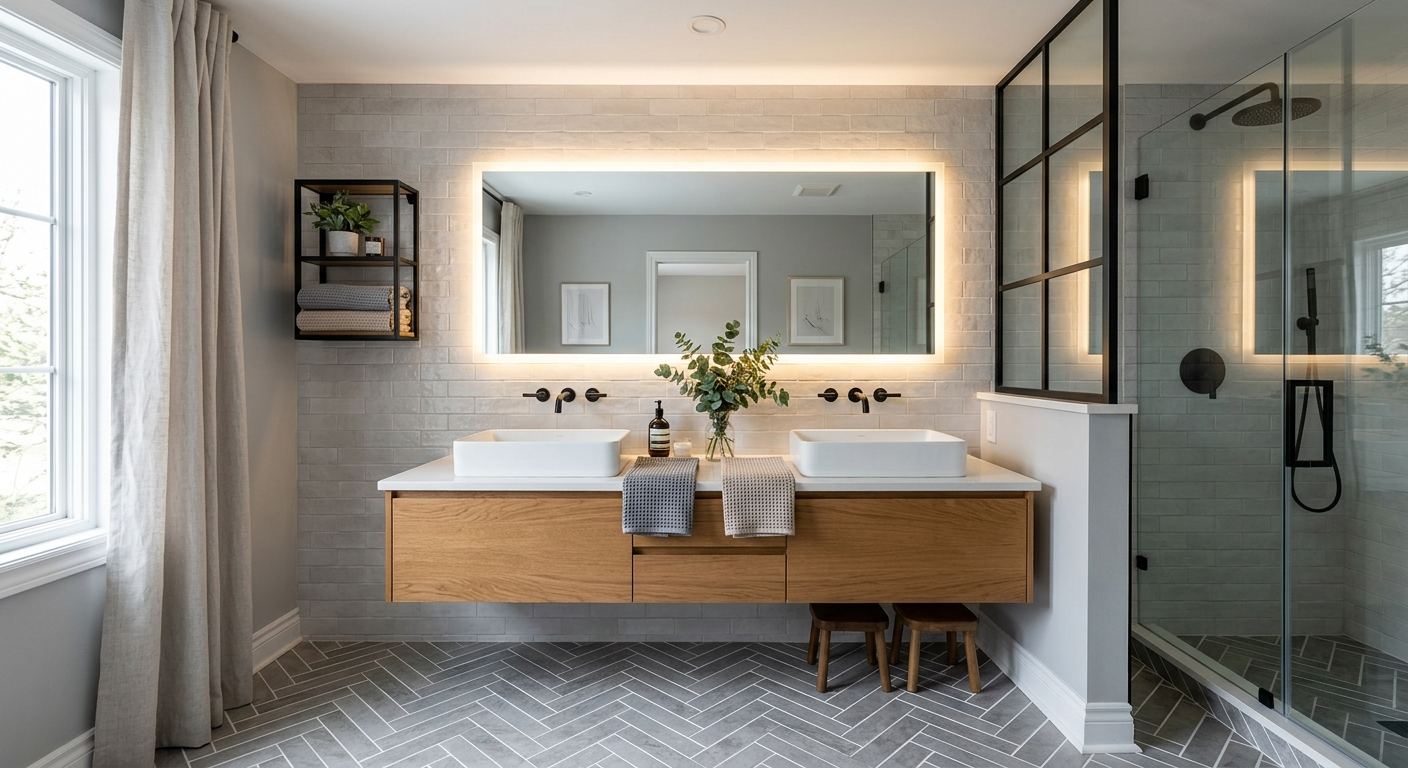
Bathroom renovation options and costs in Dunnville
Dunnville homeowners usually start a bathroom renovation with a clear idea—fresh tile, a new vanity, maybe a walk-in shower. The pricing, though, is often shaped by what’s behind the walls. In Ontario, Dunnville’s housing stock reflects many older builds across the broader Hamilton–Niagara Peninsula area, where dated plumbing layouts and floor-to-wall assemblies can change what your contractor finds once demolition begins. With 5,907 people in Dunnville (Statistics Canada, 2021 Census), the local trades market can feel tight at peak season, so scheduling and lead times can affect your timeline and overall cost. Also, in the Hamilton–Niagara Peninsula market, older homes commonly add hidden scope: plumbers may need upgrades to drains, vents, shutoffs, or traps to bring work up to code, and opening walls can reveal water damage, asbestos-containing materials in legacy floor tile or drywall compounds, or outdated wiring.
Climate matters too, but less than labour and housing age here. Ontario’s winter conditions and indoor humidity put strain on ventilation and waterproofing, so waterproofing details and exhaust fan performance are where “cheap” shortcuts can become expensive call-backs. That’s why a “simple” refresh can stay in the lower bands, while a mid-range or full renovation can climb quickly into broader ranges once waterproofing, electrical, and plumbing upgrades are included. In Dunnville’s high-demand areas—like the residential pockets near the downtown core—contractors often prioritize work that reduces moisture risk and adds accessibility, because those choices get used and last.
Below are practical option ranges you can use to compare quotes, then dial in your scope once a contractor confirms fixture locations, tile coverage, and whether hidden repairs are likely.
| Renovation Scope |
What's Included |
Typical Duration |
Price Range |
| Cosmetic refresh (paint, fixtures, accessories only) |
New vanity or sink/fixtures, toilet swap (if same rough-in), paint, accessories, caulking refresh; no major plumbing relocation; no tile removal |
2–5 business days |
$4,500–$9,000 |
| Mid-range full renovation (new tile, vanity, tub/shower, electrical) |
Demo and rebuild of finishes, new tile floor + surround, vanity, tub or standard shower system, waterproofing system, exhaust fan upgrades, selective electrical updates (e.g., GFCI) |
1.5–3 weeks |
$12,000–$22,500 |
| High-end full renovation (custom tile, steam shower, heated floors) |
Custom layout refinements, premium tile (often larger format), heated floor circuit, higher-tier fixtures, upgraded waterproofing, steam-ready plumbing/electrical provisions as needed |
3–5 weeks |
$22,500–$45,000 |
| Shower-only installation (convert tub to walk-in shower) |
Convert to a walk-in shower, new shower pan/waterproofing, tile surround, glass (if chosen), curbless or low-threshold options, valve/accessory updates |
1.5–3 weeks |
$9,000–$20,000 |
| Bathtub replacement or tub-liner install |
Remove and replace tub (or install a liner where suitable), recaulk and seal, updated trim, basic plumbing connection checks |
3–8 business days |
$1,500–$6,000 |
| Tile-only installation (floor + surround, existing layout kept) |
Tile floor and wall surround only, waterproofing preparation and membrane application as required, grout/seal details; limited or no plumbing relocation |
1–2.5 weeks |
$3,000–$8,000 |
Prices are estimates only and vary by project scope, site access and material selection.
What affects the price of bathroom renovation in Dunnville
It’s common to see quotes for the “same bathroom” in the Hamilton–Niagara Peninsula land in a 30–50% spread, even when homeowners select similar fixtures. In practice, the spread comes down to labour rates and how much renovation scope opens up once demolition starts—especially in older homes where hidden plumbing and ventilation details aren’t as straightforward as the layout drawings suggest. While Dunnville doesn’t have a separate building system, the regional market context matters: contractors in the Hamilton–Niagara Peninsula area are juggling work across older stock, which drives demand for plumbers and electricians who can address code-level updates quickly.
Here’s what I see most often in Dunnville and surrounding towns: older drain stacks may be cast-iron and require replacement or upgrades to vents and traps; supply lines may be galvanized; and ventilation may be undersized for a modern shower. Those issues inflate the scope even if you’re aiming for a $12,000–$22,500 mid-range renovation. In pre-1985 homes, discovery of asbestos-containing materials in vinyl floor tile or older drywall compounds can trigger abatement protocols—commonly adding $1,500–$5,000+ depending on area and removal complexity. On the flip side, keeping the plumbing layout consistent usually helps you stay closer to the tile-only band of about $3,000–$8,000 when the demolition reveals clean subfloor and no hidden water damage.
Concrete examples from real Dunnville projects: (1) a tub-to-shower conversion that needs moving the drain typically adds labour for rough-in and testing; (2) choosing large-format porcelain can lower grout lines but increases underlayment and labour to prevent lippage on an unlevel floor; (3) installing a new exhaust fan with a dedicated circuit can cost more than a simple swap if the existing wiring route isn’t ready. Budgeting for these variables is the difference between a predictable job and an “upgrade spiral” once walls come down.
| Price Factor |
Why It Matters |
Cost Impact |
| Layout change — moving drain or supply lines requires rough-in work |
New plumbing routes means demolition, rough-in plumbing, leak testing, and possible venting changes |
Often adds $2,000–$8,000+ |
| Tile selection — large-format porcelain vs. mosaic vs. ceramic |
Harder materials and bigger tiles require flatter substrates, more careful setting, and more labour per square foot |
Typically adds $500–$3,500 to finish cost |
| Fixture tier — builder-grade vs. mid-range vs. designer brands |
Higher tiers often include better valves, finishes that resist staining, and improved installation hardware |
Usually shifts the budget by $500–$4,000 |
| Subfloor condition — rot or unlevel concrete adds scope |
Water-damaged floors need removal and rebuild; uneven substrates require extra prep underlayment |
Commonly adds $1,000–$6,000 |
| Electrical — adding GFCI outlets, exhaust fan, heated floor circuit |
Bathroom electrical must be code-compliant; wiring routes and panel capacity affect the work |
Often adds $500–$3,500 |
| Waterproofing method — membrane type and extent |
Proper membranes prevent moisture migration; the chosen system affects labour and material thickness |
Typically adds $800–$3,000 (but reduces failures) |
| Older-home surprises — asbestos tile, cast-iron drains, galvanized pipes |
Discovery changes scope: testing/abatement, drain/vent upgrades, and plumbing replacement parts |
Can add $1,500–$8,000+ |
| Bathroom size — sq ft drives tile and labour time directly |
More coverage increases thinset/grout, waterproofing surface area, and installation time |
Often shifts total cost by $1,500–$10,000 across sizes |
Permits & regulations in Ontario
In Ontario, the line between “cosmetic” and “regulated work” matters for both cost and scheduling. Cosmetic updates—swapping a vanity, replacing a toilet that stays on the same rough-in, repainting, or retiling without changing plumbing or structural elements—often don’t require permits. However, when you relocate plumbing (moving a drain or supply lines), add or rework ventilation (like installing a new exhaust fan with new electrical routing), or change load-bearing or structural wall components, permits and inspections are typically required.
Electrical must also meet provincial code. Work such as installing new circuits for heated floors, adding GFCI protection where it’s not present, or updating bathroom wiring for a new exhaust fan must be done by a licensed electrician and generally requires appropriate sign-off. Plumbing rough-in changes for new or moved fixtures typically require a permit and inspection, because they’re tested for pressure/leaks and must comply with venting requirements.
For Dunnville homeowners verifying a contractor, do this step-by-step: (1) Ask for the contractor’s Ontario trade licence details and confirm them through the appropriate online registry; (2) request a certificate of insurance and ensure liability coverage is current for renovation work; (3) confirm WSIB/WCB coverage (as applicable) so you’re not exposed if a worker is injured on site; (4) ask for a clearance letter where relevant and keep copies with your contract; and (5) verify product warranties start date and workmanship coverage terms in writing before you pay the first milestone.
Choosing tile, waterproofing and fixtures for your Dunnville bathroom
In Dunnville, your bathroom budget is driven less by “what looks nice” and more by three decisions that directly control labour complexity and moisture performance: tile, waterproofing, and fixture tier. First, tile choice: ceramic is a good entry point, while porcelain often provides better durability and lower water absorption for wet zones. Natural stone (like travertine or slate) looks premium, but it can cost more to install due to higher prep requirements and finishing/maintenance considerations. Second, waterproofing method: a paint-on membrane can work for certain systems, but bathrooms still need correct prep, thickness, and compatible sealing at corners and transitions. Bonded sheet membranes (and Schluter-style systems) are often preferred in Ontario because they’re designed to manage water vapour at seams and help prevent mould in consistently humid conditions. Third, fixtures: builder-grade options fit smaller budgets, mid-range balances performance and appearance, and designer brands can increase both materials and install time—especially with custom valves, glass, or specialty shower components.
Because Ontario winters and indoor humidity push moisture load, the “best bargain” is usually the one that gets waterproofing right the first time. For example, if you’re comparing tile-only installation around $3,000–$8,000 versus a mid-range full renovation near $12,000–$22,500, the difference is justified when waterproofing coverage, niche cuts, and electrical/exhaust fan work are included. If you only replace tile and leave ventilation undersized, you may still see grout discolouration or persistent odours—then you’re paying twice.
Match your choices to your bathroom’s use and your risk tolerance. Busy households and shower-first layouts benefit from modern waterproofing and durable porcelain, while guest bathrooms can sometimes handle a simpler ceramic-and-standard-vent approach if the ventilation is verified and moisture is controlled.
| Material / Option |
Pros |
Cons |
Price Range |
| Ceramic tile (floor + walls) |
Lower material cost, broad style selection, easier to cut and replace small sections |
More susceptible to chipping; may require more attention to slip resistance and prep |
$3,000–$6,500 |
| Porcelain tile (floor + walls) |
Denser and more water-resistant, great for shower surrounds, often longer-lasting finish |
Heavier and needs flatter substrate to avoid lippage; some finishes cost more |
$5,000–$8,000 |
| Natural stone (marble, travertine, slate) |
High-end look, unique variation, excellent for accent walls when installed correctly |
Higher material and finishing/maintenance needs; can be more labour-intensive |
$7,000–$12,000 |
| Frameless glass shower enclosure |
Modern appearance, easy to clean when installed with correct sealing and hardware |
More expensive hardware; alignment and wall straightness matter |
$2,000–$6,000 |
| Prefab tub surround (acrylic) |
Fast install, consistent finish, good water resistance when properly sealed |
Less custom styling; can limit future remodel options compared to tile |
$1,000–$3,500 |
| Custom shower pan (tile or linear drain) |
Better slope design and drainage; linear drains look sleek; durable when correctly waterproofed |
More labour; requires precise waterproofing and substrate prep |
$3,000–$10,000 |
How to choose a bathroom renovation contractor in Dunnville
Choosing the right contractor in Dunnville comes down to verification and clarity before you sign. Start with Ontario trade licensing: ask for their licence number and confirm it via the appropriate provincial online registry. Next, obtain a current certificate of liability insurance—make sure the work description is renovation-specific and that the policy is active for your project period. For worker protection, confirm WSIB/WCB coverage (or the applicable coverage for their structure) so you’re not responsible if an injury occurs on your job site. Ask how they handle subcontractors; you want the same documentation for anyone entering your home.
Then get 2–3 itemised written quotes. You want labour and materials separated, not a single lump sum that hides risk. Ask whether the permit is included, who pulls it, and whether disposal and drywall/tile waste handling are in the quote. Check the scope line-by-line: waterproofing method, exhaust fan requirements, and whether shutdown/isolations of plumbing are included. Warranty matters too—look for a workmanship warranty (often the most important), plus manufacturer warranties for products. Ask whether the warranty is transferable to you as the homeowner.
For payment schedule, don’t front-load the job. Avoid paying more than 10–15% upfront and use a holdback until key items are complete (waterproofing inspected, tile/grout finished, and final caulking done). Also lock in your timeline: request a start date and completion estimate in writing, with key milestone dates if possible.
- Verify Ontario trade licence and ask for the licence number on your quote
- Confirm liability insurance (active dates) and request the certificate
- Confirm WSIB/WCB coverage for workers and ask about subcontractors
- Demand itemised pricing: demo, framing repairs, plumbing, electrical, waterproofing, tile labour, materials
- Ask who pulls permits and whether that cost is included
- Confirm disposal/removal is included (dump fees, protection, drywall/tile waste)
- Ensure waterproofing details are specified (membrane type, extents, curb/base sealing)
- Get confirmation of ventilation scope (exhaust fan size, ducting route, electrical)
- Ask about substrate prep (leveling, backer board, moisture checks)
- Review fixture rough-in assumptions (valve height, drain location, glass wall anchoring)
- Check warranty length and what’s covered for workmanship and products
- Use a payment schedule with a holdback; never pay full amount before completion
Red flags I see too often in Dunnville: a contractor who won’t provide itemised scope, vague “allowances” for tile/fixtures that get inflated later, no proof of insurance or coverage, pressure to pay large deposits up front, and missing written start/finish dates. If the quote doesn’t specify waterproofing and ventilation details, treat that as a risk—not a savings.
Frequently asked questions — bathroom renovation in Dunnville
Should I do a tub-to-shower conversion?
In many Dunnville homes, tub-to-shower conversions are worth considering—especially if mobility is a factor or you want easier cleaning and better water efficiency. A conversion also tends to pair well with upgraded waterproofing and a new exhaust strategy, which helps manage Ontario humidity. Cost-wise, many homeowners end up in the “shower installation” style range of about $3,000–$8,000 for shower work alone, but full conversions in real renovations often land higher once tile, pan/waterproofing, glass, and any plumbing/electrical updates are included. If your plumbing layout can stay close to the existing rough-in, you can often control scope; if you need drain relocation, the job can move into mid-range full renovation budgets rather than a simple swap. Ask your contractor to confirm valve heights, drain location, and whether venting/traps require updates before you commit.
How do I prevent mold in a Dunnville bathroom?
Mould prevention starts with two fundamentals: waterproofing integrity and ventilation performance. In Dunnville and across Ontario, winter indoor humidity can linger after showers, so a properly sized exhaust fan (ducted and vented correctly) is usually more impactful than surface-level cleaning. Pair that with a proven waterproofing system: correct membrane coverage at the shower walls and floor transitions, properly sealed corners, and no shortcuts around niches, valve penetrations, and curb/base joints. If your bathroom currently has older ventilation or you’re switching from tub walls to a tiled shower surround, plan for waterproofing and an exhaust upgrade in the scope—this is one reason “cosmetic-only” renovations sometimes fail in practice. If asbestos-containing materials are present in older floor tile or drywall compound, abatement must be handled properly so the bathroom can be rebuilt safely and sealed correctly.
What adds the most resale value in a bathroom reno?
Resale value usually tracks “risk reduction” plus modern usability. In Ontario, buyers value bathrooms that feel clean, are easy to maintain, and don’t show signs of moisture failure—so the highest ROI often comes from correct waterproofing, durable tile selections (often porcelain), and updated ventilation/exhaust performance. Layout improvements like a walk-in shower can help too, but keeping a sensible layout can reduce hidden plumbing surprises. In terms of budgets, a well-scoped mid-range full renovation commonly lands around $12,000–$22,500, and that range often supports the upgrades that matter for long-term durability. If you spend only on finishes while leaving ventilation undersized or waterproofing inconsistent, resale value tends to reflect the perceived risk. If you’re unsure, prioritize the items that affect moisture management and code compliance first, then choose aesthetics that match your neighbourhood’s style.
Can I keep my existing plumbing layout to save money?
Yes—keeping the existing plumbing layout is one of the most reliable ways to control cost in Dunnville. When you avoid moving drain and supply lines, you reduce the demolition footprint and the likelihood of finding surprises like damaged subfloor, venting issues, or aging drain stack components. It also helps keep the renovation closer to the lower bands: for example, if your goal is primarily tile updates with minimal plumbing work, homeowners can sometimes stay near the tile-only installation band of $3,000–$8,000 depending on size and substrate prep. That said, you still need to verify what’s behind the wall. Older homes may have galvanized supply lines or cast-iron drain components that need upgrading even if you don’t move fixtures. Ask your contractor for a clear explanation of which parts of the plumbing will be reused and which will be replaced for code compliance.
How much does a walk-in shower cost in Dunnville?
A walk-in shower cost depends on whether it’s a shower-only installation or a full conversion from a tub, plus how much tile and glass work you choose. As a starting point, shower installation in this tier is commonly about $3,000–$8,000, but in real projects the total often rises once waterproofing, tile surround coverage, niche cuts, and electrical/ventilation updates are included. For a tub-to-shower conversion with new pan and tile surround, many homeowners find the total aligns more closely with mid-range renovation budgets (commonly in the $12,000–$22,500 neighbourhood) if plumbing and electrical must be updated. The fastest, most budget-friendly walk-in showers are usually those that keep the existing rough-in and minimize drain relocation. Get your contractor to confirm drain location and valve height before budgeting.
What's the ROI on a bathroom renovation?
ROI varies by neighbourhood, condition of the rest of the home, and what you change. In Ontario, buyers often pay attention to moisture risk, modern fixtures, and whether the bathroom feels functional—so ROI is highest when you fix the stuff that causes problems: ventilation, waterproofing, and dated plumbing components. If your current bathroom has persistent odours, grout staining, or signs of water damage, a properly built mid-range renovation (often around $12,000–$22,500) can deliver better “peace of mind” value than a purely cosmetic refresh. If you’re simply repainting and swapping accessories, the ROI can be less because buyers still see the same underlying surfaces and ventilation performance. A full high-end renovation can be beautiful, but the incremental spend may not be fully recouped in the resale price if the rest of the home is average. The best approach is to match scope to your goal—reduce risk first, then upgrade finishes.