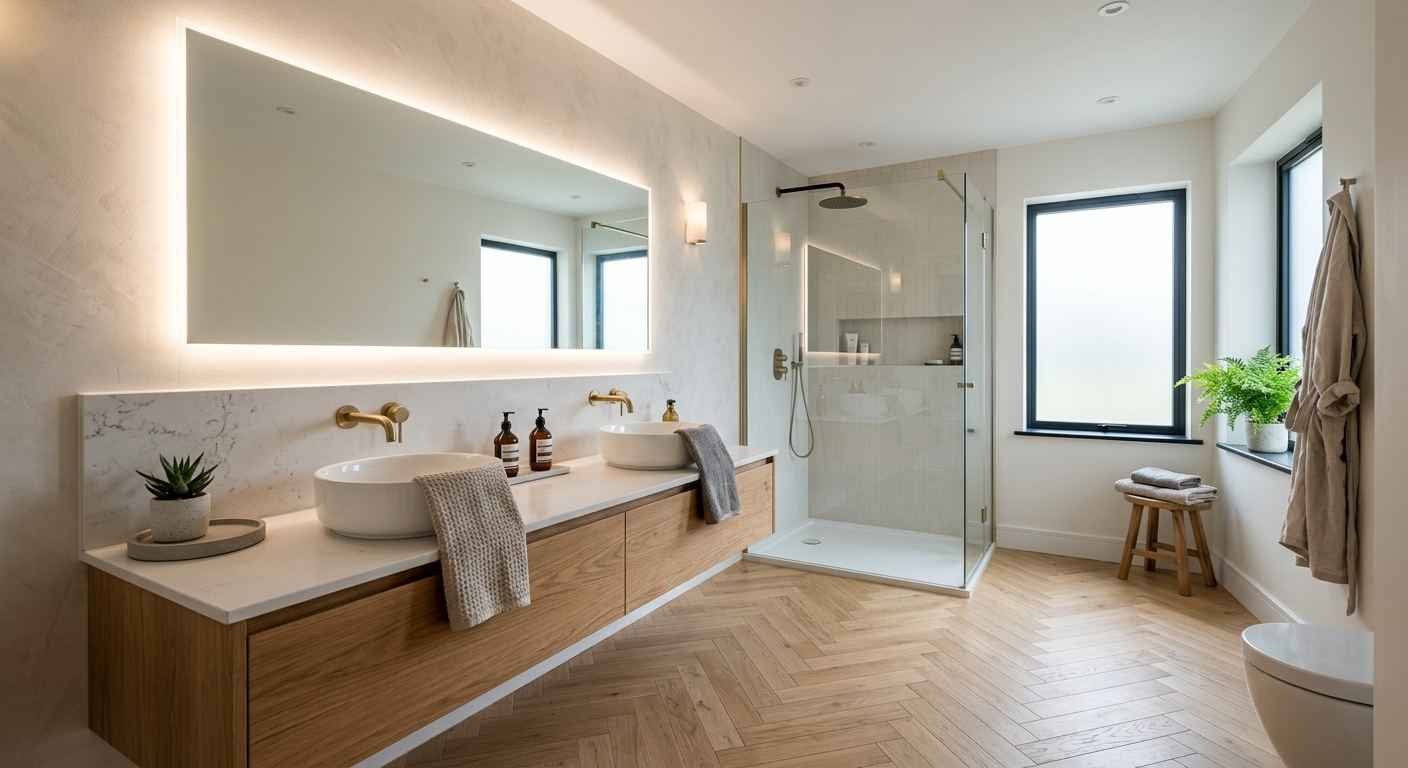
Bathroom renovation options and costs in Wendover
Bathroom renovations in Wendover are shaped by both the size of the local housing market and the Toronto-area labour premium. Wendover’s population is small (1,302 people, Statistics Canada, 2021 Census), so scheduling can tighten when multiple trades are working at once. It also means many projects are influenced by crews that travel in from the broader Toronto economic region, where pricing is driven more by labour intensity than by climate. Even though Ontario’s weather doesn’t directly “cause” bathroom costs, Ontario does demand that moisture control and ventilation are built correctly—so good ventilation work and waterproofing detailing can’t be value-engineered safely.
Another big reason quotes vary is housing age. In the Toronto economic region, a large share of post-war and 1960s–1980s homes means more dated drain layouts, venting issues, and occasional asbestos-containing materials in older floor tile or related coatings. When walls and floors open, reputable contractors often budget time for discovery work and code upgrades, especially around drains, shut-offs, and exhaust pathways—this is why realistic budgets for a full 3-piece renovation in the region commonly land in the low-to-mid five figures, depending on finish level.
In Wendover, contractor demand is especially high around established residential pockets with older plumbing footprints—projects near the town’s main residential areas tend to trigger the same “open it up and confirm” issues. From there, it becomes easier to compare renovation packages side by side in your planning stage.
| Renovation Scope |
What's Included |
Typical Duration |
Price Range |
| Cosmetic refresh (paint, fixtures, accessories only) |
Paint, caulking, replace vanity/fixtures (no plumbing moves), toilet & sink swap, accessories, new lighting trims |
2–5 days |
$2,500–$6,500 |
| Mid-range full renovation (new tile, vanity, tub/shower, electrical) |
Demo, tub-to-tile or tub replacement, new vanity, tile floor + walls, waterproofing, exhaust fan, basic electrical updates, disposal |
2–3 weeks |
$12,000–$20,000 |
| High-end full renovation (custom tile, steam shower, heated floors) |
Custom shower or steam shower build, premium tile layouts, linear drain (if applicable), heated floors circuit, higher-end fixtures, expanded waterproofing detailing |
3–5 weeks |
$20,000–$30,000 |
| Shower-only installation (convert tub to walk-in shower) |
Remove tub, prep substrate, new shower pan, waterproofing, tile surround, valve trim changes (as required), grab bar blocking (optional) |
1–2.5 weeks |
$7,000–$14,500 |
| Bathtub replacement or tub-liner install |
Swap existing tub and surround, new valves/trim (if needed), re-seal, or install tub liner over existing (where suitable), minor caulking & finish touch-ups |
4–10 days |
$1,200–$4,500 |
| Tile-only installation (floor + surround, existing layout kept) |
Remove existing tile/prepare surface, install tile floor + walls, waterproofing/membrane system (as required), grout, caulking, sealing at transitions |
7–14 days |
$3,000–$10,000 |
Prices are estimates only and vary by project scope, site access and material selection.
What affects the price of bathroom renovation in Wendover
In Ontario, two homeowners can receive quotes that differ by 30–50% for what looks like the same bathroom on paper, especially in the Toronto economic region. The biggest drivers are regional labour rates and the age of the housing stock, not “weather.” Bathroom work is labour-intensive—tiling, custom showers, and getting plumbing lines to meet modern standards take time and careful trades coordination. A contractor can also quote differently based on how they handle unknown conditions: some price only what’s visible, while others include realistic discovery and code-upgrade allowances.
Older homes in the Toronto region often hide cast-iron or copper drain stacks that may require replacement, along with galvanized or undersized supply lines and ventilation pathways that no longer meet today’s expectations. Those hidden issues can add several thousand dollars in drain reconfiguration, vent corrections, and new shut-offs. If asbestos-containing materials are encountered—commonly discussed in older floor tile systems—abatement protocols can be triggered, often adding $1,500–$5,000+ depending on extent and access.
In Wendover specifically, there are a few patterns that change the final number. Example one: a “same layout” bathroom can still become a mid-range full renovation when plumbing venting needs correction, pushing the project toward the $12,000–$20,000 band. Example two: switching to large-format porcelain can increase material costs, but it can reduce labour in some cases—if the substrate is perfectly flat; otherwise, prep and setting time can wipe out the savings, bringing you closer to the $3,000–$10,000 tile-only ceiling. The right waterproofing and ventilation choices are what keep Ontario bathrooms from developing persistent moisture problems over time.
| Price Factor |
Why It Matters |
Cost Impact |
| Layout change — moving drain or supply lines requires rough-in work |
Requires demolition, rough plumbing, possible vent adjustments, and patching back to solid substrate |
$2,000–$8,000 |
| Tile selection — large-format porcelain vs. mosaic vs. ceramic |
Material price and installation difficulty vary; mosaics and small tiles increase labour time |
$500–$4,000 |
| Fixture tier — builder-grade vs. mid-range vs. designer brands |
Higher-end fixtures cost more and often require more detailed trim, valves, and matching components |
$300–$3,500 |
| Subfloor condition — rot or unlevel concrete adds scope |
Floor leveling, substrate repair, and moisture-safe backer prep extend labour and materials |
$800–$6,000 |
| Electrical — adding GFCI outlets, exhaust fan, heated floor circuit |
Code-compliant work may require a licensed electrician, new circuits, and updated fan wiring |
$700–$3,500 |
| Waterproofing method — membrane type and extent |
Correct waterproofing reduces callbacks; more coverage and better systems cost more up front |
$400–$2,500 |
| Older-home surprises — asbestos tile, cast-iron drains, galvanized pipes |
Discovery leads to abatement, pipe replacements, drain stack corrections, and added inspection steps |
$1,500–$7,500+ |
| Bathroom size — sq ft drives tile and labour time directly |
Tile area, grout lines, and waterproofing hours scale with footprint and wall height |
$1,000–$5,000 |
Permits & regulations in Ontario
In Ontario, the permit picture depends on what you change. In most cases, cosmetic updates—like swapping a vanity, replacing a toilet, retiling bathroom walls without moving plumbing, or painting—typically do not require permits. However, in Wendover (and across Ontario), when you relocate plumbing fixtures (for example, moving a drain or supply line), add or significantly alter an exhaust fan in a way that requires new wiring or a new circuit, or make structural changes to walls, permits are often required. Electrical work must follow Ontario electrical code requirements and must be completed by a licensed electrician where applicable.
Plumbing rough-in changes—especially anything involving moving drains, venting corrections, or rerouting supply piping—should be permitted and inspected. Your contractor should also coordinate any required inspections so the work is documented before walls and floors close up. Before signing, ask for proof of the contractor’s Ontario trade licence (where they’re required to hold one) and a current liability insurance certificate, plus confirmation of WSIB/WCB coverage for their workers.
Step-by-step verification you can do at home: (1) check the contractor’s licence details through the appropriate Ontario online registry or directory they provide; (2) request a certificate of insurance and confirm the effective dates and coverage limits match your job; (3) ask for WSIB/WCB account details or clearance information—then verify it matches the business name on their contract; and (4) keep copies of everything in your file before demolition starts, so you’re protected if issues are discovered mid-project.
Choosing tile, waterproofing and fixtures for your Wendover bathroom
In a Wendover bathroom renovation, three material decisions most directly control both budget and long-term performance. First is tile choice. Ceramic tile is usually the entry point for floors and surrounds, but it can be more forgiving on price while still needing precise layout and grout detailing. Porcelain is often the best “value-to-performance” step up—denser and typically better suited for wet areas. Natural stone (marble, travertine, slate) looks premium, but the installation and finishing complexity (and sealing/maintenance expectations) can push labour and material costs higher than you might expect.
Second is waterproofing method. In Ontario, your bathroom is exposed to recurring humidity and splash risk year-round—so the waterproofing system is what prevents mould and failure, not the paint colour. Paint-on membranes can work in the right design, but bonded sheet membranes or a proven system (including compatible pre-slopes and edge detailing around niches) are often more dependable for shower areas. Third is fixture tier. Builder-grade fixtures help keep costs under control, while mid-range and designer brands can improve comfort and resale appeal, but they can’t compensate for poor prep and waterproofing.
To match your budget: if you’re trying to stay in the $12,000–$20,000 mid-range band, consider porcelain tile plus a strong waterproofing package, and allocate higher spending to the shower valve trim or vanity upgrades rather than premium stone everywhere. A practical example: upgrading from ceramic to porcelain on a small 3-piece bathroom may be justified, but replacing the entire shower surround with natural stone when your layout needs drain/vent corrections can be an over-spend compared with investing that difference into waterproofing coverage and substrate prep.
| Material / Option |
Pros |
Cons |
Price Range |
| Ceramic tile (floor + walls) |
Budget-friendly, wide style selection, good for non-shower wall areas and many floors |
More prone to chipping than porcelain; needs careful setting and grout planning |
$3,000–$7,500 |
| Porcelain tile (floor + walls) |
Denser and often more water- and wear-resistant; great for wet area floors and surrounds |
Can cost more per tile and may require more precise substrate prep for best results |
$5,000–$10,000 |
| Natural stone (marble, travertine, slate) |
High-end look and unique variation; strong curb appeal |
Sealing and maintenance; potential labour complexity and higher waste from cutting |
$8,000–$18,000 |
| Frameless glass shower enclosure |
Modern appearance; easier to visually expand the space; usually strong and durable |
Hardware and glass cost more; precise measurements are critical |
$2,500–$7,000 |
| Prefab tub surround (acrylic) |
Fast install, consistent finish, often good for reducing tile labour time |
Less “custom” look; seams and fit depend on the exact model and your rough opening |
$1,200–$3,800 |
| Custom shower pan (tile or linear drain) |
Better integration with your layout; linear drain can improve slope and clean lines |
More labour and waterproofing detailing; can uncover substrate issues during prep |
$4,000–$12,000 |
How to choose a bathroom renovation contractor in Wendover
Choosing the right contractor in Wendover starts with proof and paperwork, not just photos. First, verify Ontario licensing and coverage: request their Ontario trade licence information where applicable, then ask for a certificate of liability insurance (confirm the effective dates and that the named insured matches the contracting company). Next, confirm WSIB/WCB coverage for workers—ask for the clearance letter or documentation they provide for your project file, and ensure the business name aligns with the contract.
Then get 2–3 itemised written quotes. You want labour and material breakdowns rather than one lump sum, including allowances for tile, membrane/waterproofing, bathroom fan, disposal, and any electrical or plumbing rough-in work. Carefully read what’s excluded: for example, does the quote include permit pulls (if required), asbestos discovery/abatement allowances (where applicable), surface repairs, or moving items/materials? Ask how changes are priced—ideally with a written change-order process.
Warranty matters. Look for a workmanship warranty length (for waterproofing and installation), a clear statement of manufacturer product warranties, and whether warranties are transferable when you sell. Finally, payment scheduling: never let a contractor request more than about 10–15% upfront, and hold back part of the balance until the job is complete and defect checks are addressed. Ask for a written start date and completion estimate; bathroom work can shift with tile lead times and inspection scheduling.
- Confirm Ontario trade licence and provide licence details on request.
- Verify liability insurance certificate (dates, limits, correct business name).
- Request WSIB/WCB clearance documentation before work begins.
- Get 2–3 itemised quotes with labour vs. materials separated.
- Ask what’s included for demolition, disposal, and site protection.
- Clarify permit pull responsibility and list which permits are required.
- Require explicit waterproofing scope (membrane type and shower coverage).
- Confirm tile installation specs (substrate prep, leveling, grout expectations).
- Check whether electrical work includes GFCI and fan wiring details.
- Ask how plumbing surprises (venting, drain condition) are handled in pricing.
- Review warranty terms: workmanship duration and transferability.
- Use a payment schedule with a small deposit and a holdback until close-out.
Concrete red flags I see too often in bathroom-reno enquiries around Wendover: contractors who won’t provide insurance/WSIB proof; quotes that aren’t itemised and use vague allowances for tile and waterproofing; promises of “we’ll handle permits” with no written scope; schedules that lack a realistic completion plan; and payment requests that exceed 10–15% upfront or demand full payment before final caulking, fan testing, and waterproofing cure checks.
Frequently asked questions — bathroom renovation in Wendover
Can I live at home during a bathroom renovation in Wendover?
Yes, many Wendover homeowners do, especially for cosmetic refreshes or tile-focused work, because the disruption can be contained to one area. For a mid-range full renovation, you typically plan for bathroom use interruption for several days while demo, rough-in checks, waterproofing cure time, and tile installation progress. If you’re converting a tub to a walk-in shower, expect more downtime because pan construction and waterproofing need time to set correctly. In practice, contractors often set plastic containment, protect floors, and schedule the messier demolition early in the day. If your budget is closer to a cosmetic refresh (for example, in the $2,500–$6,500 band), you’re usually less likely to lose full bathroom function for long.
What's the best bathtub material for a Wendover home?
The “best” bathtub depends on whether you’re prioritising longevity, quick installation, or weight/stability concerns. Acrylic tubs are commonly chosen for value and easier install, while cast iron is very durable but heavier and sometimes harder to swap in older homes with limited access. Fibreglass/enamel surfaces can be economical but may not hold finishes as well over decades of use. In Wendover and Ontario generally, your choice should also consider how the tub ties into waterproofing and surround sealing—because the leak risk is often at transitions, not only the tub material. If you’re replacing a tub or using a tub-liner approach, the typical budget range can be relatively contained (often within the $1,200–$3,500 band), but only when rough plumbing and subfloor conditions are in good shape.
Is it worth renovating a bathroom before selling in Wendover?
Often, yes—when the renovation addresses functional issues buyers notice quickly: poor waterproofing history, outdated finishes that show age, weak ventilation, or awkward layouts. In a market influenced by Toronto-region trades and labour costs, the return isn’t only about “luxury”; it’s also about confidence that the plumbing and moisture system were built correctly. If you’re deciding between a cosmetic refresh and a full renovation, think about your current condition. A cosmetic refresh can be worthwhile to modernise appearance, but it won’t correct underlying venting problems or drain/vent issues. If your budget lands closer to a mid-range full renovation (commonly $12,000–$20,000), you can improve buyer confidence by pairing new surfaces with reliable exhaust fan upgrades and proper waterproofing.
How do I plan a bathroom renovation on a tight budget in Wendover?
Start by deciding what must change for performance and what can wait for appearance. If your plumbing is sound and ventilation is working, you can often keep costs down with a tile-only installation or cosmetic refresh—then allocate money to the areas that prevent future problems. For example, a tile-focused scope can fall into the $3,000–$10,000 range, while cosmetic upgrades may be as low as $2,500–$6,500 depending on fixture choices. Build your plan around “labour-heavy, high-impact” work: waterproofing quality, substrate prep, and good ventilation. In the Toronto economic region, labour premiums and older-home discoveries can push budgets upward, so get an itemised quote with allowances for older-drain or vent adjustments and asbestos-related discovery processes where relevant. That way, you budget for reality rather than being surprised after demolition.
What's the difference between a cosmetic and a full bathroom renovation?
A cosmetic renovation focuses on surfaces and fixtures without relocating plumbing or changing the core rough-in. Typical work includes paint, re-caulking, vanity replacement, lighting trim swaps, and sometimes fixture swaps where supply/drywall work isn’t required. A full renovation usually includes demolition, new tile floors and walls, waterproofing, and often changes to electrical (like a properly vented exhaust fan and GFCI protection) plus tub/shower rebuild work. Because full renovations are labour-intensive and frequently uncover older-home issues like drain/vent corrections, they commonly sit in a larger budget range—often low-to-mid five figures locally. Cosmetic refresh projects often align with the $2,500–$6,500 band, while mid-range full renovations commonly land around $12,000–$20,000.
How do I choose the right contractor for my bathroom in Wendover?
Choose a contractor by verifying documentation, comparing itemised quotes, and checking scope clarity. Ask for Ontario trade licence details where required, a current liability insurance certificate, and proof of WSIB/WCB clearance for workers—then confirm the business name matches the contract. Next, get at least 2–3 written itemised quotes, with a breakdown for labour, tile, waterproofing method, disposal, and electrical/plumbing work (including whether permits are included). Read exclusions carefully: demolition scope, permit pull responsibility, and any contingency for older-home surprises should be clear. For quality and risk reduction, request a workmanship warranty (especially for waterproofing) and confirm product warranty terms. In Wendover projects influenced by Toronto-region labour rates, a contractor who underprices waterproofing or ignores older-home plumbing/vent risks is a common source of budget blowouts later.