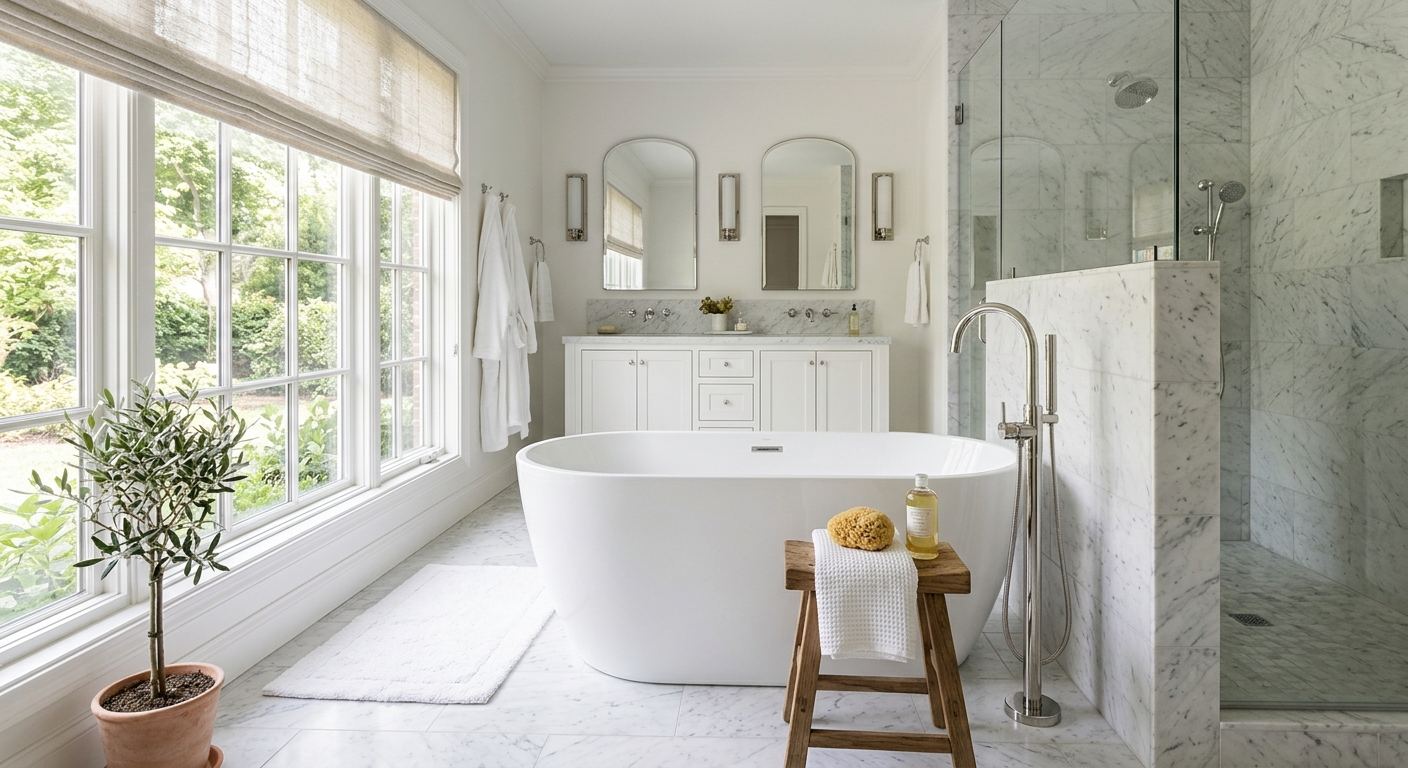
Bathroom renovation options and costs in Petrolia
Petrolia bathroom renovations usually start with a simple question—“What will it cost?”—but the right answer depends on how much of the existing bathroom you want to keep. With many homes in Petrolia built before 1981 (55.1% of dwellings, Statistics Canada, 2021 Census), it’s common to uncover dated plumbing layouts, older drain piping, and ventilation issues only after the demo begins. That’s one reason contractor pricing in the Windsor–Sarnia region is driven more by labour hours and discovery/repair time than by weather alone.
Ontario’s winter freeze-thaw cycles don’t hit bathrooms the way they hit exterior walls, but persistent indoor humidity still matters—especially in older homes where exhaust fans or duct runs aren’t up to current best practice. In practice, Windsor–Sarnia pricing also reflects a steady trade workload and the availability of installers who can handle tile, waterproofing, and electrical corrections without rework. In Petrolia, the trade is particularly in demand around the downtown and older residential pockets off Confederation Line, where many bathrooms were last updated decades ago.
To help you compare options, here are realistic scope-and-cost ranges you’ll see from local crews. Use these bands as a baseline, then expect a site visit to confirm what’s hidden behind the walls and under the floor.
| Renovation Scope |
What's Included |
Typical Duration |
Price Range |
| Cosmetic refresh (paint, fixtures, accessories only) |
Paint/trim, vanity and mirror swap, new toilet or tap/handles, re-caulk, accessory upgrades; typically no wall opening |
3–7 days |
$2,500–$6,500 |
| Mid-range full renovation (new tile, vanity, tub/shower, electrical) |
Tile floor + surround, vanity/lighting, new tub/shower unit, updated waterproofing, vanity plumbing connections, basic electrical updates (e.g., GFCI/exhaust fan where needed), disposal |
2–4 weeks |
$14,000–$22,000 |
| High-end full renovation (custom tile, steam shower, heated floors) |
Higher-end tile, custom shower with niche/bench, premium fixtures, heated floor system, advanced waterproofing system, additional electrical circuits as required, improved ventilation, extensive layout tuning |
4–6 weeks |
$22,000–$30,000 |
| Shower-only installation (convert tub to walk-in shower) |
Demo tub, new walk-in shower layout, waterproofing and tile/liner, new shower valve and head, new drain connection (as needed), niche/shelf options, ventilation touch-ups |
1–3 weeks |
$5,000–$12,000 |
| Bathtub replacement or tub-liner install |
Remove/replace tub and surrounds OR install tub liner with surface prep, new caulk/grout at transitions, updated faucet/trim, select waterproofing where interfaces change |
5–12 days |
$3,000–$8,000 |
| Tile-only installation (floor + surround, existing layout kept) |
Remove old tile, repair/level substrate as required, new waterproofing for tiled areas, floor and wall tile, grout/seal, transition trims |
1–3 weeks |
$4,500–$11,000 |
Prices are estimates only and vary by project scope, site access and material selection.
What affects the price of bathroom renovation in Petrolia
Even when two homeowners in Petrolia choose the same style—say, a tiled tub surround and a new vanity—quotes can differ by 30–50% across the Windsor–Sarnia region and the broader Ontario market. In this part of Ontario, the biggest swing factors are labour rates and the age of the housing stock, not climate surprises. Many bathrooms in older homes were built with ventilation that no longer performs well, and with drain and supply runs that may not be sized or routed as needed for modern fixtures.
When demolition starts in older bathrooms, contractors often find undersized venting routes, cast-iron or ageing drain stacks that need upgrading, galvanized supply lines that should be replaced, and subfloors that are no longer flat. Each correction adds trade time. A second common cost jump is discovery of asbestos-containing materials in older floor tile or drywall compound. When abatement is required, budgets commonly add $1,500–$5,000+, and timelines extend due to scheduling and safe removal practices.
Concrete examples from local work: switching from ceramic to large-format porcelain can increase layout labour (more cutting, stricter flatness requirements), but it may reduce total grout lines and improve longevity. Converting a tub to a shower often costs more than many homeowners expect because new drain connections and a properly pitched shower base may be required. Meanwhile, projects that keep the existing plumbing “footprint” and focus on tile and fixtures often land within the mid-market band near the $14,000–$22,000 range, whereas extensive layout and system upgrades push work toward the $22,000–$30,000 full-reno tier.
In short: your home’s build age drives what’s hidden, and hidden issues drive the final price.
| Price Factor |
Why It Matters |
Cost Impact |
| Layout change — moving drain or supply lines |
Requires rough-in plumbing, patching drywall, and potentially structural adjustments to chase lines |
$2,500–$7,500 |
| Tile selection — large-format porcelain vs. mosaic vs. ceramic |
Harder tile tolerates less out-of-level substrates; mosaics can be labour-intensive to set and grout |
$1,000–$4,000 |
| Fixture tier — builder-grade vs. mid-range vs. designer brands |
Better valves, finishes, and warranties often cost more and may require different trim/rough systems |
$500–$4,500 |
| Subfloor condition — rot or unlevel concrete adds scope |
Floor flattening, membrane prep, and replacement of damaged framing can be extensive after demo |
$1,000–$6,000 |
| Electrical — adding GFCI outlets, exhaust fan, heated floor circuit |
New circuits or fan upgrades may require panel work and code-compliant wiring runs |
$800–$5,000 |
| Waterproofing method — membrane type and extent |
A full, correct system reduces moisture intrusion and callbacks; partial waterproofing costs later |
$600–$3,500 |
| Older-home surprises — asbestos tile, cast-iron drains, galvanized pipes |
Abatement and replacement work adds both material and labour time, plus inspections |
$1,500–$8,000+ |
| Bathroom size — sq ft drives tile and labour time directly |
More area means more setting time, more waterproofing coverage, and higher waste from cuts |
$1,500–$6,000 |
Permits & regulations in Ontario
In Ontario, not every bathroom update needs a permit, but changes that affect plumbing, electrical, or structure typically do. As a homeowner in Petrolia, you can often do “cosmetic-only” improvements—like swapping a vanity, replacing a toilet, repainting, updating mirrors or accessories, or retiling without moving plumbing—without triggering a permit. However, if you relocate plumbing (moving a drain or supply line), add or replace an exhaust fan with new wiring/circuit work, change electrical circuits, or make structural changes to walls, you should expect permit/inspection requirements.
Electrical work must meet the Ontario Electrical Safety Code and be completed by a licensed electrician or performed under appropriate authorization. For plumbing, any rough-in changes (new drain connections, relocated supply lines, or changes to venting arrangements) generally require permits and inspections. Always confirm with your contractor before work starts—once materials are removed, it’s too late to “guess.”
To verify a contractor in Petrolia step-by-step: (1) check their Ontario trade licence (or the appropriate registration for the trade they’re performing), (2) request a certificate of insurance showing liability coverage, (3) ask for WSIB/WCB clearance or coverage documentation (as applicable to their trade), and (4) for electrical or plumbing subcontracted scopes, request proof those trades are licensed too. Where available, you can confirm details via the relevant provincial registry and by reviewing the COI and any clearance letter provided with the quote package.
Choosing tile, waterproofing and fixtures for your Petrolia bathroom
Your three biggest budget levers in a Petrolia bathroom reno are tile choice, waterproofing method, and fixture tier—and getting the combination right prevents expensive “fixes later.” First is tile. Entry-level ceramic is usually the most budget-friendly, but it’s often less forgiving in wet-area conditions unless substrate prep and grout selection are done correctly. Porcelain tile is typically a better mid-range choice because it handles moisture and wear well, and it can look higher-end with the right grout colour and layout. Natural stone (marble, travertine, slate) can create a luxury look, but it adds cost and often requires more careful sealing and finish detailing.
Second is waterproofing. In Ontario’s bathrooms, humidity is constant and ventilation is critical. A paint-on membrane can be fine for certain areas when applied to the right substrate and system, but a bonded sheet membrane or a modern integrated system is often more robust for shower walls and floors. Third is fixtures. Builder-grade models save money upfront, but mid-range valves, showerheads, and proper trim quality often improve day-to-day reliability and resale appeal.
Where does the money pay off? For example, choosing a properly detailed waterproofing system and correct substrate prep can mean you spend more upfront within the mid-range renovation tier (near $14,000–$22,000), but you reduce the risk of grout breakdown and moisture issues that can quickly erode value and force rework—especially in older homes where the “first fix” rarely stays the last.
| Material / Option |
Pros |
Cons |
Price Range |
| Ceramic tile (floor + walls) |
Lower material cost; good variety of colours; straightforward maintenance |
More variation in wear performance; may be less durable than porcelain in high-traffic areas |
$2,000–$6,000 |
| Porcelain tile (floor + walls) |
Higher durability and moisture resistance; cleaner look with modern formats |
Can cost more; requires excellent substrate flatness for large formats |
$4,000–$10,000 |
| Natural stone (marble, travertine, slate) |
Distinct luxury appearance; strong resale appeal when well finished |
Needs sealing/maintenance; can be higher labour and material waste |
$6,000–$14,000 |
| Frameless glass shower enclosure |
Modern look; easier to wipe clean; visually opens the space |
Glass cost and installation labour; may require careful measurements and blocking |
$2,000–$6,000 |
| Prefab tub surround (acrylic) |
Fast install; consistent finish; lower labour than full tile surrounds |
Limited design options; can be less “custom” than tiled walls |
$800–$3,500 |
| Custom shower pan (tile or linear drain) |
Improved water management; sleek lines with linear drains; fully integrated look |
More build-up and waterproofing detail; can raise total timeline |
$3,500–$10,000 |
How to choose a bathroom renovation contractor in Petrolia
Start by confirming licensing and coverage, then move to quotes and workmanship details. In Ontario, ask each contractor to provide proof of their Ontario trade licence (for the scope they perform), a certificate of liability insurance, and WSIB/WCB clearance or coverage documentation. If subcontractors will do electrical or plumbing rough-in, insist they provide their own proof too.
Next, get 2–3 itemised written quotes. “Itemised” matters: you want labour and materials separated (tile supply vs. install, waterproofing materials, demolition/disposal, permit handling, and any allowances for fixtures). A lump sum quote often hides risk. Then read the scope line-by-line: what is excluded (subfloor repairs, asbestos testing/abatement, venting changes, drywall replacement), whether permits are included, and if disposal and clean-up are part of the price. A reputable contractor will list allowances clearly and explain how changes are billed.
For warranty, look for both workmanship warranty length and how product/manufacturer warranties apply. Confirm if the warranty is transferable and what it covers after normal wear and humidity exposure. For payment scheduling, never pay more than 10–15% upfront; hold back part of the amount until you’re satisfied with critical milestones (waterproofing inspection, tiling completion, final trim).
Finally, insist on a start date and an estimated completion timeline in writing—especially because older-home surprises in Petrolia can affect schedule when hidden plumbing or ventilation corrections appear.
- Verify Ontario licence for the trade scope they’re performing.
- Request certificate of liability insurance (and confirm coverage is active).
- Confirm WSIB/WCB clearance or coverage documentation.
- Get 2–3 itemised quotes (labour + materials, not one lump).
- Check whether permits and inspections are included or billed separately.
- Confirm disposal and debris removal is included.
- Ask what happens if asbestos or concealed damage is found.
- Confirm waterproofing type and coverage area (shower walls, pan, transitions).
- Ask who is responsible for substrate repair/flattening before tile.
- Review the warranty: workmanship duration and product warranty terms.
- Agree on a milestone-based payment schedule (10–15% max upfront).
- Get a written timeline and communication plan for change orders.
Red flags I commonly see with bathroom renovation contractors in Petrolia include: vague scope language (“allowances” without amounts), no written warranty terms, requests for large upfront payments, missing or outdated insurance/licensing paperwork, and refusal to put permit responsibility and change-order pricing in writing.
Frequently asked questions — bathroom renovation in Petrolia
How do I plan a bathroom renovation on a tight budget in Petrolia?
If you’re budgeting carefully in Petrolia, start by keeping the plumbing “footprint” if you can. Avoid relocating drain and supply lines unless necessary—layout changes are one of the fastest ways a project grows from a shower/tub refresh into a full $14,000–$22,000 mid-range renovation. Prioritise waterproofing quality and ventilation upgrades (even a good exhaust fan replacement can prevent long-term mould). For budget control, choose tile strategically: porcelain in a smaller pattern or ceramic where wear is lower can stretch material dollars, while investing in proper substrate prep reduces rework. Finally, ask for itemised quotes with allowances so you can adjust fixtures and finishes without risking hidden demolition costs.
What's the difference between a cosmetic and a full bathroom renovation?
A cosmetic refresh typically involves surfaces and fixtures only—think repainting, swapping a vanity, mirror, lighting, and accessories, or doing re-caulking and minor fixture replacement without opening walls. A full bathroom renovation means demolition down to key building elements and then rebuilding: new tile work (floor and walls), updated waterproofing, electrical and ventilation corrections, and often plumbing rough-in or replacement. In Petrolia, where many homes are older (55.1% built before 1981, Statistics Canada, 2021 Census), “cosmetic” can quickly become “full” once trades open up to check drains, venting, or subfloor condition. If you’re aiming to stay in the $2,500–$6,500 cosmetic range, be explicit that you’re not changing plumbing routes.
How do I choose the right contractor for my bathroom in Petrolia?
Choose a contractor who can prove coverage and can clearly explain the scope. For Ontario, request their Ontario trade licence for the work they’ll do, a certificate of liability insurance, and WSIB/WCB clearance (or evidence of coverage). Then compare 2–3 itemised written quotes and confirm what’s included: permits, disposal, waterproofing method, and substrate repairs. Watch for how they handle older-home risks common in Petrolia—cast-iron/copper drain issues, galvanized supply lines, or potential asbestos discovery. A good contractor will outline how surprises are handled, not just the final price. Also confirm workmanship and product warranty terms and confirm that payment is milestone-based with no large upfront deposits beyond 10–15%.
What's the most common mistake homeowners make in bathroom renovations?
The most common mistake is under-budgeting for what’s hidden—especially in older Petrolia homes. Homeowners often choose finishes first (tile/fixtures) and then assume the wall behind the tile will be solid and dry. Once demo starts, contractors may find unlevel substrates, failing caulking, inadequate ventilation ducting, or dated plumbing/drain arrangements that require upgrading. Another frequent issue is skipping or under-specifying waterproofing because the quote looked lower at first. Ontario bathroom humidity and long steam/splash exposure make waterproofing critical. If your budget targets a shower-only or tub-liner approach, confirm the condition of the subfloor and waterproofing interfaces so you don’t end up paying for a bigger scope than intended.
How long does tile installation take in a Petrolia bathroom?
Tile timelines vary by bathroom size, tile type, and how much substrate correction is needed. In a typical Petrolia bath where demo is already complete and the substrate is reasonably flat, tile installation often takes about 5–10 working days, with additional time for waterproofing prep, grout curing, and final sealing. If you choose larger-format porcelain, the installer typically needs extra time to achieve a flat, consistent plane and align layout lines. In older homes (many built before 1981, Statistics Canada, 2021 Census), expect additional time for subfloor repairs or leveling before tile can be set. For scheduling, ask your contractor to provide a task-by-task timeline rather than only a final completion date.
How much does a bathroom renovation cost in Petrolia?
In Petrolia, pricing usually lands within the mid-market bands for Ontario depending on scope and what’s hidden behind walls. A mid-range full bathroom renovation commonly falls around $14,000–$22,000, while more premium builds with heated floors or higher-end custom work can reach $22,000–$30,000. If you’re doing a shower-only conversion (like replacing a tub with a walk-in), expect roughly $5,000–$12,000 depending on plumbing changes, waterproofing complexity, and enclosure choices. For tile-only work (keeping the layout), many projects land around $4,500–$11,000. Your final price depends heavily on labour scope, older-home repairs, and the ventilation/electrical updates needed for code-compliant, moisture-safe performance.