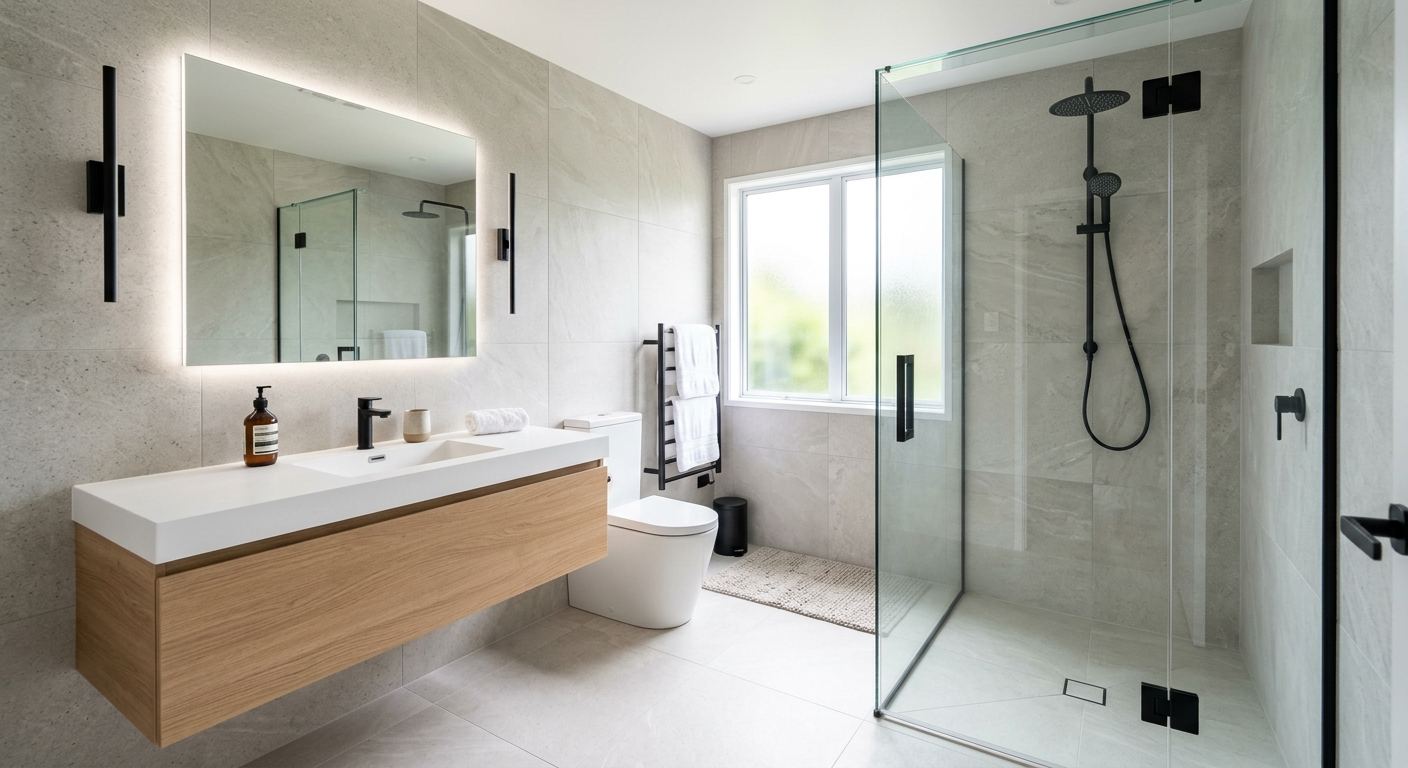
Bathroom renovation options and costs in Nepean
Nepean homeowners usually have three paths when planning a bathroom renovation: a cosmetic refresh, a mid-range full renovation, or a high-end gut-style upgrade. With Nepean’s housing stock in Ottawa’s orbit largely shaped by mid-20th-century builds, it’s common to run into older plumbing layouts that change how the job prices out. In the Ottawa economic region, the population is about 180,000 (Statistics Canada, 2021 Census), and that steady demand keeps trade schedules busy during peak renovation months—especially around the South Nepean/Beacon Hill area where families renovate to keep pace with changing household needs. Also, a meaningful share of older homes can pre-date modern waterproofing detailing, so the “simple” plan can turn invasive once we uncover aged drainage (often cast-iron) or galvanized supply lines and undersized venting that needs bringing up to current Ontario requirements.
Ontario’s climate doesn’t directly drive labour the way age does, but it does affect moisture management and how carefully bathrooms must be built to resist condensation and seasonal humidity swings. In practice, the biggest cost jumps in Nepean come from hidden-condition discovery, electrical and ventilation upgrades, and whether the renovation stays on the existing layout. That’s why full-service firms typically quote using realistic time-and-material assumptions rather than a single “per square foot” number.
Below are common renovation scopes and realistic Nepean price ranges. Use them as a backbone for comparing quotes, then we’ll fine-tune based on your tile plan, plumbing changes, and what’s behind the walls.
| Renovation Scope |
What's Included |
Typical Duration |
Price Range |
| Cosmetic refresh (paint, fixtures, accessories only) |
Clean-out, paint, replace vanity or toilet if using existing connections, swap faucets, re-caulk, update lighting trim (no rewire), accessory install |
2–5 days |
$3,500–$8,500 |
| Mid-range full renovation (new tile, vanity, tub/shower, electrical) |
Demo, new vanity, tub/shower or surround, updated exhaust fan, GFCI provisions where required, new tile floor and walls, drywall patching, basic electrical updates |
2–3 weeks |
$15,000–$28,000 |
| High-end full renovation (custom tile, steam shower, heated floors) |
Full gut, custom tile detailing, heated floor circuit, upgraded shower system (including steam if selected), enhanced lighting, premium fixtures, robust waterproofing and extended finishing |
4–6 weeks |
$30,000–$45,000 |
| Shower-only installation (convert tub to walk-in shower) |
Remove tub, build shower pan system, new curb/linear options, glass enclosure, re-tile floor and walls, plumbing adjustments on a typical rough-in |
2–4 weeks |
$8,500–$18,000 |
| Bathtub replacement or tub-liner install |
Swap tub (or liner on compatible surfaces), new caulking/trim, minor surround updates, plumbing tie-ins as needed, re-sealing |
5–10 days |
$800–$4,000 |
| Tile-only installation (floor + surround, existing layout kept) |
Tile removal where needed, tile floor and/or tub surround, waterproofing as required by substrate, grouting/sealing, reinstatement of existing fixtures |
1–3 weeks |
$5,000–$25,000 |
Prices are estimates only and vary by project scope, site access and material selection.
What affects the price of bathroom renovation in Nepean
Two Nepean bathrooms can look identical on paper, yet one quote can land 30–50% higher. The Ottawa region’s main drivers are labour rates, the age of the housing stock, and how many trades must touch the space—not the weather. Local full-service firms commonly work in the $85–$150 per hour range once you combine licensed trades, supervision, and scheduling overhead. When multiple scopes overlap (demolition, plumbing, electrical, drywall, tile, finishing), hours multiply quickly.
In older Ottawa-area homes, even a “refresh” can uncover problems that inflate scope: cast-iron or galvanized supply issues, undersized venting, non-compliant traps, and drains that need upgrading to meet Ontario Building Code expectations. Those discoveries typically trigger changes before finishes go in, so costs move toward the full renovation bands. Also, if asbestos-containing materials are present in pre-1985 assemblies (such as certain floor tile, mastics, or pipe wrap), the job may need abatement procedures, which can add roughly $1,500–$5,000+ depending on extent and containment.
Concrete examples I see in Nepean: (1) keeping your tub in the same location often preserves the existing rough-in, which helps hold you nearer the $15,000–$28,000 mid-range band; (2) moving drains or adding a second shower head usually requires more rough-in and wall work, pushing the project toward $30,000–$45,000; (3) changing to large-format porcelain can reduce visual grout lines but increases labour time for layout and substrate prep when floors are out of level.
In short, it’s less about Ottawa’s winters and more about what’s behind the walls—and how quickly hidden conditions are confirmed once demolition starts.
| Price Factor |
Why It Matters |
Cost Impact |
| Layout change — moving drain or supply lines requires rough-in work |
Replumbing means opening walls/ceilings, re-routing vents, and new connections |
Often +$3,000–$10,000 |
| Tile selection — large-format porcelain vs. mosaic vs. ceramic |
Harder substrates and tighter tolerances increase labour and waste; mosaics are labour-intensive |
Often +$1,000–$7,000 |
| Fixture tier — builder-grade vs. mid-range vs. designer brands |
Higher tiers add material cost and sometimes require different valves/rough-in components |
Often +$500–$5,000 |
| Subfloor condition — rot or unlevel concrete adds scope |
May require membrane-compatible prep, backer adjustments, or subfloor repair |
Often +$1,000–$6,000 |
| Electrical — adding GFCI outlets, exhaust fan, heated floor circuit |
New circuits, vent fan wiring, and code-compliant upgrades require licensed work |
Often +$800–$4,500 |
| Waterproofing method — membrane type and extent |
Quality membrane systems and full coverage reduce failure risk in humid bathrooms |
Often +$500–$3,500 |
| Older-home surprises — asbestos tile, cast-iron drains, galvanized pipes |
Discovery can force abatement, pipe upgrades, and extra inspections |
Often +$1,500–$12,000 |
| Bathroom size — sq ft drives tile and labour time directly |
More wall/floor area means more waterproofing, thinset, labour, and cure times |
Often +$2,000–$15,000 |
Permits & regulations in Ontario
In Ontario, cosmetic updates usually don’t trigger a building permit. Swapping fixtures like a vanity, toilet, faucet, or light trim, re-painting, and retiling using the same layout typically falls under “finish work.” Many homeowners also choose to keep plumbing locations the same when they want to avoid permit timelines and inspections.
Permits are commonly required when you relocate plumbing or change how services run. That includes moving a drain or supply line, adding or relocating a toilet flange, and making changes that affect rough-in plumbing. Electrical work also matters: if you add circuits or install new powered components (commonly a new exhaust fan with wiring, adding heated floor circuits, or updating to code-compliant GFCI protection), it must meet Ontario electrical code and be completed or signed off by a licensed electrician. Structural or framing changes to walls (for example, removing a structural wall section or significantly altering backing/support) can also require permits and inspection.
Step-by-step for Nepean homeowners: (1) Ask for the contractor’s Ontario trade licence details (or equivalent proof of authorization for the scope) before signing; (2) Request a current Certificate of Insurance showing liability coverage; (3) Confirm WSIB/WCB coverage (or a clearance letter where applicable) for the trades that will be on-site; (4) Keep all documents with your quote and schedule; and (5) If the plan includes electrical/plumbing rough-in changes, confirm whether the contractor includes permit pulls and inspection scheduling in the written scope.
Choosing tile, waterproofing and fixtures for your Nepean bathroom
In Nepean, the three decisions that most directly shape your budget—and your long-term risk of mould or leaks—are tile choice, waterproofing method, and fixture tier. Start with tile: ceramic is typically the entry point, but installation complexity rises when the subfloor is uneven or the layout is intricate. Porcelain usually offers better water resistance and durability, and it’s a common “sweet spot” for families who want longevity without going fully luxury. Natural stone (marble, travertine, slate) can look exceptional, but it requires careful selection, sealing, and labour-intensive installation details, especially on shower floors.
Next, waterproofing. In Ontario’s real-world bathroom conditions—cold starts, warm showers, and frequent condensation—the right system prevents moisture from migrating behind tile. Paint-on membranes can work in certain systems, but bonded sheet membranes or a complete schluter-style approach often provide a more robust, details-first build when installed correctly at seams, corners, and transitions. Finally, fixtures: builder-grade units reduce upfront cost but may cost more in maintenance or replacement over time; mid-range balances performance and style; designer brands tend to pay off when you value finish consistency, valve control, and resale appeal.
Example to budget wisely: if you move from entry-level ceramic tile toward porcelain on the shower surround, you may add a few thousand dollars in materials and labour—often money that’s justified because porcelain holds up better to daily cleaning and frequent wetting in Ottawa-area homes. But if your biggest driver is dated plumbing, don’t overspend on stone while ignoring rough-in upgrades.
Match the package to your actual situation: keep layout, choose a proven waterproofing method, and invest where it affects failure risk first—then upgrade finishes.
| Material / Option |
Pros |
Cons |
Price Range |
| Ceramic tile (floor + walls) |
Generally lower material cost, wide style selection, good for tub surrounds |
Less forgiving than porcelain for wear on floors; can chip if substrate prep is poor |
$5,000–$12,000 |
| Porcelain tile (floor + walls) |
More durable, lower water absorption, handles Ottawa bathroom use well, cleaner grout appearance |
Higher material cost; large-format layout demands very accurate subfloor prep |
$9,000–$20,000 |
| Natural stone (marble, travertine, slate) |
Premium look and uniqueness; strong resale appeal when sealed and detailed well |
Sealing/maintenance required; can stain; often higher labour and waste |
$15,000–$25,000 |
| Frameless glass shower enclosure |
Bright, modern look; easy to clean; can visually enlarge smaller baths |
More expensive than framed units; needs precise wall/plumb alignment |
$3,500–$8,500 |
| Prefab tub surround (acrylic) |
Fast install, water-resistant surfaces with correct sealant, budget-friendly |
Less custom look; seams still matter; limited pattern flexibility |
$1,200–$3,800 |
| Custom shower pan (tile or linear drain) |
Best durability when done with correct waterproofing; linear drains look high-end |
More trades/time; requires precise slope and waterproofing detailing |
$6,000–$18,000 |
How to choose a bathroom renovation contractor in Nepean
Choosing the right bathroom contractor in Nepean starts with proof, not promises. First, verify Ontario licensing for the trades relevant to your scope (especially electrical and plumbing-related work). Ask for a Certificate of Insurance for liability coverage and confirm WSIB/WCB clearance for the workers who will be on-site. If they can’t provide current documentation promptly, that’s usually a sign your job may get delayed or become complicated when inspections and site safety questions come up.
Next, get 2–3 itemised written quotes. You want a breakdown that separates labour and materials (demo, rough-in, drywall, waterproofing, tile installation, fixtures, electrical/mechanical costs). Avoid “lump sum” only quotes with vague exclusions. Read the scope line-by-line: confirm whether disposal is included, whether permit pull/inspection scheduling is included if required, and what happens if the contractor finds damaged subfloor, old drains, or mould after demo.
Warranty matters in bathrooms because failures are usually hidden behind tile. Ask for workmanship warranty length, whether product/manufacturer warranties apply to installed components, and if warranties are transferable. Also confirm the payment schedule: never allow more than about 10–15% upfront, and hold back a portion until punch-list completion and site cleanup.
Finally, insist on a start date and a completion estimate in writing so you can plan around school/work. A clear schedule is usually a sign of good trade coordination.
- Provide Ontario trade licence/authorization details relevant to your scope.
- Show current liability insurance (and confirm the insured name matches the contract).
- Confirm WSIB/WCB clearance (or acceptable documentation where applicable).
- Use itemised labour + material pricing, not just a single total.
- List exclusions clearly (e.g., asbestos abatement, subfloor repairs, venting upgrades).
- State whether permit pulls and inspection fees are included (when plumbing/electrical scope requires them).
- Confirm disposal and dump fees are included.
- Specify waterproofing system by name and detail coverage (walls, corners, transitions).
- Include tile installation method (layout planning, substrate prep expectations, tolerances).
- Confirm electrical scope includes GFCI and exhaust fan work where required.
- Ask for workmanship warranty details and whether product warranties are supported.
- Agree on a payment schedule with holdback until final sign-off/punch-list.
Red flags I see in Nepean: no written scope for waterproofing details, pricing changes after demo without a documented change order, contractors who won’t disclose disposal or permit responsibility, inconsistent warranty terms (or only “verbal” warranty), and schedules that start without confirmed trade availability—especially for tiling and electrical sign-offs.
Frequently asked questions — bathroom renovation in Nepean
How long does tile installation take in a Nepean bathroom?
In Nepean, tile installation timing depends mostly on wall prep quality, waterproofing curing time, and whether you’re tiling a tub surround or a full shower with a custom pan. For a typical mid-range full renovation, expect the tile package to take about 7–12 working days, not including cure time between waterproofing and tile setting. If you select large-format porcelain, plan for extra layout and levelling time. If you’re converting a tub to a walk-in shower, tile can stretch closer to the 2–3 week renovation window due to custom pan and drain detailing. Because local labour is busy, lead times for enclosures and specialty drains can also affect completion.
How much does a bathroom renovation cost in Nepean?
Bathroom renovation costs in Nepean generally land in bands tied to scope and hidden-condition discovery. A cosmetic refresh is commonly lower, but a full renovation is usually the real decision point. For a typical family bath with new tile, a vanity, and updated electrical, budgets often run in the $15,000–$28,000 range. If you’re doing a higher-end job with custom tile work, heated flooring, and premium shower upgrades, you’ll more often be in the $30,000–$45,000 band. Older Ottawa-area homes can raise costs when drains, venting, or supply lines need upgrades, and asbestos-containing materials require proper abatement procedures. (Statistics Canada, 2021 Census)
How long does a bathroom renovation take in Nepean?
For Nepean homeowners, timelines usually depend on trade coordination and how disruptive the renovation is. A cosmetic refresh can be as quick as 2–5 days. A mid-range full renovation typically takes about 2–3 weeks when plumbing/electrical and tile trades stay on schedule. Conversions (like tub-to-shower) often land around 2–4 weeks due to waterproofing detailing and enclosure lead times. High-end full renovations commonly run 4–6 weeks because of custom shower builds, heated floors, and more extensive finish work. The biggest schedule risk is discovering issues after demo—such as damaged subfloor, aged drains, or the need for venting upgrades—so it’s smart to request a contingency approach in your quote.
Do I need a permit for a bathroom renovation in Ontario?
In Ontario, many bathroom updates don’t require permits if they’re cosmetic and don’t move plumbing or structural elements. Generally, swapping fixtures, repainting, and retiling on the same layout often proceed without a permit. You’re more likely to need a permit when you relocate plumbing (moving drains/supplies), add or significantly change exhaust ventilation that involves electrical work, or make changes to structural walls. Electrical work must be done or signed off by a licensed electrician and must meet Ontario code. For Nepean projects, the best practice is to ask your contractor to confirm whether permit pulls and inspections are required for your exact scope before work begins, and to include that responsibility clearly in the written quote.
What's the best tile for a bathroom in Nepean?
“Best” usually means most appropriate for your shower conditions, cleaning habits, and budget. In Ontario’s bathroom humidity and condensation cycles, porcelain is often the most dependable choice because it’s durable and lower water absorption than typical entry ceramic. Ceramic is fine for many tub surrounds and floors if the substrate prep and waterproofing are done properly. Natural stone looks premium but demands more maintenance and careful sealing, and it can be pricier to install. For shower floors, also consider slip resistance—especially in households that want peace of mind in wet conditions. If you’re aiming for longevity without overspending, many Nepean renovations choose porcelain tile with a proven membrane system and careful corner/seam detailing.
Should I do a tub-to-shower conversion?
A tub-to-shower conversion is a great option for many Nepean homes, especially for accessibility and easier day-to-day cleaning. It’s also a common path when homeowners want a modern look and plan to keep plumbing in a manageable configuration. Budget-wise, it often sits in the higher portion of a shower-focused renovation because you’ll be building a shower pan system and waterproofing correctly—plus adding a glass enclosure in many cases. If your quote includes converting the plumbing rough-in and updating ventilation, costs can move toward a full renovation band rather than a simple refresh. If you have older drains or venting limitations, discovery after demo can also affect the scope. The best decision comes down to your mobility needs, how your current rough-in is laid out, and how thorough the waterproofing plan is.