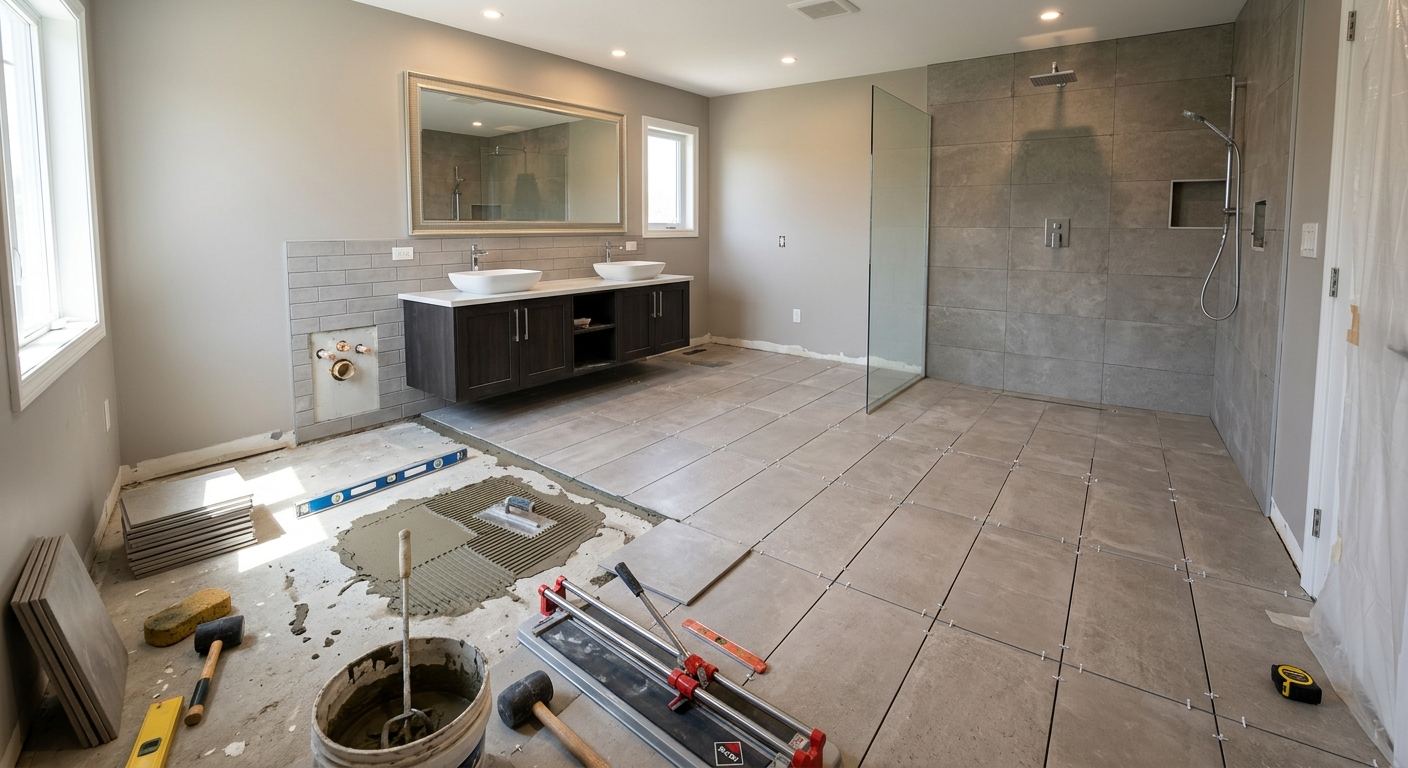
Bathroom renovation options and costs in London
Bathroom renovations in London, Ontario can look surprisingly similar on paper, yet the final bill often depends on how old the home is and what’s hiding behind finished walls. In London, 52.3% of homes were built before 1981, which commonly means older plumbing layouts, dated venting, and finishes that may contain asbestos-containing materials in older vinyl floor tile or old patching compounds. With 101,555 homeowner households in the city (Statistics Canada, 2021 Census), there’s steady demand, so reputable trades are typically busiest around spring and early summer—especially in neighbourhoods with a large share of older housing.
Cost is also shaped by local market reality: the London region tends to have contractors scheduled tightly, and if demolition reveals cast-iron drains or galvanized supply lines, labour time increases fast. Climate in London influences material performance (mould resistance, ventilation, and waterproofing durability), but it’s the housing age and plumbing/vent condition that most strongly drives pricing here. Trades are especially in demand around Old East London and the downtown core where many homes are older and bathrooms are being updated in occupied houses.
Below is a practical comparison of typical renovation approaches and what homeowners usually get at each price level, before a site visit confirms hidden conditions.
| Renovation Scope |
What's Included |
Typical Duration |
Price Range |
| Cosmetic refresh (paint, fixtures, accessories only) |
New vanity top or vanity, toilet/trim swaps if existing plumbing remains, paint, lighting/fixture refresh (no electrical expansion), accessories, caulking/trim sealing |
3–7 days |
$4,000–$8,000 |
| Mid-range full renovation (new tile, vanity, tub/shower, electrical) |
Demolition, waterproofing, tile floor + surround, new vanity and fixtures, bathtub or surround rebuild, exhaust fan upgrades, updated lighting, basic electrical updates, disposal |
2–4 weeks |
$14,000–$22,000 |
| High-end full renovation (custom tile, steam shower, heated floors) |
Full gut, premium waterproofing and tile detailing, custom shower or steam system, heated floors circuit, upgraded electrical/venting, higher-end fixtures, niche/bench work, extensive substrate repair, disposal |
4–7 weeks |
$22,000–$30,000 |
| Shower-only installation (convert tub to walk-in shower) |
Remove tub, new shower valve/trim, pan and waterproofing, tile surround, new glass enclosure, rework drain tie-in and venting/rough-ins as needed, exhaust/fan tie-in where required |
2–3 weeks |
$7,000–$14,000 |
| Bathtub replacement or tub-liner install |
Swap tub (or liner), sealing and re-grout, matching trim, plumbing reconnection, limited wall repair, waterproofing in critical joints, disposal |
5–10 days |
$1,200–$6,000 |
| Tile-only installation (floor + surround, existing layout kept) |
Tile removal where needed, substrate prep, waterproofing, tile installation for floor and walls, grout/seal, reinstallation of fixtures if kept, disposal of tile materials |
1–3 weeks |
$6,500–$18,000 |
Prices are estimates only and vary by project scope, site access and material selection.
What affects the price of bathroom renovation in London
Homeowners in London often see quotes for the “same” bathroom that vary by 30–50%. The biggest drivers aren’t cosmetic taste—they’re labour rates, the condition of the existing bathroom, and the age of the housing stock. Because 52.3% of London homes were built before 1981 (Statistics Canada, 2021 Census), many projects start with plumbing and ventilation that aren’t ideal by today’s standards. Older homes can include cast-iron or copper drain stacks that require upgrade work, galvanized supply lines that are slow to shut off cleanly, and ventilation ducts that can be undersized or routed poorly—each adds time and sometimes unexpected demolition.
Discovery risk also matters. If asbestos-containing materials are found in older floor tile or patching compounds, abatement protocols may be required. That’s why a job that looks like a straightforward mid-range renovation (often around $14,000–$22,000) can climb toward the upper full-reno band once substrate repair and safe removal are included. In worst-case scenarios, cast-iron drain work plus waterproofing rebuilding can push scope to the high-end range (up to $22,000–$30,000), even when the design looks similar.
Concrete London examples: (1) a “simple” toilet and vanity swap can still require access work if the shutoff valves are seized—labour increases even without layout changes; (2) large-format porcelain often costs more in materials, but can reduce grout lines; however, it demands flatter subfloors and more prep labour if the existing floor is out of level; (3) older venting may force an updated exhaust fan location to meet performance expectations, adding rough-in and electrical labour. While Ontario’s temperature swings and humidity affect mould risk, the cost swing is usually dominated by what we find behind the walls, not by weather itself.
| Price Factor |
Why It Matters |
Cost Impact |
| Layout change — moving drain or supply lines |
Repositioning plumbing requires rough-in work, wall/floor opening, and re-tying drains and valves |
Often adds significant labour; common driver of quote increases of 30%+ when discovered late |
| Tile selection — large-format porcelain vs. mosaic vs. ceramic |
Harder materials can require more careful substrate prep, higher-spec blades, and more skilled setting |
Can shift a bathroom from mid-range to upper pricing even when the layout stays the same |
| Fixture tier — builder-grade vs. mid-range vs. designer brands |
Higher-end valves, faucets, and trims cost more and may need specific installation sequences |
Material difference can be the easiest way to explain variance without extra trades time |
| Subfloor condition — rot or unlevel concrete adds scope |
Weak framing, water-damaged drywall, or unlevel floors require rebuild and additional waterproofing prep |
Commonly turns “tile-only” into a larger full-reno scope |
| Electrical — adding GFCI outlets, exhaust fan, heated floor circuit |
Bathroom electrical must be code-compliant and may require additional circuits, boxes, and permits |
Heated floors and fan upgrades typically add noticeable cost and scheduling coordination |
| Waterproofing method — membrane type and extent |
Shower longevity depends on correct membrane coverage at seams, corners, and transitions |
Better waterproofing materials can add cost but reduce repeat-failure risk |
| Older-home surprises — asbestos tile, cast-iron drains, galvanized pipes |
Hidden conditions can trigger abatement and require plumbing replacement or upgraded drainage |
Can add $1,500–$5,000+ when abatement is required |
| Bathroom size — sq ft drives tile and labour time directly |
Tile area and install time scale with floor size, wall heights, niches and linear drains |
Small bathrooms keep costs closer to the lower band; larger ones climb quickly |
Permits & regulations in Ontario
In Ontario, cosmetic updates in a bathroom usually don’t require permits—think swapping fixtures (like a toilet or vanity) when you’re not changing plumbing locations, repainting, replacing accessories, or retiling with the same layout and no structural changes. However, permits and inspections become more likely when you’re moving plumbing or adding new electrical loads. Specifically, relocating a drain or supply line (changing where the toilet, tub/shower valve, or vanity sits) typically requires a plumbing permit and inspection once rough-in work is completed. Adding or relocating an exhaust fan, installing heated flooring, or upgrading circuits generally requires electrical work to be completed and verified per the electrical code by a licensed electrician; the permit/inspection process is commonly tied to that electrical scope.
Step-by-step for a London homeowner:
- Ask for the contractor’s Ontario trade licence details (and confirm it on the province’s licensing registry, using the licence number they provide).
- Request a current certificate of liability insurance showing bathroom renovation/home improvement coverage—verify dates and that it lists the correct business name.
- Confirm WSIB/WCB coverage status (clearance letter or proof of coverage) before work starts.
- Get an itemized scope that clearly states whether permits are included and who pulls them.
- For electrical or plumbing rough-ins, ensure the contractor lists the licensed sub-trades by name and licence where applicable.
Taking these steps upfront protects you if discovery work expands due to older London plumbing, ventilation, or hidden material issues.
Choosing tile, waterproofing and fixtures for your London bathroom
In London bathrooms, the three decisions that most reliably set the budget are tile choice, waterproofing method, and fixture tier. First, tile: entry-level ceramic is usually the lowest-cost option, but it’s typically less dense and can be more forgiving on cost if you’re working around smaller tiles and trim. Mid-range porcelain is often the sweet spot for longevity and appearance, especially for floors where you want strength and lower stain risk. Natural stone (marble, travertine, slate) looks premium, but it adds cost through material variation, sealing requirements, and higher install complexity.
Second, waterproofing: in Ontario’s indoor humidity, the right system is what prevents mould and failure behind tile. A paint-on membrane can be acceptable for certain details, but bonded sheet membranes or a properly detailed system (including corners, seams, and transitions) often delivers better long-term performance when the shower sees daily use. Third, fixtures: builder-grade items can keep you near the lower end of the price bands, while designer brands raise both purchase cost and, sometimes, trim-specific installation requirements. In the London market, customers often choose mid-range fixtures with premium waterproofing and porcelain tile—this combination gives the biggest durability payoff without overspending on brands.
For a dollar example, moving from ceramic to porcelain can push tile/material budgets, but it’s frequently justified if you’re doing a full renovation around the $14,000–$22,000 range: better tile can reduce future repairs and improve resale appeal. If your goal is a tub/shower refresh, overspending on luxury stone may not pencil out as well, especially if plumbing updates are already consuming budget.
| Material / Option |
Pros |
Cons |
Price Range |
| Ceramic tile (floor + walls) |
Generally lower material cost, wide colour selection, familiar installation methods |
Can be less durable than porcelain for floors, may chip easier, requires careful subfloor prep |
$2,000–$6,500 |
| Porcelain tile (floor + walls) |
Denser and more stain-resistant, holds up well in wet zones, more consistent colour and size |
Higher material cost, may require more precise substrate flatness for large formats |
$3,500–$10,000 |
| Natural stone (marble, travertine, slate) |
High-end look, unique veining and character, can increase perceived value |
Requires sealing/maintenance, varies by batch, more expensive and labour-intensive installation |
$7,000–$18,000 |
| Frameless glass shower enclosure |
Modern appearance, visually opens the bathroom, durable when properly installed |
Higher cost than standard units, relies on correct pan/tile alignment; small layout changes can add labour |
$1,800–$6,000 |
| Prefab tub surround (acrylic) |
Fast install, easy to maintain, fewer tile-setting steps, good for tight budgets |
Limited custom look compared with full tile, seam detailing must be correct to prevent water ingress |
$900–$3,000 |
| Custom shower pan (tile or linear drain) |
Allows a true custom slope, accommodates linear drains, clean “water goes where it should” solution |
More labour and waterproofing detailing, stronger need for substrate prep and correct drain rough-in |
$2,200–$8,000 |
How to choose a bathroom renovation contractor in London
Choosing a contractor in London means verifying licensing, insurance and job-site coverage before you sign anything. For Ontario work, ask for proof of trades licence (for plumbing/electrical where applicable), a certificate of liability insurance, and confirmation of WSIB/WCB coverage. You can check licence status using the licence number the contractor provides, then verify insurance by reviewing the certificate details and dates. For WSIB/WCB, request a clearance letter or proof of coverage so you’re not exposed if a worker is injured on your property.
Next, request 2–3 itemised written quotes. Don’t accept “all-in” numbers without a breakdown—look for line items covering labour and materials, demolition, waterproofing, tile installation, disposal, and any permit-related costs. Scope clarity is where many London projects either run smoothly or get expensive: confirm what’s excluded (for example, moving a vent, replacing subfloor, or matching tile if an older tile removal damages the substrate). Also confirm whether the contractor includes permit pulling, and whether disposal and dump fees are included or billed separately.
Finally, evaluate warranty and payment structure. A workmanship warranty should be in writing (and you should ask how long and what it covers). Product/manufacturer warranties vary by brand, so ask if the warranty transfers if you sell your home. Payment should follow progress: generally keep upfront deposits around 10–15%, and hold back until key milestones are complete. Get a written start date and completion estimate, not a “sometime in April” plan.
- Confirm Ontario trade licence details (use the licence number provided).
- Verify liability insurance certificate (correct legal name, active dates, adequate limits).
- Request WSIB/WCB clearance or proof of coverage.
- Ask for a demolition plan: who removes debris, and where does it go?
- Get an itemised labour/material quote, not a single lump sum.
- Confirm waterproofing scope (membrane type, coverage, and how corners/seams are handled).
- Clarify electrical scope: exhaust fan upgrades, GFCI outlets, heated floor circuit.
- Confirm permit responsibility: who pulls permits and who pays fees.
- Ask who handles hidden condition discoveries (rot, unlevel subfloor, older drain issues).
- Review the warranty: workmanship length, product coverage, and transferability.
- Agree on payment schedule: 10–15% max upfront; holdback until completion.
- Require timeline in writing with milestones (demo, rough-in, waterproofing, tile set, final trim).
London red flags to watch for: (1) a quote with no waterproofing details or no mention of substrate prep; (2) refusal to provide insurance/WSIB/WCB proof; (3) a “we’ll figure out permits later” approach; (4) large upfront payments beyond 10–15% without milestones; (5) vague warranty language (no coverage terms or no stated workmanship period).
Frequently asked questions — bathroom renovation in London
How much does a walk-in shower cost in London?
In London, a walk-in shower cost usually falls within the local shower-install range of $3,500–$10,000, but many real projects land higher once demolition and rough-in changes are included. If you’re converting from a tub, budget for pan construction, waterproofing, drain tie-in, and a glass enclosure—older London homes (especially those built before 1981) often need additional plumbing or venting adjustments. For a realistic “conversion” scope, many homeowners end up in the mid band for a bathroom update, commonly around $7,000–$14,000 depending on tile choice, linear drain vs. standard drain, and whether electrical work (like an upgraded exhaust fan) is required.
What's the ROI on a bathroom renovation?
ROI varies, but in London’s owner-occupied market (58.1% of households own, per Statistics Canada, 2021 Census), bathrooms tend to be a key decision point for buyers—especially updated waterproofing, modern lighting, and a functional layout. The “hard ROI” isn’t guaranteed, and a luxury finish won’t always pay back dollar-for-dollar. What typically recovers best is durable work that prevents future issues: correct waterproofing, quality tile installation, and properly sealed wet areas. If your renovation lands in the common full-bath band of $14,000–$22,000, it often positions a home competitively without overcapitalizing. High-end upgrades (up to $22,000–$30,000) can improve lifestyle value and buyer appeal, but they may not fully offset the additional spend depending on the rest of the home.
Do I need waterproofing behind the tile?
Yes—waterproofing behind tile in a shower area is strongly recommended, and it’s the standard approach for well-built renovations in Ontario. The goal is to stop water from reaching studs and subfloor, which is where mould and rot start, especially in bathrooms where humidity is high. For London homes built before 1981, older substrates can be less stable, so the waterproofing system and prep work matter even more. Your contractor should specify the method (for example, a bonded sheet membrane or a detailed membrane system), confirm coverage at corners/seams and around niches/benches, and explain how transitions are sealed. Skipping or under-specifying waterproofing is one of the most common causes of repeat failures—and those repairs can be far more expensive than doing it right during a $14,000–$22,000 renovation scope.
How do I compare bathroom renovation quotes?
To compare quotes in London fairly, ensure each includes the same scope and level of detail. Start by asking for an itemised breakdown: demolition, substrate repairs, waterproofing method, tile installation type, fixture allowances, electrical/electrical permit responsibility, ventilation/exhaust fan scope, and disposal fees. Watch for exclusions like “electrical by others,” “permit by homeowner,” or “repairs due to hidden damage not included.” Also compare product allowances: two contractors might both claim “mid-range vanity,” but the line item price can differ a lot. When quotes are close, timeline and warranty terms matter. When quotes differ by 30–50%, it’s often due to older-home surprises (cast-iron drains, galvanized supply lines, or asbestos-containing materials) or a different waterproofing approach. Use those differences to ask targeted questions rather than just picking the lowest number.
Can I live at home during a bathroom renovation in London?
Often, yes—many London homeowners stay in the home, especially for cosmetic refreshes or shorter parts of a full renovation. For occupied renovations, plan around access to water and a workable temporary bathroom solution. A cosmetic refresh can be done relatively quickly, but a mid-range full renovation typically takes a few weeks, and trades will need time for demo, rough-ins, waterproofing cure times, tile setting, and finish trim. If you’re converting a tub to a walk-in shower, schedule disruption can be bigger since plumbing tie-ins and shower pan prep must be done in sequence. If the project scope touches electrical or venting, those steps must be coordinated and inspected. In practice, communication matters: confirm a daily work window, dust control, and how the contractor will handle plumbing shutdowns during rough-in. For anything beyond like-for-like, I recommend planning a backup routine for at least the first 1–2 weeks.
What's the best bathtub material for a London home?
The “best” bathtub material depends on what you’re optimizing: budget, durability, or installation speed. For many London homeowners, acrylic/Prefab tub solutions are popular because they install efficiently and can help keep labour costs lower when the existing rough-in is being retained. If you’re doing a full bathroom renovation and you want a longer lifespan and better refinishing options, higher-quality tubs (often cast or heavier options) can be a good choice—but they’re typically more expensive to procure and sometimes more demanding to install. In London’s older housing stock, the biggest deciding factor is often what the subfloor and drain condition allow—if you discover drainage or substrate issues during demolition, the best “material” becomes the one that can be installed correctly with proper sealing and waterproofing. If your scope is a bathtub replacement or tub-liner approach, many projects fall around $1,200–$6,000, depending on whether walls need repair and how complex the reconnection is.