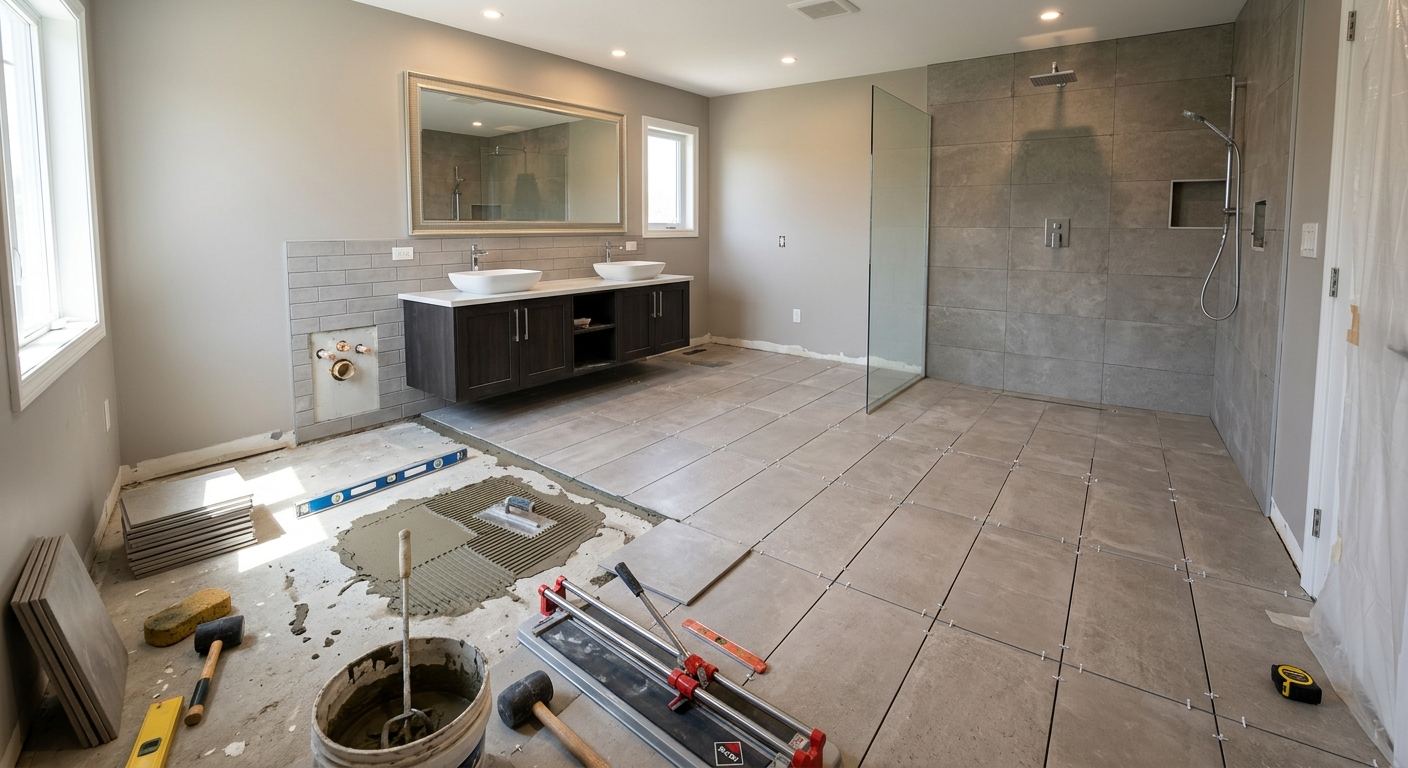
Bathroom renovation options and costs in Kingston
In Kingston, Ontario, bathroom renovations are in demand because homeowners are balancing updates with the realities of an older housing stock. With 52.7% of homes built before 1981 (Statistics Canada, 2021 Census), it’s common to run into dated rough-ins, older venting routes, and drain stacks that don’t match modern waterproofing expectations. In many Kingston homes, that means your “same layout” project can still uncover hidden scope once walls come down, such as subfloor irregularities or supply-line age that affects shut-offs and pressure. Labour availability and trades coordination also matter here—Kingston has plenty of contractors, but peak seasons tighten schedules when multiple older-home renos kick off at the same time.
Climate plays a smaller role than housing age in Ontario, but humidity management is still a cost driver. If the existing fan ducting isn’t right, mould-prone ventilation failures can force more remedial work after demolition. This is especially common in older neighbourhoods where homes were designed for different moisture loads and ventilation habits.
Work is particularly busy around Westbrook, where many properties were built decades ago and homeowners frequently renovate to improve resale appeal and comfort. Whether you’re aiming for a refresh or a full rebuild, the most accurate way to compare quotes is by scope.
Below are typical Kingston cost bands to help you frame what different options usually include.
| Renovation Scope |
What's Included |
Typical Duration |
Price Range |
| Cosmetic refresh (paint, fixtures, accessories only) |
Paint, swap vanity or toilet if keeping plumbing locations, replace lighting fixtures (as needed), add new accessories, deep clean; no major demolition |
3–7 days |
$3,000–$8,000 |
| Mid-range full renovation (new tile, vanity, tub/shower, electrical) |
Demolition, subfloor inspection and minor repairs, waterproofing with modern system, tile floor + surround, new vanity, new tub or shower/tub combo, ventilation fan upgrade, GFCI where required, new trim and finishes |
2–4 weeks |
$15,000–$24,000 |
| High-end full renovation (custom tile, steam shower, heated floors) |
Full demolition, engineered waterproofing approach, premium tile and layout, heated floor wiring (as required), custom shower features (curb/bench/linear drain), upgraded electrical scope, higher-tier plumbing fixtures, upgraded ventilation |
4–6+ weeks |
$24,000–$32,000 |
| Shower-only installation (convert tub to walk-in shower) |
Remove tub, prepare base and plumbing for shower drain, waterproof shower walls, new walk-in shower pan approach, glass door/partition, new valve trim; may include minor subfloor corrections |
1.5–3 weeks |
$5,500–$12,000 |
| Bathtub replacement or tub-liner install |
Remove existing tub (or liner prep), install replacement tub or liner system, new caulking/sealing, re-fit surround edges, basic plumbing connections check |
1–3 weeks |
$1,200–$6,000 |
| Tile-only installation (floor + surround, existing layout kept) |
Tile floor + wall surround with waterproofing upgrades as required, floor prep/levelling, grout/seal where appropriate; excludes major plumbing relocation |
1–3 weeks |
$2,000–$10,000 |
Prices are estimates only and vary by project scope, site access and material selection.
What affects the price of bathroom renovation in Kingston
In Kingston–Pembroke, two homeowners can receive quotes that differ by 30–50% for what sounds like the same bathroom because scope is discovered during demolition, not chosen on day one. The biggest drivers tend to be regional labour rates and the age of Kingston homes—not the weather. Kingston sits in a humid continental climate, so ventilation failures show up quickly, but the real cost spikes usually come from plumbing and building-method differences in older houses.
With 48.0% of dwellings being single-detached (Statistics Canada, 2021 Census) and many built pre-1981, it’s common to see older rough-in materials. That can include cast-iron or copper drain sections that need upgrading for proper slope, galvanized supply lines that affect shut-off performance, and ventilation runs that were never intended to handle modern shower usage. If asbestos-containing materials are found (for example, in older vinyl floor tile or older drywall compounds), it can trigger abatement protocols and add roughly $1,500–$5,000+ depending on extent and containment requirements.
Concrete examples from Kingston jobs: (1) keeping plumbing where it is often keeps you in the $15,000–$24,000 mid-range for many full renos, while moving the drain and supply lines can push you closer to the $24,000–$32,000 band; (2) switching from standard tile layouts to complex patterns and niches increases labour time for setting, layout, and waterproofing transitions; (3) upgrading exhaust fan ducting from a short, ineffective run to a proper vent path can add electrical and sheetrock time, but it usually prevents repeat issues later.
| Price Factor |
Why It Matters |
Cost Impact |
| Layout change — moving drain or supply lines requires rough-in work |
Moving plumbing triggers demolition, rough-in plumbing, re-venting/connection checks, and patching through finished surfaces |
Often +10% to +25% (sometimes more in older walls) |
| Tile selection — large-format porcelain vs. mosaic vs. ceramic |
Different tiles require different substrates, more careful cuts, and more time for patterning and setting |
Typically +$1,000 to +$5,000 |
| Fixture tier — builder-grade vs. mid-range vs. designer brands |
Higher tiers cost more up front and sometimes require different valves, trims, and finish compatibility |
Commonly +$500 to +$4,000 |
| Subfloor condition — rot or unlevel concrete adds scope |
Warps and rot require replacement and proper substrate preparation for tile and waterproofing longevity |
Often +$1,000 to +$6,000 |
| Electrical — adding GFCI outlets, exhaust fan, heated floor circuit |
Bathroom circuits must meet Ontario code; adding heated floors increases the electrical scope and labour |
Usually +$600 to +$3,500 |
| Waterproofing method — membrane type and extent |
The membrane system and coverage area affect prep time, material costs, and durability in moisture conditions |
Often +$800 to +$4,000 |
| Older-home surprises — asbestos tile, cast-iron drains, galvanized pipes |
Discovery changes scope instantly: abatement, drain upgrades, supply-line changes, and added testing/inspection time |
Can add $1,500–$5,000+ depending on findings |
| Bathroom size — sq ft drives tile and labour time directly |
More area means more tile, more waterproofing, more thinset and grout, and longer demo/trim work |
Commonly +$2,000 to +$8,000 as size increases |
Permits & regulations in Ontario
In Ontario, many “cosmetic” bathroom updates can be done without pulling permits, but the moment you change plumbing routes, electrical systems, or structural elements, permitting and inspections usually come into play. Typically, you do not need a permit for straightforward swaps like replacing a vanity of the same size, repainting, installing accessories, or replacing fixtures without moving supply lines or drains. Replacing a toilet or tap may be considered cosmetic only when plumbing connections stay where they are and no rough-in changes are required.
Permits are commonly required when you relocate plumbing (for example, moving a drain or supply line to change the shower valve location), add or relocate exhaust ventilation that involves new wiring/circuit work, or perform structural changes like moving walls or changing framing. Electrical work in bathrooms must meet provincial electrical code requirements and must be completed or signed off by a licensed electrician. If your renovation includes rough-in plumbing changes, permitting and inspections are typically part of the process.
For a Kingston homeowner, verify in this order: (1) confirm the contractor’s Ontario trade licence credentials where applicable through the appropriate online registry; (2) request a current certificate of insurance (liability) and confirm coverage limits; (3) ask for WSIB/WCB coverage confirmation—insist on documentation before the first demolition; and (4) ensure any permit pull responsibility is clearly stated in the written estimate and contract, including who pays and who schedules inspections.
Choosing tile, waterproofing and fixtures for your Kingston bathroom
For Kingston bathrooms, the three budget levers that most affect cost and long-term performance are tile selection, waterproofing method, and fixture tier. First, tile: ceramic is a solid entry option, but it often has more limitations for shower walls and can be less forgiving on size/flatness. Porcelain usually performs better for floors and wet areas due to lower water absorption, and it’s commonly worth the step up when you’re already investing in waterproofing and floor prep. Natural stone (marble, travertine, slate) can look stunning, but it introduces additional labour for finishing and sealing and is less forgiving if you want large-format installs without careful substrate prep.
Second, waterproofing. In Ontario’s moisture-rich bathroom environment, the right system prevents mould and breakdown behind the tile. A paint-on membrane may be acceptable for some scenarios, but for shower areas most renos benefit from a bonded sheet membrane or a properly detailed system using an engineered approach (including proper corners, transitions, and cure times). In practice, switching waterproofing “up a tier” is often cheaper than fixing failure later.
Third, fixtures. Builder-grade taps and shower trims save money, but mid-range or designer brands can improve usability and resale appeal because finishes and valve performance tend to last longer. For example, moving from standard tile to porcelain plus a better membrane is a reasonable trade when you’re already targeting the $15,000–$24,000 mid-range full renovation—your waterproofing and labour costs don’t change just because the tile costs more, so you’re leveraging the same installation time.
Work with your contractor to match options to your shower complexity and how long you plan to stay in the home—Kingston homeowners with older homes often do best prioritising waterproofing and ventilation, then upgrading finishes within the remaining budget.
| Material / Option |
Pros |
Cons |
Price Range |
| Ceramic tile (floor + walls) |
Lower material cost, good variety of colours; straightforward installation with proper prep |
Higher water absorption than porcelain; can be more sensitive in wet-area performance if not detailed correctly |
$2,000–$6,000 |
| Porcelain tile (floor + walls) |
Better wet-area performance, often more durable for floors; wider selection of sizes and finishes |
Can cost more and may require more precise substrate flatness for large formats |
$4,000–$10,000 |
| Natural stone (marble, travertine, slate) |
Premium look and uniqueness; great for feature walls when installed properly |
Needs sealing and careful maintenance; labour-intensive finishing and layout; substrate prep is critical |
$6,000–$15,000 |
| Frameless glass shower enclosure |
Clean modern look, easier visual upkeep; durable when installed and sealed correctly |
Higher material cost; requires accurate measurements and solid mounting surfaces |
$1,800–$6,500 |
| Prefab tub surround (acrylic) |
Quicker install, consistent surfaces, lower labour than full custom tile surround |
Less “custom” look; can show seams/edges depending on product and layout |
$800–$3,500 |
| Custom shower pan (tile or linear drain) |
More design flexibility; linear drain can improve aesthetics and reduce pooling |
More waterproofing detailing and prep; linear drains require precise slope and installation |
$3,500–$12,000 |
How to choose a bathroom renovation contractor in Kingston
Choosing the right contractor in Kingston comes down to proof: proof of licensing where required, proof of insurance, proof of coverage for workers, and proof that the scope you’re paying for is the scope you’ll get. Start with Ontario licensing: ask for the trade licence details applicable to their work (and confirm the contractor is properly credentialed for the tasks they’re doing). Next, request a certificate of insurance (liability) and confirm it covers renovation work. Finally, verify WSIB/WCB coverage—ask for the documentation and make sure it’s current; don’t rely on verbal assurances. If they won’t provide paperwork up front, that’s a serious warning.
Get 2–3 itemised written quotes. You want a labour + materials breakdown, not a single lump-sum figure that hides what changes if asbestos, subfloor repair, or extra waterproofing layers are discovered. Read scope exclusions carefully: confirm whether permit pull is included (when needed), whether drywall patching and disposal are included, and how they handle change orders if conditions behind the walls differ from what was visible pre-demo.
Warranty also matters. Ask for the workmanship warranty length (how long tile and waterproofing are covered), what product/manufacturer warranties apply to fixtures and waterproofing materials, and whether warranties transfer if you sell the home. For payment, never pay more than 10% to 15% upfront and hold back a portion until completion and walkthrough items are addressed. Timing should be documented: get a start date and a completion estimate in writing, including key milestones like demolition, rough-in, waterproofing inspection, and final trim.
- Request proof of Ontario trade licensing (as applicable to their scope) and confirm it matches the work listed.
- Get a current certificate of liability insurance and verify coverage limits before work begins.
- Verify WSIB/WCB coverage with documentation—don’t accept “we’re covered” without proof.
- Insist on itemised quotes showing labour and material line items separately.
- Ask whether permit pull and inspection scheduling are included for plumbing/electrical changes.
- Confirm disposal/recycling for demolition materials is included in the estimate.
- Make sure the contract states what happens if asbestos is discovered (abatement process and cost approach).
- Clarify waterproofing steps: membrane type, coverage areas, and who does/takes responsibility for it.
- Confirm electrical scope details (GFCI outlets, exhaust fan circuit, heated floor circuit if applicable).
- Ask for a written warranty for workmanship and check the start date and duration.
- Use a payment schedule capped at 10%–15% upfront; hold back until punch-list completion.
- Require a written timeline with milestone dates, not just a single “approx. completion” date.
Red flags in Kingston bathroom renos: (1) a contractor who won’t provide proof of insurance/WSIB/WCB; (2) quotes that aren’t itemised and won’t discuss waterproofing details; (3) no permit plan despite electrical or plumbing relocation; (4) pushing for large upfront payments; and (5) vague change-order language like “extra costs as needed” without an explanation of rates or method.
Frequently asked questions — bathroom renovation in Kingston
What's the best bathtub material for a Kingston home?
For most Kingston homeowners, acrylic or fiberglass tubs are popular because they install cleanly and are cost-effective, especially when your plumbing layout stays the same. If you’re doing a full renovation, bathtub replacement or tub-liner installs commonly land around $1,200–$6,000, and acrylic often fits best in that range without heavy labour. For older Kingston–Pembroke homes, the “best” material is also the one that supports the waterproofing and sealing details your contractor will implement—because moisture and ventilation performance are what protect against mould long-term. If access is tight or your tub surround needs to be rebuilt, a replacement tub can be more straightforward than a liner, but that depends on subfloor condition and how much demolition is needed.
Is it worth renovating a bathroom before selling in Kingston?
Often, yes—because bathrooms are high-impact spaces for buyer perception in Kingston’s owner-occupied market (55.8% of households are homeowners per Statistics Canada, 2021 Census). The key is choosing improvements that buyers notice and that reduce risk: fresh finishes, good ventilation, and reliable waterproofing. A cosmetic refresh can help if your layout and waterproofing are already sound; however, if the bathroom is dated and you’re seeing grout staining, lingering odours, or uneven floors, a full renovation is more convincing. Budget-wise, many full renovations in this market fall in the mid-range of $15,000–$24,000, and that’s often easier to justify than trying to patch multiple failing areas. If you’re unsure, prioritize fixes tied to performance first, then upgrade finishes second.
How do I plan a bathroom renovation on a tight budget in Kingston?
Start by protecting your budget from scope creep. In Kingston, older homes (52.7% built before 1981) can hide issues behind walls—like subfloor irregularities, older plumbing materials, or ventilation problems—so it’s smart to set aside contingency. On a tight budget, keep the layout where possible to avoid drain/supply relocation costs. You can also stretch value by combining a mid-range approach with targeted upgrades: for example, choose a durable porcelain floor but limit expensive custom shower features, or keep tile scope smaller and invest in waterproofing quality and an improved exhaust fan. If you’re converting a tub to a shower, plan for shower install budgets that often fall between $3,500–$12,000 depending on enclosure and pan details. Finally, get itemised quotes so you can choose which line items to adjust rather than cutting “unknown” items later.
What's the difference between a cosmetic and a full bathroom renovation?
A cosmetic refresh typically focuses on surfaces and fixtures without major demolition or relocating plumbing/electrical. Think paint, swapping a vanity, replacing accessories, and possibly updating lighting—without changing the shower pan, drain positions, or waterproofing system. A full bathroom renovation usually includes demolition, subfloor checks, a modern waterproofing approach, tile work (floor and walls), ventilation upgrades, and electrical updates like GFCI and exhaust fan wiring. In Kingston–Pembroke, the “full” scope is where hidden issues come to light, and that’s why full renovations commonly land in the mid-range of $15,000–$32,000, depending on whether you’re keeping the plumbing layout similar or moving fixtures. If your waterproofing is old or ventilation isn’t working, a cosmetic refresh may not solve the root cause.
How do I choose the right contractor for my bathroom in Kingston?
Choose a contractor who can prove three things: correct Ontario trade credentials where applicable, current liability insurance, and WSIB/WCB coverage documentation. Ask for it before demolition—reputable bathroom renovators in Kingston have no problem providing paperwork. Then demand 2–3 itemised written quotes with labour and materials broken out (and written scope that lists exclusions). Confirm whether permit pull is included when plumbing or electrical changes require it. Also review warranty terms: workmanship warranty length for waterproofing and tile, plus manufacturer warranties for fixtures and membranes. Finally, confirm payment terms—never pay more than 10%–15% upfront and hold back until the job is complete and your punch list is addressed. This approach prevents the most common Kingston-reno disputes.
What's the most common mistake homeowners make in bathroom renovations?
The most common mistake is underestimating the behind-the-wall work until after demolition starts—then trying to “save money” by cutting scope midstream. In Kingston’s older housing stock (with 52.7% built before 1981), that shows up when people plan a cosmetic or limited refresh but discover subfloor issues, outdated drain components, or poor ventilation once the walls open. Another frequent issue is not locking down waterproofing details early; if waterproofing/membrane type or coverage isn’t clearly written into the contract, you can end up paying later to redo failed areas. If you’re budgeting for a mid-range full renovation of around $15,000–$24,000, it’s better to decide on waterproofing and ventilation up front than to treat them as “extras.” Finally, avoid lump-sum quotes without itemisation—scope ambiguity is where surprises happen.