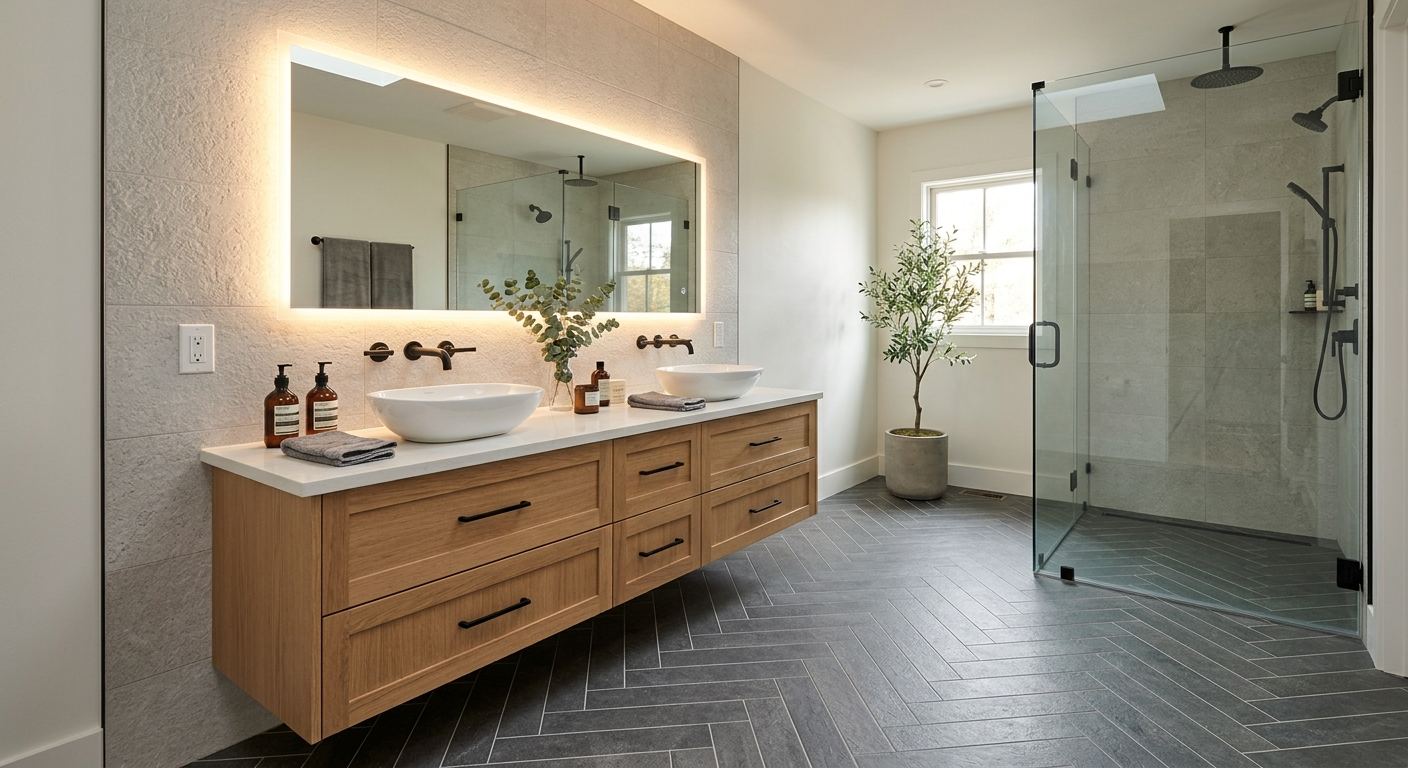
Bathroom renovation options and costs in Hintonburg
In Hintonburg, a bathroom renovation is usually driven by what you change—surface updates versus a full rebuild—and by what trades uncover once walls and floors come down. With a population of 7,844 (Statistics Canada, 2021 Census), the local market is large enough for steady contractor availability, but pricing still reflects the wider Toronto economic region where labour is premium. Hintonburg also sits within a housing mix shaped by older post-war and mid-century builds; in many Toronto-area neighbourhoods, pre-1980 layouts often mean dated plumbing, earlier venting methods, and a higher chance of surprises behind tile or around the subfloor. That’s where projects start to diverge quickly.
Toronto’s climate doesn’t usually change bathroom renovation costs the way it affects exterior work, but it does affect performance requirements: bathrooms here need robust moisture control to manage Ontario humidity year-round. In practice, that means good waterproofing detailing, proper exhaust fan performance, and tile set correctly for freeze–thaw movement and seasonal indoor humidity swings. As a result, contractors in the Toronto region often prioritize labour-intensive waterproofing and waterproof test steps over “fast” installs.
In Hintonburg, demand is especially steady around the Main Street corridor and nearby residential pockets where homeowners are modernizing aging 3-piece bathrooms for resale value and day-to-day comfort. If you’re planning your scope now, use the table below to compare common renovation pathways and realistic Toronto-region budgets before you request itemised quotes.
| Renovation Scope |
What's Included |
Typical Duration |
Price Range |
| Cosmetic refresh (paint, fixtures, accessories only) |
Paint, caulking, vanity refresh or replacement, tap/trim swaps, new mirrors/accessories; no plumbing move and no major tile removal |
3–7 days |
$2,000 – $6,500 |
| Mid-range full renovation (new tile, vanity, tub/shower, electrical) |
Remove and replace existing finishes; new vanity, toilet, tub/shower components, tile floor and surround, exhaust fan upgrade, basic electrical updates (e.g., GFCI), new trim and hardware |
2–3 weeks |
$12,000 – $20,000 |
| High-end full renovation (custom tile, steam shower, heated floors) |
Custom shower (often linear drain), high-end tile package, heated flooring circuit, upgraded plumbing/venting corrections if discovered, designer fixtures, premium waterproofing and detailing |
3–5 weeks |
$20,000 – $30,000 |
| Shower-only installation (convert tub to walk-in shower) |
Remove tub and reconfigure waterproofing; install walk-in shower pan system, wall board, tile surround, new controls/valves, drain adjustments if required, exhaust fan check |
1.5–3 weeks |
$10,000 – $17,500 |
| Bathtub replacement or tub-liner install |
Replace existing tub with new unit (or install tub-liner where appropriate), new trim, recaulk, reseal wall junctions; plumbing tie-ins as needed |
3–10 days |
$1,200 – $4,500 |
| Tile-only installation (floor + surround, existing layout kept) |
Remove tile, prepare substrate, install new tile floor and wall surround, grout/seal, re-attach fixtures/trim; no fixture plumbing relocation |
1–2 weeks |
$3,500 – $12,000 |
Prices are estimates only and vary by project scope, site access and material selection.
What affects the price of bathroom renovation in Hintonburg
If you get two quotes for the “same” bathroom in the Toronto economic region, it’s common to see 30–50% swings because labour is priced at a premium and scope expands when older materials meet current Ontario requirements. In Hintonburg, the biggest driver isn’t outdoor weather—it’s the age of the home and what has to be brought up to code once walls are open. A full renovation can start with finishes, but quickly turns into drain/vent corrections, new shut-offs, and re-work of undersized or corroded lines.
Older Toronto-area housing often hides cast-iron or copper drain stacks that need upgrading, plus galvanized supply lines that can be undersized. If the bathroom also lacks proper ventilation, contractors typically factor in an exhaust fan upgrade and electrical tie-ins—labour-intensive work once access is limited. Another common cost driver is asbestos-containing materials: if asbestos is found in vinyl floor tile or old drywall compound (more typical in pre-1985 builds), licensed abatement and safe disposal are required. In many cases, that adds $1,500 – $5,000+ to the budget, depending on area impacted and remediation approach.
Here are a few Hintonburg examples that change the number fast. If you keep the same tub and just replace tile, you might land closer to tile-only pricing (for example, $3,500 – $12,000). If you convert a tub to a walk-in shower, you may need drain reconfiguration and more complex waterproofing detailing, often pushing the project toward shower conversion budgets. Conversely, choosing a standard vanity and keeping plumbing in place can help keep a mid-range full renovation closer to $12,000 – $20,000.
| Price Factor |
Why It Matters |
Cost Impact |
| Layout change — moving drain or supply lines |
Requires rough-in work, possible joist/subfloor changes, and more demolition |
Often adds $2,000 – $6,000 depending on distance and access |
| Tile selection — large-format porcelain vs. mosaic vs. ceramic |
Harder materials increase cutting, setting time, and labour for straight lines and layout |
Can swing $1,500 – $4,500 on a typical bath |
| Fixture tier — builder-grade vs. mid-range vs. designer brands |
Branded trims and valves cost more and may require specialized installation parts |
Typically adds $500 – $4,000 |
| Subfloor condition — rot or unlevel concrete adds scope |
Water damage or uneven substrates require removal, patching, and extra prep |
Commonly adds $800 – $3,500 |
| Electrical — adding GFCI outlets, exhaust fan, heated floor circuit |
Licensed electrical work, new wiring runs, and safe circuit design |
Often adds $500 – $3,000+ |
| Waterproofing method — membrane type and extent |
Better systems improve long-term moisture performance and reduce call-backs |
Can add $600 – $2,500 but reduces risk of future failures |
| Older-home surprises — asbestos tile, cast-iron drains, galvanized pipes |
Triggers abatement, disposal, and plumbing upgrades to current expectations |
Can add $1,500 – $7,000+ when discovered |
| Bathroom size — sq ft drives tile and labour time directly |
More surface area means more layout, waterproofing, and install time |
Usually shifts total by $2,000 – $10,000 |
Permits & regulations in Ontario
In Ontario, many straightforward bathroom upgrades are considered “cosmetic” work and typically do not require permits—especially when you’re not changing the plumbing or building structure. Examples that usually do not require a permit: swapping a vanity or mirror, replacing toilet or tub/fixtures in the same location without moving drain/supply connections, painting, replacing accessories, and re-caulking sealed joints. Re-tiling with the same layout often falls under cosmetic/finish work, provided you’re not modifying structure.
Work that does require permitting and inspections usually includes relocating plumbing lines (moving a drain or supply), changing wet-wall configurations, adding or altering ventilation ducting that affects the building envelope, and any structural wall changes. Electrical permitting is typically triggered when you add circuits or make substantial electrical changes—like installing a new exhaust fan circuit, adding heated floors, or introducing additional GFCI-protected receptacles. All electrical work must be performed or signed off by a licensed electrician to meet Ontario electrical code expectations.
For a homeowner in Hintonburg, verifying a contractor is a straightforward step-by-step process: (1) Ask for their Ontario trade licence details (and confirm the scope matches bathroom work that requires it). (2) Request a certificate of liability insurance—make sure it’s current for the project dates and that it lists you as certificate holder if offered. (3) Ask for WSIB/WCB clearance or coverage documentation where applicable; this helps protect you if a subcontractor is injured on site. (4) Confirm permit responsibility in writing—who pulls permits, who schedules inspections, and whether disposal and site protection are included.
Choosing tile, waterproofing and fixtures for your Hintonburg bathroom
In Hintonburg, the three material decisions that most affect both your budget and your long-term performance are tile choice, waterproofing method, and fixture tier. First, tile: ceramic is usually the entry-level option, while porcelain is denser and more consistent for floors and wall systems—especially where you want a stable surface for grout lines and frequent cleaning. Natural stone (marble, travertine, slate) can be stunning, but it demands extra labour for layout and finishing, plus sealing upkeep to keep it looking right.
Second, waterproofing: paint-on membrane can work on certain systems, but bathrooms benefit most from a method matched to the substrate and wet areas. Bonded sheet membranes and bonded systems with proper corner/wet-area detailing typically reduce mould risk by limiting water intrusion behind the tile. Using the right system matters in Ontario because bathrooms spend a lot of time at high humidity; if waterproofing is rushed, you can get grout haze, persistent odours, and hidden failures.
Third, fixture tier: builder-grade valves and trims cost less initially, but mid-range or designer fixtures often improve longevity, finish quality, and resale appeal. A common “value” example: upgrading from basic ceramic to porcelain may add roughly $1,000 – $3,000 in material and setting time, but it’s often justified because porcelain tends to resist chipping and wear better in high-traffic showers.
Matching your budget is about combining the right level of tile with a waterproofing approach that prevents call-backs—then spending on fixtures where they’ll be seen daily. The Toronto market is competitive on finishes, but waterproofing labour is where contractors earn their numbers.
| Material / Option |
Pros |
Cons |
Price Range |
| Ceramic tile (floor + walls) |
Lower cost, good appearance options, widely available sizes and colours |
Can be more prone to chips; requires careful selection for slip resistance on floors |
$3,000 – $7,500 |
| Porcelain tile (floor + walls) |
Hard-wearing, consistent for straight layouts, generally better for floors and wet zones |
Heavier and more demanding to cut/install; higher material cost |
$6,000 – $10,000 |
| Natural stone (marble, travertine, slate) |
Luxury look, unique veining and texture, excellent for statement walls |
Needs sealing/maintenance; higher labour for finishing and balancing lots |
$9,000 – $15,000 |
| Frameless glass shower enclosure |
Modern, light and spacious look; easy to clean with proper sealing |
Costly hardware and fabrication; can be impacted by wall alignment |
$2,500 – $6,500 |
| Prefab tub surround (acrylic) |
Fast install, fewer tile-setting steps, good for keeping projects on schedule |
Less “custom” look; may have seams depending on model |
$1,200 – $3,500 |
| Custom shower pan (tile or linear drain) |
Premium finish, improved drainage with linear options, clean modern lines |
More labour and precise waterproofing detailing required |
$6,000 – $12,000 |
How to choose a bathroom renovation contractor in Hintonburg
Choosing the right contractor in Hintonburg comes down to verification, clarity, and workmanship responsibility. Start by confirming their Ontario trade licensing for the scope they’ll be doing (especially if plumbing or electrical-related permits are involved). Ask for a current certificate of liability insurance and the contractor’s WSIB/WCB clearance or coverage documentation for the people working on your site. Don’t rely on verbal assurances—request the documents and check expiry dates.
Next, get 2–3 itemised written quotes. A strong bathroom quote breaks labour and materials out separately (tile, waterproofing system, fixtures, demo/disposal, labour hours, and any permit costs). It should include who pulls the permit and when inspections are scheduled, and it should list exclusions—things like what happens if asbestos is discovered, whether subfloor replacement is included, and what’s not covered if joists are out of spec. Warranty matters: confirm workmanship warranty length in writing and whether it’s transferable if you sell the home.
Payment should be staged safely. In Ontario practice, I recommend never paying more than 10–15% upfront. Hold back a portion until the job is complete, including final caulking, waterproofing sign-off (where applicable), and walkthrough corrections. Finally, get the start date and completion estimate in writing; bathroom projects can’t be “estimated” loosely because tiling and waterproofing timing are schedule-critical.
- Ask for Ontario licensing details that match the work scope.
- Request liability insurance certificate and verify project dates.
- Confirm WSIB/WCB clearance or coverage paperwork for all workers.
- Get 2–3 itemised quotes (labour + materials breakdown, not one lump sum).
- Ensure permit responsibility is spelled out (who pulls, who pays, and inspection timing).
- Confirm disposal and drywall/tile debris removal are included.
- Ask what’s included in waterproofing prep and whether a proper membrane system is specified.
- Require a clear scope for plumbing rough-in changes and shut-off replacements.
- Verify tile layout method (leveling, substrate prep, and how lippage is addressed).
- Review warranty terms for labour and the specific manufacturer warranties for products.
- Agree on a payment schedule with a holdback until final walkthrough is signed off.
- Get a written timeline with key milestones (demo, rough-in, waterproofing, tile, trim).
Red flags I see in the Hintonburg market: (1) contractors who quote “fast and cheap” without a waterproofing plan; (2) no itemised breakdown or vague allowances that can double-change orders; (3) refusal to provide insurance/WSIB/WCB proof; (4) missing permit clarity; and (5) warranties only offered verbally or limited to product-only coverage.
Frequently asked questions — bathroom renovation in Hintonburg
How much does a walk-in shower cost in Hintonburg?
A walk-in shower in Hintonburg commonly falls in the $4,000 – $12,000 range for the shower installation itself, depending on whether you’re converting from a tub, the drain type (standard vs. linear), and how much plumbing rework is needed. In older Toronto-area homes, you may also see extra scope if the drain/vent setup needs upgrading once walls are open, which pushes labour-intensive waterproofing work higher. If you’re keeping the existing layout and using mid-range porcelain tile, you might land near the lower end of the shower conversion range. For a higher-end custom shower with premium tile and glass, projects often move toward the upper end, aligning with broader full-reno budgets that sit above national averages in the Toronto region. (Statistics Canada, 2021 Census)
What's the ROI on a bathroom renovation?
In Ontario—especially in neighbourhoods like Hintonburg where buyer expectations are strong—bathroom renovations usually improve marketability and can protect value, but “ROI” depends heavily on scope and finish consistency. A cosmetic refresh can help buyers see the home as maintained, yet it won’t always command the same lift as a full, moisture-proofed rebuild. If you invest in a mid-range full renovation (often $12,000 – $20,000), you’re typically aligning with what buyers view as turnkey comfort: updated vanity, proper ventilation, and modern tile/waterproofing. ROI is also affected by hidden conditions: older plumbing venting or potential asbestos remediation can change your total cost, so realistic budgets matter. Focus on durable waterproofing and quality labour—those elements protect against future repair costs that hurt resale.
Do I need waterproofing behind the tile?
In a properly built Ontario shower and wet area, yes—waterproofing behind tile is essential. Bathrooms in Hintonburg face year-round humidity, and water can migrate through grout lines or minor tile movement. A good contractor will treat waterproofing as a system, not just a coating: it includes correct membrane selection, substrate prep, and detailed sealing at corners, niches, and transitions around the drain. If you choose a reputable bonded membrane approach or a system-compatible method, it reduces the chance of mould and hidden failures. Some “quick” methods skip key prep steps and can lead to long-term problems—especially in older homes where subfloors may be uneven or have aged moisture damage.
How do I compare bathroom renovation quotes?
Compare quotes like a line-by-line spreadsheet. Make sure each quote includes the same scope: demo, disposal, waterproofing method and extent, tile format and setting details, electrical updates (including exhaust fan and any GFCI requirements), and plumbing changes if the drain/supply positions are affected. Look for itemised labour and materials, not just a lump sum. Check whether permits are included and who is responsible for inspections. Also compare allowances: if one quote uses a “budget” vanity or generic tile while another uses your selected products, the difference will show up later as change orders. Finally, confirm warranty language and whether product warranties are separate from workmanship warranties. In the Toronto region, labour rates and older-home code upgrades are major cost drivers, so equal scope is the only fair comparison.
Can I live at home during a bathroom renovation in Hintonburg?
Often, yes—but it depends on your bathroom layout and how involved the renovation is. If you’re doing a cosmetic refresh or tile-only work, the disruption is usually manageable and you may be able to keep basic bathroom use, at least in phases. For a full renovation or shower conversion, most homeowners plan to live without full shower access for part of the project window, since waterproofing and tiling require careful sequencing and curing time. That’s especially true when permits and rough-ins are required. In older Hintonburg homes, opening walls can reveal additional scope (subfloor repairs or potential abatement), which can extend timelines. If living onsite is important, ask your contractor about a phased schedule, dust protection, and temporary facilities.
What's the best bathtub material for a Hintonburg home?
The “best” tub material depends on how you use it, the feel you want, and what will fit your bathroom. Common options include acrylic and, in some renovations, refinished or upgraded liners. Acrylic tubs are popular because they’re lighter than many alternatives, easier to install, and tend to be durable for everyday use—often fitting well in renovations that need schedule certainty. If you want a more robust, long-term finish and you’re doing a mid-range full renovation (often around $12,000 – $20,000 when bundled with tile and electrical), a quality acrylic tub plus properly sealed joints is frequently the practical choice. For older houses, the deciding factor is often what the floor can support and whether plumbing connections can be matched safely without major rework. A contractor should assess subfloor condition and drain compatibility before locking the tub type in.