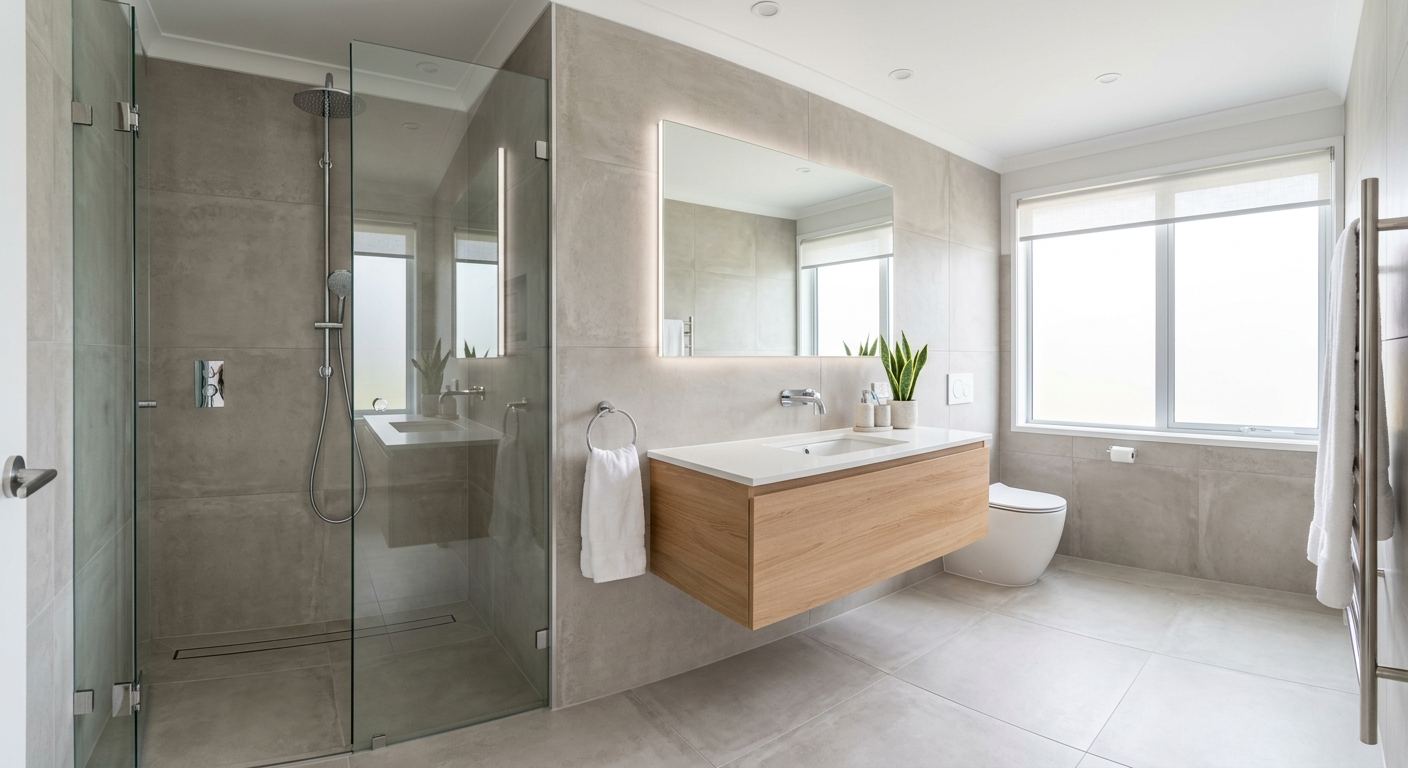
Bathroom renovation options and costs in Alpine
In Alpine, Ontario, homeowners typically choose from a few common renovation paths—then adjust the scope once they see what’s hiding behind the tile. With a total population of 3,203 (Statistics Canada, 2021 Census), the area draws on a smaller pool of trades, and scheduling can affect pricing. Just as importantly, the broader Toronto economic region includes many post-war and 1960s–1980s homes, and that age factor often brings dated plumbing layouts and drains that may not meet today’s Ontario code. In some pre-1985 bathrooms, older vinyl floor tile or drywall compound can also indicate asbestos risk, which is a cost driver once walls and floors are opened.
Here, costs are shaped less by local “weather” and more by market labour rates and the complexity of bathroom work in the Toronto corridor. Skilled trades command a premium, especially for tiling, custom shower waterproofing, and any reconfiguration of plumbing vents, drains, or shut-offs. You’ll feel this in neighbourhoods across Alpine where renovations are active—particularly where homeowners are updating older three-piece bathrooms into modern layouts with walk-in showers and better exhaust ventilation—because those jobs are labour-intensive and require careful coordination between plumbing and electrical.
Below is a practical comparison of the most common options. Use it as a budget anchor, then expect a site visit to refine the numbers based on your existing rough-in, subfloor condition, and finish level.
| Renovation Scope |
What's Included |
Typical Duration |
Price Range |
| Cosmetic refresh (paint, fixtures, accessories only) |
Paint, new vanity or taps (no plumbing relocation), toilet/vanity swap, light repairs, re-caulk, fresh hardware, accessories |
2–5 days |
$3,000–$7,000 |
| Mid-range full renovation (new tile, vanity, tub/shower, electrical) |
Demo and disposal, waterproofing, tile floor + shower/tub surround, vanity and faucet, new tub or updated shower valve, exhaust fan upgrade, basic electrical updates (GFCI where needed), plumbing checks/shut-offs |
2–3 weeks |
$12,000–$20,000 |
| High-end full renovation (custom tile, steam shower, heated floors) |
Custom tiled shower (including niche/bench if requested), premium fixtures, heated floor circuit, higher-end waterproofing and detailing, expanded electrical (fan + controls), steam-ready plumbing/electrical coordination, upgraded finishes throughout |
3–5 weeks |
$20,000–$30,000 |
| Shower-only installation (convert tub to walk-in shower) |
Demo tub surround, install new walk-in shower base/liner or pan system, waterproofing, tile surround, new shower valve/trim, updated drain route if needed, exhaust and fan tie-in checks |
1–2 weeks |
$6,000–$12,000 |
| Bathtub replacement or tub-liner install |
New tub swap (or liner where existing is sound), reconnect plumbing, re-caulk and seal, re-tile or patch surround as required, leak testing |
3–7 days |
$1,200–$3,500 |
| Tile-only installation (floor + surround, existing layout kept) |
Remove existing tile, prep and flatten, install waterproofing for tile surfaces, tile floor + shower surround (keeping footprint), grout/seal, trim and finish transitions |
1–2 weeks |
$3,000–$10,000 |
Prices are estimates only and vary by project scope, site access and material selection.
What affects the price of bathroom renovation in Alpine
In the Toronto economic region, it’s common for two quotes on the “same” bathroom to differ by 30–50%. The main reason isn’t climate—it’s labour pricing plus what the age of local homes forces contractors to fix once walls and floors are opened. Skilled trades are busier around the GTA, and bathroom work is detail-heavy (waterproofing, tiling, drainage slopes, and precise fit-ups), so pricing can swing quickly when schedules or finish requirements change. Older homes are also more likely to need plumbing and venting brought up to current Ontario code standards. That often means drain reconfiguration, vent corrections, and new shut-offs—work that can add several thousand dollars even before you talk about tile.
Another hidden-cost driver is asbestos or outdated materials. If pre-1985 vinyl floor tile, mastic, or dated drywall compounds are discovered, abatement protocols can add roughly $1,500–$5,000+ depending on what’s affected and how much needs removal. Similarly, galvanized or undersized supply lines and older drain stacks (sometimes cast-iron remnants in basements or walls) can expand scope when corrosion or improper venting shows up during demolition.
Concrete examples I see in Alpine: (1) switching from basic surround tile to large-format porcelain can increase labour and waste, often pushing tile installation toward the higher end of $3,000–$10,000; (2) adding heated floors or relocating a shower valve can push a mid-range full renovation from roughly $12,000 toward $20,000 as electrical and rough-in coordination expands. On the flip side, if your subfloor is flat and your plumbing footprint is staying put, you can keep costs closer to the lower band of a full reno.
| Price Factor |
Why It Matters |
Cost Impact |
| Layout change — moving drain or supply lines requires rough-in work |
New drain slopes, vent tie-ins, and wall openings increase demo + labour |
Often adds $3,000–$8,000+ |
| Tile selection — large-format porcelain vs. mosaic vs. ceramic |
Different cutting patterns, installation difficulty, and higher breakage/waste |
Shifts tile budget by $1,000–$4,000 |
| Fixture tier — builder-grade vs. mid-range vs. designer brands |
Higher-end valves, trim, and toilets cost more and may require specific installs |
Can move a full reno by $1,500–$6,000 |
| Subfloor condition — rot or unlevel concrete adds scope |
May require structural repair, underlayment changes, or flattening prep |
Typically adds $500–$3,500 |
| Electrical — adding GFCI outlets, exhaust fan, heated floor circuit |
More circuits, wiring, and licensed sign-off increases labour and material |
Often adds $800–$4,000 |
| Waterproofing method — membrane type and extent |
Proper sealing under tile reduces mould risk but takes correct system installation |
Usually adds $600–$2,500 versus basic approaches |
| Older-home surprises — asbestos tile, cast-iron drains, galvanized pipes |
Abatement + replacement of failing plumbing components expands scope |
Can add $1,500–$10,000+ |
| Bathroom size — sq ft drives tile and labour time directly |
More surface area means more tile, mortar, grout, and longer installation |
Small changes can shift cost by $1,000–$5,000 |
Permits & regulations in Ontario
In Ontario, the permit requirements are usually about whether you’re changing plumbing, electrical, or any structural elements—not just updating finishes. Cosmetic work—like swapping fixtures in the same locations, repainting, replacing a vanity, and retiling without moving plumbing—typically does not require a permit. However, the moment you relocate plumbing (moving a drain or supply line), add or modify an exhaust fan that involves electrical circuitry, or make structural changes (like altering load-bearing wall framing), permits and inspections become more likely. Electrical work must meet Ontario electrical code requirements and be completed or signed off by a licensed electrician.
Any plumbing rough-in changes generally require a permit and inspection before covering walls with drywall, backer board, and waterproofing. For your job in Alpine, your contractor should be able to tell you exactly what permits are required for your scope and whether they will pull them on your behalf.
Here’s how you verify an Ontario trade licence and coverage step-by-step: (1) ask the contractor for their current Ontario trade licence number (and confirm it matches the company doing the work); (2) request a certificate of insurance showing liability coverage that corresponds to the project; (3) confirm they have WSIB/WCB coverage (or provide the appropriate proof of clearance/coverage status for workers). When you receive documents, check validity dates and that the insured entity name matches the contractor’s business. Then ask your contractor what will be inspected and when—before any tile and waterproofing are covered.
Choosing tile, waterproofing and fixtures for your Alpine bathroom
In an Alpine bathroom renovation, three material decisions usually determine both the look and the budget: tile choice, waterproofing system, and fixture tier. First, tile selection: ceramic is the entry point and works well when you want good value, but it can be more limited in size and may be easier to chip if your floor framing isn’t perfectly flat. Porcelain (often the mid-range sweet spot) is denser and typically handles moisture-rich environments better, which matters in Ontario basements and main-floor bathrooms where humidity can linger. Natural stone (marble, travertine, slate) can look exceptional, but it often needs more careful finishing and may carry maintenance considerations.
Second is waterproofing. A paint-on membrane can be used in certain scopes, but in most full-tile shower builds you’ll want a system that’s installed with the correct details at seams, corners, niches, and penetrations. Bonded sheet membranes and more structured systems (installed with compatible accessories) reduce the risk of water intrusion—important for Ontario’s freeze-thaw cycles that stress assemblies around exterior walls and plumbing penetrations.
Third is fixture tier. Builder-grade taps and toilets meet function, but mid-range and designer brands often give better valves, smoother operation, and improved finish longevity. A real budget example: if you’re choosing between standard shower tile and premium porcelain, the extra cost may be justified if it reduces future service calls and improves cleanability; if you add large-format porcelain, you may also pay more in labour (more precise cuts), which is where you’ll feel it in the $3,000–$10,000 tile installation band. If your goal is keeping total costs closer to $12,000–$20,000, consider investing in waterproofing and core tile areas (shower and floor) while keeping the rest simpler.
| Material / Option |
Pros |
Cons |
Price Range |
| Ceramic tile (floor + walls) |
Good value, wide style selection, familiar installation methods |
Can be more sensitive to uneven subfloors; less durable than porcelain in some applications |
$3,000–$6,500 |
| Porcelain tile (floor + walls) |
Moisture-resistant, durable, good for larger formats and modern looks |
Higher material cost; careful layout needed to avoid awkward cuts |
$5,000–$10,000 |
| Natural stone (marble, travertine, slate) |
High-end appearance and texture; unique character |
More variables (porosity, sealing/maintenance); requires premium workmanship |
$8,000–$16,000 |
| Frameless glass shower enclosure |
Bright, modern look; durable glass when properly installed |
Can be pricier; requires precise plumbing and wall alignment |
$4,000–$8,000 |
| Prefab tub surround (acrylic) |
Faster install; fewer tile seams; easier long-term sealing |
Less custom look; limited style options; may not match premium tile aesthetics |
$1,200–$3,500 |
| Custom shower pan (tile or linear drain) |
Better drainage solutions; modern linear look; excellent performance when detailed right |
More labour and detailing; requires exact slope and waterproofing |
$6,000–$12,000 |
How to choose a bathroom renovation contractor in Alpine
Choosing the right contractor matters in Alpine because bathroom jobs are high-risk for leaks and rework once waterproofing is covered. Start with licensing and coverage verification. Ask for their Ontario trade licence details (or proof that the specific trades used are licensed where required), a certificate of liability insurance, and proof of WSIB/WCB coverage for their workers. How to check: request the documents directly and confirm the company name matches the contract, check policy expiry dates, and ensure coverage is active before the job begins.
Then get 2–3 itemised written quotes, not a lump sum. A solid quote should break out labour and materials (tile, waterproofing system, fixtures, plumbing/electrical allowances), list exclusions, and state whether permits and inspections are included. Bathroom quotes should also clarify disposal and whether the contractor handles dust control and protection for floors and adjacent rooms.
Warranty is another key divider: confirm the workmanship warranty length, what it covers (typically leaks and failed installs), and whether it’s transferable if you sell. Review the payment schedule too—never pay more than 10–15% upfront, and use a holdback until you’ve completed final walkthroughs and corrections. Finally, insist on a written timeline with an estimated start date and completion date, including when inspections happen if permits are required.
- Confirm Ontario trade licence (and ensure the licence belongs to the contracting entity)
- Verify liability insurance with project-appropriate coverage
- Request WSIB/WCB proof or clearance documentation for workers
- Get 2–3 itemised quotes with labour + materials line items
- Ensure the quote lists what’s included for demo, disposal, and site protection
- Ask who pulls permits and what inspections are covered
- Confirm electrical and plumbing scopes are specified (no “allowances” without ranges)
- Require a waterproofing specification, not just “waterproofing included”
- Check the warranty for workmanship and whether it covers leaks
- Use a payment schedule with 10–15% max upfront and a holdback for punch list
- Get lead times for tile, glass, and specialty items in writing
- Confirm how change orders will be priced and approved
Concrete red flags in Alpine to watch for: quotes that don’t specify waterproofing method, “tile included” with no mention of prep/flattening, contractors who ask for large upfront deposits, vague electrical/plumbing wording without licensed-trade documentation, and warranties limited to materials only (or no written warranty terms at all).
Frequently asked questions — bathroom renovation in Alpine
How do I compare bathroom renovation quotes?
When comparing bathroom renovation quotes in Alpine, start by making them apples-to-apples. Look for itemised line items for labour (demo, framing/backer prep, tiling, waterproofing install) and materials (tile type/size, grout, membrane system, fixtures). Confirm whether the scope includes permit pulling and inspection costs, disposal, and any subfloor flattening. It’s also important to compare how each quote handles older-home surprises common in the Toronto housing stock—like potential asbestos in older floor materials or plumbing vent/drain updates. A quote that looks cheaper but has more exclusions can land you above the typical $12,000–$20,000 mid-range band once changes are discovered mid-demo. Ask for a written change-order process and a timeline for inspections.
Can I live at home during a bathroom renovation in Alpine?
Often, yes—many Alpine homeowners can live at home during a bathroom renovation—but it depends on whether you’re doing a full renovation or converting a shower/tub. If it’s a mid-range full renovation (commonly $12,000–$20,000), you may be without functional shower access for part of the schedule, especially once waterproofing and tile are installed. Contractors usually build in “dry times” for waterproofing cures and tile grouts, so daily use can be limited. If you have a second bathroom, the job is much easier. If you only have one bathroom, ask about a temporary solution (like a temporary wash setup) and whether the contractor can stage work to keep the bathroom usable longer during demo. The key is getting a realistic timeline in writing.
What's the best bathtub material for a Alpine home?
For most Alpine and Ontario homes, “best” depends on your subfloor condition and how much plumbing work you’re doing. If you’re replacing a tub, acrylic tubs are common because they’re lighter than cast iron and typically easier to install without major structural changes. For homes where the tub footprint is staying put, an acrylic replacement can help you stay closer to the $1,200–$3,500 bathtub replacement/tub-liner band. Cast iron can be very durable, but it’s heavier and may require more careful installation. If your goal is faster turnaround, a tub-liner approach can work when the existing tub is in sound condition and the surround is properly prepared. Avoid choosing based on looks alone—ask your contractor to assess the existing base, drainage connection, and the condition of the wall and subfloor.
Is it worth renovating a bathroom before selling in Alpine?
It can be worth it, but only if you renovate strategically. In the Toronto economic region, buyers often pay attention to functional updates—clean waterproofed shower areas, modern exhaust ventilation, and fixtures that look current—more than they do to premium stone everywhere. If your bathroom is dated or shows early signs of moisture issues, a renovation can reduce buyer risk perception and speed up decisions. However, overspending on high-end finishes (like full custom steam shower builds) may not recoup fully in every market scenario. As a guideline, homeowners commonly target the mid-range full reno band (often $12,000–$20,000) unless they’re upgrading to match the rest of the home’s finish level. If plumbing is already in good shape and the layout stays, you can improve value without triggering expensive rough-in changes that jump costs toward the upper end.
How do I plan a bathroom renovation on a tight budget in Alpine?
On a tight budget in Alpine, prioritize the “waterproofing and function first” approach. Keep the layout where possible to avoid rough-in changes that can add several thousand dollars. Choose a tile strategy that spends money where it matters: invest in a durable porcelain floor and a well-waterproofed shower area, and keep the rest simpler (or limit natural stone to accent areas). If you’re working within a $12,000–$20,000 mid-range full renovation budget, consider not relocating plumbing unless absolutely necessary. Also, ask for quotes that separate allowances for fixtures so you can adjust later without redoing tile. If you’re only changing finishes, a cosmetic refresh scope can be far cheaper, but remember it won’t solve structural or moisture problems. Build in a contingency for discovery items typical of older housing stock.
What's the difference between a cosmetic and a full bathroom renovation?
A cosmetic renovation focuses on surface-level changes that generally don’t require plumbing rough-in or significant electrical work. In Ontario, that commonly means repainting, swapping fixtures in the same positions, changing accessories, and sometimes retiling without moving drains or supply lines. A full renovation goes further: it usually includes demo, new waterproofing, new tile systems, vanity/toilet/shower or tub replacement, and often electrical updates such as GFCI protection and exhaust fan improvements. In the Toronto region, a full bathroom renovation typically lands in the low-to-mid five-figure range—often $12,000–$30,000 depending on scope—while cosmetic refreshes are usually much lower (often a few thousand). Your quote should clearly state what’s included so you can compare apples-to-apples.