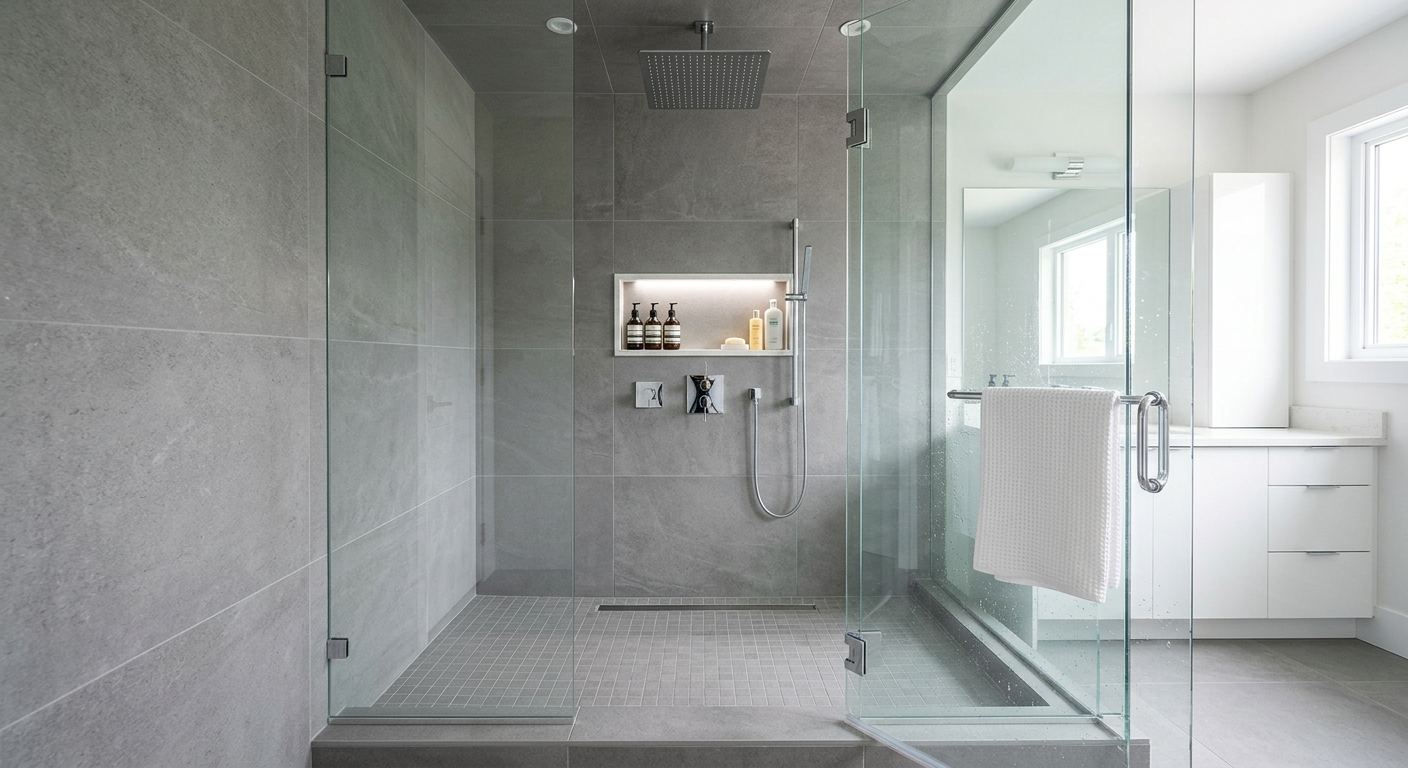
Bathroom renovation options and costs in Leaside-Bennington
Renovating a bathroom in Leaside-Bennington usually starts with a simple question: are you aiming for a cosmetic refresh, or a full rebuild? In our area, your budget is often shaped by the age of the housing stock—many Toronto-area homes were built long before modern waterproofing and ventilation practices, which can mean dated drain layouts and a higher chance of hidden materials like older floor-tile compounds. With a total population of 16,828 (Statistics Canada, 2021 Census), the Leaside-Bennington market is busy enough that skilled crews are in demand, but quotes still swing depending on what needs to be opened up. Toronto weather and indoor humidity don’t usually “drive” pricing the way they do in colder regions, but they do impact how carefully you must ventilate and waterproof. The labour intensity of tiling, custom shower builds, and code-upgrade plumbing/venting is the bigger driver in the GTA.
In particular, contractors see frequent repeat demand around the Leaside and Bennington Village pockets, where many mid-century homes have older plumbing and ventilation setups tucked behind tiled surrounds and plaster walls. Once walls come down, it’s not unusual to uncover cast-iron or galvanized components, undersized venting, or electrical that needs bringing up to modern safety expectations—scope increases quickly. That’s why it’s smart to compare options side-by-side before you request quotes.
Use the table below as a realistic starting point for planning your renovation approach, then we’ll break down what affects pricing and what permits may apply in Ontario.
| Renovation Scope |
What's Included |
Typical Duration |
Price Range |
| Cosmetic refresh (paint, fixtures, accessories only) |
Paint, replace vanity top or vanity (if like-for-like), toilet refresh/replace, taps/aerators, mirror, towel bar, simple caulking and deep clean; no plumbing relocation |
2–5 days |
$3,000–$7,500 |
| Mid-range full renovation (new tile, vanity, tub/shower, electrical) |
Remove and replace tile floor/walls (typical 3-piece updates), vanity, tub/shower surround, exhaust fan upgrade, new GFCI outlet(s), surface waterproofing prep; plumbing usually like-for-like |
2–3 weeks |
$12,000–$21,000 |
| High-end full renovation (custom tile, steam shower, heated floors) |
Custom shower/tub conversion (often with curbless or linear drain), premium tile and layout, heated floor system, advanced waterproofing, steam-ready electrical planning, upgraded fixtures and accessories |
3–5 weeks |
$22,000–$30,000 |
| Shower-only installation (convert tub to walk-in shower) |
Remove tub, install walk-in shower base/pan and wall system, tile surround, drain reconfiguration if needed, exhaust/fan refresh, plumbing modifications typically to code |
1.5–3 weeks |
$8,000–$15,500 |
| Bathtub replacement or tub-liner install |
Replace tub with new unit and re-set surround; or install tub liner system where applicable; re-caulk, reseal, match finishes; plumbing mostly like-for-like |
3–7 days |
$1,200–$5,000 |
| Tile-only installation (floor + surround, existing layout kept) |
Demo and replacement of tile floor and shower/tub walls only (existing plumbing fixtures remain), surface prep and grout/seal; assumes waterproofing remediation is included if required |
1.5–3 weeks |
$4,000–$12,000 |
Prices are estimates only and vary by project scope, site access and material selection.
What affects the price of bathroom renovation in Leaside-Bennington
In Leaside-Bennington and across the Toronto economic region, homeowners can see 30–50% differences for the “same” bathroom. The reason isn’t the weather so much as labour rates and how often older homes demand extra work once walls are opened. Skilled trade pricing in the GTA is premium, and bathroom renovations are labour-heavy—tiling and waterproofing are detail work, while plumbing rough-in and vent corrections require careful, code-compliant execution. When you’re budgeting in the low-to-mid five figures, it’s usually the hidden conditions that push you toward the higher end of the local range for a full bathroom renovation of $12,000–$30,000.
Older homes in the Toronto region often hide cast-iron or copper drain stacks that need upgrading to meet Ontario requirements, alongside galvanized supply lines and ventilation that isn’t up to current expectations. Those issues can inflate scope through drain reconfiguration, new shut-offs, and additional venting corrections. If asbestos-containing materials are discovered—such as in certain older floor tiles or related drywall compounds—abatement protocols add meaningful cost. Realistically, that can add $1,500–$5,000+ depending on containment scope and how much material is affected.
Two local examples that frequently change budgets: (1) moving a drain for a frameless glass shower can add days of rough-in work and re-tiling complexity; (2) keeping a tub-to-shower conversion “like-for-like” often keeps you closer to the lower end of the shower-only installation range of $4,000–$12,000. Conversely, large-format porcelain tile can raise material and installation labour due to layout and subfloor preparation. Size matters too—more square footage means more tile cutting, more waterproofing area, and more time on the tools, even when the layout stays the same.
| Price Factor |
Why It Matters |
Cost Impact |
| Layout change — moving drain or supply lines requires rough-in work |
Requires demolition, rough-in plumbing, testing and code-compliant tie-ins |
Often adds roughly $2,000–$6,000 to labour and rough-in scope |
| Tile selection — large-format porcelain vs. mosaic vs. ceramic |
More complex cuts, higher risk of lippage/warping on large format, different backing needs |
Typically shifts tile installation by $1,000–$5,000 depending on finish |
| Fixture tier — builder-grade vs. mid-range vs. designer brands |
Hardware cost, finish complexity, and installation time (tolerances) |
Commonly changes the fixture line by $500–$3,000+ |
| Subfloor condition — rot or unlevel concrete adds scope |
May require membrane-friendly underlayment, patching, or subfloor rebuild |
Can add $1,000–$4,000 |
| Electrical — adding GFCI outlets, exhaust fan, heated floor circuit |
Licensed electrical work and safe connection points increase coordination time |
Often adds $700–$3,500+ |
| Waterproofing method — membrane type and extent |
Better systems reduce risk of mould and leaks; prep is critical |
Usually adds $400–$2,500 depending on system and coverage |
| Older-home surprises — asbestos tile, cast-iron drains, galvanized pipes |
Abatement/part replacement and additional disposal and labour are required |
Can add $1,500–$10,000+ |
| Bathroom size — sq ft drives tile and labour time directly |
More surface area equals more waterproofing, thinset, setting and grouting time |
Commonly shifts total by $1,500–$6,000+ |
Permits & regulations in Ontario
In Ontario, the permit question is less about the “style” of the bathroom and more about the type of work you’re doing. Cosmetic updates—like swapping a vanity, changing taps, repainting, or retiling without moving plumbing—typically do not trigger a building permit. However, you should expect permits when the project involves plumbing relocation, new ventilation work that changes circuits, or structural changes.
Common examples that DO require a permit or inspections in most renovations include: moving a drain or supply line (any rough-in plumbing changes), replacing/adding an exhaust fan that involves electrical circuit work, changing how plumbing vents are configured, and any structural wall modifications (opening walls for blocking or framing). Electrical work must meet Ontario safety requirements and be done or signed off by a licensed electrician; adding GFCI protection and properly wiring a heated floor circuit usually falls into that bucket.
Here’s how a Leaside-Bennington homeowner can verify a contractor step-by-step: (1) ask for their Ontario trade licence details and check it through the appropriate provincial online verification channels; (2) request a current certificate of insurance showing general liability and confirm the expiry date; (3) obtain proof of WSIB/WCB clearance for workers doing the work; (4) ask for a written copy of the permit plan—who pulls permits, what inspections are scheduled, and whether disposal is included; (5) confirm whether any abatement would be handled by a qualified subcontractor if asbestos is encountered. Don’t rely on verbal assurance—get documents in writing before work starts.
Choosing tile, waterproofing and fixtures for your Leaside-Bennington bathroom
In Leaside-Bennington, the three most important material decisions for your bathroom reno budget are tile choice, waterproofing method, and fixture tier. First, tile: ceramic is a solid entry-level option, but it can be less forgiving on wear and maintenance for high-traffic bathrooms. Porcelain usually offers better durability and water resistance for both floors and wet areas, and it often supports cleaner-looking lines when you go larger-format. Natural stone (marble, travertine, slate) can be stunning, but it adds cost and complexity—stone requires appropriate sealing and careful substrate preparation to prevent staining and cracking.
Second, waterproofing: paint-on membranes may look straightforward, but a proper system depends on prep and coverage. Bonded sheet membranes and well-executed systems (including modern channel/drain-ready approaches) can reduce mould risk by preventing water migration behind tile—an important consideration in Toronto’s bathroom humidity cycle. Third, fixtures: builder-grade units keep budgets lower, mid-range brands balance value and lifespan, and designer fixtures can elevate resale appeal—yet they don’t automatically justify the spend if your layout and waterproofing aren’t top-tier.
Example: if you’re deciding between mid-range porcelain tile and premium natural stone, a reasonable shift of a few thousand dollars can be justified when you want a cohesive, long-term look across the entire shower and floor. If you’re staying with a simple tub surround and basic lighting, though, overspending on stone while cutting corners on waterproofing is usually the wrong trade. Match your materials to your wet-area strategy, not just to the showroom price tag.
| Material / Option |
Pros |
Cons |
Price Range |
| Ceramic tile (floor + walls) |
Entry-level cost, wide design variety, easier to source matching trim |
Less durable than porcelain for floors; more susceptible to chipping without careful selection |
$3,000–$7,000 |
| Porcelain tile (floor + walls) |
Higher water and wear resistance; better for modern large-format layouts; consistent finish |
More expensive tile and can require more precise subfloor preparation for large pieces |
$5,000–$10,000 |
| Natural stone (marble, travertine, slate) |
Premium look and texture; strong resale appeal when well chosen |
Sealing/maintenance required; risk of staining; substrate and leveling must be excellent |
$8,000–$16,000 |
| Frameless glass shower enclosure |
Clean, modern appearance; visually opens smaller bathrooms |
Higher hardware cost; requires precise waterproofing and stable substrate |
$4,000–$12,000 |
| Prefab tub surround (acrylic) |
Faster install; consistent surfaces; often lower labour time than full tile |
Less “custom” look; seams and fit depend on the existing rough opening |
$1,200–$3,500 |
| Custom shower pan (tile or linear drain) |
Best for watertight designs; modern linear drain look; can support curbless transitions |
More labour and tighter tolerances; demands a high-quality waterproofing system |
$3,500–$12,000 |
How to choose a bathroom renovation contractor in Leaside-Bennington
Start with verification, because bathroom work mixes plumbing, electrical, waterproofing and tile setting—there’s no place for guesswork. In Ontario, confirm the contractor’s Ontario trade licensing (where applicable to their scope) and request a certificate of insurance that matches the project start date and coverage limits. Next, ask for WSIB/WCB clearance for their workers. How to check each: (1) request licence information before signing and verify it using the applicable provincial online registry; (2) review the COI for the named insured, coverage types and limits; (3) verify WSIB/WCB status via proof documents they provide—don’t accept “we’re covered” without documentation. Finally, ensure the subcontractors they use (tile setter, electrician, plumber, and any abatement) are properly covered.
Then get 2–3 itemised written quotes, not a single lump-sum number. You want line items for labour and materials, including demo, disposal, waterproofing, tile installation, grout/seal, exhaust fan, and whether permits are pulled. Read the scope carefully: what’s excluded (e.g., subfloor repairs, niche builds, glass installation), is waterproofing remediation included if damage is found, and is disposal included in the price? Check warranty too: workmanship warranty length, product/manufacturer warranty, and whether it transfers to you if you sell.
For payment, never pay more than 10–15% upfront. Hold back part of the balance until the job is complete and inspected. Ask for a written start date and completion estimate with key milestones.
- Provide Ontario licence details and insurance documents before signing.
- Give itemised pricing (labour + materials) for tile, waterproofing, and plumbing/electrical scope.
- State who pulls permits and list scheduled inspections.
- Confirm disposal and dump fees are included or itemised.
- List exclusions clearly (subfloor repairs, joist blocking, fixture upgrades, glass hardware).
- Specify waterproofing system type and coverage areas.
- Confirm tile setting method and expectations for leveling/underlayment.
- Include an allowance range for fixtures so totals don’t surprise you.
- Ask about grout type and sealing plan where applicable.
- Review warranty terms in writing for both workmanship and products.
- Use a payment schedule with a holdback until completion and punch list.
- Provide a realistic timeline with demo, rough-in, waterproofing, tile, trim-out, and final inspection dates.
Red flags to watch for in Leaside-Bennington: vague “we’ll handle it” wording with no permit or inspection plan; quotes that omit waterproofing details; no proof of WSIB/WCB or insurance; pressure for large upfront deposits; and an inability to show similar bathroom projects with close-up tile and waterproofing workmanship.
Frequently asked questions — bathroom renovation in Leaside-Bennington
What adds the most resale value in a bathroom reno?
In Leaside-Bennington and the Toronto market, buyers tend to pay attention to a modern, watertight shower experience, clean finishes, and safe ventilation. The biggest resale value typically comes from upgrading the wet area properly—good waterproofing, durable tile (often porcelain for floors), and a ventilation fan that’s sized and vented correctly. A full renovation in the local range of $12,000–$30,000 often delivers the most “buyer-ready” impact when plumbing is brought up to current expectations and fixtures look coordinated. Cosmetic changes can refresh the space, but if the shower waterproofing and drainage aren’t addressed, the return can be limited.
Can I keep my existing plumbing layout to save money?
Yes—keeping your plumbing layout is one of the most effective ways to control cost in Ontario. If you move nothing major (no drain or supply relocation), you usually avoid a large portion of rough-in labour and the complexity of venting corrections. Many homeowners in Leaside-Bennington can reduce scope by choosing a shower/tub style that fits the existing locations and by replacing fixtures like-for-like. When you stay with a similar layout, you’re more likely to land closer to the mid-range full renovation or shower-only ranges rather than the upper end driven by re-routing. Always confirm during site review, because older drains and supply lines may still need code-upgrade despite “staying put.”
How much does a walk-in shower cost in Leaside-Bennington?
A walk-in shower price depends on whether you’re converting from a tub, how complex the drain line is, and what tile and enclosure you choose. For a typical tub-to-walk-in conversion, Toronto-area budgets often land in the $8,000–$15,500 band for shower-only installation when waterproofing, pan/base work, and necessary plumbing updates are included. If you select a more premium custom pan or linear drain and add a frameless glass enclosure, costs can move toward the higher end. If your existing plumbing layout is straightforward and you’re not changing vents, you can sometimes keep the project closer to the lower end of the local shower installation range.
What's the ROI on a bathroom renovation?
ROI varies by home price point, neighbourhood fit, and what was done—not just how it looks. In the Toronto economic region, a bathroom that’s demonstrably watertight and updated for today’s buyer expectations tends to hold value best, especially when you refresh ventilation, lighting, and finishes rather than only painting over old problems. A cosmetic refresh can make the bathroom more appealing, but it won’t fix underlying drainage or waterproofing issues. A full renovation in the $12,000–$30,000 range often delivers the strongest “functional + aesthetic” return when plumbing/venting is corrected and the shower system is properly built. The most honest answer is that ROI is highest when the work reduces risk (leaks, mould) and improves day-to-day usability.
Do I need waterproofing behind the tile?
Yes—waterproofing behind tile in a shower/tub surround is strongly recommended, and in modern good practice it’s expected in Ontario bathroom work. The purpose is to stop water migration into framing and subfloor, which is how mould and damage develop over time. Even if your existing wall “looks fine,” once you remove tile, we assess substrates for flatness and integrity, then install an appropriate waterproofing system for the wet area. The best method depends on your build-up and whether you’re doing a custom pan or linear drain. Skipping or weakening waterproofing is one of the most expensive mistakes long-term; it can turn a mid-range project into a much larger repair.
How do I compare bathroom renovation quotes?
Compare like-for-like. Ask each contractor for an itemised quote showing labour and materials: demo/disposal, waterproofing method, tile labour (including prep and leveling), plumbing scope (what’s relocated vs. like-for-like), and electrical scope (exhaust fan, GFCI, heated floor circuit if included). Confirm whether permits are pulled and whether inspections are included. In Ontario, electrical and any rough-in plumbing changes must be handled properly, so quotes should reference licensed work and permit/inspection responsibility. Watch for hidden exclusions such as subfloor repairs, niche framing, glass enclosure installation, or asbestos discovery contingency. Finally, align schedule and warranty terms, and keep payment tied to milestones—never more than 10–15% upfront. For budgeting, use the local bands as a sanity check (for example, full renovations often start around $12,000–$30,000 in the GTA).